

P1604 on 2015-2026 Volvo XC90: Startability Malfunction Causes and Fixes
P1604 is a generic code for a starting problem. On a 2015-2026 Volvo XC90, this issue is most commonly caused by a weak or failing battery (both main and auxiliary). If the vehicle has difficulty starting, test the battery and charging system first before investigating other potential causes like the starter, fuel system, or a water-damaged Central Electronic Module (CEM).
- P1604 is a generic code for a starting problem; its specific meaning on a 2015+ Volvo XC90 is not well-documented.
- Do not immediately replace parts. Start by diagnosing the most likely and simplest causes first.
- Fully test the battery and charging system before any other repairs. A weak battery is the most common cause of starting issues on this vehicle.
- Pay attention to other fault codes. P1604 is often a secondary code, and the primary code will point to the actual problem area.
- Due to the vehicle's complexity, if a simple battery issue is ruled out, professional diagnosis with Volvo-specific tools is recommended.
What's Unique About the 2015-2026 Volvo XC90

For the 2015-2026 Volvo XC90 (SPA platform), there is a significant lack of specific reports or technical service bulletins citing the P1604 code. While older Volvos have different, specific definitions for this code, its meaning on this modern platform is unclear. Therefore, a P1604 code should be treated as a general indicator of a starting issue, with diagnostics focusing on the common failure points for a no-start condition on this vehicle, such as the battery, starter, or fuel delivery system, rather than a unique, documented P1604-specific problem. The complexity of the electrical system, including the Central Electronic Module (CEM), means that water intrusion from clogged sunroof drains can be a hidden cause of starting issues. The dual-battery system (main and auxiliary) in non-PHEV models and the unique 48V mild-hybrid system in B5/B6 engines add layers of complexity not seen in older vehicles.
Generation note: The 2015-2026 year range covers the second generation of the Volvo XC90 (SPA platform), which began in model year 2015. All vehicles in this range share the same basic architecture, so the diagnostic approach should be consistent.
Symptoms You May Notice
- Engine cranks for a long time before starting
- Engine cranks but does not start at all
- Engine starts and then immediately stalls
- A single click sound when attempting to start
- Check Engine Light is on
- Multiple, seemingly unrelated warning lights on the dashboard (if CEM is failing)
- "Start/Stop support battery service required" message on the dash
- Replacing spark plugs or ignition coils when the issue is actually fuel or battery related.
- Replacing the fuel pump without first testing fuel pressure and confirming the pump is the point of failure.
- Replacing the starter motor when the actual problem is a weak battery or poor connection at the battery terminals.
Most Likely Causes

- Weak or Dead Battery (Main 12V AGM and/or Auxiliary Battery) 🔴 High Probability Modern vehicles like the XC90 have a high electrical demand from various modules, which can expose a weak battery. The start-stop system also places additional stress on the battery over time. These vehicles use both a main 12V AGM battery and a smaller 12V auxiliary battery; failure of either can cause starting issues and related warnings.
How to confirm: Test the main battery voltage with a multimeter; a healthy AGM battery should read approximately 12.8 volts with the engine off. Test the auxiliary battery; readings below 12.0V (e.g., 10.65V) indicate failure. Perform a load test on both batteries to check their ability to hold a charge under load.
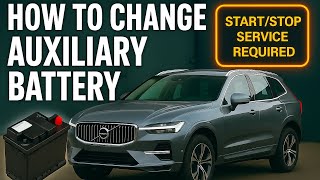
Typical fix: Replace the main 12V AGM battery 🎬 Watch: How to replace the main battery and/or the auxiliary battery. 🎬 See this auxiliary battery replacement walkthrough The new battery must be registered with the vehicle's computer system using a diagnostic tool like VIDA.
Est. part cost: $250-$500 - Faulty Starter Motor or Relay 🟡 Medium Probability The starter motor is a wear-and-tear component. Frequent use, especially with start-stop functionality, can lead to eventual failure.
How to confirm: Listen for a single, sharp click from the engine bay when trying to start the car, which can indicate a failed starter relay or solenoid. If there is no sound, check the starter relay and its circuit. A voltage drop test across the starter circuit can confirm excessive resistance; a drop of more than 0.5V is considered excessive.
Typical fix: Replace the starter motor or the starter relay.
Est. part cost: $300-$700 - Fuel Delivery Issue (Pump or Filter) 🟡 Medium Probability
How to confirm: Listen for the fuel pump priming (a humming sound from the rear of the vehicle) when the car is turned to the 'on' position. Check fuel pressure using a fuel pressure gauge to ensure it is within specification. A lack of fuel pressure points to a failed pump or a clogged filter.
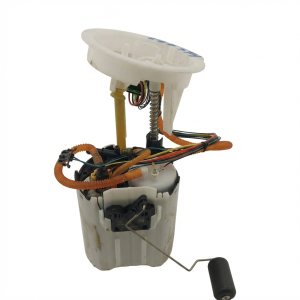
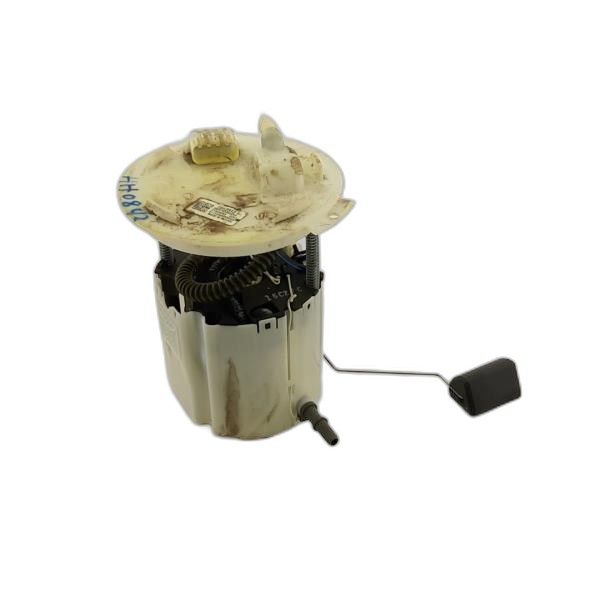
Typical fix: Replace the fuel pump assembly or the fuel filter. On some models, the fuel pump is located inside the fuel tank.
Est. part cost: $400-$900 - Faulty Crankshaft or Camshaft Position Sensor ⚪ Low Probability
How to confirm: These failures often set their own specific DTCs (e.g., P0335, P0340). A diagnostic scanner can be used to check for these codes. An oscilloscope can be used to verify the sensor's output signal.
Typical fix: Replace the faulty sensor.
Est. part cost: $80-$200
Rare But Worth Checking
- Central Electronic Module (CEM) Failure: The CEM is the main body computer and its failure can cause a no-start condition. This is often caused by water damage from clogged sunroof drains that leak water under the carpets. Symptoms include a wide array of random electrical faults, such as non-working wipers, lights, and instrument cluster warnings, in addition to the no-start.
- Engine Control Module (ECM) Software Issue: Sometimes, starting logic can be improved with a software update from a Volvo dealer. This is often investigated after all hardware has been checked and found to be in good working order. TSB TJ31543 notes that mismatched software versions between modules can cause various problems.
- Immobilizer or Key Fob Issue: If the car's security system does not recognize the key, it will prevent the engine from starting. This usually comes with a specific message on the driver's display. A dead key fob battery can also be a cause.
- Sheared Fuel Pump Woodruff Key (Diesel Models): A highly specific but documented failure on a 2.0L diesel engine involved the woodruff key on the high-pressure fuel pump shearing off. This caused the pump's timing to be incorrect, leading to a crank-no-start condition with no fault codes.
Diagnosis Steps
- Check for other DTCs. P1604 is often a secondary code; other codes present are the best clue to the root cause.
- Verify the battery's state of charge and health. Use a multimeter to check for at least 12.6 volts (12.8V for AGM). Perform a load test on both the main and auxiliary batteries to confirm their capacity.
- If the battery is good, check for a click from the starter solenoid when attempting to start. A single click can indicate a faulty starter, while no sound could be a relay or wiring issue.
- Confirm the fuel system is working. Listen for the fuel pump priming for a few seconds when the ignition is turned on. If possible, check fuel pressure at the fuel rail.
- Inspect for signs of water ingress. Check for dampness under the carpets, especially in the front footwells, which could indicate a leak that has damaged the Central Electronic Module (CEM).
- Check for spark. This is more involved but necessary if the fuel and electrical systems seem okay.
- Inspect wiring to critical sensors like the crankshaft position sensor for any visible damage.
- If all else fails, consult a professional with Volvo-specific diagnostic equipment (VIDA) to check for software updates and perform a deeper analysis of the ECM, CEM, and other modules.
Parts You'll Likely Need

- 12V AGM Battery
(OEM #e.g., Volvo 31652070 (Verify for specific model/year))— A weak battery is the most common cause of starting issues in modern, electronically complex vehicles.
Trusted brands: Volvo Genuine, Bosch, Interstate
OEM price range: $350-$450
Aftermarket price range: $250-$350 - Starter Motor
(OEM #e.g., Volvo 31438136 (Verify for specific model/year))— If the battery is good but the engine only clicks or cranks very slowly, the starter is a likely culprit.
Trusted brands: Bosch (OEM supplier), Denso
OEM price range: $500-$700
Aftermarket price range: $300-$500 - Low Pressure Fuel Pump
(OEM #e.g., Volvo 32229237 (Verify for specific model/year))— A failed fuel pump will prevent the engine from getting the fuel it needs to start, leading to a 'crank-no-start' condition.
Trusted brands: Volvo Genuine, Bosch
OEM price range: $600-$900
Aftermarket price range: $400-$600
Related Codes That Often Appear With This One
- P0087 — Indicates low fuel rail pressure, which would prevent the engine from starting and could trigger a P1604.
- P0335 — A crankshaft position sensor circuit malfunction would prevent the ECM from knowing the engine is cranking, leading to a no-start condition.
- P0562 — Indicates system voltage is low, which points directly to a battery or charging system issue as the root cause of the starting problem.
Technical Service Bulletins (TSBs) & Recalls
- TJ36415: 'PHEV Intermittent Start of the Combustion Engine in Hybrid or Pure Mode' - A technical journal addressing intermittent starting on plug-in hybrid models, which may require a software update.
- TJ31543: 'Software Upgrade / Download Guide' - This bulletin warns that if one control unit is upgraded and not all others are brought to a compatible level, various problems (potentially including starting issues) can occur.
Mechanic-Grade Diagnostic Values
- Starter Circuit Voltage Drop (Positive Cable) — expected: < 0.5 Volts. Failure: A reading greater than 0.5V indicates excessive resistance in the cable or connections.
- Starter Circuit Voltage Drop (Ground Cable) — expected: < 0.5 Volts. Failure: A reading greater than 0.5V indicates a poor ground connection at the chassis or engine block.
- Auxiliary Battery Voltage (Key Off) — expected: ~12.6 - 12.8 Volts. Failure: A reading below 12.0V, such as 10.65V, indicates the battery has an internal fault and needs replacement.
- Main AGM Battery Static Voltage (Key Off) — expected: ~12.8 Volts. Failure: A reading below 12.4V after removing surface charge indicates a weak or discharged battery.
- High-Pressure Fuel System (Diesel) — expected: Approx. 200 bar (2900 PSI) during cranking.. Failure: Significantly lower or fluctuating pressure during cranking may indicate a high-pressure pump or timing issue.
Scan Tool Commands That Help
- VIDA (Vehicle Information & Diagnostics for Aftersales): Total Upgrade / Service 2.0 Upgrade — To ensure all vehicle modules have compatible and up-to-date software, as instructed by TSB TJ31543. Mismatched software can cause a variety of unpredictable issues, including starting problems.
- VIDA (Vehicle Information & Diagnostics for Aftersales): TCAM Reset — Used to resolve communication issues with the Telematics and Connectivity Antenna Module (TCAM), which can cause various electrical faults if malfunctioning. This is typically done after ensuring software is up to date per TJ 35953.
- VIDA (Vehicle Information & Diagnostics for Aftersales): CEM Reload / Programming — This is required when installing a new Central Electronic Module. The module must be programmed with the vehicle's specific VIN, key data, and configuration from Volvo's servers.
Wiring & Ground Locations

- Main Battery Ground — The main 12V battery is located in the trunk area. The primary ground cable connects from the negative terminal to a dedicated grounding point on the vehicle chassis nearby.. Corrosion or a loose connection at this primary ground point can cause system-wide low voltage, preventing modules from operating correctly and leading to a no-start condition.
- Auxiliary Battery Location — Located in the engine bay, under a plastic cover that often incorporates the positive jump-start terminal.. Failure of this battery is a very common cause of 'Start/Stop Service Required' messages and can contribute to overall electrical instability, potentially triggering a P1604.
- Engine Bay Ground Points — Multiple ground points are located on the strut towers in the engine bay.. These points provide the ground path for numerous engine components and sensors. Corrosion here can cause erratic sensor readings or issues with the ignition system, leading to starting problems.
- Central Electronic Module (CEM) — Located under the dashboard, typically on the driver's or passenger's side, accessible after removing lower dash panels.. The CEM is the hub for most electrical functions. Its connectors and ground path are critical. Water damage in this area is a known issue that directly causes no-start and multiple electrical failures.
Real Owner Repair Stories
- YouTube channel 'OGS Mechanics' (Volvo XC90 (diesel, likely 2016-2018)) — Crank but no start, no specific fault codes.
❌ Tried (didn't work) Initial diagnostics showed no codes., After replacing timing components, the engine still would not start.
✅ What actually fixed it A detailed investigation found two issues: a jumped timing belt and, more critically, a sheared pin inside the high-pressure fuel pump, which threw off the pump's timing. Replacing the fuel pump, timing kit, water pump, and other related seals resolved the no-start condition. - Reddit user in r/VolvoXC90 (2019 Volvo XC90) — Intermittent no-start. When the start-stop system activates in traffic, the engine fails to restart. Also occurs from a cold start. Multiple attempts are needed to engage the engine.
❌ Tried (didn't work) Dealer ran diagnostics and found no issues or codes.
✅ What actually fixed it The thread suggests potential, but not confirmed, fixes from other users, including a weak main/auxiliary battery or a dying key fob battery causing immobilizer issues. The original poster did not confirm a final fix, highlighting the diagnostic difficulty of intermittent issues. - Volvo Forums user (2023 XC90 B5 Mild Hybrid) — Car completely dead on three separate occasions after not being driven for a week. Required a jump start each time. One time, the car entered reduced power mode with a '12v battery critical charging fault' message after being jumped.
❌ Tried (didn't work) Dealer initially claimed the battery was good and that the car needed to be driven daily., An initial parasitic draw test found nothing.
✅ What actually fixed it After the owner insisted, a second parasitic draw test was performed and confirmed a fault. The dealer then began the process of locating the source of the draw. The story highlights that a parasitic draw can be the root cause of the battery failure that leads to a no-start condition.
Model Year Variations Within This Range
- 2019-Present (B5/B6 Engines): The introduction of the B5 and B6 mild-hybrid powertrains replaced the previous T5/T6 engines. These systems use a 48V battery and an integrated starter-generator. Starting issues can be related to the 48V system, its battery, or associated control modules, which is a different architecture from the T5/T6/T8 models.
- 2016-Present (T8 Plug-in Hybrid): The T8 'Twin Engine' PHEV has a completely different starting mechanism. The primary starter is a powerful electric motor (CISG - Crank Integrated Starter Generator) running off the high-voltage battery. A conventional 12V starter is typically not used for normal engine starts. A P1604 on a T8 would point towards issues with the hybrid control module, high-voltage battery system, or software logic (per TSB TJ36415), rather than a conventional starter motor.
- 2022/2023-Present: Volvo transitioned from its Sensus infotainment system to an Android Automotive-based system. This involved changes to the center display, instrument cluster, and underlying control modules (like the IHU - Infotainment Head Unit). While not directly tied to starting, software incompatibilities between new and old modules during updates (as warned in TSB TJ31543) can cause unpredictable network errors that could potentially affect starting.
Diagnostic Flowchart
Other Known Issues on This Vehicle
Issues unrelated to this code that are worth knowing about as an owner of this generation:
- Air Suspension Failure 🔴 High — Commonly reported after 60,000-100,000 miles. Can manifest as one corner sagging, a bumpy ride, or a 'Suspension Service Required' message. (Ref: TJ30517.6.0-2019 (Regarding improper dust cover installation leading to premature air spring failure))
- Infotainment Screen Blackout (Sensus/AAOS) 🟠 Medium — A frequent complaint across all model years. The center display, which controls climate, navigation, and media, can go completely black, often requiring a system reboot to resolve temporarily.
- CEM Failure Due to Water Ingress 🔴 High — Clogged sunroof or roof rail drains can cause water to leak into the cabin, soaking the Central Electronic Module (CEM) located under the carpet. This leads to a host of random electrical failures, including no-start conditions.
- Excessive Oil Consumption (T6 Engines) 🟠 Medium — Some owners of the T6 twin-charged engine report higher-than-normal oil consumption, particularly on vehicles with extended oil change intervals.
- Premature Brake Wear 🟡 Low — Non-hybrid models are noted to have accelerated wear of brake pads and rotors, requiring more frequent replacement than expected.
- Automatic Emergency Braking Malfunction 🔴 High — Primarily reported on early 2016 models, where the system could engage unexpectedly at various speeds.
Used vs. New Parts: Buying Guide for This Vehicle
When a used part is the smart pick: Used parts can be a cost-effective option for major mechanical components like a starter motor or an alternator, provided they are from a low-mileage donor vehicle. Body modules and cosmetic parts are also good candidates for used purchase.
Donor-vehicle mileage cap: roughly under 60000 miles for the part to have meaningful remaining life.
What to inspect on the donor part:
- Check for a VIN on the donor vehicle to verify its year and mileage.
- For electrical components, inspect connectors for any signs of corrosion, melting, or damaged pins.
- For mechanical parts like a starter, look for excessive dirt, oil, or signs of heat damage on the solenoid.
- Prefer parts from vehicles in dry climates to minimize the risk of corrosion.
OEM-only on this vehicle (don't cheap out):
- Central Electronic Module (CEM): While a used CEM can be purchased, it is useless without being cloned or programmed by a dealer or specialist service. A new CEM must be programmed by a Volvo dealer with VIDA.
- Main and Auxiliary Batteries: Due to the critical nature and limited shelf life of batteries, it is always recommended to purchase these new to ensure full capacity and lifespan.
Aftermarket brands forum-validated for this vehicle:
- Bosch: Often the OEM supplier for many electrical components, including starters, alternators, and fuel pumps.
- Denso: A reputable OEM supplier for various electrical parts and sensors.
Brands owners have reported issues with on this vehicle:
- Unknown or 'white-box' brands for critical sensors or modules, as they can have poor quality control and may not communicate correctly with the vehicle's network.
Real Owner Stories
Aggregated from forums and TSBs cited above. Mileages and costs reflect what owners reported in those sources.
2009 Volvo XC90
Symptoms: No-start/no-crank condition.
What fixed it: Replacement of the starter motor.
Cost: $1,377-$1,377
Source hint: reddit.com/r/Volvo: A user with a 2009 XC90 reported a no-start/no-crank condition and was quoted $1,377 by a dealer for a starter motor replacement
Volvo XC90 D5
Symptoms: Starter motor failure requiring replacement; owners noted the job is labor-intensive and should be done on a cold engine.
What fixed it: Replacement of the starter motor after disconnecting the battery to prevent shorts.
Source hint: volvoforums.com: In a thread titled 'starter motor xc90 d5'
Related OBD-II Codes
Frequently Asked Questions
My 2016 XC90 shows a 'Start/Stop support battery service required' message; is this related to P1604?
Does Volvo Technical Journal TJ36415 apply to my XC90 Recharge?
Can a sunroof leak cause a no-start condition and P1604 on the SPA platform?
Do I need special equipment to replace the battery in my 2019 XC90?
What does Technical Journal TJ31543 warn about regarding software and starting issues?
Is a single click during startup a sign of a bad battery or something else?
Helpful Videos





We Have This Part in Stock




The information in this article is provided for general reference and educational purposes only. Vehicle specifications, procedures, and part compatibility can vary by production date, trim level, and region. Always consult your vehicle's factory service manual and verify part numbers before purchasing or performing repairs. Safety-critical components such as airbags, seat belts, and braking systems should be installed by a qualified professional.
- Volvo XC90:
- 🎬 Helpful Videos
- 🛍️ Shop This Part
- What's Unique About the 2015-2026 Volvo XC90
- Symptoms You May Notice
- Most Likely Causes
- Rare But Worth Checking
- Diagnosis Steps
- Parts You'll Likely Need
- Related Codes That Often Appear With This One
- Technical Service Bulletins (TSBs) & Recalls
- Mechanic-Grade Diagnostic Values
- Scan Tool Commands That Help
- Wiring & Ground Locations
- Real Owner Repair Stories
- Model Year Variations Within This Range
- Diagnostic Flowchart
- Other Known Issues on This Vehicle
- Used vs. New Parts: Buying Guide for This Vehicle
- Real Owner Stories
- 2009 Volvo XC90
- Volvo XC90 D5
- Related OBD-II Codes
- Frequently Asked Questions
- 🎟️ Get 5% Off