

P1530 on 2002-2009 Chevrolet TrailBlazer: A/C Clutch Circuit Malfunction Causes and Fixes
This code means your TrailBlazer's A/C won't work due to an electrical issue in the compressor clutch circuit. The most common fix is replacing the A/C clutch relay in the under-hood fuse box, which is a cheap and easy DIY swap.
- P1530 on your TrailBlazer almost always means your A/C isn't working because of an electrical fault.
- Always start by checking the easiest and cheapest parts: the A/C fuse and the A/C clutch relay in the fuse box under the hood.
- A simple way to test the relay is to swap it with the horn relay and see if the A/C works.
- If the relay and fuse are good, the next most likely cause is a failed A/C clutch coil, which can be confirmed by testing its resistance with a multimeter (look for 2-5 ohms).
- Do not assume you need an expensive new A/C compressor without performing these basic electrical checks first.
What's Unique About the 2002-2009 Chevrolet TrailBlazer

For the GMT360 platform, which includes the TrailBlazer and its siblings (GMC Envoy, Buick Rainier, Isuzu Ascender, Saab 9-7x), the A/C electrical system is straightforward. The most common point of failure is not the expensive compressor itself, but the small, inexpensive micro-relay that controls it, located in the under-hood fuse box. Owners often find that a simple relay swap, a common diagnostic step for many GM vehicles of this era, resolves the issue without the need for complex A/C system service.
Symptoms You May Notice
- Air conditioning does not blow cold air
- A/C compressor clutch does not engage (no 'click' sound when A/C is turned on)
- Check Engine Light is illuminated
- Replacing the entire A/C compressor when only the clutch coil or relay has failed.
- Adding refrigerant to a system that is already full, assuming the problem is low charge without checking for a circuit fault first. This can cause dangerously high pressures and damage components.
- Replacing the A/C compressor or clutch coil when the real issue is an excessive mechanical air gap between the clutch plate and pulley.
Most Likely Causes

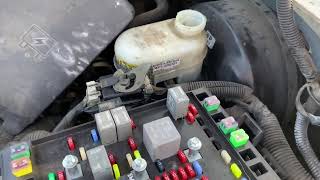
- Faulty A/C Clutch Relay 🔴 High Probability The micro-relays used in the under-hood fuse box are a known common failure point across many GM platforms from this era due to age and heat cycles. They are located on the driver's side of the engine bay.
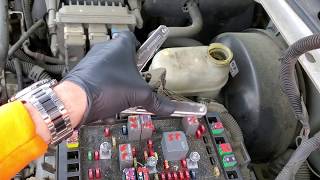
How to confirm: Locate the A/C clutch relay in the under-hood fuse box (it's typically marked on the fuse box lid diagram 🎬 Watch: Locate your A/C compressor clutch fuse and relay). Swap it with an identical relay from a non-essential but testable system, such as the horn relay. If the A/C clutch now engages and the horn doesn't work, the relay is bad.
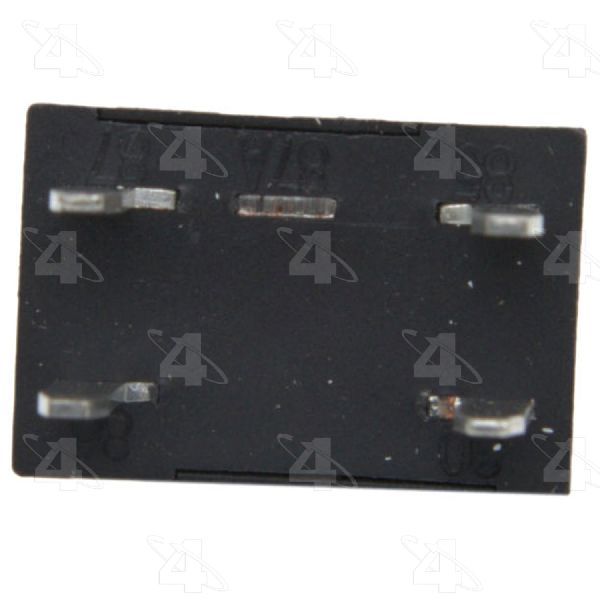
Typical fix: Replace the faulty relay with a new one. The original GM part was a gray Delphi relay, but the superseding part from GM/ACDelco is often black.
Est. part cost: $5-$20 - Failed A/C Compressor Clutch Coil 🟡 Medium Probability The coil is an electromagnet that lives in a high-heat, high-vibration environment at the front of the engine. Over time, the fine wire windings can break (open circuit) or short together.
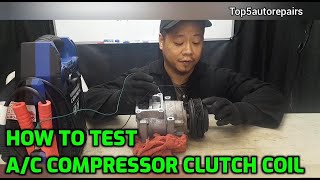
How to confirm: Disconnect the electrical connector at the A/C compressor. Use a multimeter set to Ohms to measure the resistance across the two pins of the clutch coil. A good coil should read between 3.0 and 5.0 ohms. 🎬 Watch: How to test your A/C compressor clutch coil A reading of infinity (O.L.) indicates an open coil, while a reading near zero indicates a shorted coil.
Typical fix: Replace the A/C compressor clutch assembly, which includes the coil, pulley, and front plate. In some cases, the entire compressor is replaced as a unit, especially on higher mileage vehicles.
Est. part cost: $60-$150 for a clutch kit, $150-$400 for a complete compressor assembly. - Low Refrigerant Level 🟡 Medium Probability All automotive A/C systems are prone to developing small leaks over time from seals, hoses, or the condenser, which is vulnerable to road debris.
How to confirm: A low refrigerant level is detected by the A/C pressure switch, causing the PCM to prevent the clutch from engaging to protect the compressor. This is a protective feature, not a circuit fault, but it prevents the A/C from working. Check the system pressure using an A/C manifold gauge set. If the static pressure is very low (e.g., below 40-50 psi depending on ambient temp), there is a leak.
Typical fix: The system must be properly evacuated, the leak must be found and repaired, and then the system must be recharged to the correct specification. This often requires professional service.
Est. part cost: $20 for a DIY recharge can (not recommended for a known leak), $150+ for professional diagnosis and repair. - Blown A/C Fuse ⚪ Low Probability
How to confirm: Inspect the A/C fuse (typically a 10A fuse labeled 'A/C COMP', position #30) in the under-hood fuse box 🎬 See this quick guide to Trailblazer A/C fuses and relays. Visually check if the metal strip inside is broken or test for continuity with a multimeter.
Typical fix: Replace the fuse. If the new fuse blows immediately, it indicates a short circuit in the system (often a shorted clutch coil or damaged wiring) that needs to be diagnosed.
Est. part cost: $1-$5 - Damaged Wiring or Connector ⚪ Low Probability
How to confirm: Visually inspect the wiring harness leading to the A/C compressor for any signs of cracking, melting, or physical damage, particularly where it runs near hot or moving engine parts. Check that the connector is fully seated and the pins are not corroded or backed out.
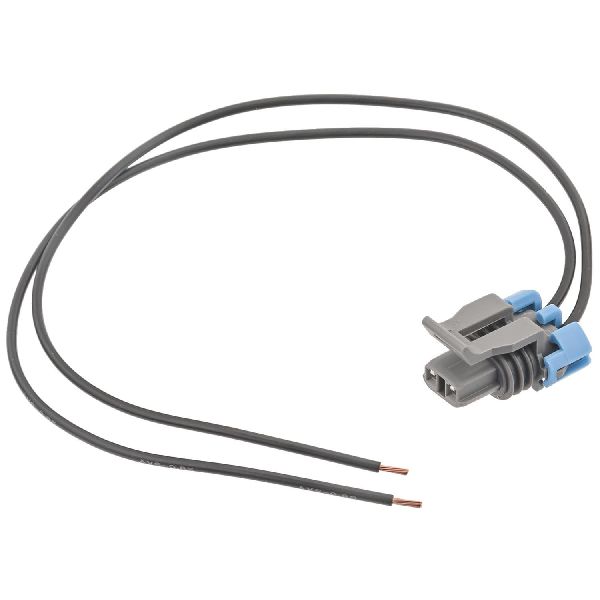
Typical fix: Repair the damaged section of wire or replace the connector pigtail.
Est. part cost: $10-$30 for a connector pigtail.
Rare But Worth Checking
- Faulty HVAC Control Module: If the relay and its power/ground circuits are good, but the relay is not receiving the signal to turn on, the module that controls it may be at fault. This is uncommon and should be diagnosed last.
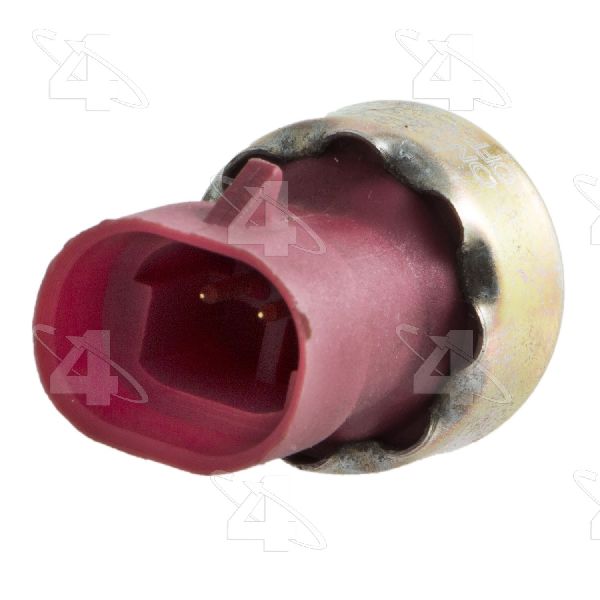
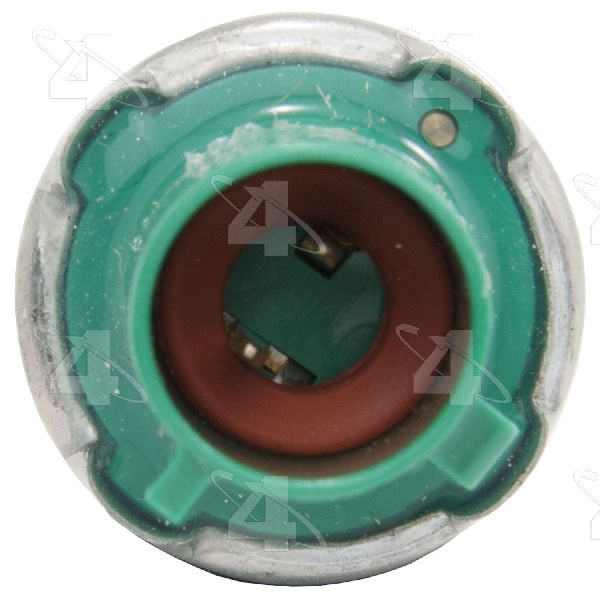
- Faulty A/C Pressure Switch: A defective pressure switch can incorrectly report low or high pressure, preventing the PCM from engaging the clutch even if the refrigerant level is correct.
Diagnosis Steps

- Verify the Check Engine Light is on and code P1530 is present using an OBD-II scanner.
- Start the engine and turn the A/C on max. Visually check if the A/C compressor clutch is engaging. It's the outer plate on the front of the compressor pulley.
- Inspect the A/C fuse (#30, 10A) in the under-hood fuse box. Replace if blown.
- Locate the A/C clutch relay (#44) in the under-hood fuse box. Swap it with an identical relay (e.g., the horn relay) to see if the problem moves. If the A/C now works and the horn doesn't, the relay is faulty.
- If the relay is good, check for voltage at the A/C compressor connector with the engine running and A/C commanded on. You should have battery voltage (12V+) on the dark green wire. If you do, the problem is likely the clutch coil or a bad ground at the compressor.
- If you do not have 12V at the connector, check the relay socket to ensure it's receiving power (pin 30) and the command signal from the PCM (ground signal on pin 85 or 86).
- If voltage is present at the connector, turn the engine off and disconnect the compressor. Measure the resistance of the A/C clutch coil. It should be between 3.0 and 5.0 ohms. If it's open (O.L.) or shorted (near 0 ohms), the clutch coil has failed.
- If all circuit checks pass, connect an A/C manifold gauge set to check the system's static and operating pressures to rule out a refrigerant level or pressure switch issue.
Parts You'll Likely Need

- A/C Compressor Control Relay
(OEM #15328866 (original gray), 19116057 / 13500114 (superseding black))— This is the most frequent failure point for a P1530 code on this vehicle and is the easiest and cheapest part to replace.
Trusted brands: ACDelco, Bosch, Standard Motor Products, Four Seasons
OEM price range: $10-$25
Aftermarket price range: $5-$15 - A/C Compressor Clutch Kit — If the clutch coil has failed (open or shorted), replacing the clutch assembly is the next logical step. This avoids replacing the entire compressor if it is still mechanically sound.
Trusted brands: Autopart Premium, GPD, Four Seasons
OEM price range: N/A (Typically not sold separately from compressor by OEM)
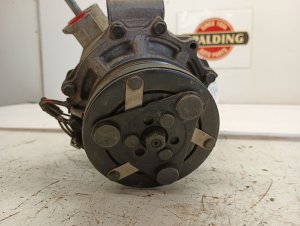
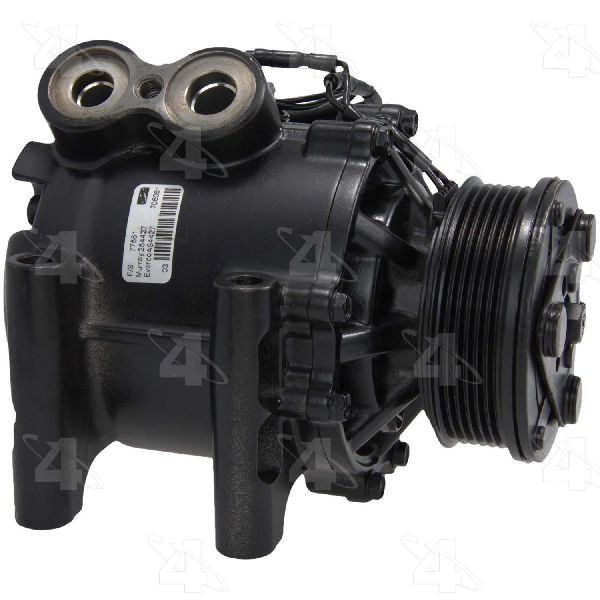
Aftermarket price range: $60-$150 - A/C Compressor with Clutch
(OEM #CO 4910AC (Common Aftermarket #))— Often, replacing the entire compressor is easier than just the clutch, or the compressor itself may be failing. This is the most expensive common repair.
Trusted brands: ACDelco, Denso, Four Seasons, UAC
OEM price range: $250-$400
Aftermarket price range: $150-$250
Technical Service Bulletins (TSBs) & Recalls
- GM Recall No. 12180 / NHTSA Action PE12013: While not directly for P1530, this recall addresses short circuits in the driver's door module on 2006-2007 models due to water intrusion, especially in 'Salt Belt' states. This highlights the platform's susceptibility to electrical issues from environmental factors, which could, in rare cases, manifest in other circuits.
Platform-Specific Known Issues
- The under-hood fuse box containing the A/C relay (#44) and fuse (#30) is located on the driver's side, near the firewall.
- A common owner experience shared on forums like Trailvoy.com involves the A/C suddenly quitting. The first and most successful troubleshooting step reported by users is swapping the A/C relay with the horn relay to confirm the failure before purchasing a new part.
Mechanic-Grade Diagnostic Values
- A/C Compressor Clutch Coil Resistance — expected: 3.0 to 5.0 Ohms at room temperature.. Failure: A reading of O.L. (infinity) indicates an open/broken coil. A reading near 0 Ohms indicates a shorted coil. Both require replacement.
- A/C Relay Control Coil Resistance — expected: 75 to 100 Ohms across pins 85 and 86 of the relay.. Failure: A reading significantly outside this range, or O.L., indicates a faulty relay coil.
- Voltage at A/C Relay Socket (Load Circuit) — expected: 12V+ (Battery Voltage) at pin 30 at all times (hot at all times).. Failure: No voltage indicates a problem with the fuse (#30) or the fuse box itself.
- Voltage at A/C Relay Socket (Control Circuit) — expected: With engine running and A/C commanded ON, one pin (85 or 86) should have 12V+ from the ignition, and the other pin should show near 0V (ground) as supplied by the PCM.. Failure: If 12V+ is present but the ground signal from the PCM never appears, it could indicate a wiring issue or a faulty PCM driver.
Scan Tool Commands That Help
- GM Tech2 / GDS2: Active Test: A/C Clutch Relay or Magnetic Clutch Command — This bidirectional command allows a technician to manually toggle the A/C clutch relay ON and OFF directly from the scan tool. This is used to instantly verify if the PCM, relay, wiring, and clutch coil are capable of functioning, bypassing all other sensor inputs (like pressure switches or temperature controls).
Wiring & Ground Locations
- G107 — Lower left side of the engine block.. This is a critical engine ground. Forum reports indicate that corrosion or damage to this ground can cause a variety of strange electrical issues, potentially including intermittent or failed operation of accessories like the A/C compressor due to unstable voltage or poor grounding for the PCM which controls the relay.
- G103 — Left side of the radiator support, near the front of the engine compartment.. This is a primary ground point for the forward lamp harness, which can include components related to the A/C system's electrical path. Ensuring this ground is clean and tight is a key step in diagnosing any front-of-engine electrical fault.
- A/C Compressor Connector — Electrical connector on the A/C compressor body.. This is the final point for voltage delivery. The Dark Green wire should have 12V+ when the clutch is commanded on, and the Black wire provides the ground path. Checking for voltage here is a definitive test of the entire control circuit.
- A/C Relay Socket — Position #44 in the under-hood fuse block.. This is the central control point. Testing the four terminals (pins 30, 87, 85, 86) for power, ground, and output is the most effective way to isolate the problem to the power supply, control signal (PCM), relay itself, or the downstream circuit to the compressor.
Real Owner Repair Stories
- GMTNation Forum Member 'molderone' (2002 Trailblazer 4.2L) — Multiple electrical abnormalities, including dim LH headlamp and engine stalling.
❌ Tried (didn't work) Cleaned all visible ground points., Replaced ground wire eyelets.
✅ What actually fixed it The copper strands of the ground wire at G107 (on the engine block) were internally corroded about 3/4" up from the eyelet. The final fix was cutting the wire back 1.5 inches to get to clean wire, and patching in a new section to the eyelet. - Reddit user in r/MechanicAdvice (2003 Chevrolet Trailblazer) — A/C compressor clutch would not engage.
❌ Tried (didn't work) Initial electrical diagnosis pointed towards a circuit issue.
✅ What actually fixed it The problem was mechanical, not electrical. The air gap between the clutch plate and the pulley had become too wide due to normal wear. When jumping the relay, the clutch would try to engage but couldn't bridge the gap. The fix was to remove a shim from the clutch assembly to reduce the air gap, allowing the electromagnet to engage it properly.
"I Checked Everything" — The Actual Cause
- A common scenario for P1530 is that all electrical tests pass: the fuse is good, the relay tests good, there is 12V at the compressor connector when commanded, and the coil resistance is within spec (3-5 ohms). However, the clutch still does not engage. The cause is often a mechanical failure where the air gap between the clutch plate and the pulley has worn to be too large. The electromagnet in the coil is functioning correctly but is no longer strong enough to pull the clutch plate across the excessive gap. This is confirmed by visually inspecting the clutch for movement when power is applied; it may move slightly but not enough to make contact and lock.
When the Usual Fixes Don't Work
- While the vast majority of P1530 codes are fixed by replacing the A/C relay, there are documented cases where the fix is entirely different. One owner found that even after testing the relay and fuse, the issue was a worn mechanical air gap in the clutch itself, requiring a shim removal instead of an electrical part replacement. Another owner fighting various electrical gremlins found the ultimate cause to be an internally corroded main engine ground wire (G107), which required cutting back the wire and patching it, a fix far removed from the A/C components themselves. These cases highlight the need to follow a full diagnostic procedure rather than just replacing the most common part.
OEM Part Supersession History
15328866→19116057, 13500114, among others— Part update/consolidation by GM. The original gray Delphi relay is no longer in production.
Heads up: No incompatibility exists. The superseding black relays are direct functional replacements for the original gray relays, though they are visually different.
Model Year Variations Within This Range
- 2002-2009: While the core GMT360 platform is very consistent, minor changes in fuse box layouts or wiring harness routing may exist between early (2002-2004) and late (2007-2009) models. However, for the P1530 code, the diagnostic process remains the same: the A/C clutch relay is in the under-hood fuse box (position #44) and the fuse is also in that box (position #30).
Diagnostic Flowchart
Other Known Issues on This Vehicle
Issues unrelated to this code that are worth knowing about as an owner of this generation:
- Cooling Fan Clutch Failure 🔴 High — Very common across all model years. Often fails by either staying engaged (causing a loud 'jet engine' roar) or not engaging (causing overheating at idle). Failure can occur before 100,000 miles. (Ref: Common trouble codes include P0495 and P0526.)
- Instrument Cluster Failure 🟠 Medium — Widespread issue where gauges (speedometer, fuel, tachometer) become erratic, get stuck, or stop working entirely. Caused by faulty stepper motors on the cluster's circuit board. (Ref: While a known GM issue on many trucks of the era, the TrailBlazer was often excluded from specific recall campaigns, making customer-paid repair common.)
- Fuel Level Sensor (Sending Unit) Failure 🟠 Medium — Extremely common problem causing an inaccurate or completely inoperative fuel gauge. The gauge may read empty after a fill-up or fluctuate randomly. (Ref: GM issued a special service policy (not a full recall) for some 2005-2007 models, covering a portion of the repair cost for up to 10 years/120,000 miles.)
- Cracked Cylinder Head / Worn Valve Seats (4.2L I6) 🔴 High — A notable percentage of early 4.2L engines (approx. 2002-2005) can develop worn valve seats, leading to a loss of compression, misfires, and eventual cylinder head replacement.
- Driver's Door Module Failure 🟡 Low — Water intrusion into the driver's door can short out the module, causing power window and lock failure. Primarily affects vehicles in the 'Salt Belt'. (Ref: NHTSA Action Number: PE12013, GM Recall No. 12180. Affects 2006-2007 models.)
- Four-Wheel Drive (4WD) Actuator/Encoder Motor Failure 🟠 Medium — The transfer case encoder motor and/or the front axle actuator are common failure points, leading to a 'Service 4WD' light and inability to switch between 2WD, A4WD, and 4HI/4LO.
Used vs. New Parts: Buying Guide for This Vehicle
When a used part is the smart pick: For a P1530 diagnosis, using a known-good used relay from another system in the car (like the horn) is a primary diagnostic step. A used wiring connector pigtail from a salvage yard is a perfect solution for repairing a damaged connector. A complete used A/C compressor assembly can be a cost-effective option if from a low-mileage, verified running and driving donor vehicle.
Donor-vehicle mileage cap: roughly under 100000 miles for the part to have meaningful remaining life.
What to inspect on the donor part:
- For a used compressor, inspect the clutch area for heavy rust or oily residue which indicates a seal leak.
- Manually spin the compressor pulley and clutch plate to ensure they turn smoothly without grinding noises.
- For a wiring pigtail, ensure the wires have sufficient length and the locking tabs on the connector are not broken.
OEM-only on this vehicle (don't cheap out):
- Powertrain Control Module (PCM) - While remanufactured units are common, avoid no-name, untested used modules due to programming and security requirements.
Aftermarket brands forum-validated for this vehicle:
- Relays: ACDelco (OEM), Bosch, Standard Motor Products (SMP), Four Seasons.
- Compressors/Clutches: Denso, Four Seasons, GPD, UAC.
Real Owner Stories
Aggregated from forums and TSBs cited above. Mileages and costs reflect what owners reported in those sources.
2005 Chevrolet TrailBlazer
Symptoms: The A/C suddenly quit working. The compressor clutch would not engage and there was no 'click' sound when turning the A/C on.
What fixed it: Following advice from an online forum, the owner swapped the A/C clutch relay with the horn relay in the under-hood fuse box. The A/C immediately started working, confirming the original relay had failed. The problem was resolved by replacing the faulty relay.
Cost: $5-$20
Source hint: Common experience reported on forums like Trailvoy.com and gmtnation.com
Related OBD-II Codes
Frequently Asked Questions
Where is the A/C relay located on my 2002-2009 TrailBlazer?
My TrailBlazer's A/C just stopped working. What's the first thing I should check for code P1530?
What resistance reading should I get when testing the A/C compressor clutch coil?
I need to replace my A/C relay, which is gray. I can only find black ones. Is that correct?
What fuse protects the A/C compressor circuit on this vehicle?
Does the GM recall for the driver's door module (12180) relate to this A/C code?
I have a GMC Envoy with the same A/C problem. Does this P1530 information apply?
Helpful Videos
Used OEM Parts in Stock


New Aftermarket Parts Available


The information in this article is provided for general reference and educational purposes only. Vehicle specifications, procedures, and part compatibility can vary by production date, trim level, and region. Always consult your vehicle's factory service manual and verify part numbers before purchasing or performing repairs. Safety-critical components such as airbags, seat belts, and braking systems should be installed by a qualified professional.
- Chevrolet TrailBlazer:
- 🎬 Helpful Videos
- 🛍️ Shop This Part
- What's Unique About the 2002-2009 Chevrolet TrailBlazer
- Symptoms You May Notice
- Most Likely Causes
- Rare But Worth Checking
- Diagnosis Steps
- Parts You'll Likely Need
- Technical Service Bulletins (TSBs) & Recalls
- Platform-Specific Known Issues
- Mechanic-Grade Diagnostic Values
- Scan Tool Commands That Help
- Wiring & Ground Locations
- Real Owner Repair Stories
- "I Checked Everything" — The Actual Cause
- When the Usual Fixes Don't Work
- OEM Part Supersession History
- Model Year Variations Within This Range
- Diagnostic Flowchart
- Other Known Issues on This Vehicle
- Used vs. New Parts: Buying Guide for This Vehicle
- Real Owner Stories
- 2005 Chevrolet TrailBlazer
- Related OBD-II Codes
- Frequently Asked Questions
- 🎟️ Get 5% Off