

OBD-II Code P0532: A/C Refrigerant Pressure Sensor 'A' Circuit Low
The Ultimate Guide to What P0532 Means, Why It Triggers, and How to Fix It for Good
- Code P0532 triggers when the powertrain control module detects the A/C pressure sensor voltage has dropped below 0.25V, disabling the compressor to prevent damage.
- A refrigerant leak is the root cause in over 80% of P0532 cases, requiring a UV dye test and a professional system recharge costing $250 to $1,100.
- Never add a DIY can of refrigerant without checking live OBD-II data first; overcharging a system with a faulty electrical sensor causes catastrophic compressor failure.
- You can safely drive with this code indefinitely, but expect a 1-3% drop in fuel economy and potential premature cooling fan failure if your vehicle runs the fans continuously as a fail-safe.
What Does P0532 Mean?

The Powertrain Control Module (PCM) detected the A/C pressure sensor voltage is below the normal operating range (typically under 0.25V). This indicates critically low refrigerant pressure from a leak or an electrical short. To protect the compressor from running without lubrication, the PCM disables it, resulting in warm air from the vents.
Technical definition: A/C Refrigerant Pressure Sensor 'A' Circuit Low. The PCM or HVAC module registered a voltage from the A/C refrigerant pressure sensor below the minimum threshold (e.g., under 0.26 volts) for a set period. The PCM uses this input to manage compressor clutch engagement and cooling fan operation.
Can I Drive With P0532?
Yes. Yes. This code disables the air conditioning but does not impact engine safety or drivability. However, in some vehicles, the engine cooling fans run continuously as a fail-safe, putting minor additional wear on the fan assembly over time.
Common Causes

- Low A/C Refrigerant Level (Very Common) — A leak from a bad hose, dried O-ring, or punctured condenser allows refrigerant to escape, dropping system pressure below the minimum threshold. 🎬 Watch this guide to finding small and large A/C leaks
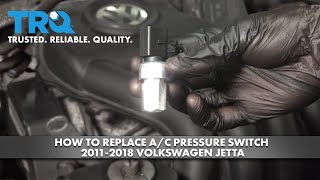
- Faulty A/C Refrigerant Pressure Sensor (Common) — The sensor failed internally with a short to ground or open circuit, sending a constant low voltage signal regardless of actual pressure. 🎬 See how to replace a faulty A/C pressure switch
- Damaged Wiring or Connectors (Common) — Corroded, loose, or frayed wiring prevents the correct voltage signal from reaching the computer. Water intrusion frequently causes this on lower engine bay sensors.
- Blown Fuse or Power Supply Problem (Rare) — A blown fuse or internal PCM fault interrupts the 5-volt reference signal or ground required by the sensor circuit.
- Clogged A/C Orifice Tube or Expansion Valve (Less Common) — A blockage causes an abnormal pressure drop near the sensor, tricking it into reporting low pressure despite a correct overall refrigerant charge.
- Refrigerant System Contamination (Less Common) — Moisture mixed with refrigerant forms corrosive acids, damaging the sensor internally or creating blockages.
- Faulty Powertrain Control Module (PCM) (Very Rare) — The main computer failed and cannot interpret the sensor signal. Rule out all other possibilities before replacing the PCM.
Symptoms

- A/C Blows Warm (Compressor Disabled) — The PCM actively prevents the A/C compressor clutch from engaging to protect it from damage due to low pressure and lack of lubrication.
- Check Engine Light (MIL) is On — The PCM illuminates the Malfunction Indicator Lamp to alert the driver of a powertrain or emissions-related fault.
- A/C Warning Light On — Some vehicles feature a separate A/C-specific warning light (often a flashing snowflake icon) on the dashboard.
- Engine Cooling Fans Run Continuously — The PCM commands the engine's cooling fans to run on high as a fail-safe measure whenever a fault in the A/C pressure circuit is detected.
- Reduced Engine Idle Speed — The HVAC control module fails to request the normal idle-up compensation from the PCM when the A/C is turned on, resulting in a slight dip in idle speed.
Diagnostic Flowchart
Tap your situation to follow the diagnostic path that matches what you're seeing on this code.
Common Fixes & Costs
- A/C System Leak Repair and Recharge — Parts: $50-$500, Labor: $200-$600, ~2.5 hr book time (Professional)
- Replace A/C Refrigerant Pressure Sensor
— Parts: $30-$100, Labor: $80-$150, ~1.0 hr book time
(Intermediate)
Ford Focus/Fiesta/Escape: OEM BT4Z-19D594-A (Alt: Standard Motor Products: MT3500)
VW Jetta/Golf: OEM 1K0-959-126-E (Alt: Standard Motor Products: PSS31, Bosch: 0986280500)
Chevy Silverado: OEM 13587668 (Alt: Standard Motor Products: PSS33) - Repair Damaged Wiring or Connector — Parts: $15-$50, Labor: $120-$250, ~1.5 hr book time (Intermediate)
- Replace A/C Compressor — Parts: $400-$800, Labor: $500-$1200, ~4.0 hr book time (Professional)
- A/C System Evacuation and Recharge (No Leak) — Parts: $40-$130, Labor: $150-$250, ~1.2 hr book time (Professional)
Used vs. New Parts: Buying Guide
When a used part is worth it: For expensive components like an A/C condenser or compressor, a used part from a verified low-mileage vehicle offers significant savings. For the pressure sensor itself, the low cost of a new part makes buying used impractical.
Donor-vehicle mileage cap: roughly under 60000 miles for the part to have meaningful remaining life.
Donor quality checklist:
- Verify the donor vehicle's mileage and reason for being scrapped.
- Inspect A/C components for physical damage, corrosion, or oily residue indicating a past leak.
- Match the part number exactly to ensure electronic compatibility.
Decision logic:
- If Part is the electronic sensor → Always buy new. The cost is low and failure of a used part requires repeating the labor.
- If Part is a condenser or compressor and budget is the top priority → A used part from a donor under 60k miles is a reasonable risk.
- If You want maximum reliability and warranty coverage → Buy a new OEM or high-quality aftermarket part.
Warranty tradeoff: Used parts typically offer a 30-90 day warranty covering only the part. New aftermarket parts usually come with a 1-year or longer warranty.
Worst-case if a used part fails: $300-$600 if a used condenser fails after installation, due to repeated labor and the cost of another system evacuation and recharge.
What Happens If You Wait — Timeline
- 0-1 month: Code P0532 is set. A/C compressor is disabled. On some vehicles, engine cooling fans begin to run constantly as a fail-safe. (MPG impact: 1-3%% · Added cost: $0)
- 1-6 months: Bearings in the cooling fan motors begin to wear excessively due to continuous operation. Constant load shortens alternator lifespan. (MPG impact: 1-3%% · Added cost: $50-$100)
- 6-12 months: High likelihood of cooling fan motor failure. The fan becomes noisy before seizing. The engine is now at high risk of overheating. (MPG impact: 1-3%% · Added cost: $450-$900)
- 12+ months: Catastrophic failure risk. If the cooling fan fails and the driver does not notice the temperature gauge rising, the engine will overheat, warping the cylinder head. (MPG impact: N/A% · Added cost: $1,500-$4,000+)
Cost of Not Fixing It
- Immediate: No air conditioning. On some vehicles, the engine cooling fans run continuously whenever the engine is on. (Added cost: 0)
- 1-6 months: Increased wear on the cooling fan motors from constant operation. Minor decrease in fuel economy (1-3%) and increased load on the alternator. (Added cost: $50-$100)
- 6+ months: Premature failure of cooling fan motors. If the fans fail, the engine is at high risk of overheating, leading to catastrophic engine damage. (Added cost: $450-$2500+)
Diagnosis Steps

- Scan Tool Live Data Analysis
Connect an OBD-II scanner and view the live data stream for the PCM or HVAC module. Observe 'A/C Pressure Sensor Voltage'. If it reads 0V or 0 PSI with the engine off, you have an electrical fault or a completely empty system. A normal resting system shows 0.5V to 2.0V.
Tools: OBD-II Scan Tool (with live data) (Beginner) - Check Static A/C System Pressure
Connect an A/C manifold gauge set. With the engine off for 15 minutes, static pressure on both gauges should roughly equal the ambient air temperature in Fahrenheit (e.g., 75°F ambient = ~75 PSI). Pressure below 30 PSI confirms a significant leak.
Tools: A/C Manifold Gauge Set, Safety Goggles (Intermediate) - Find the Refrigerant Leak
If static pressure is low, inject UV dye into the A/C system and charge it slightly to build pressure. Use a UV flashlight in a dark environment to inspect all A/C lines, the compressor, and the condenser for a bright green/yellow glow marking the leak.
Tools: UV Dye Injector, UV Flashlight, UV Goggles (Intermediate) - Visual Inspection & Wiggle Test
If pressure is normal, inspect the sensor's electrical connector for corrosion or pushed-out pins. With the scan tool displaying live voltage, wiggle the connector and harness. If the voltage jumps, you have a poor connection or broken wire.
Tools: Flashlight, OBD-II Scan Tool (with live data) (Beginner) - Test the Sensor's Electrical Circuit
Unplug the sensor. With the key ON (engine off), probe the harness connector. You must find a 5-volt reference wire (4.8V-5.2V), a ground wire (~0V), and a signal wire (0V unplugged). Missing reference voltage indicates a wiring or PCM issue.
Tools: Multimeter (Intermediate) - Check for Signal Wire Short to Ground
With the key OFF and sensor unplugged, set the multimeter to Ohms. Probe the signal wire terminal and a clean chassis ground. A good circuit shows infinite resistance (OL). Low resistance (under 1,000 ohms) confirms the signal wire is shorted to ground.
Tools: Multimeter (Advanced) - Advanced Sensor Analysis: Voltage vs. Pressure
Compare the sensor's output voltage to its known pressure/voltage chart in the service manual. If the gauges show 100 PSI but the sensor outputs 0.2V (which corresponds to 0 PSI), the sensor is faulty.
Tools: OBD-II Scan Tool, A/C Manifold Gauge Set, Service Manual (Advanced) - Verify PCM Function with a Scope
Backprobe the signal wire at the PCM with an oscilloscope. If the waveform shows a correct, steady DC voltage corresponding to gauge pressure, but the scan tool reads 0V, the PCM has an internal fault.
Tools: Oscilloscope, Service Manual (Professional)
When This Code Triggers (Freeze-Frame Conditions)
- Engine Coolant Temp: 185-210°F (Engine at normal operating temperature.)
- RPM: 700-2500 RPM (Engine at idle or during steady driving.)
- A/C Command: On (Driver has requested air conditioning.)
- Ambient Air Temperature: Above 50°F (Warm enough for A/C system to be requested and operate.)
Related Codes
- P0533 — The direct opposite code, 'Circuit High,' indicating voltage is too high. P0532 is caused by a leak or short to ground, while P0533 is caused by an overcharged system or a short to voltage.
- P0531 — Indicates the sensor's signal is irrational or erratic. Sets when the PCM sees a voltage that fluctuates wildly, pointing to an intermittent wiring issue rather than a hard short.
- P0530 — A general fault code for the circuit. P0532 is a more specific version. P0530 appears if the sensor signal disappears entirely before meeting the time criteria for P0532.
- P0534 — Indicates 'A/C Refrigerant Charge Loss.' Set specifically when the PCM determines the refrigerant level itself is the problem. If both codes are present, focus entirely on finding a leak.
Climate & Environmental Factors
- Road Salt / High Humidity: Areas with heavy road salt use or high-humidity coastal climates see a higher incidence of P0532. Salt and moisture accelerate corrosion on the sensor's electrical connector pins, leading to shorts to ground.
- Extreme Heat: High ambient temperatures place greater demand on the A/C system, making symptoms of an existing small leak or failing sensor more apparent.
How to Talk to a Mechanic About This Code
Say this: "I have a P0532 code and my A/C is blowing warm. I'd like to schedule a diagnostic. Please start by checking the A/C system's static pressure to rule out a refrigerant leak before testing the sensor circuit."
This signals you know the most common cause is a leak, not a bad sensor. It steers the mechanic toward a logical diagnostic path, preventing them from replacing the sensor without confirming the real problem.
Avoid saying:
- 'My A/C is broken, can you fix it?'
- 'My check engine light is on.'
- 'Just do whatever it takes to fix it.'
Questions to ask before authorizing the repair:
- If it's a leak: How did you locate the leak? Does the estimate include a full system evacuation and recharge with the correct weight of refrigerant?
- If it's the sensor: Did you confirm the sensor is bad by testing the 5-volt reference, ground, and signal wire at the connector?
- If it's the wiring: Can you show me the damaged wiring? How will you repair it?
- What is the warranty on the parts and labor for this repair?
Where to Take It: Dealer vs Independent vs Chain
- Dealer:
A safe but expensive choice. Best if your car is new, under warranty, or has a known issue documented by the manufacturer.
Best for: Vehicles under warranty, Newer vehicles with known TSBs, Complex electrical issues
Downsides: Highest labor rate, May recommend replacing a whole assembly instead of a smaller component. (Typical cost: +50% vs. baseline) - Independent Shop:
Best fit for most situations. A reputable independent shop with certified A/C technicians offers the best balance of expertise and value.
Best for: Out-of-warranty vehicles where cost is a factor., Standard A/C diagnostics and repair.
Downsides: Quality and equipment vary, so check for ASE certification. (Typical cost: +0% vs. baseline) - Chain Shop:
Use with caution. Acceptable for a basic diagnostic check, but get a second opinion from an independent shop before authorizing major repairs.
Best for: Simple, advertised specials like an 'A/C Performance Check' to get an initial pressure reading.
Downsides: Technician skill varies widely., High pressure to upsell unnecessary services or parts., May not be equipped for complex electrical diagnosis. (Typical cost: -10% vs. baseline)
When to Walk Away From the Repair
If the total estimated repair cost for the A/C system exceeds 40% of your car's current private-party value, strongly consider selling the vehicle as-is.
- Car worth $4000, fix is $1800: Walk away. The repair cost is nearly half the car's value. It's not economical unless the vehicle has significant sentimental value.
- Car worth $15000, fix is $950: Fix it. The repair cost is a small fraction of the vehicle's value and restores an important comfort feature.
- Car worth $2500, fix is $800: Borderline. If the car is otherwise reliable, fixing it might be worthwhile. Get a second opinion to ensure the diagnosis is accurate.
What Scan Tool You Need for This Code

Minimum: An OBD-II scanner that can read and graph live data, specifically the 'A/C Refrigerant Pressure' PID.
A basic $20 code reader only shows the P0532 code. It cannot show live voltage or pressure readings, which are essential to determine if the system is empty or if the sensor is lying.
Budget: BlueDriver Pro (~$100) — Connects to your smartphone via Bluetooth to display and graph live A/C pressure data, helping distinguish between a leak and a sensor failure.
Mid-range: Foxwell NT1009 / VDIAGTOOL VD70S (~$300) — Offers bidirectional control, allowing you to command the A/C compressor clutch to engage directly from the tool to test the control circuit.
Professional: Autel MaxiCOM MK808S (~$400-500) — Provides full OE-level diagnostics, advanced live data graphing, and full bidirectional control of the HVAC system.
Rent vs buy: If this is a one-time diagnosis, auto parts stores offer free tool loaner programs. Buy a scanner only if you plan to do your own diagnostics regularly.
How to Clear the Code After You Fix It
- Fix the underlying cause (e.g., repair leak, replace sensor).
- Use an OBD-II scan tool to erase the diagnostic trouble codes.
- Perform a complete drive cycle to allow readiness monitors to run.
Drive cycle (~25 minutes): Begin with a cold start (engine coolant below 122°F). Idle for 2-3 minutes with the A/C on. Accelerate to 55 MPH and hold a steady speed for 3-5 minutes. Let the vehicle coast down to 20 MPH without using the brakes. Accelerate again to 55-60 MPH and hold for another 5 minutes. Coast to a stop.
Readiness monitors affected: Catalyst Monitor, Evaporative (EVAP) System Monitor, Oxygen (O2) Sensor Monitor, EGR System Monitor
Before emissions retest: drive at least 100 miles to fully set monitors.
Watch out for:
- Clearing the code without fixing the root problem causes the code to return immediately.
- Not having the fuel tank between 15% and 85% full prevents the EVAP monitor from running.
- Disconnecting the battery clears the code but resets all readiness monitors, guaranteeing an emissions test failure until a drive cycle is completed.
Will This Fail Emissions / State Inspection?
Yes — this code typically fails an OBD-II emissions inspection.
- California: An active P0532 code with the Check Engine Light on is an automatic failure of the smog check's OBD-II inspection. All readiness monitors must also be complete.
- New York: An illuminated Malfunction Indicator Lamp (MIL) for any code, including P0532, results in an immediate emissions test failure.
- Texas: In counties requiring emissions testing, a vehicle fails the OBD-II portion of the inspection if the Check Engine Light is on due to code P0532.
Most Commonly Affected Vehicles
- Ford Focus, Fiesta, Edge, Bronco (2005-2022) — TSB 51358 for the 2021-2022 Bronco specifically addresses P0532 caused by terminal fretting/corrosion in connector C1062.
- Volkswagen Golf, Jetta, Passat (2004-2014) — The Ross-Tech wiki specifically notes P0532 as 'Short to Ground' for the G65 pressure sensor on these models.
- Chevrolet Silverado, Cruze, Trax (1999-2024) — A known issue on these models. On older Silverado trucks, the sensor itself is frequently the primary culprit.
- Honda Accord, Civic, CR-V (2011-2017) — Service information specifies a trigger threshold of 0.24V and provides a detailed diagnostic flowchart using the Honda HDS scan tool.
- Hyundai Sonata, Elantra (2006-2015) — The code sets if the signal remains below 0.25V for over 10 seconds, often pointing to wiring faults.
- Nissan Altima, Sentra, Rogue (2013-2019) — Frequently appears due to condenser leaks caused by road debris impacts.
- BMW 3 Series, 5 Series, X3 (2007-2017) — Common fault code due to highly sensitive climate control systems monitoring pressure thresholds.
- Audi A3, A4, A6 (2005-2015) — Frequently reports P0532 traced back to the G65 sensor or its wiring harness.
Manufacturer-Specific Notes
- Ford: On vehicles like the Edge and Bronco, P0532 sets if the sensor's feedback voltage is less than 0.26 volts for 2+ seconds. TSB 51358 points directly to connector corrosion.
- General Motors (Chevy/GMC): When the PCM detects a P0532 fault, it immediately commands the engine cooling fans to run on high continuously as a fail-safe strategy.
- Honda: The PCM looks for a sensor voltage of 0.24V or less to trigger P0532. Honda issued extended warranties for A/C condensers on many 2016-2020 models due to defect-induced leaks.
- Hyundai: On models like the Sonata, the PCM sets P0532 if the signal from the A/C pressure sensor is below 0.25V for more than 10 consecutive seconds.
- Mitsubishi: The service manual specifies an extremely low threshold: the code sets if the A/C pressure sensor voltage is less than 0.07 volts for 3 seconds.
- Volkswagen/Audi: This fault is often defined specifically as 'A/C Refrigerant Pressure Sensor (G65): Short to Ground,' pointing diagnosis heavily towards wiring.
Real Owner Stories
2016 Mazda 6 with intermittent A/C
The A/C compressor would not kick on, triggering code P0532. Refrigerant level was confirmed to be correct.
Outcome: The issue was traced to a poor connection at the sensor's electrical plug. After cleaning the contacts and ensuring a snug fit, the code cleared permanently.
Lesson: An intermittent fault often points to an electrical connection issue. Always perform a 'wiggle test' on the sensor connector before buying parts.
2005 Ford Focus with persistent P0532
A/C was not blowing cold air and code P0532 was present. The owner assumed the sensor was bad.
Outcome: The actual problem was a complete loss of refrigerant from a leak. The system was empty, causing the sensor to correctly report low pressure. A professional diagnosis found the leak.
Lesson: Don't assume the sensor is the problem just because it's named in the code. Always check static pressure with gauges before replacing parts.
2020 Nissan Sentra after road impact
After hitting a raccoon that damaged the front bumper, the Check Engine Light came on 15 miles later with code P0532.
Outcome: The impact damaged the condenser, causing a massive leak. The car was safe to drive, but the A/C was inoperative until the condenser was replaced.
Lesson: If P0532 appears immediately after a front-end impact, the cause is almost certainly physical damage to the condenser or A/C lines.
How to Prevent This Code From Triggering
- Run the A/C for 10 minutes weekly, even in winter. (Once per week, year-round.) — Circulates refrigerant oil, lubricating seals and O-rings. Keeping seals moist prevents them from drying out and causing slow leaks.
- Clean the A/C condenser. (Once per year.) — The condenser gets clogged with bugs and road grime. A gentle rinse removes debris, allowing efficient heat transfer and reducing system strain.
- Inspect and clean electrical connectors in the engine bay. (Every 1-2 years.) — Unplugging connectors, cleaning them with contact cleaner, and applying dielectric grease prevents moisture intrusion and corrosion.
- Have the A/C system professionally inspected. (Every 2-3 years.) — A technician checks for minor leaks and verifies correct refrigerant levels, catching small problems before they trigger a P0532 code.
Frequently Asked Questions
What does P0532 mean in simple terms?
Your car's computer shut off the air conditioning because it received a dangerously low pressure signal. This happens when refrigerant leaks out or the sensor breaks.
Can I just add a can of refrigerant to fix P0532?
No. Adding refrigerant without fixing the leak guarantees the problem will return. If the cause is electrical, adding refrigerant over-pressurizes the system and destroys the compressor.
What is the most common misdiagnosis for P0532?
Mechanics often mistakenly replace the expensive A/C compressor when the actual fault is a cheap pressure sensor or wiring issue. Another common error is adding refrigerant without confirming the system is actually low.
Is it safe to drive my car with the P0532 code?
Yes. The code only disables the A/C system and does not create a safety or drivability issue. Your car will run normally, just without cold air.
How much does it cost to fix code P0532?
A simple sensor replacement costs $110 to $250. If you have a leak, diagnostics, parts (like a condenser), and a professional recharge typically range from $400 to $1,100.
Can I fix P0532 myself?
You can perform visual inspections, read live data, and replace the sensor if it sits on a Schrader valve. However, handling refrigerant requires specialized equipment and certification. Leave leak repairs and system recharges to professionals.
Will jumping the pressure switch fix my A/C?
Absolutely not. Modern systems use 3-wire analog sensors, and jumping them sends improper voltage directly into the PCM. This destroys the computer and turns a minor repair into a $2,000 nightmare.
Where is the A/C pressure sensor located?
It sits on the high-pressure side of the A/C system. Look for a 3-wire sensor screwed into a small-diameter aluminum line near the condenser or firewall.
Key Takeaways
- Code P0532 triggers when the powertrain control module detects the A/C pressure sensor voltage has dropped below 0.25V, disabling the compressor to prevent damage.
- A refrigerant leak is the root cause in over 80% of P0532 cases, requiring a UV dye test and a professional system recharge costing $250 to $1,100.
- Never add a DIY can of refrigerant without checking live OBD-II data first; overcharging a system with a faulty electrical sensor causes catastrophic compressor failure.
- You can safely drive with this code indefinitely, but expect a 1-3% drop in fuel economy and potential premature cooling fan failure if your vehicle runs the fans continuously as a fail-safe.
Helpful Videos


The information in this article is provided for general reference and educational purposes only. Vehicle specifications, procedures, and part compatibility can vary by production date, trim level, and region. Always consult your vehicle's factory service manual and verify part numbers before purchasing or performing repairs. Safety-critical components such as airbags, seat belts, and braking systems should be installed by a qualified professional.
- 🎬 Helpful Videos
- What Does P0532 Mean?
- Can I Drive With P0532?
- Common Causes
- Symptoms
- Diagnostic Flowchart
- Common Fixes & Costs
- Used vs. New Parts: Buying Guide
- What Happens If You Wait — Timeline
- Cost of Not Fixing It
- Diagnosis Steps
- When This Code Triggers (Freeze-Frame Conditions)
- Related Codes
- Climate & Environmental Factors
- How to Talk to a Mechanic About This Code
- Where to Take It: Dealer vs Independent vs Chain
- When to Walk Away From the Repair
- What Scan Tool You Need for This Code
- How to Clear the Code After You Fix It
- Will This Fail Emissions / State Inspection?
- Most Commonly Affected Vehicles
- Manufacturer-Specific Notes
- Real Owner Stories
- 2016 Mazda 6 with intermittent A/C
- 2005 Ford Focus with persistent P0532
- 2020 Nissan Sentra after road impact
- How to Prevent This Code From Triggering
- Frequently Asked Questions
- What does P0532 mean in simple terms?
- Can I just add a can of refrigerant to fix P0532?
- What is the most common misdiagnosis for P0532?
- Is it safe to drive my car with the P0532 code?
- How much does it cost to fix code P0532?
- Can I fix P0532 myself?
- Will jumping the pressure switch fix my A/C?
- Where is the A/C pressure sensor located?
- Key Takeaways
- 🎟️ Get 5% Off