

P1524 on 2018-2023 Ram 1500: Causes for Oil Pressure Out Of Range
This code usually means your oil pressure is too low to operate the Variable Valve Timing (VVT) and MDS systems. The most common fixes are simple: checking the oil level, and changing the oil and filter using a high-quality OEM Mopar or reputable aftermarket filter like Wix. If that doesn't work, the oil pressure sensor is the next likely culprit, followed by a potential PCM software update needed from the dealer.
- P1524 means oil pressure is too low for the VVT/MDS systems, which are then disabled by the computer.
- Before attempting any complex repairs, always check the oil level and, most importantly, ensure a Mopar OEM oil filter is installed. This is the most common fix.
- If an oil and filter change doesn't work, the next most likely culprit is a faulty oil pressure sensor.
- Do not ignore this code. While it might be a simple sensor issue, it could also indicate a real low oil pressure problem that can destroy your engine.
- A Ram dealer may be able to fix the issue with a simple software update, as noted in multiple TSBs.
What's Unique About the 2018-2023 Ram 1500

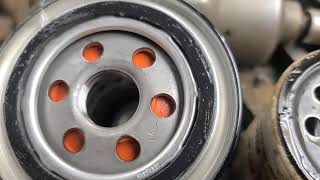
The 5.7L HEMI engine in these Ram trucks relies heavily on precise oil pressure to operate both its Variable Valve Timing (VVT) for performance and the Multi-Displacement System (MDS) for fuel economy. These systems are known to be particularly sensitive to oil viscosity, level, and filter quality. Many owner experiences confirm that using non-OEM or cheap aftermarket oil filters (such as Fram, STP, and K&N) can lead directly to this code, even when the oil level and type are correct. In one documented case, a user with an Amsoil filter saw the P1524 code appear, which was resolved by switching back to a Mopar OEM filter 🎬 Watch: How a simple filter swap fixes the P1524 code., subsequently raising oil pressure. Additionally, several Technical Service Bulletins (TSBs) indicate that the issue can sometimes be resolved with a simple PCM software update from a dealer. [Bulletin #18-067-24, Bulletin #1809823]
Diagnostic Flowchart

Tap your situation to follow the diagnostic path that matches what you're seeing on this vehicle.
Generation note: The 2018-2023 year range covers two generations: the end of the 4th generation (2009-2018, and sold as the 'Ram 1500 Classic' from 2019-2023) and the 5th generation (2019-present). Both generations use the 5.7L HEMI with VVT and MDS, and the causes and fixes for P1524 are largely the same across both platforms. The issue is well-documented on forums for both 4th and 5th generation trucks.
Symptoms You May Notice

- Check Engine Light (MIL) is on. [Bulletin #S2109000001]
- Noticeable rough idle. [Bulletin #18-002-25]
- Engine misfires. [Bulletin #18-002-25]
- Reduced engine performance and acceleration.
- Engine may make unusual noises, like a 'fluttering' sound when MDS tries to activate.
- Remote start may be disabled.
- Oil pressure gauge on the dashboard reads lower than normal (e.g., stuck at 30-35 PSI when it's usually 50+ PSI at speed).
- Replacing VVT solenoids or camshaft phasers when the issue is simply low oil pressure from a bad filter or sensor.
- Replacing the oil pump before verifying a true low-pressure condition with a mechanical gauge.
- Assuming the engine is damaged when the P1524 code is often a preventative warning caused by a simple, fixable issue like a clogged filter.
Most Likely Causes

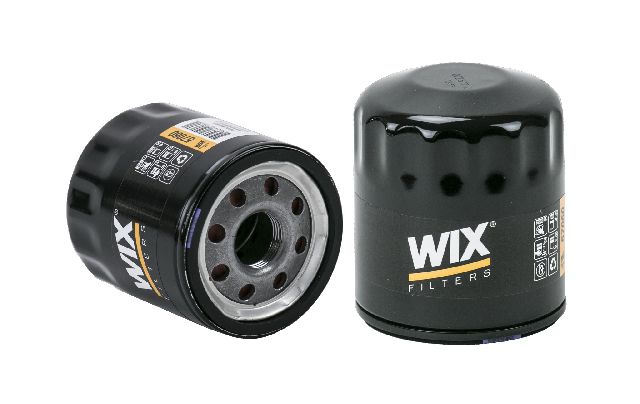
- Incorrect or Poor Quality Oil Filter 🔴 High Probability Many aftermarket oil filters have different internal bypass valve specifications or flow rates that are not compatible with the HEMI's sensitive oil pressure requirements. Owners on forums frequently report that brands like Fram, K&N, STP, and other generic filters ('Carguard', 'Prompto') have caused the P1524 code, which was resolved by switching to a Mopar OEM or high-quality Wix filter.
How to confirm: Visually inspect the installed oil filter. If it is not an OEM (Mopar) or a reputable equivalent (like Wix or Royal Purple), it is a likely suspect.
Typical fix: Replace the oil and filter, using a Mopar OEM filter (MO-339 or MO-899) and the correct oil viscosity. This is the most commonly reported successful fix.
Est. part cost: $40-$80 - Low Engine Oil Level 🔴 High Probability The HEMI engine's VVT and MDS systems are highly dependent on having the correct volume of oil to build pressure. Even being slightly low can cause issues.
How to confirm: Check the engine oil dipstick when the engine is cold and on level ground. Top off if low.
Typical fix: Top off the oil to the full mark using the manufacturer-specified viscosity (typically 5W-20 or 0W-20 depending on the year).
Est. part cost: $10-$20 - Faulty Engine Oil Pressure Sensor 🟡 Medium Probability The sensor is an electronic component that can fail over time, providing incorrect readings to the PCM. It may read low pressure when the actual pressure is fine, a common failure reported by owners.
How to confirm: Use a scan tool to monitor live oil pressure data. Compare this to a reading from a mechanical oil pressure gauge connected to the engine. If the mechanical gauge shows good pressure while the scan tool shows low pressure, the sensor is bad.
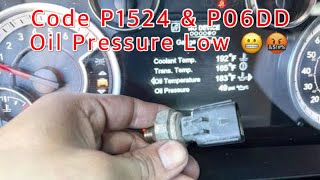
Typical fix: Replace the engine oil pressure sensor. It is located near the oil filter housing and is accessible for DIY replacement. The Mopar part number is 68334877AA for 2019+ models. 🎬 See this walkthrough on diagnosing and replacing the oil pressure sensor.
Est. part cost: $40-$75 - PCM Software Update Needed 🟡 Medium Probability Ram has issued TSBs specifically stating that outdated PCM software can cause this code to be set erroneously, often in conjunction with other codes like P219A and P2097. [Bulletin #18-067-24, Bulletin #1809823]
How to confirm: A Ram dealership can check your vehicle's VIN against their database to see if TSBs #18-067-24 or #1809823 apply.
Typical fix: The dealer will reprogram the Powertrain Control Module (PCM) with the latest software. [Bulletin #18-067-24, Bulletin #1809823]
Est. part cost: $0-$200 (May be covered under warranty) - Dirty or Deteriorated Engine Oil ⚪ Low Probability Old, sludgy oil or oil contaminated with fuel or coolant can lose its viscosity, preventing it from building sufficient pressure for the VVT/MDS systems.
How to confirm: Check the oil's condition on the dipstick. If it is very dark, thick, or milky, it needs to be changed. Also check the oil change interval history.
Typical fix: Perform a complete oil and filter change using a quality filter and correct oil.
Est. part cost: $40-$80
Rare But Worth Checking
- Failing MDS Solenoid: The Multi-Displacement System (MDS) uses four electronic solenoids located under the intake manifold to control oil flow. If one fails, gets clogged, or leaks internally, it can cause pressure irregularities and trigger P1524. This is sometimes accompanied by a droning or whining noise.
- Failing Oil Pump: In rare cases, the oil pump itself may be wearing out and unable to generate sufficient pressure. This is a major repair and should only be considered after all other causes are ruled out with a mechanical gauge test confirming consistently low pressure across all RPM ranges.
Diagnosis Steps
- Check the engine oil level and condition. Ensure it is full and not dirty or sludgy.
- Verify the correct oil viscosity is being used (e.g., 5W-20 or 0W-20 as specified for your 5.7L HEMI).
- Inspect the oil filter. If it is not an OEM Mopar filter or a high-quality alternative (like Wix), replace it with an OEM filter and fresh oil. 🎬 Watch: Why you should try this easy oil fix first. This resolves the issue in a high number of cases.
- If the code returns, connect a scan tool and monitor the live oil pressure reading. Normal readings reported by owners are typically 25-35 PSI at hot idle and 45-60 PSI while driving. If your pressure is stuck low (e.g., 30-35 PSI) at all RPMs, the filter is a strong suspect.
- Connect a mechanical oil pressure gauge to the engine to verify the true oil pressure. Compare this reading to the scan tool data.
- If the mechanical gauge shows good pressure (e.g., >40 PSI while driving) but the scan tool shows low pressure, the oil pressure sensor is faulty and should be replaced.
- If the mechanical gauge confirms low oil pressure, the problem is more serious. Investigate for a failing oil pump, clogged oil passages, or faulty MDS solenoids.
- Contact a Ram dealership to check if your vehicle's PCM software is up to date, as specified in TSBs #18-067-24 and #1809823.
Parts You'll Likely Need
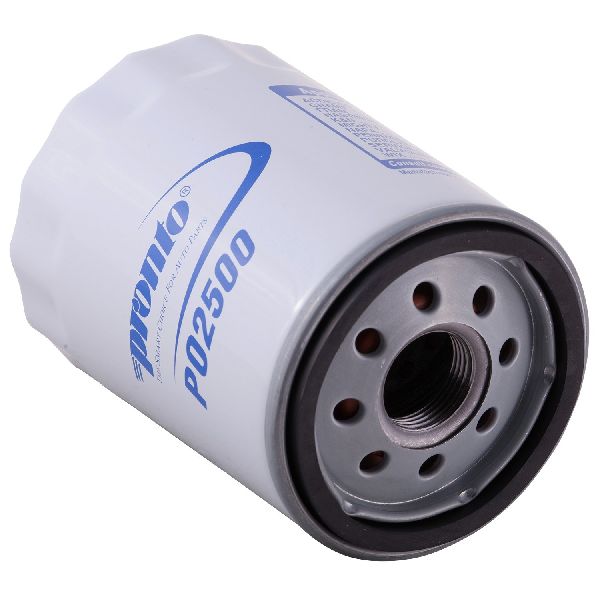
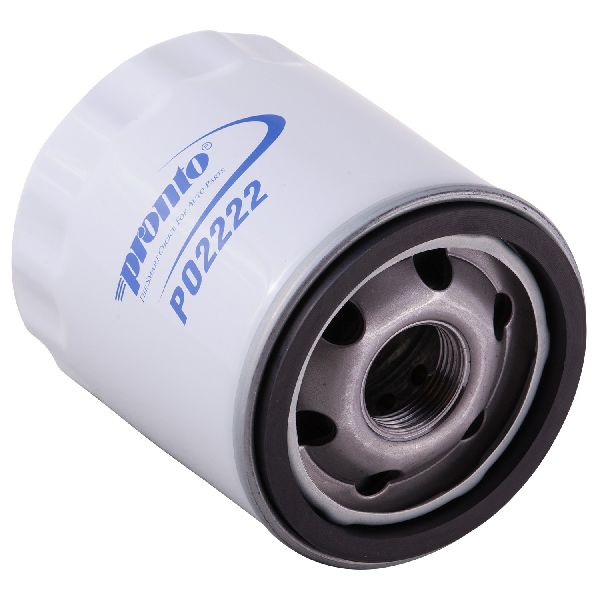
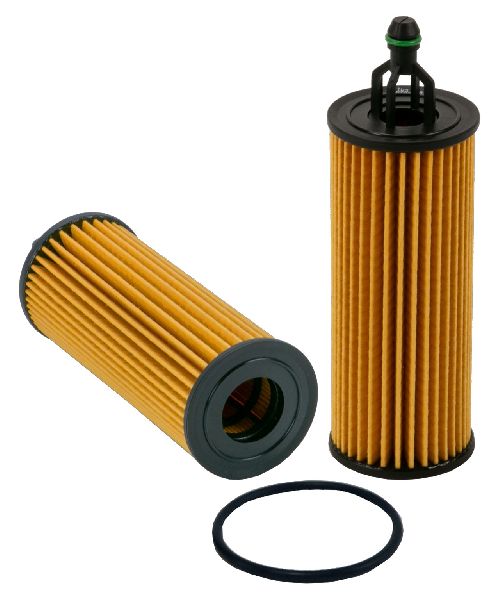
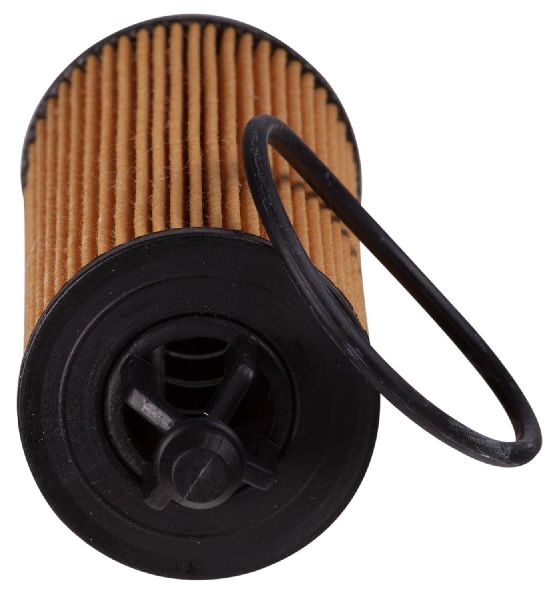
- Engine Oil Filter
(OEM #MO-339 or 4892339AA)— The HEMI engine is very sensitive to oil filter flow rates and bypass pressures. Using a non-OEM filter is a very common cause of this code.
Related Codes That Often Appear With This One
- P219A — Bank 1 Air-Fuel Ratio Imbalance. This code often appears with P1524 because when the VVT/MDS system is disabled, it can affect cylinder operation and lead to an imbalanced air-fuel mixture. [Bulletin #1800123, Bulletin #1809823]
- P2097 — Downstream Fuel Trim System 1 Rich. Similar to P219A, the change in engine operation from the disabled VVT can cause the fuel trim to go rich. [Bulletin #18-002-25, Bulletin #18-067-24]
- P0520 — Engine Oil Pressure Sensor/Switch Circuit. This code points more directly to an electrical fault with the sensor or its circuit, while P1524 is about the pressure being out of range for VVT/MDS operation. Seeing both strongly suggests a sensor or wiring issue.
- P0521 — Engine Oil Pressure Sensor Range/Performance. This code is very similar to P0520 and often appears with P1524 when a cheap oil filter is the culprit, as the PCM sees pressure that is not logical for the engine's operating state.
Technical Service Bulletins (TSBs) & Recalls
- 18-067-24
- 1809823
- 18-002-25
- 1800123
- S2109000001
- 1808923
Platform-Specific Known Issues
- Oil Filter Size Confusion (MO-339 vs. MO-899): There is frequent discussion about the smaller OEM Mopar MO-339 filter versus the larger MO-899 (specified for SRT/TRX models). For the P1524 issue, the correctly specified MO-339 is proven to work and restore proper pressure. While the larger filter fits, using the correct, smaller OEM filter is the safest bet to resolve the code.
Mechanic-Grade Diagnostic Values
- Mechanical Oil Pressure (Engine Warm) — expected: Minimum 4 PSI at curb idle; 25-110 PSI at 3,000 RPM.. Failure: Pressure below these minimums indicates a mechanical issue (pump, blockage) rather than a sensor fault.
- MDS Activation Oil Pressure — expected: Must rise above 41 PSI and be maintained at 36 PSI.. Failure: If pressure cannot be maintained in this range, the PCM disables MDS and can set P1524.
- Oil Pressure Sensor Circuit Voltage (KOEO, Connector Off) — expected: Approximately 5.0 volts (± 0.1V) on the signal wire.. Failure: No voltage or incorrect voltage points to a PCM or wiring issue.
- Oil Pressure Sensor Circuit Voltage (KOEO, Signal & Ground Jumpered) — expected: Approximately 0.0 volts (± 0.1V) on the signal wire.. Failure: Voltage not dropping to zero indicates high resistance or an open in the ground circuit.
- VVT Solenoid Coil Resistance — expected: Generally between 8 to 12 ohms.. Failure: A reading outside this range indicates a faulty solenoid coil.
Scan Tool Commands That Help
- Professional Scan Tool (e.g., wiTECH, Autel, BlueDriver): Live Data Monitoring - Engine Oil Pressure — Used during all diagnostic steps to compare the PCM's reported pressure against physical measurements from a mechanical gauge. A discrepancy is key to diagnosing a bad sensor versus a true pressure problem.
Wiring & Ground Locations
- Engine Oil Pressure Sensor — On the front of the engine block, passenger side, just above the oil filter housing. It is the sensor that points forward towards the radiator.. This is the primary sensor that reports the pressure reading to the PCM. Incorrect readings due to sensor failure or a bad connection are a common cause of P1524.
- Engine Oil Pressure Sensor Connector — A 3-pin connector with a red locking tab that attaches to the sensor.. The locking tab is known to become brittle and break, leading to a poor connection. The terminals and wiring should be inspected for corrosion or damage.
- Sensor Wiring Circuits (at PCM) — Circuits run from the sensor to the PCM. They are identified as (G6) Engine Oil Pressure Signal, (K900) Sensor Ground, and (F855) 5-Volt Supply.. Knowing the circuit identifiers is crucial for performing pin-point voltage and resistance tests at the PCM connector to rule out wiring faults.
- Engine Ground Strap — Connects from the rear of the passenger side cylinder head to the firewall or PCM bracket area.. A corroded or broken ground strap can cause a variety of erratic electrical issues, including incorrect sensor readings. While not a direct cause of P1524, a poor ground can mimic sensor failure and should be inspected.
Real Owner Repair Stories
- RamForum.com user (Ram 1500 (year not specified, 4th Gen implied)) — P1524 code, low oil pressure reading 26 PSI at idle and 34 PSI on the highway.
❌ Tried (didn't work) Replacing the oil pressure sensor.
✅ What actually fixed it Replacing the existing Wix 57060 oil filter with a Wix 57060XP model restored oil pressure to 55 PSI highway and 41 PSI at idle, clearing the code. - Reddit user Original-Shock-3349 (Ram 1500 (year not specified)) — P1524 code, oil pressure stuck at 35 PSI regardless of RPM.
❌ Tried (didn't work) Initial thought was a major engine issue requiring a dealer visit.
✅ What actually fixed it Replacing a cheap 'Carguard' brand oil filter with a Mopar OEM filter and fresh Pennzoil Ultra Platinum oil. Oil pressure immediately returned to a normal 55-60 PSI while driving. - YouTube user Auto Guy Diy (2009 Ram 1500) — P1524 code, low oil pressure.
✅ What actually fixed it The user determined that an 'Engine Restore' oil additive had clogged the oil filter. After an oil and filter change, the code was fixed. Cutting the old filter open revealed it was full of metallic particles from the additive. - 5thGenRams Forum user (2020 Ram 1500 Limited, 9,485 miles) — P1524 code, remote start disabled.
❌ Tried (didn't work) Dealer performed a software update., Dealer replaced the oil pressure sensor, but the check engine light returned 3 miles later.
✅ What actually fixed it The problem occurred after an oil change using Amsoil oil and an Amsoil filter. Forum discussion strongly suggested the aftermarket filter's bypass valve was the cause, and the implied fix was to return to an OEM Mopar filter.
OEM Part Supersession History
68334877AA→Current— This is the current, widely used part number for the oil pressure sensor on 2019+ models.
Heads up: This part is used across a wide variety of Mopar vehicles, including those with and without the eTorque system, indicating broad compatibility for the specified model years.
Model Year Variations Within This Range
- 2018-2023: The oil pressure sensor for this generation is consistently located on the front of the engine, near the oil filter housing. This differs from some previous generations or other Mopar V8s where the sensor was located in the valley under the intake manifold. Technicians accustomed to the older location may look in the wrong place initially.
Helpful Videos
Used OEM Parts in Stock


New Aftermarket Parts Available

The information in this article is provided for general reference and educational purposes only. Vehicle specifications, procedures, and part compatibility can vary by production date, trim level, and region. Always consult your vehicle's factory service manual and verify part numbers before purchasing or performing repairs. Safety-critical components such as airbags, seat belts, and braking systems should be installed by a qualified professional.
- Ram 1500:
- 🎬 Helpful Videos
- 🛍️ Shop This Part
- What's Unique About the 2018-2023 Ram 1500
- Diagnostic Flowchart
- Symptoms You May Notice
- Most Likely Causes
- Rare But Worth Checking
- Diagnosis Steps
- Parts You'll Likely Need
- Related Codes That Often Appear With This One
- Technical Service Bulletins (TSBs) & Recalls
- Platform-Specific Known Issues
- Mechanic-Grade Diagnostic Values
- Scan Tool Commands That Help
- Wiring & Ground Locations
- Real Owner Repair Stories
- OEM Part Supersession History
- Model Year Variations Within This Range
- 🎟️ Get 5% Off