

P1524 on 2014-2017 Mazda 6 SKYACTIV-G 2.5L: Why It's the Wrong Code and What It Really Means
If your scanner shows P1524 on a 2014-2017 Mazda 6, it is almost certainly a tool error. The actual underlying code is likely P0524 for 'Engine Oil Pressure Too Low'. This is a serious condition that should be addressed immediately to prevent engine damage. Do not drive the vehicle.
- P1524 is the wrong code for your Mazda 6; it's a scan tool error. The real issue is likely P0524 (Low Oil Pressure).
- This is a critical fault. Stop driving immediately and have the vehicle towed to prevent catastrophic engine failure.
- The most likely cause, according to a Mazda TSB, is debris in the oil system, not necessarily a failed oil pump.
- Do not simply replace the oil pressure sensor; diagnosis must confirm actual oil pressure with a mechanical gauge.
- The official repair may involve replacing an updated oil strainer (Part # PE01-14-240A) and cleaning the oil pan.
What's Unique About the 2014-2017 Mazda 6
The SKYACTIV-G engine platform is sensitive to oil pressure for its variable valve timing (VVT) system to function correctly. Mazda issued a series of superseding Technical Service Bulletins (TSBs), with 01-009/16 and the later 01-016/19 being key, for this exact engine platform addressing low oil pressure (code P0524), often paired with P0015 (Exhaust CMP Timing Over-Retarded). The TSBs note that the cause is often not a failing oil pump, but rather a piece of foreign object (manufacturing debris, sludge) temporarily getting stuck in the oil pump's pressure relief valve or the Oil Control Valve (OCV). This means the issue can sometimes be intermittent and may not require replacing the entire oil pump.
Symptoms You May Notice
- Check Engine Light is on
- Low Oil Pressure Warning Light may be on or flashing
- Rough or unstable idle
- Engine may stall
- Rattling or ticking noises from the engine, especially on startup
- Vehicle may enter 'limp mode', limiting engine RPM to around 2000.
- Assuming the P1524 code is valid for Mazda and looking for Chrysler-specific parts or solutions.
- Replacing the oil pressure sensor immediately, as the issue is more often related to actual pressure loss due to debris, not a faulty sensor reading.
Most Likely Causes
- Debris in Oil Control Valve (OCV) or Oil Pump Relief Valve 🔴 High Probability This is the primary cause identified by Mazda in TSBs 01-009/16 and 01-016/19 for the P0524 code. Small foreign objects can temporarily lodge in critical oil passages, causing a pressure drop.
How to confirm: A technician will follow the TSB procedure, which may first involve an attempt to dislodge the debris by revving the engine to 4,000+ RPM ten times with the engine warm. If this fails, a direct oil pressure test with a mechanical gauge is required.
Typical fix: If pressure returns to normal after the revving procedure, an oil and filter change is performed. If pressure remains low, the TSB directs replacement of the oil strainer with an updated part, cleaning the oil pan, and changing the engine oil and filter. The OCV may also require replacement.
Est. part cost: $50-$150 - Low Engine Oil Level 🟡 Medium Probability
How to confirm: Check the engine oil dipstick. The level should be between the 'min' and 'max' marks.
Typical fix: Top up the oil to the correct level with the manufacturer-specified grade (full synthetic 0W-20 for SKYACTIV-G). Investigate the cause of the oil loss (e.g., leaks, consumption).
Est. part cost: $10-$20 - Incorrect or Clogged Oil Filter ⚪ Low Probability Using a low-quality aftermarket oil filter can cause a pressure drop. These filters may have poor bypass valve design or restrictive media. The SKYACTIV system is sensitive to oil flow and cleanliness.
How to confirm: Inspect the installed oil filter. If it is not an OEM or high-quality equivalent (e.g., from brands like Mazda, Denso), it is suspect.
Typical fix: Replace the oil and filter using a genuine Mazda oil filter or a reputable aftermarket equivalent.
Est. part cost: $15-$30 - Failed Oil Pump ⚪ Low Probability
How to confirm: If oil pressure remains low after following the TSB diagnostic steps for debris, a failed oil pump is the likely cause. This is confirmed with a mechanical oil pressure test showing pressure below spec at various RPMs.
Typical fix: Replace the engine oil pump and oil strainer. TSB 01-016/19 notes an updated procedure that does not require removing the front engine cover.
Est. part cost: $200-$400
Rare But Worth Checking
- Failed Oil Pressure Sensor/Switch:
Diagnosis Steps
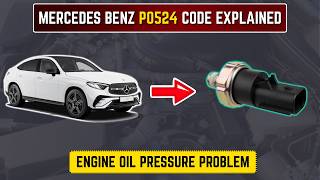
- Confirm the Code: Use a high-quality scan tool to re-scan the vehicle. Verify if the code is truly P1524 or if the tool now shows P0524. Proceed with the diagnosis for P0524 regardless. 🎬 Watch this overview of the P0524 low oil pressure code
- DO NOT START THE ENGINE: If you suspect low oil pressure, do not run the engine. Check the oil level on the dipstick. If it is low, top it off.
- Tow to a Professional: This issue requires professional diagnosis. Have the vehicle towed to a qualified mechanic.
- Follow Mazda TSB 01-016/19: The technician should follow the diagnostic procedure outlined in this TSB, which supersedes 01-009/16.
- Attempt Debris Dislodging: Per the TSB flowchart, a step may involve warming the engine and revving it to 4,000+ RPM multiple times to try and dislodge the foreign object.
- Perform Oil Pressure Test: The technician will connect a mechanical gauge to measure the actual engine oil pressure at different RPMs (e.g., 650, 1500, 4500 RPM) and compare it to Mazda's specifications.
- Inspect for Debris: Based on the pressure test results, the technician will determine if the cause is likely debris (normal pressure) or a failed component (low pressure).
- Component Replacement: If pressure was low, the oil pump and strainer are replaced. If pressure was normal but the code returns, the oil strainer is replaced with a modified part, the oil pan is cleaned, and an oil change is performed.
Parts You'll Likely Need
- Engine Oil Strainer (Pickup Tube)
(OEM #PE01-14-240A (supersedes PE01-14-240))— Mazda recommends replacing this with a modified part as part of the TSB procedure to prevent future debris issues, even if the oil pump is not replaced.
Trusted brands: Mazda OE
OEM price range: $35-$60
Aftermarket price range: $25-$45 - Engine Oil Control Valve (OCV)
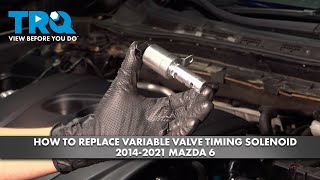
(OEM #PE01-14-420A)— The OCV can get stuck or clogged by the same debris causing the low pressure. It is a primary suspect for the related P0015 code and is often replaced. 🎬 Watch: How to replace the variable valve timing solenoid
Trusted brands: Mazda OE, Dorman, Hitachi
OEM price range: $80-$120
Aftermarket price range: $50-$90 - Engine Oil Pump — This is replaced only if the mechanical oil pressure test confirms the pump has failed and is not able to produce the required pressure.
Trusted brands: Mazda OE, Aisin
OEM price range: $200-$400
Aftermarket price range: $150-$250
Related Codes That Often Appear With This One
- P0524 — This is the correct SAE code for 'Engine Oil Pressure Too Low'. P1524 is a misinterpretation of this code by a generic scan tool.
- P0015 — This code for 'Exhaust CMP Timing Over-Retarded' is often stored along with P0524 because low oil pressure prevents the variable valve timing (VVT) system from operating correctly. Mazda TSBs 01-009/16 and 01-016/19 explicitly link these two codes.
Technical Service Bulletins (TSBs) & Recalls
- 01-016/19 - ROUGH IDLE WITH CHECK ENGINE LIGHT ON AND DTC P0015 / P0524. This TSB supersedes previous versions and is a primary diagnostic document.
- 01-009/16 - ROUGH IDLE WITH CHECK ENGINE LIGHT ON AND DTC P0015 / P0524. This TSB is the primary source for diagnosing and fixing the underlying low oil pressure issue.
Platform-Specific Known Issues
- Per TSB 01-009/16 and its successors, these SKYACTIV-G engines can be susceptible to temporary blockages in oil passages from small foreign objects, leading to intermittent low oil pressure conditions that may not require a full oil pump replacement.
- The diagnostic procedure in the TSB includes a step to attempt to dislodge the debris by revving the engine, highlighting the unique, non-permanent nature of the blockage in many cases.
Mechanic-Grade Diagnostic Values
- Engine Oil Pressure (with mechanical gauge, engine warm) — expected: 110—175 kPa (16.0—25.3 psi) at 1,500 rpm. Failure: Pressure below 110 kPa (16.0 psi) at 1,500 rpm indicates a mechanical fault.
- Engine Oil Pressure (with mechanical gauge, engine warm) — expected: 300—430 kPa (43.6—62.3 psi) at 4,500 rpm. Failure: Pressure below 300 kPa (43.6 psi) at 4,500 rpm indicates a mechanical fault.
- Oil Control Valve (OCV) Coil Resistance — expected: 6.9—7.5 ohms at 20°C (68°F). Failure: Resistance outside of this range indicates a faulty OCV solenoid coil.
- Engine Oil Capacity (2.5L SKYACTIV-G) — expected: 4.5 L (4.8 US qt) for oil and filter replacement. Failure: Incorrect oil level can cause pressure issues. This value ensures correct filling.
Hidden / Shadow Codes Worth Checking
- P055F: Engine Oil Pressure Malfunction. This code is often stored along with P0524 and is mentioned in the same TSBs, indicating they are part of the same fault condition. (see via A standard OBD-II scanner capable of reading manufacturer-specific codes. It is not a 'hidden' code but is a critical related code.)
Scan Tool Commands That Help
- Mazda M-MDS (or equivalent professional scanner): Monitor PIDs: EOP, OIL_TEMP, RPM, VT_EX_DES, VT_EX_ACT — Used during diagnosis to verify engine operating parameters. Comparing the desired (DES) vs. actual (ACT) exhaust cam timing is critical when P0015 is also present.
- Mazda M-MDS (or equivalent professional scanner): PCM Reprogramming — Required after certain component replacements or if a TSB indicates a software update is part of the fix to correct control logic.
- Manual Activation (or bidirectional scanner): Oil Control Valve (OCV) Actuation Test — A technician can apply battery voltage to the OCV terminals to verify the internal spool valve moves, often heard as a 'click'. This is a quick functional test to see if the valve is mechanically stuck.
Wiring & Ground Locations
- Oil Pressure Sensor Connector — Screwed into the engine block, typically near the oil filter housing.. This is the primary source of the oil pressure signal. A poor connection, corrosion, or oil saturation on the connector or pins can cause false low pressure readings.
- Harness Continuity Check — Between oil pressure sensor terminal A and PCM terminal 1BT.. A specific diagnostic step from a Mazda procedure is to check for continuity on this wire to rule out an open circuit in the harness between the sensor and the engine computer.
Real Owner Repair Stories
- Mazdas247 Forum user 'ferro_sk' (2018 Mazda CX-5 with 2.5L SKYACTIV-G engine (same family), ~1800km at failure.) — Check Engine Light with P0524 on a nearly new vehicle.
❌ Tried (didn't work) Dealer resetting the DTC; the code returned after 100km.
✅ What actually fixed it Under warranty, the dealer performed a comprehensive repair authorized by Mazda support, which included replacing the oil control solenoid valve, the oil pump, the oil pressure sensor, and the connecting rod bearings. - Reddit user, auto shop manager (2019-2021 Mazda3 (inferred from TSBs cited, same engine family)) — P0524 and red oil warning light returned at highway speeds after a major engine repair (cracked cylinder head).
❌ Tried (didn't work) PCM update per Mazda tech line., Replacing the Oil Control Valve (OCV)., Replacing the oil pressure sensor., Replacing the oil pump and strainer., Confirming actual oil pressure was good with a mechanical gauge.
✅ What actually fixed it The final suspected cause, after all major components were replaced without success, was the oil pressure sensor's electrical connector. It had been saturated with oil from the previous engine failure, likely causing an intermittent short or poor connection under load. The plan was to replace the connector pigtail itself.
OEM Part Supersession History
PE01-14-240→PE01-14-240A— Updated part recommended by Mazda in TSBs to address debris and oil flow issues.PE01-18-501 / PE01-18-501A→PE01-18-501B— Revision to improve sensor reliability and accuracy.
Model Year Variations Within This Range
- 2014-2017: The 2.5L SKYACTIV-G engine in this year range (GJ platform) is a simpler design that does NOT have the cylinder deactivation system that was introduced in 2018+ non-turbo models. While the P0524 fault is common across the family, some later TSBs specifically target issues on engines with cylinder deactivation, making the 2014-2017 models distinct.
Diagnostic Flowchart
Other Known Issues on This Vehicle
Issues unrelated to this code that are worth knowing about as an owner of this generation:
- Infotainment 'Ghost Touch' / Delamination 🟠 Medium — Very common. The touchscreen digitizer delaminates, causing phantom inputs. Often gets worse in heat. (Ref: Mazda issued Special Service Program (SSPB6) for some models, but it may not cover all affected vehicles.)
- Intake Valve Carbon Buildup 🟠 Medium — An inherent characteristic of all SKYACTIV-G direct injection engines. Becomes noticeable after 80,000-100,000 miles, causing rough idle on cold starts or random misfires (P0300).
- Leaking Accessory Belt Tensioner 🟡 Low — A well-documented issue where the hydraulic tensioner leaks oil, visible on the passenger side of the engine. Not a critical failure but should be replaced when noticed.
- Failing Ignition Coils 🟠 Medium — Certain production runs of ignition coils were prone to failure, causing random misfires (P0300), especially after large temperature changes. (Ref: TSB #01-014-16-3208A)
- Stuck-Open Thermostat / Coolant Control Valve 🟡 Low — A known issue where the thermostat fails in the open position, causing very slow engine warm-up and poor heater performance, often triggering code P0126. (Ref: Mazda has a warranty extension program for this specific issue.)
Used vs. New Parts: Buying Guide for This Vehicle
When a used part is the smart pick: For this specific repair, used parts are generally not recommended due to the critical nature of the oiling system. However, purely mechanical, non-wear items like the oil pan could be sourced from a donor vehicle if thoroughly cleaned and inspected for damage.
Donor-vehicle mileage cap: roughly under 60000 miles for the part to have meaningful remaining life.
What to inspect on the donor part:
- Check the inside of the donor engine's oil pan for sludge or metallic debris.
- Avoid parts from engines that show signs of overheating (discolored metal).
- Ensure the donor vehicle was not involved in a front-end collision that could have damaged engine components.
OEM-only on this vehicle (don't cheap out):
- Engine Oil Pressure Sensor: Aftermarket sensors are a common source of incorrect readings, leading to a repeat diagnosis. Given the low cost of the OEM part, it is the only recommended option.
- Oil Control Valve (OCV) / VVT Solenoid: This is a precision electro-hydraulic part. OEM is strongly recommended to ensure correct timing operation and avoid related codes like P0015.
- Engine Oil Filter: The TSBs and engine sensitivity make using a high-quality filter critical. The Mazda OEM filter is a safe and correct choice.
Aftermarket brands forum-validated for this vehicle:
- Aisin: Aisin is an OEM supplier to many Japanese automakers and is a trusted brand for parts like the oil pump.
Brands owners have reported issues with on this vehicle:
- Avoid 'white-box' or no-name brand electronic sensors (Oil Pressure Sensor, OCV) from online marketplaces. The potential for incorrect calibration and premature failure is high, making any upfront cost savings negligible after a second diagnostic and repair job.
Real Owner Stories
Aggregated from forums and TSBs cited above. Mileages and costs reflect what owners reported in those sources.
2018 Mazda CX-5 SKYACTIV-G — ~5000 miles
Symptoms: Check engine light on at very low mileage (3 months old).
What fixed it: The dealer replaced the oil control solenoid valve, oil pump, pressure sensor, and connecting rod bearings after a simple code reset failed to resolve the issue.
Source hint: Mazdas247 Forum thread titled 'p0524-check-engine-light-on-3-month-old-2018-cx-5-awd-touring'
2014-2017 Mazda 6 SKYACTIV-G 2.5L
Symptoms: Rough or unstable idle and the Check Engine Light is on.
What fixed it: Following TSB 01-016/19, the oil strainer was replaced with a modified part, the oil pan was cleaned, and the engine oil and filter were changed.
Source hint: TSB 01-016/19
Related OBD-II Codes
Frequently Asked Questions
Does TSB 01-016/19 apply to my 2014-2017 Mazda 6 with the SKYACTIV-G 2.5L engine?
My Mazda 6 is stuck in 'limp mode' and won't go over 2000 RPM. Is this related to P1524?
Can I use any oil filter on my SKYACTIV-G engine?
Is there a specific oil I should use to prevent these pressure codes?
The technician wants to rev my engine to 4,000 RPM to fix a 'low oil pressure' code. Is this a standard Mazda procedure?
What if the revving procedure doesn't clear the P1524 code on my Mazda 6?
Helpful Videos

We Have This Part in Stock


The information in this article is provided for general reference and educational purposes only. Vehicle specifications, procedures, and part compatibility can vary by production date, trim level, and region. Always consult your vehicle's factory service manual and verify part numbers before purchasing or performing repairs. Safety-critical components such as airbags, seat belts, and braking systems should be installed by a qualified professional.
- Mazda 6:
- 🎬 Helpful Videos
- 🛍️ Shop This Part
- What's Unique About the 2014-2017 Mazda 6
- Symptoms You May Notice
- Most Likely Causes
- Rare But Worth Checking
- Diagnosis Steps
- Parts You'll Likely Need
- Related Codes That Often Appear With This One
- Technical Service Bulletins (TSBs) & Recalls
- Platform-Specific Known Issues
- Mechanic-Grade Diagnostic Values
- Hidden / Shadow Codes Worth Checking
- Scan Tool Commands That Help
- Wiring & Ground Locations
- Real Owner Repair Stories
- OEM Part Supersession History
- Model Year Variations Within This Range
- Diagnostic Flowchart
- Other Known Issues on This Vehicle
- Used vs. New Parts: Buying Guide for This Vehicle
- Real Owner Stories
- 2018 Mazda CX-5 SKYACTIV-G — ~5000 miles
- 2014-2017 Mazda 6 SKYACTIV-G 2.5L
- Related OBD-II Codes
- Frequently Asked Questions
- 🎟️ Get 5% Off