

OBD-II Code P0126: Engine Not Warming Up Properly
What P0126 means, why it triggers, and how to fix it
- A thermostat stuck in the open position causes up to 80% of P0126 codes by preventing the engine from reaching its 195-220°F operating temperature.
- Driving with a P0126 code drops fuel economy by 10-15% and guarantees an automatic failure on state emissions tests.
- If you own a 2018-2025 non-turbo Mazda, call a dealer with your VIN immediately; a 15-year/150,000-mile warranty extension (SSPD8) covers this exact repair for free.
- Never replace the thermostat without first verifying the coolant level is full and bleeding the system of air pockets, which mimic a failed sensor.
What Does P0126 Mean?
Code P0126 means the Powertrain Control Module (PCM) detects the engine is taking too long to reach its 195-220°F (90-104°C) operating temperature. Engines must reach this threshold to enter 'closed-loop' fuel control and activate emissions systems. The PCM triggers this code when the warm-up timer expires before the target temperature is met.
Technical definition: The SAE/OBD-II definition is "Insufficient Coolant Temperature for Stable Operation." The PCM relies on coolant temperature data to manage fuel mixture and ignition timing. When the engine stays cold, the PCM forces a less efficient 'open-loop' mode, increasing tailpipe pollution and fuel consumption.
Can I Drive With P0126?
Yes, But With Caution. Yes, you can drive the vehicle, but fix it within a few weeks. An engine running too cold wastes gas, increases emissions, and provides poor cabin heat. Prolonged driving in this state causes engine sludge from oil condensation and destroys the catalytic converter—a repair costing up to $2,500.
Common Causes
- Thermostat stuck open (Very Common) — Accounts for up to 80% of cases. The thermostat valve stays open, constantly circulating coolant to the radiator and preventing the engine from reaching operating temperature.
- Low engine coolant level (Common) — Low coolant creates air pockets in the system. These pockets prevent hot liquid from reaching the Engine Coolant Temperature (ECT) sensor, causing a false low reading.
- Faulty Engine Coolant Temperature (ECT) sensor (Less Common) — The ECT sensor measures engine heat. Internal resistance changes or drift cause it to report a cold engine even when fully warmed up.
- Cooling fan running constantly (Less Common) — A stuck fan relay or faulty control module forces the electric cooling fan to run continuously from a cold start, over-cooling the engine.
- Incorrect aftermarket thermostat (Rare) — Installing a non-OEM 'failsafe' or colder-rated thermostat triggers this code. Modern Ford F-150s require specific 'cold-side' thermostats; standard 'hot-side' parts cause malfunctions.
- Wiring or connector issues (Rare) — Corroded or loose wires at the ECT sensor create high resistance, disrupting the signal to the PCM.
- Failing Water Pump (Rare) — A corroded impeller fails to circulate coolant effectively, causing erratic temperature readings or localized hot spots.
- Internal PCM or Software Fault (Very Rare) — Corrupted software sets the warm-up timer too aggressively, or a damaged circuit board misinterprets healthy sensor signals. Often requires a dealer software update.
Symptoms
- Check Engine Light is on — This is the first and often only sign you will notice.
- Temperature gauge stays cold — The dashboard gauge stays on 'C' longer than usual or drops at highway speeds due to increased radiator airflow.
- Heater blows lukewarm air — Coolant passing through the heater core lacks the heat required to warm the cabin.
- Failed Emissions Test — An active P0126 code triggers an automatic failure because emissions systems remain offline.
- Rough idle on cold start — The PCM uses an incorrect default fuel map, causing hesitation or stalling.
- Worse gas mileage (also visible on scanner) — The engine stays in 'rich' open-loop mode, burning 10-15% more fuel.
Diagnostic Flowchart
Tap your situation to follow the diagnostic path that matches what you're seeing on this code.
Common Fixes & Costs
- Replace the thermostat — Parts: $20-$100, Labor: $150-$400, ~1.5 hr book time (Intermediate)
- Add engine coolant and bleed the system — Parts: $20-$40, Labor: $0-$75, ~0.5 hr book time (DIY)
- Replace the Engine Coolant Temperature (ECT) sensor — Parts: $25-$80, Labor: $80-$200, ~0.8 hr book time (DIY)
- Replace Coolant Control Valve (specific to Mazda) — Parts: $25-$100, Labor: $200-$900, ~1.6 hr book time (Professional)
- Replace Cooling Fan Relay or Control Module — Parts: $15-$50, Labor: $50-$100, ~0.5 hr book time (DIY)
- Repair ECT Sensor Wiring or Connector — Parts: $5-$25, Labor: $70-$150, ~1 hr book time (Intermediate)
Used vs. New Parts: Buying Guide
When a used part is worth it: Buying a used thermostat is never recommended. It is a low-cost wear item, and the labor to install it is much more expensive than the part itself.
Donor-vehicle mileage cap: roughly under 10000 miles for the part to have meaningful remaining life.
Donor quality checklist:
- Only consider 'new old stock' (NOS) or 'open-box' unused parts.
- Avoid parts pulled from junked vehicles.
- Ensure the part number and temperature rating match the OEM specification.
Decision logic:
- If The part is a simple, mechanical thermostat → Always buy new. The cost is low ($20-$100) and a new part comes with a warranty.
- If The part is an expensive, integrated thermostat housing ($200+) → A guaranteed-functional, low-mileage used part from a reputable auto recycler is an option, but the risk of early failure remains.
- If The part has a known high failure rate (e.g., Mazda Coolant Control Valve) → Avoid used parts entirely. Buy the newest revised OEM part or kit.
Warranty tradeoff: Used parts typically have a 30-90 day warranty. New aftermarket parts offer a 1-year to limited lifetime warranty. New OEM parts offer a 1-2 year warranty.
Worst-case if a used part fails: $200-$500 if a used part fails shortly after installation, primarily from repeating the labor charge.
What Happens If You Wait — Timeline
- 0-2 weeks: Check Engine Light is on with code P0126. The temperature gauge is slow to rise and the cabin heater is less effective. (MPG impact: 5-10%% · Added cost: $10-$40 in wasted fuel)
- 2 weeks - 3 months: Noticeable drop in fuel economy. The engine runs in 'open-loop' rich mode more often. Moisture and fuel begin to accumulate in the engine oil. (MPG impact: 10-15%% · Added cost: $50-$200 in wasted fuel)
- 3-9 months: The persistently rich fuel mixture damages the catalytic converter. Engine oil quality degrades, and sludge deposits form in oil passages. (MPG impact: 10-20%% · Added cost: $500-$1500 (risk of early catalytic converter failure is high))
- 9+ months: High probability of catalytic converter meltdown. Significant engine sludge buildup blocks the oil pickup tube, risking catastrophic internal engine damage. (MPG impact: 15-25%+% · Added cost: $1500-$4000+ (catalytic converter replacement plus potential engine repairs))
Cost of Not Fixing It
- 0-1 month: Reduced fuel economy (up to 10-15%), poor heater performance, and failed emissions tests. (Added cost: $20-$60 in wasted fuel)
- 1-6 months: Increased risk of engine sludge formation as oil fails to burn off moisture. The rich fuel mixture stresses the catalytic converter. (Added cost: $100-$300 in wasted fuel, potential for future cleaning/flush services.)
- 6+ months: High probability of catalytic converter damage from an overly rich fuel mixture. Engine sludge blocks oil passages, leading to accelerated wear. (Added cost: $1200-$3500 for catalytic converter replacement, plus potential engine repair.)
Diagnosis Steps
- Check Coolant Level and Condition
Wait for a cold engine. Check the overflow reservoir and radiator. Top off with OEM-spec coolant. Low coolant causes false sensor readings.
Tools: None (Beginner) - Check for Technical Service Bulletins (TSBs)
Before touching tools, search TSBs for your VIN. Mazda vehicles have a mandatory software update and warranty extension for this exact code.
Tools: Internet Access (Beginner) - Read Live Data with a Scan Tool
Plug in an OBD-II scanner and view 'Engine Coolant Temperature' (ECT). From a cold start, watch the temperature rise. If it climbs slowly, plateaus below 195°F, or drops at highway speeds, the thermostat is stuck open.
Tools: OBD-II Scanner (Beginner) - Test Thermostat Operation
Start the cold engine and feel the upper radiator hose. It must remain cool for several minutes, then suddenly get hot when the thermostat opens. If it warms gradually from the start, the thermostat is stuck open.
Tools: Infrared Thermometer (optional) (Intermediate) - Observe the Cooling Fan
Start the cold car. The main electric cooling fans must NOT run at full speed. If they do, a stuck relay is over-cooling the engine.
Tools: None (Beginner) - Inspect the ECT Sensor and Wiring
Visually inspect the ECT sensor connector for corrosion or broken wires. Wiggle the harness while watching live scan tool data; fluctuating temperatures indicate a bad connection.
Tools: Flashlight, OBD-II Scanner (Intermediate) - Test the ECT Sensor Resistance
Unplug the sensor and measure resistance across its pins with a multimeter. Compare to the factory service manual chart (typically 2,200–3,500 Ω at 68°F, dropping to 200–350 Ω at 194°F). Out-of-spec readings require replacement.
Tools: Multimeter, Service Manual (Advanced) - Test the ECT Sensor Voltage
Back-probe the ECT signal wire with the key on, engine off. Voltage should start around 3.0-3.5V at 68°F and drop smoothly below 1.3V at 194°F. 5V indicates an open circuit; 0V indicates a short.
Tools: Multimeter, Back-probe Kit (Advanced)
When This Code Triggers (Freeze-Frame Conditions)
- Engine Coolant Temp: 160-180°F (71-82°C) (The code sets when the temperature fails to rise past this range in a set time.)
- RPM: 1500-2500 (Triggers during steady-state cruise conditions where airflow over the radiator is high.)
- Engine Load: 20-50% (Typical of light-to-moderate cruising. The engine isn't working hard enough to generate excess heat.)
- Vehicle Speed: 45-65 mph (Highway driving is a common trigger, as constant airflow rapidly cools the coolant when the thermostat is stuck open.)
Related Codes
- P0128 — Identical diagnostic path. P0128 triggers if the engine never reaches minimum temperature; P0126 triggers based on the time taken to warm up.
- P0125 — Older version of P0126. Means the engine isn't warm enough for closed-loop fuel control.
- P0117 — ECT Sensor Circuit Low. Indicates a specific electrical short circuit, not a mechanical cooling issue.
- P0118 — ECT Sensor Circuit High. Indicates an open electrical circuit, such as an unplugged sensor.
Climate & Environmental Factors
- Cold Weather: Cold ambient temperatures expose weak thermostats. A partially stuck thermostat passes the warm-up timer in summer but fails during a winter cold snap.
- High Humidity / Road Salt: Salt and moisture corrode ECT sensor connectors, creating high electrical resistance that the PCM misinterprets as a cold engine.
How to Talk to a Mechanic About This Code
Say this: "I have a P0126 code and my car is slow to warm up. I'd like to schedule a diagnostic to confirm the cause. Could you please monitor the live engine coolant temperature data from a cold start to verify if the thermostat is stuck open or if the ECT sensor is reading incorrectly?"
This shows you've done your research and guides the technician directly to the most efficient diagnostic test. It focuses on proving the failure with data rather than guessing.
Avoid saying:
- 'Just fix whatever's wrong'
- 'My check engine light is on, can you look at it?'
- 'Whatever you recommend'
Questions to ask before authorizing the repair:
- Did the live data show the engine failing to reach operating temperature or dropping temperature at highway speeds?
- If you are recommending an ECT sensor, did its reading on the scan tool seem illogical compared to a physical temperature reading?
- Does the repair estimate include the cost of new coolant and bleeding the air from the system?
- What is the warranty on the recommended parts and your labor?
Where to Take It: Dealer vs Independent vs Chain
- Dealer:
Required for modern Mazda owners to claim the extended warranty fix. For most other out-of-warranty cars, an independent shop is more cost-effective.
Best for: Modern Mazda vehicles (2018+) due to a specific extended warranty for this code., Vehicles still under the original powertrain or emissions warranty., Complex, vehicle-specific issues requiring software updates.
Downsides: Typically the highest labor rate., May recommend replacing a large assembly when a smaller component is the only issue. (Typical cost: +50% vs. baseline) - Independent Shop:
Best overall fit for most vehicles with a P0126 code. This is a routine repair that any competent independent shop handles efficiently.
Best for: Most out-of-warranty vehicles., Common repairs like a thermostat or sensor replacement., Building a long-term relationship with a trusted mechanic.
Downsides: Quality and diagnostic capabilities vary widely., May lack access to the latest manufacturer-specific software for updates. (Typical cost: +0% vs. baseline) - Chain Shop:
Acceptable, but with caution. Best used if you have already diagnosed the problem yourself and just need the part installed.
Best for: Simple, clear-cut part replacements when you are certain of the diagnosis., Basic maintenance like oil changes or tires.
Downsides: Technician skill and diagnostic experience are inconsistent., Business model pressures technicians to upsell services like coolant flushes. (Typical cost: -10% vs. baseline)
When to Walk Away From the Repair
If the estimated repair cost exceeds 40-50% of your car's private-party market value, pause and consider alternatives.
- Car worth $4000, fix is $450: Fix it. This repair is well below the threshold and is crucial for the engine's long-term health.
- Car worth $12000, fix is $800: Fix it. The repair cost is minor compared to the vehicle's value.
- Car worth $2500, fix is $1500: Walk away. The repair cost is over 50% of the car's value. This is likely not the only repair it will need soon.
What Scan Tool You Need for This Code
Minimum: A tool that reads and graphs live data, specifically the Engine Coolant Temperature (ECT) PID.
A basic $20 code reader only tells you the P0126 code exists. It cannot show live temperature data as the engine warms up, which is essential to determine if the thermostat is stuck or the sensor is faulty.
Budget: BlueDriver Pro or Ancel BD310 (~$60-100) — These Bluetooth scanners connect to a smartphone app to display and graph live ECT data. This is sufficient to watch the temperature rise from a cold start.
Mid-range: Foxwell NT510 Elite or Innova 5610 (~$150-350) — These handheld scanners offer robust live data, manufacturer-specific codes, and limited bidirectional controls. Ideal for serious DIYers.
Professional: Autel MaxiCOM MK808 / MK808S (~$450-600) — Provides full bidirectional control, all system diagnostics, and professional-level data graphing. Overkill for P0126, but standard for home professionals.
Rent vs buy: For a one-time diagnosis, auto parts stores like AutoZone and O'Reilly loan scanners for free with a refundable deposit. Buy a scanner only if you perform diagnostics frequently.
How to Clear the Code After You Fix It
- Use an OBD-II scan tool to clear the diagnostic trouble code.
- Perform a complete OBD-II drive cycle to allow readiness monitors to run.
- Disconnecting the battery clears the code but resets all readiness monitors.
Drive cycle (~30 minutes): A generic drive cycle includes a cold start (sitting over 8 hours), 2-3 minutes of idling, 10-15 minutes of steady highway driving (55-60 mph), coasting down to 20 mph, and 10-15 minutes of stop-and-go city driving.
Readiness monitors affected: Catalyst Monitor, Oxygen (O2) Sensor Monitor, Oxygen Sensor Heater Monitor, EGR System Monitor
Before emissions retest: drive at least 100 miles to fully set monitors.
Watch out for:
- Not performing a complete drive cycle, leaving readiness monitors 'incomplete'.
- Clearing codes without fixing the underlying mechanical issue.
- Not allowing the vehicle to cool down completely before beginning the drive cycle.
Will This Fail Emissions / State Inspection?
Yes — this code typically fails an OBD-II emissions inspection.
- California: An active P0126 code results in an automatic smog check failure. After repair, a full drive cycle must be completed to set all required readiness monitors.
- New York: The NYS DMV vehicle inspection includes an OBD-II scan. A P0126 code causes an automatic failure.
- Texas: In the 17 counties requiring emissions testing, an illuminated Check Engine Light from a P0126 code results in an automatic failure.
Most Commonly Affected Vehicles
- Mazda CX-5, Mazda3, CX-30, Mazda6, CX-3 (non-turbo) (2018-2025) — Extremely common Coolant Control Valve (CCV) failure. Covered by a 15-year/150,000-mile warranty extension (SSPD8). Requires kit PYY2-15-SA1 and a mandatory PCM update.
- Ford Focus (2012-2018) — Thermostat stuck open is a highly documented failure point on the 2.0L engine.
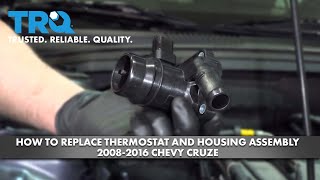
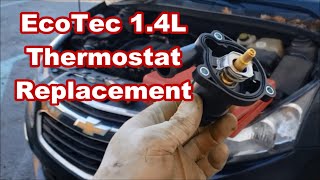
- Chevrolet / GM Cruze, Sonic, Trax (with 1.4L Turbo Engine) (2011-2020) — Plastic thermostat housings crack, causing slow coolant leaks, air pockets, and P0126 codes.
- Ford F-150 (2004-2024) — Requires specific 'cold-side' thermostats. Standard aftermarket 'hot-side' parts fail to fix the code.
- Honda Accord, Civic (2003-2024) — Standard stuck-open thermostat failure on higher-mileage engines.
- BMW Various (E46, E90, E60, etc.) (2000-2013) — Electronically controlled thermostats and secondary lower radiator hose sensors frequently fail.
Manufacturer-Specific Notes
- Mazda: Modern non-turbo Skyactiv engines suffer from a faulty 'failsafe' thermostat inside the Coolant Control Valve. Mazda issued a warranty extension (SSPD8) covering this for 15 years/150,000 miles. The fix requires a specific kit and a mandatory PCM software update.
- Ford: Many modern Ford vehicles use a 'cold-side' thermostat. Installing a traditional 'hot-side' aftermarket thermostat fails to resolve the code and causes improper cooling.
- BMW: Models like the E46 and E90 use two ECT sensors: a primary one on the cylinder head and a secondary one on the lower radiator hose. Failure of either sensor triggers P0126/P0128.
- General Motors (GM): The 1.4L Ecotec turbo engine features a plastic thermostat housing that frequently develops hairline cracks. This causes slow coolant leaks, leading to low coolant levels and a P0126 code.
Real Owner Stories
2019 Mazda CX-5 at 40k miles - The Warranty Fix
Check Engine Light came on. Coolant level in the reservoir was slightly low. Temperature gauge seemed normal.
Outcome: Took the vehicle to a Mazda dealer. The issue was diagnosed as the common Coolant Control Valve failure. The repair was covered under Mazda's extended warranty (SSPD8) at no charge.
Lesson: For any 2018+ non-turbo Mazda with a P0126 code, contact a dealer with the VIN to check for warranty coverage before attempting repairs.
2012 Chevy Cruze 1.4L Turbo - Thermostat vs. Sensor Misdiagnosis
P0126 code appeared on cold days. Owner replaced the thermostat, but the code returned 500 miles later.
Outcome: The actual problem was a faulty Engine Coolant Temperature (ECT) sensor sending incorrect low-temperature readings. Replacing the ECT sensor permanently fixed the issue.
Lesson: If a new thermostat doesn't fix a P0126 code, the ECT sensor is the next likely culprit. Use a scan tool to watch live temperature data.
Mazdaspeed - The Intermittent Electrical Gremlin
P0126 code persisted after multiple repairs. The temperature gauge on the scan tool fluctuated wildly while cruising.
Outcome: The issue was an intermittent fault in the wiring harness between the ECT sensor and the PCM. The owner traced the wiring harness for faults.
Lesson: If both the thermostat and ECT sensor are new and the system is bled, erratic temperature readings point to an electrical circuit fault.
How to Prevent This Code From Triggering
- Perform coolant flushes at recommended intervals. (Every 30,000-100,000 miles or 3-5 years.) — Old coolant becomes acidic and leads to corrosion of the thermostat, water pump, and radiator, causing parts to stick or fail.
- Use the correct OEM-specified coolant. (Every time you top off or flush the system.) — Mixing coolant types causes a chemical reaction that leads to gelling and blockages in the cooling system.
- Use synthetic oil and change it on schedule. (Per manufacturer's severe service schedule.) — An engine running cold allows moisture and fuel to contaminate the oil. High-quality synthetic oil resists this breakdown.
- Avoid frequent short trips. (Daily habit.) — Short drives prevent the oil from getting hot enough to burn off accumulated moisture and fuel contaminants.
- Keep the fuel tank at least half full in winter. (During cold seasons.) — A fuller tank reduces the empty space where condensation forms, preventing water in the fuel.
Frequently Asked Questions
Is it safe to drive with code P0126?
Yes, for a few weeks. The engine runs too cool, not hot. Fix it promptly to restore fuel economy and prevent catalytic converter damage.
My car is a modern Mazda and has this code. What should I do first?
Call a dealer with your VIN immediately. Mazda issued a 15-year/150,000-mile warranty extension (SSPD8) for this exact code. Do not pay an independent shop before verifying coverage.
What's the difference between P0126 and P0128?
They share the exact same causes and fixes. P0128 means the engine never reached the target temperature, while P0126 means it took too long to get there.
I replaced the thermostat and the P0126 code came back. What now?
You likely have trapped air in the cooling system. Bleed the system completely. If the code persists, test the ECT sensor and verify you installed an OEM-spec thermostat.
Will a P0126 code clear itself?
No. The underlying mechanical or electrical fault requires repair. Once fixed, clear the code with a scanner or complete several drive cycles.
Can low coolant cause a P0126 code?
Yes. Low coolant creates air pockets around the ECT sensor. The sensor reads the cooler air instead of hot liquid, triggering the code.
Will a P0126 code cause my car to fail an emissions test?
Yes. An active P0126 code is an automatic failure. The engine must reach operating temperature for emissions systems to function.
Can this code be caused by cold weather?
Extreme cold exposes existing problems, like a weak thermostat, but does not cause the code on a healthy vehicle. A properly functioning cooling system reaches operating temperature regardless of weather.
Key Takeaways
- A thermostat stuck in the open position causes up to 80% of P0126 codes by preventing the engine from reaching its 195-220°F operating temperature.
- Driving with a P0126 code drops fuel economy by 10-15% and guarantees an automatic failure on state emissions tests.
- If you own a 2018-2025 non-turbo Mazda, call a dealer with your VIN immediately; a 15-year/150,000-mile warranty extension (SSPD8) covers this exact repair for free.
- Never replace the thermostat without first verifying the coolant level is full and bleeding the system of air pockets, which mimic a failed sensor.
Helpful Videos

The information in this article is provided for general reference and educational purposes only. Vehicle specifications, procedures, and part compatibility can vary by production date, trim level, and region. Always consult your vehicle's factory service manual and verify part numbers before purchasing or performing repairs. Safety-critical components such as airbags, seat belts, and braking systems should be installed by a qualified professional.
- 🎬 Helpful Videos
- What Does P0126 Mean?
- Can I Drive With P0126?
- Common Causes
- Symptoms
- Diagnostic Flowchart
- Common Fixes & Costs
- Used vs. New Parts: Buying Guide
- What Happens If You Wait — Timeline
- Cost of Not Fixing It
- Diagnosis Steps
- When This Code Triggers (Freeze-Frame Conditions)
- Related Codes
- Climate & Environmental Factors
- How to Talk to a Mechanic About This Code
- Where to Take It: Dealer vs Independent vs Chain
- When to Walk Away From the Repair
- What Scan Tool You Need for This Code
- How to Clear the Code After You Fix It
- Will This Fail Emissions / State Inspection?
- Most Commonly Affected Vehicles
- Manufacturer-Specific Notes
- Real Owner Stories
- 2019 Mazda CX-5 at 40k miles - The Warranty Fix
- 2012 Chevy Cruze 1.4L Turbo - Thermostat vs. Sensor Misdiagnosis
- Mazdaspeed - The Intermittent Electrical Gremlin
- How to Prevent This Code From Triggering
- Frequently Asked Questions
- Is it safe to drive with code P0126?
- My car is a modern Mazda and has this code. What should I do first?
- What's the difference between P0126 and P0128?
- I replaced the thermostat and the P0126 code came back. What now?
- Will a P0126 code clear itself?
- Can low coolant cause a P0126 code?
- Will a P0126 code cause my car to fail an emissions test?
- Can this code be caused by cold weather?
- Key Takeaways
- 🎟️ Get 5% Off