

P1524 on 2017-2022 Jeep Compass 2.4L: Oil Pressure Out of Range Causes and Fixes
On a 2017-2022 Jeep Compass, code P1524 is almost always caused by a low engine oil level, the wrong type of oil, or a low-quality oil filter. Before buying any parts, check your oil level and change the oil and filter using full-synthetic 0W-20 oil and an OEM Mopar filter. This low-cost fix often resolves the issue, which is common across all vehicles with the 2.4L Tigershark engine.
- P1524 is a serious code on this engine. Your first and most important step is to immediately check the engine oil level.
- Do not replace any expensive parts until you have performed an oil change with full-synthetic 0W-20 oil and a high-quality OEM Mopar filter. This simple step fixes the problem in a majority of cases.
- The 2.4L MultiAir engine is known to consume oil. You must check your oil level regularly (e.g., every 1,000 miles) to prevent this code from returning.
- If your vehicle consumes a lot of oil, contact a Jeep dealer to ask about the oil consumption test and the XB1 warranty extension, as you may be eligible for a covered repair.
What's Unique About the 2017-2022 Jeep Compass
The 2.4L Tigershark MultiAir engine is unique because it uses engine oil as hydraulic fluid to control the intake valves. This makes it extremely sensitive to the oil's level, quality, and pressure. This engine is also widely known for a significant oil consumption problem, which was the subject of a class-action lawsuit and resulted in warranty extension X81 (formerly XB1). This defect means the engine can burn through oil much faster than expected, leading to a low oil level that directly triggers the P1524 code long before the next scheduled oil change.
Symptoms You May Notice
- Check Engine Light is on
- Reduced engine power and sluggish acceleration
- Rough or unstable idle
- Engine may stall, sometimes unexpectedly
- Ticking or rattling noises from the engine
- Remote start feature may be disabled
- Burning oil smell
- Replacing the VVT solenoids or camshaft phasers. This code disables the VVT system due to an oil pressure problem, not necessarily a fault with the VVT components themselves. Always address the oil pressure issue first.
Most Likely Causes
- Low Engine Oil Level 🔴 High Probability The 2.4L Tigershark engine has a well-documented history of excessive oil consumption, acknowledged by FCA through warranty extension X81. Many owners report needing to add oil every 1,000-3,000 miles. A low level can cause the oil pump to suck air during turns or on hills, triggering the code.
How to confirm: Park the vehicle on a level surface, wait at least 5 minutes after shutting off the engine, and check the oil level on the dipstick. The level should be at the top of the crosshatch area.
Typical fix: Top off the oil to the 'FULL' mark using full-synthetic SAE 0W-20 oil. Regularly monitor the oil level between changes and inquire with a dealer about the X81 warranty extension if consumption is high.
Est. part cost: $10-$20 for a quart of oil - Incorrect or Low-Quality Oil Filter 🔴 High Probability These engines are notoriously sensitive to oil filter quality. Aftermarket filters, especially those from quick-lube shops, can have faulty internal bypass valves or incorrect flow characteristics that cause pressure drops, triggering P1524 immediately after an oil change.
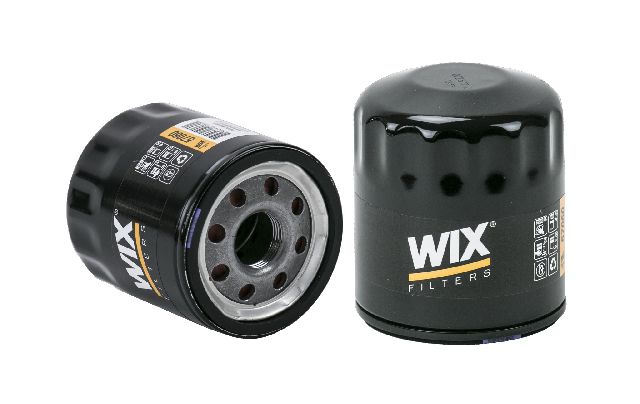
How to confirm: Inspect the brand of the installed oil filter. If it is not an OEM Mopar filter or a high-quality equivalent (like Wix XP), it is highly suspect. A forum user on RamForum.com with a similar engine fixed his P1524 code simply by swapping a standard Wix filter for a higher-spec Wix XP filter.
Typical fix: Perform an oil and filter change using a new OEM Mopar oil filter (Part #68191349AC) and the correct oil.
Est. part cost: $10-$25 - Incorrect Engine Oil Type 🟡 Medium Probability The MultiAir system requires a specific oil viscosity (0W-20) to function. Using a thicker oil (like 5W-30) or conventional oil can disrupt the hydraulic actuation of the valves and cause this code.
How to confirm: Check service records or the oil cap to see what type of oil was last used. A Reddit user reported their dealer insisted an oil change would fix the issue, highlighting how common this is as a root cause.
Typical fix: Perform an oil and filter change using full-synthetic SAE 0W-20 oil that meets the MS-6395 specification.
Est. part cost: $40-$70 for oil and filter - Faulty Engine Oil Pressure Sensor ⚪ Low Probability The sensor that reads oil pressure can fail, sending incorrect data to the PCM. Its wiring can also become damaged from the nearby serpentine belt or the connector can become loose or contaminated with oil.
How to confirm: Use a scan tool to monitor live oil pressure data. If the reading is erratic, stuck at one value, or doesn't make sense, the sensor is suspect. A definitive test involves comparing the scan tool reading to a mechanical pressure gauge.
Typical fix: Replace the engine oil pressure sensor. The sensor is located on the back side of the engine block, underneath the water pump, and typically requires a 1 1/16 inch deep socket for removal.
Est. part cost: $25-$70
Rare But Worth Checking
- Failing Oil Pump: If the oil level, type, filter, and sensor are all confirmed to be good, but a mechanical gauge shows genuinely low oil pressure, the oil pump itself may be weak or failing. This is an uncommon but serious mechanical issue.
- Outdated PCM Software: Jeep has released software updates for the Powertrain Control Module (PCM) to improve the diagnostic logic and prevent false triggers for the P1524 code. TSB 18-043-21 specifically addresses this, along with other codes like P1D7F. A dealer can check if your vehicle has the latest software.
- Clogged MultiAir Secondary Filter: The MultiAir system has a small, secondary mesh filter screen located on the side of the cylinder head. If this screen becomes clogged with sludge or debris, it can restrict oil flow to the MultiAir 'brick' actuator and trigger P1524. This is less common but should be considered if other fixes fail.
Diagnosis Steps
- Check Engine Oil Level: Park on a level surface, wait 5 minutes after turning off the engine, and check the dipstick. Top off with full-synthetic 0W-20 oil if low. This is the most critical first step. 🎬 See this detailed walkthrough for a proper 2.4L oil change.
- Verify Oil and Filter Quality: Check service records to confirm the correct oil is being used. Inspect the oil filter; if it's not an OEM Mopar or equivalent high-quality brand, replace it. An oil and filter change is the most common and effective first step.
- Scan for Live Data: Use an OBD-II scanner to monitor the 'Engine Oil Pressure' PID. Watch for readings that are erratic, too low (e.g., below 20 PSI at idle when warm), or don't increase with RPM.
- Inspect the Oil Pressure Sensor: Locate the sensor on the rear of the engine block, below the water pump. Check its electrical connector for a secure fit and inspect the wiring for any damage from the nearby serpentine belt.
- Verify with a Mechanical Gauge: If the sensor reading is suspect, connect a mechanical oil pressure gauge to the engine to measure the true pressure. This will confirm whether you have a real pressure problem or just a faulty sensor.
- Check for TSBs: Contact a Jeep dealership with your VIN to see if any software updates, like TSB 18-043-21, are available for the PCM to improve the code's logic.
Parts You'll Likely Need
- Engine Oil and Filter
(OEM #68191349AC (Filter))— This is the most common fix. The engine is highly sensitive to oil level, type, and filter quality. Using the specified full-synthetic 0W-20 oil and an OEM filter often resolves the code.
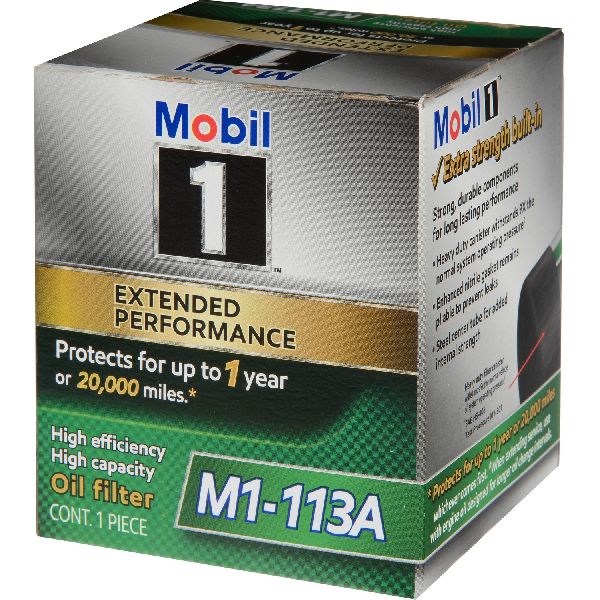
Trusted brands: Mopar (OEM), Wix XP, PurolatorONE
OEM price range: $15-$25 (Filter)
Aftermarket price range: $8-$18 (Filter) - Engine Oil Pressure Sensor
(OEM #68252672AB)— If the oil and filter are correct, the sensor itself is the next most likely part to have failed, providing inaccurate readings to the computer. Verify with your VIN before purchasing.
Trusted brands: Mopar (OEM), Standard Motor Products (SMP), NTK
OEM price range: $40-$70
Aftermarket price range: $25-$50
Related Codes That Often Appear With This One
- P1523 — This code indicates 'VVA Low Oil Pressure', which is a more specific fault within the MultiAir system. They often appear together as P1523 identifies the low pressure state and P1524 reports the resulting action of disabling the system. Manufacturer Bulletin #18-042-21 notes that P1523-00 and P1524-00 can set together alongside O2 sensor performance issues.
- P0520 — This code points to a general 'Engine Oil Pressure Sensor/Switch Circuit Malfunction'. It can appear with P1524 if the sensor itself or its circuit is the root cause of the out-of-range pressure reading.
- P06DD — This code for 'Engine Oil Pressure Control Circuit Stuck Off' points to a problem with the dual-stage oil pump. It can appear with P1524 and suggests a more serious mechanical oil pressure issue rather than just a sensor fault.
- P1D7F — This code for 'ETC Self-Learning Failure' is mentioned in TSB 18-043-21 alongside P1524. A PCM software update is designed to address both codes, suggesting a potential software logic link between them.
Technical Service Bulletins (TSBs) & Recalls
- TSB 18-043-21: Involves a PCM software update for 2017 models to improve diagnostic logic for several DTCs, including P1524. This bulletin notes that technicians may find P1524 set alongside P1D7F and P0326.
- Bulletin #18-042-21: A manufacturer service bulletin indicating that P1524-00 (Oil Pressure Out Of Range) may be found with P1523-00 (VVA Low Oil Pressure) and P0141 (O2 Sensor Heater Performance).
- Warranty Extension XB1 (related to TSB 09-007-21): Addresses excessive oil consumption. If a vehicle fails an oil consumption test, this may cover repairs up to and including engine replacement. This is a root cause for P1524.
Platform-Specific Known Issues
- Excessive Oil Consumption: The 2.4L Tigershark engine is known for consuming oil, which is the subject of class-action lawsuits and warranty extension programs (like X81, formerly XB1). This defect is a primary driver for the low oil levels that cause code P1524. Owners may be eligible for a free oil consumption test and potential engine replacement if their vehicle qualifies.
- PCM Software Updates: TSB 18-043-21 was released to update the PCM software, which can correct faulty logic that triggers P1524 unnecessarily.
Mechanic-Grade Diagnostic Values
- Engine Oil Pressure (Mechanical Gauge) at Curb Idle — expected: Minimum 4 PSI. Failure: A reading of zero or near-zero PSI. If pressure is zero at idle, do not proceed to test at higher RPMs to avoid engine damage.
- Engine Oil Pressure (Mechanical Gauge) at 3000 RPM — expected: 25 - 80 PSI. Failure: Pressure that does not rise into this range as RPMs increase indicates a mechanical issue like a weak oil pump or blockage.
- VVT Enablement Oil Pressure (Scan Tool Live Data) — expected: Pressure must reach 42 PSI to enable the VVT system.. Failure: The system will not enable if pressure cannot reach this threshold.
- VVT Sustained Oil Pressure (Scan Tool Live Data) — expected: Pressure must not drop below 31 PSI to keep the VVT system enabled.. Failure: If pressure drops below 31 PSI under load, the PCM will set P1524 and disable the VVT system.
Scan Tool Commands That Help
- wiTECH (Dealer Scan Tool): Flash: Powertrain Control Module (PCM) Updates — If diagnosis points to a software issue or to eliminate false triggers. TSB 18-043-21 specifically uses a PCM flash to address P1524. This should be done at a dealership or a properly equipped independent shop.
Wiring & Ground Locations
- Engine Oil Pressure Sensor — Located on the back side of the engine block, underneath the water pump assembly.. This is the sensor providing the data that triggers the code. Its connector can become contaminated with leaking oil, and its wiring is near the serpentine belt, making it susceptible to damage.
- K900 (Circuit) — This is the sensor ground circuit running between the oil pressure sensor connector and the PCM.. A fault or high resistance on the ground circuit can cause an incorrect pressure reading, leading to a false P1524 code. A wiring diagram is needed for a full trace.
- G6 (Circuit) — This is the oil pressure sensor signal circuit running between the sensor connector and the PCM.. A short or open on this signal wire will cause the PCM to see an out-of-range value and set the code. A voltage test on this circuit can confirm if the sensor or wiring is at fault.
Real Owner Repair Stories
- Reddit user on r/ram_trucks (Ram truck with similar engine logic) — Check Engine Light with code P1524, oil pressure stuck at 35 PSI regardless of RPM.
❌ Tried (didn't work) Driving the vehicle, considering taking it to a dealer.
✅ What actually fixed it Performing an oil change and replacing a cheap aftermarket 'Carguard' oil filter with an OEM Mopar filter. Oil pressure immediately returned to normal (55-60 PSI). - RamForum.com user (Ram truck with 102k miles) — Code P1524 appeared 4,000 miles after an oil change. Oil pressure was low (26 PSI at idle, 34 PSI at highway speed).
❌ Tried (didn't work) Replacing the oil pressure sensor/switch.
✅ What actually fixed it Replacing the standard Wix 57060 oil filter with a premium Wix 57060XP filter. This immediately restored oil pressure to normal levels (41 PSI at idle, 55 PSI at highway speed). - 5thGenRams Forum user (Ram 1500) — Check Engine Light with P1524, remote start would shut off after 3 seconds.
❌ Tried (didn't work) Dealer replaced the oil pressure sensor, but the check engine light returned 3 miles after leaving the dealership.
✅ What actually fixed it The user had to return to the dealer for further diagnosis. This story highlights that even a new sensor may not be the fix and the issue can be misdiagnosed by professionals.
When the Usual Fixes Don't Work
- While a faulty oil pressure sensor is listed as a common cause, one owner's experience on a forum showed that having the sensor replaced by a dealer did not fix the issue, as the Check Engine Light returned just three miles later. This indicates the root cause was likely something else that was initially overlooked, such as a wiring issue, a software anomaly, or a persistent mechanical pressure problem that the new sensor also correctly detected.
OEM Part Supersession History
68191349AB→68191349AC— Standard part evolution and potential minor design improvements by the manufacturer.
Heads up: The new part number (68191349AC) is a direct replacement for the previous versions (AA and AB) and should be used for all repairs.68252672AB (Oil Pressure Sensor)→68252672AC— Standard part revision.
Heads up: Part number 68252672AC is noted as a supersession in some parts catalogs. Always verify the correct part number with the vehicle's VIN before purchasing.
Model Year Variations Within This Range
- 2017-2022: The core powertrain (2.4L Tigershark engine and associated transmissions) remained consistent throughout this period for the P1524 code's relevance. A major interior/exterior refresh occurred in 2022, but it did not significantly alter the engine or the causes of this code. The engine was replaced by a 2.0L Turbo in 2023.
Diagnostic Flowchart
Used vs. New Parts: Buying Guide for This Vehicle
When a used part is the smart pick: For this specific code, using used parts is generally not recommended as the most common failure items (filters, oil, sensors) are inexpensive wear-and-tear components. A used MultiAir 'brick' assembly could be considered if it is diagnosed as the fault, as it is very expensive new, but it carries a high risk of having the same issues as the part it is replacing.
Donor-vehicle mileage cap: roughly under 60000 miles for the part to have meaningful remaining life.
What to inspect on the donor part:
- For a MultiAir assembly, look for a donor vehicle with a documented service history and no signs of engine sludge.
- Ensure the donor vehicle was not involved in a front-end collision that could have damaged engine components.
- Check for a clean engine oil cap and dipstick on the donor vehicle as an indicator of maintenance.
OEM-only on this vehicle (don't cheap out):
- Engine Oil Filter - This is critical. The vast majority of forum-documented cases of P1524 that occur after an oil change are traced back to non-OEM filters. Using a Mopar filter (68191349AC) is the strongest recommendation.
Aftermarket brands forum-validated for this vehicle:
- Wix XP (specifically the 'XP' or 'Extreme Performance' version, not the standard Wix) has been reported by users to solve the P1524 code where a standard filter failed.
Brands owners have reported issues with on this vehicle:
- Generic 'quick-lube' filters
- Low-cost store brands such as 'Carguard' have been specifically cited by owners as causing this code.
Real Owner Stories
Aggregated from forums and TSBs cited above. Mileages and costs reflect what owners reported in those sources.
Jeep Renegade 2.4L MultiAir
Symptoms: Check Engine Light was on with codes P1523 and P1524.
What fixed it: The owner was advised by the dealership and community members that the issue was likely caused by the wrong oil viscosity and that an oil change with the correct full-synthetic 0W-20 oil was the required fix.
Source hint: Reddit r/JeepRenegade/comments/khv757/dealership_insists_its_the_wrong_oil_in_the_car/
Ram with 2.4L MultiAir-style engine
Symptoms: Check Engine Light with code P1524: Oil Pressure Out of Range - Camshaft Advance/Retard Disable.
What fixed it: The problem was solved by replacing a standard WIX oil filter with a higher-specification WIX XP filter, highlighting the engine's sensitivity to filter quality.
Source hint: RamForum.com thread titled 'P1524 Oil Pressure Out of Range - Camshaft Advance/Retard Disable'
Jeep Compass 2.4L MultiAir
Symptoms: Check Engine Light with code P1524.
What fixed it: According to forum discussions, the issue is frequently resolved by performing a complete oil and filter change using the correct OEM-spec products.
Source hint: JeepCompassClub.com
Related OBD-II Codes
Frequently Asked Questions
My 2018 Jeep Compass is consuming a lot of oil. Is this related to the P1524 code and is there a recall?
I just had an oil change at a quick-lube shop and now my Check Engine Light is on with code P1524. What's the most likely cause?
What is TSB 18-043-21 and does it apply to my P1524 code?
What is the correct oil for my 2.4L Jeep Compass to avoid code P1524?
My remote start stopped working and I have a P1524 code. Are these related?
I have a Jeep Renegade with the same P1524 code. Is the information for the Compass relevant to me?
Helpful Videos
We Have This Part in Stock


The information in this article is provided for general reference and educational purposes only. Vehicle specifications, procedures, and part compatibility can vary by production date, trim level, and region. Always consult your vehicle's factory service manual and verify part numbers before purchasing or performing repairs. Safety-critical components such as airbags, seat belts, and braking systems should be installed by a qualified professional.
- Jeep Compass:
- 🎬 Helpful Videos
- 🛍️ Shop This Part
- What's Unique About the 2017-2022 Jeep Compass
- Symptoms You May Notice
- Most Likely Causes
- Rare But Worth Checking
- Diagnosis Steps
- Parts You'll Likely Need
- Related Codes That Often Appear With This One
- Technical Service Bulletins (TSBs) & Recalls
- Platform-Specific Known Issues
- Mechanic-Grade Diagnostic Values
- Scan Tool Commands That Help
- Wiring & Ground Locations
- Real Owner Repair Stories
- When the Usual Fixes Don't Work
- OEM Part Supersession History
- Model Year Variations Within This Range
- Diagnostic Flowchart
- Used vs. New Parts: Buying Guide for This Vehicle
- Real Owner Stories
- Jeep Renegade 2.4L MultiAir
- Ram with 2.4L MultiAir-style engine
- Jeep Compass 2.4L MultiAir
- Related OBD-II Codes
- Frequently Asked Questions
- 🎟️ Get 5% Off