

P1524 on 2015-2017 Chrysler 200 2.4L: Oil Pressure and Camshaft Disabled Fixes
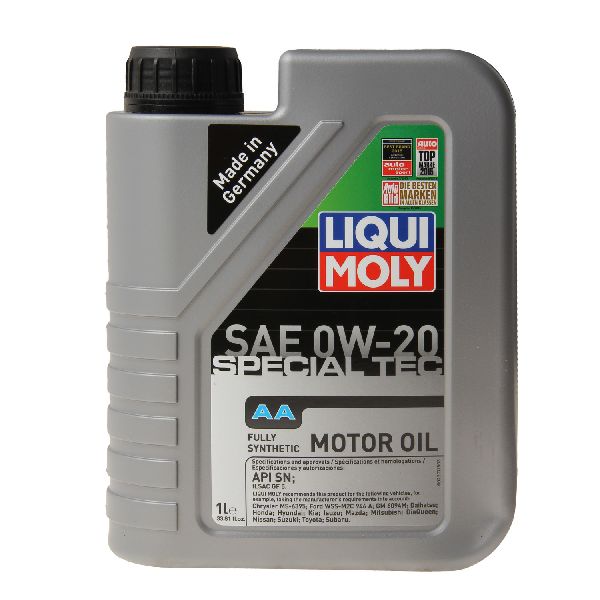
This code is most often caused by a low oil level, incorrect oil type, or a cheap aftermarket oil filter. Start by checking your oil. If that's not the issue, an oil change using full synthetic 0W-20 oil and an OEM Mopar filter is the most likely fix. This engine is known for high oil consumption, so check the level frequently. If the code persists, the next most common cause is a faulty oil pressure sensor.
- Do not ignore this code. While it might be a simple fix, the underlying cause could be low oil pressure that can destroy your engine.
- Always start with the simplest solution: check your oil level and change your oil and filter. Use only full synthetic 0W-20 oil and a Mopar OEM filter.
- If an oil change doesn't work, the oil pressure sensor is the next most likely culprit and is a manageable DIY replacement for many.
- The 2.4L MultiAir engine is not tolerant of incorrect oil or filters; sticking to OEM specifications is critical for avoiding this issue.
What's Unique About the 2015-2017 Chrysler 200
The 2.4L MultiAir2 "Tigershark" engine is uniquely dependent on oil pressure, not just for lubrication, but for its fundamental valve actuation technology. Unlike traditional camshaft-driven valves, the MultiAir system uses oil pressure to control the intake valves. This makes it extremely sensitive to oil level, viscosity, and cleanliness. Furthermore, this engine is known for excessive oil consumption, often due to a piston ring design issue, which can cause the oil level to drop and trigger P1524 long before a scheduled oil change. Owners often find that using anything other than the specified full synthetic 0W-20 oil and a high-quality OEM filter can lead to this specific code, even when other engines might tolerate it.
Symptoms You May Notice
- Check Engine Light (MIL) is on
- Vehicle may feel sluggish or have reduced engine performance
- Rough or unstable idle
- Remote start may be disabled
- Engine may stall, especially at low speeds or when stopping
- Ticking noise from the top of the engine
- Crank-no-start condition after the vehicle has been parked for an extended period (due to MultiAir system losing oil prime)
- Replacing the VVT solenoids or camshaft phasers. The code specifically points to a pressure issue supplying the system, not a failure of the components themselves.
- Assuming an engine is bad without first checking the simple causes. Due to the sensitivity of the MultiAir system, this code is very often a maintenance issue (oil/filter) or a known consumption problem rather than a major mechanical failure.
Most Likely Causes
- Low Engine Oil Level or Incorrect Oil Viscosity 🔴 High Probability The MultiAir system is hydraulically actuated and requires a precise oil volume and pressure. The 2.4L Tigershark engine is subject to a warranty extension (XB1) and TSB (09-003-23 REV. A) for excessive oil consumption, making this a very common cause. The specified full synthetic 0W-20 oil is essential.
How to confirm: Check the oil level on the dipstick. Verify service records or oil cap to see what type of oil was last used. The oil should be clean and not smell of fuel. If consumption is high, contact a dealer with your VIN to check for warranty extension eligibility.
Typical fix: Top off or perform an oil change with the correct full synthetic 0W-20 oil. If under warranty, undergo a dealer-performed oil consumption test which may lead to engine replacement.
Est. part cost: $40-$80 - Incorrect or Clogged Oil Filter 🔴 High Probability The oiling system is sensitive to flow restrictions. Poor-quality aftermarket filters may have incorrect bypass valve settings or clog prematurely, reducing oil pressure to the VVT system. Owners on forums for similar vehicles have reported P1524 after using aftermarket filters (like K&N or Amsoil) and resolved it by switching to a Mopar or Purolator filter.
How to confirm: Visually inspect the oil filter. If it is not an OEM Mopar or a high-quality equivalent, it is a likely suspect. One owner on DodgeForum.com reported that low-quality oil began to clump and repeatedly clogged new filters.
Typical fix: Replace the oil filter with a new OEM Mopar filter (Part No. 4892339AA or its successor 4892339BE) during an oil change.
Est. part cost: $10-$20 - Faulty Oil Pressure Sensor 🟡 Medium Probability The sensor is a common failure point on this platform, leading it to send inaccurate pressure readings to the PCM.
How to confirm: After confirming oil level and quality are correct, the next step is to test the sensor. A scan tool can read the pressure value the PCM sees. If it's erratic or illogical (e.g., 0 psi with the engine running), the sensor is likely bad. A definitive test involves comparing the scan tool reading to a mechanical oil pressure gauge.
Typical fix: Replace the oil pressure sensor.
Est. part cost: $25-$60 - Damaged Wiring or Connector to Oil Pressure Sensor ⚪ Low Probability The sensor is located on the back of the engine and its wiring can be exposed to heat and debris, and potentially damaged by the serpentine belt.
How to confirm: Visually inspect the wiring harness and the 3-pin connector attached to the oil pressure sensor for breaks, corrosion, or oil contamination.
Typical fix: Repair the damaged wiring or clean/replace the connector pigtail.
Est. part cost: $15-$40
Rare But Worth Checking
- Clogged MultiAir Oil Filter/Passage: The MultiAir system has its own small filter screen (Part No. 68189847AA) that can become clogged with sludge if oil changes are neglected, starving the actuator of oil. This is a critical check before condemning the expensive MultiAir 'brick' itself.
- Failing Oil Pump: If all other causes are ruled out and a mechanical gauge confirms consistently low oil pressure, the oil pump itself may be worn or failing. This is the least likely and most expensive repair.
Diagnosis Steps
- Check Engine Oil Level and Condition: Pull the dipstick. Is the oil level low? This engine is known for oil consumption. If low, top off, clear the code, and see if it returns. If consumption is excessive, proceed to step 2.
- Check for Warranty/TSB Coverage: If you are experiencing high oil consumption, contact an FCA/Stellantis dealer with your VIN. Ask them to check for coverage under the XB1 Warranty Extension or TSB 09-003-23 REV. A. This could result in a dealer-led oil consumption test and potential engine replacement.
- Verify Correct Oil and Filter: Confirm you are using full synthetic 0W-20 oil and a quality oil filter. If you are unsure, this is the best next step. Perform an oil and filter change using OEM Mopar parts. Clear the code and drive to see if it returns.
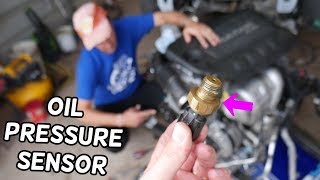
- Inspect Oil Pressure Sensor and Connector: If the code returns, locate the oil pressure sensor on the back of the engine, below the water pump. 🎬 Watch: How to fix oil pressure switch and check engine lights. Check its electrical connector for a secure fit and inspect the wiring for any visible damage.
- Test the Oil Pressure Sensor: Using a capable scan tool, monitor the engine oil pressure reading. The VVT system requires pressure to reach over 42 PSI to enable and must stay above 31 PSI to remain active. If the reading is erratic or doesn't change with engine RPM, the sensor is likely faulty.
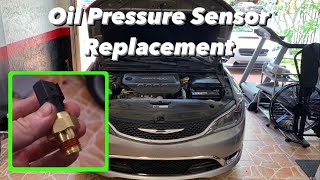
- Replace the Oil Pressure Sensor: If the sensor is suspected to be faulty, replace it. This requires a 1 and 1/16" deep socket and is typically accessed by removing the front passenger wheel and fender liner. 🎬 Watch: Step-by-step walkthrough for replacing the oil pressure sensor.
- Perform a Mechanical Oil Pressure Test: If the code still persists after replacing the sensor, the next step is to verify actual engine oil pressure with a mechanical gauge. This will confirm if there is a true internal engine pressure problem (e.g., a failing oil pump).
Parts You'll Likely Need
- Engine Oil and Filter
(OEM #4892339AA (Filter, superseded by 4892339BE))— This is the most common fix. The MultiAir system requires clean, correct-viscosity oil (0W-20 Synthetic) and a quality filter to maintain proper pressure.
Trusted brands: Mopar (OEM Filter), Pennzoil, Mobil 1
OEM price range: $10-$20 (Filter)
Aftermarket price range: $40-$70 (Oil) - Engine Oil Pressure Sensor
(OEM #68252672AA)— This sensor is a frequent failure point and sends the pressure reading to the PCM. A false reading will trigger the code even if the pressure is mechanically sound.
Trusted brands: Mopar (OEM), Standard Motor Products (SMP), Delphi
OEM price range: $40-$60
Aftermarket price range: $25-$45
Related Codes That Often Appear With This One
- P1523 (VVA Low Oil Pressure): This code is often the direct cause of P1524. P1523 indicates the low oil pressure condition was detected, and P1524 indicates the resulting action of disabling the VVT system.
- P0344 (Camshaft Position Sensor Circuit Intermittent): Low oil pressure can affect cam phasing and trigger associated sensor codes.
Technical Service Bulletins (TSBs) & Recalls
- TSB 09-003-23 REV. A / XB1 Warranty Extension: Addresses customer complaints of excessive oil consumption or the oil pressure light coming on between changes. This is a critical TSB for owners of vehicles with the 2.4L engine, as it outlines the process for an oil consumption test that can lead to a no-cost engine replacement if the vehicle qualifies.
Platform-Specific Known Issues
- Excessive Oil Consumption & Warranty Extension: The 2.4L Tigershark engine is widely known for excessive oil consumption, which has led to class-action lawsuits. FCA (now Stellantis) issued TSB 09-003-23 REV. A and an associated 'XB1' warranty extension for this issue. Owners experiencing high oil consumption may be eligible for a dealer-performed consumption test and, if the vehicle fails, a free engine replacement.
Mechanic-Grade Diagnostic Values
- Variable Valve Timing (VVT) Enablement Pressure — expected: Pressure must reach 42 PSI to enable the system.. Failure: If pressure fails to reach 42 PSI, the VVT system will not activate.
- Variable Valve Timing (VVT) Disablement Pressure — expected: Pressure must not drop below 31 PSI to remain enabled.. Failure: If oil pressure drops below 31 PSI while the system is active, the PCM will disable VVT and set code P1524.
- Oil Pressure Sensor Circuit Voltage Test — expected: With ignition on/engine off, jumping the sensor ground circuit (K900, typically a brown/light green wire) and the signal circuit (G6, typically a dark blue/dark green wire) should cause the scan tool voltage reading to drop from ~4.5V to less than 0.5V.. Failure: If the voltage does not drop, it indicates an open or high resistance in the signal or ground circuit between the sensor and the PCM.
Scan Tool Commands That Help
- wiTECH (or equivalent professional scanner): Live Data - Engine Oil Pressure — Use this as the first step to see what the PCM is reporting. Compare this value to the known PSI thresholds (31/42 PSI) and against a mechanical gauge to determine if the sensor is reading accurately or if there is a true mechanical pressure issue.
- wiTECH: Powertrain Verification Test — This is a guided routine to be performed after a repair (like replacing the oil pressure sensor) to confirm the fault is resolved and all related systems are operating correctly.
Wiring & Ground Locations
- Oil Pressure Sensor — On the back side of the engine block, located directly below the water pump. It is best accessed by removing the front passenger-side wheel and fender liner.. This is the primary sensor that reports the pressure reading to the PCM. Its location exposes its wiring to heat, debris, and potential damage from the serpentine belt.
- Oil Pressure Sensor Connector — A 3-pin connector that plugs into the oil pressure sensor. It has a red sliding lock tab that must be disengaged before removal.. A poor connection, corrosion on the pins, or oil contamination within the connector can cause incorrect readings and trigger P1524. The circuit identifiers are Pin 1: 5V Supply, Pin 2: G6 (Signal), Pin 3: K900 (Sensor Ground).
- Engine Ground Strap — A primary ground strap is bolted to the top of the passenger-side engine mount.. This ground can become corroded (appearing green). A poor engine ground can cause a variety of erratic electrical issues and sensor reading faults. Cleaning this connection point is a wise preventative measure during any related service.
- Supplemental Ground Point — A bolt on the transmission housing.. Some owners have resolved intermittent electrical issues (like no-start) by adding a supplemental 4-gauge ground wire from the battery's negative terminal to a bolt on the transmission housing, suggesting the factory grounding may be insufficient over time.
Real Owner Repair Stories
- Reddit user on r/ram_trucks (Ram 1500 (similar engine logic)) — Check engine light with code P1524, oil pressure stuck at 35 PSI regardless of RPM.
❌ Tried (didn't work) Initially considered taking it to a dealer.
✅ What actually fixed it Replacing a cheap aftermarket 'Carguard' oil filter with an OEM Mopar filter and fresh Pennzoil 5W-30 oil. Oil pressure immediately returned to a normal 55-60 PSI while driving. - YouTube channel 'Auto Guy Diy' (2009 Ram 1500 5.7L Hemi) — P1524 code, low oil pressure reading on the dash.
❌ Tried (didn't work) An oil change alone did not initially resolve the issue.
✅ What actually fixed it The root cause was found to be a severely clogged oil filter. The owner had used an 'Engine Restore' additive which appeared to break down and clog the filter media with metallic particles, starving the engine of pressure. Replacing the clogged filter fixed the code. - Reddit user on r/DodgeRam (2010 Dodge Ram 1500) — P1524 code, oil pressure reading lower than normal.
❌ Tried (didn't work) Replacing the oil pressure sensor did not fix the code.
✅ What actually fixed it Replacing the engine oil pump. The code did not return for two years after the repair. This confirms a potential mechanical failure if all other simple fixes fail.
When the Usual Fixes Don't Work
- While the most common fixes for P1524 are simple maintenance items like the correct oil and an OEM filter, it is not always the case. In one documented instance, an owner replaced the oil pressure sensor hoping for an easy fix, but the code persisted. After further diagnosis confirmed a true lack of mechanical pressure, the final repair was a replacement of the entire oil pump, which permanently resolved the issue. This serves as a critical reminder to perform a mechanical oil pressure test before assuming the issue is just a sensor or filter, especially if those items have already been addressed.
OEM Part Supersession History
68145662AA→68145662AB, 68252672AA— Standard part revision and update by the manufacturer.
Heads up: These part numbers are generally interchangeable for the specified vehicle, but it is always best to verify the correct part number with a dealer using the vehicle's VIN.
Diagnostic Flowchart
Used vs. New Parts: Buying Guide for This Vehicle
When a used part is the smart pick: For this repair, sourcing a used wiring harness pigtail for the oil pressure sensor from a junkyard is a viable option if the original connector is broken, as long as the used connector is free of corrosion and the wires are pliable. Major mechanical components like the MultiAir actuator ('brick') or the complete engine could be sourced from a low-mileage wrecked vehicle, but this carries significant risk and should only be considered if the cost of new parts is prohibitive.
Donor-vehicle mileage cap: roughly under 70000 miles for the part to have meaningful remaining life.
What to inspect on the donor part:
- For a wiring pigtail, check for brittle plastic, corrosion on the pins, and any signs of previous repair (splices).
- For a major component like an engine or MultiAir brick, look for a donor vehicle with verifiable low mileage and no signs of front-end collision or fire.
- Check the oil condition in the donor engine if possible; milky or sludgy oil is a major red flag.
OEM-only on this vehicle (don't cheap out):
- Engine Oil Filter: This is the most critical component. Use only the Mopar OEM filter or a proven high-quality equivalent like Wix or Purolator. Cheap aftermarket filters are a known direct cause of P1524.
- Engine Oil Pressure Sensor: Due to the sensitivity of the MultiAir system, using an OEM Mopar sensor is strongly recommended to avoid inaccurate readings that can mimic a real pressure problem.
Aftermarket brands forum-validated for this vehicle:
- Oil Filters: Wix, Purolator
- Sensors: Standard Motor Products (SMP), Delphi
Brands owners have reported issues with on this vehicle:
- Oil Filters: Generic or store-brand filters (e.g., 'Carguard'), and some reports mention issues with Fram and K&N on sensitive Mopar engines.
Real Owner Stories
Aggregated from forums and TSBs cited above. Mileages and costs reflect what owners reported in those sources.
Ram with Hemi engine
Symptoms: The vehicle set a P1524 code and oil pressure was observed to be maxing out at 32 psi.
What fixed it: The owner replaced the Amsoil oil filter with a Purolator filter. This action alone caused the oil pressure to jump to 49 psi and resolved the code.
Source hint: RamForum.com - 'Code P1524 - should I bother with Dealer?'
2014 Ram 1500
Symptoms: A recurring P1524 code was present. Upon inspection, the oil filter was found to be clogged, but not with any metal debris.
What fixed it: The issue was attributed to low-quality oil that was clumping and prematurely clogging the oil filter, restricting flow. An oil and filter change with quality components was the implied solution.
Source hint: DodgeForum.com - 'P1524 oil pressure out of range - oil filter problem'
Ram Truck
Symptoms: The owner received a P1524 diagnostic trouble code.
What fixed it: The advice given and the most effective first step was to perform a complete oil and filter change.
Source hint: Reddit r/ram_trucks - 'Code P1524 and Oil Filters'
Related OBD-II Codes
Frequently Asked Questions
My 2016 Chrysler 200 is burning a lot of oil and just threw a P1524 code. Is there a recall for this?
What is the correct oil and filter to use for my Chrysler 200 2.4L to prevent code P1524?
I just did an oil change with an aftermarket filter and now my check engine light is on with P1524. Could the filter be the cause?
My remote start has stopped working and the engine feels sluggish. Are these symptoms of a P1524 fault?
My oil level is full, but the P1524 code keeps coming back. What should I check next?
I heard the 2.4L Tigershark engine has oil consumption issues. Does this problem affect other vehicles besides the Chrysler 200?
Helpful Videos
Used OEM Parts in Stock

New Aftermarket Parts Available

The information in this article is provided for general reference and educational purposes only. Vehicle specifications, procedures, and part compatibility can vary by production date, trim level, and region. Always consult your vehicle's factory service manual and verify part numbers before purchasing or performing repairs. Safety-critical components such as airbags, seat belts, and braking systems should be installed by a qualified professional.
- Chrysler 200:
- 🎬 Helpful Videos
- 🛍️ Shop This Part
- What's Unique About the 2015-2017 Chrysler 200
- Symptoms You May Notice
- Most Likely Causes
- Rare But Worth Checking
- Diagnosis Steps
- Parts You'll Likely Need
- Related Codes That Often Appear With This One
- Technical Service Bulletins (TSBs) & Recalls
- Platform-Specific Known Issues
- Mechanic-Grade Diagnostic Values
- Scan Tool Commands That Help
- Wiring & Ground Locations
- Real Owner Repair Stories
- When the Usual Fixes Don't Work
- OEM Part Supersession History
- Diagnostic Flowchart
- Used vs. New Parts: Buying Guide for This Vehicle
- Real Owner Stories
- Ram with Hemi engine
- 2014 Ram 1500
- Ram Truck
- Related OBD-II Codes
- Frequently Asked Questions
- 🎟️ Get 5% Off