

P1523 on 2002-2009 GMC Envoy 4.2L: Throttle Body Return Fault Causes and Fixes
On a 2002-2009 GMC Envoy, code P1523 is most often caused by a dirty or sticking electronic throttle body due to carbon buildup. A thorough cleaning of the throttle plate and bore often resolves the issue. If cleaning doesn't work, the throttle body assembly likely needs replacement. A throttle relearn procedure is recommended after either service.
- P1523 on a GMC Envoy is not a VVT solenoid issue; it is specifically for the electronic throttle body.
- The most common and cheapest fix is to thoroughly clean the carbon buildup from the throttle body plate and bore. This is a well-documented procedure in owner forums and videos.
- A manual throttle relearn procedure is necessary after cleaning or replacement and can be done without a scan tool.
- If cleaning doesn't solve the problem, the entire throttle body assembly usually needs to be replaced. Use the updated part number 12679524.
- This code will likely put the vehicle into 'Reduced Engine Power' mode, so it should be addressed to restore normal vehicle operation.
What's Unique About the 2002-2009 GMC Envoy
The GMC Envoy's 4.2L LL8 engine, part of the GMT360 platform, uses a full drive-by-wire electronic throttle control system. Over time, carbon and oil vapor from the crankcase ventilation (PCV) system can build up inside the throttle body bore. This buildup is very common and can cause the throttle plate to stick, preventing it from closing properly and directly triggering the P1523 diagnostic test. While many issues on this engine point to VVT solenoids, this code is exclusively related to the throttle body's return performance.
Symptoms You May Notice
- Check Engine Light is on
- "Reduced Engine Power" message displayed
- Vehicle may not start or has a long crank time
- Poor, erratic, or high idle
- Stalling, especially when coming to a stop or with A/C on
- Poor or delayed throttle response
- Engine stumbles on acceleration
- Replacing the Accelerator Pedal Position (APP) sensor. While part of the throttle control system, the P1523 code specifically points to a fault at the throttle body's return performance, not the pedal's input.
- Replacing the Camshaft Position Actuator (VVT) Solenoids. VVT solenoid failure is very common on the 4.2L engine but causes different codes (like P0014 or P0017) and is unrelated to P1523.
- Replacing the fan clutch. A failing fan clutch can cause issues with the 5v reference circuit, but this typically sets other codes alongside the throttle codes. It can be diagnosed by unplugging the fan clutch to see if the P1523 code disappears.
Most Likely Causes
- Dirty/Sticking Throttle Body 🔴 High Probability The crankcase ventilation system routes oil vapor and combustion byproducts into the intake, leading to a sticky ring of carbon and sludge buildup in the throttle body, which can make the throttle plate physically stick.
How to confirm: Remove the intake ducting from the throttle body and visually inspect the throttle plate and bore for a ring of black carbon buildup. Manually move the plate (with the engine off) to feel for any binding, scraping, or sticking.
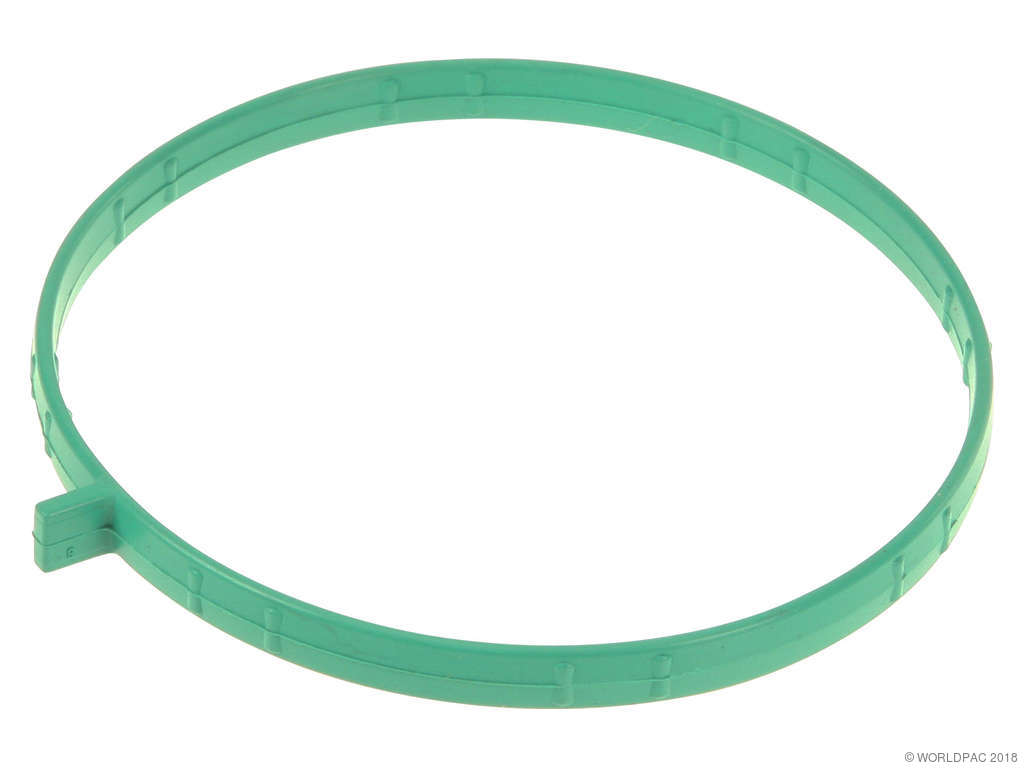
Typical fix: Thoroughly clean the throttle body bore and both sides of the throttle plate using a dedicated throttle body cleaner and a soft, lint-free cloth or plastic bristle brush. Do not use metal brushes. The throttle body should be removed (typically four 10mm bolts) for a complete cleaning. The silicone gasket is often reusable if not torn. A throttle position relearn procedure is required after cleaning.
Est. part cost: $5-$15 for cleaner - Failing Throttle Body Assembly 🟡 Medium Probability The internal motor or the dual Throttle Position Sensors (TPS) within the sealed throttle body assembly can fail electrically over time, causing erratic behavior or a complete loss of function.
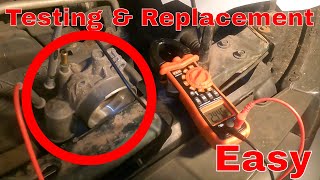
How to confirm: If a thorough cleaning and relearn procedure does not resolve the code, and the wiring is confirmed to be good, the throttle body assembly itself is the likely point of failure. 🎬 Watch: A complete guide to troubleshooting and replacing the throttle body. A scan tool may show the commanded throttle position and actual throttle position disagreeing. A multimeter can be used to test the resistance of the internal motor and sensors, comparing them to known good values.
Typical fix: Replace the entire throttle body assembly. This is a bolt-on part, but requires a throttle relearn procedure after installation.
Est. part cost: $100-$250 - Damaged Wiring or Connector ⚪ Low Probability The engine harness is exposed to heat and vibration, which can cause wires to fray or the connector pins to lose tension or corrode over many years. The pigtail right at the throttle body is the most common failure point.
How to confirm: Visually inspect the throttle body electrical connector for corrosion, pushed-out pins, or loose connections. Wiggle the harness near the connector with the engine running to see if it causes a stumble. Check the wiring harness leading to the connector for any signs of chafing, melting, or breaks.
Typical fix: Repair the damaged section of wiring or replace the connector pigtail.
Est. part cost: $15-$40 for a pigtail
Rare But Worth Checking
- Faulty Powertrain Control Module (PCM): This is extremely rare. The PCM should only be considered after all other possibilities, including the throttle body and its wiring, have been exhaustively tested and ruled out.
Diagnosis Steps
- Verify the engine oil level and condition are good, as extreme electrical issues can sometimes be caused by a weak battery.
- Turn the ignition ON (engine OFF). Listen for any unusual clicking or buzzing from the throttle body area.
- Disconnect the intake air duct from the throttle body. This usually involves loosening hose clamps with a flathead screwdriver and removing a few 10mm bolts holding the resonator box.
- Visually inspect the throttle bore and plate for heavy carbon buildup. A black, sticky ring where the plate closes is the key indicator.
- If dirty, disconnect the battery's negative terminal for at least 30 minutes to reset the PCM's learned values. Remove the throttle body (four 10mm bolts) for better access and clean it thoroughly with dedicated throttle body cleaner and a soft rag or plastic brush. Be careful not to damage the reusable orange silicone gasket.
- Reinstall the throttle body, torquing the bolts in a criss-cross pattern. Reconnect the intake and battery.
- Perform a throttle relearn procedure. This can be done without a scan tool: Turn the ignition on (engine off) for 3 minutes. Turn off for 60 seconds. Start the engine and let it idle in Park for 3 minutes. The idle should stabilize. 🎬 See how to fix the reduced engine power message yourself. A short drive cycle with varied speeds may also be needed.
- If the code returns, inspect the throttle body electrical connector and harness for any visible damage, corrosion, or loose pins.
- Using a capable scan tool, monitor the commanded vs. actual throttle position PIDs. If they do not match or the actual position is erratic, the throttle body assembly is faulty.
- If all else fails, the PCM driver for the throttle body could be at fault, but this is highly unlikely.
Parts You'll Likely Need
- Electronic Throttle Body Assembly
(OEM #12679524)— This is the primary cause of the code if a thorough cleaning does not resolve the issue. The internal motor or sensors fail. The original part number 12572658 has been superseded by 12580760, and then by 12679524.
Trusted brands: ACDelco (GM Original Equipment), Delphi, Hitachi, Dorman
OEM price range: $200-$300
Aftermarket price range: $100-$200 - Throttle Body Cleaner — This is required for the most common and least expensive fix: cleaning a sticking throttle plate.
Trusted brands: CRC, Berryman, Gumout
Aftermarket price range: $5-$15
Related Codes That Often Appear With This One
- P1515 — This code relates to a mismatch between the Throttle Actuator Control (TAC) module and the PCM, often triggered by the same underlying throttle body issues.
- P1516 — This code indicates the TAC module has detected a throttle position error that is outside the predicted range, which can occur if the throttle plate is sticking or the sensors are failing.
- P2135 — This code indicates a correlation error between the two internal throttle position sensors (TPS A and TPS B). A failing throttle body assembly will often set this code along with P1523.
Technical Service Bulletins (TSBs) & Recalls
- While no TSB directly addresses P1523, GM Corporate Bulletin 03-06-04-030F discusses driveability issues from deposits and recommends cleaning procedures and using Top Tier fuel, which relates to the root cause of carbon buildup.
- GM Corporate Bulletin 04-06-04-051 discusses the use of fuel additives, but GM does not generally endorse injector cleaning as preventative maintenance, only as a specific repair step when directed by diagnostics.
Platform-Specific Known Issues
- The GMT360 platform's 4.2L engine is known for heavy carbon buildup in the throttle body, making cleaning a very common maintenance item to resolve idle and stalling issues. Several owner videos and forum posts confirm this is the first and most successful step.
- While GM has issued bulletins (like 03-06-04-030F) regarding fuel injector cleaning and using Top Tier gasoline to prevent deposits, these are generally for other codes like P0171 or P0300 and do not directly address the mechanical sticking that causes P1523.
Mechanic-Grade Diagnostic Values
- Throttle Actuator Control (TAC) Motor Resistance — expected: 2 to 13 Ohms. Failure: A reading below 1 Ohm indicates an internal short circuit. A reading in the K-Ohm or OL (Open Loop) range indicates an open circuit.
- Throttle Position Sensor 1 (TPS1) Internal Resistance — expected: Approximately 3.0 kOhms. Failure: A reading of 0 Ohms (short) or OL (open circuit) indicates a failed sensor.
- Throttle Position Sensor 2 (TPS2) Resistance Sweep — expected: Resistance should change smoothly from ~2.4 kOhms at closed throttle to ~1.0 kOhms at wide-open throttle.. Failure: Resistance that is jumpy, erratic, or does not change when the throttle plate is moved indicates a failed sensor.
- 5-Volt Reference at Throttle Body Connector — expected: 4.8V to 5.2V. Failure: Voltage significantly lower than 4.8V or absent suggests a wiring issue or a problem with the PCM. This can also be caused by a short in another sensor on the same circuit, like the fan clutch.
Scan Tool Commands That Help
- GM Tech2 / GDS2 or capable aftermarket scanner: TAC System Test (Throttle Actuator Control) — This is a bidirectional control that allows a technician to command the throttle plate to open and close. It is used to verify if the motor is responding correctly and to check for any physical binding or sticking of the throttle plate, which helps separate a mechanical failure (sticking) from an electrical one (bad motor/sensor).
- GM Tech2 / GDS2 or capable aftermarket scanner: Throttle/Idle Learn — This function is mandatory after cleaning or replacing the throttle body. It resets the learned idle position and throttle range stored in the Engine Control Module (ECM) to prevent high idle, stalling, or other driveability issues.
Wiring & Ground Locations
- Throttle Body 8-Pin Connector — Directly on the electronic throttle body assembly at the front of the engine.. This is the single connection point for the actuator motor and both TPS sensors. Corrosion, pushed-out pins, or frayed wires in the pigtail are a common cause of throttle-related codes. The pinout is: Pin A (DK GRN): TPS 1 Signal, Pin B (LT BLU/BLK): 5V Ref (TPS 2), Pin C (BLK): Ground (TPS 1), Pin D (PPL): TPS 2 Signal, Pin E (YEL): TAC Motor Control, Pin F (BRN): TAC Motor Control, Pin G (GRY): 5V Ref (TPS 1), Pin H (BLK/WHT): Ground (TPS 2).
- G101 — On the lower front of the engine block.. This is a primary ground location for the Engine Control Module (ECM). A poor or corroded connection here can cause a wide range of erratic sensor readings and module behavior, including faulty throttle control operation.
- G103 / G104 / G107 — On the driver's side of the engine block, often near the power steering pump or alternator.. These are major engine block grounds. On the GMT360 platform, poor grounds are a well-documented cause of 'Reduced Engine Power' mode and various electronic issues. Ensuring these are clean and tight is a critical step when diagnosing any electronic fault code.
Real Owner Repair Stories
- YouTube channel 'Trailblazer Problems' (2005 Chevrolet Trailblazer 4.2L) — Reduced Engine Power light, stalling, and throttle-related codes.
❌ Tried (didn't work) The owner first suspected the throttle body was bad but decided to test it before replacing.
✅ What actually fixed it Testing the original throttle body revealed the TAC motor resistance was 1.3 Ohms, which is below the specified 2-13 Ohm range, indicating a fault. The owner replaced the throttle body with a used unit from a junkyard which tested at 1.8 Ohms (closer to spec). This replacement resolved the issue.
OEM Part Supersession History
12568580→12572658, then 12580760, then 12679524— Standard part evolution for design improvements and supplier changes.
Heads up: The part number 12568580 is widely cited for the 2002-2007 4.2L I6 engine.N/A→12616437 or F00H600078 (Bosch)— A different throttle body was used for the later model years of the 4.2L engine.
Heads up: For the 2008-2009 model years with the 4.2L I6 engine, the earlier part number (12568580) is not listed as compatible. You must use the part specified for these later years.
Model Year Variations Within This Range
- 2008-2009: The electronic throttle body assembly uses a different part number (e.g., 12616437) than the earlier 2002-2007 models (12568580). While physically similar, the internal electronics or calibration may be different, making them incompatible.
Diagnostic Flowchart
Used vs. New Parts: Buying Guide for This Vehicle
When a used part is the smart pick: A used throttle body from a junkyard can be a cost-effective option, especially if you can test it or pull it from a low-mileage donor. Since the most common failure is electronic, a used part is a gamble, but one that can pay off if the original part's failure is confirmed via resistance testing.
Donor-vehicle mileage cap: roughly under 100000 miles for the part to have meaningful remaining life.
What to inspect on the donor part:
- Check the donor vehicle's mileage if possible; lower is always better.
- Visually inspect the throttle bore. A relatively clean bore may indicate a well-maintained engine.
- If you have a multimeter with you, perform a TAC motor resistance test (Pins E & F). A reading between 2-13 Ohms is a good sign.
- Ensure the electrical connector pins are straight and free of corrosion.
Aftermarket brands forum-validated for this vehicle:
- ACDelco (Original Equipment)
- Bosch (Often the OE supplier)
- Hitachi (Often an OE supplier)
- Delphi
Brands owners have reported issues with on this vehicle:
- Be cautious with unbranded, 'white-box' parts from online marketplaces. While some may work, failure rates and calibration issues are more common. Dorman offers an 'OE FIX' version with an upgraded shaft seal to prevent future failures, which may be a consideration.
Real Owner Stories
Aggregated from forums and TSBs cited above. Mileages and costs reflect what owners reported in those sources.
2003 GMC Envoy SLT 4.2L
Symptoms: MIL light on, codes P1523 and P0172 (System runs rich bank 1).
What fixed it: The source is a request for help from a technician and does not state the final repair.
Source hint: iATN - 2003 GMC Envoy SLT 4.2L Poor Fuel Economy, MIL Lamp on
2002 GMC Envoy SLT 4.2L
Symptoms: MIL Lamp on, Reduced Power Light.
What fixed it: The source quote is incomplete and does not state the final repair.
Source hint: iATN (International Automotive Technicians Network)
2006 Chevrolet TrailBlazer 4.2L
Symptoms: Owner experienced throttle body issues, setting a related code (P1516).
What fixed it: The forum thread title indicates that cleaning the throttle body solved the problem.
Source hint: GMTNation.com - A thread titled 'SOLVED: P1516 06 4.2 ls trailblazer'
Related OBD-II Codes
Frequently Asked Questions
My Envoy is in 'Reduced Engine Power' mode. Is cleaning the throttle body the first thing I should do?
I cleaned my throttle body, but the idle is still high and erratic. What did I miss?
Is the orange silicone gasket on the throttle body reusable?
Does GM have a TSB specifically for code P1523 on the Envoy?
My mechanic says the whole throttle body needs to be replaced. Is this common?
I have a Chevrolet TrailBlazer with the 4.2L engine. Does this P1523 information apply to my vehicle?
Helpful Videos

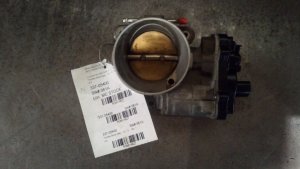
Used OEM Parts in Stock


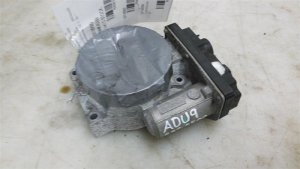

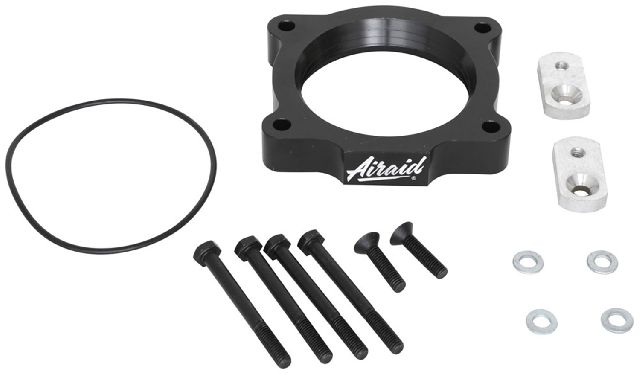
New Aftermarket Parts Available




The information in this article is provided for general reference and educational purposes only. Vehicle specifications, procedures, and part compatibility can vary by production date, trim level, and region. Always consult your vehicle's factory service manual and verify part numbers before purchasing or performing repairs. Safety-critical components such as airbags, seat belts, and braking systems should be installed by a qualified professional.
- GMC Envoy:
- 🎬 Helpful Videos
- 🛍️ Shop This Part
- What's Unique About the 2002-2009 GMC Envoy
- Symptoms You May Notice
- Most Likely Causes
- Rare But Worth Checking
- Diagnosis Steps
- Parts You'll Likely Need
- Related Codes That Often Appear With This One
- Technical Service Bulletins (TSBs) & Recalls
- Platform-Specific Known Issues
- Mechanic-Grade Diagnostic Values
- Scan Tool Commands That Help
- Wiring & Ground Locations
- Real Owner Repair Stories
- OEM Part Supersession History
- Model Year Variations Within This Range
- Diagnostic Flowchart
- Used vs. New Parts: Buying Guide for This Vehicle
- Real Owner Stories
- 2003 GMC Envoy SLT 4.2L
- 2002 GMC Envoy SLT 4.2L
- 2006 Chevrolet TrailBlazer 4.2L
- Related OBD-II Codes
- Frequently Asked Questions
- 🎟️ Get 5% Off