

P1507 on 1994-2002 Honda Accord: Idle Control Malfunction Causes and Fixes
P1507 on a 1994-2002 Honda Accord almost always means the Idle Air Control (IAC) Valve is dirty or has failed. The engine's computer can't maintain the correct idle speed, causing stalling and a rough idle. A thorough cleaning of the IAC valve and throttle body often fixes it for under $20 in materials. If cleaning fails, replacement is the next step.
- P1507 means your Accord's idle is too low, and the most likely culprit is a dirty Idle Air Control (IAC) Valve.
- The fix is often inexpensive, requiring only a can of carburetor cleaner, a new gasket, and basic hand tools.
- When removing the IAC valve, be prepared for a small amount of coolant to spill from the attached hoses. Always perform this job on a cold engine.
- After cleaning or replacing the valve, you must perform an idle relearn procedure by letting the car idle for about 10 minutes for the computer to adjust.
- Do not adjust the factory-set throttle stop screw in an attempt to fix the idle; this will not solve the problem and may create new ones.
What's Unique About the 1994-2002 Honda Accord

On this era of Honda Accord (both 5th and 6th generations), the Idle Air Control (IAC) valve is a very common failure point due to carbon buildup from the crankcase ventilation system. A unique feature is that the IAC valve is heated by engine coolant, with two small coolant hoses attached to it. This design can make removal and replacement slightly messy, as some coolant will spill. It's a well-known issue in the owner community, and cleaning the valve is a standard maintenance procedure for many. The V6 (J30A1) and 4-cylinder (F-series) engines use different IAC valve designs and locations, but both suffer from the same carbon buildup problem.
Generation note: This guide covers the fifth generation (1994-1997) and sixth generation (1998-2002) Honda Accord. The function and common failure of the Idle Air Control (IAC) valve are the same for both, but the specific location and appearance of the valve and throttle body may vary slightly between engine types (4-cylinder F22/F23 vs. V6 J30A1) and generations. The 5th generation IACV is typically a separate component bolted to the intake manifold, while the 6th generation IACV is usually mounted directly to the throttle body.
Symptoms You May Notice
- Check Engine Light is on
- Engine stalls, especially when coming to a stop or at low RPM
- Rough, surging, or fluctuating idle speed.
- Difficulty starting the engine without giving it some gas
- Idle speed is noticeably lower than normal (e.g., below 500 RPM)
- Engine hesitates or stumbles when electrical loads (like A/C or headlights) are turned on
- Replacing the throttle position sensor (TPS). The TPS reports the throttle plate angle and does not directly control idle speed; a faulty TPS will typically set its own specific codes.
- Adjusting the throttle stop screw. This screw is factory-set and should not be adjusted to compensate for an idle problem. The issue lies with the bypass air system (IACV), not the base throttle setting.
Most Likely Causes

- Dirty or Sticking Idle Air Control (IAC) Valve 🔴 High Probability Carbon from the crankcase ventilation and EGR systems builds up over time, causing the valve's internal plunger or rotary shutter to stick. This is the most frequent cause of P1507 on these Accords. The passages become clogged, restricting the bypass air needed to maintain idle.
How to confirm: Remove the IAC valve from the throttle body or intake manifold. Inspect the air passages and the valve mechanism for heavy black carbon deposits. The screen on the valve is often completely blocked.
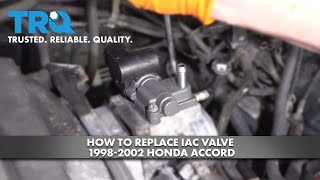
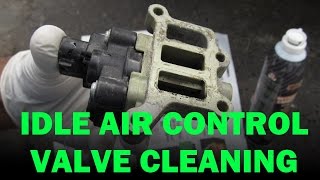
Typical fix: Thoroughly clean the IAC valve and the corresponding ports on the throttle body with carburetor cleaner and a small brush. Always replace the IAC valve gasket to prevent a vacuum leak. If cleaning doesn't work, the valve's internal electric motor has likely failed and the entire unit needs to be replaced. 🎬 Watch: Step-by-step guide to replacing the IAC valve on 6th-gen Accords.
Est. part cost: $5-$20 for cleaner and a gasket, $70-$200 for a new IAC valve. - Vacuum Leak 🟡 Medium Probability Over time, rubber vacuum hoses can crack, and intake gaskets can become brittle, allowing unmetered air to enter the engine. This disrupts the air-fuel mixture and can confuse the idle control system.
How to confirm: With the engine running, listen for hissing sounds around the intake manifold. You can also carefully spray short bursts of carburetor cleaner or use a smoke machine around vacuum lines and gasket surfaces; if the engine idle changes, you've found the leak. Pay close attention to the PCV valve hose and brake booster hose.
Typical fix: Replace the cracked vacuum hose or leaking gasket.
Est. part cost: $5-$50 - Faulty IAC Valve Electrical Circuit ⚪ Low Probability
How to confirm: Inspect the IAC valve's electrical connector for corrosion or damage. With a multimeter and the key on, check for battery voltage at the power pin on the connector (often the center pin on a 3-wire connector). You can also check the resistance of the coils inside the IAC valve to see if they are within the manufacturer's specified range (typically between 8-15 ohms for each coil).
Typical fix: Clean the connector contacts or repair the damaged wiring. If the internal coils are out of spec (open or shorted), the IAC valve must be replaced.
Est. part cost: $1-$10 for wiring repair supplies. - Clogged Throttle Body Ports 🟡 Medium Probability The small air passages in the throttle body that feed the IAC valve can become clogged with the same carbon that affects the valve itself. Cleaning the valve without cleaning the ports may not solve the issue.
How to confirm: When the IAC valve is removed for cleaning, inspect the corresponding ports on the throttle body. They are often caked with black soot.
Typical fix: Use throttle body cleaner and small brushes to meticulously clean the passages in the throttle body leading to and from the IAC valve.
Est. part cost: $5-$10 for cleaner.
Rare But Worth Checking
- Faulty Powertrain Control Module (PCM): This is extremely rare. The PCM is the last thing to suspect. Only consider this after every other possibility, including wiring, has been exhaustively tested and ruled out. A faulty PCM driver for the IAC valve is possible but unlikely.
- Poor ECU Ground (G101): The main ECU ground, often designated G101, is critical for stable sensor readings and actuator control. On these Accords, it's typically located on the thermostat housing. If this connection becomes corroded or loose, it can cause a host of intermittent issues, including erratic idle control that can trigger a P1507.
Diagnosis Steps

- Scan for any other trouble codes to see if other issues are present.
- Visually inspect the air intake hose between the air filter box and the throttle body for cracks or loose clamps.
- Inspect all accessible vacuum hoses connected to the intake manifold for cracks, disconnection, or deterioration.
- Locate the Idle Air Control (IAC) valve. On 4-cylinder models it's typically on the back of the intake manifold; on V6 models it's often on the throttle body. Inspect its electrical connector for damage, corrosion, or loose pins.
- Perform a cleaning procedure: With the engine cold, disconnect the battery. Place a drain pan or rags under the vehicle to catch coolant. Carefully disconnect the two small coolant hoses from the IAC valve using pliers on the clamps. Unbolt the IAC valve (typically two 12mm bolts), remove the old gasket, and thoroughly clean the valve's passages and the throttle body ports with carburetor cleaner and a soft brush.
- Reinstall the valve with a new gasket, reconnect the coolant lines and electrical connector.
- Top off any lost coolant. Reconnect the battery.
- Perform an idle relearn procedure: Start the engine and hold the RPM at 3,000 with no electrical load until the radiator fan cycles on. Then, let the engine idle for at least 5-10 minutes. A simpler method is to just let the car idle with no accessories on until the radiator fan cycles twice.
- If the problem persists after cleaning, test the IAC valve's internal resistance with a multimeter or consider replacing it. 🎬 Watch: How to test the IAC valve using a multimeter for P1507 codes.
Parts You'll Likely Need

- Idle Air Control Valve (IACV)
(OEM #36460-PAA-L21 (for 4-Cyl F23A1/F23A4); 16022-P8A-A03 (for V6 J30A1, supersedes 16022-P8A-A01/A02))— This is the component that fails or gets clogged, directly causing the P1507 code. Cleaning often works, but if the internal motor is dead, it must be replaced.
Trusted brands: Denso, Hitachi, Standard Motor Products, Walker
OEM price range: $150-$350
Aftermarket price range: $50-$120 - Idle Air Control Valve Gasket
(OEM #Included with most new valves, or sold separately. OEM for F23A1 is often 16455-P0A-A01.)— The old gasket will be compressed and may be damaged during removal. A new gasket is required to prevent a vacuum leak upon reinstallation.
Trusted brands: Fel-Pro, Mahle, OEM Honda
OEM price range: $5-$15
Aftermarket price range: $3-$10 - Carburetor/Throttle Body Cleaner — This is the solvent needed to break down the carbon deposits that cause the IAC valve to stick.
Trusted brands: CRC, Gumout, Berryman
Aftermarket price range: $5-$10
Related Codes That Often Appear With This One
- P0505 — This is the generic SAE code for 'Idle Air Control System Malfunction.' P1507 is Honda's more specific version for an underspeed condition, and they point to the same fundamental problem.
- P0171 — This code for 'System Too Lean' can appear alongside P1507 if the root cause is a significant vacuum leak. The unmetered air causes both the lean condition and the idle control problem.
Platform-Specific Known Issues
- The IACV is a two-wire or three-wire rotary valve located on the back of the intake manifold, making it somewhat difficult to access. Cleaning is highly effective. The OEM part number is typically 36460-PAA-L21 for 98-02 models.
- The IACV is mounted directly to the throttle body and is generally easier to access than the 4-cylinder version. It is a rotary type valve. The OEM part number is 16022-P8A-A03, which supersedes earlier versions.
Mechanic-Grade Diagnostic Values
- IAC Valve Coil Resistance (3-wire type) — expected: Approximately 8-15 Ohms between the center power pin and each of the two outer control pins. Some sources cite up to 12.9 Ohms.. Failure: A reading of infinite resistance (open circuit) or near zero resistance (short circuit) on either coil indicates a failed valve.
- IAC Valve Connector Voltage (Key On, Engine Off) — expected: Battery voltage (~12V) should be present at the center pin (YEL/BLK wire) relative to a good chassis ground.. Failure: Low or no voltage indicates a problem with the PGM-FI main relay or the wiring from it.
- Live Data: Desired vs. Actual Idle RPM — expected: At idle, the desired and actual RPM values should be very close to each other (e.g., 750 RPM).. Failure: With P1507, the scan tool will show the PCM is commanding a higher idle speed (Desired RPM) than the engine is actually achieving (Actual RPM), confirming an 'underspeed' condition.
Wiring & Ground Locations
- G101 — The main engine-to-chassis ground, critical for the ECU and sensors. On many F-series and J-series engines of this era, it is a multi-wire ground ring terminal bolted to the thermostat housing.. Corrosion or a loose connection at G101 can cause erratic behavior from the ECU and its controlled actuators, including the IAC valve. This can lead to unstable idle and trigger P1507, even if the IAC valve itself is good. It is a common, often-overlooked cause of persistent idle issues after the IAC has been cleaned or replaced.
- IAC Valve Connector (3-wire) — Connected directly to the Idle Air Control Valve.. Pin 1 is often a BLK ground wire, Pin 2 is the YEL/BLK power wire from the PGM-FI Main Relay, and Pin 3 is the BLK/BLU control wire from the ECU. Testing for power at Pin 2 and checking continuity of the other wires back to the ECU and ground is a key diagnostic step.
Real Owner Repair Stories
- Honda-Tech Forum User (Honda Accord, year/engine not specified but context implies 90s model) — Car would randomly die and not restart, or would die when letting off the gas.
❌ Tried (didn't work) Cleaning the ground terminal and bolt., Repositioning the ground wire., Initially suspecting a flooded engine or incorrect spark plug wire order.
✅ What actually fixed it The issue was a faulty G101 ground connection at the thermostat housing. The user had loosened it during other repairs. After cleaning and properly securing the G101 ground, the car ran correctly. Another user in the same thread noted a similar issue was caused by a frayed G101 wire inside the loom, not the connection point itself.
OEM Part Supersession History
16022-P8A-A01, 16022-P8A-A02→16022-P8A-A03— Standard part revision and consolidation by Honda for the J30A1 V6 engine.
Heads up: The parts are interchangeable; the latest version (A03) is the correct service replacement for all previous versions on the 1998-2002 Accord V6.36460-PAA-L21→Discontinued— End of production life for the OEM part for the F23 4-cylinder engine.
Heads up: While the OEM part is discontinued, numerous aftermarket replacements are available. However, quality can vary significantly.
Model Year Variations Within This Range
- 1994-1997 (5th Generation): These earlier models often feature a separate Fast Idle Thermo Valve (FITV) in addition to the IACV. The FITV is a mechanical, wax-pellet valve that controls high idle on a cold engine. A faulty FITV (often just needing its plastic ring tightened) can cause surging or incorrect idle speeds that can be misdiagnosed as an IACV problem.
- 1998-2002 (6th Generation): The FITV was integrated into the IACV assembly or its function was taken over by the ECU and IACV entirely. Diagnosis is more streamlined towards the IACV, its wiring, and ECU control, without the separate mechanical FITV as a potential cause.
Diagnostic Flowchart
Other Known Issues on This Vehicle
Issues unrelated to this code that are worth knowing about as an owner of this generation:
- Automatic Transmission Failure 🔴 High — Very common, especially on V6 models, often occurring between 80,000 and 150,000 miles. The 2nd gear clutch pack was a known weak point. (Ref: Honda issued TSB 02-062 extending the warranty on some 2000-01 models, and the issue led to a class-action lawsuit.)
- Faulty Ignition Switch 🔴 High — Widespread enough to cause a massive recall. The switch could wear prematurely, causing the engine to stall while driving. (Ref: NHTSA Recall 02V120000. Honda recalled ~1.3 million vehicles, including 1997-2000 Accords, to replace the electrical portion of the switch.)
- Clogged EGR Ports 🟠 Medium — Extremely common on both 4-cylinder and V6 models, typically after 100,000 miles. Causes rough idle, hesitation, and EGR-specific codes (P0401). (Ref: No recall, but it is a well-documented issue in service manuals and owner forums.)
- Ignition Key Interlock Failure 🟠 Medium — Common enough to warrant a recall. Allowed the key to be removed from the ignition without the transmission being in Park. (Ref: NHTSA Recall 03V423000. Affected certain 1998-1999 Accords.)
- Main Relay Failure 🟠 Medium — A classic Honda issue from this era. Solder joints on the main relay circuit board crack over time, causing intermittent no-start conditions, especially when hot.
Used vs. New Parts: Buying Guide for This Vehicle
When a used part is the smart pick: For this repair, a used OEM (Denso or Hitachi) IAC valve from a low-mileage junkyard vehicle is often a better and more reliable choice than a new, cheap, no-name aftermarket valve. Forum and mechanic consensus indicates that many aftermarket valves fail quickly or don't perform correctly, leading to persistent idle issues.
Donor-vehicle mileage cap: roughly under 120000 miles for the part to have meaningful remaining life.
What to inspect on the donor part:
- Inspect the electrical connector for corrosion or broken plastic.
- Look into the air ports; minimal carbon buildup is a good sign.
- Ensure the small mesh screen is intact and not clogged or torn.
- If possible, gently shake the valve to check for rattling, which could indicate internal damage.
Aftermarket brands forum-validated for this vehicle:
- Denso (often the original OEM supplier)
- Hitachi
- Standard Motor Products (SMP)
- Walker Products
Brands owners have reported issues with on this vehicle:
- Unbranded, 'white box' parts from online marketplaces like eBay or Amazon are frequently reported to be defective out of the box or fail within a short period.
Real Owner Stories
Aggregated from forums and TSBs cited above. Mileages and costs reflect what owners reported in those sources.
1999 Honda Accord (4-Cylinder)
Symptoms: Owner experienced idle surge issues and the Check Engine Light came on.
What fixed it: Cleaning the Idle Air Control Valve and replacing the gasket resolved the problem.
Source hint: honda-tech.com: Multiple threads on this forum corroborate that cleaning or replacing the IACV is the standard fix for idle surge and P1507 on 90s and early 2000s Hondas. A common tip is to replace the gasket even if you are just cleaning the valve.
1996 Honda Accord (5th Gen)
Symptoms: The car was stalling, especially when coming to a stop, and had a rough idle.
What fixed it: The owner performed a DIY cleaning of the Idle Air Control Valve, which fixed the stalling and rough idle symptoms.
Source hint: driveaccord.net: Owner discussions confirm the common symptoms of stalling and rough idle being tied directly to a dirty IACV, with many successful DIY cleaning repairs documented. One user post titled 'DIY IACV Cleaning' provides a step-by-step guide with photos for the 5th generation Accord.
Related OBD-II Codes
Frequently Asked Questions
Where is the Idle Air Control (IAC) valve located on my 2000 Honda Accord?
I'm cleaning the IAC valve myself. Do I really need to replace the gasket?
What is the OEM part number for the IAC valve on a 2001 Accord V6?
After cleaning the IAC valve and reconnecting the battery, what's the next step?
I cleaned the IAC valve and the throttle body ports, but P1507 came back. What should I check now?
My Accord is stalling randomly while driving, is this related to the P1507 code?
Helpful Videos

We Have This Part in Stock



The information in this article is provided for general reference and educational purposes only. Vehicle specifications, procedures, and part compatibility can vary by production date, trim level, and region. Always consult your vehicle's factory service manual and verify part numbers before purchasing or performing repairs. Safety-critical components such as airbags, seat belts, and braking systems should be installed by a qualified professional.
- Honda Accord:
- 🎬 Helpful Videos
- 🛍️ Shop This Part
- What's Unique About the 1994-2002 Honda Accord
- Symptoms You May Notice
- Most Likely Causes
- Rare But Worth Checking
- Diagnosis Steps
- Parts You'll Likely Need
- Related Codes That Often Appear With This One
- Platform-Specific Known Issues
- Mechanic-Grade Diagnostic Values
- Wiring & Ground Locations
- Real Owner Repair Stories
- OEM Part Supersession History
- Model Year Variations Within This Range
- Diagnostic Flowchart
- Other Known Issues on This Vehicle
- Used vs. New Parts: Buying Guide for This Vehicle
- Real Owner Stories
- 1999 Honda Accord (4-Cylinder)
- 1996 Honda Accord (5th Gen)
- Related OBD-II Codes
- Frequently Asked Questions
- 🎟️ Get 5% Off