

P1500 on 2004-2008 Ford F-150: Vehicle Speed Sensor Intermittent Causes and Fixes
On a 2004-2008 F-150, code P1500 most often means the Vehicle Speed Sensor (VSS) on the transmission is failing or its wiring is damaged. This can cause an erratic speedometer, harsh shifting, and loss of cruise control. The fix is usually replacing the sensor, which is a relatively inexpensive part and an easy DIY job.
- P1500 on a 2004-2008 F-150 means there is an intermittent signal from the Vehicle Speed Sensor (VSS) on the transmission.
- The most common causes are a faulty sensor (Motorcraft part DY1123), a contaminated sensor tip, or damaged wiring near the connector.
- This is NOT the same as the severe internal transmission leadframe issue found on 2011 and newer F-150s.
- The fix is usually simple and affordable, involving cleaning or replacing the external sensor on the transmission, which is held by one 8mm bolt.
- Symptoms include an erratic speedometer, harsh shifting, a flashing O/D light, and the Check Engine Light.
What's Unique About the 2004-2008 Ford F-150
The 2004-2008 F-150 (11th generation) uses an external Vehicle Speed Sensor (VSS) on the transmission that is prone to failure from contamination or simple wear. It's important not to confuse this with the P1500 code on later 2011+ F-150s, which points to a much more serious and expensive internal transmission leadframe failure. For your 2004-2008 truck, the problem is almost always the external sensor or its wiring, making it a far simpler and cheaper fix.
Symptoms You May Notice
- Check Engine Light is on
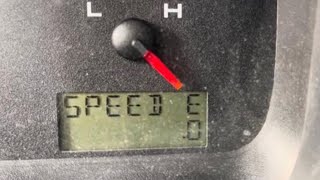
- Speedometer needle behaves erratically, jumps around, or drops to zero while driving.
- Harsh, delayed, or improper automatic transmission shifting.
- Flashing 'O/D Off' (Overdrive Off) light on the gear selector.
- Cruise control does not work or disengages unexpectedly.
- Vehicle enters 'Engine Failsafe Mode' or 'Limp Mode'.
- Intermittent bucking or hesitation during acceleration.
- Replacing the entire transmission when only the external speed sensor is at fault.
- Replacing the instrument cluster due to the erratic speedometer, when the cluster is just displaying the bad data it's receiving.
- Assuming it's the internal transmission leadframe, which is a known issue but on the later 2011+ models, not the 2004-2008 generation.
Most Likely Causes
- Faulty Vehicle Speed Sensor (VSS) 🔴 High Probability The sensor is a magnetic pickup located on the transmission, where it is exposed to heat and potential contamination from metallic debris inside the transmission fluid. Over time, the internal electronics can fail intermittently.
How to confirm: Inspect the sensor's magnetic tip. If it is covered in a sludge of metallic particles, it can disrupt the signal. The sensor can also be tested with a multimeter for proper resistance (refer to a service manual for specs) or by monitoring its output on a capable scan tool while driving.
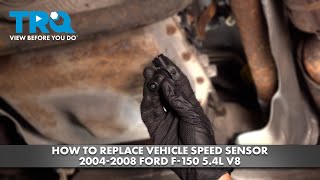
Typical fix: Replace the Vehicle Speed Sensor. 🎬 Watch: Step-by-step guide to replacing your F-150 speed sensor. It is held in by a single 8mm bolt on the driver's side of the transmission housing. The OEM Motorcraft part is recommended over aftermarket alternatives, which some owners report have failed prematurely.
Est. part cost: $20-$60 - Damaged Wiring or Connector 🟡 Medium Probability The wiring harness runs underneath the truck and is exposed to road debris, moisture, and heat from the exhaust and transmission. Wires can chafe, break internally inside the insulation, or the connector pins can corrode.
How to confirm: Visually inspect the wiring harness and connector leading to the VSS for any signs of damage, corrosion, or loose pins. Wiggle the connector and wiring with the engine running to see if it triggers the symptoms. A common failure point is right near the connector itself.
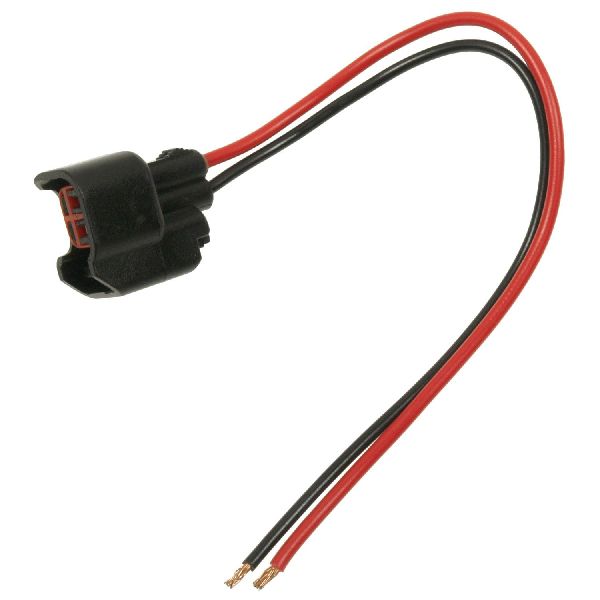
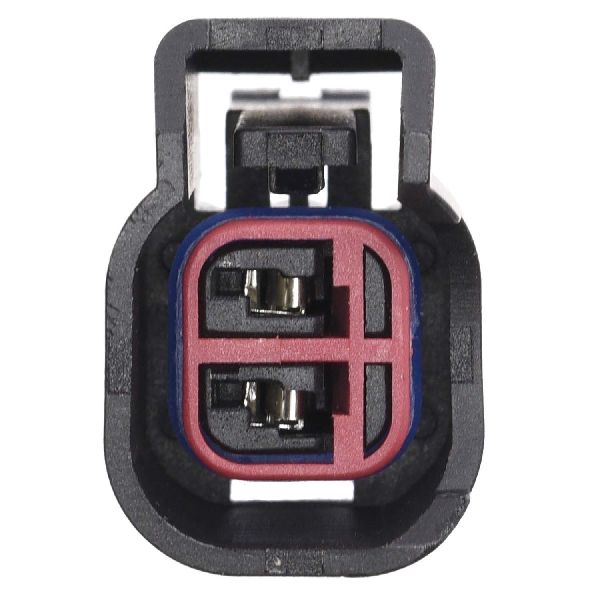
Typical fix: Repair the damaged section of wiring or replace the connector pigtail. A 2-wire pigtail connector kit is available for this repair.
Est. part cost: $15-$35 - Contaminated Sensor Tip 🟡 Medium Probability The VSS is a magnet that naturally attracts fine metal particles ('fuzz') suspended in the transmission fluid. A thick layer of this metallic 'sludge' can weaken the signal enough to cause an intermittent dropout.
How to confirm: Remove the sensor and visually inspect the tip. If it's covered in a gray or black metallic paste, this is a likely contributor to the problem.
Typical fix: Clean the sensor tip thoroughly with a rag and brake cleaner and reinstall it. If the code returns, the sensor itself is likely weak and requires replacement. This cleaning is often a temporary fix.
Est. part cost: $0
Rare But Worth Checking
- Faulty Powertrain Control Module (PCM): This is very rare. Before condemning the PCM, all other possibilities, especially the sensor and wiring, must be exhaustively ruled out. A PCM failure for this specific code is highly unlikely.
- Damaged Tone Ring: The VSS reads a toothed 'tone ring' on the transmission's output shaft. While rare, if this ring is damaged, has a broken tooth, or has come loose, it will produce an erratic signal that a new sensor cannot fix. This would typically require significant transmission work to inspect and repair.
- Faulty Alternator: In some cases, a failing alternator diode can introduce excessive electrical noise (AC ripple) into the vehicle's electrical system, which can interfere with sensitive sensor signals like the VSS. TSB 06-19-12 notes that a bad generator can cause certain unrelated DTCs. This is an uncommon cause but worth considering if sensor and wiring checks pass.
Diagnosis Steps
- Connect an OBD-II scanner and confirm that P1500 is the primary code present. Check for related codes like P0720 or P0722.
- Using a scan tool with live data, monitor the Vehicle Speed (VSS) PID while driving. Observe if the speed reading drops to zero, freezes, or behaves erratically, corresponding with the symptoms.
- Safely raise and support the vehicle. Locate the Vehicle Speed Sensor on the driver's side of the transmission, near the output shaft.
- Thoroughly inspect the wiring harness and 2-pin connector leading to the VSS. Look for chafing against the frame, heat damage from the exhaust, corrosion in the connector, or broken wires.
- Disconnect the sensor and remove the single 8mm retaining bolt.
- Carefully twist and pull the sensor out of the transmission housing. A small amount of transmission fluid may drip out, which is normal.
- Examine the magnetic tip of the sensor. Clean off any metallic debris and sludge with a clean rag.
- Given the low cost of the part and high probability of failure, proactively replacing the sensor is recommended. The Motorcraft DY1123 is the specified OEM replacement.
- Apply a small amount of clean transmission fluid to the O-ring of the new sensor and install it. Torque the retaining bolt to 9 ft-lbs (12 Nm).
- Reconnect the electrical connector securely, using dielectric grease in the connector to prevent future corrosion.
- Clear the trouble code with the OBD-II scanner and perform a test drive to confirm the speedometer operates correctly and the code does not return.
Parts You'll Likely Need
- Vehicle Speed Sensor (VSS)
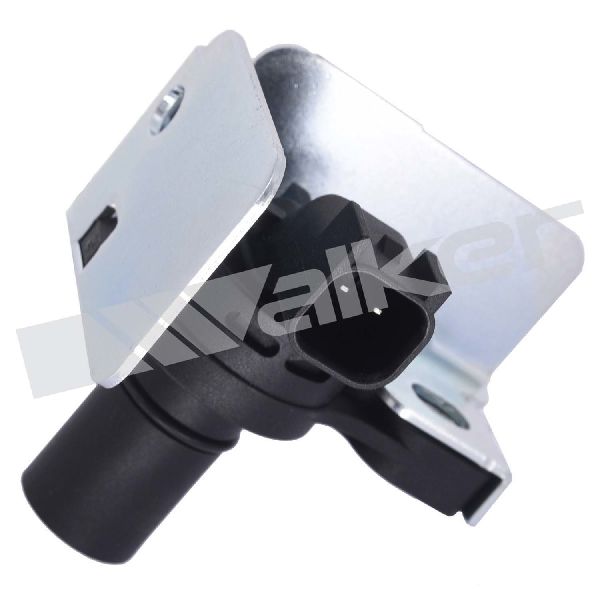
(OEM #Motorcraft DY1123 (interchanges with F85Z9E731AB, DY1235).)— This sensor is the most common failure point for the P1500 code on this vehicle, either by failing internally or becoming contaminated with debris.
Trusted brands: Motorcraft, Standard Motor Products (SMP), Delphi
OEM price range: $40-$60
Aftermarket price range: $20-$40 - VSS Connector Pigtail — If the wiring is damaged or corroded at the sensor connector, replacing the pigtail is the most effective repair.
Trusted brands: Standard Motor Products, Dorman
OEM price range: $20-$35
Aftermarket price range: $15-$25
Related Codes That Often Appear With This One
- P0720 - Output Speed Sensor Circuit Malfunction
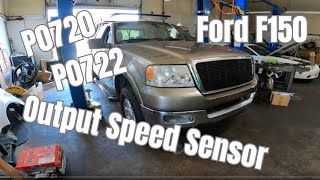
- P0722 - Output Speed Sensor No Signal 🎬 See how to diagnose and repair common Ford speed sensor codes.
Technical Service Bulletins (TSBs) & Recalls
- Manufacturer Bulletin #19N01-S3: This bulletin notes that an illuminated malfunction indicator light (MIL) or wrench light may occur with DTCs P0720, P0722, P0731, and/or P1500 stored in the powertrain control module (PCM).
Platform-Specific Known Issues
- Real Owner Experience: Sensor vs. Wiring: On F150forum.com, a user with a '95 F-150 (a different generation but with a similar VSS setup) experienced an erratic speedometer and harsh shifting. After replacing the sensor with an aftermarket part didn't fix it, he discovered the issue was the wiring leading to the sensor. Re-installing the original OEM sensor after repairing the wires solved the problem completely, highlighting that both the wiring and the quality of the replacement sensor are critical.
Mechanic-Grade Diagnostic Values
- Vehicle Speed Sensor (VSS/OSS) Resistance — expected: 400 to 700 Ohms. Failure: A reading below 400 Ohms, an open circuit (infinite resistance), or a short (near zero Ohms) indicates a faulty sensor.
- VSS Signal Wires at PCM Connector C175T — expected: Pins 31 (Signal) and 32 (Signal Return). Resistance between these pins should match the sensor's resistance (400-700 Ohms).. Failure: If resistance is out of spec, it indicates a wiring problem between the PCM and the sensor.
Hidden / Shadow Codes Worth Checking
- Mode 6, Test ID $51-$5A: On Ford vehicles, Mode 6 can provide misfire counts per cylinder for the current and last ten driving cycles, even before a P030x code is set. While not directly related to P1500, severe intermittent hesitations from a VSS failure could potentially be misidentified as a misfire by the driver, making this data useful for ruling out engine issues. (see via A professional scan tool capable of displaying Mode 6 data. The data is presented in hexadecimal and may require conversion to be understood.)
Wiring & Ground Locations
- C175T — The transmission connector on the Powertrain Control Module (PCM), which is located on the passenger side firewall in the engine bay.. The two wires from the VSS/OSS terminate here at pins 31 (Signal, WHT/LT GRN wire) and 32 (Signal Return, PNK/LT GRN wire). Testing for resistance and continuity at this connector is the definitive way to check the entire circuit back to the PCM.
- G101 / G102 — G101 is on the firewall behind the PCM. G102 is on the firewall just to the right of the PCM.. These are primary grounds for the engine control system. A poor or corroded ground connection at these points can introduce electrical noise or unstable voltages, potentially interfering with sensitive sensor signals like the VSS and causing intermittent faults.
- VSS Wire Colors (at sensor) — At the 2-pin connector on the driver's side of the transmission.. The wires are typically Blue with a Yellow stripe (VT/OG in some diagrams) and Gray with a Red stripe (GY/RD). Knowing these colors helps confirm you are testing the correct circuit at the sensor and tracing it back through the harness.
Real Owner Repair Stories
- Ford Truck Enthusiasts Forum (1995 Ford F-150 2WD with 4R70W (similar VSS/OSS setup)) — Erratic shifting, blinking OD light, and trouble code 639 (OBD-I equivalent for insufficient OSS input).
❌ Tried (didn't work) Replacing the speedometer module., Testing the resistance of the original sensor, which was within spec (459 ohms).
✅ What actually fixed it The owner noted the harness connector clips were broken and the connection was 'wiggly'. After struggling to remove the old sensor, the ultimate fix was installing a new sensor and ensuring the loose connector was securely fastened with a zip tie to prevent intermittent signal loss. This highlights the connector's mechanical security as a key failure point. - NHTSA ODI #11723677: An owner reported that the Powertrain Control Module (PCM) was receiving "no signal" from the transmission Output Speed Sensor (OSS), resulting in DTCs P0722, P1500, and P2195.
- NHTSA ODI #11704709: A driver noted that while driving, the vehicle was provided with several codes including P1500-00, P0722-00, P0721-00, P0304-00, and P0151-00.
- NHTSA ODI #11672880: A report from a repair facility noted that codes P1500 and P0722 were present, which they identified as a lead frame in transmission issue.
OEM Part Supersession History
F85Z-9E731-AB→Motorcraft DY1123— Part number update and consolidation. The sensor design was slightly changed around 1999 but remained functionally the same for many years.
Heads up: The sensor for 2004-on 4R70E/4R75E transmissions is specific. While earlier sensors look similar, there may be internal differences. Ensure the part is listed for 2004+ models.
Diagnostic Flowchart
Other Known Issues on This Vehicle
Issues unrelated to this code that are worth knowing about as an owner of this generation:
- Ford 5.4L 3-Valve Cam Phaser Failure 🔴 High — Very common, often appearing after 80,000 miles. Presents as a diesel-like knocking or ticking sound from the top of the engine at hot idle. (Ref: TSB 06-19-8 addresses diagnosing the noise and replacing phasers, lash adjusters, or VCT solenoids.)
- Spark Plug Breakage During Removal 🔴 High — Extremely common on 5.4L 3V engines built before 10/9/07. The two-piece spark plug design allows carbon to build up, causing the lower portion to seize in the cylinder head and break off during removal. (Ref: TSB 08-7-6 provides a specific, multi-step procedure for removing the plugs to minimize breakage and a method for extracting broken plugs.)
- Fuel Pump Driver Module (FPDM) Corrosion and Failure 🔴 High — Very common, especially in regions with road salt. The module is mounted directly to the steel frame above the spare tire, causing the aluminum housing to corrode, crack, and fail, leading to a no-start or stalling condition. (Ref: No recall, but a well-documented failure. Replacement modules from Ford and Dorman come with standoff spacers to prevent direct contact with the frame.)
Used vs. New Parts: Buying Guide for This Vehicle
When a used part is the smart pick: For this repair, buying a used Vehicle Speed Sensor is not recommended. The part is inexpensive to buy new, is a known wear item, and the labor to access it is the same regardless. A used sensor carries a high risk of premature failure.
Donor-vehicle mileage cap: roughly under 150000 miles for the part to have meaningful remaining life.
What to inspect on the donor part:
- If sourcing a related part like a wiring pigtail, inspect for brittle insulation, cracked connector clips, and any signs of corrosion on the pins.
- Ensure the donor vehicle is from the same generation (2004-2008) to guarantee connector compatibility.
OEM-only on this vehicle (don't cheap out):
- Vehicle Speed Sensor (VSS/OSS)
Aftermarket brands forum-validated for this vehicle:
- Standard Motor Products (SMP)
- Delphi
- NTK
Brands owners have reported issues with on this vehicle:
- No-name, unbranded sensors sold on marketplace sites are frequently cited in forums as being dead-on-arrival or failing within a few months. Given the low cost of a quality part, it is not worth the risk.
Real Owner Stories
Aggregated from forums and TSBs cited above. Mileages and costs reflect what owners reported in those sources.
2007 F150 Lariat
Symptoms: Speedometer drops erratically from high speeds when letting off the throttle, engine goes into failsafe mode, and OBD code P1500 comes up occasionally.
What fixed it: Cleaning the VSS, which was covered with metal sludge, resulted in a successful test drive. The owner was also planning to replace the VSS wire and plug.
Source hint: F150Forum.com
'95 F-150
Symptoms: An erratic speedometer and harsh shifting.
What fixed it: After a new aftermarket sensor didn't fix it, the owner discovered the wiring leading to the sensor was the issue. Repairing the wires and re-installing the original OEM sensor solved the problem completely.
Source hint: F150forum.com
1996 F-150
Symptoms: A bouncing speedometer after replacing the VSS.
What fixed it: The issue was attributed to an inconsistent quality aftermarket sensor.
Source hint: ford-trucks.com
Documented NHTSA Reports
Symptoms: Sudden downshifts causing a loss of vehicle control and increased risk of crash.
What fixed it: NHTSA ODI #11647962 notes that potential codes for this failure include P0720, P0722, P0731 and/or P1500. Diagnostic and repair efforts typically focus on the PCM and speed sensor signals.
Related OBD-II Codes
Frequently Asked Questions
What is the recommended replacement part for the Vehicle Speed Sensor (VSS) on my F-150?
Where is the VSS located on my 2004-2008 F-150?
Is it enough to just clean the metallic sludge off the VSS sensor tip?
My speedometer is bouncing even after I replaced the VSS. What could be the problem?
Besides a bad sensor, what else is a common cause for the P1500 code?
Does this same VSS problem affect the Ford Expedition or Lincoln Mark LT?
Helpful Videos

Used OEM Parts in Stock

New Aftermarket Parts Available


The information in this article is provided for general reference and educational purposes only. Vehicle specifications, procedures, and part compatibility can vary by production date, trim level, and region. Always consult your vehicle's factory service manual and verify part numbers before purchasing or performing repairs. Safety-critical components such as airbags, seat belts, and braking systems should be installed by a qualified professional.
- Ford F-150:
- 🎬 Helpful Videos
- 🛍️ Shop This Part
- What's Unique About the 2004-2008 Ford F-150
- Symptoms You May Notice
- Most Likely Causes
- Rare But Worth Checking
- Diagnosis Steps
- Parts You'll Likely Need
- Related Codes That Often Appear With This One
- Technical Service Bulletins (TSBs) & Recalls
- Platform-Specific Known Issues
- Mechanic-Grade Diagnostic Values
- Hidden / Shadow Codes Worth Checking
- Wiring & Ground Locations
- Real Owner Repair Stories
- OEM Part Supersession History
- Diagnostic Flowchart
- Other Known Issues on This Vehicle
- Used vs. New Parts: Buying Guide for This Vehicle
- Real Owner Stories
- 2007 F150 Lariat
- '95 F-150
- 1996 F-150
- Documented NHTSA Reports
- Related OBD-II Codes
- Frequently Asked Questions
- 🎟️ Get 5% Off