

P1456 on 2002-2006 Honda CR-V: EVAP Leak Causes and Fixes
On a 2002-2006 Honda CR-V, code P1456 is almost always caused by a loose or worn-out gas cap. Before buying any parts, tighten your gas cap until it clicks at least three times and clear the code. If it returns, a new OEM gas cap is the most likely fix, costing around $30-$60. If that doesn't work, the fuel filler neck is likely rusted where the cap seals, requiring replacement.
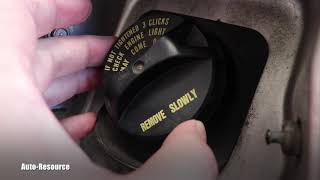
- Start with the simplest fix: ensure your gas cap is tightened to at least three clicks.
- If the code returns, the most likely solution is a new OEM Honda gas cap. Avoid cheap aftermarket caps.
- If a new cap doesn't fix it, carefully inspect the fuel filler neck for rust before replacing any other parts.
- This code will not leave you stranded, but it will prevent you from passing an emissions inspection.
- For leaks that aren't obvious, a professional smoke test is the most efficient diagnostic method.
What's Unique About the 2002-2006 Honda CR-V

For this generation of Honda CR-V, the P1456 code is a very common and well-documented issue. The primary culprits are simple mechanical failures rather than complex electronic ones. Owners in regions with winter road salt are particularly susceptible to this code due to rust forming on the fuel filler neck, which prevents the gas cap from sealing properly. While Honda has a separate code (P1457) for leaks on the charcoal canister side of the system, P1456 points squarely at the tank area 🎬 Watch: A detailed breakdown of the P1456 fuel tank system leak., making diagnosis more straightforward.
Symptoms You May Notice
- Check Engine Light is on
- A faint smell of gasoline, particularly around the rear of the vehicle (less common)
- Replacing the charcoal canister. The canister itself rarely fails and is more often associated with code P1457.
- Replacing the purge valve solenoid on the engine. While this part can fail, it typically triggers other codes like P0497 or P0443 and is not a common cause for P1456.
Most Likely Causes

- Loose, Worn, or Incorrect Gas Cap 🔴 High Probability The rubber o-ring seal on the gas cap dries out, cracks, and loses its sealing ability over time. Aftermarket caps often do not seal as well as the OEM part, leading to a persistent code even after replacement.
How to confirm: Ensure the cap is tightened at least three clicks. Remove the cap and inspect the black rubber seal for cracks, stiffness, or deformities. If the seal is damaged, the cap is bad.
Typical fix: Replace the gas cap with a new, genuine Honda part (OEM).
Est. part cost: $30-$60 - Rusted Fuel Filler Neck 🟡 Medium Probability In areas that use road salt ('Salt Belt' or 'Rust Belt'), the metal lip of the fuel filler neck where the gas cap seals can rust and become pitted. This creates an uneven surface that even a new gas cap cannot seal against.
How to confirm: Remove the gas cap and visually inspect the metal filler neck opening. Run your finger along the edge where the rubber seal makes contact. If you feel roughness, pitting, or see visible rust, this is likely the cause. You can try cleaning the surface with a Scotch-Brite pad or fine-grit sandpaper as a temporary measure.
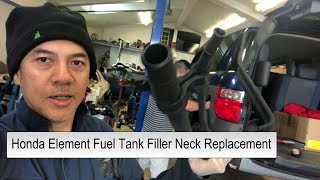
Typical fix: The fuel filler neck must be replaced. This involves removing the driver's side rear wheel and plastic splash shield to access the neck. While a DIY is possible, it can be labor-intensive. 🎬 See this walkthrough on how to replace the fuel filler neck.
Est. part cost: $70-$150 - Failed EVAP Canister Vent Solenoid / Valve ⚪ Low Probability This valve, located near the charcoal canister under the vehicle (driver's side, in front of the rear wheel), can get stuck open or closed due to age or debris, creating a leak in the system.
How to confirm: This is difficult to confirm without a smoke machine or a bi-directional scan tool to command the valve shut and check for leaks. A mechanic can perform a smoke test to see if smoke escapes from the valve. A visual inspection may reveal cracks in the valve body. 🎬 Watch: How to replace the EVAP canister vent solenoid.
Typical fix: Replace the EVAP canister vent solenoid.
Est. part cost: $40-$120
Rare But Worth Checking
- Cracked EVAP Hose: The rubber hoses connecting the fuel tank, filler neck, and charcoal canister can become brittle and crack over time. A smoke test is the most effective way to find a small hose leak.
- Faulty Fuel Tank Pressure (FTP) Sensor: In rare cases, the sensor that detects the pressure/vacuum in the tank can fail, leading to a false P1456 code. This usually requires advanced diagnostics with a professional scan tool to verify sensor voltage readings, as described by advanced users in forums.
Diagnosis Steps

- Read the code with an OBD-II scanner to confirm P1456.
- Check the gas cap. Ensure it is tight by turning it until it clicks at least three times.
- Clear the code with the scanner and drive for a few days to see if it returns. If it does not, the cap was simply loose.
- If the code returns, remove and inspect the gas cap's rubber seal for any cracks, tears, or hardening. If it looks worn, replace it with an OEM cap.
- With the cap off, thoroughly inspect the metal lip of the fuel filler neck for any signs of rust, corrosion, or pitting. A rough surface here will prevent a seal. Try cleaning the sealing surface with a light abrasive pad before considering replacement.
- Visually inspect all accessible rubber EVAP hoses running from the filler neck and tank area for obvious cracks or loose connections.
- If the cap and filler neck are in good condition and the light returns, the next step is a professional smoke test. A mechanic will inject pressurized smoke into the EVAP system to pinpoint the exact location of the leak, which could be a faulty valve or a cracked hose.
Parts You'll Likely Need

- Fuel Filler Cap
(OEM #17670-S5A-A32)— This is the most common failure point. The seal wears out, causing a leak that the system detects. Using a genuine Honda cap is highly recommended for a proper seal.
Trusted brands: Honda (OEM)
OEM price range: $30-$60
Aftermarket price range: $15-$30 - Fuel Filler Neck
(OEM #17660-S9A-A01 (for 2002-2004 models), 17660-S9A-A31 (for 2005-2006 models))— A common failure on vehicles in rust-prone climates. The neck corrodes where the cap seals, making a tight seal impossible.
Trusted brands: Spectra Premium (FN518), Dorman (573-134), Honda (OEM)
OEM price range: $190-$270
Aftermarket price range: $70-$150 - EVAP Canister Vent Solenoid
(OEM #17310-S5A-L31)— If the gas cap and filler neck are good, this valve is the next most likely component to fail and cause a tank-side leak. It gets stuck and fails to seal the EVAP system for the pressure test.
Trusted brands: Dorman, Standard Motor Products (SMP), Honda (OEM)
OEM price range: $100-$180
Aftermarket price range: $40-$120
Technical Service Bulletins (TSBs) & Recalls
- Honda TSB 99-075 (August 9, 2013): Provides extensive professional diagnostic procedures for troubleshooting DTC P1456 and P1457, including how to test sensors and valves with a Honda-specific scan tool.
Documented NHTSA Reports
- An owner reported that P1456 and P1457 are very common problems for those living in New England, suggesting the issue is related to how the unit is protected from the elements (NHTSA ODI #10315726).
- NHTSA ODI #10195472 describes a situation where P1456 was issued by a technician alongside codes P0420 and P0505, with the failure occurring around 80,000 miles.
- A manufacturer report (NHTSA ODI #10078623) notes that an owner received error code P1456 for an EVAP system leak and noted it seemed to be a very common problem, even after ensuring the gas cap was tight.
Platform-Specific Known Issues
- DIY Filler Neck Cleaning: Before spending money on a new fuel filler neck, some owners have had success cleaning the rusted sealing surface. After removing the gas cap, use a piece of fine-grit sandpaper or a Scotch-Brite pad to gently sand the metal lip where the cap's rubber gasket makes contact. Clean away all debris before reinstalling the cap. This can sometimes restore the seal and resolve the P1456 code, at least temporarily.
Mechanic-Grade Diagnostic Values
- Fuel Tank Pressure (FTP) Sensor Voltage, Key On, Engine Off, Gas Cap Removed — expected: 2.45V - 2.55V. Failure: A reading outside this range with the system open to atmosphere suggests a faulty sensor or wiring issue.
- Fuel Tank Pressure (FTP) Sensor Voltage, during EVAP test vacuum — expected: Drops to approx. 1.50V. Failure: If the voltage does not drop when vacuum is applied, there is a blockage or sensor malfunction. If it does not hold vacuum (voltage rises more than 0.05V in 20 seconds), there is a leak.
- EVAP Canister Vent Valve Solenoid Resistance — expected: 20 - 30 ohms. Failure: A reading outside this range indicates a damaged solenoid winding, requiring valve replacement.
Scan Tool Commands That Help
- Honda HDS (Honda Diagnostic System): EVAP FUNCTION TEST — This is the first step in the official Honda troubleshooting procedure to confirm if a fault exists in the system at the time of testing.
- Honda HDS (Honda Diagnostic System): INSPECTION > EVAP TEST > SINGLE SOLENOIDS — This function allows a technician to individually command the EVAP Bypass Solenoid (BPS), Canister Vent Shut (CVS) valve, and Purge Control Solenoid (PCS) to check for audible clicks and proper function during diagnosis.
Real Owner Repair Stories
- Reddit User (2004 Honda CR-V) — Check engine light with code P1456.
❌ Tried (didn't work) Replaced the gas cap., Performed a smoke test which showed no leaks., Replaced the entire EVAP canister assembly with a low-mileage used part.
✅ What actually fixed it The user suspected the Fuel Tank Pressure (FTP) sensor was the final remaining possibility after all other common parts were replaced and the system passed a smoke test. - Honda-Tech Forum User (1998 Honda Accord (system is analogous to CR-V)) — P1456 code that persisted after standard checks.
❌ Tried (didn't work) Confirmed system holds vacuum with a hand pump., Monitored FTP sensor voltage, which never dropped as expected for a diagnostic cycle.
✅ What actually fixed it The user found that while the system held vacuum, it failed to build sufficient pressure (only reaching 2.55V instead of the specified 3V). The final fix was replacing the EVAP two-way valve, which was suspected of venting pressure prematurely.
"I Checked Everything" — The Actual Cause
- In some cases, a smoke test will not reveal a leak, yet the P1456 code persists. This can happen if the leak is intermittent or if the fault is not a physical leak but a malfunctioning sensor. One owner replaced the gas cap and the entire EVAP canister assembly after a clean smoke test, but the code returned. The final suspected culprit was a faulty Fuel Tank Pressure (FTP) sensor providing incorrect readings to the ECU.
Model Year Variations Within This Range
- 2002-2004 vs 2005-2006: The OEM part number for the Fuel Filler Neck changes. 2002-2004 models use part number 17660-S9A-A01, while 2005-2006 models use 17660-S9A-A31. This is critical when ordering a replacement part.
Diagnostic Flowchart
Other Known Issues on This Vehicle
Issues unrelated to this code that are worth knowing about as an owner of this generation:
- A/C Compressor Catastrophic Failure ('Black Death') 🔴 High — Very common issue for this generation. The compressor fails internally, sending metal shavings and black sludge throughout the entire A/C system, requiring replacement of the compressor, condenser, expansion valve, and a full system flush.
- VTC Actuator Rattle on Cold Start 🟠 Medium — A brief, loud grinding or rattling noise for about 2 seconds upon starting the engine when cold. Caused by a faulty Variable Timing Control (VTC) actuator. While not immediately catastrophic, it can lead to timing chain issues if ignored. (Ref: Honda TSB 09-010 (and subsequent revisions) addresses this issue, though it primarily lists later model years, the K24 engine in the 2nd gen CR-V is known for the same problem.)
- Rear Differential Moan/Groan/Shudder 🟡 Low — A moaning or groaning noise from the rear of the vehicle during low-speed turns. This is caused by contaminated or broken-down differential fluid. The fix is to drain and replace the fluid with genuine Honda Dual Pump Fluid II. (Ref: Honda TSB 07-024)
- Deteriorating Front Lower Control Arm Bushings 🟠 Medium — The front-most bushing in the front lower control arms is known to wear out, causing clunking noises, poor handling, and uneven tire wear.
- Power Steering Pump Leaks 🟠 Medium — Leaks can develop from the power steering pump seals, dripping fluid onto the alternator below and causing premature alternator failure.
Used vs. New Parts: Buying Guide for This Vehicle
When a used part is the smart pick: For a fuel filler neck, a used part from a junkyard can be a very smart choice, especially if sourced from a vehicle in a dry, non-rust-belt state. This component is a simple metal pipe, and its failure is almost always due to external corrosion, not internal wear. A clean, rust-free used OEM neck is often superior to a cheap aftermarket one.
Donor-vehicle mileage cap: roughly under 150000 miles for the part to have meaningful remaining life.
What to inspect on the donor part:
- Check the donor vehicle's location history if possible (e.g., via CarFax) to avoid parts from rust-belt states.
- Visually inspect the sealing surface where the gas cap sits. It must be perfectly smooth, with no pitting, rust, or flaking paint.
- Examine the entire length of the pipe for any signs of deep rust, dents, or kinks that could restrict flow.
- Ensure all mounting brackets are intact and not rusted through.
OEM-only on this vehicle (don't cheap out):
- Fuel Filler Cap
Aftermarket brands forum-validated for this vehicle:
- Spectra Premium (for Fuel Filler Neck)
- Dorman (for Fuel Filler Neck)
Brands owners have reported issues with on this vehicle:
- Unknown/"white-box" brand fuel caps are frequently reported by owners to not seal correctly, causing the P1456 code to persist even after replacement.
Real Owner Stories
Aggregated from forums and TSBs cited above. Mileages and costs reflect what owners reported in those sources.
2004 Honda CR-V
Symptoms: Check engine light came on with code P1456. The light returned after 295 miles of driving even after replacing parts.
What fixed it: The owner had not found a definitive fix after multiple attempts, including a new cap, a smoke test that showed no leaks, and a replacement EVAP canister assembly. They suspected the Fuel Tank Pressure Sensor (FTPS) was the next part to investigate.
Source hint: Reddit r/crv
1998 Honda CR-V
Symptoms: Owner needed to address a rusted fuel filler neck.
What fixed it: The owner was seeking advice on the replacement of the rusted filler neck, noting that the job was challenging.
Source hint: Reddit r/MechanicAdvice: 98 CRV fuel filler neck replacement. HELP!
2002-2006 Honda CR-V
Symptoms: P1456 code appeared due to a poor seal at the gas cap caused by a rusted fuel filler neck.
What fixed it: The owner successfully cleaned the rusted sealing surface of the fuel filler neck with a fine-grit sandpaper or a Scotch-Brite pad. This restored the seal and resolved the code without needing to replace the part.
Source hint: Vehicle Specific Issues: DIY Filler Neck Cleaning
Related OBD-II Codes
Frequently Asked Questions
My Check Engine Light is on for P1456. What's the very first thing I should check on my 2004 CR-V?
I replaced my gas cap with a cheap one from an auto parts store, but the P1456 code came back. Why?
I live in a snowy state and have a P1456 code. What common issue should I look for on my CR-V?
Can I fix a rusted fuel filler neck myself without replacing the whole part?
Is there an official Honda Technical Service Bulletin (TSB) for code P1456?
My gas cap and filler neck seem fine. What's the next most likely cause for P1456?
I have a 2005 Honda Element with a P1456 code. Is this article relevant?
Helpful Videos
Used OEM Parts in Stock

New Aftermarket Parts Available


The information in this article is provided for general reference and educational purposes only. Vehicle specifications, procedures, and part compatibility can vary by production date, trim level, and region. Always consult your vehicle's factory service manual and verify part numbers before purchasing or performing repairs. Safety-critical components such as airbags, seat belts, and braking systems should be installed by a qualified professional.
- Honda CR-V:
- 🎬 Helpful Videos
- 🛍️ Shop This Part
- What's Unique About the 2002-2006 Honda CR-V
- Symptoms You May Notice
- Most Likely Causes
- Rare But Worth Checking
- Diagnosis Steps
- Parts You'll Likely Need
- Technical Service Bulletins (TSBs) & Recalls
- Documented NHTSA Reports
- Platform-Specific Known Issues
- Mechanic-Grade Diagnostic Values
- Scan Tool Commands That Help
- Real Owner Repair Stories
- "I Checked Everything" — The Actual Cause
- Model Year Variations Within This Range
- Diagnostic Flowchart
- Other Known Issues on This Vehicle
- Used vs. New Parts: Buying Guide for This Vehicle
- Real Owner Stories
- 2004 Honda CR-V
- 1998 Honda CR-V
- 2002-2006 Honda CR-V
- Related OBD-II Codes
- Frequently Asked Questions
- 🎟️ Get 5% Off