

P1450 on 2011-2018 Ford Explorer 3.5L: Causes and Fixes for Unable to Bleed Up Fuel Tank Vacuum
On a 2011-2018 Ford Explorer with the 3.5L V6, code P1450 is almost always caused by a faulty canister purge valve located on top of the engine. This valve fails by sticking open, causing constant engine vacuum to pull on the fuel tank. This is an inexpensive part (around $30-$60) and is a very easy DIY fix, typically taking less than 20 minutes. The most common symptom, besides the check engine light, is difficulty starting the vehicle right after refueling.
- P1450 on your Explorer almost certainly means you need a new canister purge valve.
- The most telling symptom, besides the check engine light, is having trouble starting the engine right after you fill up with gas.
- You can confirm the purge valve is bad in under 5 minutes with a simple 'thumb test' to check for suction with the engine running.
- This is a very easy and cheap DIY repair. The part is on top of the engine and held by two simple bolts.
- Don't mistakenly replace the canister vent solenoid under the car first; the purge valve on the engine is the far more likely culprit.
What's Unique About the 2011-2018 Ford Explorer

For this generation of Ford Explorer with the 3.5L V6 (and its platform mates), the canister purge valve has a very high failure rate. The valve is designed to be normally closed, but it commonly fails by sticking partially or fully open. This allows engine vacuum to constantly pull on the fuel tank, creating the exact condition the P1450 code describes. The fix is so common that numerous DIY videos exist specifically for this engine and vehicle, making it a well-documented and straightforward repair. The failure is so prevalent that Ford has issued TSBs for other models with similar engines for this exact issue. For instance, NHTSA ODI #11467127 describes a diagnosis where a sticking canister purge valve was found pulling a constant vacuum, confirming the system was unable to bleed fuel tank vacuum.
Symptoms You May Notice

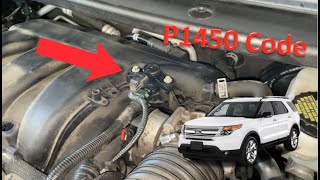
- Check Engine Light is on. 🎬 Watch: Diagnosing the P1450 code on your Ford Explorer
- Difficulty starting the engine, or a rough, sputtering start, immediately after filling the gas tank.
- Rough idle, sometimes feeling like the engine wants to stall.
- A loud 'whoosh' or sucking sound when opening the capless fuel filler to refuel, as atmospheric pressure rushes into the vacuum-filled tank.
- Audible sucking or hissing noise from the old purge valve when tested.
- In some cases, fuel tank deformation from the constant vacuum can cause inaccurate fuel gauge readings.
- Sudden stalling while driving, as documented in NHTSA ODI #11171843 where a vehicle stalled at 25 mph when the P1450 indicator illuminated.
- Replacing the canister vent solenoid (under the car) when the actual problem is the much more accessible and common-to-fail canister purge valve (on the engine).
- Replacing the fuel cap, which is not applicable to the capless system on these Explorers. A faulty capless filler neck typically causes leak codes, not vacuum codes.
Most Likely Causes

- Faulty Canister Purge Valve (Solenoid) 🔴 High Probability The purge valve on this platform is known to fail internally, causing it to leak or stick open when it should be closed. This is considered the cause in over 90% of P1450 cases on these Fords.
How to confirm: With the engine running, disconnect the vapor line from the purge valve on the engine. Place your thumb over the port on the valve itself. If you feel any suction, the valve is leaking and must be replaced. Another test is to remove the valve and try to blow through it; if air passes, it's faulty as it should be normally closed.
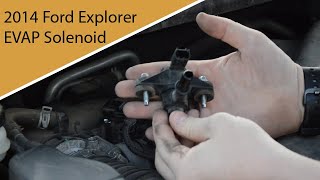
Typical fix: Replace the canister purge valve. It is located on top of the engine near the throttle body and is held by two 8mm bolts. 🎬 See this step-by-step purge solenoid replacement walkthrough
Est. part cost: $30-$80 - Blocked Canister Vent Solenoid or Hose ⚪ Low Probability In dusty environments, the vent filter and solenoid, located under the vehicle near the charcoal canister, can become clogged with dirt, spider webs, or other debris, preventing the tank from venting to the atmosphere. Manufacturer Bulletin #TSB 21-2106 notes that a kinked evaporator emissions fresh air vent line can also cause P1450.
How to confirm: Inspect the vent solenoid and its associated hoses for blockages or kinks. A smoke test of the EVAP system can confirm if the vent path is restricted; if smoke is introduced, it should exit freely through the vent path when commanded open.
Typical fix: Replace the canister vent solenoid and/or clean or replace the blocked hoses. The solenoid is typically mounted on or near the charcoal canister under the vehicle.
Est. part cost: $50-$100 - Debris in Capless Fuel Filler Neck ⚪ Low Probability The capless system can sometimes get dirt or debris in the seal, preventing it from closing properly. However, this more commonly causes a small leak code (P0456) rather than a vacuum code. A stuck-closed filler neck could theoretically cause P1450, but this is not a common report.
How to confirm: Inspect the fuel filler neck for any visible debris. Use the funnel provided with the vehicle to open and close the internal flap several times to ensure it moves freely.
Typical fix: Clean the fuel filler neck area with a clean cloth and compressed air.
Est. part cost: $0
Rare But Worth Checking
- Saturated Charcoal Canister: If the purge valve has been stuck open for a long time, it can pull raw fuel into the charcoal canister, saturating it. This can also happen from habitually 'topping off' the fuel tank. If replacing the purge valve doesn't fix the issue and hard starting persists, the canister may be ruined and require replacement. Check for charcoal pellets in the EVAP lines as a sign of canister failure.
- Faulty Fuel Tank Pressure (FTP) Sensor: It is possible, but unlikely, that the sensor providing the vacuum reading is faulty, sending incorrect data to the PCM. This is typically diagnosed only after all other more common causes have been ruled out. NHTSA ODI #11321251 notes a case where replacement of the fuel tank pressure solenoid did not resolve the P1450 code, highlighting the need for thorough diagnosis.
- Kinked or Collapsed EVAP Hose: A pinched or collapsed hose between the fuel tank and the canister, or between the canister and the vent solenoid, can prevent the system from bleeding up vacuum. This would typically be found during a visual inspection or a smoke test.
Diagnosis Steps

- Read the code with an OBD-II scanner to confirm P1450 and check for any other related codes like P2196, P2198, or P0496.
- Visually inspect the engine bay for any obvious disconnected or cracked vacuum hoses.
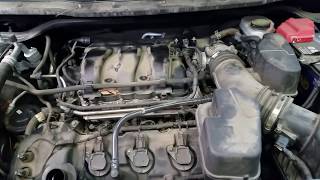
- Locate the canister purge valve on top of the engine. It has an electrical connector and two EVAP lines attached.
- Start the engine.
- Disconnect the EVAP line that runs from the purge valve towards the rear of the vehicle (the line going to the canister).
- Place your finger over the port 🎬 Watch: A quick and easy DIY test for the valve on the valve itself. If you feel suction, the valve is faulty and needs to be replaced. This is the most likely cause, confirmed in over 90% of cases.
- If no suction is felt, the problem may be further down the system. The next step is to inspect the canister vent solenoid and its filter/hoses under the vehicle near the fuel tank for blockages from dirt or debris.
- If no blockages are found, a professional smoke test may be needed to identify a restriction in an EVAP hose or a saturated charcoal canister.
- As a final, less likely step, test the Fuel Tank Pressure (FTP) sensor and its wiring to ensure it is reading correctly.
Parts You'll Likely Need
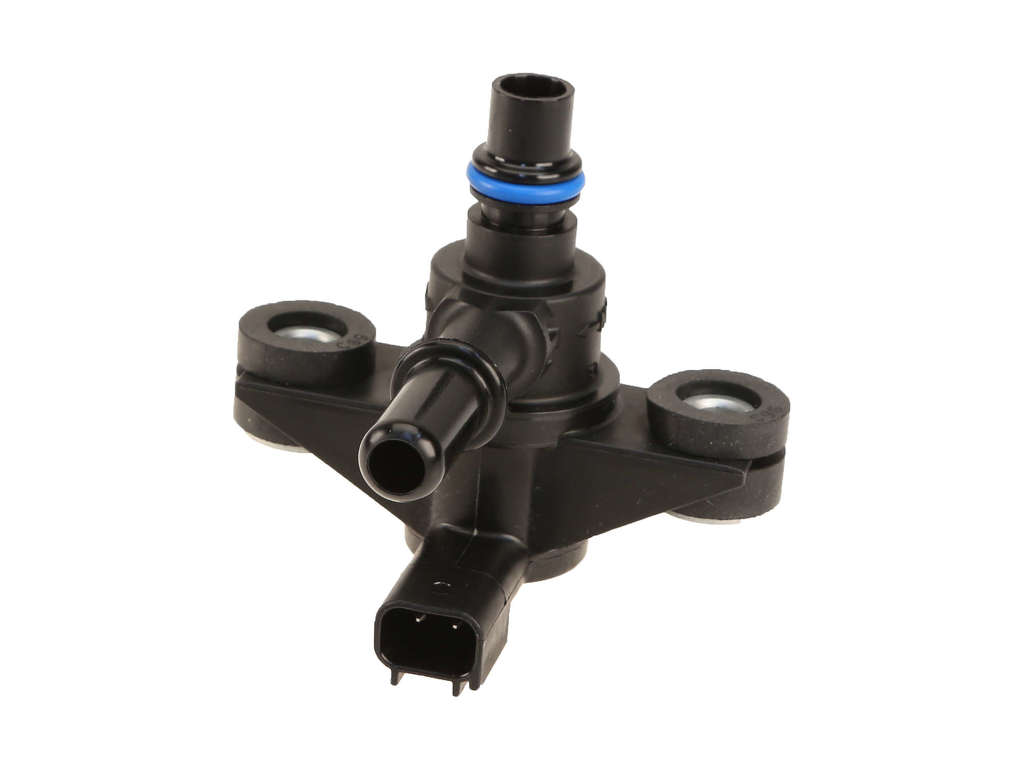
- Vapor Canister Purge Valve / Solenoid
(OEM #9U5Z-9C915-H)— This is the most common failure point for code P1450 on this vehicle. It fails by sticking open, causing constant, unwanted vacuum on the fuel tank.
Trusted brands: Motorcraft, Dorman, Standard Motor Products (CP758)
OEM price range: $50-$80
Aftermarket price range: $30-$60
Related Codes That Often Appear With This One
- P2196 — A leaking purge valve allows un-metered fuel vapors into the engine, causing a rich condition that can make the Bank 1 O2 sensor get stuck rich.
- P2198 — A leaking purge valve allows un-metered fuel vapors into the engine, causing a rich condition that can make the Bank 2 O2 sensor get stuck rich.
- P0456 — While P1450 is for excessive vacuum, a faulty purge valve can sometimes also be interpreted by the system as a small leak, triggering a P0456 code. NHTSA ODI #11564344 notes a case where P1450 and P0456 appeared together, with the car failing to start after getting gas.
- P0496 — This code, 'EVAP Flow During a Non-Purge Condition', is another common result of a stuck-open purge valve and is often seen with P1450 on Ford vehicles.
Technical Service Bulletins (TSBs) & Recalls
- TSB 19-2363: While this specific TSB number relates to PCM updates for various issues on Ford vehicles, it is often mentioned in the context of resolving erroneous EVAP-related codes after a hardware fix. For P1450, the primary fix remains the mechanical purge valve.
- General TSBs for P1450: Ford has issued other TSBs like 16-0062 and 17-0016 for different models (e.g., Ford Focus) that explicitly link P1450 to a faulty canister purge valve, showing a pattern of this failure across the brand.
- Bulletin #TSB 21-2106: This bulletin notes that P1450 and other EVAP codes may be due to a kinked evaporator emissions fresh air vent line, which can be corrected by attaching a zip tie to the line.
Platform-Specific Known Issues
- Ford has issued multiple Technical Service Bulletins (TSBs) and even a safety recall (18S32) for other models like the Focus for issues directly related to a sticking purge valve causing P1450 and fuel tank deformation. While the Explorer was not part of that specific recall, it uses a similar engine family and EVAP system design, and suffers from the identical part failure and symptoms. The constant vacuum can lead to inaccurate fuel gauge readings and, in severe cases, a physically deformed fuel tank.
Mechanic-Grade Diagnostic Values
- Fuel Tank Pressure (FTP) Sensor Voltage — expected: 2.4V to 2.8V with key on, engine off (at atmospheric pressure).. Failure: A reading significantly outside this range at rest can indicate a biased sensor. During the fault condition (engine running, purge commanded closed), the voltage will drop below 2.4V as vacuum builds.
- Canister Purge Valve Solenoid Resistance — expected: Approximately 0.5–2 Ω. Failure: A reading outside this range indicates a faulty solenoid coil.
- Canister Purge Valve Power Supply — expected: 12V (Battery Voltage) at the connector with key on.. Failure: No voltage indicates a wiring or fuse issue upstream of the valve.
Scan Tool Commands That Help
- Ford IDS, FORScan, or advanced bidirectional scanner: EVAP Purge Valve Control (or Commanded Evaporative Purge) — This is the definitive test. Command the valve to 0% (closed) while the engine is running. If you still feel vacuum at the valve's port or see vacuum build on the FTP sensor live data, the valve is mechanically stuck open and must be replaced.
- Ford IDS, FORScan, or advanced bidirectional scanner: EVAP Canister Vent Valve Control — Used to diagnose a blocked vent path. With the engine off, command the vent valve closed (typically 100%). If you then apply a small amount of pressure (e.g., with a smoke machine) and the system doesn't hold pressure, the vent valve is leaking. Conversely, if you command it open and smoke does not exit freely from the vent, the vent path is blocked.
Wiring & Ground Locations
- Canister Purge Valve Connector — On top of the engine, near the throttle body, plugged directly into the purge valve.. This is the connection point for power and the PCM control signal. Testing for 12V power and a ground signal from the PCM occurs here.
- C213 Connector — Behind the driver's side left kick panel.. This is an intermediate connector for the canister vent solenoid wiring. A wire color change occurs here (e.g., Green/Violet to Green/Blue). Corrosion or a bad connection at this interior connector can cause issues with the vent solenoid circuit.
- C3053 Connector — Underneath the vehicle, below the 2nd-row seats.. This is another intermediate connector for the canister vent solenoid wiring. Due to its location under the vehicle, it is more susceptible to corrosion and damage from the elements, which can interrupt the vent solenoid circuit.
- PCM Connector C175B, Pin 20 — At the Powertrain Control Module (PCM).. This is the specific pin at the PCM that provides the ground control signal for the canister vent solenoid on a 2011 Explorer. This is the final point to test for a control signal if a wiring issue is suspected.
Real Owner Repair Stories
- Ford Edge Forum (2017 Ford Edge 2.0L EcoBoost, 75,000 miles) — P1450 code.
✅ What actually fixed it Owner replaced the purge valve, which fixed the code. However, the same P1450 code returned one month later, suggesting either a faulty replacement part or a different underlying issue that was not initially present. - Reddit r/FordFocus (2014 Ford Focus, 170,000 miles) — P1450 code.
✅ What actually fixed it Replacing the OEM purge valve fixed the code. The owner noted that after replacement, it can take up to a week or 100+ miles of driving for the EVAP readiness monitor to complete its cycle and turn off the Check Engine Light on its own. - NHTSA ODI #11564344 — An owner reported that their vehicle would not start after getting gas and was diagnosed with a purge valve that needed replacement because it was "sucking" and causing P1450 and P0456 codes.
When the Usual Fixes Don't Work
- While replacing the canister purge valve fixes the P1450 code in the vast majority of cases, there are documented instances where the code returns after about a month. This points to either a quality issue with some aftermarket replacement valves or a secondary, intermittent problem that causes the new valve to fail. If the code returns, it is critical to re-verify the new purge valve's operation before moving on to less common causes.
OEM Part Supersession History
9U5Z-9C915-H→9U5Z-9C915-J (also listed as Motorcraft CX-2626)— Unspecified, but part supersessions are common for design improvements to increase reliability.
Heads up: The parts are interchangeable and the supersession does not create incompatibility issues.
Diagnostic Flowchart
Used vs. New Parts: Buying Guide for This Vehicle
When a used part is the smart pick: A used part is NOT recommended for this repair. The canister purge valve is a known high-failure item with a low part cost. The risk of getting a used part that has already failed or is near the end of its service life is very high.
What to inspect on the donor part:
- Not applicable as a used part is not advised.
OEM-only on this vehicle (don't cheap out):
- No parts for this specific P1450 repair require OEM-only sourcing. The primary failed part, the purge valve, is widely available from reputable aftermarket brands.
Aftermarket brands forum-validated for this vehicle:
- Motorcraft (OEM)
- Dorman (e.g., 911-222)
- Standard Motor Products (e.g., CP758)
- TRQ
Brands owners have reported issues with on this vehicle:
- No-name, unbranded parts from online marketplaces should be avoided, as some owners report premature failure and the return of the P1450 code.
Real Owner Stories
Aggregated from forums and TSBs cited above. Mileages and costs reflect what owners reported in those sources.
2016 Ford Explorer 3.5L V6
Symptoms: Codes P1450 and P144a, rough start after filling up, which progressed to a no-start condition. The engine would sometimes try to catch for a moment if the gas pedal was held down during cranking.
What fixed it: Not specified in the post; the user was still seeking advice after initial attempts.
Source hint: Reddit r/MechanicAdvice
2015 Ford Explorer
Symptoms: The check engine light for P1450 would come and go, and the only other symptom was fluctuating RPMs at idle.
What fixed it: Not specified in the post; the user was asking about the urgency of the repair after receiving a quote.
Cost: $400-$400
Source hint: Reddit r/askcarguys
2013 Ford Explorer
Symptoms: P1450 code and check engine light.
What fixed it: Replacing the canister purge valve resolved the issue.
Source hint: Reddit r/AutoMechanics - 'P1450 code Ford Explorer 2013'
2011-2018 Ford Explorer 3.5L V6
Symptoms: P1450 code and a hard-start-after-refueling symptom.
What fixed it: Replacing the purge valve, specifically part number 9U5Z-9C915-H.
Source hint: explorerforum.com
2014 Ford Explorer
Symptoms: While driving 25 MPH, the vehicle stalled and the P1450 warning indicator illuminated.
What fixed it: The vehicle was taken to an independent mechanic for diagnosis after the stall.
Source hint: NHTSA ODI #11171843
Documented NHTSA Reports
- NHTSA ODI #11321251 describes a vehicle that stalls and has trouble starting with code P1450. The owner noted that replacement of the fuel tank pressure solenoid did not resolve the problem.
- NHTSA ODI #11467127 reports a diagnosis for a check engine lamp with code P1450, where a sticking canister purge valve was found pulling a constant vacuum on the fuel tank.
Related OBD-II Codes
Frequently Asked Questions
Is the canister purge valve really the most likely cause for P1450 on my 2011-2018 Explorer?
How can I test the purge valve myself before buying a new one?
My Explorer is very hard to start right after I get gas. Is this related to the P1450 code?
Is there a recall for the P1450 purge valve issue on the Ford Explorer?
My fuel gauge seems inaccurate since the Check Engine Light came on. Could P1450 cause this?
What is the part number for the purge valve that owners are using to fix this?
After I replace the purge valve, will the Check Engine Light go away immediately?
Helpful Videos

Used OEM Parts in Stock

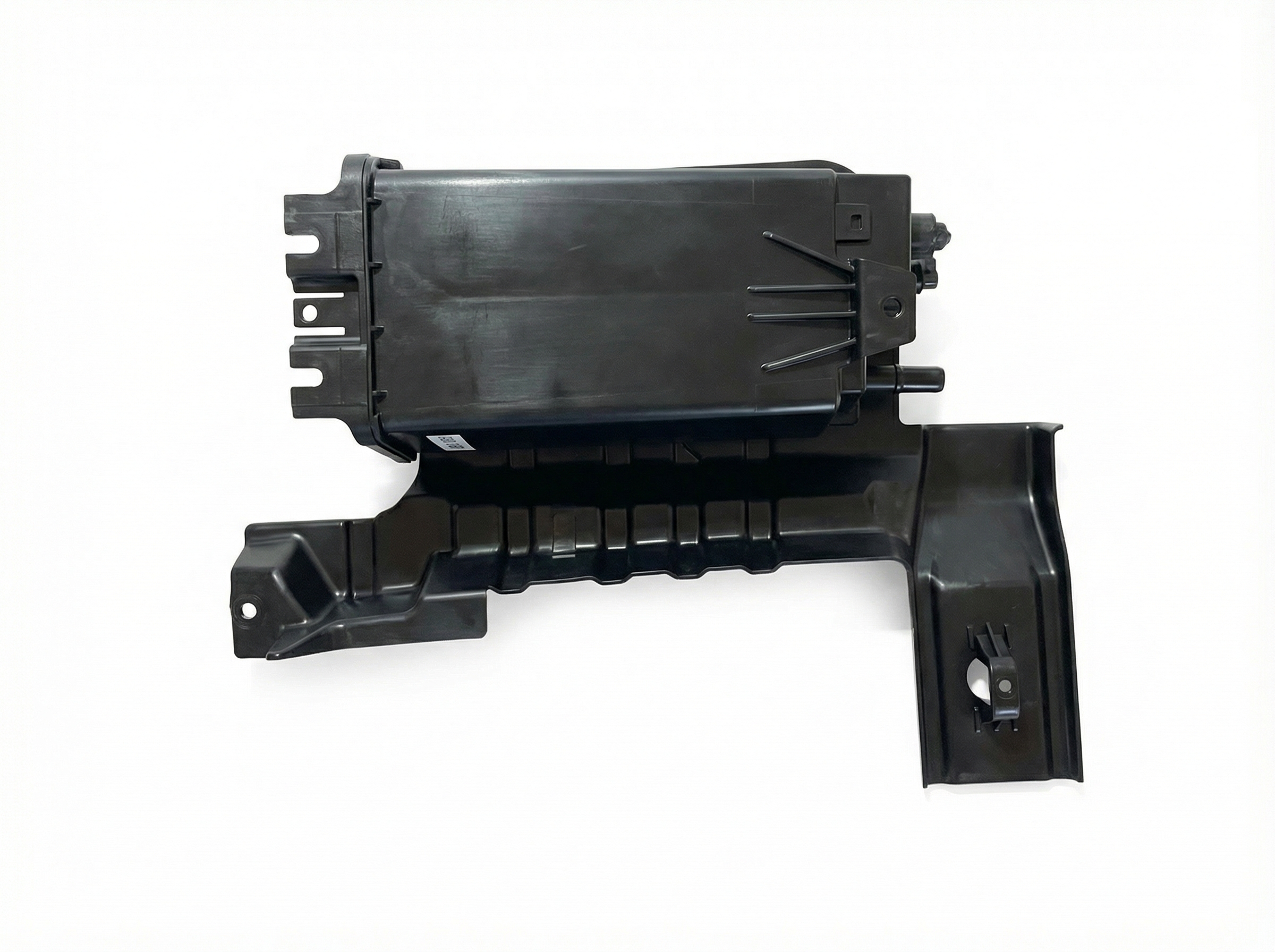
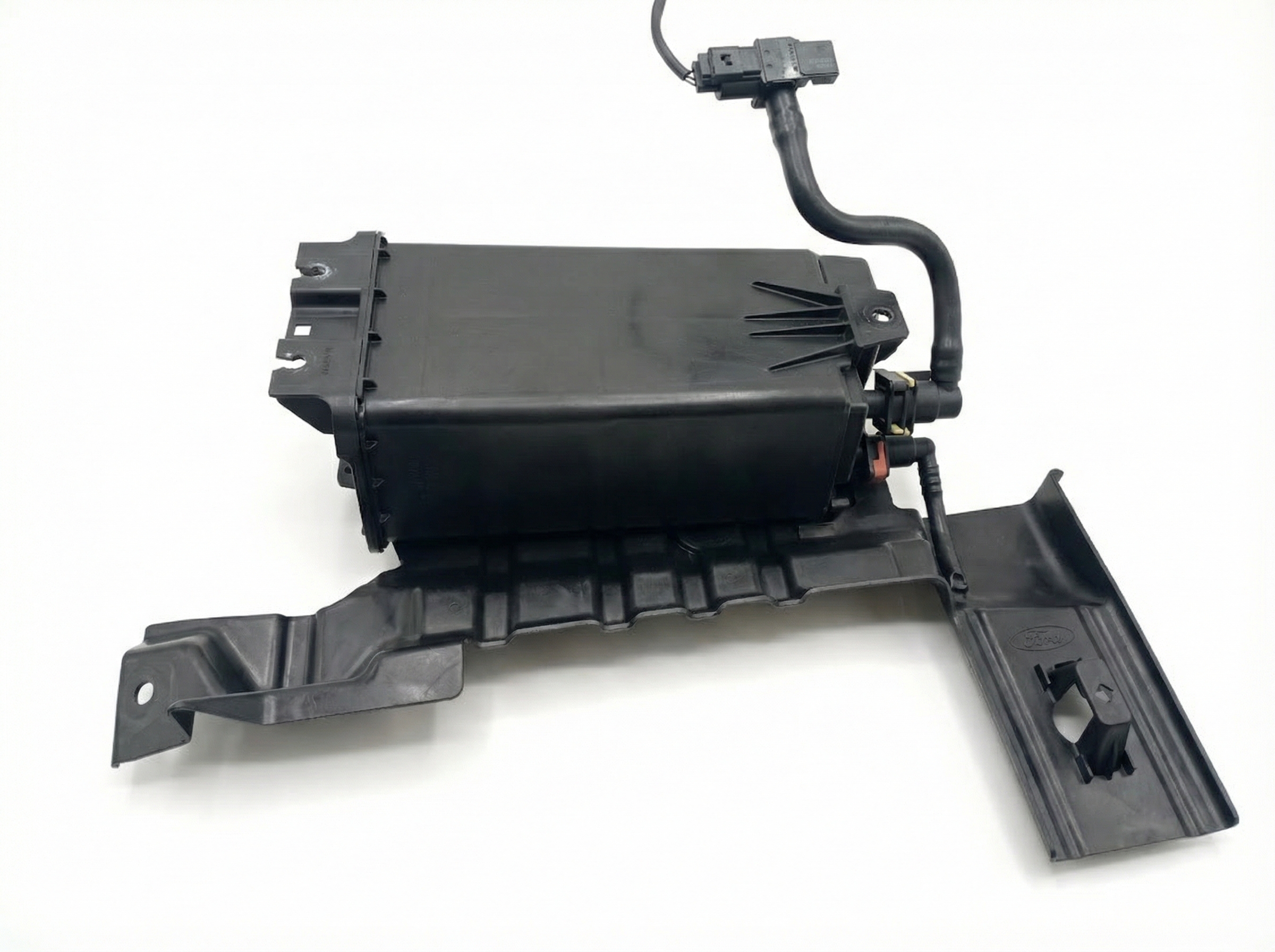
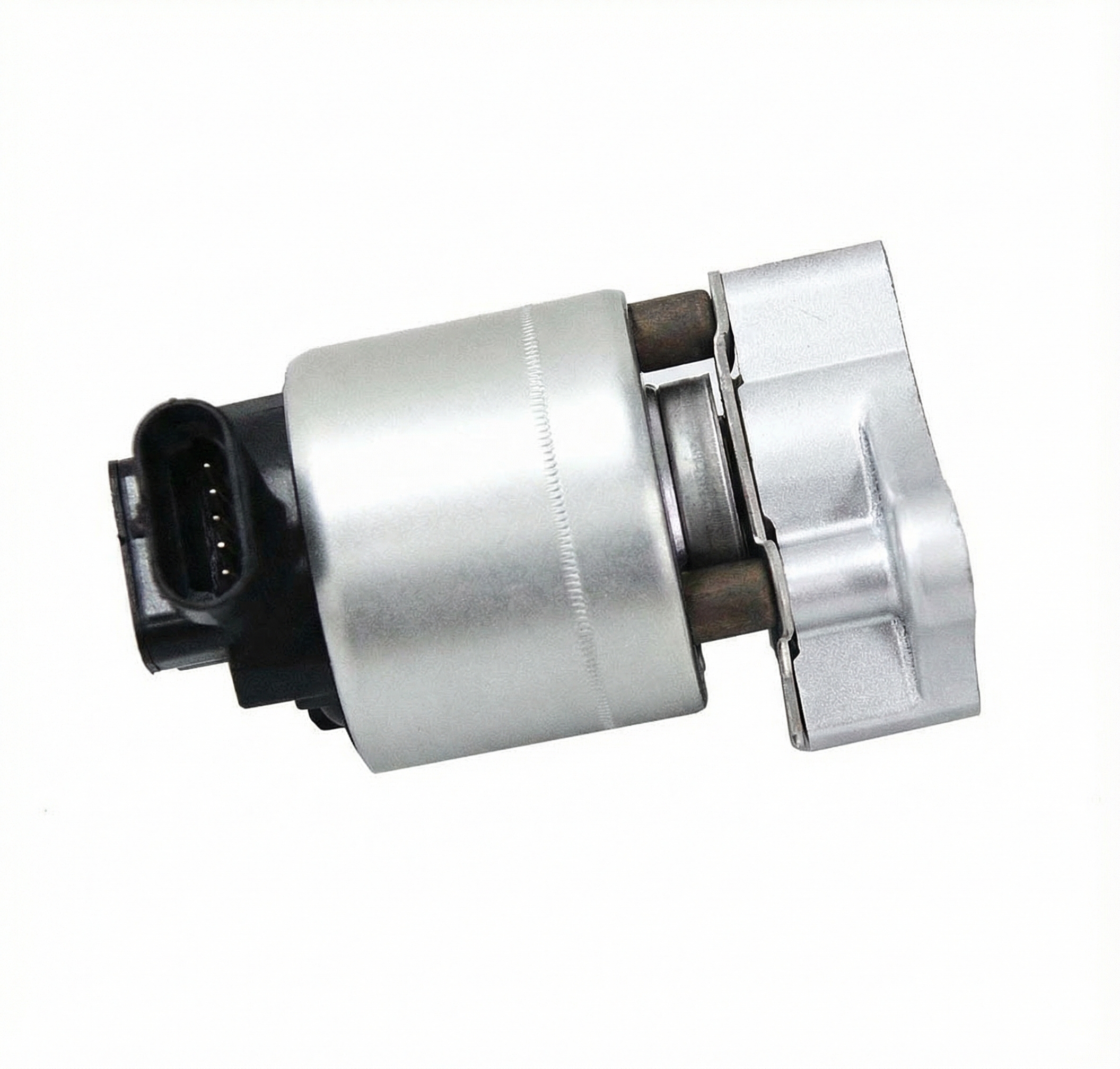
New Aftermarket Parts Available

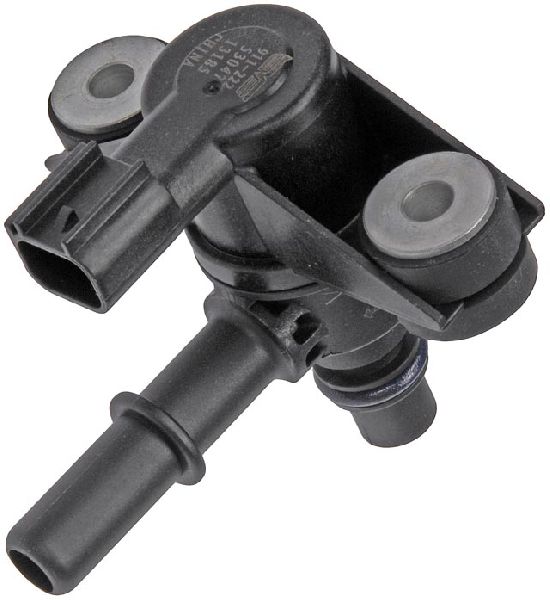

The information in this article is provided for general reference and educational purposes only. Vehicle specifications, procedures, and part compatibility can vary by production date, trim level, and region. Always consult your vehicle's factory service manual and verify part numbers before purchasing or performing repairs. Safety-critical components such as airbags, seat belts, and braking systems should be installed by a qualified professional.
- Ford Explorer:
- 🎬 Helpful Videos
- 🛍️ Shop This Part
- What's Unique About the 2011-2018 Ford Explorer
- Symptoms You May Notice
- Most Likely Causes
- Rare But Worth Checking
- Diagnosis Steps
- Parts You'll Likely Need
- Related Codes That Often Appear With This One
- Technical Service Bulletins (TSBs) & Recalls
- Platform-Specific Known Issues
- Mechanic-Grade Diagnostic Values
- Scan Tool Commands That Help
- Wiring & Ground Locations
- Real Owner Repair Stories
- When the Usual Fixes Don't Work
- OEM Part Supersession History
- Diagnostic Flowchart
- Used vs. New Parts: Buying Guide for This Vehicle
- Real Owner Stories
- 2016 Ford Explorer 3.5L V6
- 2015 Ford Explorer
- 2013 Ford Explorer
- 2011-2018 Ford Explorer 3.5L V6
- 2014 Ford Explorer
- Documented NHTSA Reports
- Related OBD-II Codes
- Frequently Asked Questions
- 🎟️ Get 5% Off