

P1450 on 2013-2019 Ford Escape 1.6L: 'Unable to Bleed Up Fuel Tank Vacuum' Causes and Fixes
On a 2013-2016 Ford Escape with the 1.6L EcoBoost engine, the P1450 code is almost always caused by a faulty canister purge valve that is stuck open. This is a very common issue, and the most noticeable symptom is difficulty starting or stalling right after refueling. Replacing the purge valve assembly is a straightforward DIY fix, with the OEM part costing between $70 and $100.
- P1450 on your 1.6L Escape almost certainly means the canister purge valve has failed.
- The most reliable symptom is the engine stalling or being very difficult to start right after you get gas.
- You can confirm the failure in minutes: if you feel suction from the purge valve's port at idle, it's bad and needs replacement.
- This is a common DIY repair that can be done in under an hour with basic tools, saving hundreds of dollars.
- When buying the part, ensure you get the full assembly with hoses, as the valve itself is not typically sold separately for this application.
What's Unique About the 2013-2016 Ford Escape

The 1.6L EcoBoost engine, used across several Ford models including the Escape, Fusion, and Fiesta ST, is well-documented for this specific failure. The canister purge valve is a known high-failure item, leading Ford to issue recalls and technical service bulletins for this engine family. Owner complaints consistently link the P1450 code to a classic, tell-tale symptom: the engine stalling or being very hard to start immediately after refueling, a direct result of the stuck-open valve flooding the intake with un-metered fuel vapors. This symptom is so specific that it often allows for a confident diagnosis before even opening the hood.
Symptoms You May Notice
- Check Engine Light is on
- Difficulty starting, rough idle, or stalling immediately after refueling.
- Hesitation and stalling while idling. [ODI #11268044]
- A 'whoosh' sound of air rushing in when opening the gas cap.
- Vibration from the fuel tank area. [ODI #11268044]
- Slightly higher than normal idle RPM as the PCM tries to compensate for the vacuum leak.
- Replacing the gas cap. This vehicle has a capless fuel filler. Issues with the filler neck seal typically cause leak codes (like P0456), not excessive vacuum codes like P1450.
- Replacing the EVAP charcoal canister. The canister itself rarely fails in a way that causes this code. It is more likely to become saturated with fuel if the purge valve issue is ignored for a long time, but the valve is the root cause.
Most Likely Causes

- Stuck-Open Canister Purge Valve 🔴 High Probability This specific part is a known high-failure item on many Ford EcoBoost platforms. Multiple NHTSA complaints and a Ford Technical Service Bulletin (TSB 16-0075) directly point to this valve as the primary cause for P1450. [1, ODI #11659937, ODI #11268044]
How to confirm: With the engine idling, disconnect the EVAP hose from the purge valve in the engine bay. Place your finger over the port on the valve itself. If you feel any suction, the valve is stuck open and has failed. A good valve should be completely closed at idle and exhibit no vacuum.
Typical fix: Replace the entire canister purge valve and hose assembly. On this engine, the valve is integrated with the lines and typically sold as a single unit. Attempting to separate the old valve from the brittle plastic lines often leads to damage.
Est. part cost: $40-$100
Rare But Worth Checking
- Blocked Canister Vent Solenoid or Hoses: If the purge valve tests good, the issue could be a blockage in the EVAP system's vent path, which is located near the fuel tank. This can be caused by dirt, debris, insects, or a failed vent solenoid, preventing the tank from drawing in fresh air to equalize pressure.
- Faulty Fuel Tank Pressure (FTP) Sensor: It's possible, but unlikely, that the sensor responsible for reporting the tank pressure is sending incorrect data to the computer, making the PCM believe there is a vacuum when there isn't.
- Restricted EVAP Canister: If the vehicle is frequently 'topped off' with fuel after the pump clicks off, liquid fuel can be forced into the charcoal canister, saturating it and turning it into a restriction. If the canister is heavy or smells of raw fuel, it may be saturated and require replacement.
Diagnosis Steps

- Confirm the presence of code P1450 using an OBD-II scanner.
- Check for the primary symptom: Does the vehicle stall or run rough immediately after refueling? If yes, the purge valve is the prime suspect.
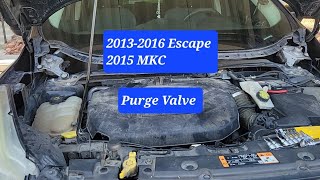
- Locate the canister purge valve in the engine bay. It's a black valve with several plastic lines attached, situated near the intake manifold.
- Start the engine and let it idle.
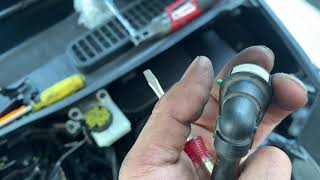
- Disconnect the EVAP hose from the purge valve. Place your finger over the port on the valve where the hose was connected.
- If you feel any vacuum suction at idle, the valve is stuck open and must be replaced. A properly functioning valve is closed at idle and should have no suction.
- If no suction is felt, the problem is less common. Use a scan tool to command the canister vent solenoid (near the fuel tank) closed and see if the system can then hold a vacuum. If it cannot, the vent solenoid may be stuck open. If it holds vacuum but the code persists, check for restrictions in the vent lines.
Parts You'll Likely Need

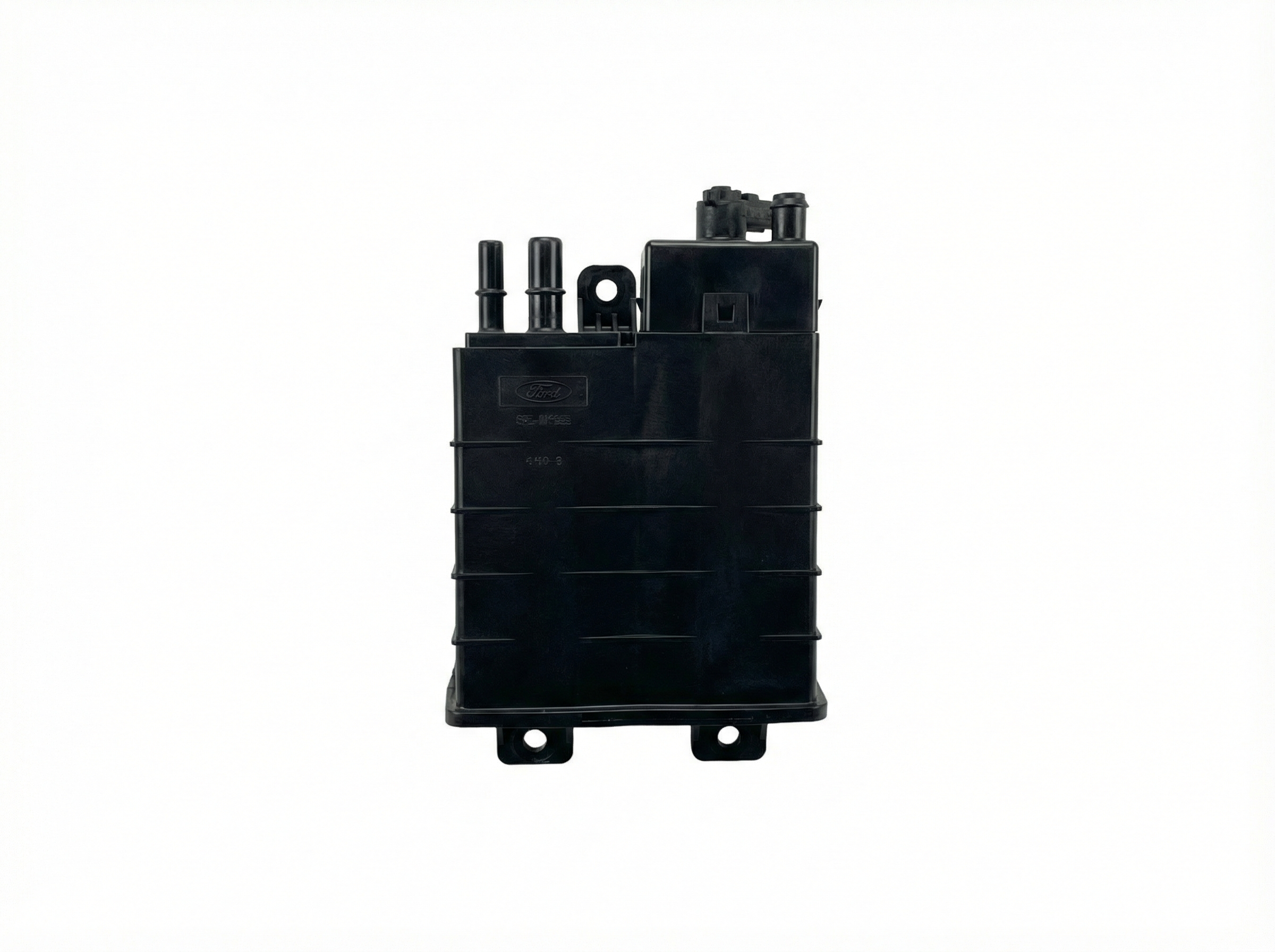
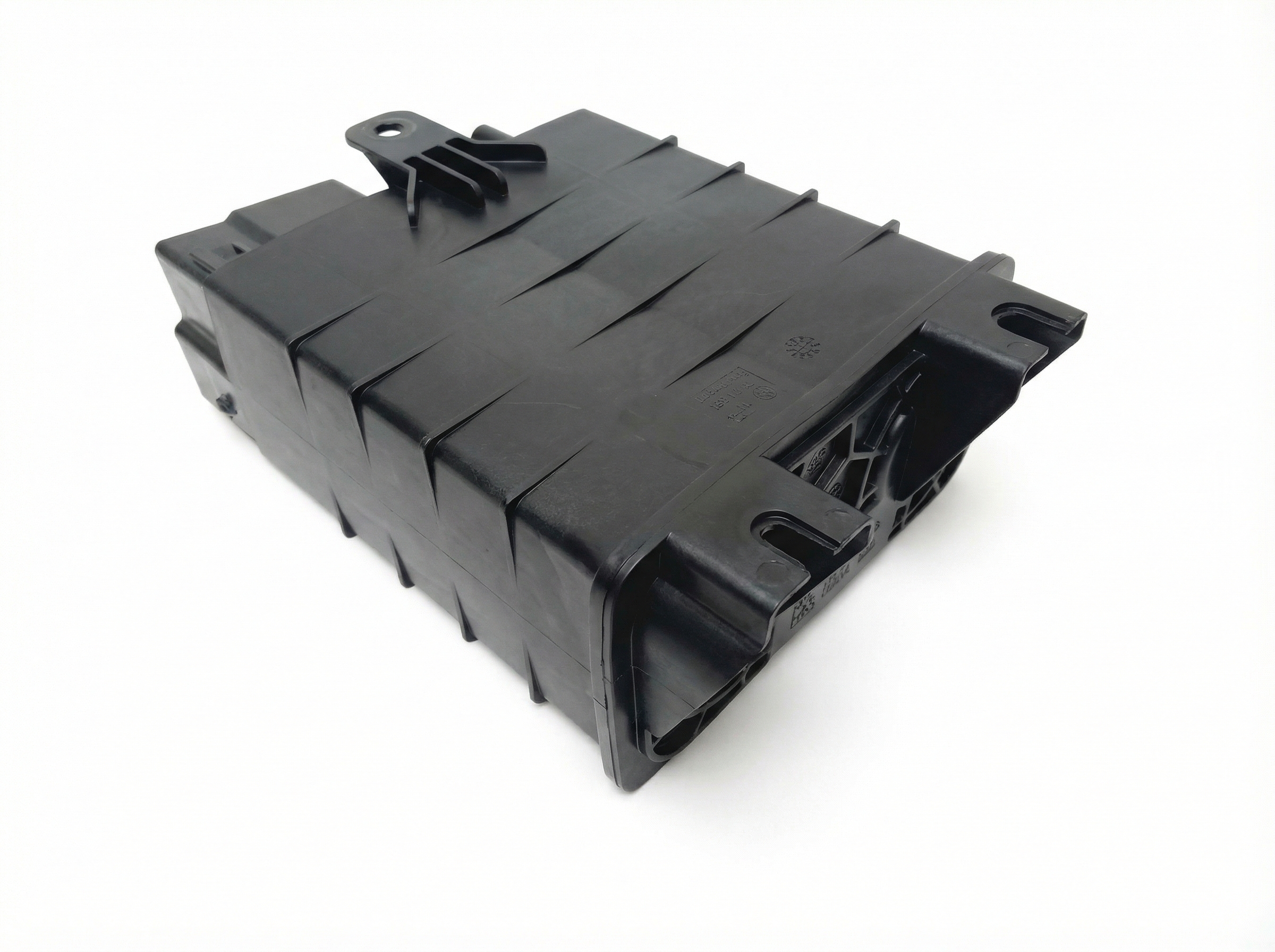
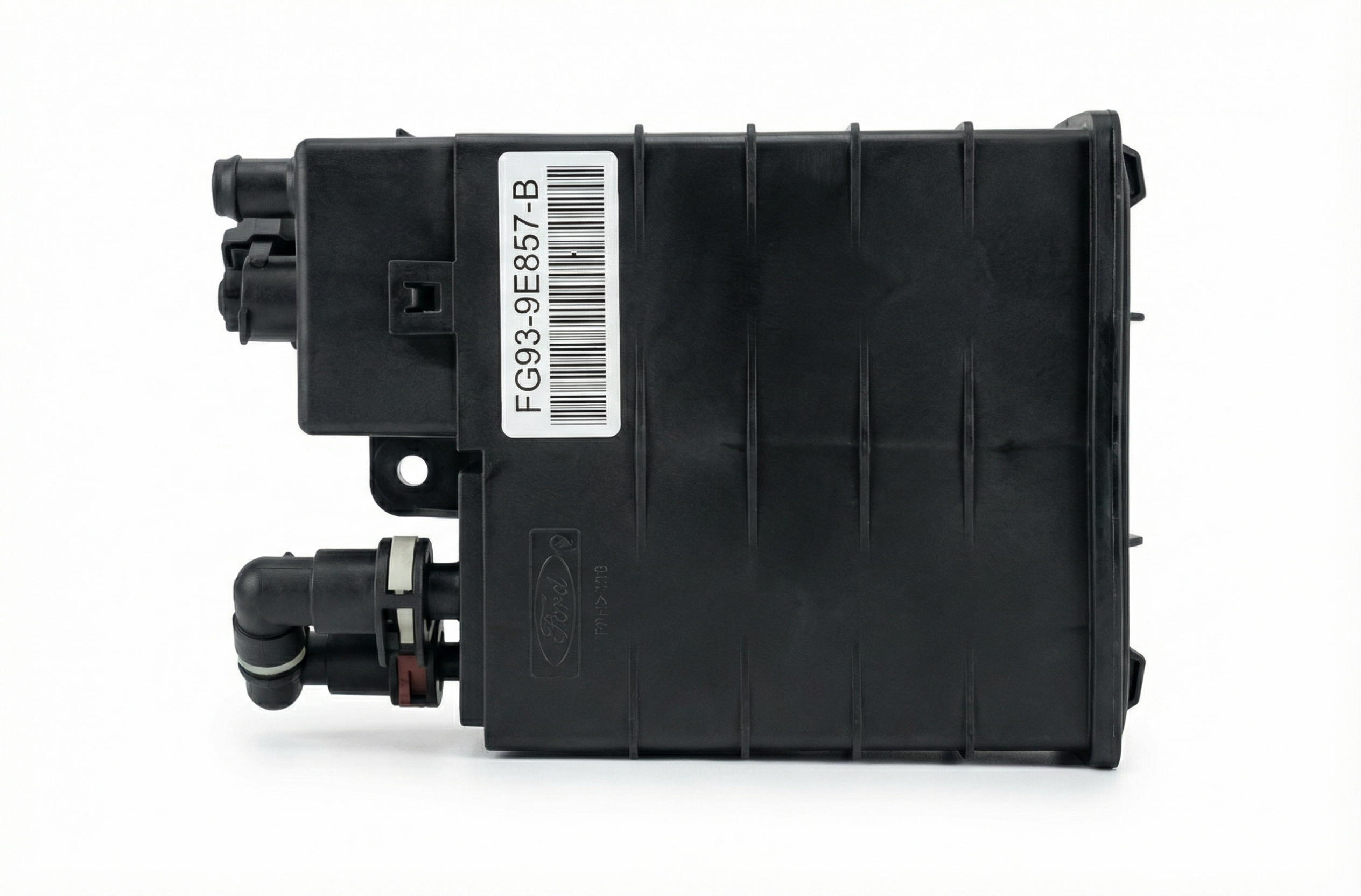
- Vapor Canister Purge Valve / Solenoid Assembly
(OEM #CV6Z-9D289-T)— This is the component that mechanically fails (sticks open), causing the constant vacuum pull that triggers code P1450. It is a well-documented failure item on this platform.
Trusted brands: Motorcraft (OEM), Dorman, Standard Motor Products
OEM price range: $70-$100
Aftermarket price range: $40-$70
Related Codes That Often Appear With This One
- P144C — This code for 'EVAP System Purge Check Valve Performance' directly points to the function of the purge valve, which is the component that fails and causes P1450.
- P0456 — A 'Small EVAP Leak' code can sometimes accompany P1450. Ford TSB 16-0075 explicitly lists both codes as being caused by the same faulty canister purge valve.
- P0302 — A misfire code, such as P0302 for Cylinder 2, can occasionally appear. A stuck-open purge valve can introduce un-metered fuel vapors, disrupting the air-fuel mixture and potentially causing misfires. [ODI #11604055]
- P219A — This 'Air-Fuel Ratio Imbalance' code can be triggered because the un-commanded fuel vapors from the stuck purge valve create a rich condition that the PCM struggles to correct.
Technical Service Bulletins (TSBs) & Recalls
- TSB 16-0075: Addresses hard start/no start/stall after refueling with DTC P1450 and/or P0456 on 2013 Escape and 2013-2014 Fusion models, fixed by replacing the canister purge valve.
Platform-Specific Known Issues
- TSB 16-0075: Ford issued Technical Service Bulletin 16-0075 for the 2013 Escape 1.6L, which directly addresses DTC P1450 and/or P0456 accompanied by a hard start or stall after refueling, instructing dealers to replace the canister purge valve.
- Recall 18S32 / NHTSA 18V735: A safety recall was issued for some Ford models (notably the Focus, but the same part fails on the Escape) for a related issue where the PCM software failed to detect a stuck purge valve, leading to potential fuel tank deformation, erratic fuel gauge readings, and stalling. This highlights the prevalence and severity of this part's failure across the brand.
- Concrete Repair Story from a Forum: On FordTruckEnthusiasts.com, user '22rimfire' described their '14 Escape with 37,000 miles experiencing the classic 'won't start after a gas fill up' symptom. The dealer diagnosed codes P0456 and P1450 and confirmed the vapor canister purge valve was bad. The repair was covered under the emissions warranty and solved the problem.
- Repeat Failures: Owner complaints frequently mention this part failing multiple times, as noted in NHTSA ODI #11278716, where an owner experienced the same P1450 failure at 112,000 miles after a previous replacement. [ODI #11278716]
Mechanic-Grade Diagnostic Values
- Fuel Tank Pressure (FTP) Sensor Voltage (Key On, Engine Off) — expected: 2.4V to 2.8V. Failure: A voltage below 2.4V with the engine running but zero purge commanded indicates a vacuum is present when it shouldn't be, strongly suggesting a stuck-open purge valve.
- Canister Purge Valve Solenoid Resistance — expected: 7 to 30 Ohms. Failure: Infinite resistance (open circuit) or zero resistance (short circuit) indicates an electrical failure of the solenoid coil. This test does not confirm a mechanical failure (stuck valve).
- Canister Purge Valve Connector Power Wire Voltage (Key On, Engine Off) — expected: ~12 Volts (Battery Voltage). Failure: No voltage points to a wiring issue or a blown fuse, which would typically set a circuit code like P0443, not P1450.
Scan Tool Commands That Help
- FORScan / Ford IDS: EVAP Purge Valve Command (PWM %) — This is the definitive test. At idle, command the purge valve to 0% (closed). While monitoring the Fuel Tank Pressure (FTP) sensor PID, if the vacuum increases (voltage drops), the valve is mechanically stuck open and has failed.
- FORScan / Ford IDS: EVAP Canister Vent Valve Command — This is used if the purge valve tests good but P1450 persists. Commanding the vent valve (normally open) to close should allow the system to build vacuum. If it fails to do so, or fails to release vacuum when commanded open, the vent valve or its path is faulty.
- FORScan / Ford IDS: EVAP System Test — This is an automated on-demand self-test that runs the EVAP monitor. It can be used to verify the repair after replacing a component, but it often requires specific conditions (like fuel level between 15-85%) to run.
Wiring & Ground Locations
- G104 — Top rear of the transmission.. This is a primary ground point for several engine and powertrain components. A wiring diagram for the 2014 Escape 1.6L shows the Fuel Tank Pressure (FTP) sensor circuit utilizes this ground. A poor connection here could potentially cause erratic sensor readings, though it is a very rare cause for P1450.
- EVAP Canister Purge Valve Connector — On the purge valve assembly, located in the engine bay near the intake manifold.. This is where voltage and resistance tests are performed. One pin should have battery voltage with the key on (power supply), and the other is the control wire from the PCM.
- EVAP Canister Vent Valve Connector — On the EVAP canister, located under the rear of the vehicle.. This connector is checked if a vent path blockage is suspected. The valve is normally open and is commanded closed by the PCM during system tests.
Real Owner Repair Stories
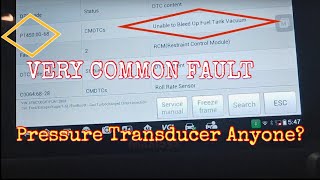
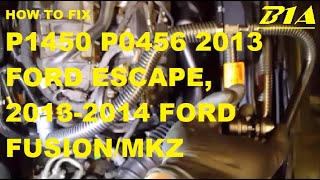
- YouTube channel 'JL's Auto Solution' (2013 Ford Escape) — Check Engine Light with code P1450, 'unable to bleed up fuel tank vacuum'.
❌ Tried (didn't work) The video focuses directly on diagnosis and replacement, no other failed attempts were mentioned.
✅ What actually fixed it The canister purge valve was diagnosed as faulty and replaced with a Dorman aftermarket part. The video confirms the repair by showing post-repair scan tool data. The technician notes that no relearn procedure is required after replacement.
"I Checked Everything" — The Actual Cause
- A smoke test is not the correct diagnostic procedure for a P1450 code. A smoke test is designed to find leaks where pressure escapes (e.g., for codes like P0455/P0456). Code P1450 indicates an inability to relieve vacuum, which means the system is sealed too well. A vehicle with only a P1450 code should pass a smoke test, as the test won't identify a stuck-open purge valve or a stuck-closed vent valve.
When the Usual Fixes Don't Work
- While the canister purge valve is the cause in over 95% of cases, there are rare instances where the code persists after replacement. In a video by 'FordTechInfo', a P1450 on a 2014 Escape 2.0L was ultimately fixed by replacing the entire EVAP canister assembly after a new purge valve did not solve the issue, suggesting the canister's integrated vent valve had failed or the canister itself was internally restricted.
OEM Part Supersession History
CV6Z-9D289-B→CV6Z-9D289-T— Unknown, likely a design revision to improve reliability, as this is a high-failure part. Multiple Ford parts dealers show -T as the replacement for -B.
Model Year Variations Within This Range
- 2013-2016 vs 2017-2019: The 1.6L EcoBoost engine was used from 2013-2016. For the 2017 model year, it was replaced with a 1.5L EcoBoost engine. While the failure mode is similar, the purge valve assembly is a different part number for the 1.5L engine.
Diagnostic Flowchart
Other Known Issues on This Vehicle
Issues unrelated to this code that are worth knowing about as an owner of this generation:
- Engine Coolant Intrusion into Cylinders 🔴 High — A widespread and well-documented issue, particularly for the 1.6L and 1.5L EcoBoost engines. Can occur at various mileages, often leading to complete engine failure. (Ref: Multiple recalls (e.g., 13S12, 17V209) and Customer Satisfaction Programs (e.g., 21N12) have been issued to address engine overheating and coolant leaks.)
- 6F35 Transmission Failure / Shudder 🔴 High — Common in earlier years of this generation (2013-2016). Symptoms include harsh shifting, shuddering, and complete failure, often requiring a rebuild or replacement. (Ref: TSB 19-2100 was issued for 2013-2015 models with the 1.6L engine for torque converter failure (codes P0741/P1744).)
- Engine Overheating due to Cooling System Faults 🔴 High — Prevalent in 2013-2014 models with the 1.6L engine. Failures of the water pump, coolant reservoir, and various hoses can lead to rapid overheating and risk of engine fire. (Ref: Recall 13S12 was issued to address a cylinder head plug that could dislodge and cause a significant coolant loss.)
Used vs. New Parts: Buying Guide for This Vehicle
When a used part is the smart pick: A used part is not recommended for this repair. The canister purge valve is a known high-failure-rate component due to an internal mechanical fault. A used part from a salvage yard has an unknown history and a high probability of either being already faulty or failing soon after installation.
What to inspect on the donor part:
- Not applicable, as a used part is not advised.
OEM-only on this vehicle (don't cheap out):
- While not strictly required, the Motorcraft (OEM) part is recommended for best fit and longevity. Given the history of repeat failures noted in NHTSA complaints, using the latest OEM revision (CV6Z-9D289-T) is the safest choice. [ODI #11278716]
Aftermarket brands forum-validated for this vehicle:
- Dorman (e.g., 911-773) is a widely available and commonly used aftermarket alternative. Some users report success with it, and Dorman claims to have improved the design of the hose clips to make future replacement easier.
Brands owners have reported issues with on this vehicle:
- No specific brands are consistently reported as problematic, but ultra-low-cost, unbranded parts from online marketplaces carry a higher risk of premature failure.
Real Owner Stories
Aggregated from forums and TSBs cited above. Mileages and costs reflect what owners reported in those sources.
2013 Ford Escape SE 1.6L EcoBoost — 110000 miles
Symptoms: Car wouldn't start after filling the tank, took 3-5 tries. Eventually, the check engine light came on with code P1450.
What fixed it: Replacement of the canister purge valve.
Source hint: r/fordescape owner report
2014 Ford Escape — 37000 miles
Symptoms: Classic 'won't start after a gas fill up' symptom; dealer diagnosed codes P0456 and P1450.
What fixed it: The dealer confirmed the vapor canister purge valve was bad and replaced it under the emissions warranty.
Source hint: FordTruckEnthusiasts.com thread 'If you have hard start after fill up'
2013-2019 Ford Escape 1.6L EcoBoost — 112000 miles
Symptoms: Owner experienced a repeat P1450 failure after a previous replacement.
What fixed it: Replacement of the canister purge valve.
Source hint: NHTSA ODI #11278716
2013-2019 Ford Escape 1.6L EcoBoost
Symptoms: Hesitation and stalling while idling; vibration from the fuel tank area.
What fixed it: Replacement of the canister purge valve.
Source hint: NHTSA ODI #11268044
Related OBD-II Codes
Frequently Asked Questions
Does TSB 16-0075 apply to my 2013 Ford Escape 1.6L EcoBoost?
Will the emissions warranty cover a P1450 repair on my 2014 Escape?
Is there a recall for the purge valve on the 2013-2019 Escape?
Can I just replace the valve itself, or do I need the whole hose assembly?
Why does my Escape struggle to start only after I put gas in it?
What is the 'whoosh' sound I hear when opening my gas cap?
Helpful Videos

Used OEM Parts in Stock


New Aftermarket Parts Available


The information in this article is provided for general reference and educational purposes only. Vehicle specifications, procedures, and part compatibility can vary by production date, trim level, and region. Always consult your vehicle's factory service manual and verify part numbers before purchasing or performing repairs. Safety-critical components such as airbags, seat belts, and braking systems should be installed by a qualified professional.
- Ford Escape:
- 🎬 Helpful Videos
- 🛍️ Shop This Part
- What's Unique About the 2013-2016 Ford Escape
- Symptoms You May Notice
- Most Likely Causes
- Rare But Worth Checking
- Diagnosis Steps
- Parts You'll Likely Need
- Related Codes That Often Appear With This One
- Technical Service Bulletins (TSBs) & Recalls
- Platform-Specific Known Issues
- Mechanic-Grade Diagnostic Values
- Scan Tool Commands That Help
- Wiring & Ground Locations
- Real Owner Repair Stories
- "I Checked Everything" — The Actual Cause
- When the Usual Fixes Don't Work
- OEM Part Supersession History
- Model Year Variations Within This Range
- Diagnostic Flowchart
- Other Known Issues on This Vehicle
- Used vs. New Parts: Buying Guide for This Vehicle
- Real Owner Stories
- 2013 Ford Escape SE 1.6L EcoBoost — 110000 miles
- 2014 Ford Escape — 37000 miles
- 2013-2019 Ford Escape 1.6L EcoBoost — 112000 miles
- 2013-2019 Ford Escape 1.6L EcoBoost
- Related OBD-II Codes
- Frequently Asked Questions
- 🎟️ Get 5% Off