

P1441 on 2003-2009 Lexus GX470: Secondary Air Injection Valve Stuck Open Causes and Fixes
P1441 on a GX470 means the Bank 1 Secondary Air Injection (SAI) switching valve is stuck open. This is almost always caused by a failed SAI pump that shatters and sends debris into the valves. A complete repair often requires replacing the pump and both air switching valves, which is a significant and costly job located under the intake manifold. Many owners opt for an aftermarket bypass kit as a more affordable alternative.
- P1441 on a GX470 is a Secondary Air Injection (SAI) system code, NOT an EVAP code.
- The most common cause is a failed SAI pump that has sent plastic debris into the air switching valves, jamming them open.
- Symptoms often include a loud 'vacuum cleaner' noise on cold starts and the vehicle entering a low-power 'limp mode'.
- A proper repair is expensive and labor-intensive, requiring the removal of the intake manifold to replace both the pump and the contaminated valves.
- Simply replacing the valve identified by the code is not enough; the pump must also be replaced to prevent the issue from recurring.
What's Unique About the 2003-2009 Lexus GX470
The 2UZ-FE engine in the GX470, Tundra, and Sequoia is known for a specific failure pattern in the SAI system, primarily on 2005+ models with VVT-i. The air pump, located in the V of the engine under the intake manifold, can ingest moisture or its foam filter can degrade. This causes the pump's plastic impeller to shatter, sending sharp plastic debris downstream. This debris physically jams the air switching valves, leading to codes like P1441 (stuck open Bank 1) or P1444 (stuck open Bank 2). Because the root cause is the pump's disintegration, simply replacing the stuck valve is almost never a permanent fix; the pump must be replaced to prevent repeat failure.
Symptoms You May Notice
- Check Engine Light is on
- VSC, TRAC, and VSC OFF lights are illuminated (a 'Christmas tree' on the dash)
- Loud vacuum cleaner or fan noise from the engine bay for about 30-60 seconds after a cold start, which is the sound of the failing pump.
- Vehicle enters 'limp mode,' resulting in a significant loss of power.
- A booming or 'Mack truck downshifting' sound on startup as the valve fails to operate correctly.
- Replacing only the stuck Air Switching Valve without replacing the failed Air Pump. If the pump has failed, it will soon send debris into the new valve, causing the problem to return within a short period.
- Mistaking the code for an EVAP system issue. Some generic code readers incorrectly define P1441 as an EVAP code, leading to wasted time diagnosing the wrong system.
Most Likely Causes
- Failed Secondary Air Injection Pump 🔴 High Probability The pump's design includes a foam filter that is known to disintegrate over time. The pump can also ingest moisture, causing the plastic impeller to become brittle and shatter, sending debris throughout the system.
How to confirm: Listen for a loud, abnormal fan or vacuum-like noise from the engine on a cold start. The pump itself is located under the intake manifold and requires significant disassembly to inspect visually. Debris from the pump can sometimes be seen in the hoses leading to the valves.
Typical fix: Replace the Secondary Air Injection Pump. It is highly recommended to also replace both Air Switching Valves (Bank 1 and Bank 2) at the same time, as they are likely contaminated with debris or will be soon. All associated gaskets should also be replaced.
Est. part cost: $300-$600 - Jammed Air Switching Valve (Bank 1) 🔴 High Probability This is typically a symptom of the failed air pump. Debris from the shattered pump impeller travels through the air lines and physically lodges in the valve, preventing it from closing.
How to confirm: The P1441 code itself points directly to this valve. Diagnosis involves removing the intake manifold to access the valve for inspection. A technician can check for physical debris (often looks like black plastic shards or soot) holding the valve open.
Typical fix: Replace the Air Switching Valve for Bank 1. Due to the high likelihood of contamination from the pump, it is best practice to replace the valve for Bank 2 (which may trigger code P1444) and the air pump simultaneously.
Est. part cost: $150-$250 - Faulty Vacuum Switching Valve (VSV) ⚪ Low Probability
How to confirm: The VSVs that control the main air switching valves can be tested by applying 12V power and checking for operation (a clicking sound) and by checking for vacuum flow when actuated.
Typical fix: Replace the faulty VSV.
Est. part cost: $50-$100
Rare But Worth Checking
- Wiring or Connector Issue: A damaged wire or corroded connector for the air switching valve or its control driver could prevent the valve from receiving the signal to close. This is less common than mechanical failure from debris.
- Faulty ECM: In very rare cases, the Engine Control Module (ECM) itself could be faulty, but all other possibilities should be exhausted before considering ECM replacement.
Diagnosis Steps
- Confirm the code with an OBD-II scanner. Note if P1444 or other related SAI codes are also present.
- On a cold start, listen for a very loud (like a shop vacuum) noise from the engine bay that lasts for less than a minute. This is a strong indicator of a failing air pump.
- If the noise is present, the diagnosis is almost certainly a failed air pump and contaminated switching valves. The system is located under the intake manifold.
- If no noise is heard, a more technical diagnosis is needed. This involves gaining access to the SAI components under the intake manifold.
- Inspect all vacuum lines connected to the air switching valves for cracks or disconnection.
- Test the VSV (Vacuum Switching Valve) for Bank 1. Apply 12V power and listen for a click. Check that it properly passes/blocks vacuum when actuated.
- Inspect the Air Switching Valve itself. This requires removal. Check for any visible debris holding the valve open. The debris often looks like black plastic shards.
- If debris is found, the air pump must be replaced along with the valves to prevent a repeat failure. It is also wise to blow out the air passages with compressed air to clear any remaining fragments.
Parts You'll Likely Need
- Secondary Air Injection Pump
(OEM #17610-0C010)— This is the root cause of the failure. Its internal foam filter and plastic impeller disintegrate, sending debris that jams the switching valves.
Trusted brands: Genuine Toyota/Lexus, Aisin, Dorman
OEM price range: $400-$600
Aftermarket price range: $200-$400 - Air Switching Valve (Diverter Valve)
(OEM #25710-50022)— This is the part that the P1441 code directly identifies as being stuck open, usually due to debris from the failed pump. It's recommended to replace both valves (Bank 1 and Bank 2) at the same time. This part number supersedes 25710-50020 and 25710-50021.
Trusted brands: Genuine Toyota/Lexus, Aisin, Dorman
OEM price range: $200-$300
Aftermarket price range: $100-$180 - Intake Manifold Gasket Set
(OEM #Felpro MS 96672 (example))— Required for re-installing the intake manifold after accessing the SAI components.
Trusted brands: Genuine Toyota/Lexus, Fel-Pro
OEM price range: $50-$80
Aftermarket price range: $30-$50
Related Codes That Often Appear With This One
- P1444 — This is the identical fault ('Stuck Open') for the Air Switching Valve on Bank 2. It's common to see both codes together because debris from the single air pump contaminates both valves.
- P2440, P2442 — These codes also indicate a stuck-open valve and are part of the same family of SAI faults that can be triggered by the same pump failure event.
- P1442, P1445, P2441, P2443 — These codes indicate the air switching valves are stuck in the *closed* position. This can also be caused by pump debris or a failure of the valve's vacuum actuator.
- P0418 — This code points to a fault in the air pump's relay or driver circuit, often appearing when the pump motor fails, seizes, or has an electrical issue.
Technical Service Bulletins (TSBs) & Recalls
- While not a TSB for this specific fault, Lexus issued a Warranty Enhancement Program (ZLD) for cracked dashboards on 2003-2008 GX470s, a common unrelated issue.
Platform-Specific Known Issues
- The failure of the SAI pump is a widely documented issue on 2UZ-FE engines of this era, particularly 2005 and newer models.
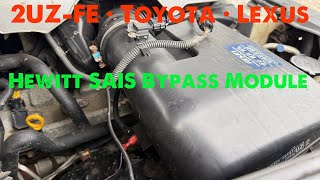
- Due to the high cost of repair (often quoted at $2000+ at a dealership), many owners opt for an aftermarket bypass kit from companies like Hewitt Technologies. 🎬 See how a bypass kit addresses this common emissions flaw. These kits use an electronic module and block-off plates to trick the ECM into thinking the system is working correctly, allowing the user to clear the codes and exit limp mode without replacing the expensive hardware. This may not be legal in states with strict emissions testing, but many users report passing inspections as the kit allows readiness monitors to set.
Mechanic-Grade Diagnostic Values
- VSV for Air Injection System Resistance — expected: 33 to 39 Ω at 20°C (68°F) between terminals 1 and 2.. Failure: Resistance outside this range, or less than 10 MΩ between either terminal and body ground, indicates a faulty VSV.
- SAI Pressure Sensor Voltage (Key On, Engine Off) — expected: 1.0 to 2.2 V between terminals AIP and E2 of the ECM connector.. Failure: Voltage outside this range suggests a faulty pressure sensor.
- Air-Fuel Ratio during Techstream Active Test — expected: A/F value should be 18 or more when the Air Switching Valve is commanded open, and approximately 14.5 when commanded closed.. Failure: If the A/F value does not change as expected, it indicates the valve is not operating correctly.
Scan Tool Commands That Help
- Toyota Techstream: Active Test: "Control the Air Injection System" — This function allows a technician to command the air pump and switching valves to operate for 5-second intervals. It is used to verify the function of individual components without a cold start. By observing live data (like A/F ratio or pressure sensor voltage) during the test, a technician can confirm if the valves are opening and closing as commanded.
Wiring & Ground Locations
- ECM Connector E5 (Pressure Sensor) — The ECM is located behind the passenger side glove box compartment. Connector E5 is one of the plugs connecting to it.. If the pressure sensor is suspected to be faulty, its wiring can be tested or a new sensor can be wired in at the ECM, bypassing the need to remove the intake manifold. Pin 32 (White/Blue) is the sensor signal, Pin 23 (Light Green/Black) is the 5V reference, and Pin 28 (Brown) is the sensor ground.
- Air Injection Control Driver — Bolted to the top of the engine, near the firewall, often on the passenger side. It's a silver box with cooling fins.. This driver module controls the air pump and the main (electric) air switching valve. A failure in this driver or its wiring can cause codes like P0418 but can also be related to the overall system malfunction that triggers P1441.
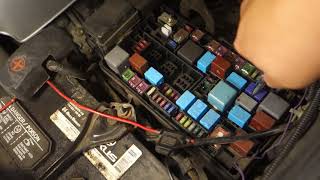
- Starter Relay — Located in the main fuse box in the engine bay on the driver's side.. This is not part of the original circuit, but it is the signal source tapped by aftermarket bypass kits (like Hewitt or DIY solutions) to know when the engine is starting. The kit uses this signal to trick the ECM during the cold-start self-test window.
Real Owner Repair Stories
- ClubLexus Forum (2006 Lexus GX470 with 145,000 miles) — Heard high-pitched fan noise at startup, then CEL/VSC lights came on. Vehicle went into limp mode. Codes P1441 and P1444 were present.
❌ Tried (didn't work) Owner considered OEM repair but found it too expensive for the vehicle's age and value.
✅ What actually fixed it Installed a Hewitt-Tech Plug and Play SAIS Bypass Kit. After installation, all warning lights went off and the truck returned to normal operation. - ClubLexus Forum (2005 Lexus GX470 with 80,000 miles) — Air pump/valve failure. Dealer quoted approximately $4,000 for a full system replacement.
❌ Tried (didn't work) Initial dealer diagnosis suggested replacing all valves along with the pump.
✅ What actually fixed it The owner had the work done at an independent shop, which replaced the pump and only one of the valves. Another owner with a similar issue negotiated with the Lexus dealer and received assistance, paying only for labor ($750) while Lexus covered the parts cost as a goodwill gesture. - YouTube - Michael Tomko (2005 Lexus GX470 with ~320,000 miles) — Check engine light and other dash lights on. Codes P1442 and P1445 (valves stuck closed) were present.
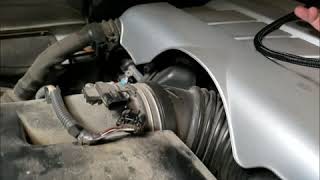
✅ What actually fixed it Installed a Hewitt-Tech Gen 1 bypass kit, including the module that plugs into the MAF sensor and the exhaust block-off plates. This resolved the codes and prevented limp mode. - NHTSA ODI #11184806 — An owner reported a recurring "dreaded secondary air injection system (emissions) defect" involving codes P1441/P1444, P0412, P0418, P2440, and others. They noted that replacement is a "nightmare for self repair" or costs over $2000.
OEM Part Supersession History
25710-50020, 25710-50021→25710-50022— Standard part revision and improvement by the manufacturer.Unknown (early pump design)→17610-0C040 (example of updated part)— The original air pump assembly and filter were modified to reduce the likelihood of the foam filter disintegrating and destroying the pump and valves.
Heads up: Using an older design pump, even new-old-stock, carries the same risk of premature failure.
Model Year Variations Within This Range
- 2003-2004: These earlier models of the GX470 were not equipped with the Secondary Air Injection system and are therefore not susceptible to this specific P1441 failure mode.
- 2005-2009: These models are equipped with the problematic SAI system located under the intake manifold. The failure is common across this entire date range.
Diagnostic Flowchart
Other Known Issues on This Vehicle
Issues unrelated to this code that are worth knowing about as an owner of this generation:
- Cracked Dashboard 🟠 Medium — Extremely common, especially in warmer climates. Cracks often form around vents and the passenger airbag area. (Ref: Lexus Warranty Enhancement Program ZLD was issued, but has since expired.)
- Seized Front Brake Calipers 🔴 High — Common issue where caliper pistons (especially the inner ones) corrode and seize, causing uneven pad wear, pulling, and brake drag. Often occurs between 60k-100k miles.
- Cracked Exhaust Manifolds 🟠 Medium — Fairly common, causing an audible 'ticking' noise from the engine bay, especially when cold, which may disappear as the engine warms up and the crack expands shut.
- Driveshaft 'Clunk' or 'Thump' 🟡 Low — A common complaint of a 'clunk' or 'thump' from the rear of the vehicle when coming to a stop. Often resolved by greasing the driveshaft slip yoke splines.
- Rear Air Suspension Failure 🔴 High — The rear air springs can dry rot and leak over time, causing the rear of the vehicle to sag. A costly repair, many owners opt to convert to a standard coil spring suspension.
Used vs. New Parts: Buying Guide for This Vehicle
When a used part is the smart pick: For this specific P1441 failure, using second-hand parts is strongly discouraged. The root cause is a design flaw in the air pump that causes it to self-destruct. A used pump or valve from a donor vehicle is highly likely to be near the end of its own life or already contaminated with debris.
What to inspect on the donor part:
- Not applicable, as used SAI pumps and valves for this engine are considered a high-risk purchase regardless of condition.
OEM-only on this vehicle (don't cheap out):
- Secondary Air Injection Pump: While aftermarket options from brands like Dorman exist, the OEM (or OEM supplier, Aisin) part is recommended for reliability, as it may incorporate design updates.
- Air Switching Valves: Similar to the pump, OEM/Aisin is preferred to ensure compatibility and longevity.
Aftermarket brands forum-validated for this vehicle:
- Hewitt Technologies: This brand is widely cited in forums as the go-to source for bypass kits, which are the most common and cost-effective alternative to a full hardware replacement.
- Aisin: As the likely original equipment manufacturer for Toyota/Lexus, Aisin parts are considered equivalent to OEM quality.
Brands owners have reported issues with on this vehicle:
- No specific brands are consistently cited as poor quality, but extreme low-cost, unbranded parts from online marketplaces should be avoided due to the critical function and high labor cost to replace them if they fail prematurely.
Real Owner Stories
Aggregated from forums and TSBs cited above. Mileages and costs reflect what owners reported in those sources.
2006 GX470
Symptoms: For about a month, the check engine light and three yellow VSC lights would come on during the morning warm-up, causing a huge loss of power. The car also made a loud noise that sounded like a Mack truck downshifting twice right before the error lights appeared.
What fixed it:
Source hint: ClubLexus
NHTSA Report
Symptoms: An owner reported experiencing the "dreaded" secondary air injection system defect, noting that multiple codes including P1441, P1444, and P2440 were present simultaneously.
What fixed it: The owner highlighted that the repair is extremely difficult for DIY and typically costs over $2,000 at a shop.
Source hint: NHTSA ODI #11184806
Related OBD-II Codes
Frequently Asked Questions
What is the loud vacuum cleaner or fan noise I hear for a minute when I start my GX470 cold?
Why are my Check Engine, VSC, and TRAC lights all on at the same time with code P1441?
My GX470 is in 'limp mode' with a major loss of power. Is this caused by P1441?
The dealership quoted me over $2000 for this repair. Is there a cheaper alternative?
If I'm replacing the Air Switching Valve for Bank 1, what other parts should I replace?
I have a Toyota 4Runner with the 4.7L V8 and the same symptoms. Is the repair the same?
Helpful Videos
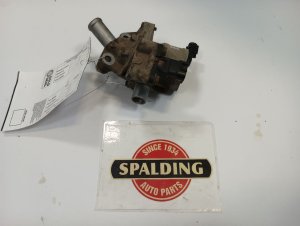
We Have This Part in Stock


The information in this article is provided for general reference and educational purposes only. Vehicle specifications, procedures, and part compatibility can vary by production date, trim level, and region. Always consult your vehicle's factory service manual and verify part numbers before purchasing or performing repairs. Safety-critical components such as airbags, seat belts, and braking systems should be installed by a qualified professional.
- Lexus GX470:
- 🎬 Helpful Videos
- 🛍️ Shop This Part
- What's Unique About the 2003-2009 Lexus GX470
- Symptoms You May Notice
- Most Likely Causes
- Rare But Worth Checking
- Diagnosis Steps
- Parts You'll Likely Need
- Related Codes That Often Appear With This One
- Technical Service Bulletins (TSBs) & Recalls
- Platform-Specific Known Issues
- Mechanic-Grade Diagnostic Values
- Scan Tool Commands That Help
- Wiring & Ground Locations
- Real Owner Repair Stories
- OEM Part Supersession History
- Model Year Variations Within This Range
- Diagnostic Flowchart
- Other Known Issues on This Vehicle
- Used vs. New Parts: Buying Guide for This Vehicle
- Real Owner Stories
- 2006 GX470
- NHTSA Report
- Related OBD-II Codes
- Frequently Asked Questions
- 🎟️ Get 5% Off