

P1440 on 2005-2018 Ford Focus: EVAP System Vacuum Trouble Causes and Fixes
For a 2005-2018 Ford Focus, code P1440 is most often caused by a faulty canister purge valve/solenoid. On 2012-2018 models with the 2.0L GDI or GTDI engine, this is a known issue covered by safety recall 18S32. A stuck-open valve can cause the fuel tank to deform, leading to stalling and an inaccurate fuel gauge. Replacing the purge valve is a common DIY fix costing between $30-$80 for the part.
- P1440 on a Ford Focus almost always points to a problem with the canister purge valve.
- For 2012-2018 models, check if Ford's safety recall 18S32 applies to your vehicle before paying for repairs.
- The location and part design of the purge valve are different for the 2005-2011 generation versus the 2012-2018 generation.
- Replacing the purge valve is a relatively simple DIY job that can be done with basic hand tools in under an hour.
- Ignoring the code on a 2012-2018 model can lead to a deformed fuel tank and inaccurate fuel level readings.
What's Unique About the 2005-2018 Ford Focus

The 2005-2018 Ford Focus spans two distinct generations (Mk2 and Mk3), and the primary cause of P1440 differs slightly between them. For the third generation (2012-2018) with 2.0L engines, a stuck-open canister purge valve is so common that Ford issued a safety recall (18S32 / NHTSA 18V735). This failure can cause excessive vacuum, leading to a deformed plastic fuel tank, an inaccurate fuel gauge, and engine stalling, which are unique and severe symptoms for this platform. The second generation (2005-2011) also suffers from purge valve failures, but the part is in a different location and isn't associated with the same severe fuel tank deformation issues.
Generation note: This guide covers two Ford Focus generations: - Mk2 (2005-2011): The purge solenoid is located on the firewall, behind the engine. The primary issue is the valve failing, typically without the severe tank-deformation side effects seen in the next generation. A video by '2CarPros' on YouTube shows the location and replacement process for a 2007 model. - Mk3 (2012-2018): The purge valve (or vapor management valve) is in the engine bay, attached near the intake manifold. These models with 2.0L GDI and GTDI engines are subject to recall 18S32 for a stuck-open purge valve that can cause the fuel tank to collapse inward, affecting fuel gauge accuracy and potentially causing stalls.
🎬 See what a deformed fuel tank looks like under recall.Symptoms You May Notice
- Check Engine Light illuminated
- Rough idle, stumbling, or difficulty starting, especially after filling the gas tank
- Slight decrease in fuel economy
- Possible fuel odor
- For 2012-2018 models: Erratic or incorrect fuel gauge readings, inaccurate 'Distance to Empty' display, and potential engine stalling
- Replacing the oxygen (O2) sensors. O2 sensors are not part of the EVAP system and will not cause a P1440 code.
- Replacing the fuel tank pressure sensor without proper diagnosis. While a possibility, this sensor is far less likely to fail than the purge valve.
Most Likely Causes

- Faulty Canister Purge Valve / Solenoid 🔴 High Probability This is a very common failure item on both generations. For 2012-2018 models with 2.0L engines, it is the subject of Ford recall 18S32 because the valve is prone to sticking open. The issue was widespread enough to affect nearly 1.3 million vehicles in the U.S.
How to confirm: Remove the valve. With no power applied, you should not be able to blow air through it. If you can, it is stuck open and needs to be replaced. A scan tool can also be used to command the valve open and closed to check for response. A YouTube video from 'Falcon's Garage' demonstrates the replacement for a 2013 Focus, 🎬 Watch: Step-by-step purge valve replacement for 2012-2018 models. noting how common the failure is.
Typical fix: Replace the canister purge valve and its associated hoses/lines if they are brittle or cracked. After replacement, clear the trouble codes. For the 2012-2018 models, the recall remedy involves reprogramming the PCM and, if necessary, replacing the purge valve, carbon canister, and fuel tank free of charge.
Est. part cost: $30-$80 - Leaking or Loose Gas Cap / Debris in Capless Filler Neck 🟡 Medium Probability On 2005-2011 models, a worn-out gas cap seal is a common cause for all EVAP codes. On 2012-2018 models with the capless 'Easy Fuel' system, dirt or debris in the filler neck can prevent a proper seal, causing a leak the system may interpret as a vacuum fault.
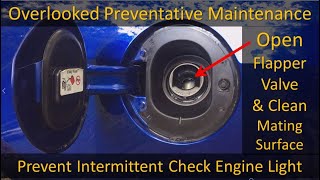
How to confirm: For Mk2 (2005-2011), inspect the gas cap O-ring for cracks or damage. Ensure it's tightened until it clicks. For Mk3 (2012-2018), use the funnel provided with the vehicle to open and close the filler neck flap several times to dislodge debris, then clean the opening with a clean cloth. 🎬 Watch: How to properly clean your capless filler neck.
Typical fix: Replace the gas cap or clean the capless filler neck.
Est. part cost: $10-$25 - Cracked or Disconnected EVAP Hoses ⚪ Low Probability Over time, the plastic and rubber EVAP lines in the engine bay can become brittle from heat cycles and crack, creating a vacuum leak. The connections at the purge valve itself are a common point of failure.
How to confirm: Visually inspect all accessible EVAP lines running from the purge valve to the intake manifold and back towards the firewall. A smoke test is the most effective way to find small, hard-to-see leaks.
Typical fix: Replace the cracked section of the hose or the entire hose assembly.
Est. part cost: $20-$100
Rare But Worth Checking
- Failed EVAP Canister Vent Solenoid: This valve is located near the charcoal canister by the fuel tank. While less common than the engine-bay purge valve, it can also stick open or closed and cause EVAP system codes.
- Damaged Charcoal Canister: The canister itself can crack or become saturated with liquid fuel, usually from habitually overfilling the gas tank. This is an expensive part, so it should be diagnosed last. On 2012-2018 models, this part may be replaced as part of the 18S32 recall if the purge valve has failed.
Diagnosis Steps
- Check for Recalls: For 2012-2018 models with a 2.0L engine, first contact a Ford dealership with your VIN to see if recall 18S32 is open for your vehicle. The repair, which includes a PCM reprogram and potential replacement of the purge valve, canister, and fuel tank, may be performed at no cost.
- Inspect Fuel Filler Area: On 2005-2011 models, check that the gas cap is tight and the seal is not cracked. On 2012-2018 models, inspect the capless filler neck for debris and clean it.
- Inspect Engine Bay Hoses: Visually check the EVAP hoses around the purge valve and intake manifold for obvious cracks, brittleness, or disconnections.
- Test the Canister Purge Valve: This is the most likely cause. Locate the valve (on the firewall for 2005-2011, near the intake for 2012-2018). Disconnect it and try to blow through it. If air passes through, it's stuck open and must be replaced.
- Perform a Smoke Test: If the purge valve is good and no visible cracks are found, a smoke test is the next step. This involves feeding pressurized smoke into the EVAP system to pinpoint the location of any leaks.
- Inspect Vent Solenoid and Canister: If no leaks are found, the problem may be with the vent solenoid or the charcoal canister itself, located near the fuel tank. These components should be inspected and tested last.
Parts You'll Likely Need

- Canister Purge Valve / Solenoid
(OEM #Motorcraft CX2349 (for some 2009-2011 models), BV6Z-9D289-R or Motorcraft CX2626 (for 2012-2018 models))— This is the most frequent failure point for code P1440 on both generations of the Ford Focus.
Trusted brands: Motorcraft, Dorman, Bosch
OEM price range: $50-$100
Aftermarket price range: $30-$80
Related Codes That Often Appear With This One
- P144A — This is another Ford-specific EVAP code that often points directly to a fault in the purge valve circuit or component, reinforcing the diagnosis. A YouTube video by 'Falcon's Garage' shows a P144A repair by replacing the purge valve.
- P0455 — Indicates a large EVAP system leak. A purge valve stuck wide open can sometimes be interpreted by the ECU as a large leak.
- P0442 — Indicates a small EVAP system leak. This can appear alongside P1440 if the issue is a small crack in a hose rather than a stuck valve.
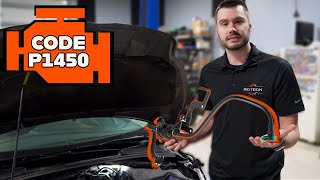
- P1450 — This code for 'Unable to Bleed Up Fuel Tank Vacuum' is frequently seen with P1440 on the 2012-2018 models and is explicitly mentioned in the recall documentation as a related DTC.
Technical Service Bulletins (TSBs) & Recalls

- 18S32 - A safety recall for 2012-2018 models concerning a stuck canister purge valve that can cause fuel tank deformation.
- NHTSA Campaign 18V735 - The National Highway Traffic Safety Administration identifier for the 18S32 recall.
- 19S22 - A follow-up action for vehicles where the 18S32 software update was not performed correctly.
Platform-Specific Known Issues
- Recall 18S32 / NHTSA 18V735: Fuel Tank Deformation: Affects 2012-2018 Focus models with 2.0L GDI and GTDI engines. A stuck canister purge valve can create excessive vacuum in the fuel system, causing the plastic fuel tank to deform. This can lead to an inaccurate fuel gauge, engine stalling, and the Check Engine Light with codes like P1440 and P1450. The fix involves a PCM reprogram and potential replacement of the purge valve, carbon canister, and/or fuel tank, performed by a dealer. Ford advised owners to keep the fuel tank at least half full until the repair was completed.
- Follow-up Recall 19S22: Some vehicles that were serviced under the initial 18S32 recall required a second software update because the first PCM reprogram was not properly completed. This primarily affected 2012-2014 models.
Mechanic-Grade Diagnostic Values
- Canister Purge Valve (CPV) Solenoid Resistance — expected: 30 to 38 ohms (when engine is cool). Failure: A reading of 0 ohms (short circuit), infinite resistance (open circuit), or a value significantly outside the expected range indicates a faulty solenoid coil.
- Fuel Tank Pressure (FTP) Sensor Voltage (Key On, Engine Off) — expected: Approximately 2.6V to 2.65V. Failure: A reading significantly different from this static value can indicate a sensor fault or a pre-existing vacuum/pressure issue in the tank. If the voltage immediately drops when the engine is started (with the purge valve commanded off), it points to a purge valve stuck open.
- Fuel Tank Pressure (FTP) Sensor Voltage (During IDS EVAP Test) — expected: Should drop as the purge valve is commanded open, and rise as the vent valve is closed and vapors build.. Failure: If pressure goes excessively negative (e.g., below -8.0 in-H2O) and does not recover, it can trigger a P1450 code, often caused by a stuck-open purge valve or blocked vent. If the pressure doesn't change when the purge valve is commanded, the valve is stuck closed or the line is blocked.
Hidden / Shadow Codes Worth Checking
- Mode $06, Test ID $81: This is not a DTC, but a non-continuous monitor test result for the catalyst system. However, similar Mode $06 tests exist for the EVAP system. For example, a test for a 0.020" leak will show a measured value, a maximum limit, and a minimum limit. If the measured value is very close to the maximum limit, it indicates the system is borderline failing and may set a code like P0442 or P1440 soon, even if it passes the test at that moment. (see via A scan tool capable of reading Mode $06 data, such as FORScan or the Ford IDS. The raw data may need to be converted or interpreted based on the specific Test ID (TID) and Component ID (CID).)
Scan Tool Commands That Help
- Ford IDS (or equivalent high-level scanner like FORScan): EVAP System Test (Manual Evaps Test) — This is a comprehensive, automated test sequence run by the scan tool. It commands the purge and vent solenoids open and closed in sequence while monitoring the Fuel Tank Pressure (FTP) sensor to verify the entire system's integrity, including its ability to seal, pull a vacuum, and vent. It's the most thorough way to diagnose the system after simple checks fail.
- Ford IDS (or equivalent high-level scanner): Bi-Directional Control: EVAP Purge Valve — This allows the technician to manually command the purge valve open by a specific percentage (e.g., 0%, 25%, 50%) while the engine is running. While monitoring FTP sensor voltage and short-term fuel trims, you can confirm if the valve is physically responding to the PCM's command. If you command it to 0% and still feel vacuum on the canister side hose, the valve is mechanically stuck open.
- Ford IDS (or equivalent high-level scanner): Bi-Directional Control: EVAP Vent Valve — This command closes the normally-open vent valve. This is used to seal the system for a leak test (either with a smoke machine or by watching for vacuum decay via the FTP sensor). If you command the vent valve closed and the system still cannot hold a vacuum, it confirms a leak somewhere in the lines, canister, or fuel filler neck.
Wiring & Ground Locations
- Main Battery Ground (G1) — On the driver's side of the engine bay, the main negative battery cable connects to a painted chassis point near the strut tower. On Mk3 models, two smaller ground wires are also located under the airbox.. A poor main ground connection at the chassis can cause a host of floating voltages and unpredictable electronic issues. The factory design, which relies on the bolt threads for connection against a painted surface, is a known weak point. While not a direct cause of P1440, cleaning this ground point (scraping paint to bare metal) is a foundational step in resolving any persistent, difficult-to-diagnose electronic faults on a Focus.
- Purge Valve Connector — On the purge valve assembly itself. It is a 2-pin connector.. One pin should receive battery voltage (VPWR) with the key on, and the other is the control wire that the PCM pulses to ground to activate the solenoid. Checking for voltage at the connector is a key step to rule out a wiring or PCM driver issue before condemning the valve itself. A lack of voltage points to a fuse or wiring problem, while a lack of a ground signal during the active command test points to a PCM or wiring continuity issue.
- Fuel Tank Pressure (FTP) Sensor Connector — On top of the fuel tank, accessible without dropping the tank on most Focus models by reaching up above the rear subframe.. This 3-wire connector is in a vulnerable location and is known for rodent damage. Chewed wires will cause erratic FTP sensor readings (often setting codes like P0451-P0454) which can be misinterpreted. The three wires are typically 5V reference, signal return, and ground. Incorrect voltage on any of these wires will make the PCM's entire EVAP diagnosis unreliable.
Real Owner Repair Stories
- Reddit user on r/MechanicAdvice (2012 Ford Focus SE) — Check Engine Light with codes P1450 and P0456. Car would sputter and stall after filling the fuel tank.
❌ Tried (didn't work) Replacing the purge valve (DIY)., Taking it to a dealership, who updated the computer and replaced the purge valve again., Dealership then replaced the collapsed fuel tank., Taking it to an independent mechanic who ran a smoke test and found no leaks.
✅ What actually fixed it The user's post was a request for help as the P0456 code persisted even after all listed repairs, including a fuel tank replacement and a clean smoke test. This highlights a scenario where the common fixes are not sufficient, and the problem may lie in a very small, intermittent leak, a faulty vent solenoid, or a wiring issue with the FTP sensor that a standard smoke test might not reveal.
"I Checked Everything" — The Actual Cause
- In a documented case on a 2012 Focus, a persistent P0456 (small leak) code remained after multiple purge valve replacements and a dealership visit that included a fuel tank replacement and a smoke test that found no leaks. This indicates that even when the most common cause (purge valve) is addressed and the standard diagnostic test (smoke test) is clean, the root cause can be elusive. In such cases, the fault may lie with components not easily checked by a smoke test, such as an intermittently failing canister vent solenoid, a hairline crack in the fuel filler neck that only opens under specific conditions, or a faulty Fuel Tank Pressure sensor providing incorrect data to the PCM.
OEM Part Supersession History
BV6Z-9D289-A, BV6Z-9D289-B→BV6Z-9D289-R— Likely design revisions to improve durability and prevent the sticking-open failure mode that prompted the recall (18S32).
Heads up: The earlier revisions (-A, -B) should not be used; always install the latest revision (-R) or an aftermarket equivalent designed to meet or exceed the latest OEM spec.
Model Year Variations Within This Range
- 2012-2014: Vehicles in this range that were serviced under the original 18S32 recall may have received an incomplete software update. Ford issued a follow-up program (19S22) to correctly reprogram the PCM on these specific vehicles to ensure the new strategy for detecting a stuck purge valve was properly implemented.
Diagnostic Flowchart
Real Owner Stories
Aggregated from forums and TSBs cited above. Mileages and costs reflect what owners reported in those sources.
2014 Ford Focus
Symptoms: Experienced code P1440.
What fixed it: Replaced the purge valve under recall 18S32.
Source hint: FocusFanatics thread titled 'P1440 Code - Purge Valve Stuck Open'
2013 Ford Focus
Symptoms: Stalling, an erratic fuel gauge, and code P1440.
What fixed it: Advised to get the 18S32 recall performed and keep the fuel tank over half full in the meantime.
Source hint: Reddit r/FordFocus thread titled '2013 Ford Focus Stalling, P1440 Code'
2012-2014 Ford Focus
Symptoms: EVAP codes related to the purge valve.
What fixed it: Replaced the purge valve using a DIY step-by-step procedure.
Source hint: FocusFanatics thread titled 'DIY: 2012-2014 Focus Purge Valve Replacement (P1450/P144A)'
Related OBD-II Codes
Frequently Asked Questions
Does Recall 18S32 apply to my Ford Focus for code P1440?
Why does my 2012-2018 Focus stall and show an erratic fuel gauge with this code?
How can I temporarily prevent stalling before getting the 18S32 recall fixed?
I have a 2005-2011 Focus (Mk2). Is the purge valve still the most likely cause?
How do I test the canister purge valve on my Focus?
What is Recall 19S22 and does it relate to P1440?
My 2012-2018 Focus doesn't have a gas cap. Could the filler neck cause P1440?
Helpful Videos




We Have This Part in Stock


The information in this article is provided for general reference and educational purposes only. Vehicle specifications, procedures, and part compatibility can vary by production date, trim level, and region. Always consult your vehicle's factory service manual and verify part numbers before purchasing or performing repairs. Safety-critical components such as airbags, seat belts, and braking systems should be installed by a qualified professional.
- Ford Focus:
- 🎬 Helpful Videos
- 🛍️ Shop This Part
- What's Unique About the 2005-2018 Ford Focus
- Symptoms You May Notice
- Most Likely Causes
- Rare But Worth Checking
- Diagnosis Steps
- Parts You'll Likely Need
- Related Codes That Often Appear With This One
- Technical Service Bulletins (TSBs) & Recalls
- Platform-Specific Known Issues
- Mechanic-Grade Diagnostic Values
- Hidden / Shadow Codes Worth Checking
- Scan Tool Commands That Help
- Wiring & Ground Locations
- Real Owner Repair Stories
- "I Checked Everything" — The Actual Cause
- OEM Part Supersession History
- Model Year Variations Within This Range
- Diagnostic Flowchart
- Real Owner Stories
- 2014 Ford Focus
- 2013 Ford Focus
- 2012-2014 Ford Focus
- Related OBD-II Codes
- Frequently Asked Questions
- 🎟️ Get 5% Off