

P1440 on 2004-2008 Ford F-150: EVAP System Vacuum Trouble Causes and Fixes
On a 2004-2008 F-150, code P1440 almost always points to a faulty canister purge valve located on the firewall. Before buying parts, confirm your scanner is reading a 'P' code (P1440) and not the unrelated 'C' code (C1440). The purge valve is a ~$40 part and a 15-minute DIY fix.
- Before starting any repair, confirm your scanner is reporting code P1440, not C1440, which relates to the ABS system.
- The most likely cause is a faulty canister purge valve on the driver's side firewall. You can test it by removing it and trying to blow through it; it should be sealed shut.
- If the purge valve is not the issue, inspect the wiring and connector for the EVAP vent valve, located above the spare tire, for corrosion before replacing the valve itself.
- While inspecting components near the spare tire, check the Fuel Pump Driver Module (FPDM) for corrosion, as it is a very common failure point on this truck that can cause stalling or no-start issues.
What's Unique About the 2004-2008 Ford F-150
The most critical issue for the 2004-2008 F-150 is potential confusion between different trouble codes. A basic OBD-II scanner might simply show '1440'. It is vital to use a scanner that specifies the prefix, as P1440 (Powertrain) is an EVAP emissions issue, while C1440 (Chassis) on this same truck points to a 'Pressure Difference Transducer Circuit Failure' within the ABS brake module. Misdiagnosing C1440 as an EVAP problem can lead to replacing the wrong, and much cheaper, parts. This guide specifically addresses the emissions-related P1440 code.
Symptoms You May Notice
- Check Engine Light (MIL) illuminated
- Difficulty starting, rough running, or stalling immediately after refueling
- Slightly reduced fuel economy
- Possible faint fuel smell
- Rough idle
- Confusing P1440 with C1440. C1440 is an ABS/brake system code and has nothing to do with the EVAP system.
- Replacing the fuel pump. Fuel delivery issues on this truck are more commonly related to the Fuel Pump Driver Module (FPDM), not the EVAP system.
Most Likely Causes
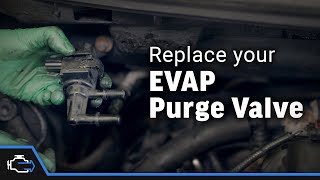
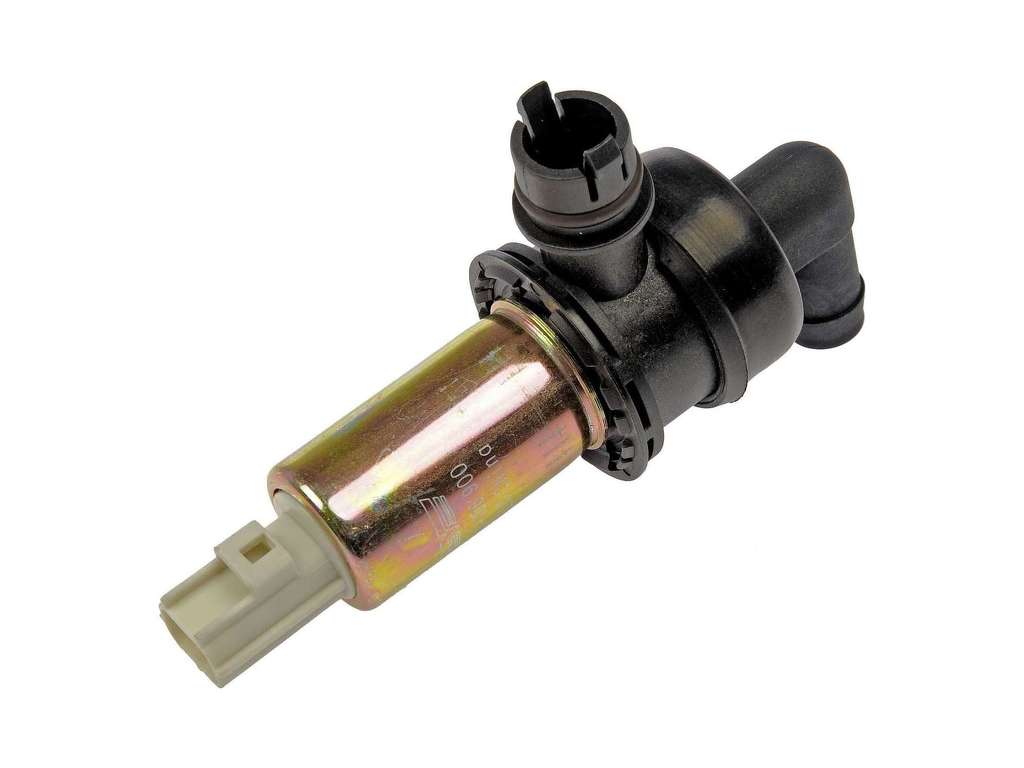
- Faulty Canister Purge Valve / Solenoid 🔴 High Probability This valve cycles frequently and is a common failure item across many Ford models. It can get stuck open, allowing un-metered fuel vapor into the engine at the wrong time, which prevents the system from holding vacuum.
How to confirm: Locate the valve on the driver's side firewall, sometimes tucked behind the intake manifold on 5.4L models. Disconnect the electrical connector and hoses. Try to blow through it. If air passes through, the valve is stuck open and has failed. It should be normally closed. You can also disconnect the vacuum line to the valve with the engine running and feel for suction; if vacuum is present at idle, the valve is stuck open.
Typical fix: Replace the canister purge valve. This is a simple repair requiring no special tools.
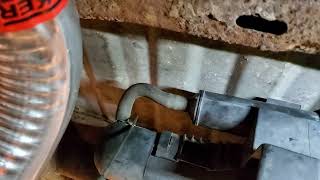
Est. part cost: $30-$60 - Faulty EVAP Vent Valve / Solenoid 🟡 Medium Probability Located near the spare tire, this component and its wiring are exposed to road debris and moisture, leading to corrosion and failure. A stuck-open vent valve will prevent the system from sealing and holding a vacuum, while a stuck-closed valve can trigger a P1450 code by trapping vacuum.
How to confirm: Lower the spare tire for access. 🎬 See this walkthrough for replacing the canister vent solenoid. Visually inspect the wiring and connector for green corrosion or broken wires. The valve can be tested with a scan tool to command it closed or by applying voltage directly.
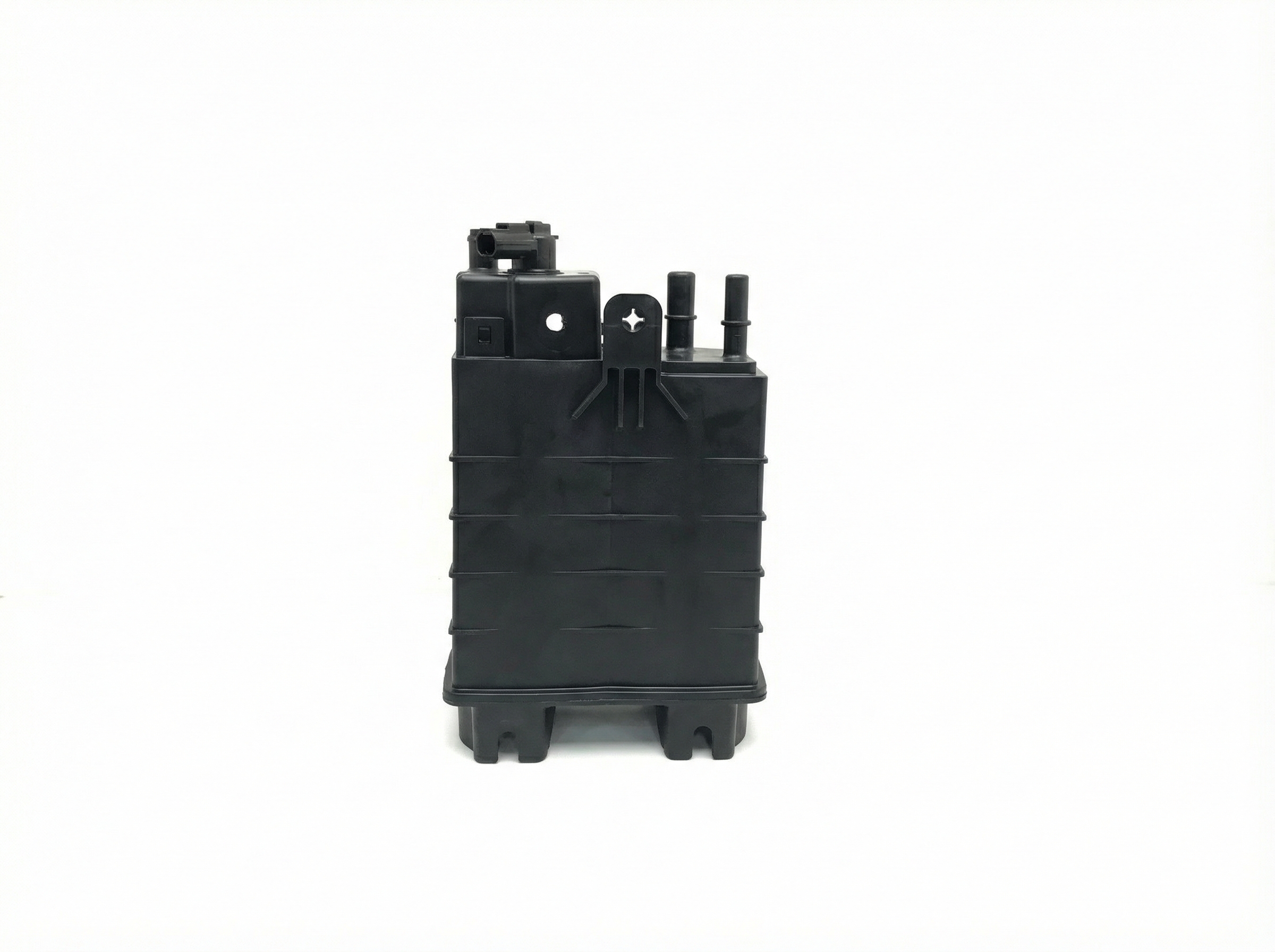
Typical fix: Replace the EVAP vent valve and repair any corroded wiring. This is often sold as an assembly with the charcoal canister.
Est. part cost: $40-$90 - Loose or Faulty Gas Cap ⚪ Low Probability The gas cap is a critical seal for the EVAP system. An old, worn-out seal or a cap that isn't tightened until it clicks can cause a vacuum leak, though this more commonly sets P0455/P0457 codes.
How to confirm: Check that the gas cap is tightened properly. Inspect the rubber O-ring seal for cracks or signs of degradation. A smoke test is the most definitive way to confirm a leak at the cap seal.
Typical fix: Tighten or replace the gas cap. It is recommended to use an OEM (Motorcraft) part, as some aftermarket caps are known to cause sealing issues.
Est. part cost: $15-$30 - Cracked or Disconnected EVAP Hoses ⚪ Low Probability Over time, rubber and plastic hoses in the engine bay and under the vehicle can become brittle and crack, causing vacuum leaks. Quick-connect fittings can also become loose.
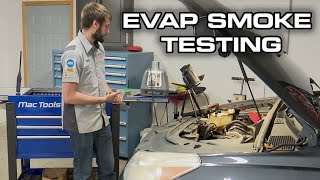
How to confirm: Visually inspect all accessible EVAP lines. The most definitive method is to have a professional perform a smoke test, which forces smoke through the system to reveal the exact location of any leaks.
Typical fix: Replace the cracked section of hose or re-secure the connection.
Est. part cost: $10-$50
Rare But Worth Checking
- Faulty Fuel Tank Pressure Sensor: This sensor tells the PCM the pressure within the EVAP system. If it sends incorrect data, the computer may set a code even if there is no leak. This is uncommon and should only be considered after all other possibilities are exhausted.
- Saturated Charcoal Canister: Repeatedly overfilling the fuel tank (topping off) can force liquid fuel into the charcoal canister, which is designed only for vapor. This can saturate the charcoal, causing blockages and triggering various EVAP codes, including P1440.
Diagnosis Steps
- Verify the code with a quality scanner to ensure it is P1440 (Powertrain) and not C1440 (Chassis).
- Inspect the gas cap. Ensure it is tight and the seal is not cracked or brittle. Reseat the cap and clear the code to see if it returns.
- Locate the canister purge valve on the driver's side firewall. With the engine off, disconnect the hoses and attempt to blow through it. If air passes, the valve is faulty and must be replaced.
- If the purge valve is good, lower the spare tire to access the EVAP canister and vent valve. Carefully inspect the wiring to the vent valve for any signs of corrosion or damage, which is a common failure point.
- Visually inspect all visible EVAP hoses for obvious cracks or disconnections between the engine bay and the rear of the truck. Pay attention to quick-connect fittings.
- If no issues are found, the most reliable next step is to perform a smoke test on the EVAP system to pinpoint any hard-to-find leaks.
Parts You'll Likely Need
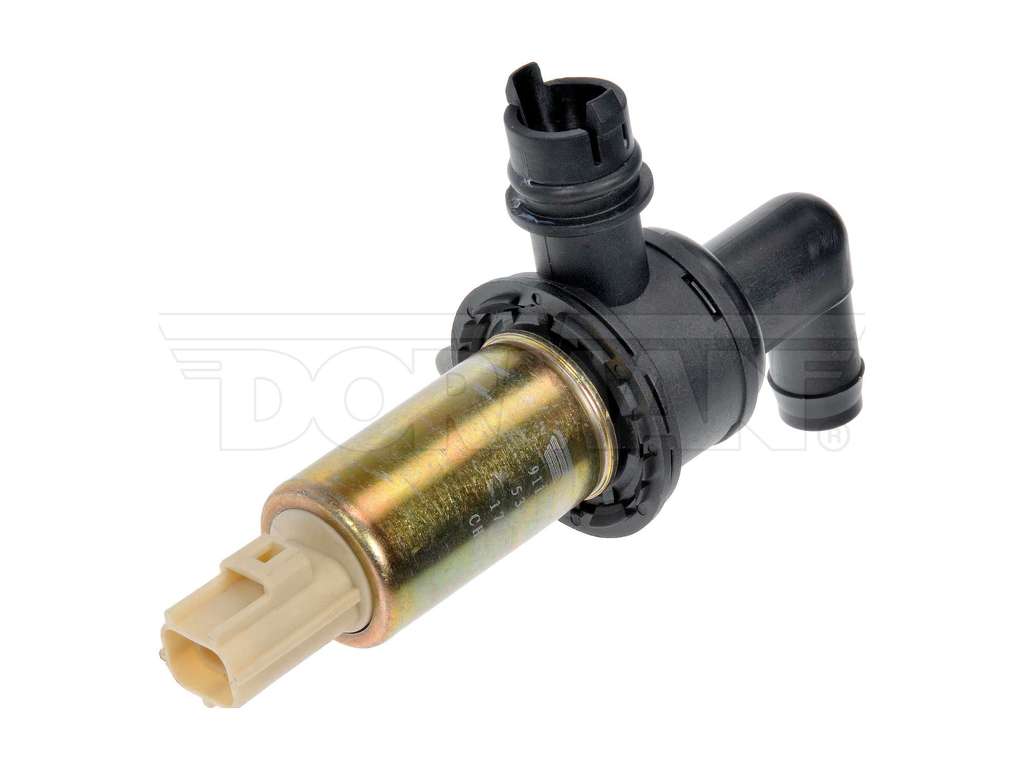
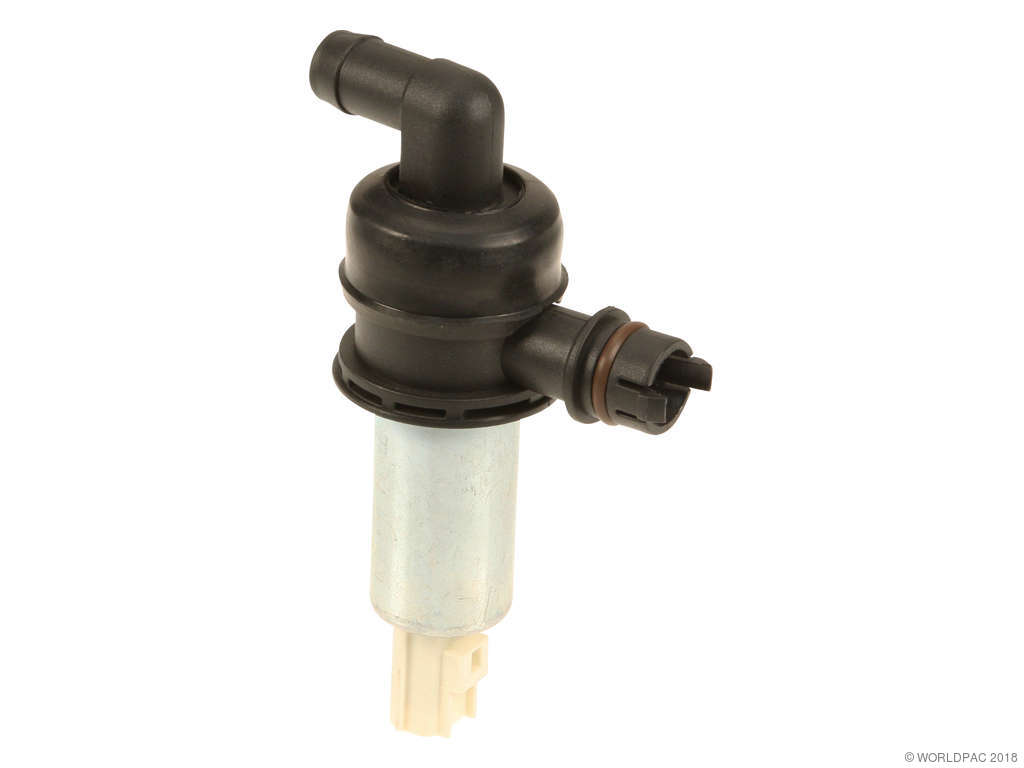
- Canister Purge Valve / Solenoid
(OEM #CX2418)— This is the most frequent cause of P1440 and related EVAP codes on this truck. It gets stuck open, preventing the system from holding a vacuum.
Trusted brands: Motorcraft, Dorman
OEM price range: $40-$60
Aftermarket price range: $25-$45 - EVAP Vent Valve / Solenoid
(OEM #CX2127)— The second most common cause, often due to failure of the valve itself or corrosion of its electrical connector due to its location near the rear axle.
Trusted brands: Motorcraft, Bosch, Dorman
OEM price range: $50-$90
Aftermarket price range: $30-$60
Related Codes That Often Appear With This One
- P1450 — This code means 'Unable to Bleed Up Fuel Tank Vacuum' and is very closely related to P1440. Both often point directly to a stuck or faulty canister purge valve or a restricted vent valve.
- P0455 / P0456 — These codes indicate a large or small EVAP leak, respectively. The same faulty component (like a stuck purge valve or bad gas cap) that causes P1440 can also be interpreted by the PCM as a system leak.
- P0171 / P0174 — These codes indicate the engine is running too lean. A purge valve that is stuck open creates a vacuum leak, allowing un-metered air into the intake manifold and causing a lean condition.
Platform-Specific Known Issues
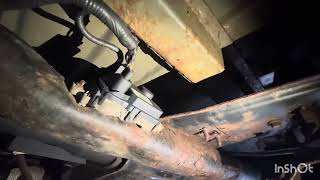
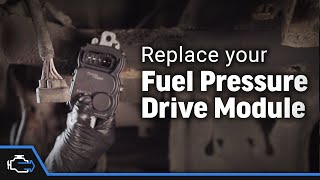
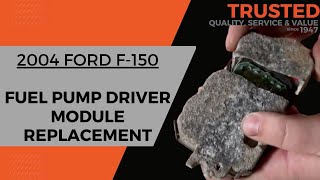
- While you are working near the spare tire to inspect the EVAP vent valve, also inspect the Fuel Pump Driver Module (FPDM). This module is mounted to the frame crossmember and is notorious for corroding and failing on this generation of F-150. The aluminum case corrodes where it touches the steel frame, cracking the module and causing intermittent stalling, bucking, or a no-start condition, often with code P1233. 🎬 Watch: How to replace a corroded fuel pump driver module. Replacement kits from Ford include new standoffs to prevent direct contact with the frame.
Mechanic-Grade Diagnostic Values
- Canister Purge Valve Solenoid Coil Resistance — expected: 30 to 38 Ohms. Failure: A reading of 0 Ohms indicates a short; an infinite (OL) reading indicates an open circuit.
- EVAP Canister Vent Solenoid Coil Resistance — expected: 45 to 68 Ohms. Failure: A reading of infinity (OL) indicates an open coil, while a reading near zero indicates a short.
- Fuel Tank Pressure (FTP) Sensor Voltage (KOEO, Gas Cap Off) — expected: ~2.6 Volts DC. Failure: A significantly different voltage at atmospheric pressure suggests a faulty sensor. A reading of ~1.4V was reported by one owner with a suspected issue.
- Fuel Tank Pressure (FTP) Sensor Voltage (Vacuum Applied) — expected: ~0.5 Volts DC. Failure: If the voltage does not drop when a vacuum is applied to the tank (e.g., during a scan tool test), it indicates a blockage or a faulty sensor.
- EVAP Vent Valve Connector Power — expected: Battery Voltage (~12.6V). Failure: Low or no voltage on the power supply wire (often Dark Green or Red/Yellow) points to a blown fuse (F5, 7.5A) or a wiring issue.
Hidden / Shadow Codes Worth Checking
- PID 1639: This is the On-Board Diagnostics Parameter ID (PID) for the Fuel Tank Pressure (FTP) sensor. It returns a raw two-byte A/D (Analog to Digital) converter count from the PCM. (see via Advanced scan tools like Torque Pro can be configured to request this specific PID. The formula to convert the raw value (A, B) to voltage is (A*256+B)/13107.)
Scan Tool Commands That Help
- Ford IDS / FORScan: EVAP System Test — This is a comprehensive, automated test sequence that commands the purge and vent solenoids in order while monitoring the FTP sensor. It verifies the system's ability to seal, pull a vacuum, and vent, providing a clear pass/fail result. Use this after basic visual checks and component tests are inconclusive.
- Ford IDS / FORScan: Bidirectional Control (Datalogger) — This allows for manual control of individual components. A technician can command the purge valve open/closed while monitoring FTP voltage to see if the valve is physically responding and if the system holds vacuum. This is useful for isolating a specific faulty component.
Wiring & Ground Locations
- EVAP Vent Valve Connector — Above the spare tire, connected to the EVAP vent solenoid on or near the charcoal canister.. The control wire for the vent valve (often Violet/White) goes to Pin 61 on the PCM. The power wire (often Dark Green/Red/Yellow) is supplied by fuse F5 (7.5A) in the passenger compartment fuse panel. This circuit is a common failure point due to corrosion from its exposed location.
- Passenger Kick Panel Grounds — Behind the plastic kick panel on the passenger side, near the fuse box.. Forum users report that 2-3 ground wires are typically attached to the chassis in this area. This location can be prone to rust, especially in northern climates, and a poor ground here can cause various difficult-to-diagnose electrical issues.
- Engine to Firewall Ground Strap — Typically a braided strap running from the passenger side of the engine block or cylinder head to the firewall.. This is a primary ground path for the engine and its sensors. A corroded or broken strap can cause intermittent electrical problems, including erratic sensor readings that could potentially affect the EVAP monitoring system.
OEM Part Supersession History
4L3Z-9C915-AB→6L3Z-9C915-A— Standard part revision/update.
Heads up: This part is for 2004-2006 models and differs from the part used on 2007-2008 models.7L3Z-9C915-A→— This is the part number for the later model years of this generation.
Heads up: This purge valve is specific to 2007-2008 F-150s and should not be used on earlier 2004-2006 models.
Model Year Variations Within This Range
- 2004-2006 vs. 2007-2008: The canister purge valve part number is different. 2004-2006 models use part numbers like 4L3Z-9C915-AB or 6L3Z-9C915-A, while 2007-2008 models use 7L3Z-9C915-A. While functionally identical, the specific part may have minor revisions.
- Late 2007-2008 (5.4L V8 only): 5.4L Triton engines with a build date of October 9, 2007 or later have redesigned cylinder heads. These heads use a more reliable one-piece spark plug design, eliminating the notorious issue of two-piece plugs breaking during removal. These later engines also received updated VCT solenoids.
Diagnostic Flowchart
Other Known Issues on This Vehicle
Issues unrelated to this code that are worth knowing about as an owner of this generation:
- Ford 5.4L 3-Valve Spark Plug Breakage 🔴 High — Extremely common on engines built before 10/09/07. Carbon buildup seizes the plug's long ground electrode shield in the cylinder head, causing it to break during removal. (Ref: TSB 08-7-6)
- Ford 5.4L 3-Valve Cam Phaser Failure 🔴 High — Very common, especially over 100k miles. Causes a distinct diesel-like rattle or ticking noise at startup and idle due to oil pressure issues in the VCT solenoids and phasers. Ignoring it can lead to timing chain failure. (Ref: Multiple TSBs exist for related timing components.)
- Fuel Pump Driver Module (FPDM) Corrosion 🔴 High — Extremely common. The aluminum module corrodes where it mounts directly to the steel frame crossmember above the spare tire, causing cracks and internal failure. Leads to intermittent no-start, stalling, or severe bucking while driving.
- Cracked Exhaust Manifold / Broken Studs 🟠 Medium — Common failure, resulting in a ticking noise that is loudest on a cold engine and may quiet down as the metal expands. The studs, particularly those near the firewall, are prone to breaking from heat cycles.
- Window Regulator Failure 🟡 Low — A frequent annoyance where the power window may fail to go up or down, often accompanied by a grinding or popping noise from inside the door panel.
Used vs. New Parts: Buying Guide for This Vehicle
When a used part is the smart pick: For this repair, using used parts is generally not recommended. The primary failure components (purge valve, vent solenoid) are relatively inexpensive new and are known wear items. A used charcoal canister could be considered if from a low-mileage, accident-free donor vehicle, but you risk it being saturated or having an internally failed valve.
Donor-vehicle mileage cap: roughly under 50000 miles for the part to have meaningful remaining life.
What to inspect on the donor part:
- For a charcoal canister, ensure there is no physical damage, cracking, or signs of fuel saturation (wetness or strong fuel smell).
- Check that all hose connection points and mounting tabs are intact.
- Avoid parts from vehicles in salt-belt regions due to high risk of corrosion on electrical connectors and metal components.
OEM-only on this vehicle (don't cheap out):
- Gas Cap: While not expensive, many owners report that aftermarket gas caps fail to seal properly on this truck, causing recurring EVAP codes. Using an OEM Motorcraft cap is a cheap and effective way to eliminate this variable.
Aftermarket brands forum-validated for this vehicle:
- Motorcraft: As the OEM supplier, it is the benchmark for fit and function.
- Standard Motor Products (SMP): Generally considered a reliable aftermarket supplier for emissions and engine management components.
Brands owners have reported issues with on this vehicle:
- Dorman: Owner experiences with Dorman are mixed. While some parts are well-regarded 'OE Fixes', others, particularly rubber components like hoses, have been reported to fail prematurely. For solenoids, some report success while others advise caution. It is often a 'hit or miss' brand.
Real Owner Stories
Aggregated from forums and TSBs cited above. Mileages and costs reflect what owners reported in those sources.
2004-2008 Ford F-150
Symptoms: Rhythmic bucking under acceleration and intermittent no-starts.
What fixed it: Replacing the corroded Fuel Pump Driver Module (FPDM) located above the spare tire using a kit with new standoffs.
Source hint: f150forum.com threads regarding Fuel Pump Driver Module (FPDM) failure points
Related OBD-II Codes
Frequently Asked Questions
I'm seeing a P1440 code on my F-150, but my scanner also mentions a C1440. Are these the same thing?
My 5.4L 3V F-150 is stalling after I fill up the tank. Is this related to P1440?
Where is the canister purge valve located on the 5.4L Triton engine?
Should I use an aftermarket gas cap to fix an EVAP leak on my 2004-2008 F-150?
Does the spark plug breakage issue described in TSB 08-7-6 affect my 2004-2008 F-150?
I found corrosion near my spare tire while checking the vent valve; should I be worried about other parts?
Helpful Videos


Used OEM Parts in Stock
New Aftermarket Parts Available


The information in this article is provided for general reference and educational purposes only. Vehicle specifications, procedures, and part compatibility can vary by production date, trim level, and region. Always consult your vehicle's factory service manual and verify part numbers before purchasing or performing repairs. Safety-critical components such as airbags, seat belts, and braking systems should be installed by a qualified professional.
- Ford F-150:
- 🎬 Helpful Videos
- 🛍️ Shop This Part
- What's Unique About the 2004-2008 Ford F-150
- Symptoms You May Notice
- Most Likely Causes
- Rare But Worth Checking
- Diagnosis Steps
- Parts You'll Likely Need
- Related Codes That Often Appear With This One
- Platform-Specific Known Issues
- Mechanic-Grade Diagnostic Values
- Hidden / Shadow Codes Worth Checking
- Scan Tool Commands That Help
- Wiring & Ground Locations
- OEM Part Supersession History
- Model Year Variations Within This Range
- Diagnostic Flowchart
- Other Known Issues on This Vehicle
- Used vs. New Parts: Buying Guide for This Vehicle
- Real Owner Stories
- 2004-2008 Ford F-150
- Related OBD-II Codes
- Frequently Asked Questions
- 🎟️ Get 5% Off