

P1440 on 2011-2018 Audi A6 2.0L TDI: EGR Valve Power Stage Open Circuit Causes and Fixes
On a 2011-2018 Audi A6 2.0L TDI, code P1440 indicates an electrical failure in the EGR valve circuit, not a clog. The most common causes are a broken wire in the harness leading to the valve or a failed EGR valve solenoid. Expect to pay $400-$700 for a new EGR valve assembly.
- P1440 on this Audi is an ELECTRICAL fault ('Open Circuit'), not a mechanical clog. Do not start by cleaning the EGR valve.
- The most likely cause is a broken wire in the harness under the battery tray or a failed electronic solenoid inside the EGR valve assembly.
- A VCDS scan tool is highly recommended for diagnosis, as it can perform output tests to command the valve and run adaptation procedures after replacement.
- If replacing the EGR assembly, using an OEM or OEM-supplier part (Pierburg, Wahler) is crucial for compatibility and longevity.
What's Unique About the 2011-2018 Audi A6

Unlike many other vehicles where P1440 points to an EVAP system leak, on Audi TDI engines, it is strictly an EGR electrical fault. It's crucial not to confuse this with the more common EGR flow code P0401, which on this CGLC engine often signals a clogged EGR cooler or mechanically stuck valve. P1440 is about the command circuit being broken. This code will also appear if an 'EGR delete' has been performed by unplugging the valve without reprogramming the ECU to ignore the missing component, a common topic in tuning forums.
Symptoms You May Notice

- Check Engine Light (MIL) illuminated on the dashboard.
- Flashing glow plug light.
- Reduced engine power or vehicle entering 'limp mode'.
- Rough or unstable idle, especially when warm.
- Noticeable decrease in fuel economy.
- Failure to pass an emissions test.
- Car may be hard to start.
- Replacing the EGR valve for being clogged with carbon. P1440 is an electrical fault; cleaning a mechanically stuck or clogged valve will not fix an open circuit.
- Diagnosing an EVAP system problem. On many other manufacturers like Nissan or Honda, P1440 relates to the EVAP system, but on Audi/VW, it is specific to the EGR circuit.
Most Likely Causes

- Damaged Wiring Harness or Connector 🔴 High Probability Engine bay heat and vibration can cause wires to become brittle and break over time. On VAG vehicles, the harness section below the engine bay fuse box and near the air intake is a common area for wires to chafe through the conduit and break. This is the most frequent cause for an open circuit fault.
How to confirm: Visually inspect the entire length of the wiring harness going to the EGR valve for chafing, breaks, or corrosion. Pay close attention to the loom under the battery tray. Check the connector itself for cracked plastic or bent/corroded pins. Test for continuity from the ECU to the connector using a multimeter.
Typical fix: Repair the broken section of wire using a solder and heat-shrink butt connector. If the connector is damaged, replace it with a new pigtail. Ensure the repaired section is protected with new conduit or tape to prevent future damage.
Est. part cost: $5-$30 - Failed EGR Valve Solenoid 🔴 High Probability The electronic solenoid (the 'power stage') integrated into the EGR valve assembly can fail internally, creating an open circuit. This is an electronic failure inside the component itself.
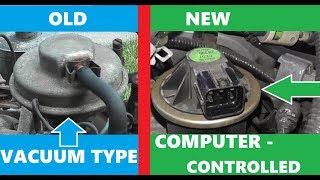
How to confirm: Disconnect the EGR valve's electrical connector. Use a multimeter set to Ohms (Ω) to measure the resistance between the power and ground pins on the valve itself. An 'OL' or infinite reading indicates the internal coil is broken and the valve assembly needs to be replaced. 🎬 Watch: How to test old vs new EGR valves with a multimeter. On similar VAG TDI engines, a good resistance reading is around 8.3 Ohms.
Typical fix: Replace the entire EGR valve and cooler assembly. It is typically sold as one unit and it is recommended to use an OEM or high-quality aftermarket brand like Valeo to avoid compatibility issues.
Est. part cost: $400-$700 - Blown Fuse ⚪ Low Probability A short circuit in the wiring or a faulty EGR valve can draw too much current and blow the corresponding fuse.
How to confirm: Consult the vehicle's owner's manual or a wiring diagram to locate the fuse for the EGR circuit and visually inspect it. On similar VW platforms, this can be Fuse 7 in the engine bay fuse box. Test with a multimeter to be sure.
Typical fix: Replace the blown fuse. If the fuse blows again immediately, it indicates a persistent short circuit in the wiring or the EGR valve that must be found and fixed.
Est. part cost: $1-$5
Rare But Worth Checking
- Faulty Engine Control Unit (ECU): This is very rare. The internal driver circuit within the ECU that controls the EGR valve can fail. This should only be considered after all other possibilities (wiring, fuse, and the EGR valve itself) have been definitively ruled out.
Diagnosis Steps

- Read the fault codes with an OBD-II scanner (VCDS is preferred for VAG vehicles) to confirm P1440 and/or 17848 is present.
- Visually inspect the wiring harness leading to the EGR valve. Pay special attention to the area under the battery tray and fuse box for chafing.
- Inspect the electrical connector at the EGR valve for damage, corrosion, or loose pins.
- If wiring appears intact, disconnect the connector and test the EGR valve's internal resistance with a multimeter across the appropriate pins. A reading of infinite resistance (OL) confirms the valve's electrical part has failed. A good valve should have a specific resistance (e.g., ~8.3 Ohms on similar TDIs).
- If the EGR valve's resistance is within spec, test the connector for power and ground. Check a wiring diagram for the correct pins. Use a scan tool's output test mode to verify voltage supply.
- If power or ground is missing, trace the circuit back to the fuse box and ECU. Check the fuse for the EGR circuit.
- If the fuse is good, perform a continuity test on the signal wire from the EGR connector back to the ECU connector to find the break in the wire.
- After repairing the wire or replacing the faulty component, clear the fault codes. It may be necessary to perform an EGR valve adaptation procedure with a capable scan tool.
- Perform a test drive to ensure the code does not return.
Parts You'll Likely Need

- EGR Valve with Cooler Assembly
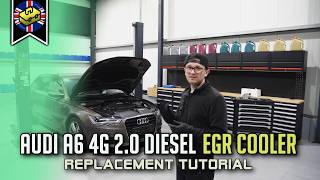
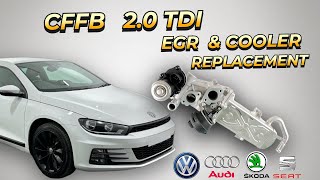
(OEM #03L131512DQ)— This is the most likely part to have failed if wiring is intact. The electronic solenoid is integrated into the valve assembly, which is typically replaced as a single unit with the attached EGR cooler. 🎬 Watch: Step-by-step DIY tutorial for replacing the Audi A6 EGR cooler.
Trusted brands: Genuine VW/Audi, Pierburg, Wahler, Mahle, Valeo
OEM price range: $600-$800
Aftermarket price range: $400-$600
Related Codes That Often Appear With This One
- P0403 — P0403 is a more generic 'EGR Circuit Malfunction' code. It often appears with P1440 because both point to an electrical problem in the EGR control system rather than a flow issue.
- 17848 — This is the VAG-specific internal fault code equivalent to the generic OBD-II code P1440. A VCDS scan will often show this number.
Platform-Specific Known Issues

- EGR Delete Complication: Owners who perform an 'EGR delete' by physically removing the EGR valve and cooler often encounter code P1440 if the ECU is not properly re-flashed to remove the EGR function from the software. Simply clearing the code is not enough, as the ECU expects to see the valve connected.
- Wiring Harness Chafing: A forum thread on CADDY2K.com regarding the VAG equivalent code 17848 strongly suggests checking the wiring loom below the engine bay fuse box and air intake, as this is a known spot for wires to chafe and break, causing an open circuit.
Mechanic-Grade Diagnostic Values
- EGR Valve Solenoid Resistance — expected: ~8.3 Ohms. Failure: An 'OL' or infinite resistance reading.
- VCDS EGR System Basic Setting Test — expected: Deviation between 'EGR ON' and 'EGR OFF' must be at least 100.0 mg/Str.. Failure: A deviation less than 100.0 mg/Str indicates a flow problem (not an open circuit, but a useful related test).
- Voltage Supply at EGR Connector — expected: Battery voltage present at the supply pin when tested.. Failure: No voltage indicates a break in the power supply wire or a blown fuse.
- ECU Triggering Signal at EGR Connector — expected: A flashing signal on a test light connected between the signal and power pins during a VCDS output test.. Failure: No flashing or a constant light indicates a wiring issue or a faulty ECU driver.
Scan Tool Commands That Help
- VCDS (VAG-COM): Engine -> Output Tests -> EGR Valve (N18) — To directly command the EGR valve's electronic motor to cycle. This is a primary bidirectional test to see if the 'power stage' responds to ECU commands. Lack of response points to a failed valve or open circuit.
- VCDS (VAG-COM): Engine -> Basic Settings -> Group 074 — After replacing the EGR valve assembly, this procedure adapts the new valve to the ECU, teaching it the closed and open stop points. Failure to adapt can cause incorrect operation even with a new part.
- VCDS (VAG-COM): Engine -> Adaptation -> Channel 118 or 123 — On some TDI engines, this is used to reset the learned values for the low-pressure or high-pressure EGR valves after replacement.
Wiring & Ground Locations

- EGR Valve Connector — On the EGR valve assembly itself, which is located on the front of the CGLC engine.. This is a 5-pin connector. Two pins operate the solenoid (the 'power stage' referenced in the code) and three are for the integrated position sensor. All tests for resistance and voltage begin here.
- Engine Harness Chafe Point — The wiring loom located under the battery tray and engine bay fuse box.. This is a widely-known weak spot on VAG platforms where the protective conduit wears through, exposing wires to chafing and breaking. This is a primary location to inspect for the 'open circuit'.
- Main Ground Studs — On the chassis frame rail, directly underneath the battery tray.. While not a direct cause of an 'open circuit' on a single wire, corrosion on these main engine grounds can cause a host of bizarre, high-resistance electrical faults that can mimic component failure. Cleaning them is a wise step during diagnosis.
Real Owner Repair Stories
- MHH Auto Forum User (2012 Audi A6 C7 2.0 TDI CGLC) — P1440 (N18) Open Circuit fault code.
❌ Tried (didn't work) Using DTC remover software that couldn't find/erase the P1440 code.
✅ What actually fixed it The user had performed an EGR delete and unplugged the valve. The forum confirmed the code was a direct result of the unplugged connector creating the open circuit, which required a proper ECU remap to eliminate, not just clearing codes. - Ross-Tech Forum User (similar platform) (2006 Audi A3 2.0 TDI BKD) — P1440 / 17848 Open Circuit code.
❌ Tried (didn't work) Cleaning the EGR valve., Checking for obvious wiring chafing.
✅ What actually fixed it The initial cause was a blown fuse (F23 in engine bay). After replacing the fuse and a related component, a different fuse (F24) blew and burned the connector, indicating a persistent short circuit was the ultimate root cause that needed to be traced. This highlights that a blown fuse is a symptom, not the final fix.
OEM Part Supersession History
03L131512DQ→Multiple revisions exist and may be supplied.— Standard part evolution for cost reduction, material changes, or minor design improvements.
Heads up: The following part numbers are often listed as equivalents or previous versions for the 03L131512DQ assembly: 03L131512AP, 03L131512AT, 03L131512BB, 03L131512BJ, 03L131512BL, 03L131512CF, 03L131512CH, 03L131512N. Always confirm fitment with VIN.
Model Year Variations Within This Range
- 2011-2014: The CGLC 177hp engine is part of the pre-facelift Audi A6 C7. The 2015 model year introduced a major facelift with revised styling and new Euro 6 compliant engines, including a 190hp 2.0 TDI that replaced the CGLC in many configurations.
Diagnostic Flowchart
Other Known Issues on This Vehicle
Issues unrelated to this code that are worth knowing about as an owner of this generation:
- Diesel Particulate Filter (DPF) Clogging 🔴 High — Common, especially on vehicles used primarily for short trips that prevent successful DPF regeneration. Can lead to limp mode and costly cleaning or replacement.
- AdBlue (SCR) System Failure 🔴 High — Failures of the AdBlue pump, heater, or NOx sensors are frequently reported. Can result in a 'no-start' countdown timer. (Ref: TSB 01 15 32 2040962/2 addresses a related DTC P20E800 (Reductant pressure too low) for 2014-2015 models.)
- Intake Manifold Flap Failure 🟠 Medium — The swirl flaps within the intake manifold can wear or get stuck, leading to rough running, power loss, and fault codes. Often requires intake manifold replacement.
- High-Pressure Fuel Pump (HPFP) Failure 🔴 High — While not as common as on older Pumpe-Düse engines, failure of the common-rail HPFP can still occur, causing stalling, power loss, and starting issues.
- Dual-Mass Flywheel (DMF) Wear 🟠 Medium — On manual and S-Tronic models, the DMF can wear out, causing vibrations at idle and during acceleration. More common on higher mileage vehicles.
Used vs. New Parts: Buying Guide for This Vehicle
When a used part is the smart pick: A used part is a reasonable choice for a replacement wiring harness pigtail if the original connector is damaged. For the complete EGR valve and cooler assembly, a used part is a significant gamble due to the risk of internal electronic failure or hidden carbon buildup.
Donor-vehicle mileage cap: roughly under 80000 miles for the part to have meaningful remaining life.
What to inspect on the donor part:
- Check the electrical connector pins for any signs of corrosion, melting, or damage.
- Inspect the cooler body for any signs of coolant leakage (white or pink crusty residue).
- Ensure all vacuum ports and mounting points are intact.
- Avoid parts from vehicles with known engine damage or high mileage.
OEM-only on this vehicle (don't cheap out):
- EGR Valve and Cooler Assembly: While not strictly 'OEM-only', using a genuine VW/Audi part or one from an original equipment manufacturer (OEM) like Pierburg or Wahler is strongly recommended to ensure correct electronic function, sensor calibration, and longevity.
Aftermarket brands forum-validated for this vehicle:
- Pierburg (often the OEM)
- Wahler (often the OEM)
- Valeo
- Mahle
- Nissens
Brands owners have reported issues with on this vehicle:
- Unbranded, no-name parts from online marketplaces should be avoided. They often have high failure rates, use inferior materials, and may not calibrate correctly with the ECU, leading to persistent codes.
Real Owner Stories
Aggregated from forums and TSBs cited above. Mileages and costs reflect what owners reported in those sources.
2012 Audi A6 C7 2.0 TDI CGLC
Symptoms: Owner installed an EGR removal kit and unplugged the valve, resulting in an immediate P1440 'Open Circuit' fault code.
What fixed it: The ECU requires a software re-flash to remove the EGR function; the code persists if the valve is simply left unplugged.
Source hint: MHH AUTO - 'a6 c7 egr problem?'
Audi A6 2.0 TDI (CGLC engine family)
Symptoms: The vehicle experienced an open circuit fault (VAG code 17848 / P1440) due to wiring issues in the engine compartment.
What fixed it: Repairing the wiring loom located specifically under the engine bay fuse box where wires had chafed through.
Source hint: CADDY2K.com - '17848 / P1440 egr valve issue'
Related OBD-II Codes
Frequently Asked Questions
I have a 2014 Audi A6 TDI and I'm seeing code P20E800. Is there a TSB for this?
I just installed an EGR delete kit on my 2012 Audi A6 C7 2.0 TDI and now I have a P1440 code. Why?
Where is the most common place for wiring to fail on the Audi A6 CGLC engine?
What resistance should I see when testing the EGR valve solenoid on my TDI?
Which fuse should I check for EGR-related electrical issues in the engine bay?
Can I just replace the solenoid, or do I need the whole EGR assembly?
Helpful Videos
We Have This Part in Stock

The information in this article is provided for general reference and educational purposes only. Vehicle specifications, procedures, and part compatibility can vary by production date, trim level, and region. Always consult your vehicle's factory service manual and verify part numbers before purchasing or performing repairs. Safety-critical components such as airbags, seat belts, and braking systems should be installed by a qualified professional.
- Audi A6:
- 🎬 Helpful Videos
- 🛍️ Shop This Part
- What's Unique About the 2011-2018 Audi A6
- Symptoms You May Notice
- Most Likely Causes
- Rare But Worth Checking
- Diagnosis Steps
- Parts You'll Likely Need
- Related Codes That Often Appear With This One
- Platform-Specific Known Issues
- Mechanic-Grade Diagnostic Values
- Scan Tool Commands That Help
- Wiring & Ground Locations
- Real Owner Repair Stories
- OEM Part Supersession History
- Model Year Variations Within This Range
- Diagnostic Flowchart
- Other Known Issues on This Vehicle
- Used vs. New Parts: Buying Guide for This Vehicle
- Real Owner Stories
- 2012 Audi A6 C7 2.0 TDI CGLC
- Audi A6 2.0 TDI (CGLC engine family)
- Related OBD-II Codes
- Frequently Asked Questions
- 🎟️ Get 5% Off