

P1437 on 2008-2018 Citroen Berlingo 1.6 HDi: DPF Additive System Fault Guide
This code indicates a fault in the DPF (Diesel Particulate Filter) additive system, known as Eolys. The most common cause is an empty additive pouch/tank, which needs refilling and resetting with a diagnostic tool. A faulty fuel cap sensor can also prevent the system from working. Expect to pay $100-$200 for a DIY refill kit or $250-$400 at a shop.
- P1437 on a 1.6 HDi Berlingo relates to the DPF Eolys additive system, not the A/C.
- The most likely cause is an empty additive pouch. This is a regular maintenance item.
- Always check the wiring harness to the pump for corrosion or damage before replacing expensive parts.
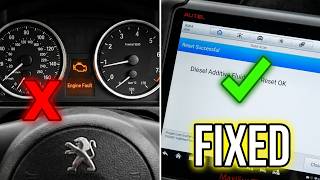
- After refilling the fluid or replacing the pump, you MUST use a diagnostic tool like Diagbox to reset the system's electronic counter.
- Do not confuse Eolys fluid with AdBlue; they are separate systems.
What's Unique About the 2008-2018 Citroen Berlingo

The 1.6 HDi engine from PSA (Peugeot-Citroën) relies on the Eolys additive system for DPF health, unlike some other manufacturers that use a different regeneration strategy. The system doesn't use a direct level sensor; instead, the ECU calculates the remaining fluid based on fuel fill-ups detected by a sensor in the fuel filler neck (usually magnetic). This means a reset with a diagnostic tool (like Diagbox) after every refill is mandatory. Faults often appear immediately after refueling if the system is malfunctioning, as this is when the pump is triggered to dose the fuel tank.
Generation note: The 2008-2018 range primarily covers the second generation (B9) Berlingo. This generation had facelifts in 2012 and 2015, but the core 1.6 HDi engine and its Eolys additive system remained consistent. Note that later models (approx. 2015+) may have both an Eolys system for DPF regeneration and a separate AdBlue (Urea) system for NOx reduction; these are entirely different systems and fluids and should not be confused. P143x codes relate specifically to the Eolys system.
Symptoms You May Notice

- "Engine fault: Have the vehicle repaired" message on the dashboard.
- "Risk of filter clogging" or "Particle Filter additive level too low" warning.
- Illuminated engine management light or service warning triangle.
- Vehicle enters limp mode (reduced engine power).
- Warning light appears immediately after refueling.
- Replacing the Diesel Particulate Filter (DPF) itself. A clogged DPF is often a symptom of a failing additive system, not the root cause. Fix the additive fault first.
- Confusing the Eolys additive system with the AdBlue system on later models. They use different fluids and serve different functions. P143x codes relate to Eolys.
- Replacing the additive pump when the only issue is damaged wiring or an empty pouch.
Most Likely Causes

- Empty DPF Additive (Eolys) Pouch or Tank 🔴 High Probability The Eolys fluid is a consumable that is used up over approximately 50,000-75,000 miles. The ECU triggers a fault when its calculated level reaches empty. It is crucial to use the correct fluid type for your vehicle's year (e.g., Eolys 176, Eolys Powerflex, or Infineum F7995), as mixing them can cause system damage.
How to confirm: Use a diagnostic tool (like Diagbox) to check the 'calculated additive level' in the ECU. If it reads 0 or near-zero, it needs a refill. A visual inspection of the pouch or tank (often located near the rear axle) can also confirm if it's empty.
Typical fix: Refill the additive pouch or tank with the correct generation of Eolys fluid and reset the additive counter in the ECU using a diagnostic tool.
Est. part cost: $80-$150 - Faulty Additive Pump 🟡 Medium Probability The pump is an electro-mechanical part located under the vehicle, exposed to the elements. It can fail electronically or mechanically, preventing fluid from being injected. This is a common failure point discussed in owner forums.
How to confirm: Using a diagnostic tool, run the pump priming or activation test. If you cannot hear the pump ticking or buzzing, and power/ground is confirmed at the connector, 🎬 See how to diagnose common additive pump fault codes. the pump has likely failed.
Typical fix: Replace the additive pump assembly. On many Berlingos, this is part of the pouch holder or tank assembly. 🎬 Watch this walkthrough on replacing the additive tank assembly. The system must be reset after replacement.
Est. part cost: $200-$450 - Damaged Wiring or Connectors 🟡 Medium Probability The wiring harness to the additive pump runs underneath the car and is susceptible to corrosion, moisture ingress, and physical damage, causing a loss of communication (often triggering P1435 or U0118). Forum users frequently report finding and repairing breaks in the loom as the ultimate fix after replacing parts unnecessarily.
How to confirm: Visually inspect the entire wiring loom from the additive tank forward. Check for green corrosion in connectors, chafed wires, or breaks. Test for 12V power, ground, and CAN bus signal continuity at the pump connector.
Typical fix: Repair the damaged section of the wiring harness and protect it from future damage. This is often more cost-effective than replacing the entire harness.
Est. part cost: $10-$50 - ECU Counter Not Reset After Refill ⚪ Low Probability This is a procedural error. The ECU has no physical sensor and must be told electronically that the fluid has been replenished. Skipping this step is a common DIY or non-specialist garage mistake that will prevent the fault codes from clearing.
How to confirm: If the fluid was recently refilled but the fault persists, this is the most likely cause. The fault will remain until the reset is performed correctly using a tool like Diagbox.
Typical fix: Use a compatible diagnostic tool (ideally Diagbox) to perform the 'additive filling' or 'parts replacement' procedure to reset the counter. This is often found under the 'Repair' menu for the engine ECU. 🎬 Watch: How to reset the additive counter using a diagnostic tool.
Est. part cost: $0 (if you have the tool) - Faulty Fuel Cap Sensor ⚪ Low Probability The ECU relies on a magnetic sensor in the fuel filler neck to detect when the car is being refueled. If this sensor fails, the ECU never receives the signal to inject the Eolys fluid, even if the tank is full and the pump works. Over time, this leads to the ECU calculating an empty tank.
How to confirm: Using a diagnostic tool, check the live data for the fuel cap sensor status while opening and closing the fuel cap. The status should change from 'Open' to 'Closed'. If it doesn't change, the sensor or its wiring is faulty.
Typical fix: Replace the fuel cap sensor, which is typically integrated into the fuel filler neck assembly. Ensure the magnet is present on the fuel cap itself.
Est. part cost: $40-$80
Rare But Worth Checking
- Clogged Additive Injector: The small injector that introduces the fluid into the fuel tank can become blocked with crystallized additive, preventing dosing even if the pump is working.
Diagnosis Steps
- Connect a PSA-compatible diagnostic tool (like Diagbox) to the vehicle.
- Read all fault codes from the engine ECU and BSI modules. Note P1437 and any related codes (P1434, P1435, U0118, etc.).
- Navigate to the engine ECU live data and check the parameters for the DPF additive system. Specifically, look for 'volume of remaining additive' or 'calculated additive level'.
- If the level is zero or very low, the pouch/tank needs to be refilled with the correct Eolys fluid type for the vehicle's age.
- Check the status of the fuel cap sensor in live data. Open and close the fuel cap to ensure the sensor registers the change. If not, investigate the sensor and its wiring.
- If the fluid level appears sufficient, inspect the wiring harness running to the additive tank (located under the vehicle, often ahead of the driver's side rear wheel). Look for any signs of corrosion, breaks, or chafing, as this is a very common failure point.
- In the diagnostic tool's 'actuator tests' or 'special functions', find the option to prime or test the additive pump. Activate it and listen for a distinct ticking or whirring sound from the tank area.
- If no sound is heard, use a multimeter to check for 12V power and ground at the pump's electrical connector when the test is activated.
- If power and ground are present but the pump is silent, the pump has failed.
- If power is not present, the wiring fault is further up the harness or in the engine bay fuse box (BSM).
- After any repair (refill or pump replacement), perform the 'additive refill' or 'replacement of additive pump' procedure in the diagnostic tool to reset the ECU counters. Failure to do this will cause the fault to return.
Parts You'll Likely Need
- DPF Additive Refill Pouch/Kit
(OEM #9678101680 (2.4L Pouch), 9678101480 (1.75L Pouch))— This is the most common failure point, as the fluid is a consumable item that runs out with mileage. Part number and volume vary by vehicle build, so VIN check is
Related Codes That Often Appear With This One
- P1435 — Indicates a CAN network or communication fault with the multiplexed additive pump, often caused by wiring issues or internal pump failure.
- P1434 — A more general code for an additive pump fault, which could be mechanical or electrical.
- U0118 — Specifically means 'Lost Communication With Fuel Additive Control Module', pointing directly to a wiring or pump electronic failure.
- P15B3 — Indicates the calculated additive level is below the critical threshold, essentially confirming the ECU thinks the tank is empty.
- P242F — Indicates the DPF is considered 'worn' or restricted with ash. This is a consequence of the additive system not working over a long period, leading to poor regenerations.
Platform-Specific Known Issues
- The wiring loom to the additive pump is known to be a weak point, frequently suffering from corrosion or damage due to its exposed location under the vehicle.
Mechanic-Grade Diagnostic Values
- CAN Bus Resistance at Additive Pump Connector — expected: 60 Ohms. Failure: A reading of 120 Ohms indicates a break in one of the CAN bus wires or a faulty terminating resistor in another module. A reading of 0 Ohms indicates a short between the CAN High and CAN Low wires.
- Additive Pump Connector Voltage — expected: Pin 1: ~12V (Key On), Pin 2: Ground (continuity to chassis). Failure: Absence of 12V power on Pin 1 points to a fuse or wiring issue upstream. Poor ground on Pin 2 indicates a break in the ground wire.
Scan Tool Commands That Help

- Diagbox / Lexia: Additive Pump Test (or Priming) — Use this bidirectional command to manually activate the additive pump. You should hear a distinct clicking or whirring from the pump. If there is no sound, it points to a faulty pump or a wiring issue.
- Diagbox / Lexia: Replacement of Additive Reservoir / Filling of Additive Reservoir — This is a mandatory reset procedure after refilling the Eolys pouch/tank. It resets the ECU's calculated fluid level. Failure to perform this step will ensure the P1437 code remains or returns immediately.
- Diagbox / Lexia: Live Data: Fuel Tank Cap Sensor Status — Monitor this parameter while opening and closing the fuel cap. The status should toggle between 'Present' and 'Absent' (or similar). If it does not change, it confirms a fault with the cap sensor, its wiring, or the magnets on the cap itself.
Wiring & Ground Locations

- Additive Pump Connector — On the additive pump/pouch assembly, located under the vehicle, typically just in front of the rear axle on the driver's side.. This is the primary point for electrical testing. The 4-pin connector pinout is typically: Pin 1 = 12V Power, Pin 2 = Ground, Pin 3 = CAN Low, Pin 4 = CAN High. The wires are thin and prone to breaking within a foot of this connector due to exposure and vibration.
- Wiring Harness Chafe Point — The section of the wiring loom running along the chassis rail from the additive pump towards the front of the vehicle.. This harness is a very common source of faults. It can be damaged by road debris, corrode from salt/water, or chafe against chassis components, leading to intermittent or total loss of communication (P1435) and power to the pump.
Real Owner Repair Stories
- PeugeotForums user (2011 Peugeot Partner (same platform/engine as Berlingo)) — DPF Additive Low warning, codes P1435 and P1434.
❌ Tried (didn't work) Refilling the Eolys pouch., Replacing the entire additive pump and pouch unit with a new one.
✅ What actually fixed it After the new pump didn't fix the issue, the owner inspected the wiring harness closely. They found a broken wire inside the insulation about 10 inches away from the pump connector. Splicing and repairing this single wire resolved all fault codes. - French-Car-Forum user (Citroen Berlingo 1.6 HDi) — Particle filter additive level low warning, P1437.
❌ Tried (didn't work) Checking additive level (it was full)., Testing the additive pump with a diagnostic tool (it worked).
✅ What actually fixed it The owner noticed the fault appeared after refueling. On inspection, they found the two small, circular magnets on the inside of the fuel cap were missing. The ECU never received the 'refueling' signal from the hall-effect sensor in the filler neck. Gluing two new small magnets onto the fuel cap fixed the problem permanently.
"I Checked Everything" — The Actual Cause
- A smoke test is not applicable for this system. However, a parallel scenario exists: a technician may use a diagnostic tool to activate the additive pump and hear it run, confirming the pump motor works. The actual cause could still be a blocked or kinked delivery pipe between the pump and the fuel tank's injector nozzle, which prevents fluid from being delivered despite a working pump. Another missed cause is the fuel cap magnet issue, as the system appears functional until a refueling event is supposed to trigger it.
When the Usual Fixes Don't Work
- The most common counter-evidence to the 'replace the pump' diagnosis is the high frequency of wiring failures. Multiple owner accounts detail replacing the additive pump, only to find the P1435/P1437 codes persist. The ultimate fix in many of these cases was tracing the harness from the pump connector forward and finding a single broken or corroded wire, often several inches away from the connector itself. This suggests that a thorough wiring continuity and resistance check should always precede pump replacement, even if the pump is unresponsive to a scan tool command.
Model Year Variations Within This Range
- 2008-~2010 vs. ~2010-2018: The type of Eolys fluid used. Early B9 Berlingos (pre-facelift) typically use Eolys 176. Models from around 2010 onwards use Eolys Powerflex. The connector types on the refill pouches are often different colors (e.g., green vs. blue) to prevent mis-filling. Using the wrong fluid can lead to crystallization and damage the pump or injector. Always verify the correct fluid via VIN or by checking the original pouch/tank.
Diagnostic Flowchart
Other Known Issues on This Vehicle
Issues unrelated to this code that are worth knowing about as an owner of this generation:
- Leaking Fuel Injector Seals 🔴 High — Extremely common. Often identified by a 'chuffing' sound from the engine, a smell of diesel/exhaust in the cabin, and a build-up of black, tar-like carbon around the base of the injectors.
- Turbocharger Failure 🔴 High — Common, especially on higher-mileage engines or those with poor service history. Often caused by oil starvation due to a clogged mesh filter in the oil feed banjo bolt. (Ref: A modified banjo bolt with a larger, removable filter was introduced by PSA to mitigate this issue.)
- Worn Rear Axle Bushes 🟠 Medium — A very common chassis issue on the Berlingo/Partner platform, leading to knocking noises from the rear when going over bumps and poor handling.
- EGR Valve Clogging/Failure 🟠 Medium — Typical for modern diesels, especially those used for short trips. Leads to poor running, hesitation, and engine fault lights.
- Timing Belt Degradation 🔴 High — Some reports indicate premature wear or material shedding from the timing belt, which can contaminate oil and block the vacuum pump, leading to weak brakes or catastrophic engine failure.
- Electrical Faults / Water Ingress 🟡 Low — Can occur due to poorly sealed roof aerials or door seals, allowing water to enter the cabin and potentially affect electronics like the BSI (Body Systems Interface) module.
Used vs. New Parts: Buying Guide for This Vehicle
When a used part is the smart pick: A used part is a reasonable choice for the wiring harness pigtail or a complete fuel filler neck assembly (if the sensor has failed). A complete used pump and tank assembly can be a cost-effective option if sourced from a low-mileage, accident-damaged vehicle, but it carries risk.
Donor-vehicle mileage cap: roughly under 60000 miles for the part to have meaningful remaining life.
What to inspect on the donor part:
- For a pump assembly, check for physical damage, cracks, or signs of leaking.
- Inspect the electrical connector for corrosion on the pins.
- For a wiring harness, ensure the insulation is not brittle and there are no obvious previous repairs or chafe marks.
OEM-only on this vehicle (don't cheap out):
- Eolys Additive Fluid: Never use fluid from an unknown source. Always buy new, sealed Eolys or a known-equivalent like Infineum F7995 to avoid system damage.
Aftermarket brands forum-validated for this vehicle:
- Valeo: Valeo is an Original Equipment Manufacturer (OEM) for PSA, so their branded parts are generally considered equivalent to dealer parts.
Brands owners have reported issues with on this vehicle:
- Unbranded pumps from online marketplaces (e.g., eBay, Amazon) have very mixed reviews. Many owners report them failing prematurely or being dead on arrival. They are a significant gamble compared to OEM or a known good brand like Valeo.
Real Owner Stories
Aggregated from forums and TSBs cited above. Mileages and costs reflect what owners reported in those sources.
2008-2018 Citroen Berlingo 1.6 HDi
Symptoms: Vehicle displayed P1434 and P1435 additive error codes.
What fixed it: The issue was traced to damaged wiring, which is a common and often overlooked cause for these communication-related fault codes.
Source hint: French Car Forum thread titled 'Berlingo Additiv Error P1434 and P1435 - French Car Forum'
2008-2018 Citroen Berlingo 1.6 HDi
Symptoms: The engine fault light came on with error code P1434.
What fixed it: The owner replaced the additive pump, but the fault persisted. This indicated a misdiagnosis, with the actual cause likely being a communication or wiring issue rather than the pump itself.
Source hint: Berlingo Forum thread titled 'Engine Fault Light Error Code P1434 - Berlingo Forum'
2008-2018 Citroen Berlingo 1.6 HDi
Symptoms: After refilling the Eolys additive pouch, the dashboard warning light would not go away.
What fixed it: The problem was resolved by correctly performing the ECU counter reset procedure using the Diagbox diagnostic tool. The warning will not clear until this electronic reset is completed.
Source hint: French Car Forum thread titled 'Resetting Eolys counter with diagbox - French Car Forum'
2008-2018 Citroen Berlingo 1.6 HDi
Symptoms: Fault codes related to the additive system were present even though the tank was confirmed to be full.
What fixed it: The discussion pointed to two potential causes: either the ECU counter was not reset after the last fill, or the magnetic sensor in the fuel filler cap was faulty and not signaling the ECU to inject fluid.
Source hint: French Car Forum thread titled 'Multiplexed Additive Pump Faults - French Car Forum'
Related OBD-II Codes
Frequently Asked Questions
My garage refilled the Eolys fluid on my Berlingo, but the 'Risk of filter clogging' warning is still on. Why?
Where is the Eolys additive pump located on my 1.6 HDi Berlingo?
I got the 'Engine fault' message right after filling up with diesel. Is this related to P1437?
What specific type of Eolys fluid does my 2008-2018 Berlingo need?
My mechanic says the additive pump is fine and the tank is full, but I still have the P1437 code. What else should I check?
How can I test the additive pump myself before buying a new one?
I have a Peugeot Partner 1.6 HDi with the same symptoms. Does this article apply?
Helpful Videos

The information in this article is provided for general reference and educational purposes only. Vehicle specifications, procedures, and part compatibility can vary by production date, trim level, and region. Always consult your vehicle's factory service manual and verify part numbers before purchasing or performing repairs. Safety-critical components such as airbags, seat belts, and braking systems should be installed by a qualified professional.
- Citroen Berlingo:
- 🎬 Helpful Videos
- What's Unique About the 2008-2018 Citroen Berlingo
- Symptoms You May Notice
- Most Likely Causes
- Rare But Worth Checking
- Diagnosis Steps
- Parts You'll Likely Need
- Related Codes That Often Appear With This One
- Platform-Specific Known Issues
- Mechanic-Grade Diagnostic Values
- Scan Tool Commands That Help
- Wiring & Ground Locations
- Real Owner Repair Stories
- "I Checked Everything" — The Actual Cause
- When the Usual Fixes Don't Work
- Model Year Variations Within This Range
- Diagnostic Flowchart
- Other Known Issues on This Vehicle
- Used vs. New Parts: Buying Guide for This Vehicle
- Real Owner Stories
- 2008-2018 Citroen Berlingo 1.6 HDi
- 2008-2018 Citroen Berlingo 1.6 HDi
- 2008-2018 Citroen Berlingo 1.6 HDi
- 2008-2018 Citroen Berlingo 1.6 HDi
- Related OBD-II Codes
- Frequently Asked Questions
- 🎟️ Get 5% Off