

OBD-II Code P1434: Manufacturer-Specific Fault Guide
What P1434 means, why it triggers, and how to fix it on your vehicle
- P1434 definitions vary by manufacturer: it signals a DMTL pump failure on BMWs, an Eolys additive fault on Peugeot diesels, an SAI pump issue on Audi/VW, or a chafed ECM wiring harness on 2020-2024 Chevy Malibus.
- Always inspect related components before replacing a pump; a $20 stuck relay, a blown 40A fuse, or a loose gas cap frequently triggers P1434.
- Ignoring P1434 on a diesel vehicle disables DPF regeneration, guaranteeing a clogged filter and a $1,500 to $4,000 replacement cost within 3 to 8 months.
- Replacing an Eolys pump on 2016+ Peugeot and Citroën models requires online programming with an official Diagbox tool; skipping this step guarantees the code returns immediately.
What Does P1434 Mean?

P1434 is a manufacturer-specific code. For German brands (BMW, Audi, VW), it indicates an emissions control system failure. For French brands (Peugeot, Citroën), it signals a diesel additive system fault. For 2020-2024 Chevrolet Malibus, it identifies an ECM wiring harness short.
Technical definition: The official SAE/ISO J2012 definition for P1434 is manufacturer-controlled. Common definitions include 'Diagnostic Module Tank Leakage (DMTL) Pump Current Too High' (BMW/MINI), 'Multiplexed Additive Pump Fault' (Peugeot/Citroën), 'Secondary Air Injection System Malfunction' (Audi/VW/Mercedes-Benz), 'Engine Control Module (ECM) Wiring Harness Fault' (Chevrolet), and 'A/C Refrigerant Temperature Circuit High' (Ford, Kia).
Can I Drive With P1434?
Yes, But With Caution. Driving is possible, but consequences vary by make. On Peugeot/Citroën diesels, ignoring the fault prevents DPF regeneration, leading to a clogged filter (a $1,500-$4,000 repair) and limp mode. On Audi/VW, a faulty secondary air system shortens catalytic converter life ($800-$2,500). On affected Chevrolet models, the underlying wiring issue causes intermittent stalling or loss of power steering, creating a severe safety risk.
Common Causes

- Chafed ECM Wiring Harness (Chevrolet) (Very Common) — On 2020-2024 Chevrolet Malibu models, P1434 is caused by the engine wiring harness rubbing against the ECM bracket. This chafing shorts wires, leading to communication errors and a malfunctioning fuel gauge (GM TSB #21-NA-186).
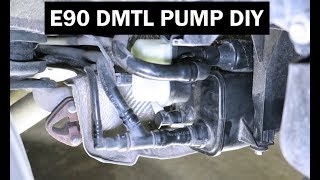
- Faulty Diagnostic Module Tank Leakage (DMTL) Pump (BMW, MINI) (Very Common) — The DMTL pump pressurizes the fuel tank to check for EVAP leaks. The internal motor or valve fails, triggering a system fault for excessive current draw.
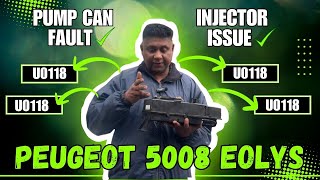
- Faulty Diesel Particulate Filter (DPF) Additive Pump/Tank (Peugeot, Citroën) (Very Common) — On PSA diesels, the Eolys additive pump or its integrated control unit fails electrically or mechanically, preventing it from dosing the DPF with regeneration fluid.
- Defective Secondary Air Injection (SAI) Pump (Audi, VW, Mercedes-Benz) (Common) — This pump injects fresh air into the exhaust on cold starts. The motor burns out or seizes due to moisture intrusion, drawing excessive current and blowing a fuse. 🎬 See how the secondary air system operates and fails.
- Corroded Wiring or Connectors (Common) — Pump wiring harnesses located under the vehicle are exposed to moisture and road debris. This causes corrosion, short circuits, or broken wires at the connector, leading to a loss of power.
- Faulty Relay or Blown Fuse (Less Common) — A failed relay prevents the pump from running. A seized pump motor draws excessive current and blows a high-amperage fuse (e.g., 40A or 50A), which is a definitive indicator of pump failure.
- Blocked or Leaking Hoses/Injectors (Less Common) — Hoses for SAI or EVAP systems crack and leak. On PSA diesels, the Eolys additive injector clogs with crystallized fluid, preventing operation and triggering a pump fault.
- Faulty Non-Return Valve in Fuel Tank (Peugeot, Citroën) (Rare) — A faulty non-return valve where additive injects into the main fuel tank triggers a pressure fault that the ECU blames on the pump. The entire fuel tank requires replacement if the valve is integrated.
- Loose or Faulty Gas Cap (BMW, MINI) (Rare) — A loose gas cap causes the DMTL pump to run excessively to compensate for the leak. The ECU interprets this abnormal runtime as a pump failure.
Symptoms

- Check Engine Light is On — The primary symptom. The light illuminates as soon as the computer detects the fault.
- Malfunctioning Fuel Gauge (Chevrolet) — On affected Chevrolet Malibu models, the primary symptom of the P1434 wiring fault is an erratic or completely inoperative fuel gauge.
- Loud Whining or 'Vacuum Cleaner' Noise on Cold Start — On vehicles with a Secondary Air Injection (SAI) system (Audi/VW), a failing pump makes a loud, abrasive noise for 60-90 seconds after a cold start.
- 'Risk of Clogging DPF' or 'Engine Fault' Message (Peugeot, Citroën) — A failure in the additive system prevents the DPF from cleaning itself, triggering dashboard warnings and engaging limp mode.
- Pump Runs Continuously, Draining the Battery (Audi, VW) — If the SAI pump relay fails in the 'on' position, the pump runs constantly while parked, draining the battery and burning out the motor.
- Failed Emissions Test — Because this code relates to emissions equipment, the vehicle automatically fails state emissions inspections.
- Reduced or No A/C Cooling (Ford, Kia) — For Ford and Kia vehicles where P1434 relates to the A/C system, the air conditioning performs poorly or stops working.
Diagnostic Flowchart
Tap your situation to follow the diagnostic path that matches what you're seeing on this code.
Common Fixes & Costs

- Repair Chafed ECM Wiring Harness (Chevrolet Malibu) — Parts: $10-$25, Labor: $150-$300, ~1.4 hr book time (Intermediate)
- Replace Diagnostic Module Tank Leakage (DMTL) Pump — Parts: $85-$160, Labor: $100-$250, ~1.5 hr book time (Intermediate)
- Replace Diesel Additive (Eolys) Pump/Tank Assembly — Parts: $150-$550, Labor: $150-$300, ~2.5 hr book time (Professional)
- Replace Secondary Air Injection (SAI) Pump — Parts: $250-$800, Labor: $150-$300, ~2 hr book time (Intermediate)
- Repair Damaged Wiring or Connector — Parts: $10-$50, Labor: $100-$450, ~2.5 hr book time (Professional)
- Replace Fuel Tank Assembly (Peugeot/Citroën) — Parts: $500-$1200, Labor: $300-$500, ~4 hr book time (Professional)
Used vs. New Parts: Buying Guide
When a used part is worth it: For purely mechanical components, a used part is a budget-friendly option. For electronic pumps, a used part from a low-mileage donor is viable if the part number matches exactly and the part is tested prior to installation.
Donor-vehicle mileage cap: roughly under 60000 miles for the part to have meaningful remaining life.
Donor quality checklist:
- Verify the donor vehicle was not scrapped for emissions or engine failure.
- Match OEM part numbers exactly; superseded numbers have different programming or connectors.
- For SAI pumps, avoid donors from cold/wet climates where water intrusion causes failure.
- For Eolys pumps, ensure the used part is confirmed functional, as they are difficult to test off-vehicle.
Decision logic:
- If The part is a simple relay or fuse → Buy new. The cost saving is negligible and new is more reliable.
- If The vehicle is high-mileage (>150k miles) and the budget is tight → A used pump is a reasonable gamble, but it has limited remaining life.
- If The part requires vehicle-specific programming (e.g., Peugeot Eolys Pump) → Buy a new OEM or high-quality aftermarket part to avoid compatibility issues during coding.
- If The root cause of failure was external (e.g., SAI pump killed by bad check valve) → A used pump is acceptable ONLY if the root cause (the check valve) is replaced with a new part.
Warranty tradeoff: Used parts from salvage yards offer a 30-90 day warranty. New aftermarket parts include a 1-year to limited lifetime warranty. New OEM parts carry a 1-2 year warranty.
Worst-case if a used part fails: $300-$600 if a used pump fails shortly after installation, requiring double labor and a second replacement part.
What Happens If You Wait — Timeline
- 0-1 month: For PSA diesels, the code sets and a 'Risk of Clogging DPF' message appears. DPF regeneration is disabled. Vehicle fails emissions tests. (MPG impact: 0-2%% · Added cost: $0)
- 1-4 months: The DPF steadily accumulates soot. The engine feels sluggish as exhaust backpressure builds. Warning messages become persistent. (MPG impact: 3-8%% · Added cost: $50-150 in wasted fuel)
- 4-8 months: The DPF is heavily saturated. The ECU forces the engine into 'limp mode,' severely restricting power. An 'Engine Fault: Repair Needed' message is constant. (MPG impact: 10-25%% · Added cost: $200-$600 (Cost for a forced DPF regeneration, which may fail if too clogged).)
- 8+ months: The DPF is irreversibly blocked with hardened soot. The engine struggles to run or fails to start due to extreme backpressure. The DPF must be replaced. (MPG impact: >25%% · Added cost: $1,500-$4,000+ (Cost of a new DPF assembly plus the original Eolys pump repair).)
Cost of Not Fixing It
- 0-3 months: Failed emissions test. On Peugeot/Citroën, 'Risk of Clogging DPF' warnings appear. On Chevy Malibu, the fuel gauge becomes unreliable, creating a risk of running out of fuel. (Added cost: $50-$100)
- 3-12 months: On Peugeot/Citroën, the DPF becomes irreversibly clogged, forcing limp mode. On Audi/VW, the catalytic converter suffers premature aging. On Chevy Malibu, chafed wiring causes intermittent stalling. (Added cost: $1,500-$4,000)
- 12+ months: Catastrophic DPF failure requires replacement. Complete catalytic converter failure on Audi/VW. A failed pump relay sticks 'on', draining the battery and burning out the pump motor. (Added cost: $2,000-$8,000+)
Diagnosis Steps

- Identify Your Vehicle's System
Use an OBD-II scanner to confirm the manufacturer-specific definition. BMW/MINI = EVAP/DMTL system. Peugeot/Citroën = Eolys additive system. Audi/VW/Mercedes = Secondary Air Injection (SAI) system. 2020-2024 Chevrolet Malibu = ECM wiring harness issue.
Tools: Professional OBD-II Scanner (Beginner) - Visual Inspection (All Systems)
Locate the component. For DMTL/Eolys pumps, check near the rear wheels or fuel tank. For SAI pumps, check the engine bay. For the Chevrolet Malibu, inspect the wiring harness where it passes the ECM bracket near the battery. Look for chafing, corroded wires, or loose connections.
Tools: Jack and Jack Stands, Flashlight (Beginner) - Check High-Amperage Fuses and Relays
Locate the fuse and relay for the specific system. For SAI pumps, check the high-current fuse (40A-50A). A blown fuse confirms the pump motor has seized. Test the relay by swapping it with an identical one.
Tools: Owner's Manual, Fuse Puller, Multimeter (Beginner) - Listen for Pump Operation & Activate with Scan Tool
For SAI Systems: Have a helper start the engine cold. The pump must run loudly for 60-90 seconds. For DMTL/Eolys Systems: Use a scan tool to command the pump ON. If you hear nothing, the pump lacks power or has failed.
Tools: Professional OBD-II Scanner, A helper (Intermediate) - Test for Power, Ground, and LIN Bus Signal
Disconnect the pump connector. Use a multimeter to verify battery voltage and ground when the pump is commanded ON. For PSA and BMW pumps, measure the LIN Bus wire; it must fluctuate between 9V and 12V, indicating ECU communication.
Tools: Multimeter, Vehicle-specific wiring diagram (Advanced) - Bench Test the Pump Motor
If power and ground reach the pump but it remains silent, remove it. Apply 12V power directly from a battery to the pump's terminals using jumper wires. If the motor does not spin, it is internally dead.
Tools: Basic hand tools, Jumper wires, 12V battery (Advanced) - [Pro Tip] Check for Excessive Amperage Draw
If the pump runs but the code persists, connect an amp clamp in series with the power wire. A healthy Audi SAI pump draws 30-40A initially. A failing pump draws over 50A, blowing the fuse. BMW DMTL pumps trigger P1434 specifically for high current draw.
Tools: Ammeter / Amp Clamp, Jumper Wires (Advanced) - [Pro Tip] Advanced Electrical Checks (Audi/VW SAI)
Check for battery voltage (12.5V+) at the SAI pump connector terminal 2 to ground during a cold start. Voltage must be present for 10-90 seconds. If no voltage, check wiring resistance from the relay socket (terminal 87) to the pump connector (< 1.5 Ohms).
Tools: Multimeter, Wiring Diagram (Advanced) - [Pro Tip] Interpreting BMW DMTL Test Plans
Use ISTA/DIS to run the DMTL system test. The pump runs a 'reference leak measurement' and measures current, then pressurizes the fuel system and measures current again. Abnormally high current confirms a faulty pump motor.
Tools: BMW-specific Scan Tool (ISTA, INPA) (Advanced) - [Pro Tip] Test PSA Additive Injector & Non-Return Valve
Disconnect the additive line at the pump and connect a vacuum hand pump. Pressurize the line. Pressure must rise to 400 mbar as the valve opens, then settle to 200-300 mbar. If pressure builds excessively, the injector is clogged.
Tools: Vacuum/Pressure Hand Pump (Advanced)
When This Code Triggers (Freeze-Frame Conditions)
- Engine Coolant Temp: 40-85°F (Cold Start) or 180-210°F (Cruising) (Sets during a cold start self-test (SAI systems) or steady-state cruise when an EVAP/DMTL monitor runs.)
- Fuel Level: 15-85% (For EVAP/DMTL systems (BMW/MINI), the self-test aborts if the tank is too full or too empty.)
- Vehicle Speed: 0 mph (Cold Start) or 45-60 mph (Cruising) (SAI pump faults log within seconds of a cold start. DMTL/Eolys faults log during steady highway driving during leak checks.)
- Time Since Engine Start: < 90 seconds or > 10 minutes (SAI faults trigger immediately after startup. EVAP or Eolys faults log after reaching operating temperature.)
Related Codes
- P1435 — Appears with P1434 on Peugeot/Citroën vehicles. P1434 indicates a 'Pump Fault,' while P1435 specifies a 'CAN Network Fault.' Together, they confirm an electrical or communication issue.
- U0118 — A generic 'Lost Communication With Fuel Additive Control Module' code. On PSA vehicles, it points directly to a failed control module inside the additive tank or a severed wiring harness.
- P0411 — On Audi/VW, means 'SAI System Incorrect Flow Detected.' If paired with P1434, the pump has failed completely. If alone, the pump works but passages are blocked.
- P1447 — On BMWs, indicates 'DMTL Pump Solenoid Circuit.' Accompanies P1434 to confirm a problem with the electrical control circuit for the pump's internal switching valve.
- 2A17 — The BMW-specific fault code for 'DMTL, system fault,' which is the direct equivalent of P1434.
Climate & Environmental Factors
- Cold Climates: Increases SAI pump failure rates. Exhaust moisture condenses in air lines, flows back into the pump, freezes, and destroys internal components or seizes the motor.
- High Humidity / Road Salt: Accelerates corrosion of electrical connectors and wiring harnesses for under-vehicle components (DMTL, Eolys), leading to communication loss.
How to Talk to a Mechanic About This Code
Say this: "Be specific. For a Chevy Malibu: 'My car has a P1434 and a faulty fuel gauge. Please inspect the ECM wiring harness for chafing per GM TSB 21-NA-186.' For Peugeot/Citroën: 'I have a P1434 for the Eolys pump. Do you have the official Diagbox tool to code a new pump?' For BMW/MINI: 'I have a P1434 DMTL pump code. Can you test the pump's function before replacing it?' For Audi/VW: 'I have a P1434 for the SAI pump. If the pump is bad, please inspect the check valve to ensure it didn't cause the failure.'"
This signals you are an informed consumer, preventing expensive, broad diagnostics. It directs them to the exact cause and pre-qualifies their ability to perform required programming.
Avoid saying:
- 'My check engine light is on, can you just fix it?' (Invites costly, broad diagnosis.)
- 'I think it's the [wrong part for your make].' (Misleads the technician and wastes money.)
- 'Just do whatever you think is best.' (Gives up your right to authorize specific repairs.)
Questions to ask before authorizing the repair:
- Can you show me the test results (e.g., high amperage draw, failed activation test) confirming the part failed?
- (For Peugeot/Citroën) What is the separate cost for programming the new module, and do you guarantee success?
- (For Audi/VW) What is the additional cost to replace the secondary air check valve alongside the pump?
- What is the warranty on both the replacement part and your labor?
Where to Take It: Dealer vs Independent vs Chain
- Dealer:
Required for modern PSA repairs due to proprietary online tools. A safe, but expensive, option for other makes.
Best for: Peugeot/Citroën Eolys pump replacement on 2016+ models requiring online programming., Vehicles under warranty (emissions, CPO)., Complex diagnostics where an independent shop failed.
Downsides: Highest labor rates and part costs., Prefers replacing whole assemblies rather than attempting wiring repairs. (Typical cost: +50% vs. baseline) - Independent Shop:
The best choice for BMW, VW, Audi, and Chevy. For modern Peugeot/Citroën, verify they have an up-to-date Diagbox tool.
Best for: Out-of-warranty BMW, Audi, and VW repairs., The Chevrolet Malibu wiring harness repair (TSB #21-NA-186)., Building a long-term relationship with a mechanic.
Downsides: Quality varies; you must find a brand specialist., Lacks online-only dealer tools for programming the newest models. (Typical cost: +0% vs. baseline) - Chain Shop:
AVOID. The complexity of P1434 is a poor match for chain shops. The risk of misdiagnosis is extremely high.
Best for: Simple, unrelated services like tire rotations or oil changes.
Downsides: Technicians lack experience with manufacturer-specific systems (Eolys, DMTL, SAI)., Lack specialized diagnostic tools for proper diagnosis and programming., High pressure to meet sales targets leads to misdiagnosis. (Typical cost: -10% vs. baseline)
When to Walk Away From the Repair
If the estimated repair cost exceeds 40-50% of the car's private-party value, consider selling. For older cars (>150,000 miles), this threshold drops to 30-40%.
- Car worth $4500, fix is $850: Fix it. The repair cost for a Peugeot Eolys pump or Audi SAI pump is well below the 50% threshold.
- Car worth $3500, fix is $1700: Borderline. A worst-case scenario on a Peugeot (full fuel tank replacement) approaches 50% of the car's value. Get a second opinion.
- Car worth $18000, fix is $450: Fix it. The cost to repair the wiring harness on a newer Chevy Malibu is a tiny fraction of the vehicle's value.
- Car worth $2500, fix is $1500: Walk away. Spending 60% of the car's value on a single repair for an older vehicle is not a sound financial decision.
What Scan Tool You Need for This Code
Minimum: A bidirectional scan tool with manufacturer-specific system access. Required to perform active tests (commanding a pump ON/OFF) essential for diagnosing P1434.
A basic $20 code reader only shows the P1434 code. It cannot perform active tests to determine if the pump, relay, or wiring is at fault, leading to unnecessary part replacement.
Mid-range: Foxwell NT510 Elite (~$180) — Provides OE-level diagnostics, bidirectional tests, and advanced sensor data for specific manufacturers (BMW, VAG, PSA).
Professional: Autel MaxiCOM MK808 / XTOOL D7 (~$450-600) — Professional-grade tablets offering extensive bidirectional controls. They perform nearly all diagnostic functions but may fall short of online programming for the newest Peugeot/Citroën models.
Rent vs buy: Buy. Free rental tools at auto parts stores are basic readers lacking bidirectional control. A capable scanner pays for itself by avoiding a single misdiagnosis.
How to Clear the Code After You Fix It
- Use an OBD-II scan tool to clear the fault codes.
- Perform a complete drive cycle to allow readiness monitors to run.
- Check readiness monitor status with a scan tool before seeking an emissions test.
Drive cycle (~30 minutes): Start with a cold engine (sit overnight). Start and idle for 2-3 minutes. Drive a mix of city (stop-and-go) and highway speeds. Include steady-state cruising at 50-60 mph for 5-10 minutes. Coast down without braking. Idle again before shutdown.
Readiness monitors affected: Evaporative System (EVAP), Catalyst (CAT), Secondary Air System (AIR)
Before emissions retest: drive at least 100 miles to fully set monitors.
Watch out for:
- Disconnecting the battery clears the code but resets all readiness monitors to 'Not Ready', guaranteeing an emissions test failure.
- The code returns immediately if the underlying mechanical or electrical fault remains unfixed.
- EVAP monitors require specific fuel levels (15-85%) and ambient temperatures to run.
Will This Fail Emissions / State Inspection?
Yes — this code typically fails an OBD-II emissions inspection.
- California: An active P1434 code results in an automatic Smog Check failure. After repair, all readiness monitors must be 'Ready' before the vehicle passes a re-test.
- New York: Any active Check Engine Light is an automatic failure. After repair, the vehicle must complete a drive cycle to set the monitors; clearing the code and testing immediately results in a 'Not Ready' failure.
- Texas: In counties requiring emissions testing, an illuminated Check Engine Light from P1434 causes an automatic OBD-II test failure.
Most Commonly Affected Vehicles
- Chevrolet Malibu (2020-2024) — On 1.5L models, P1434 is caused by a chafed ECM wiring harness. GM TSB #21-NA-186 covers this specific repair.
- BMW 3 Series (E90/E92), 5 Series (E60), X3 (E83), X5 (E70) (2004-2013) — Highly prone to DMTL pump failures. The Bosch OEM part (16137193479) supersedes older, failure-prone versions.
- Peugeot / Citroën 308, 5008, C4, Berlingo, DS4, DS5 (2008-2018) — Commonly experience Eolys additive pump failures. Models from 2016 onwards require online programming with Diagbox.
- Audi / Volkswagen A4, A6, Golf, Jetta, Passat (1998-2012) — P1434 points to the Secondary Air Injection (SAI) pump. V6/V8 models also suffer from clogged internal air passages.
- MINI Cooper (R50/R53/R56) (2002-2013) — Uses the same DMTL pump as BMW, sharing the identical failure points.
- Mercedes-Benz C-Class (W203), E-Class (W211) (1999-2007) — Indicates a fault within the Secondary Air Injection system.
- Toyota Proace (2013-Present) — Based on a PSA platform, it uses the Eolys additive system and suffers from identical P1434 pump faults.
- Porsche 911 (996/997), Boxster (986/987), Cayenne (2001-2010) — Indicates a problem with the Secondary Air Injection (SAI) system.
Manufacturer-Specific Notes
- Chevrolet: On 2020-2024 Malibus, P1434 is exclusively linked to a wiring harness chafing issue (GM TSB #21-NA-186). The primary symptom is a malfunctioning fuel gauge, not a pump failure.
- Peugeot / Citroën: Replacing the Eolys pump requires programming the new module to the vehicle. On 2016+ models, aftermarket scanners fail, requiring an online connection with the official dealer tool (Diagbox).
- BMW / MINI: The DMTL pump mounts directly to the charcoal canister. Do not replace the entire canister; the pump is sold separately. BMW issued an extended warranty (10 years/120,000 miles) for this part under SI B01 05 11.
- Audi / Volkswagen: The root cause of SAI pump failure is a faulty combi (check) valve stuck open, allowing exhaust gas to destroy the pump. Replacing the pump without replacing the valve guarantees repeat failure.
- Ford / Kia: P1434 means 'A/C Refrigerant Temperature Circuit High.' It indicates a problem with the air conditioning evaporator temperature sensor, completely unrelated to emissions.
Real Owner Stories
2020 Chevrolet Malibu with P1434 and erratic fuel gauge
The Service Engine Soon light came on, and the fuel gauge stopped working correctly. A scan revealed code P1434.
What they tried:
- Initial diagnosis incorrectly pointed towards a fuel pump or level sensor.
- A technician inspected the engine wiring harness near the ECM.
- Found chafed wires where the harness rubbed against the metal ECM bracket.
Outcome: The damaged wires were repaired and wrapped with anti-abrasion tape per GM TSB #21-NA-186. This resolved the P1434 code and the fuel gauge malfunction.
Lesson: For a 2020-2024 Chevy Malibu, P1434 is caused by the wiring issue detailed in TSB #21-NA-186. Inspect this harness first before considering fuel tank repairs.
2017 Citroën Spacetourer at ~240,000 km with P1434/P1435
The 'Engine fault repair needed' message appeared. A generic scanner showed P1434 and P1435, pointing to the Eolys additive pump.
What they tried:
- Replaced the additive pump/tank assembly and refilled with Eolys fluid.
- Used an offline version of the Diagbox tool to code the pump, but codes returned.
- Noticed the new pump's control unit required internet authentication.
Outcome: The owner purchased an online token for the official Diagbox software. Running the procedure with an active connection allowed the new pump to prime and function correctly.
Lesson: On Peugeot/Citroën models from 2016+, a simple part swap and offline coding fails. The new pump must be programmed with an official diagnostic tool connected to manufacturer servers.
2001 Audi Allroad with P1434 and a blown fuse
Check Engine Light came on with code P1434. There was no 'vacuum cleaner' noise on startup.
What they tried:
- Found a blown 40-amp fuse for the SAI system.
- Replaced the fuse and the SAI pump relay.
- The code did not clear, and the new fuse blew immediately.
Outcome: The blown high-amperage fuse indicated the SAI pump motor had seized. A non-functional pump confirmed it was internally dead and required replacement.
Lesson: A blown high-current fuse (40A+) for an emissions pump means the motor has seized. Replacing the fuse without addressing the failed pump results in the new fuse blowing instantly.
BMW E90 with P1434 and other EVAP codes
The Check Engine Light appeared with code P1434 (DMTL Malfunction).
What they tried:
- Checked the gas cap O-ring for cracks.
- Cleared the codes to see if they returned.
- When the code returned, the DMTL pump was suspected.
Outcome: The owner replaced the DMTL pump (Bosch part, ~$85). The replacement was a straightforward DIY job accessed by removing the rear passenger-side wheel well liner.
Lesson: For a BMW DMTL fault, check the gas cap seal first. If the code persists, the pump itself is a common failure item and an inexpensive DIY replacement.
How to Prevent This Code From Triggering
- Proactively protect the ECM wiring harness on 2020-2024 Chevy Malibus (Once, as a preventative measure) — Wrapping the ECM harness with anti-abrasion cloth tape (Tesa 51036) prevents the wiring from shorting out against the bracket, avoiding P1434.
- Inspect and replace the SAI combi (check) valve (Every 60,000 miles or when replacing the SAI pump) — A leaking check valve allows hot exhaust to flow back into the SAI pump, causing internal corrosion. This is the primary cause of premature SAI pump failure.
- Apply dielectric grease to under-vehicle electrical connectors (During any under-vehicle service) — Seals DMTL and Eolys pump connectors from moisture and road salt, preventing corrosion that leads to communication faults.
- Use only the correct, specified Eolys fluid for your PSA vehicle (During additive fluid refills (approx. every 75,000 miles)) — Using the wrong Eolys type causes crystallization, clogging the injector and triggering a pump fault. It is not interchangeable with AdBlue.
- Avoid running the fuel tank below a quarter full (Daily habit) — Fuel acts as a coolant for tank-mounted pumps. Consistently running low causes the pump to run hotter, shortening its lifespan.
Frequently Asked Questions
My mechanic replaced the additive pump on my Peugeot, but the code came back. What happened?
The new pump must be electronically coded to the car's computer; skipping this step causes the fault to return. Alternatively, the real fault is a clogged additive injector or a faulty non-return valve inside the main fuel tank.
What is the most common misdiagnosis for P1434?
For Peugeot/Citroën, it's replacing the pump when the fault is a clogged injector. For Audi/VW, it's replacing the air pump without replacing the faulty check valve. For BMW, it's replacing the DMTL pump when the cause is a faulty gas cap seal.
What is Eolys fluid and is it the same as AdBlue?
No, they are completely different. Eolys is a cerium-based additive mixed with diesel to lower the soot burn-off temperature in the DPF. AdBlue is a urea solution injected into the exhaust stream to reduce NOx emissions.
I have a BMW and my gas cap was loose. Could that cause P1434?
Yes, a loose gas cap creates a large EVAP leak. The DMTL pump runs continuously trying to build pressure, and the engine computer interprets this excessive runtime as a pump failure. Always check the gas cap seal before replacing the pump.
My Audi's air pump runs for a few minutes after I turn the car off. What's wrong?
This is a classic symptom of a failed Secondary Air Injection (SAI) pump relay. The relay's internal contacts are stuck closed, supplying constant power to the pump. Replace the relay immediately to prevent battery drain and motor burnout.
Is it difficult to replace these pumps myself?
For BMW (DMTL) and Audi/VW (SAI) systems, replacement is a manageable DIY job requiring basic tools. For Peugeot/Citroën (Eolys), the mechanical replacement is simple, but electronic programming requires professional diagnostic tools.
What does GM TSB 21-NA-186 for the Chevy Malibu say?
This bulletin states that on 2020-2024 Malibus, P1434 and a malfunctioning fuel gauge are caused by the engine wiring harness chafing against its metal bracket. Technicians must repair damaged wires and wrap the area with anti-abrasion tape.
Key Takeaways
- P1434 definitions vary by manufacturer: it signals a DMTL pump failure on BMWs, an Eolys additive fault on Peugeot diesels, an SAI pump issue on Audi/VW, or a chafed ECM wiring harness on 2020-2024 Chevy Malibus.
- Always inspect related components before replacing a pump; a $20 stuck relay, a blown 40A fuse, or a loose gas cap frequently triggers P1434.
- Ignoring P1434 on a diesel vehicle disables DPF regeneration, guaranteeing a clogged filter and a $1,500 to $4,000 replacement cost within 3 to 8 months.
- Replacing an Eolys pump on 2016+ Peugeot and Citroën models requires online programming with an official Diagbox tool; skipping this step guarantees the code returns immediately.
Helpful Videos

The information in this article is provided for general reference and educational purposes only. Vehicle specifications, procedures, and part compatibility can vary by production date, trim level, and region. Always consult your vehicle's factory service manual and verify part numbers before purchasing or performing repairs. Safety-critical components such as airbags, seat belts, and braking systems should be installed by a qualified professional.
- 🎬 Helpful Videos
- What Does P1434 Mean?
- Can I Drive With P1434?
- Common Causes
- Symptoms
- Diagnostic Flowchart
- Common Fixes & Costs
- Used vs. New Parts: Buying Guide
- What Happens If You Wait — Timeline
- Cost of Not Fixing It
- Diagnosis Steps
- When This Code Triggers (Freeze-Frame Conditions)
- Related Codes
- Climate & Environmental Factors
- How to Talk to a Mechanic About This Code
- Where to Take It: Dealer vs Independent vs Chain
- When to Walk Away From the Repair
- What Scan Tool You Need for This Code
- How to Clear the Code After You Fix It
- Will This Fail Emissions / State Inspection?
- Most Commonly Affected Vehicles
- Manufacturer-Specific Notes
- Real Owner Stories
- 2020 Chevrolet Malibu with P1434 and erratic fuel gauge
- 2017 Citroën Spacetourer at ~240,000 km with P1434/P1435
- 2001 Audi Allroad with P1434 and a blown fuse
- BMW E90 with P1434 and other EVAP codes
- How to Prevent This Code From Triggering
- Frequently Asked Questions
- My mechanic replaced the additive pump on my Peugeot, but the code came back. What happened?
- What is the most common misdiagnosis for P1434?
- What is Eolys fluid and is it the same as AdBlue?
- I have a BMW and my gas cap was loose. Could that cause P1434?
- My Audi's air pump runs for a few minutes after I turn the car off. What's wrong?
- Is it difficult to replace these pumps myself?
- What does GM TSB 21-NA-186 for the Chevy Malibu say?
- Key Takeaways
- 🎟️ Get 5% Off