

P1429 on 2014-2021 Ram ProMaster 3.6L: Brake Vacuum Pump Fault Guide
Code P1429 on a Ram ProMaster most likely indicates a problem with the electric brake vacuum pump circuit, which can cause a hard brake pedal. While not officially confirmed by Ram documentation in search results, this is the most logical interpretation as the vehicle is equipped with this pump. The fix often involves replacing the electric vacuum pump, its dedicated fuse, or its relay.
- P1429 on a ProMaster is a critical safety code, likely pointing to a failure in the electric brake vacuum pump circuit.
- The most common symptom is a hard brake pedal that requires extreme effort, making the vehicle unsafe to drive.
- Diagnosis should start with the easiest and cheapest fixes: checking fuse F61 (20A) and the associated relay in the under-hood fuse box.
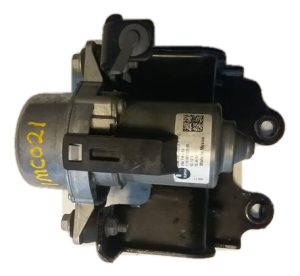
- If the fuse and relay are good, the vacuum pump itself (Part No. 68239633AB) is the most likely failed component.
- The definition is not officially confirmed for Ram, but is inferred based on the vehicle's hardware and common use of the code by other manufacturers for the same component.
What's Unique About the 2014-2021 Ram ProMaster
The Ram ProMaster is based on the Fiat Ducato, a European van platform. Many vehicles of European design (like Volkswagen and Audi) use an electric brake vacuum pump and designate code P1429 for its circuit failure. While generic Chrysler/Dodge code lists from the past point to an 'electric air pump' for emissions, the ProMaster is physically equipped with an electric *brake vacuum* pump. Therefore, it's highly probable that Ram applied this code to the brake vacuum pump system on this specific platform, diverging from other domestic Ram trucks that may not use this setup.
Symptoms You May Notice
- Hard brake pedal that requires significantly more effort to press.
- Increased stopping distance.
- Check Engine Light illuminated
- Audible hissing noise near the brake pedal or from under the hood when brakes are applied, indicating a vacuum leak.
- Replacing the brake booster without testing the vacuum pump circuit first.
- Replacing the brake master cylinder when the issue is a lack of vacuum assist.
- Assuming the hard pedal is due to seized calipers without checking for vacuum-related codes.
Most Likely Causes
- Failed Electric Brake Vacuum Pump 🔴 High Probability Electric motors and pump assemblies can wear out over time, leading to an open or shorted circuit internally. The pump's location under the vehicle also exposes it to road salt and moisture, which can accelerate failure.
How to confirm: After checking fuses and wiring, a technician can test the pump by applying 12V and ground directly to its terminals to see if it runs. If it doesn't, the pump has failed.
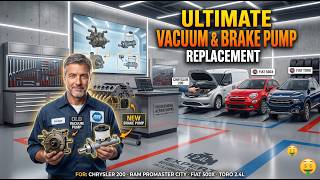
Typical fix: Replace the electric brake vacuum pump assembly. 🎬 Watch this step-by-step brake vacuum pump replacement guide
Est. part cost: $250-$400 - Blown Fuse or Faulty Relay 🟡 Medium Probability
How to confirm: Locate the fuse and relay for the brake vacuum pump in the vehicle's power distribution center. On the ProMaster, this is typically fuse F61 (20 Amp Yellow) in the Front Power Distribution Center and its associated relay. Visually inspect the fuse and swap the relay with a known-good relay of the same type to see if the problem is resolved.
Typical fix: Replace the blown fuse or faulty relay.
Est. part cost: $5-$30 - Damaged Wiring or Connector ⚪ Low Probability The pump is located under the vehicle, exposing its wiring to potential road debris, corrosion, and moisture, which can lead to shorts or open circuits.
How to confirm: Visually inspect the wiring harness and electrical connector leading to the electric brake vacuum pump for any signs of breaks, corrosion, or loose pins. Pay close attention to the section of the harness that runs along the frame rail.
Typical fix: Repair the damaged section of the wiring harness or replace the connector pigtail.
Est. part cost: $20-$60
Rare But Worth Checking
- Faulty Brake Booster:
Diagnosis Steps
- Verify the presence of code P1429 with an OBD-II scanner. Check for any other accompanying codes, such as P0556.
- CRITICAL SAFETY STEP: Confirm if the brake pedal feels hard or if braking performance is reduced. Do not proceed with extensive test driving if a safety issue is present.
- Locate the Front Power Distribution Center in the engine compartment. Inspect fuse F61 (20 Amp Yellow) which is designated for the Vacuum Pump. Replace if blown.
- Locate the relay for the vacuum pump, also in the engine compartment fuse box. Swap it with an identical relay from a non-critical system (like the horn) to see if the pump begins to function.
- If the fuse and relay are good, safely raise and support the vehicle to access the electric brake vacuum pump. It is typically mounted to the frame under the driver's side of the vehicle.
- Visually inspect the electrical connector and wiring harness for any damage, corrosion, or loose connections.
- Using a multimeter, check for 12V power and a solid ground at the pump's connector with the key on (the pump may only activate when vacuum is low, so a helper may need to pump the brakes to trigger it).
- If power and ground are present but the pump does not run, the pump motor has failed and the assembly needs to be replaced.
- If no power is found at the connector, trace the wiring back towards the relay to find the break in the circuit.
Parts You'll Likely Need
- Electric Brake Vacuum Pump
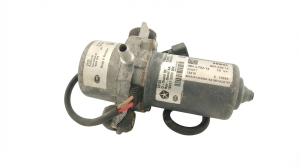
(OEM #68239633AB)— This is the most likely component to fail in the circuit, causing the P1429 code and a hard brake pedal. The original part 68239633AA was superseded by this version.
Trusted brands: Mopar, Dorman
OEM price range: $300-$480
Aftermarket price range: $200-$350
Related Codes That Often Appear With This One
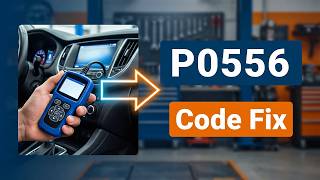
- P0556 — P0556 indicates an issue with the Brake Booster Pressure Sensor. If the vacuum pump (related to P1429) fails to run, the pressure sensor will correctly report an out-of-range value, triggering P0556 as a direct symptom of the pump failure. 🎬 Watch how to diagnose and repair code P0556
- C1252-92 — This ABS module code for 'Vacuum Pump Control Circuit - Performance or Incorrect Operation' is a more specific fault pointing directly at the pump system. A STAR case document notes that if this code is present, the P258B diagnostic should be performed, as it is more comprehensive. It also advises against replacing the ABS module for this code alone.
- P258B — This PCM code for 'Electronic Vacuum Pump Performance' is closely related. A technical document advises that if P1429 or C1252-92 are present, technicians should perform the diagnostic steps for P258B, as it provides a more thorough test of the vacuum pump system, including hoses and check valves.
Technical Service Bulletins (TSBs) & Recalls
- TSB 08-076-20: Involves reprogramming the ABS module for MIL illumination, which could be related to brake system faults but does not directly mention P1429.
Platform-Specific Known Issues
- Fuse and Relay Location: Owners often have difficulty locating the correct fuse. For the 3.6L engine, the vacuum pump is powered by fuse F61 (20A) and its corresponding relay in the Front Power Distribution Center (under the hood), not the interior fuse panel.
Mechanic-Grade Diagnostic Values
- Brake Booster Vacuum Level at Idle — expected: 15" to 20" Hg (50 to 70 kPa). Failure: A reading of 16" Hg or lower at idle suggests a leak in the vacuum hose or a failing pump.
- Direct Pump Activation Test — expected: Pump motor runs and creates suction when 12V and ground are applied directly to its terminals.. Failure: If the pump does not run, the motor is internally failed. If it runs but creates no vacuum, the pump mechanism is broken.
Hidden / Shadow Codes Worth Checking
- C1252-92: ABS Module: Vacuum Pump Control Circuit - Performance or Incorrect Operation. This is a more specific code than P1429 and directly implicates the pump circuit. (see via A professional scan tool capable of reading ABS module codes, such as wiTECH.)
- P258B-00: PCM: Electronic Vacuum Pump Performance. FCA documentation suggests using the diagnostic procedure for this code to test the entire vacuum system, even if only C1252-92 is present. (see via A professional scan tool capable of reading PCM codes, such as wiTECH.)
Scan Tool Commands That Help
- wiTECH: Restore Configuration and Align Proxi — This routine, found under the 'Diagnostic Procedures' tab, may be necessary after replacing modules to ensure they communicate correctly with the rest of the vehicle.
- wiTECH: Clear All DTCs — After a module flash or component replacement, this function ensures that old fault codes do not cause lingering diagnostic confusion. A key cycle may be required after clearing.
- wiTECH: Network Loss of Communication Test — If a wiring issue is suspected, this test provides a real-time 'ping' of all modules on the network. A technician can perform a wiggle test on harnesses while watching this screen to see if communication drops, pinpointing the location of a fault.
Wiring & Ground Locations
- Primary Engine/Transmission Ground Strap — A braided strap running from a bolt on the side of the transmission case to a bolt on the top of the transmission mount, accessible by removing the driver's side headlight.. A poor or intermittent primary engine ground can cause a wide range of electrical issues and corrupted data signals due to inconsistent voltage. While not a direct cause of P1429, verifying this ground is secure is a crucial step in diagnosing any electrical fault on the ProMaster.
- Vacuum Pump Connector — Connected to the electric brake vacuum pump, which is mounted to the frame under the driver's side of the vehicle.. This is the direct connection point for the component. Checking for power, ground, and physical integrity (corrosion, spread pins) at this connector is a primary diagnostic step.
Real Owner Repair Stories
- RamForum.com user 'Buttyman' (2018 Ram Power Wagon (similar brake system principles)) — After sitting for a week, the brake pedal was extremely hard with no travel, preventing the push-to-start system from engaging. After forcing the pedal down hard, the engine started and the pedal feel returned to normal.
✅ What actually fixed it The issue was diagnosed by other forum members as a very small vacuum leak in the brake booster system. The stored vacuum was bleeding off while the truck sat unused. The system worked normally once the engine started and created fresh vacuum. The user was advised to monitor the situation as finding a very small leak can be difficult.
OEM Part Supersession History
68239633AA→68239633AB— Standard part revision and improvement by the manufacturer.
Heads up: None. The new part number (68239633AB) is a direct replacement for the original.
Model Year Variations Within This Range
- 2019-2021: For the 2019 model year, the ProMaster received a facelift that replaced the crosshair grille with bold 'RAM' lettering. More importantly for fleet operators, Ram introduced the 'Ram Telematics' system, which allows for enhanced vehicle data tracking and diagnostics. While the base brake system remained the same, these newer models have more advanced fleet diagnostic capabilities.
Diagnostic Flowchart
Other Known Issues on This Vehicle
Issues unrelated to this code that are worth knowing about as an owner of this generation:
- Oil Cooler/Filter Housing Leaks 🔴 High — Very common, often occurs between 60,000-120,000 miles. The plastic housing cracks or the seals degrade, causing oil to leak down the back of the engine onto the transmission bellhousing.
- 62TE Transmission Failure 🔴 High — Common, especially in vehicles used for heavy hauling. The transmission is considered undersized for the vehicle's weight, leading to premature torque converter or internal component failure. There is also a recall (44A) for 2019-2021 models where debris can prevent the park pawl from engaging. (Ref: Recall 44A / NHTSA 23V-291)
- Coolant Leaks (Radiator & Reservoir) 🟠 Medium — Early (2014) models were prone to radiator leaks due to a manufacturing defect. Across all years, the plastic coolant reservoir (surge tank) is known to develop hairline cracks, causing slow coolant loss and a distinct coolant smell.
- Sliding Door and Window Regulator Failures 🟡 Low — Common annoyance. The sliding door contacts and wiring can fail, causing issues with locks and interior lights. Window regulators are also a frequent failure point.
- TPMS Electrical Gremlins 🟡 Low — The Tire Pressure Monitoring System is known for being sensitive, often throwing system fault codes (like C1012, C1014) due to sensor communication issues or a faulty receiver module located under the van, rather than just a low tire.
Used vs. New Parts: Buying Guide for This Vehicle
When a used part is the smart pick: A used electric brake vacuum pump from a low-mileage, accident-free donor vehicle can be a cost-effective option, as the part is a simple electric motor and pump assembly without complex electronics that require programming.
Donor-vehicle mileage cap: roughly under 60000 miles for the part to have meaningful remaining life.
What to inspect on the donor part:
- Check for heavy rust or corrosion on the pump housing and mounting brackets.
- Inspect the electrical connector for any signs of corrosion, melting, or broken locking tabs.
- Ensure the vacuum port nipple is not cracked or broken.
- If possible, ask for the VIN of the donor vehicle to check its history for accidents or flood damage.
OEM-only on this vehicle (don't cheap out):
- While the pump itself can be sourced from aftermarket, critical related components like the ABS module or PCM should always be replaced with new OEM parts due to programming and safety requirements.
Aftermarket brands forum-validated for this vehicle:
- Mopar (OEM)
- Dorman (Often provides redesigned parts to address OEM weaknesses)
Brands owners have reported issues with on this vehicle:
- Unknown, no-name brands from online marketplaces should be avoided due to the critical safety nature of the brake system.
Real Owner Stories
Aggregated from forums and TSBs cited above. Mileages and costs reflect what owners reported in those sources.
Ram ProMaster 3.6L Pentastar V6
Symptoms: A classic hard brake pedal symptom after the vehicle sits, indicating a loss of stored vacuum.
What fixed it: The issue was identified as a vacuum leak or an issue with the brake booster system's electric pump.
Source hint: RamForum.com - 'Very hard brake pedal'
Related OBD-II Codes
Frequently Asked Questions
Where is the fuse for the brake vacuum pump located on my Ram ProMaster 3.6L?
Does TSB 08-076-20 fix the P1429 code on my ProMaster?
Can I use a vacuum pump from a Jeep Wrangler to fix my ProMaster?
Why does my brake pedal feel extremely hard to press when I first start the van?
Is the electric brake vacuum pump failure related to the transmission recalls on 2019-2021 models?
Helpful Videos
We Have This Part in Stock


The information in this article is provided for general reference and educational purposes only. Vehicle specifications, procedures, and part compatibility can vary by production date, trim level, and region. Always consult your vehicle's factory service manual and verify part numbers before purchasing or performing repairs. Safety-critical components such as airbags, seat belts, and braking systems should be installed by a qualified professional.
- Ram ProMaster:
- 🎬 Helpful Videos
- 🛍️ Shop This Part
- What's Unique About the 2014-2021 Ram ProMaster
- Symptoms You May Notice
- Most Likely Causes
- Rare But Worth Checking
- Diagnosis Steps
- Parts You'll Likely Need
- Related Codes That Often Appear With This One
- Technical Service Bulletins (TSBs) & Recalls
- Platform-Specific Known Issues
- Mechanic-Grade Diagnostic Values
- Hidden / Shadow Codes Worth Checking
- Scan Tool Commands That Help
- Wiring & Ground Locations
- Real Owner Repair Stories
- OEM Part Supersession History
- Model Year Variations Within This Range
- Diagnostic Flowchart
- Other Known Issues on This Vehicle
- Used vs. New Parts: Buying Guide for This Vehicle
- Real Owner Stories
- Ram ProMaster 3.6L Pentastar V6
- Related OBD-II Codes
- Frequently Asked Questions
- 🎟️ Get 5% Off