

OBD-II Code C1012: ABS Sensor Circuit Malfunction
What C1012 means, why it triggers, and how to fix it
- Code C1012 is a manufacturer-specific chassis code that disables your ABS and traction control, increasing stopping distances and skidding risks.
- Over 50% of C1012 codes stem from a faulty wheel speed sensor or a broken wire in the sensor harness near the wheel hub.
- On 2009-2014 Ford F-150s, C1012 paired with C1440 indicates a failed internal brake pressure transducer requiring a $150-$300 ABS module rebuild.
- Never replace a wheel speed sensor without first using an OBD-II scanner to view live data and confirm which of the 4 wheels is reporting 0 MPH.
What Does C1012 Mean?

C1012 indicates the vehicle's computer detected a problem in an Anti-lock Braking System (ABS) circuit. As a manufacturer-specific code, its exact meaning depends on your vehicle. It most often points to a fault in a specific wheel speed sensor circuit (e.g., left front, left rear) or an internal brake pressure sensor circuit.
Technical definition: The official SAE J2012 definition for a 'C' code indicates a Chassis system fault. Code C1012 is a manufacturer-specific code. Common definitions include: Left Front Wheel Speed Sensor Circuit Malfunction (General Motors), Left Rear Wheel Speed Sensor Circuit Erratic (Chrysler), and Brake Fluid Pressure Transducer/Sensor Circuit Failure (Ford).
Can I Drive With C1012?
Yes, But With Caution. Yes, but your Anti-lock Braking System (ABS) and Traction Control are disabled. Your regular hydraulic brakes still function, but the wheels will lock up during hard braking. This significantly increases the risk of skidding and loss of steering control on wet or slippery surfaces. Stopping distances increase. Diagnose and repair the vehicle promptly to restore these critical safety features.
Common Causes

- Damaged Wiring or Connectors (Very Common) — Wires leading to a sensor are broken, corroded, or shorted. Wiring is exposed to the elements near the wheels and suffers damage from road debris, suspension movement, or improper repairs.
- Faulty Wheel Speed Sensor (Very Common) — The sensor that measures wheel rotation speed has failed internally. This is the most frequent hardware failure for ABS-related faults.
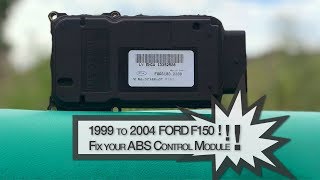
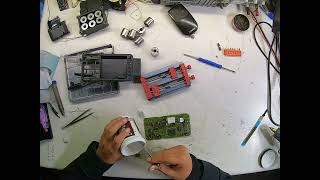
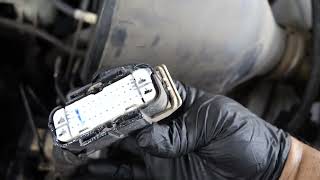
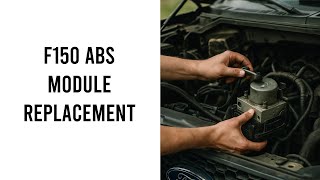
- Faulty Brake Pressure Sensor (Internal to ABS Module) (Common) — On certain vehicles (especially Ford), the sensor measuring hydraulic pressure in the brake system fails. This sensor is built into the ABS hydraulic unit and cannot be replaced separately. 🎬 See how to handle Ford ABS module and pressure sensor repairs.
- Faulty ABS Control Module (Common) — The main computer for the ABS system suffers an internal failure, such as a broken solder joint, failed processor, or faulty power supply.
- Damaged or Dirty Tone Ring (Less Common) — The notched or magnetic ring that the wheel speed sensor reads from is cracked, rusted, or covered in metallic debris, causing incorrect signals.
- Faulty Wheel Bearing / Hub Assembly (Less Common) — Excessive play in a worn wheel bearing changes the air gap between the sensor and the tone ring, leading to an erratic or lost signal. On modern cars, the tone ring is integrated into the hub assembly.
- Low Battery Voltage (Rare) — A weak or failing battery causes various electronic modules, including the ABS system, to report erroneous faults due to insufficient voltage during startup.
- Software Glitch (Rare) — The ABS or Powertrain Control Module has a software-related issue resolved by a dealer-installed update (reflash), commonly noted in Chrysler/Dodge TSBs.
Symptoms

- ABS Warning Light is On — The amber ABS light stays illuminated 🎬 Watch: How to use a scanner to find the bad sensor. on your dashboard.
- Traction Control/Stability Control Light is On — Traction and stability systems use the same sensors as the ABS, so their warning lights illuminate when the systems disable.
- ABS System is Disabled — During a hard stop, the wheels lock up and the vehicle skids. The anti-lock functionality does not engage.
- Cruise Control Inoperative — The cruise control system uses wheel speed sensor data to maintain speed. A fault in an ABS sensor circuit disables the cruise control.
- Unusual Brake Pedal Feel or Noises — The brake pedal feels different, or you hear buzzing or clicking from the ABS hydraulic unit as it fails or runs unexpectedly.
Diagnostic Flowchart

Tap your situation to follow the diagnostic path that matches what you're seeing on this code.
Common Fixes & Costs
- Replace a Faulty Wheel Speed Sensor — Parts: $30-$100, Labor: $100-$200, ~1.2 hr book time (DIY)
- Repair Damaged Wiring or Connector — Parts: $10-$50, Labor: $150-$300, ~2.0 hr book time (Intermediate)
- Repair the ABS Control Module (Mail-in Service) — Parts: $150-$300, Labor: $150-$300, ~1.5 hr book time (Intermediate)
- Replace the ABS Control Module/Hydraulic Unit — Parts: $800-$2,500, Labor: $200-$400, ~2.0 hr book time (Professional)
- Replace Wheel Hub Assembly — Parts: $150-$400, Labor: $200-$400, ~1.8 hr book time (DIY)
Used vs. New Parts: Buying Guide
When a used part is worth it: For expensive ABS modules, a professionally rebuilt unit is a cost-effective strategy. For inexpensive wheel speed sensors, labor outweighs the part cost, making new OEM sensors the only logical choice.
Donor-vehicle mileage cap: roughly under 100000 miles for the part to have meaningful remaining life.
Donor quality checklist:
- For ABS modules, match the part number exactly.
- Verify the used module comes with a warranty (30-90 days is typical).
- Be aware that a used module requires VIN programming by a dealer or specialist to function in your vehicle.
- For wheel speed sensors, always buy new from a reputable OEM or aftermarket brand to ensure reliability.
Decision logic:
- If The failed part is a wheel speed sensor → buy new. The part is inexpensive and critical for safety; the savings on a used sensor are not worth the risk or repeat labor.
- If The failed part is an expensive ABS module on a vehicle > 10 years old → a professionally rebuilt or a used module from a low-mileage donor is a reasonable choice to manage costs.
- If The ABS module requires VIN programming and you do not have access to a professional scan tool → a 'repair and return' service for your original module is the best option, as it does not require reprogramming.
Warranty tradeoff: Used parts typically have a 30-90 day warranty. Aftermarket new parts often have a 1-year to limited lifetime warranty. A rebuilt ABS module usually carries a 1-year or lifetime warranty from the rebuilder.
Worst-case if a used part fails: $300-600 if a used ABS module fails after installation, requiring repeat labor for removal/reinstallation plus the cost of another part.
What Happens If You Wait — Timeline
- Immediate: ABS and Traction/Stability Control warning lights illuminate. The systems are disabled. The vehicle's conventional hydraulic brakes remain functional. (MPG impact: 0%% · Added cost: $0)
- 0-2 months: The primary consequence is increased safety risk. In an emergency stop or on a slippery surface, the wheels lock, leading to skidding and longer stopping distances. No direct mechanical damage occurs. (MPG impact: 0%% · Added cost: $0)
- 2-6 months: Continued driving with a faulty sensor signal causes incorrect and unwanted ABS activation at low speeds, leading to a pulsating pedal and accelerated, uneven brake pad wear. (MPG impact: 0%% · Added cost: $50 - $300 (for premature brake pad replacement))
- 6+ months: The main cost remains the significant and ongoing safety risk of an accident. If the root cause is an internal ABS module fault (e.g., Ford pressure transducer), the internal failure worsens. The most significant financial risk is the cost of an insurance deductible or an at-fault accident. (MPG impact: 0%% · Added cost: $500+ (Cost of insurance deductible or accident repairs))
Cost of Not Fixing It
- Immediate: Loss of ABS and Traction/Stability Control. Increased risk of skidding and loss of control during emergency braking or on slippery surfaces. Stopping distances increase. (Added cost: 0)
- 1-6 months: A faulty sensor signal causes unwanted ABS activation at low speeds, leading to a pulsating pedal and accelerated, uneven brake pad wear. (Added cost: $50 - $300)
- 6+ months: Operating without critical safety features significantly increases the probability of an accident. On some models, an internal ABS module fault worsens, leading to more complex repairs. (Added cost: Cost of Insurance Deductible / Accident)
Diagnosis Steps
- Verify the Code and Check for Other Codes
Use an ABS-capable OBD-II scanner to confirm C1012 is present. Note any other codes, as they provide clues to the root cause (e.g., C1440 on a Ford). Clear the codes, drive the vehicle, and see if C1012 returns.
Tools: OBD-II Scanner (with ABS capability) (Beginner) - Check for Technical Service Bulletins (TSBs)
Before replacing expensive components, check for TSBs related to your vehicle's year, make, and model. Manufacturers release software updates to fix erroneous fault codes. For example, Chrysler issued TSBs for models that resolve this code with a PCM reflash.
Tools: Online TSB Database or Dealer Inquiry (Beginner) - Check Live Data (Pro Tip)
If the code points to a wheel speed sensor, use your scanner's live data function to monitor all four wheel speed sensors while driving slowly in a straight line. The faulty sensor reads 0 MPH or has an erratic signal. If the code points to a pressure sensor, monitor the brake pressure PID. A normal reading is 0 PSI with the pedal released; a reading over 40 PSI indicates a faulty sensor in the HCU.
Tools: OBD-II Scanner (with live data) (Intermediate) - Perform a Visual Inspection
Visually inspect the relevant components identified in Step 3. Look for obviously broken wires, corroded connectors, or debris on the wheel speed sensor and tone ring. Check for excessive play in the wheel bearing by trying to wiggle the tire at the 12 and 6 o'clock positions.
Tools: Flashlight, Jack and Jack Stands (Beginner) - Test the Sensor Circuit (Wiring)
Disconnect the sensor and the ABS module. Use a multimeter to check for continuity on the signal and ground wires between the sensor connector and the module connector. Check for shorts to power or ground by testing for continuity between each wire and a known good ground and a power source. This rules out wiring damage.
Tools: Multimeter, Vehicle-Specific Wiring Diagram (Advanced) - Test Passive Sensor Resistance
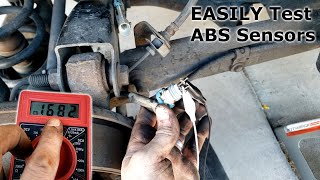
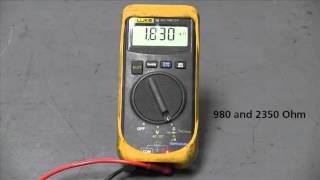
For a 2-wire passive sensor, disconnect it and measure its internal resistance with a multimeter. A typical good reading is between 800-2,000 ohms. An open circuit (infinite resistance) or short circuit (zero resistance) indicates a failed sensor.
Tools: Multimeter, Manufacturer Specifications (Advanced) - Test Passive Sensor AC Voltage Output
With the 2-wire passive sensor disconnected, set your multimeter to AC Volts. Connect the leads to the sensor's pins and spin the wheel by hand. You should see a small AC voltage that increases with speed, typically greater than 100-500mV AC. No voltage points to a dead sensor or a large air gap.
Tools: Multimeter, Jack and Jack Stands (Advanced) - Test Active Sensor Voltage Supply
For a 3-wire active sensor, verify it receives power. With the key on, back-probe the sensor connector. You should find a power supply wire (often 5V or 12V) and a ground wire. A missing power or ground indicates a wiring or ABS module problem.
Tools: Multimeter, Vehicle-Specific Wiring Diagram (Advanced) - Inspect the ABS Module
Check the ABS module's main connector for corrosion or damage. Verify it receives proper power and ground according to the vehicle's wiring diagram. If all sensors and wiring test good, the ABS module itself is the point of failure.
Tools: Multimeter, Wiring Diagram (Advanced) - Analyze the Waveform (Advanced Pro Tip)
For intermittent issues, use an oscilloscope to back-probe the sensor's signal wire at the ABS module. A good passive sensor produces a clean sine wave. A good active sensor produces a clean square wave. Gaps, noise, or a distorted pattern point to a problem with the sensor, tone ring, or wheel bearing.
Tools: Oscilloscope, Wiring Diagram (Professional)
When This Code Triggers (Freeze-Frame Conditions)
- Vehicle Speed: 10-25 mph (The ABS module performs a self-test on the wheel speed sensors shortly after initial vehicle movement.)
- Brake Pedal Status: Not Applied (For pressure sensor faults (Ford), the code sets when the module detects hydraulic pressure without the pedal being pressed.)
- System Voltage: 11.5-14.5V (The fault logs during normal operating voltage after the initial startup sequence.)
- Time Since Startup: < 2 minutes (Circuit integrity faults are detected during the module's power-on self-test or the initial low-speed wheel sensor check.)
Related Codes
- C102A — Specific to Chrysler/Dodge, this code for 'Left Rear Wheel Speed Sensor Comparative Performance' appears with C1012. C1012 points to an electrical circuit fault (open/short), while C102A means the sensor's signal is illogical compared to other wheels. To differentiate, check live data; if the sensor reads 0, suspect a C1012 circuit issue. If it reads erratically, suspect a C102A issue from a damaged tone ring.
- C1440 — On Ford vehicles, this code for 'Pressure Transducer Main/Primary Signal Faulted' is a direct companion to C1012. C1012 indicates a general failure, while C1440 confirms the issue is the pressure sensor. Use a scan tool to view the brake pressure PID. If it shows significant pressure (over 40 PSI) with the brake pedal released, the Hydraulic Control Unit (HCU) is faulty.
- C0035 / C0040 / C0045 / C0050 — These are generic codes for the front-left, front-right, rear-left, and rear-right wheel speed sensor circuits. C1012 is a manufacturer-specific version of one of these codes. On a GM vehicle, C1012 is the same as C0035 (Left Front Wheel Speed Sensor Circuit).
- U0121 — This is a communication code meaning 'Lost Communication With ABS Control Module.' It is fundamentally different from C1012. If you have U0121, your scan tool cannot communicate with the ABS module at all. If you have C1012, the module is communicating but reporting a fault in one of its circuits.
Climate & Environmental Factors
- Cold Weather: Extreme cold causes wiring to become brittle and break. Moisture freezes inside connectors, causing intermittent signal loss. Weak batteries trigger low-voltage codes.
- Humidity and Rain: Moisture intrusion is a primary cause of wiring and connector corrosion, leading to high resistance or short circuits in the sensor harness. This is a major issue in humid climates or areas with heavy rainfall.
- Road Salt (Rust Belt): Salt accelerates corrosion of wiring, connectors, the ABS module itself, and the tone ring. A rusted and cracked tone ring sends an erratic signal. This is a very common failure mode in regions that use road salt in winter.
- Snow and Ice: Packed snow and ice build up around the wheel speed sensor and tone ring, physically blocking the signal and causing the ABS light to come on. The light turns off on its own after the ice melts.
How to Talk to a Mechanic About This Code
Say this: "My scanner shows a C1012 code. I need a diagnostic to pinpoint the cause. Please confirm whether the issue is the wheel speed sensor, the wiring harness, or the ABS module before quoting a repair."
This signals you are an informed consumer. It directs the shop to perform a specific diagnosis rather than open-ended troubleshooting, and it sets the expectation that you want the root cause identified (e.g., wiring) instead of just replacing the most obvious part (the sensor).
Avoid saying:
- 'My ABS light is on, can you fix it?'
- 'Just do whatever it takes to turn the light off.'
- 'My brakes feel weird.'
Questions to ask before authorizing the repair:
- Did you use a scanner to view the live data from all four wheel speed sensors? Which one was faulting?
- Did you test the sensor's wiring and connector for continuity and shorts, or are you just recommending a new sensor?
- If you are recommending an ABS module, have you confirmed it has proper power and ground, and is a mail-in repair service a possible, cheaper alternative to a full replacement?
- What is the warranty on the recommended parts and labor?
Where to Take It: Dealer vs Independent vs Chain
- Dealer:
Recommended for complex cases like confirmed internal ABS module failure or if a new module needs to be programmed to the vehicle's VIN. Overkill for a simple wheel speed sensor.
Best for: Vehicles under warranty., Complex manufacturer-specific issues (e.g., Ford internal module failure)., Repairs requiring module programming that independent shops cannot perform.
Downsides: Highest labor rates., Often only offers expensive full-unit replacements instead of more affordable repair options (e.g., sending a module for rebuild). (Typical cost: +50% vs. baseline) - Independent Shop:
Best fit for most C1012 repairs. A good independent shop easily handles sensor and wiring issues, which are the most common causes. They are also more likely to work with you on cost-saving measures like using a module repair service.
Best for: Out-of-warranty vehicles., Diagnosing and repairing common C1012 causes like faulty wheel speed sensors and damaged wiring., Vehicles where the cost of repair is a major factor.
Downsides: Diagnostic tool capability varies; ensure they have a scanner that can read ABS codes and live data., May not be able to program new ABS modules for all makes/models. (Typical cost: +0% vs. baseline) - Chain Shop:
Use with caution. Acceptable if you have already diagnosed the problem as a simple wheel speed sensor and are just paying for the labor. AVOID for initial diagnosis or any repair more complex than a sensor swap.
Best for: Simple, confirmed wheel speed sensor replacement.
Downsides: Technician skill and diagnostic ability vary greatly., High pressure to upsell services., Less likely to perform in-depth wiring diagnostics; replaces a sensor when the real problem is the harness, leading to a comeback. (Typical cost: -10% vs. baseline)
When to Walk Away From the Repair
If the estimated repair cost for the ABS system exceeds 40-50% of the vehicle's private-party market value, pause and consider your options. Since a C1012 fault does not prevent the car from being driven, this decision is less urgent than with a no-start condition.
- Car worth $7000, fix is $350: Fix it. This is a minor repair cost relative to the car's value and restores a key safety feature.
- Car worth $4000, fix is $2000: Walk away from the dealer quote. The repair costs 50% of the car's value. Seek a second opinion from an independent shop about using a mail-in module repair service, which brings the total cost down to the $500-$700 range, making it a viable repair.
- Car worth $2500, fix is $1800: Walk away. It is not economical to put $1800 into a $2500 car to fix a non-critical system. Drive the car without ABS or sell it as a 'mechanic's special'.
What Scan Tool You Need for This Code

Minimum: A scanner that reads and clears Chassis (C) codes for your specific vehicle make, and critically, displays LIVE DATA for the ABS system.
A basic $20 code reader only checks for engine (P) codes and will not see the C1012 code at all. Without the ability to view live wheel speed sensor data, you are blindly guessing which of the four sensors or circuits is faulty.
Budget: BlueDriver Pro or Foxwell NT301 (~$70-120) — Reads and clears ABS codes and displays live data streams for all four wheel speed sensors, allowing you to identify the non-responsive or erratic sensor while driving.
Mid-range: Foxwell NT630 Plus or Autel MaxiCheck Pro (~$150-300) — Everything the budget pick does, plus adds bi-directional controls. This allows you to perform an 'automated bleed' or 'service bleed' to cycle the ABS pump and valves after replacing a hydraulic component like the module, which is essential for a proper repair.
Professional: Autel MaxiCOM MK808S or Innova 5610 (~$450-800) — Full bidirectional controls, advanced diagnostics, potential for module programming, and access to all vehicle modules. These tools offer dealership-level capabilities for complex diagnostics.
Rent vs buy: AutoZone's free loan-a-tool scanners typically read and clear ABS codes, which is helpful for initial diagnosis. However, they do not all offer live data viewing. If you plan to do the repair yourself, buying a scanner with live data capability (like the budget pick) is a worthwhile investment to avoid replacing the wrong parts.
How to Clear the Code After You Fix It
- Use an OBD-II scan tool capable of reading ABS codes to clear the fault memory.
- Perform the specific ABS drive cycle to allow the system to self-test and verify the repair.
- Re-scan for codes to ensure C1012 has not returned.
Drive cycle (~20 minutes): After clearing the code, start the engine and let it idle for 2 minutes. Drive the vehicle in a mix of city and highway conditions, ensuring speed exceeds 25 mph for at least 5 minutes to allow the ABS module to test the wheel speed sensors. Perform several normal stops. The ABS light remains off if the repair was successful.
Readiness monitors affected: This is a chassis code ('C') and does not directly affect emissions readiness monitors like the Catalyst or O2 sensor monitors.
Watch out for:
- Disconnecting the battery does not clear ABS-specific codes from the module's memory.
- Failing to perform the drive cycle results in the light reappearing later, even if the root cause was fixed.
- The code returns almost immediately if the underlying electrical fault (bad sensor, broken wire) is not properly repaired.
Will This Fail Emissions / State Inspection?
No — by itself this code doesn't fail OBD inspection (but it can keep readiness monitors from setting, which causes a separate fail).
- California: An ABS light alone will NOT cause a smog check failure. Smog inspections are concerned with emissions-related 'P' codes and the Check Engine Light, not chassis 'C' codes.
- New York: The annual safety inspection in NY requires the ABS system to be functioning correctly. An illuminated ABS warning light causes the vehicle to fail the safety inspection, but not the separate emissions inspection.
- Texas: During the annual safety inspection, an illuminated ABS light is NOT a cause for rejection. The vehicle passes the safety inspection with the C1012 code and ABS light on.
Most Commonly Affected Vehicles
- Ford F-150 (2009-2014) — Prone to C1012 related to brake pressure transducer failure within the ABS hydraulic control unit (HCU), often accompanied by code C1440. Repair requires module repair or replacement.
- Ford Escape Hybrid (2009-2012) — Sets C1012 for issues with the brake pedal feel solenoid, part of a complex electronic braking system. Diagnosis requires a scan tool capable of reading manufacturer-specific PIDs.
- Chevrolet Silverado 1500 (2007-2013) — Commonly experiences C1012 due to left front wheel speed sensor circuit failures. The wiring harness is susceptible to damage where it flexes near the steering knuckle and upper control arm.
- Chrysler / Dodge Town & Country / Grand Caravan (2011-2017) — Frequently sets C1012 for faults in the left rear wheel speed sensor circuit. Before replacing parts, check for software updates under TSBs like 08-019-12, which addresses erroneous ABS codes.
- Chrysler / Dodge 300 / Charger (2011-2014) — Often related to a faulty left rear wheel speed sensor or its wiring harness. Check for PCM software updates mentioned in TSBs that resolve intermittent electronic faults before replacing hardware.
- BMW / Mini 3-Series / Cooper (2002-2013) — On these models, C1012 points specifically to a fault in the rear left wheel speed sensor circuit. The sensor is a common failure item.
- Mercedes-Benz ML-Class (1998-2005) — Sets C1012 for 'Terminal 87 Overvoltage,' but is also triggered by a faulty lateral acceleration sensor, which causes the stability system (ESP) to log numerous unrelated ABS codes.
- Hyundai Elantra (2011-2016) — Known to set wheel speed sensor circuit codes, including C1012, due to wiring harness issues or sensor failure. The diagnostic process focuses on live data and circuit integrity tests.
Manufacturer-Specific Notes
- Ford: On many F-150s and Explorers, C1012 and C1440 point to a non-serviceable brake pressure transducer. This requires the entire expensive ABS hydraulic control unit to be replaced or sent out for specialized repair. There are no active recalls for this specific issue.
- General Motors (GM): For GM trucks and SUVs like the Silverado, C1012 almost always means a problem with the Left Front (LF) wheel speed sensor or its wiring harness, which is prone to damage from steering and suspension movement.
- Chrysler / Dodge / Jeep: On many FCA vehicles like the Grand Caravan, C1012 is specific to the Left Rear (LR) wheel speed sensor circuit. Before replacing parts, check for powertrain software updates (like TSB 08-019-12) that resolve intermittent electronic faults.
- Mercedes-Benz: On some older models, C1012 indicates 'Terminal 87 Overvoltage,' pointing to a charging system or battery problem rather than a specific brake component. This requires checking alternator output and battery health before diagnosing the ABS system.
Real Owner Stories
2012 Chevy Silverado 1500 at 120K miles
ABS and Stabilitrak warning lights came on intermittently, especially during turns. No other symptoms.
What they tried:
- Initially ignored it as it would reset after turning the truck off and on.
- Replaced the left front wheel speed sensor based on forum advice for C1012 on this model.
- Code returned within a day.
Outcome: A mechanic diagnosed a broken wire inside the insulation of the sensor harness, right where it flexes near the upper control arm. A new pigtail connector was spliced in for $200. The code cleared and did not return.
Lesson: On GM trucks, C1012 is very often a wiring issue in the flexible part of the harness near the front wheels, not the sensor itself. Test circuit continuity before replacing parts.
2011 Ford F-150 at 80K miles
ABS, brake, and AdvanceTrac warning lights all illuminated at once. The owner scanned the truck and found codes C1012 and C1440.
What they tried:
- Thinking the pressure sensor was in the master cylinder, the owner replaced it with a used one, which did not fix the issue.
Outcome: After further research, it was determined the pressure transducer is internal to the ABS Hydraulic Control Unit (HCU). The owner opted to send the original ABS module to a mail-in repair service for approximately $250. After reinstalling the repaired module, the codes were cleared and the system functioned normally.
Lesson: On many Fords, C1012 combined with C1440 points directly to an internal ABS module failure. Replacing the master cylinder is a common misdiagnosis. A mail-in repair of the original module is far cheaper than a new unit from the dealer ($1,500+) and avoids the need for expensive VIN reprogramming.
2012 VW Up! with intermittent fault
ABS light came on intermittently, often clearing after restarting the car but becoming more frequent. VCDS scan showed multiple codes for the front right sensor: C101B 01 (electrical failure), C101B 29 (signal implausible), and C101B 14 (open or short to ground).
What they tried:
- Visually inspected wiring and cleaned connectors, but the fault persisted.
- Attempted to replace the sensor but found it was seized in the steering knuckle and difficult to remove.
Outcome: The combination of an electrical failure code and a signal implausible code pointed towards an issue with the sensor itself or the connection right at the sensor. After struggling to remove the seized sensor, professional help was needed. The new sensor resolved all related codes.
Lesson: Intermittent electrical and implausible signal codes together often point to a failing sensor or a bad connection. Sensors in the wheel well become seized due to rust, making a simple replacement difficult without the right tools or techniques to avoid damaging the hub.
2014 Toyota Camry with ABS light after wheel bearing replacement
ABS light came on immediately after a shop replaced the front right wheel bearing.
What they tried:
- Returned to the shop that performed the repair.
Outcome: The technician discovered that metallic debris and grease had contaminated the new magnetic tone ring during the wheel bearing installation. Cleaning the tone ring through the sensor bore with brake cleaner and compressed air restored the correct signal. The light went out after a short drive.
Lesson: If an ABS light appears immediately after a brake or wheel-end repair, the cause is very likely related to the work performed. Common errors include a damaged sensor, a contaminated or damaged tone ring, or a forgotten connector.
How to Prevent This Code From Triggering
- Periodically clean wheel speed sensors and tone rings (Every 1-2 years or during brake service) — Metallic brake dust and road grime accumulate on the magnetic sensor tip or clog the teeth of the tone ring, causing an erratic or weak signal. Cleaning with brake cleaner and a soft brush restores signal integrity.
- Apply dielectric grease to sensor connectors (Whenever a sensor is disconnected or replaced) — Dielectric grease is a non-conductive, silicone-based grease that seals electrical connectors from moisture, dirt, and salt, preventing corrosion which causes high resistance and circuit faults.
- Inspect and secure wiring harnesses (During tire rotations or underbody inspections) — Ensuring the sensor wiring is properly clipped in place and not rubbing against suspension components or tires prevents chafing and broken wires, a very common failure cause.
- Flush brake fluid per manufacturer's schedule (Every 2-3 years) — Brake fluid is hygroscopic, meaning it absorbs moisture over time. This moisture causes internal corrosion in expensive components like the ABS hydraulic control unit and calipers, leading to seized valves or internal pressure sensor faults.
- Address worn wheel bearings promptly (As soon as humming or play is detected) — A worn wheel bearing allows for excessive movement (play), which alters the critical air gap between the sensor and its tone ring. This leads to an erratic signal and eventually causes the sensor or hub-integrated tone ring to be physically damaged.
Frequently Asked Questions
Can I fix a C1012 code myself?
If the problem is a simple bolt-on wheel speed sensor, it is a very DIY-friendly repair. However, if the code is caused by a faulty ABS module or an internal pressure sensor, it is best left to a professional due to the need for specialized diagnostic tools and brake system bleeding procedures.
Why did the C1012 code come back after I replaced the wheel speed sensor?
This common frustration usually points to a broken wire in the harness, a debris-covered tone ring, or a defective aftermarket sensor. Always test the entire circuit's continuity before assuming the sensor is the only problem. Replacing the sensor will not fix a broken wire.
What does C1012 mean on a Chevy Silverado?
On a 2007-2013 Chevrolet Silverado, code C1012 specifically points to a fault in the Left Front (LF) wheel speed sensor circuit. This is most commonly caused by a damaged wire in the harness where it flexes near the upper control arm.
What does C1012 mean on a Ford F-150?
On a 2009-2014 Ford F-150, C1012 typically indicates a failure of the internal brake pressure transducer within the ABS module itself. It is often stored along with code C1440. This is a complex repair requiring you to send the module for repair or replace the entire unit.
Is it safe to drive with the ABS light on?
You can drive the car, but your normal brakes lack the anti-lock function during emergency stops. This causes the wheels to lock and the vehicle to skid, increasing stopping distances. Repair the issue promptly to restore this critical safety system.
How much does it cost to diagnose a C1012 code?
Most repair shops charge a diagnostic fee ranging from $120 to $180 to pinpoint the exact cause of the ABS fault.
Will replacing the battery fix a C1012 code?
It is unlikely, but possible. A very weak or failing battery causes low voltage issues that trigger random fault codes in various electronic modules. If your battery is old and you have other electrical issues, test it as a first step.
Can a bad alignment cause an ABS light?
No, a bad alignment itself does not cause an ABS light. However, worn suspension or steering components that lead to a bad alignment, like a bad wheel bearing, cause an ABS fault by creating an incorrect air gap between the wheel speed sensor and its tone ring.
Key Takeaways
- Code C1012 is a manufacturer-specific chassis code that disables your ABS and traction control, increasing stopping distances and skidding risks.
- Over 50% of C1012 codes stem from a faulty wheel speed sensor or a broken wire in the sensor harness near the wheel hub.
- On 2009-2014 Ford F-150s, C1012 paired with C1440 indicates a failed internal brake pressure transducer requiring a $150-$300 ABS module rebuild.
- Never replace a wheel speed sensor without first using an OBD-II scanner to view live data and confirm which of the 4 wheels is reporting 0 MPH.
Helpful Videos

The information in this article is provided for general reference and educational purposes only. Vehicle specifications, procedures, and part compatibility can vary by production date, trim level, and region. Always consult your vehicle's factory service manual and verify part numbers before purchasing or performing repairs. Safety-critical components such as airbags, seat belts, and braking systems should be installed by a qualified professional.
- 🎬 Helpful Videos
- What Does C1012 Mean?
- Can I Drive With C1012?
- Common Causes
- Symptoms
- Diagnostic Flowchart
- Common Fixes & Costs
- Used vs. New Parts: Buying Guide
- What Happens If You Wait — Timeline
- Cost of Not Fixing It
- Diagnosis Steps
- When This Code Triggers (Freeze-Frame Conditions)
- Related Codes
- Climate & Environmental Factors
- How to Talk to a Mechanic About This Code
- Where to Take It: Dealer vs Independent vs Chain
- When to Walk Away From the Repair
- What Scan Tool You Need for This Code
- How to Clear the Code After You Fix It
- Will This Fail Emissions / State Inspection?
- Most Commonly Affected Vehicles
- Manufacturer-Specific Notes
- Real Owner Stories
- 2012 Chevy Silverado 1500 at 120K miles
- 2011 Ford F-150 at 80K miles
- 2012 VW Up! with intermittent fault
- 2014 Toyota Camry with ABS light after wheel bearing replacement
- How to Prevent This Code From Triggering
- Frequently Asked Questions
- Can I fix a C1012 code myself?
- Why did the C1012 code come back after I replaced the wheel speed sensor?
- What does C1012 mean on a Chevy Silverado?
- What does C1012 mean on a Ford F-150?
- Is it safe to drive with the ABS light on?
- How much does it cost to diagnose a C1012 code?
- Will replacing the battery fix a C1012 code?
- Can a bad alignment cause an ABS light?
- Key Takeaways
- 🎟️ Get 5% Off