

P1429 on 2003-2006 Porsche Cayenne Turbo: Brake Vacuum Pump Circuit Fault Causes and Fixes
This code on a 2003-2006 Cayenne Turbo indicates an electrical problem with the auxiliary brake vacuum pump. The most common causes are a faulty relay, a blown fuse, or a failed pump. This is a critical safety issue that results in a hard brake pedal and should be fixed immediately.
- P1429 is a critical safety code indicating an electrical failure in the auxiliary brake vacuum pump circuit.
- Do not drive the vehicle until this issue is repaired; the brake pedal will be extremely hard to press.
- The most likely and cheapest fixes are a blown fuse or a faulty relay in the engine bay fuse box.
- If the fuse and relay are good, the vacuum pump itself has likely failed.
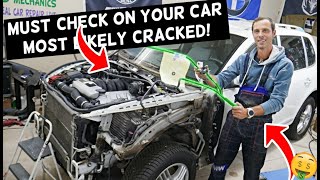
- Always inspect the plastic vacuum lines for cracks, as this is a common related failure, although it does not cause the P1429 code itself.
What's Unique About the 2003-2010 Porsche Cayenne
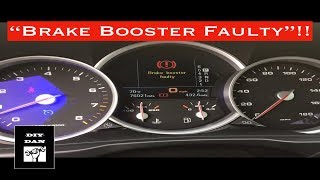
The first-generation Cayenne Turbo (955, 2003-2006) relies on this auxiliary electric vacuum pump to ensure safe and consistent braking, a common design for high-performance turbocharged vehicles. The P1429 code is a specific electrical diagnostic for this system. While many owners experience a 'Brake Booster Faulty' warning due to cracked plastic vacuum lines, the P1429 code itself points squarely 🎬 Watch this walkthrough on fixing the Brake Booster Faulty message. at the electrical components: the pump, its relay, or the wiring, which are known failure points on the platform. A constantly running pump due to a vacuum leak will often lead to premature electrical failure of the pump or its relay, eventually causing a P1429 code.
Generation note: The user prompt covers 2003-2010, which includes two Cayenne generations (955 and 957). However, the specified 4.5L V8 Turbo engine was only installed in the first generation (955) from 2003-2006. The second generation (957, 2008-2010) uses a different 4.8L engine. Therefore, this guide is specific to the 2003-2006 Porsche Cayenne Turbo and Turbo S models.
Symptoms You May Notice
- Check Engine Light is on
- 'Brake Booster Faulty' message on the instrument cluster display
- Brake pedal is very hard to press
- Significantly longer stopping distances
- Audible electric pump noise may be absent at startup
- Replacing the brake booster. The P1429 code is electrical; the booster is a mechanical/vacuum component. While a 'Brake Booster Faulty' message can be caused by a vacuum leak, the P1429 code specifically points to the pump's electrical circuit.
- Replacing vacuum lines to fix P1429. While cracked vacuum lines are a very common cause for the 'Brake Booster Faulty' warning and a hard pedal, they do not cause an electrical open circuit code. However, they are often the root cause of the pump failing electrically due to overuse and should always be inspected and repaired as part of the overall system health check.
Most Likely Causes
- Faulty Brake Booster Vacuum Pump Relay 🔴 High Probability Relays are electromechanical switches that wear out over time from repeated cycles and electrical load. A pump that runs frequently due to minor vacuum leaks can accelerate relay failure.
How to confirm: Locate the relay in the engine compartment E-box (position 2/6). It is often a standard '373' or similar multi-use relay. Swap it with an identical known-good relay from another system (like the secondary air pump). If the fault clears and the pump runs at startup, the relay is bad.
Typical fix: Replace the faulty relay.
Est. part cost: $15-$40 - Failed Electric Brake Vacuum Pump 🟡 Medium Probability The electric motor in the pump can wear out and fail, causing an internal open circuit. This is often accelerated by age and heat, or by being forced to run constantly due to vacuum leaks in the brittle plastic lines.
How to confirm: After confirming the relay and fuse are good, bypass the relay by connecting power directly to the pump's circuit (jump pins 3 and 5, or terminals 30 and 87, at the relay base). If the pump does not run, it has likely failed. You can also test for 12V at the pump connector while the relay is jumped to confirm the wiring is intact.
Typical fix: Replace the electric brake vacuum pump.
Est. part cost: $300-$550 - Blown Fuse 🟡 Medium Probability An electrical surge or a failing pump drawing too much current can blow the protective fuse. In some cases, this fuse is shared with other components like the secondary air or auxiliary water pumps, and their failure can cause the fuse to blow, disabling the brake vacuum pump as a side effect.
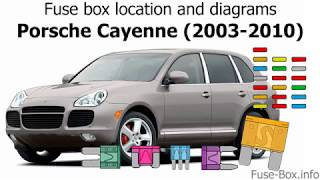
How to confirm: Inspect the fuse for the vacuum pump. On a 955 Cayenne, this can be fuse #13 (30A) in the left-side dashboard fuse box or a fuse in the engine bay box. Fuse locations can vary, so consult a model-year specific diagram. 🎬 See this guide to locate your Cayenne's fuse boxes and diagrams.
Typical fix: Replace the blown fuse. If it blows again, investigate the pump or wiring for a short circuit.
Est. part cost: $1-$5 - Open in Wiring or Damaged Connector ⚪ Low Probability Engine bay heat and vibrations can cause wires to break or connector pins to corrode over time. The wiring near the pump itself is most susceptible.
How to confirm: Visually inspect the wiring harness to the pump and relay. Use a multimeter to check for continuity from the relay socket to the pump connector.
Typical fix: Repair the broken wire or clean/replace the damaged connector.
Est. part cost: $5-$50
Rare But Worth Checking
- Faulty DME (Engine Computer): The service manual lists this as a possibility. This should only be considered after all other possibilities (pump, relay, fuse, wiring) have been exhaustively tested and ruled out. DME failure is extremely rare.
Diagnosis Steps
- Verify the symptom: Confirm the brake pedal is hard to press and a 'Brake Booster Faulty' warning is present.
- Check the Fuse: Locate and inspect the fuse for the vacuum pump. For the 955, check fuse #13 (30A) in the left-side dash fuse panel and also check the engine compartment fuse box. Replace if blown.
- Test the Relay: Locate the vacuum pump relay in position 2/6 of the engine bay E-box. It is often labeled '373' or similar. Swap it with a known-good, identical relay from a non-critical system. Clear codes and see if P1429 returns. If not, the original relay was faulty.
- Test the Pump Circuit: If the relay swap did not fix it, remove the relay and use a jumper wire between terminals 30 and 87 (or pins 3 and 5) in the relay socket. This should send power directly to the pump. Listen for the pump to run.
- Evaluate Pump Test: If the pump runs with the jumper, the pump and its wiring are likely good; the problem is in the control side of the circuit (relay or DME signal). If the pump does NOT run, the pump itself, its connector, or the power/ground wire is faulty.
- Test for Power at Pump: If the pump did not run when jumped, use a multimeter to check for 12V at the pump's electrical connector while the relay is jumped. If power is present but the pump doesn't run, the pump has failed.
- Inspect Vacuum Lines: Regardless of the electrical code, it is wise to visually and physically inspect all hard plastic vacuum lines connected to the brake booster and vacuum pump for cracks, which are very common. A common failure point is the plastic line near the passenger side firewall. 🎬 Watch how to find and fix common Cayenne vacuum leaks. A temporary repair can be made with 1/2" heater hose and clamps.
Parts You'll Likely Need
- Electric Brake Vacuum Pump
(OEM #95535561702)— The pump motor fails electrically, causing an open circuit and triggering the P1429 code. This is the ultimate fix if the relay and fuse are good.
Trusted brands: Porsche (Genuine), Pierburg (OEM supplier, Part No. 7.22513.09.0)
OEM price range: $450-$550
Aftermarket price range: $300-$400 - Brake Booster Vacuum Pump Relay
(OEM #99965700990 (Typically a multi-purpose relay marked '373'))— This relay controls power to the pump and is a common failure point due to electrical wear. It is the most likely and cheapest first part to replace when P1429 is set.
Trusted brands: Porsche (Genuine), Bosch
OEM price range: $25-$40
Aftermarket price range: $15-$25
Platform-Specific Known Issues
- The hard plastic vacuum lines in the engine bay become extremely brittle from heat cycles and are a very common failure point, leading to a 'Brake Booster Faulty' warning. While this does not directly cause the P1429 code, it produces the same symptoms and should be inspected whenever working on this system.
- A Rennlist forum user noted that on their vehicle, the fuse for the brake booster pump was shared with the secondary air injection (SAI) pump and the auxiliary water pump. A failure in one of those other components blew the shared fuse, which presented as a 'Brake Booster Failure' warning.
Mechanic-Grade Diagnostic Values
- Ground Strap Resistance — expected: 0.0 - 0.2 Ohms. Failure: A reading higher than 0.2 Ohms indicates excessive resistance, which can cause intermittent electrical issues for various components, including the vacuum pump circuit.
- Brake Booster Vacuum Level (General) — expected: Up to 18 inches of Mercury (inHg) or more.. Failure: Inability to hold a steady vacuum or significantly lower readings suggest a leak in the vacuum lines or a failing pump.
- Failed Electric Pump Resistance — expected: A specific Ohm value for a good pump is not documented, but a failed pump will test as an open loop.. Failure: A multimeter test across the pump's electrical terminals shows infinite resistance, confirming an internal open circuit.
Scan Tool Commands That Help
- PIWIS (Porsche Dealer Tool): DME Control Unit Diagnostics & Activations — A PIWIS tester can be used to read manufacturer-specific fault codes from the DME, view live data, and perform activations. While a specific command to 'activate brake vacuum pump' isn't explicitly documented in public sources, the tool's 'actuations' or 'drive links' menu within the DME or ABS/PSM module would be the place to test the pump's function directly, bypassing the relay. This is useful to confirm if the pump itself is functional when P1429 is present.
Wiring & Ground Locations
- Main Engine-to-Chassis Ground Strap — Underneath the engine in the front right corner, connecting the bottom of the engine to the vehicle frame.. A corroded or loose main ground strap can cause a host of electrical issues, including insufficient power or poor ground for the brake vacuum pump circuit, potentially leading to intermittent operation or fault codes. A proper ground should have a resistance of 0.0-0.2 ohms.
- Engine Bay Ground Point — On the engine-to-strut tower brace in the engine bay.. This is another critical ground connection. All ground connections should be disconnected, cleaned of any corrosion, and re-tightened to ensure proper electrical flow for all engine bay components.
- Brake Vacuum Pump Relay Socket — Position 2/6 in the engine compartment E-box (plenum panel fuse/relay box).. This is the central point for testing the circuit. Pin 30 is the constant power feed from the fuse, Pin 87 is the output to the pump, Pin 85 is the trigger signal from the DME, and Pin 86 is the ground for the relay coil. Jumping pins 30 and 87 directly tests the pump motor and its wiring.
Real Owner Repair Stories
- Rennlist Forum User (2004 Porsche Cayenne Turbo) — 'Brake Booster Faulty' warning on the dash, hard brake pedal.
❌ Tried (didn't work) Initially suspected vacuum lines based on common knowledge.
✅ What actually fixed it The user pulled the P1429 code, pointing to an electrical issue. They swapped the relay with a known good one, but the fault remained. They then replaced the electric brake vacuum pump, which resolved the code and the symptoms. - DIYDanCars on YouTube (2005 Porsche Cayenne Turbo) — 'Brake Booster Faulty' message, hard brake pedal.
✅ What actually fixed it Although this repair did not involve a P1429 code, it addresses the root cause of pump failure. The user found a cracked hard plastic vacuum line at the passenger side firewall. Instead of replacing the expensive OEM part, they cut out the cracked section and spliced in a piece of 1/2" heater hose with clamps, which fixed the vacuum leak and restored normal brake feel. This preventative or related repair is crucial for the longevity of the electrical pump.
OEM Part Supersession History
95535561700→95535561701, then 95535561702— Standard part evolution, likely for improved reliability or manufacturing process changes. The latest part number is 95535561702.
Heads up: All versions (95535561700, 95535561701, 95535561702) are interchangeable for the 2003-2006 Cayenne Turbo 4.5L.
Diagnostic Flowchart
Other Known Issues on This Vehicle
Issues unrelated to this code that are worth knowing about as an owner of this generation:
- Plastic Coolant Pipe Failure 🔴 High — Considered an inevitable failure on all 2003-2006 4.5L V8 models. The plastic pipes, located under the intake manifold, become brittle from heat and crack, causing a massive coolant leak. (Ref: No recall, but Porsche later released upgraded aluminum pipes. A class-action lawsuit was filed regarding this issue.)
- Driveshaft Center Support Bearing Failure 🟠 Medium — Very common. The rubber support for the center bearing of the two-piece driveshaft degrades and fails, causing a thumping or banging sound from under the center console, especially on acceleration.
- Engine Bore Scoring (Cayenne S) 🔴 High — Primarily affects the naturally-aspirated 4.5L V8 in the Cayenne S, but some cases have been reported on Turbos. Piston skirt coating fails, leading to scoring of the cylinder walls, high oil consumption, and eventual engine failure.
- Brittle Plastic Vacuum and Coolant 'T' Fittings 🟠 Medium — Extremely common. Various plastic T-fittings and lines throughout the engine bay become brittle with age and heat, leading to vacuum and coolant leaks. This is the primary cause of the 'Brake Booster Faulty' message (when not P1429).
- Ignition Coil Pack Failure 🟡 Low — Common, especially on higher-mileage vehicles. Failure leads to engine misfires. Often replaced as a set.
Used vs. New Parts: Buying Guide for This Vehicle
When a used part is the smart pick: A used relay is a perfectly acceptable and cost-effective diagnostic step or permanent replacement, as they are a standard automotive part. A used electric vacuum pump can be a viable option to save significant money, but it carries risk due to being a known failure item.
Donor-vehicle mileage cap: roughly under 80000 miles for the part to have meaningful remaining life.
What to inspect on the donor part:
- For a used vacuum pump, seek one from a lower-mileage, accident-damaged vehicle rather than one from a high-mileage car that was junked for engine failure.
- Visually inspect the pump's electrical connector for any signs of overheating, melting, or corrosion.
- If possible, ask the seller to test the pump with a 12V source to confirm it runs before purchasing.
- Check the plastic housing for any cracks or damage.
OEM-only on this vehicle (don't cheap out):
- While not strictly 'OEM-only', using a Genuine Porsche or the OEM supplier (Pierburg) vacuum pump is highly recommended for longevity. Cheap, unbranded aftermarket pumps have a high failure rate.
Aftermarket brands forum-validated for this vehicle:
- Pierburg (OEM supplier for the vacuum pump, Part No. 7.22513.09.0)
- Bosch (For the '373' multi-purpose relay)
Brands owners have reported issues with on this vehicle:
- Unnamed, no-brand electric vacuum pumps from online marketplaces should be avoided as their quality and durability are questionable.
Real Owner Stories
Aggregated from forums and TSBs cited above. Mileages and costs reflect what owners reported in those sources.
2004 Porsche Cayenne 4.5L V8
Symptoms: A 'Brake Booster Failure' warning and a fault code were present.
What fixed it: The owner discovered the brake booster fuse was shared with the auxiliary water pump and the secondary air injection (SAI) pump. A failure in one of the other components had blown the shared fuse. Replacing the fuse after fixing the other component resolved the brake warning.
Source hint: Rennlist: '04 brake booster fault code'
2005 Porsche Cayenne Turbo
Symptoms: The owner experienced the 'Brake Booster Faulty Message' on the instrument cluster.
What fixed it: The issue was traced to the common failure point of the brittle plastic vacuum line at the firewall. A DIY repair was performed using a section of heater hose to fix the vacuum leak.
Source hint: YouTube: 'Porsche Cayenne: How I Fixed The Brake Booster Faulty Message' by DIYDanCars
Related OBD-II Codes
Frequently Asked Questions
My brakes are hard and I have a 'Brake Booster Faulty' message, but no P1429 code. What else could it be on my Cayenne?
I found a blown fuse for the brake booster. Could something else have caused it to blow?
Where is the brake booster vacuum pump relay located?
I swapped the relay and the problem is still there. What's the next diagnostic step?
Is it safe to drive with a 'Brake Booster Faulty' warning?
What's a common DIY fix for the cracked vacuum line?
Are other VW or Audi models affected by similar brake booster issues?
Helpful Videos
We Have This Part in Stock


The information in this article is provided for general reference and educational purposes only. Vehicle specifications, procedures, and part compatibility can vary by production date, trim level, and region. Always consult your vehicle's factory service manual and verify part numbers before purchasing or performing repairs. Safety-critical components such as airbags, seat belts, and braking systems should be installed by a qualified professional.
- Porsche Cayenne:
- 🎬 Helpful Videos
- 🛍️ Shop This Part
- What's Unique About the 2003-2010 Porsche Cayenne
- Symptoms You May Notice
- Most Likely Causes
- Rare But Worth Checking
- Diagnosis Steps
- Parts You'll Likely Need
- Platform-Specific Known Issues
- Mechanic-Grade Diagnostic Values
- Scan Tool Commands That Help
- Wiring & Ground Locations
- Real Owner Repair Stories
- OEM Part Supersession History
- Diagnostic Flowchart
- Other Known Issues on This Vehicle
- Used vs. New Parts: Buying Guide for This Vehicle
- Real Owner Stories
- 2004 Porsche Cayenne 4.5L V8
- 2005 Porsche Cayenne Turbo
- Related OBD-II Codes
- Frequently Asked Questions
- 🎟️ Get 5% Off