

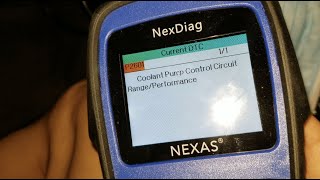
OBD-II Code P2601: Coolant Pump 'A' Control Circuit Range/Performance
What P2601 means, why it triggers, and how to fix it comprehensively
- Code P2601 flags a performance or electrical failure in the electric coolant pump circuit, risking rapid engine overheating within 5 to 15 minutes of driving.
- Immediate symptoms include an illuminated Check Engine Light, a temperature gauge pinned in the red, and a cabin heater blowing cold air at idle.
- Stop driving immediately; pushing the vehicle with a P2601 code risks a blown head gasket or warped cylinder head, turning a $400 repair into a $3,000+ engine replacement.
- Before spending $300+ on a new pump, test the $20 pump relay and bleed the cooling system, as trapped air or a dead relay are the most common misdiagnoses.
What Does P2601 Mean?

P2601 indicates the Powertrain Control Module (PCM) detected a fault in the electric coolant pump's control circuit. This pump—often an auxiliary unit for hybrid systems, turbochargers, or cabin heat—circulates engine coolant when the main mechanical pump needs assistance or the engine is off. The code triggers when the pump's performance fails to match the computer's command (e.g., incorrect RPM) or the circuit experiences out-of-range voltage or current.
Technical definition: The SAE/OBD-II definition for P2601 is 'Coolant Pump 'A' Control Circuit Range/Performance'. It sets when the PCM detects voltage, current, or performance feedback from the coolant pump 'A' control circuit outside the manufacturer's specified range for a set duration. For example, if the PCM commands a specific pump speed via a Pulse Width Modulated (PWM) signal and the reported speed deviates significantly for several seconds, the code sets. On a Gen 2 Toyota Prius, the code triggers if the coolant temperature changes less than 2°C (3.6°F) after commanding the pump on, indicating zero circulation.
🎬 Watch: How to troubleshoot the Prius coolant heater pump.Can I Drive With P2601?

No — Do Not Drive. Do not drive with code P2601. A fault in the coolant pump circuit causes rapid engine overheating. Continuing to drive risks catastrophic engine damage, such as a blown head gasket (a $1,500-$3,000 repair) or a warped cylinder head (a $2,000-$4,000+ repair). In an absolute emergency, drive only until the temperature gauge begins to rise, then pull over immediately.
Common Causes

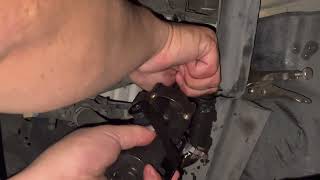
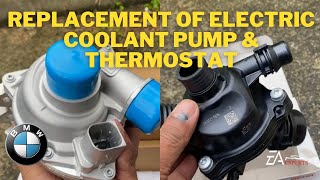
- Faulty or failed electric coolant pump (Very Common) — The electric motor inside the pump fails, seizes, or suffers a worn impeller, preventing coolant circulation. This is the primary hardware failure for P2601. 🎬 See this walkthrough for replacing an electric water pump.
- Air in the cooling system (Cavitation) (Common) — Air entering the system from a leak (e.g., a failing mechanical water pump) or improper bleeding causes the electric pump to spin in air instead of fluid. The PCM detects this lack of temperature change as a performance failure.
- Faulty coolant pump relay (Common) — The relay acts as the electrical switch for the pump. A failed relay prevents the pump from receiving power or causes erratic operation, instantly triggering the code.
- Damaged wiring or connectors (Common) — Heat and vibration cause frayed wires, short circuits, or corroded connectors in the pump control circuit, interrupting the electrical signal to the PCM.
- Blown coolant pump fuse (Less Common) — A blown fuse cuts power to the pump circuit entirely. This usually indicates an underlying short circuit in the wiring or a seized pump motor drawing excessive current.
- Software or firmware glitch (Rare) — On modern vehicles (especially Ford and Dodge), a software error in the control module falsely triggers the code. This requires a manufacturer-issued software update (re-flash) to resolve.
- Degraded or contaminated coolant (Rare) — Old or improper coolant gels or becomes abrasive, straining the pump motor and forcing it to perform outside its expected electrical range.
- Failing Powertrain Control Module (PCM) (Rare) — The internal driver circuit within the PCM that controls the pump fails. This requires module replacement and programming.
Symptoms

- Check Engine Light is on — The Malfunction Indicator Lamp (MIL) illuminates on the dashboard immediately after the PCM detects the circuit fault.
- Engine overheating — The temperature gauge climbs into the red and overheating warnings appear on the instrument cluster due to a lack of coolant circulation.
- Poor or no heat from the cabin heater — If the auxiliary pump responsible for the heater core fails, the heater blows cool or lukewarm air, especially at idle.
- Cooling fans run constantly — The PCM commands the radiator fans to run at full speed as a protective measure when it detects a coolant pump fault.
- Vehicle enters 'limp mode' — To prevent catastrophic engine damage, the PCM severely limits engine power and vehicle speed.
- Erratic temperature gauge readings — The coolant temperature gauge fluctuates unpredictably as the pump operates intermittently or air pockets move through the system.
Diagnostic Flowchart
Tap your situation to follow the diagnostic path that matches what you're seeing on this code.
Common Fixes & Costs
- Replace the electric coolant pump — Parts: $150-$500, Labor: $150-$400, ~1.5 hr book time (Intermediate)
- Bleed the cooling system and fix underlying leaks — Parts: $20-$50, Labor: $100-$200, ~1.0 hr book time (DIY)
- Replace the coolant pump relay — Parts: $15-$60, Labor: $30-$80, ~0.3 hr book time (DIY)
- Repair or replace damaged wiring/connectors — Parts: $20-$100, Labor: $100-$250, ~1.2 hr book time (Intermediate)
- Reprogram Powertrain Control Module (PCM/HCP) — Parts: $0, Labor: $100-$250, ~1.0 hr book time (Professional)
- Replace the Powertrain Control Module (PCM) — Parts: $800-$1500, Labor: $200-$400, ~1.5 hr book time (Professional)
DIY vs Professional
- Replace Fuse/Relay — Beginner:
- Bleed Cooling System — Beginner:
- Replace Electric Coolant Pump — Beginner:
- Repair Damaged Wiring — Beginner:
- Reprogram or Replace PCM — Beginner:
Used vs. New Parts: Buying Guide
When a used part is worth it: For expensive OEM-only pumps on older vehicles, a used part from a low-mileage donor offers savings. However, electric pumps are known wear items, making this a gamble.
Donor-vehicle mileage cap: roughly under 60000 miles for the part to have meaningful remaining life.
Donor quality checklist:
- Verify the donor vehicle was not scrapped due to engine failure or overheating.
- Inspect the electrical connector pins for green corrosion or melting.
- Match the part number exactly to ensure correct flow rates and control logic.
Decision logic:
- If The vehicle is a BMW or model with a known high failure rate for this part → Buy a new OEM or high-quality aftermarket part. The risk of a used part failing is too high.
- If The vehicle is older (>10 years) and the budget is very tight → A used pump is viable, but expect a significantly shorter lifespan.
- If A quality aftermarket new part is available for <$200 → Buy new. The small savings on a used part are not worth the lack of warranty.
Warranty tradeoff: Salvage yards offer a 30-90 day warranty on the part only. New aftermarket parts offer 1-year to lifetime warranties. New OEM parts carry a 1-2 year warranty.
Worst-case if a used part fails: 300-600. If a used pump fails, you pay for the replacement part and labor a second time.
What Happens If You Wait — Timeline
- 0-5 minutes of driving: Code sets. The electric pump fails to circulate coolant. Engine temperature rises rapidly, and the heater blows cold air. (MPG impact: 0%% · Added cost: $0)
- 5-15 minutes of driving: Temperature gauge enters the red. The PCM engages 'limp mode,' drastically reducing engine power. Steam appears from under the hood. (MPG impact: N/A (Limp Mode)% · Added cost: $150 (Towing))
- 1-5 repeated overheating events: Extreme heat causes the cylinder head to expand and contract, blowing the head gasket. Coolant and oil mix. (MPG impact: N/A% · Added cost: $1,500 - $3,200 (Head gasket replacement))
- Severe or prolonged overheating: Catastrophic damage. The cylinder head warps or cracks, or the engine seizes completely. (MPG impact: N/A% · Added cost: $3,000 - $6,000+ (Engine replacement))
Cost of Not Fixing It
- Immediate (0-1 month): Engine overheats rapidly in traffic. The vehicle enters a reduced-power 'limp mode' to protect the engine, leaving you stranded. (Added cost: 150)
- Short-Term (1-3 months): Repeated overheating cycles cause coolant hoses to burst or lead to a blown head gasket. (Added cost: 1500-3000)
- Long-Term (3+ months): Catastrophic engine damage from severe overheating, such as a warped cylinder head or complete engine seizure. (Added cost: 3000-6000+)
Diagnosis Steps
- Scan for Codes and Review Freeze Frame Data
Use an OBD-II scanner to confirm P2601 and check for related codes. Review freeze frame data to identify engine conditions when the fault triggered. Address thermostat codes (P0128) or open circuit codes (P2600) first.
Tools: OBD-II Scanner (Beginner) - Check the Coolant Pump Fuse and Relay
Locate the fuse and relay for the coolant pump in the fuse box. Inspect the fuse for a blown filament. Test the relay by swapping it with an identical non-critical relay (like the horn). If the pump works with the swapped relay, replace the faulty relay.
Tools: Owner's Manual, Fuse Puller (Beginner) - Visual Inspection of the Cooling System
Inspect the coolant pump, wiring harness, and connectors for frayed wires, corrosion, or loose connections. Check the coolant level and look for leaks around the main mechanical water pump, which introduces air into the system and causes P2601.
Tools: Flashlight, Safety Glasses (Beginner) - Command the Pump On with a Bi-Directional Scan Tool
Use a bi-directional scan tool to command the coolant pump ON. Listen for the pump running and observe live data for pump speed (RPM) and current draw. A healthy pump audibly runs and draws 3-8 amps. Proper voltage with zero current draw confirms an internally dead motor.
Tools: Bi-directional Scan Tool (Advanced) - Test for Power at the Pump Connector
With the ignition on (engine off), disconnect the pump connector. Use a multimeter to verify battery voltage (12.0V - 12.6V) at the power supply pin. Command the pump on with the scan tool; a reading below 10V under load indicates high resistance in the power supply circuit or relay.
Tools: Multimeter, Bi-directional Scan Tool (Intermediate) - Perform a Voltage Drop Test on the Ground Circuit
Connect the positive multimeter lead to the battery's negative terminal and the negative lead to the ground pin on the pump's connector. Command the pump ON. A reading above 0.5 volts indicates excessive resistance in the ground circuit requiring repair.
Tools: Multimeter, Bi-directional Scan Tool (Advanced) - Test Pump Motor Winding Resistance
With the pump unplugged, measure the resistance between the power and ground pins on the pump. An 'OL' (infinite) reading indicates an open internal circuit. A reading under 0.5 Ohms indicates a short circuit. Both confirm a failed pump.
Tools: Multimeter (Advanced) - Analyze the Pump's PWM Control Signal
For PWM-controlled pumps, backprobe the signal wire with an oscilloscope. Command the pump on and look for a square wave pattern (100 Hz - 1 kHz). A missing or flat-line signal points to a broken control wire or a failed PCM driver.
Tools: Oscilloscope, Bi-directional Scan Tool (Professional) - Check for a Failed PCM Driver
If the fuse, relay, wiring, and grounds test good, and the pump works when powered directly but receives no PWM signal from the PCM, the PCM's internal driver circuit has failed. This requires PCM replacement and programming.
Tools: Advanced Scan Tool, Multimeter (Professional)
When This Code Triggers (Freeze-Frame Conditions)
- Engine Coolant Temp: 190-210°F (88-99°C) (The engine is at normal operating temperature when the fault is detected.)
- RPM: 0 (Engine Off) or 700-1500 (Idle/Low Speed) (The code frequently sets when the pump is commanded to run after shutdown (for turbo/hybrid cooling) or during low-RPM conditions.)
- Vehicle Speed: 0-20 mph (The fault triggers at low speeds or standstill, when natural airflow is minimal and the system relies entirely on the pump.)
- Commanded Pump State: ON / 45-90% Duty Cycle (The PCM commands the pump to run, but the feedback (RPM or current draw) fails to match the expected value.)
Related Codes
- P2600 — Indicates 'Coolant Pump Control Circuit/Open'. Points to a complete electrical break, such as a blown fuse, unplugged connector, or fully failed relay.
- P2602 — Indicates 'Coolant Pump Control Circuit Low'. Points to a persistent low voltage condition, caused by a short to ground or high resistance in the power feed.
- P2603 — Indicates 'Coolant Pump Control Circuit High'. Points to a persistent high voltage condition, typically a short to a power source on the control side.
- P26AB — Indicates 'Engine Coolant Bypass Valve A Stuck/Open'. A malfunction in this flow-directing valve affects pump performance and confuses the diagnostic picture.
Climate & Environmental Factors
- Hot Climates: High ambient temperatures force the electric pump to run more frequently and for longer durations, accelerating wear on the motor and brushes.
- Cold Climates: Old or incorrect coolant gels at sub-zero temperatures. When the pump activates, this high-viscosity fluid causes excessive current draw, blowing fuses or burning out the motor.
- High Humidity / Salty Regions: Moisture and road salt accelerate corrosion on the pump's electrical connector and chassis ground strap, creating high resistance that triggers the performance code.
How to Talk to a Mechanic About This Code
Say this: "I have code P2601 for the coolant pump circuit. Before replacing the pump, please verify the pump's relay and fuse, and check for proper voltage and ground at the pump's connector when commanded on."
This directs the shop to perform a thorough electrical diagnosis, preventing you from paying $500 for a pump replacement when the real issue is a $20 relay or trapped air.
Avoid saying:
- 'My check engine light is on, can you just fix it?'
- 'I think I need a new water pump.'
- 'Just do whatever you think is best.'
Questions to ask before authorizing the repair:
- Did you command the pump on with a scan tool and confirm it wasn't working?
- What was the voltage reading at the pump's connector and on the ground circuit?
- Have you checked for any Technical Service Bulletins (TSBs) related to this code?
- Does the estimate include the cost of properly vacuum-bleeding the system to remove air?
Where to Take It: Dealer vs Independent vs Chain
- Dealer:
Best for: Vehicles under warranty, Vehicles with known software issues or TSBs (Ford, Dodge), Complex systems requiring specialized bleeding procedures (BMW, hybrids)
Downsides: Highest labor rates., Defaults to replacing parts rather than performing detailed wiring repairs. (Typical cost: +50% vs. baseline) - Independent Shop:
Best overall fit for out-of-warranty vehicles. Choose an ASE-certified shop comfortable with electrical diagnostics and vacuum-bleeding cooling systems.
Best for: Most out-of-warranty vehicles, Common vehicles where P2601 is well-known (Toyota Prius, Ford EcoBoost), Cost-conscious owners
Downsides: Diagnostic capabilities vary widely., Lacks access to the latest manufacturer software for PCM re-flashing. (Typical cost: +0% vs. baseline) - Chain Shop:
AVOID for initial diagnosis. The electrical testing required for P2601 is beyond the scope of a typical quick-lube chain.
Best for: Simple part swaps like a relay if you have already diagnosed the problem.
Downsides: Technician skill varies dramatically., High pressure to sell parts leads to misdiagnosis. (Typical cost: -10% vs. baseline)
When to Walk Away From the Repair
If the estimated repair cost for P2601 exceeds 40-50% of your car's private-party value, consider selling it as-is.
- Car worth $4500, fix is $700: Fix it. The repair cost is 15% of the car's value and restores a critical function.
- Car worth $6000, fix is $1500: Borderline. This is a significant repair (25% of value). Get a second opinion and assess the car's overall health.
- Car worth $2500, fix is $1200: Walk away. The repair cost is nearly 50% of the vehicle's value.
What Scan Tool You Need for This Code
Minimum: A scanner that reads live data (coolant temp, RPM) and offers bi-directional control to activate the coolant pump.
A basic $20 code reader cannot command the pump to turn on. Without this bi-directional feature, you are blindly guessing between a faulty pump, a dead relay, or a wiring issue.
Budget: BlueDriver Pro (~$90) — Reads the code, shows freeze-frame data, and provides access to TSBs. It cannot command the pump on, but provides enough data to make an educated guess.
Mid-range: Foxwell NT510 Elite (~$180) — Offers bi-directional control to command the coolant pump on and off directly. This definitively proves if the pump is dead or if the problem is in the control circuit.
Professional: Autel MaxiCOM MK808 / MK900 (~$500-700) — Provides full bi-directional control, extensive live data streams, and performs PCM resets or adaptations after the repair.
Rent vs buy: Parts stores do not rent bi-directional scanners. For a one-time fix, paying a shop's $150 diagnostic fee is more economical. Buy a mid-range scanner only if you plan to do advanced diagnostics regularly.
How to Clear the Code After You Fix It
- Use an OBD-II scan tool to clear the P2601 code.
- Perform a complete vacuum bleed procedure to remove all air from the cooling system.
- Complete at least one full drive cycle to allow the readiness monitors to set.
Drive cycle (~30 minutes): Start the engine cold and idle for 3 minutes. Drive in mixed city/highway conditions for 20 minutes to reach full operating temperature. Allow the engine to cool completely. This thermal cycle verifies the repair.
Readiness monitors affected: Comprehensive Component Monitor, Cooling System Monitor
Before emissions retest: drive at least 50 miles to fully set monitors.
Watch out for:
- Clearing the code without a drive cycle leaves readiness monitors 'Not Ready', causing an automatic emissions test failure.
- Disconnecting the battery clears the code but resets all adaptive memory, causing rough idling.
- The code returns immediately if trapped air remains in the cooling system.
Will This Fail Emissions / State Inspection?
Yes — this code typically fails an OBD-II emissions inspection.
- California: An illuminated Check Engine Light results in an automatic failure. All readiness monitors must be 'Ready'.
- New York: An active P2601 code causes an automatic failure of the OBD-II emissions inspection.
- Texas: In emissions-testing counties, an illuminated Check Engine Light is an automatic failure. Clearing the code right before the test results in a 'Not Ready' failure.
Most Commonly Affected Vehicles
- Toyota Prius (2004-2009) — P2601 refers specifically to the Coolant Heat Storage (CHS) water pump. Mechanics frequently misdiagnose this by replacing the CHS pump when the actual issue is an air pocket caused by a leaking main mechanical water pump.
- Ford F-150 (EcoBoost) (2011-2021) — Often set by the failure of the auxiliary turbocharger cooling pump. For 2019-2021 models, a software glitch is the primary cause, requiring a dealer update per TSB 21-2154.
- Ford C-Max Hybrid / Fusion Hybrid (2013-2018) — Prone to this code due to Motor Electronics Coolant Pump failure or air entering the system from a leaking degas tank (coolant reservoir).
- Volkswagen/Audi Various Models (e.g., A3, Golf, Jetta) (2015-2024) — The auxiliary coolant pump (V50) is a known failure item that runs after engine shut-off. Failure leads directly to P2601.
- Chevrolet Volt (2011-2015) — Triggers due to issues with one of the multiple electric coolant pumps used for the battery and power electronics cooling loops.
- BMW 3-Series (E90) and other N52/N54/N55 engine models (2006-2013) — The main electric water pump is a notorious failure item requiring replacement every 60,000-80,000 miles. Check with a dealer for active warranty extensions on this specific part.
- Honda Accord Hybrid (2014-2017) — The electric engine coolant pump fails, causing commanded speed to mismatch actual speed. Low coolant levels from unrelated leaks also trigger the code.
- Dodge Hornet PHEV (2024) — TSB 08-044-24 REV. C states P2601 is caused by a software glitch. The repair is reprogramming the HCP/AHCP modules, not replacing hardware.
Manufacturer-Specific Notes
- Toyota: On Gen 2 Prius models, P2601 refers specifically to the Coolant Heat Storage (CHS) tank pump. Mechanics frequently misdiagnose this by replacing the CHS pump when the true cause is an air pocket from a leaking main mechanical water pump.
- Ford: On EcoBoost engines, 'Coolant Pump A' is the auxiliary turbocharger pump. For 2019-2021 F-150s, check TSB 21-2154, as a software glitch is the primary cause. On hybrids, a leaking degas bottle introduces air and triggers the code.
- BMW: The main water pump on N52 and N54 engines is a notorious failure point setting P2601. Check with a BMW service center for active warranty extensions on your specific VIN before paying out of pocket.
- Dodge: For the 2024 Hornet PHEV, TSB 08-044-24 REV. C states P2601 is caused by a software glitch. The repair is reprogramming the Hybrid Control Processor (HCP), not replacing hardware.
Real Owner Stories
2004 Toyota Prius at 265K miles - The Easy Fix
Check Engine Light illuminated with P2601. The owner noticed the CHS pump's characteristic buzzing sound was absent after shutting the car off.
What they tried:
- Swapped the CHS water pump relay with the identical fog light relay.
- The fog lights stopped working, but the pump started buzzing again, confirming a dead relay.
Outcome: The owner cleaned the corroded contact points inside the faulty relay with sandpaper and reinstalled it. The code cleared permanently for $0.
Lesson: Always check the cheapest parts first. Diagnose a faulty relay for free by swapping it with an identical relay from a non-critical system.
2007 Toyota Prius - The Misdiagnosis
P2601 code appeared. The owner took the car to a recommended local mechanic.
What they tried:
- The mechanic immediately diagnosed a bad auxiliary coolant pump and replaced it for $227.
Outcome: The Check Engine Light returned the next morning with the same P2601 code. The actual problem was air remaining in the system from an improper bleed procedure.
Lesson: If P2601 returns immediately after a pump replacement, the system was not properly vacuum-bled. Air pockets are a primary trigger for this code.
2006 Toyota Prius - The Unusual Root Cause
Owner had a persistent P2601 code pointing to the Coolant Heat Storage (CHS) electric pump.
What they tried:
- Investigated other cooling system components before buying a new electric pump.
Outcome: The owner discovered the main mechanical water pump was leaking, introducing air into the system. The air pocket caused the electric CHS pump to cavitate, triggering the P2601 code. Replacing the mechanical pump and bleeding the system fixed the issue.
Lesson: A P2601 code is often a symptom of a leak elsewhere in the cooling system, not necessarily a failure of the electric pump itself.
2019 Ford F-150 5.0L - The Software Glitch
The truck's battery drained overnight. The owner found the auxiliary coolant pump running constantly with the engine off.
What they tried:
- Replaced the battery, but the drain persisted.
- Unplugged the auxiliary coolant pump, which stopped the battery drain.
Outcome: The root cause was a known PCM software error. Ford TSB 21-2154 addresses this with a dealership software re-flash, requiring no hardware replacement.
Lesson: Always check for manufacturer TSBs on modern vehicles. A software glitch mimics hardware failure, and an update saves hundreds of dollars.
How to Prevent This Code From Triggering
- Flush and replace coolant at recommended intervals (Every 30,000 to 50,000 miles) — Old coolant loses anti-corrosive properties, creating rust and debris that destroy the water pump's internal seals and impeller.
- Use only vehicle-specific coolant and distilled water (Every time you top off or refill) — Mixing coolant types creates a gel-like sludge that clogs the system and burns out the electric pump motor.
- Inspect for and fix small coolant leaks promptly (During every oil change) — Minor leaks allow air to enter the system. Air pockets cause the pump to cavitate, leading to zero circulation and triggering the P2601 code.
- Replace the radiator cap when replacing coolant (With every coolant flush) — A weak radiator cap fails to hold proper pressure, lowering the coolant's boiling point and damaging the water pump's seals.
- Check electrical ground connections (Every 30,000 miles) — Corrosion on the chassis ground strap causes low voltage, forcing the pump to work harder, run hotter, and fail prematurely.
Frequently Asked Questions
Can I drive my car with a P2601 code?
Do not drive with a P2601 code. Continuing to drive risks rapid overheating and catastrophic engine damage, such as a blown head gasket. This turns a minor repair into a multi-thousand-dollar engine replacement.
What is the most common fix for P2601?
Replacing the electric coolant pump is the most frequent repair. However, proper diagnosis is critical to avoid wasting money. A failed $20 relay, damaged wiring, or trapped air in the cooling system frequently trigger the exact same code.
What are the most common misdiagnosis mistakes for P2601?
The biggest mistake is replacing the coolant pump without testing the electrical circuit first. Mechanics often overlook a blown fuse or a faulty relay. On hybrids like the Prius, replacing the electric pump when the actual issue is an air pocket from a leaking mechanical pump is a notorious error.
How much does it cost to fix a P2601 code?
Professional diagnosis typically costs $125 to $165. If the pump requires replacement, expect to pay between $300 and $800 total. Simpler fixes like replacing a relay cost under $100, while a software update at the dealer runs about $150 to $250.
Can a low coolant level or air in the system cause a P2601 code?
Yes. Low coolant introduces air into the system, causing the electric pump to cavitate and spin without moving liquid. The PCM detects the lack of expected temperature change and triggers the P2601 performance code.
Can a bad thermostat cause a P2601 code?
No, a bad thermostat does not directly cause a P2601 code. P2601 specifically flags an electrical or performance issue within the pump's control circuit. A faulty thermostat triggers distinct codes, such as P0128 for coolant temperature below regulating temperature.
Why would the P2601 code return after replacing the pump?
A returning code indicates the pump was not the root cause or the repair was incomplete. The most common reasons are trapped air from improper system bleeding, an unresolved wiring short, or a failing PCM driver circuit. Always vacuum-bleed the cooling system after pump replacement.
What is the difference between a main water pump and an auxiliary coolant pump?
A main water pump is mechanically driven by the engine belt to provide primary cooling. An auxiliary coolant pump is an electric motor controlled by the PCM to cool specific components like turbochargers or hybrid inverters. Auxiliary pumps often run independently, even after the engine shuts off.
Key Takeaways
- Code P2601 flags a performance or electrical failure in the electric coolant pump circuit, risking rapid engine overheating within 5 to 15 minutes of driving.
- Immediate symptoms include an illuminated Check Engine Light, a temperature gauge pinned in the red, and a cabin heater blowing cold air at idle.
- Stop driving immediately; pushing the vehicle with a P2601 code risks a blown head gasket or warped cylinder head, turning a $400 repair into a $3,000+ engine replacement.
- Before spending $300+ on a new pump, test the $20 pump relay and bleed the cooling system, as trapped air or a dead relay are the most common misdiagnoses.
Helpful Videos

The information in this article is provided for general reference and educational purposes only. Vehicle specifications, procedures, and part compatibility can vary by production date, trim level, and region. Always consult your vehicle's factory service manual and verify part numbers before purchasing or performing repairs. Safety-critical components such as airbags, seat belts, and braking systems should be installed by a qualified professional.
- 🎬 Helpful Videos
- What Does P2601 Mean?
- Can I Drive With P2601?
- Common Causes
- Symptoms
- Diagnostic Flowchart
- Common Fixes & Costs
- DIY vs Professional
- Used vs. New Parts: Buying Guide
- What Happens If You Wait — Timeline
- Cost of Not Fixing It
- Diagnosis Steps
- When This Code Triggers (Freeze-Frame Conditions)
- Related Codes
- Climate & Environmental Factors
- How to Talk to a Mechanic About This Code
- Where to Take It: Dealer vs Independent vs Chain
- When to Walk Away From the Repair
- What Scan Tool You Need for This Code
- How to Clear the Code After You Fix It
- Will This Fail Emissions / State Inspection?
- Most Commonly Affected Vehicles
- Manufacturer-Specific Notes
- Real Owner Stories
- 2004 Toyota Prius at 265K miles - The Easy Fix
- 2007 Toyota Prius - The Misdiagnosis
- 2006 Toyota Prius - The Unusual Root Cause
- 2019 Ford F-150 5.0L - The Software Glitch
- How to Prevent This Code From Triggering
- Frequently Asked Questions
- Can I drive my car with a P2601 code?
- What is the most common fix for P2601?
- What are the most common misdiagnosis mistakes for P2601?
- How much does it cost to fix a P2601 code?
- Can a low coolant level or air in the system cause a P2601 code?
- Can a bad thermostat cause a P2601 code?
- Why would the P2601 code return after replacing the pump?
- What is the difference between a main water pump and an auxiliary coolant pump?
- Key Takeaways
- 🎟️ Get 5% Off