

P1299 on 2011-2017 Ford Mustang 3.7L: Cylinder Head Overheat Causes & Fixes
P1299 means your Mustang's computer has detected a dangerously high cylinder head temperature and has activated 'limp mode' to prevent catastrophic engine damage. This is almost always caused by a real cooling system failure, most commonly a coolant leak from the water pump or thermostat housing, a failed thermostat, or a bad water pump. Do not drive the vehicle until this is fixed, as it can lead to severe engine damage.
- P1299 is a critical code indicating your engine is overheating or the computer thinks it is. Stop driving immediately to prevent severe damage.
- The most common cause is a genuine coolant leak. Before replacing any sensors, thoroughly inspect the entire cooling system for leaks.
- Check the coolant level when the engine is cold. If it's low, you have a leak.
- A stuck thermostat and a failing water pump are the next most likely culprits after a simple leak.
- Only suspect a faulty CHT sensor if you have verified with a scan tool and an infrared thermometer that the engine is not actually overheating.
What's Unique About the 2011-2017 Ford Mustang

The 3.7L Cyclone V6 in the Mustang is generally a reliable engine, but like many modern engines, its cooling system has several potential failure points. A key difference from its transverse (FWD) cousins (like in the Ford Edge or Lincoln MKX) is that the Mustang uses an externally mounted, belt-driven water pump, which is significantly easier and cheaper to replace. The notorious internal, timing-chain-driven water pump failures that can cause coolant to mix with engine oil do not apply to the Mustang's RWD configuration. However, the Mustang is still prone to leaks from the water pump weep hole, the plastic thermostat housing, and various hose connections, making P1299 a serious warning of a genuine cooling system problem.
Generation note: This guide covers the 2011-2014 (S197 facelift) and 2015-2017 (S550) Ford Mustang generations. While both use the 3.7L Cyclone V6, there are minor differences in cooling system components and engine management (the S550 moved to a speed density system and has a slightly different intake manifold). However, the primary causes of overheating and the P1299 code, such as the water pump and thermostat, are consistent across both generations.
Symptoms You May Notice
- Sudden loss of engine power (Limp Mode).
- Check Engine Light is on or flashing.
- Temperature gauge reading at maximum (Hot).
- Warning message on the dash indicating 'Engine Coolant Overtemperature'.
- Engine running rough or vibrating.
- Steam or smoke coming from the engine bay.
- Engine may stall and refuse to restart until cooled.
- Cooling fans running on high speed continuously.
- A whining or grinding noise from the front of the engine, indicating a failing water pump bearing.
- Replacing the CHT sensor without verifying the engine is not actually overheating. The code is a *reaction* to a problem, and if the engine is truly hot, a new sensor will not fix it.
- Assuming the water pump is internal and timing-chain driven. On the Mustang 3.7L, it is external and belt-driven, a much simpler job than on transverse-engine Fords.
Most Likely Causes

- Low Engine Coolant 🔴 High Probability Leaks are the most common trigger. On the 3.7L Mustang, frequent leak points include the water pump weep hole, the plastic thermostat housing or its O-ring, and upper/lower radiator hoses. Over time, plastic components and seals degrade from heat cycles.
How to confirm: Visually check the coolant level in the degas bottle (reservoir) when the engine is cold. If low, perform a cooling system pressure test to locate the source of the leak. Look for white or colored crusty residue where coolant has dried.
Typical fix: Find and repair the leak. Refill and bleed the cooling system with the correct Motorcraft Orange (pre-2018) or Yellow (post-2018) coolant.
Est. part cost: $20-$400 - Failed Thermostat 🟡 Medium Probability Thermostats can fail and get stuck closed, preventing coolant from circulating to the radiator. The plastic housing can also crack or warp, causing leaks. A Reddit user with a 2014 V6 experienced the P1299 code, replaced the thermostat, but the car remained in limp mode, suggesting a potential follow-on CHT sensor issue.
How to confirm: After the engine warms up, feel the upper and lower radiator hoses. If the upper hose is hot and the lower hose is cold, the thermostat is likely stuck closed. A scan tool can also monitor coolant temperature to see if it rises without the thermostat opening.
Typical fix: Replace the thermostat and gasket/O-ring. It is highly recommended to replace the entire plastic housing assembly at the same time. The OEM part number for the thermostat is BR3Z-8575-A.
Est. part cost: $30-$100 - Failing Water Pump 🟡 Medium Probability The externally-mounted water pump on the RWD 3.7L is a known failure item, though less catastrophic than on FWD models. Failures typically occur from the weep hole leaking or the internal bearing failing, causing a whining/grinding noise. Multiple owners on forums report replacement between 55k and 80k miles.
How to confirm: Look for coolant leaks or crusty residue around the water pump pulley and from the weep hole below it. Listen for a grinding or whining noise from the pump area with the engine running.
Typical fix: Replace the water pump and gasket. An updated Ford part is available that includes a new hose with a check valve. OEM part numbers include BR3Z-8501-T and PW-575.
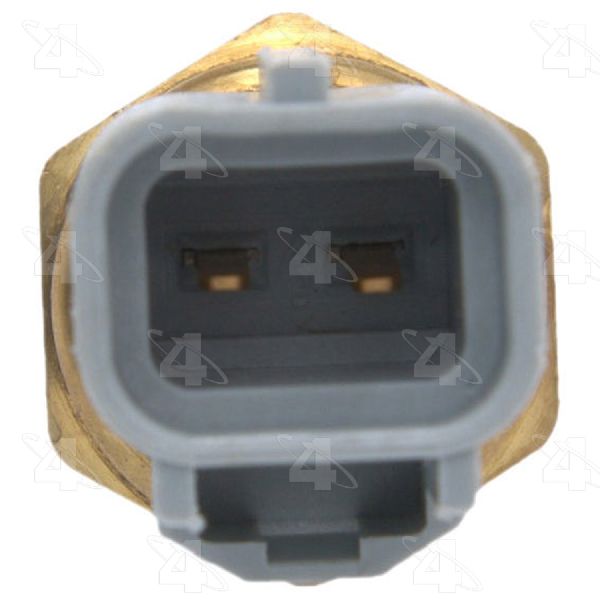
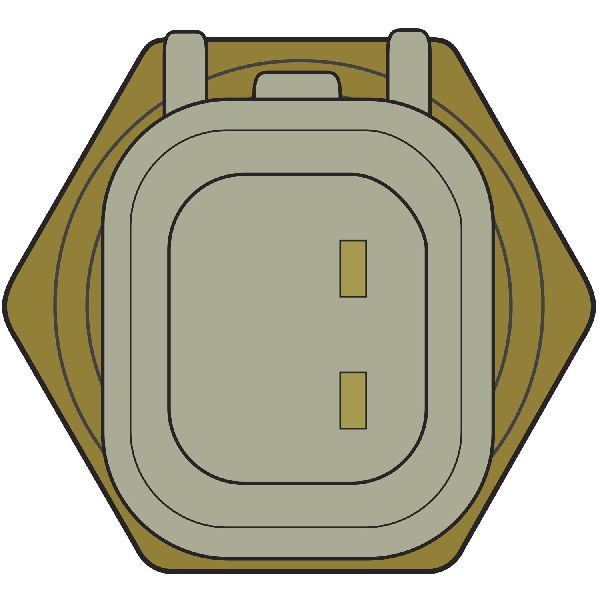
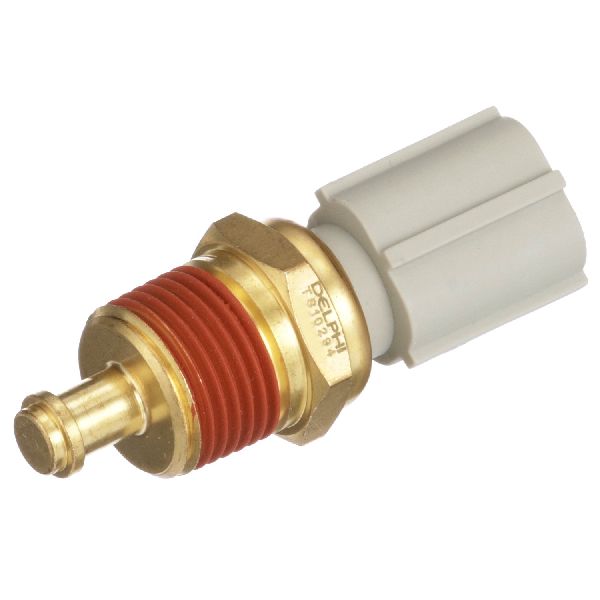
Est. part cost: $70-$250 - Faulty Cylinder Head Temperature (CHT) Sensor ⚪ Low Probability While less common than an actual overheat, the CHT sensor can fail and send false high-temperature readings to the PCM, triggering limp mode even if the engine is cold. This can happen after a real overheat event or due to sensor failure. The 3.7L V6 does not use a traditional Engine Coolant Temperature (ECT) sensor; it relies solely on the CHT.
How to confirm: Use a scan tool to monitor the CHT reading. If it jumps to maximum immediately on a cold start or reads erratically, the sensor or its wiring is suspect. You can verify the actual engine temperature with an infrared thermometer aimed at the thermostat housing.
Typical fix: Replace the CHT sensor. On the 3.7L, this sensor is located under the intake manifold, making replacement labor-intensive and requiring removal of the manifold. After replacement, the code may need to be cleared with a scan tool.
Est. part cost: $25-$60 - Cooling Fan Malfunction ⚪ Low Probability The electric cooling fans are essential for cooling the radiator at low speeds or when stopped. A failed fan motor, relay, or fan control module can cause overheating in traffic.
How to confirm: With the engine warm, turn on the A/C. Both cooling fans should activate. If they don't, check fuses, relays, and power to the fan motors.
Typical fix: Replace the faulty cooling fan assembly or fan control module.
Est. part cost: $150-$400
Rare But Worth Checking
- Blown Head Gasket: This is a very serious issue that can be either the cause or the result of a severe overheating event. NHTSA complaints for other Ford models with this code family show coolant intrusion into cylinders, a classic sign of head gasket failure. A block tester (combustion leak tester) can be used to check for exhaust gases in the coolant.
- Blocked Radiator: Internal passages can become clogged with scale or debris over time, especially if incorrect coolant has been used. External fins can be blocked by road debris, reducing cooling efficiency.
- Bad Degas Bottle Cap: A faulty coolant reservoir cap that cannot hold pressure will lower the boiling point of the coolant, leading to overheating under load. One owner on a forum reported this as the fix for a P1299 code that occurred during track use.
Diagnosis Steps

- DO NOT open the cooling system when the engine is hot. Wait for it to cool completely.
- Check the engine coolant level in the degas bottle (reservoir). If it is low, top it off with the correct fluid (Ford specifies Motorcraft Orange or Yellow depending on the exact model year and service history).
- Visually inspect the engine bay for obvious signs of coolant leaks: check hoses, the radiator, the water pump area (especially the weep hole), and the plastic thermostat housing for wetness or crusty, colored residue.
- If no obvious leaks are found, use a cooling system pressure tester to pressurize the system (when cold) to 15-17 PSI and identify any hidden leaks.
- If the coolant level is full and there are no leaks, start the engine and monitor the temperature gauge. Check if the cooling fans turn on as the engine warms up, especially when the A/C is activated.
- Carefully feel the upper and lower radiator hoses once the engine is at operating temperature. If the upper is hot and the lower is cool, the thermostat is likely stuck closed.
- If you suspect a false signal from the CHT sensor, use a scan tool to observe the CHT data. Compare this to a reading from an infrared thermometer aimed at the thermostat housing to see if the sensor is accurate. A CHT reading that pegs hot on a cold engine points to a bad sensor.
- Listen for any whining or grinding noises from the front of the engine that could indicate a failing water pump bearing.
- If overheating is confirmed but no external leaks or circulation problems are found, perform a block test to check for combustion gases in the coolant, which would indicate a failed head gasket.
Parts You'll Likely Need

- Thermostat and Housing Assembly
(OEM #BR3Z-8575-A (Thermostat only), BL3E-8A587-BB (Housing))— A thermostat stuck closed is a frequent cause of rapid overheating, and the plastic housing is a common leak point.
Trusted brands: Motorcraft, Gates, Stant, Carquest - Water Pump
(OEM #BR3Z-8501-T (Kit), PW-575)— The water pump is a common failure point, leading to leaks from the weep hole or circulation failure from a bad bearing.
Trusted brands: Motorcraft, GMB, US Motor Works, Carter - Cylinder Head Temperature (CHT) Sensor
(OEM #BR3Z-12A648-A)— Can fail and send an erroneous overheat signal, triggering limp mode even on a cold engine. Replacement is labor-intensive.
Trusted brands: Motorcraft, Standard Motor Products (SMP) - Engine Coolant
(OEM #VC-3-D (Orange), VC-13-G (Yellow))— Any repair involving draining the system will require refilling with the correct Ford-specified coolant to prevent corrosion and future issues.
Trusted brands: Motorcraft
Related Codes That Often Appear With This One
- P0217 — Engine Coolant Overtemperature Condition. This is a general overheat code that often accompanies the more specific P1299.
- P1285 — Cylinder Head Overtemperature Sensed. This code indicates the CHT sensor has detected an overheat condition, often set just before the P1299 protection mode is activated.
- P030x (e.g., P0301, P0302) — Cylinder Misfire. If overheating is caused by a head gasket leak, coolant can enter the cylinders, causing misfires. This is noted in NHTSA complaints for other Ford vehicles.
Technical Service Bulletins (TSBs) & Recalls
- TSB 19-2097: While for the Ford Transit, this TSB addresses an issue on the 3.7L engine where coolant deposits can clog the heater core, leading to poor heat. This highlights a known issue with coolant quality/deposits within this engine family that could potentially lead to broader overheating problems.
Platform-Specific Known Issues
- The provided NHTSA owner complaints, while for other Ford models like the Fusion and Escape, highlight a common pattern where a P1299 code is associated with coolant loss leading to coolant intrusion into the engine cylinders, a sign of a severe overheat and potential head gasket failure.
- A Technical Service Bulletin for the E-Transit (TSB 26-2060) also links P1299 to coolant loss from a heater hose assembly, showing a pattern of cooling system component failures triggering this code across the Ford lineup.
Mechanic-Grade Diagnostic Values
- Cylinder Head Temperature (CHT) Sensor Resistance — expected: Resistance changes with temperature. Approximately 100,000 Ohms at -40°C (-40°F) and 70 Ohms at 130°C (266°F).. Failure: Resistance readings that are infinite (open circuit) or near zero (short circuit) regardless of temperature, or values that do not correspond to the known temperature.
- Cylinder Head Temperature (CHT) Sensor PID Voltage (Key On, Engine Off) — expected: A voltage reading that corresponds to the ambient engine temperature.. Failure: A CHT PID reading of greater than 4.6 volts indicates an open circuit or sensor fault. A reading of less than 0.2 volts can also indicate a circuit problem.
Scan Tool Commands That Help
- Ford IDS (Integrated Diagnostic System): DataLogger - CHT PID Monitoring — To monitor the CHT sensor's reported temperature in real-time. This is the first step to determine if the engine is genuinely overheating or if the sensor is providing a false reading (e.g., jumping to max hot on a cold engine).
- Ford IDS (Integrated Diagnostic System): Bi-Directional Control - Cooling Fan — To command the cooling fans on and off directly from the scan tool. This quickly verifies the functionality of the fan motors, relays, and control module, ruling them out as a cause of overheating in traffic.
- Ford IDS (Integrated Diagnostic System): Power Balance Test — If misfire codes (P030x) are present alongside P1299. This test helps identify which specific cylinder is misfiring, which can point to a localized issue like a head gasket leak allowing coolant into that cylinder.
Wiring & Ground Locations
- CHT Sensor Location — On the top of the right cylinder head, under the intake manifold.. This is the sensor that directly triggers the P1299 code. Its wiring harness is routed in a hot area and can be susceptible to damage, leading to false signals.
- G103 — In the engine compartment on the passenger side (right hand side), near the hood prop.. This point provides the ground for the engine cooling fan motor. A poor connection here can prevent the fan from operating, causing overheating at low speeds or idle.
- G201 — Behind the passenger side kick panel, near the PCM.. This is a primary ground for the Powertrain Control Module (PCM). A faulty ground here can cause erratic behavior from the PCM, including misinterpretation of sensor data like the CHT, potentially leading to a false P1299 code.
- Engine to Frame Ground Strap — A braided strap typically running from the engine block to the vehicle's chassis/firewall.. This is a main engine ground path. A corroded or broken strap can cause a variety of electrical issues and noise, potentially interfering with sensor signals.
Real Owner Repair Stories
- G Auto Repair on YouTube (2020 Ford Transit Connect (different model, but same code behavior)) — P1299 and P017D codes, temperature gauge pinned to hot, rough idle, bogging down, and stalling.
❌ Tried (didn't work) Replacing the Cylinder Head Temperature (CHT) sensor., Replacing and reprogramming the Powertrain Control Module (PCM).
✅ What actually fixed it Replacing the alternator. The failing alternator was creating electrical noise (AC ripple) that back-fed into the electrical system, causing the CHT sensor circuit to read incorrectly and trigger a false overheat condition. Disconnecting the alternator's positive cable immediately resolved the symptoms, confirming the diagnosis. - The Mustang Source forum user (2011-2014 Mustang 3.7L V6) — Premature water pump failure at low mileage.
❌ Tried (didn't work) Simply replacing the water pump with the same parts.
✅ What actually fixed it When replacing the water pump, also replacing the original degas (coolant overflow) hose with an updated Ford part (ER3Z-8276-A). This new hose includes an inline check valve, which is believed to prevent air from being drawn into the cooling system, protecting the water pump bearings from premature wear.
"I Checked Everything" — The Actual Cause
- In a documented case on a Ford vehicle with a P1299 code, all standard cooling system diagnostics (pressure test, sensor check) passed. The root cause was discovered to be a failing alternator creating significant electrical interference (AC ripple voltage). This noise was being interpreted by the PCM as a high reading from the CHT sensor, triggering a false overheat and limp mode. The fix was to replace the alternator, not any part of the cooling system.
When the Usual Fixes Don't Work
- Multiple owner reports indicate that a P1299 code can appear intermittently for years without the engine ever actually overheating. In these cases, replacing the CHT sensor often does not fix the problem, pointing to a more elusive electrical issue in the wiring harness, connectors, or a faulty PCM. One of the most difficult-to-diagnose causes for a false P1299 was found to be a failing alternator creating electrical noise, which required replacing the alternator, not any cooling system component.
OEM Part Supersession History
br3z8501b, br3z8501g, br3z8501l, br3z8501n, pw521→BR3Z-8501-T (also listed as PW-575)— Likely internal improvements to bearing and seal design to increase longevity.
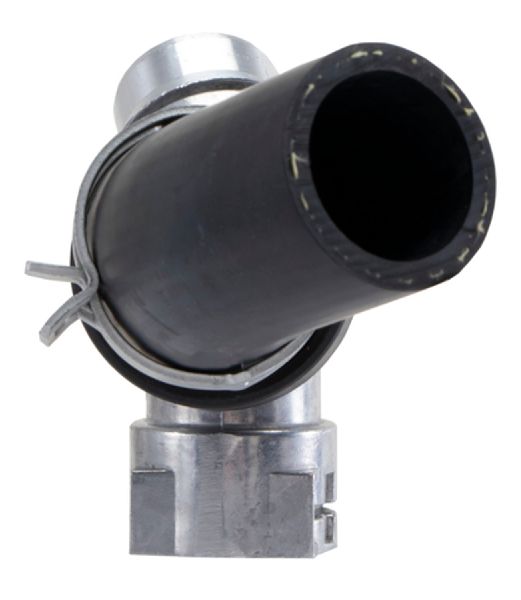
Heads up: The original water pump pulley used 4 bolts. The newer Ford replacement pump (BR3Z-8501-T) uses a 3-bolt design and comes with the correct matching pulley. The old 4-bolt pulley is not compatible with the new OEM pump. Some aftermarket pumps may still use the 4-bolt design.Original degas (overflow) hose without check valve.→ER3Z-8276-A— A check valve was added to prevent air from being drawn into the cooling system during cooldown, which could cause cavitation and premature wear on the water pump bearings.
Model Year Variations Within This Range
- 2011-2017: The water pump pulley design changed mid-cycle. Early models used a 4-bolt pulley, while later OEM replacements use a 3-bolt design. When replacing the water pump with a new OEM unit, the pulley must also be replaced if the original was a 4-bolt type.
- 2015-2017 (S550): The S550 generation has a slightly different intake manifold compared to the 2011-2014 S197 models. However, this does not significantly affect the diagnosis or common causes of the P1299 code.
- Approx. 2018+ Service: Ford transitioned from Motorcraft Orange Coolant (VC-3-D) to Motorcraft Yellow Coolant (VC-13-G). While a 2011-2017 model originally came with Orange, it is now recommended to service with Yellow, ensuring a complete flush is performed if switching types.
Diagnostic Flowchart
Other Known Issues on This Vehicle
Issues unrelated to this code that are worth knowing about as an owner of this generation:
- Water Pump Failure 🟠 Medium — Commonly reported between 60,000 and 100,000 miles. Less severe than on FWD models but still a frequent repair.
- Automatic Transmission (6R80) Hard Shifting 🟠 Medium — Some owners report occasional hard or erratic shifts. Often can be improved with a PCM software update or fluid change. (Ref: Various software-related TSBs exist.)
- Thermostat Housing Leaks 🟡 Low — The plastic thermostat housing can crack or the O-ring seal can degrade, causing coolant leaks. Often replaced preventatively with the thermostat.
- Paint and Corrosion Issues 🟡 Low — Specifically, bubbling paint on the leading edge of the aluminum hood was a common complaint on S197 and early S550 models due to contamination during manufacturing. (Ref: Ford issued customer satisfaction programs for some affected vehicles.)
Used vs. New Parts: Buying Guide for This Vehicle
When a used part is the smart pick: For this repair, used parts are generally not recommended for the primary failure components. However, a used cooling fan assembly or a coolant degas bottle (reservoir) could be a cost-effective option if sourced from a low-mileage vehicle.
Donor-vehicle mileage cap: roughly under 80000 miles for the part to have meaningful remaining life.
What to inspect on the donor part:
- For plastic parts like the degas bottle, ensure the plastic is not yellowed, brittle, or showing signs of cracking.
- For a fan assembly, spin the blades by hand to check for smooth bearing operation and inspect the electrical connector for corrosion or damage.
OEM-only on this vehicle (don't cheap out):
- Cylinder Head Temperature (CHT) Sensor: Aftermarket sensors may have different resistance-to-temperature curves, leading to inaccurate readings and persistent codes.
- Thermostat Housing Assembly: Low-quality aftermarket plastic housings are prone to warping and leaking prematurely.
- Degas Hose (ER3Z-8276-A): The updated hose with the integrated check valve is a specific Ford service part designed to improve water pump life.
Aftermarket brands forum-validated for this vehicle:
- Motorcraft (OEM)
- Gates (Often cited for quality water pumps, belts, and hoses)
- Reische (Known for performance-oriented, lower-temperature thermostats)
Real Owner Stories
Aggregated from forums and TSBs cited above. Mileages and costs reflect what owners reported in those sources.
2014 Ford Mustang 3.7L V6
Symptoms: P1299 code triggered and the car entered limp mode.
What fixed it: The owner replaced the thermostat, but the car remained in limp mode, suggesting a follow-on Cylinder Head Temperature (CHT) sensor issue.
Source hint: Reddit r/AskAMechanic thread titled 'dreaded error code p1299'
2016 Ford Mustang 3.7L V6
Symptoms: Visible coolant leak from the water pump area.
What fixed it: Replacement of the water pump.
Source hint: Mustang6G.com forum thread 'Need help identifying coolant leak issue'
2011-2014 Ford Mustang 3.7L V6 — ~65000 miles
Symptoms: Whining or grinding noise from the front of the engine and leaking from the weep hole.
What fixed it: Replacement of the externally-mounted water pump.
Source hint: Reddit r/Mustang thread '2014 3.7L V6 common issues'
2011-2017 Ford Mustang 3.7L V6
Symptoms: P1299 code triggered during track use without obvious signs of overheating.
What fixed it: Discussion suggested a faulty sensor or a bad coolant reservoir (degas) cap.
Source hint: TrackMustangsOnline.com thread 'P1299 code but not overheating'
Related OBD-II Codes
Frequently Asked Questions
Does the 2011-2017 Mustang 3.7L V6 use a standard Engine Coolant Temperature (ECT) sensor?
What is the specific Ford part number for the thermostat on my 2014 Mustang V6?
I have a 2016 Mustang 3.7L with a leak near the front pulley; what is the likely part number for the fix?
Does TSB 19-2097 apply to the Mustang's 3.7L engine family?
What type of coolant should I use for my 2011-2017 Mustang V6?
Where is the CHT sensor located on the 3.7L Cyclone V6 if I need to replace it?
Helpful Videos

Used OEM Parts in Stock

New Aftermarket Parts Available

The information in this article is provided for general reference and educational purposes only. Vehicle specifications, procedures, and part compatibility can vary by production date, trim level, and region. Always consult your vehicle's factory service manual and verify part numbers before purchasing or performing repairs. Safety-critical components such as airbags, seat belts, and braking systems should be installed by a qualified professional.
- Ford Mustang:
- 🎬 Helpful Videos
- 🛍️ Shop This Part
- What's Unique About the 2011-2017 Ford Mustang
- Symptoms You May Notice
- Most Likely Causes
- Rare But Worth Checking
- Diagnosis Steps
- Parts You'll Likely Need
- Related Codes That Often Appear With This One
- Technical Service Bulletins (TSBs) & Recalls
- Platform-Specific Known Issues
- Mechanic-Grade Diagnostic Values
- Scan Tool Commands That Help
- Wiring & Ground Locations
- Real Owner Repair Stories
- "I Checked Everything" — The Actual Cause
- When the Usual Fixes Don't Work
- OEM Part Supersession History
- Model Year Variations Within This Range
- Diagnostic Flowchart
- Other Known Issues on This Vehicle
- Used vs. New Parts: Buying Guide for This Vehicle
- Real Owner Stories
- 2014 Ford Mustang 3.7L V6
- 2016 Ford Mustang 3.7L V6
- 2011-2014 Ford Mustang 3.7L V6 — ~65000 miles
- 2011-2017 Ford Mustang 3.7L V6
- Related OBD-II Codes
- Frequently Asked Questions
- 🎟️ Get 5% Off