

P1296 on 1999-2008 Audi A4 1.8T & 2.0T: Cooling System Malfunction Causes and Fixes
On a 1999-2008 Audi A4, code P1296 is almost always caused by a faulty Engine Coolant Temperature (ECT) sensor or a thermostat that is stuck open. Most owners start by replacing the inexpensive ECT sensor first, which costs around $20-$50 for an aftermarket part. If that doesn't resolve the issue, the thermostat is the next likely culprit.
- P1296 means your Audi's engine is running too cool, not overheating.
- The problem is almost certainly a bad Engine Coolant Temperature (ECT) sensor or a stuck-open thermostat.
- Start by replacing the ECT sensor (G62); it's cheaper and easier than the thermostat and is a very common failure point.
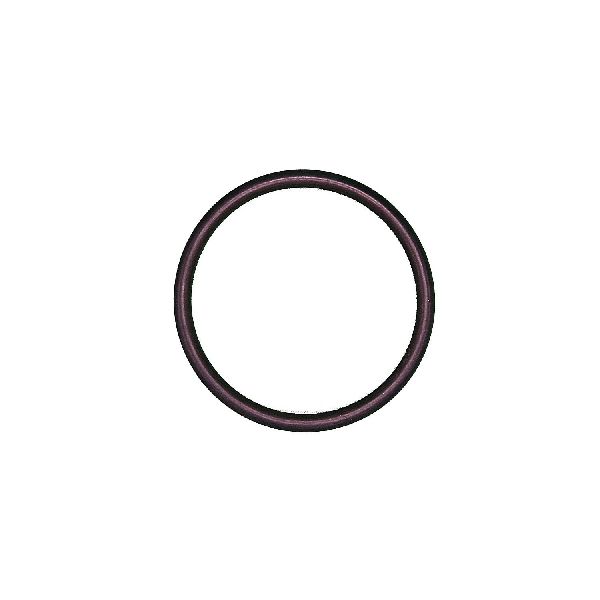
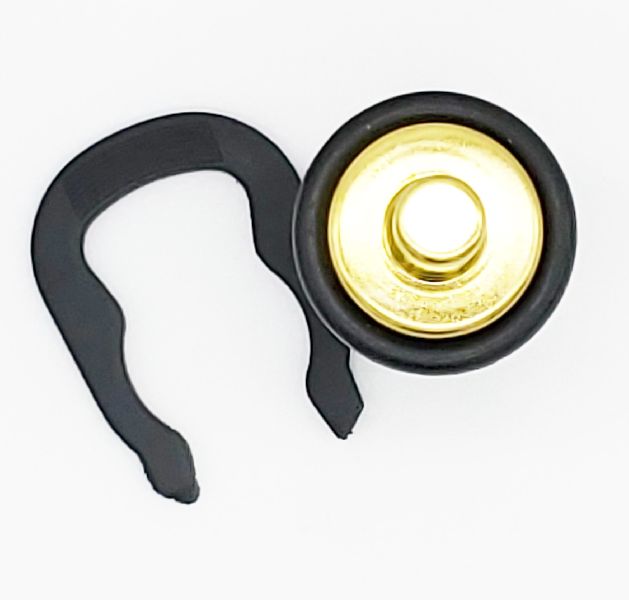
- Always use a new O-ring and retaining clip when replacing the sensor to prevent coolant leaks.
- If the problem persists after replacing the sensor, the thermostat is the next part to replace.
What's Unique About the 1999-2008 Audi A4
The 1.8T and 2.0T engines used in the B5, B6, and B7 generation A4s are well-known for this specific fault code. The issue is so common that the two primary causes—a failed Engine Coolant Temperature (ECT) sensor and a stuck thermostat—are considered routine maintenance items by many long-time owners. Early versions of the ECT sensor were black and had a high failure rate; they were later superseded by a more durable green-colored sensor. Because the sensor is much cheaper and easier to replace than the thermostat, it is the go-to first step for most DIY diagnostics. The thermostat replacement on the 1.8T engine is notably labor-intensive, as it is located behind the alternator, requiring its removal for access.
Generation note: This guide covers the B5 (1999-2001), B6 (2002-2005), and B7 (2005.5-2008) generations of the Audi A4. The 1.8T engine is found in the B5 and B6, while the 2.0T is in the B7. The causes and symptoms of P1296 are consistent across all generations, but the specific part numbers and replacement procedures for the thermostat and sensor may have slight variations. Notably, the thermostat replacement on the 2.0T engine is generally considered easier than on the 1.8T.
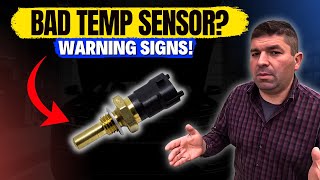
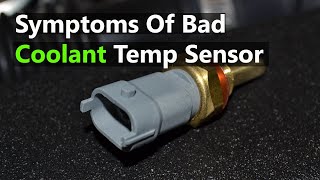
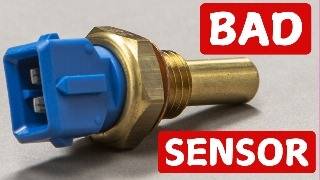
Symptoms You May Notice 🎬 Watch: A quick breakdown of common failing coolant sensor symptoms.
- Check Engine Light is on
- Engine temperature gauge takes a very long time to warm up or never reaches the center 90°C (200°F) mark.
- Temperature gauge fluctuates, sometimes dropping at highway speeds and rising in city traffic.
- Noticeably poor fuel economy.
- No hot air from the heater vents, even after the engine has been running for a while.
- In some cases, the radiator cooling fans may run constantly at high speed, even on a cold start, as a fail-safe measure.
- Coolant light may flash intermittently on the dashboard.
- Replacing the oxygen (O2) sensors. Some generic scan tools may incorrectly associate a cooling system fault with a 'fuel metering' problem, leading to a misdiagnosis.
Most Likely Causes
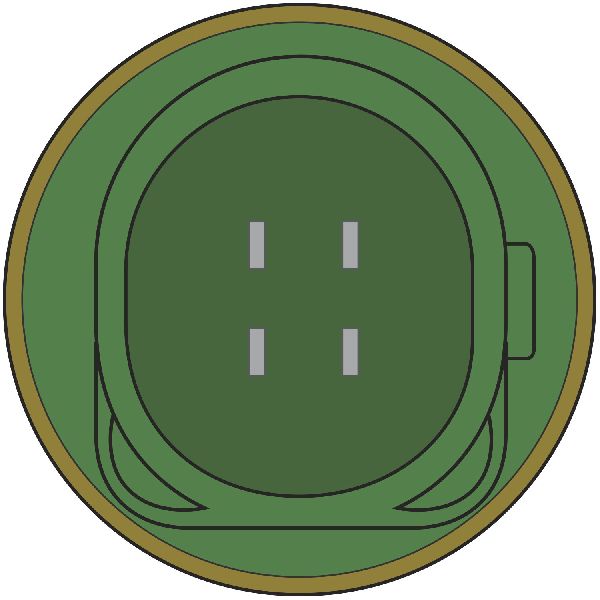
- Faulty Engine Coolant Temperature (ECT) Sensor (G62) 🔴 High Probability The original black-topped sensors (P/N: 059919501A) had a high failure rate and were superseded by an improved green-topped sensor (P/N: 06A919501A). The 4-pin sensor provides temperature data to both the ECU (for engine management) and the dashboard gauge, and the two internal thermistors can fail independently.
How to confirm: Using a scan tool (like VCDS/VAG-COM), check live coolant temperature readings in both the Engine and Instruments modules. If the readings are illogical (e.g., -40°C), don't rise smoothly, or differ significantly from each other, the sensor is bad. Given the low cost, many owners replace it preventatively.
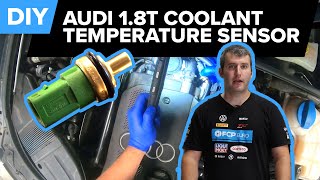
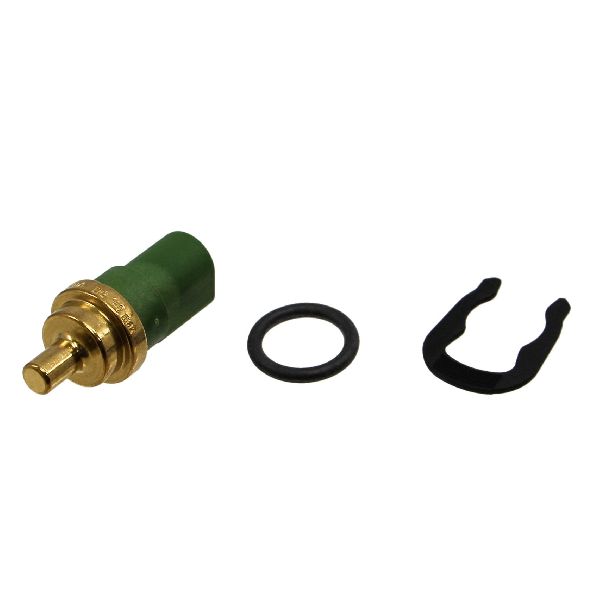
Typical fix: Replace the ECT sensor, its O-ring, and the plastic retaining clip. The sensor is located on a coolant flange at the back of the cylinder head on the 1.8T engine. 🎬 Watch: Step-by-step guide to replacing the 1.8T coolant temperature sensor.
Est. part cost: $20-$60 - Stuck-Open Coolant Thermostat 🔴 High Probability The thermostat can fail and stick in the open position, allowing coolant to flow to the radiator at all times. This constant cooling prevents the engine from reaching its designated operating temperature of ~87°C.
How to confirm: If a new ECT sensor doesn't fix the code, the thermostat is the next logical cause. Monitor live coolant temp data; if it rises very slowly and plateaus below the normal 87-90°C range, especially at highway speeds, the thermostat is stuck open. A physical check involves feeling the lower radiator hose after a cold start; it should remain cool until the engine reaches operating temp (~100°C on VCDS), at which point it will suddenly get hot.
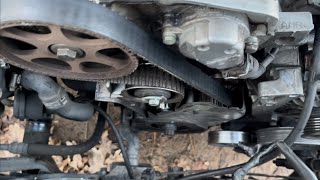
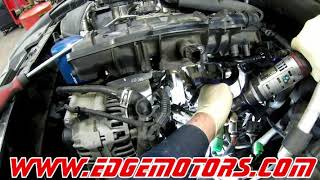
Typical fix: Replace the thermostat and its housing as an assembly. On the 1.8T engine, this is a labor-intensive job (4-6 hours) as the thermostat is located behind the alternator. 🎬 See this walkthrough for the labor-intensive 1.8T thermostat replacement. On the 2.0T, the job is easier as the thermostat is more accessible.
Est. part cost: $30-$150 - Damaged ECT Sensor Wiring or Connector ⚪ Low Probability The wiring is located at the back of the hot engine, and the plastic connector can become brittle and crack over time, leading to poor contact on the sensor pins.
How to confirm: Visually inspect the wiring harness and connector for the ECT sensor. Check for frayed wires, corrosion on the pins, or a loose connection. Wiggle the connector with the engine running to see if the temperature reading on a scan tool fluctuates wildly.
Typical fix: Repair the damaged section of wire or replace the connector pigtail.
Est. part cost: $15-$40 - Low Engine Coolant ⚪ Low Probability These vehicles are prone to various plastic cooling system component failures (flanges, hoses) leading to slow leaks over time.
How to confirm: Visually inspect the coolant expansion tank. If the level is below the 'MIN' line, the sensor may not be submerged, causing an inaccurate reading. Top off the coolant and check for leaks.
Typical fix: Top off the system with the correct G12 or G13 coolant and bleed any air. Find and repair the source of the leak if one exists, common sources include the rear coolant flange and thermostat housing.
Est. part cost: $25-$50
Rare But Worth Checking
- Failing Water Pump: While a failing water pump more commonly causes overheating, if the impeller has degraded or separated from the shaft, it could lead to poor circulation and strange temperature readings. This is usually considered only after the thermostat and sensor have been ruled out.
Diagnosis Steps
- Check for other fault codes to see if they point directly to the sensor (like P0118 or 16502).
- With a scan tool, check the freeze frame data for P1296. A temperature reading of -40°C strongly suggests a bad sensor or open circuit in the wiring. A temperature in the 60-80°C range points towards a stuck thermostat.
- Use a capable scan tool (VCDS) to monitor measuring blocks for coolant temperature. Compare the reading from the Engine control module (G62 sensor) with the reading from the Instrument Cluster module (G2 sensor). A significant discrepancy indicates a faulty sensor.
- Visually inspect the coolant level in the expansion tank and top off if necessary with the correct G12/G13 coolant.
- Inspect the ECT sensor connector and wiring for any visible damage, corrosion, or loose pins.
- Due to its low cost and high failure rate, the most common next step is to replace the Engine Coolant Temperature (ECT) sensor, along with its O-ring and clip. Clear the codes and drive the vehicle to see if the issue returns.
- If the code comes back, the thermostat is the most likely culprit. Monitor live data on a scan tool during a cold start. The coolant temperature should rise steadily to ~90°C and stabilize. If it rises very slowly or gets stuck at a lower temperature (e.g., 70°C), especially at highway speeds, the thermostat is stuck open and must be replaced.
- After replacing either part, ensure the cooling system is properly bled of all air, as air pockets can cause incorrect temperature readings and trigger the cooling fans to run constantly.
Parts You'll Likely Need
- Engine Coolant Temperature Sensor (G62)
(OEM #06A919501A (Green Top))— This sensor is a frequent failure point and is the most common cause of P1296. It's an inexpensive and relatively easy part to replace first. It supersedes the failure-prone black top sensor (059919501A).
Trusted brands: Bosch, Hella, VEMO, Elth, Genuine VW/Audi
OEM price range: $40-$70
Aftermarket price range: $15-$45 - Coolant Thermostat (1.8T)
(OEM #06B121111K)— This is the second most common cause, failing in the 'stuck open' position. On the 1.8T, it is sold as a complete assembly with the housing.
Trusted brands: Mahle, Behr, Wahler, Genuine VW/Audi
OEM price range: $100-$175
Aftermarket price range: $40-$90 - Coolant Thermostat (2.0T)
(OEM #06D121111G)— The thermostat for the 2.0T engine, also sold as a complete housing.
Trusted brands: Mahle, Behr, Genuine VW/Audi
OEM price range: $120-$200
Aftermarket price range: $50-$110 - ECT Sensor Retaining Clip and O-Ring
(OEM #Clip: 032121142, O-Ring: N90316802)— The plastic clip is often brittle and breaks upon removal, and the O-ring should always be replaced to prevent leaks. These are often sold with the sensor but sometimes must be purchased separately.
Related Codes That Often Appear With This One
- P0118 — This code means 'Engine Coolant Temperature Sensor Circuit High Input,' which directly points to a faulty ECT sensor or its wiring, a primary cause of P1296.
- P0128 — This is a generic code for 'Coolant Thermostat (Coolant Temperature Below Thermostat Regulating Temperature).' It is the SAE equivalent of the manufacturer-specific P1296 and points to the same problem.
- 17704 — This is the VAG-specific fault code number that corresponds to P1296, often seen when using diagnostic tools like VCDS.
Technical Service Bulletins (TSBs) & Recalls
- Audi TSB 19-08-05 (Supersedes TSBs for P1296): While a specific TSB number for P1296 is elusive, Audi has issued technical service bulletins related to cooling system diagnostics. TSBs like 19-08-05 guide technicians to check freeze frame data. If the temperature is -40C, it points to a sensor/wiring fault. If the temperature is between 60-80C, it points to a mechanical fault like a thermostat. This diagnostic logic is referenced in Ross-Tech's wiki.
Platform-Specific Known Issues
- 1.8T (B5/B6) Thermostat Replacement Difficulty: On the 1.8T engines, the thermostat is notoriously difficult to access. It is located on the engine block, behind the alternator. Replacement requires draining the coolant, removing the serpentine belt, and removing the alternator completely. This turns a simple part swap into a 4-6 hour job for an experienced DIYer.
- 2.0T (B7) Thermostat Replacement: On the 2.0T FSI engine, the thermostat and water pump are often replaced together as they are part of an assembly. While still involved, access is generally better than on the 1.8T, as it is located on the front of the engine. The job typically involves removing the throttle body for access.
Mechanic-Grade Diagnostic Values
- G62 ECT Sensor Resistance (disconnected) — expected: Approx. 2000-3000 Ω at 20°C (68°F); Approx. 200-300 Ω at 90°C (194°F).. Failure: A reading of -40°C in freeze frame data often indicates an open circuit or completely failed sensor. A delayed or non-linear change in resistance when heating the sensor indicates it is faulty.
- G62 ECT Sensor Signal Voltage (at connector, key on, engine off) — expected: The ECU provides a 5V reference. The return signal voltage should be between 2.0V and 3.5V on a cold engine (~20°C).. Failure: A voltage reading near 0V or 5V, or a value that doesn't change as the engine warms up, indicates a wiring issue or a failed sensor.
- VCDS Live Data - Engine Measuring Block 001 — expected: Field 1 should display engine RPM, Field 2 engine load, Field 3 injection timing, and Field 4 should display the Engine Coolant Temperature in °C as seen by the ECU.. Failure: The temperature should rise steadily from ambient to ~90°C. If it stays low, jumps erratically, or reads an illogical value like -40°C, the sensor or its circuit is faulty.
- VCDS Live Data - Engine Measuring Blocks 130-132 (Map-Controlled Thermostat) — expected: Block 130 shows actual vs specified engine outlet temp. Block 131 shows thermostat duty cycle. Block 132 shows the temperature delta between engine outlet and radiator outlet.. Failure: For a P1296 (stuck open) fault, you would expect to see a large difference between specified and actual temperature, a low duty cycle %, and a very small temperature delta between the engine and radiator outlet, as coolant is flowing constantly.
Scan Tool Commands That Help
- VCDS (VAG-COM): Read Measuring Blocks - Group 001 (Engine) and Group 003 (Instruments) — To compare the coolant temperature reading being sent to the ECU (G62) versus the reading being sent to the dashboard gauge (G2). The 4-pin sensor contains both. A significant difference between the two readings on a cold engine confirms a faulty sensor.
- VCDS (VAG-COM): Read Measuring Blocks - Groups 130-134 (Engine) — For vehicles with electronically controlled 'mapped' thermostats. These blocks show the ECU's target temperature versus the actual temperature, as well as the duty cycle being sent to the thermostat's heater. This can help differentiate a mechanically stuck thermostat from an electrical control issue.
Wiring & Ground Locations
- G62 Sensor Connector — On a coolant flange at the rear of the cylinder head, near the firewall, on the 1.8T engine.. This is the primary connector to inspect for corrosion, damage, or loose pins. The wiring harness here is subject to high heat and can become brittle.
- G12 - Ground Connection — Located at the center of the firewall in the engine bay.. This point grounds the ECM. A poor ground here can cause a host of erratic sensor readings, including from the G62 ECT sensor.
- G26 - Ground Connection — Located under the power steering reservoir in the engine compartment.. This point grounds the Coolant Fan Control Module. A fault here can cause the fans to run incorrectly (e.g., full speed constantly) which is a common symptom associated with a failed ECT sensor, potentially complicating diagnosis.
- Internal Harness Ground — The sensor ground wire for the G62 is typically grounded internally within the main engine wiring harness, not directly to the chassis.. This means a ground fault is more likely to be a corroded wire or failed crimp inside the harness loom rather than a loose bolt on the chassis. Tracing this requires a wiring diagram and continuity testing from the sensor connector to the ECU connector.
Real Owner Repair Stories
- BRISKODA forum user 'shivadow' (2002 Skoda Octavia 1.8T 4x4 (shares engine/platform with A4)) — Persistent P1296 code, intermittent lumpy idle, and misfire codes (P0300, P0301, P0302, P0304).
❌ Tried (didn't work) Replaced thermostat, Replaced with new 'green' top ECT sensor
✅ What actually fixed it The actual root cause was a dirty Mass Airflow (MAF) sensor. Cleaning the MAF sensor and performing a reset via VCDS resolved the P1296 and the associated misfire codes. - Audi-Sport.net forum user (Audi A4 1.8T (year not specified)) — P1296 error code, black smoke, and high fuel consumption.
❌ Tried (didn't work) Replacing the ECT (G62) temperature sensor did not resolve the code.
✅ What actually fixed it The issue appeared after installing a new performance ECU chip (TTi Stage 2). The problem was resolved by removing the aftermarket chip and reverting to the previous or original ECU software. The aftermarket tune was incorrectly mapped for the cooling system.
OEM Part Supersession History
059919501A (Black Top)→06A919501A (Green Top)— The original black top sensors had a very high failure rate. The green top sensor is a revised, more durable design.
Heads up: While the black sensor part number 06A919501A still exists from some manufacturers, it is a different design (2-pin) from the original failure-prone 4-pin black sensor. Technicians should ensure they are ordering the correct 4-pin green sensor for this application to get the revised part.
Model Year Variations Within This Range
- 1999-2005 (B5/B6 1.8T): The thermostat replacement is notoriously difficult, located behind the alternator, requiring its removal for access. The job can take 4-6 hours for an experienced mechanic.
- 2005.5-2008 (B7 2.0T): The thermostat on the 2.0T engine is located in a more accessible position, making the replacement procedure significantly easier and faster compared to the 1.8T.
Diagnostic Flowchart
Other Known Issues on This Vehicle
Issues unrelated to this code that are worth knowing about as an owner of this generation:
- 1.8T Oil Sludge Buildup 🔴 High — Common on higher-mileage cars, especially with extended oil change intervals. Can lead to a blocked oil pickup tube and catastrophic engine failure.
- 2.0T FSI Camshaft Follower Failure 🔴 High — The follower for the high-pressure fuel pump (HPFP) wears out, typically every 30k-50k miles. If it fails completely, it can destroy the HPFP and the intake camshaft. (Ref: Extended warranty was offered in some cases.)
- Ignition Coil Pack Failure 🟠 Medium — Extremely common across all engines. Leads to engine misfires. A recall was issued for many vehicles. (Ref: Recall)
- PCV System and Breather Hose Failure 🟠 Medium — Plastic hoses and valves in the crankcase ventilation system become brittle and crack, causing vacuum leaks, high oil consumption, and sludge.
- 2.0T FSI Carbon Buildup on Intake Valves 🟠 Medium — As a direct-injection engine, fuel doesn't wash the back of the intake valves. Carbon builds up over 60k-100k miles, causing misfires and performance loss. Requires manual cleaning.
- Timing Belt and Water Pump Failure 🔴 High — The timing belt is a critical maintenance item, recommended for replacement every 75k-100k miles. Failure of the belt or the water pump (especially plastic impeller versions) will cause catastrophic engine damage.
Used vs. New Parts: Buying Guide for This Vehicle
When a used part is the smart pick: For this specific repair, using used parts is strongly discouraged. The primary failure components (ECT sensor, thermostat) are inexpensive wear items. A used sensor or thermostat carries the same risk of failure as the part being replaced and offers no significant cost savings.
Donor-vehicle mileage cap: roughly under 10000 miles for the part to have meaningful remaining life.
What to inspect on the donor part:
- If sourcing a connector pigtail, inspect for any signs of cracking, brittleness, or corrosion on the pins.
- Ensure locking tabs on connectors are intact.
OEM-only on this vehicle (don't cheap out):
- While not strictly 'OEM-only', it is highly recommended to use a high-quality OEM or reputable OE-supplier-branded ECT sensor and thermostat (e.g., Mahle, Behr, Wahler). Low-quality, no-name aftermarket versions are known to fail prematurely or be dead-on-arrival, leading to repeat repairs.
Aftermarket brands forum-validated for this vehicle:
- Mahle
- Behr
- Wahler (for thermostats)
- Bosch
- Hella (for sensors)
Brands owners have reported issues with on this vehicle:
- Unbranded, 'white-box' parts from online marketplaces are a significant gamble and often cause more problems.
Real Owner Stories
Aggregated from forums and TSBs cited above. Mileages and costs reflect what owners reported in those sources.
Audi A4 1.8T
Symptoms: The car was slow to warm up and the Check Engine Light was on.
What fixed it: Initially replaced the ECT sensor, which did not solve the problem. The issue was ultimately resolved by replacing the stuck-open thermostat.
Source hint: Audizine: 'P1296 - Coolant temp malfunction'
2002-2005 Audi A4
Symptoms: Check Engine Light for P1296 was on, but the temperature gauge was not erratic. Another owner reported hearing a 'leaf blower' sound from the radiator fans running constantly on high speed as a symptom.
What fixed it: The issue was identified as a faulty Engine Coolant Temperature (ECT) sensor, which can fail internally without causing obvious gauge symptoms.
Source hint: AudiWorld Forums: 'CEL - Code P1296/17704 Question about Coolant Temp Sensor?'
1996-2001 Audi A4
Symptoms: A generic scan tool reported code P1296 as a 'fuel metering' issue, causing diagnostic confusion.
What fixed it: The problem was correctly identified as a cooling system fault, with the actual cause being either the ECT sensor or the thermostat.
Source hint: AudiForums.com: 'P1296 Error Code'
Related OBD-II Codes
Frequently Asked Questions
My 1.8T A4 has code P1296, but the temperature gauge on the dash seems to be working fine. Could it still be the coolant sensor?
How difficult is it to replace the thermostat on my B6 A4 1.8T?
My generic code reader says P1296 is a 'fuel metering' problem. Is this correct for my Audi?
Should I replace the ECT sensor or the thermostat first to fix P1296?
My radiator fans are running at full speed even when the engine is cold. Is this related to P1296?
How can I use a scan tool like VCDS to diagnose whether it's the sensor or the thermostat?
I'm buying a new coolant temperature sensor. Is there a specific version I should get?
Helpful Videos
We Have This Part in Stock



The information in this article is provided for general reference and educational purposes only. Vehicle specifications, procedures, and part compatibility can vary by production date, trim level, and region. Always consult your vehicle's factory service manual and verify part numbers before purchasing or performing repairs. Safety-critical components such as airbags, seat belts, and braking systems should be installed by a qualified professional.
- Audi A4:
- 🎬 Helpful Videos
- 🛍️ Shop This Part
- What's Unique About the 1999-2008 Audi A4
- Symptoms You May Notice
- Most Likely Causes
- Rare But Worth Checking
- Diagnosis Steps
- Parts You'll Likely Need
- Related Codes That Often Appear With This One
- Technical Service Bulletins (TSBs) & Recalls
- Platform-Specific Known Issues
- Mechanic-Grade Diagnostic Values
- Scan Tool Commands That Help
- Wiring & Ground Locations
- Real Owner Repair Stories
- OEM Part Supersession History
- Model Year Variations Within This Range
- Diagnostic Flowchart
- Other Known Issues on This Vehicle
- Used vs. New Parts: Buying Guide for This Vehicle
- Real Owner Stories
- Audi A4 1.8T
- 2002-2005 Audi A4
- 1996-2001 Audi A4
- Related OBD-II Codes
- Frequently Asked Questions
- 🎟️ Get 5% Off