

P1288 on 2011-2020 Dodge Grand Caravan: A Guide to the Likely Real Problem, P0128
The code P1288 is not a recognized or common fault for the Dodge Grand Caravan. It is extremely likely that you have misread or mistyped the code and the actual code is P0128. On the 3.6L Pentastar engine, P0128 is almost always caused by a failed thermostat that is stuck open. The fix is to replace the entire thermostat housing assembly, which is a DIY-friendly job costing about $40-$90 for the part.
- The code you have is almost certainly P0128, not P1288. Re-scan to confirm.
- P0128 is caused by a thermostat that is stuck open, a very common issue on the 3.6L Pentastar engine.
- The fix is to replace the entire thermostat housing assembly, not just the sensor or internal parts. Using an OEM Mopar part is strongly recommended.
- This is a DIY-friendly repair that can be done in 1-2 hours with basic tools.
- After replacing the part, you must bleed the air from the cooling system using the small bleeder screw on top of the new housing to prevent air pockets and overheating.
What's Unique About the 2011-2020 Dodge Grand Caravan

The 3.6L Pentastar engine, used across the entire 2011-2020 Grand Caravan lineup, is known for thermostat failures that trigger the P0128 code. The thermostat is designed to fail in the 'open' position as a safeguard against overheating. Because this failure is so common, owners and technicians are very familiar with the symptoms and the straightforward fix of replacing the entire thermostat and housing assembly.
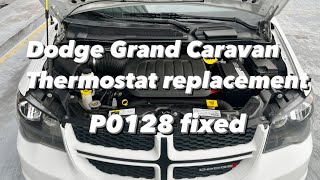
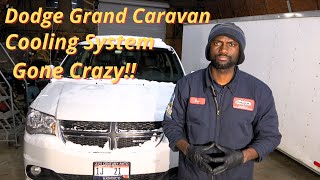
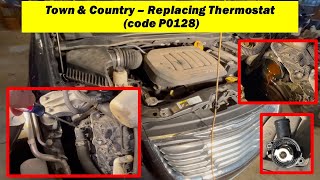
🎬 See this step-by-step thermostat replacement guideSymptoms You May Notice
- Check Engine Light is on.
- Engine temperature gauge reads lower than normal, often staying below the halfway mark.
- Temperature gauge may drop noticeably when driving at highway speeds, especially in colder weather.
- Cabin heater blows lukewarm or cool air, especially in cold weather.
- Engine takes a very long time to warm up.
- A noticeable decrease in fuel economy (2-4 MPG is common).
- Visible coolant leak or crusty, colorful residue around the plastic thermostat housing, a sign of a hairline crack.
- Replacing only the Engine Coolant Temperature (ECT) sensor. On the 3.6L Pentastar, the ECT sensor is integrated into the thermostat housing. The entire assembly must be replaced, and the sensor itself is rarely the primary point of failure for this code.
- Using a cheap aftermarket thermostat assembly. Many experienced owners and mechanics on forums report that aftermarket units for this specific application can fail quickly, sometimes within a year, leading to the code returning.
Most Likely Causes

- Thermostat Stuck Open 🔴 High Probability The original equipment thermostat assembly on the 3.6L Pentastar is a well-documented failure point. The internal mechanism can fail, causing it to remain open, and the plastic housing can become brittle from thermal cycles and crack, causing leaks.
How to confirm: Monitor the temperature gauge or live data on a scan tool. If the engine temperature is slow to rise, stays below ~195°F, or drops at highway speeds, the thermostat is almost certainly stuck open.
Typical fix: Replace the entire thermostat and housing assembly. The Engine Coolant Temperature (ECT) sensor is integrated, so it gets replaced at the same time. Using an OEM Mopar part is highly recommended by mechanics to avoid premature failure of aftermarket units.
Est. part cost: $40-$90
Rare But Worth Checking
- Low Engine Coolant Level: If the coolant is low due to a leak elsewhere in the system, it can cause erratic temperature readings or introduce air pockets near the sensor, potentially triggering a P0128 code. Always check the coolant level first.
- Cooling Fan Stuck On: If an electrical fault (such as a failed relay) causes the radiator fan to run constantly, even when the engine is cold, it can over-cool the engine and prevent it from reaching operating temperature, triggering the code. This is uncommon.
- Faulty Intake Air Temperature (IAT) Sensor: The PCM uses the IAT reading as part of its calculation for expected engine warm-up time. A faulty IAT sensor providing an inaccurately cold reading could theoretically contribute to this code, but it is very rare.
Diagnosis Steps

- Confirm the code is P0128 using an OBD-II scanner. If it is P1288, double-check as this is likely an error.
- Check the engine coolant level in the reservoir and radiator (when the engine is cold). If low, top it off with the correct OAT coolant and check for leaks.
- Start the engine from cold and monitor the temperature gauge or live ECT data on a scanner. It should rise steadily to the halfway mark (~195-205°F) within 5-10 minutes of driving.
- If the gauge stays low, takes an excessive amount of time to warm up, or drops while driving at highway speeds, the thermostat is the prime suspect.
- As the engine warms up, feel the upper radiator hose. It should remain cool until the engine reaches operating temperature (around 200°F), at which point it will suddenly become hot as the thermostat opens. If it warms up gradually along with the engine, the thermostat is stuck open.
- Visually inspect the plastic thermostat housing for any signs of coolant leaks, such as white, pink, or purple crusty residue.
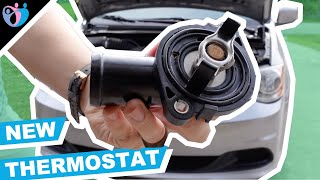
- If the thermostat appears to be working correctly, investigate other rare causes like the cooling fan operation. 🎬 Watch: A professional diagnostic walkthrough for code P0128
Parts You'll Likely Need

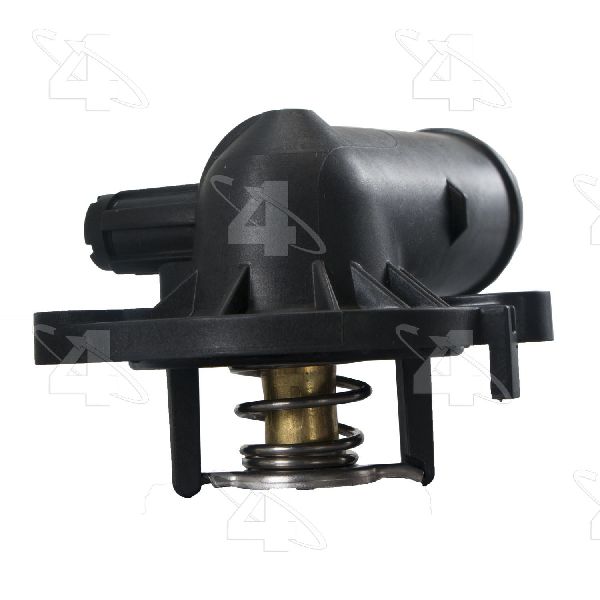
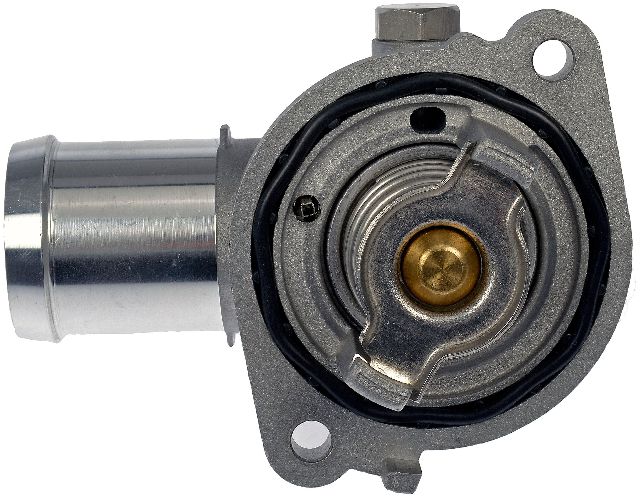
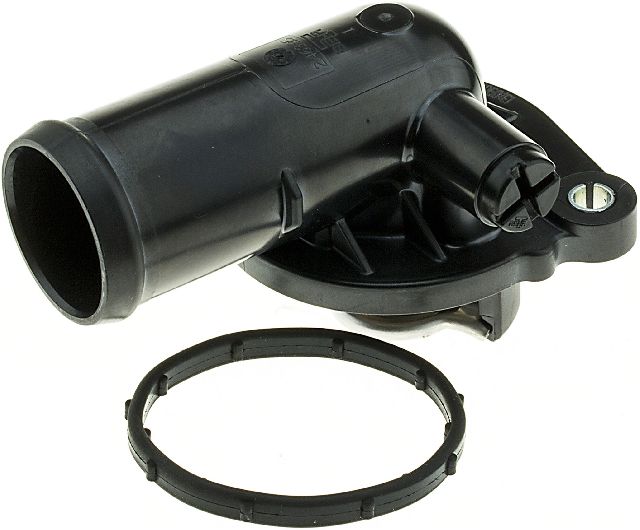
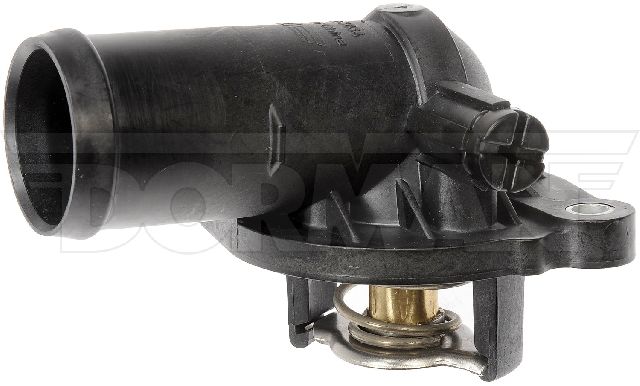
- Engine Coolant Thermostat Housing Assembly
(OEM #5184651AJ (or latest Mopar revision))— This is the root cause of code P0128 in over 90% of cases for this vehicle. The assembly includes the thermostat, housing, seal, and integrated temperature sensor. Mopar has released several revisions (AF, AG, AH, AI, AJ); it is best to purchase the latest available version.
Trusted brands: Mopar, Dorman (902-3036), Gates, Mahle
OEM price range: $60-$90
Aftermarket price range: $40-$70 - Engine Coolant / Antifreeze (OAT)
(OEM #68163849AB (50/50 pre-mixed))— You will lose coolant when replacing the thermostat and must top off the system. Use the correct Mopar OAT (Organic Acid Technology) MS-12106 coolant (typically purple) for 2013+ models to prevent corrosion. 2011-2012 models used HOAT (Hybrid OAT, typically pink/orange). Mixing them can cause gelling and damage.
Trusted brands: Mopar, PEAK OET North American Vehicles (Purple), Valvoline Zerex (Purple)
OEM price range: $25-$35 per gallon
Aftermarket price range: $20-$30 per gallon
Technical Service Bulletins (TSBs) & Recalls
- TSB 24-001-16: While not for P0128, this TSB addresses poor heater performance on some models due to heater core restrictions, a related cooling system issue that owners might experience alongside a P0128 code.
Platform-Specific Known Issues
- The plastic thermostat housing is known to become brittle over time and can develop hairline cracks, leading to slow coolant leaks in addition to the P0128 code.
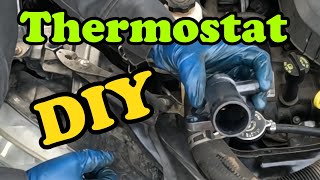
- The small plastic bleeder screw on top of the thermostat housing can also become brittle and break during service or develop a leak on its own. 🎬 Watch: Helpful DIY tips for a successful thermostat installation
Diagnostic Flowchart
Other Known Issues on This Vehicle
Issues unrelated to this code that are worth knowing about as an owner of this generation:
- Cracked Oil Filter / Cooler Housing 🔴 High — Extremely common, often occurs between 60,000 and 120,000 miles. The plastic housing cracks from thermal cycles, leaking oil into the engine valley and down the back of the transmission.
- Rocker Arm / Lifter Failure ('Pentastar Tick') 🔴 High — Common across all model years. Needle bearings in the rocker arms fail, causing a distinct ticking sound, especially on a cold start. If ignored, it can lead to camshaft damage and misfire codes (e.g., P030x).
- Left Cylinder Head Failure (Early Models) 🔴 High — Primarily affects 2011-2013 models. A defect in the valve guides/seats on the left cylinder head (cylinders 2, 4, 6) leads to compression loss and misfires. (Ref: TSB 09-002-14; Extended Warranty X56 (10 years/150,000 miles))
- TIPM (Totally Integrated Power Module) Failure 🟠 Medium — Can occur at any mileage. The vehicle's main fuse box/computer can fail, causing a wide range of bizarre electrical problems, including no-start conditions, fuel pump issues, or horn/wipers activating randomly.
Real Owner Stories
Aggregated from forums and TSBs cited above. Mileages and costs reflect what owners reported in those sources.
5th Gen (2008+) Dodge Grand Caravan 3.6L
Symptoms: Temperature fluctuations and coolant loss.
What fixed it: The symptoms pointed directly to a failing thermostat, which is the classic fix for a P0128 scenario.
Source hint: dodge-forum.com: In a thread titled '5th Gen 08+ Grand Caravan (fake?) overheating issues - help needed!!!'
Dodge Grand Caravan 3.6L Pentastar
Symptoms: Check Engine Light with a P0128 code, especially noticeable in cold climates.
What fixed it: The accepted fix is a thermostat replacement.
Source hint: Reddit r/MechanicAdvice: A thread titled 'P0128 code' for a 3.6L Pentastar
Dodge Grand Caravan 3.6L Pentastar
Symptoms: Check Engine Light on for P0128, engine not warming up properly, and poor cabin heat.
What fixed it: The definitive fix was a complete thermostat assembly replacement, with owners stressing the importance of using OEM Mopar parts to ensure longevity.
Source hint: chryslerminivan.net: Multiple threads, such as 'P0128 Thermostat replacement'
Related OBD-II Codes
Frequently Asked Questions
The article is for P1288, but I see P0128 mentioned everywhere. Which code is correct for my Grand Caravan?
My van's heater is only blowing lukewarm air. Is this related to the P1288/P0128 code?
I found a coolant leak near the top of my 3.6L engine. Is this part of the same thermostat problem?
Should I use a cheaper aftermarket thermostat assembly to fix this code?
Does this thermostat failure issue also happen on other vehicles with the 3.6L Pentastar engine?
My 2012 Grand Caravan has a ticking noise from the engine. Is this connected to the cooling system or the P1288/P0128 code?
What kind of coolant should I use to top off the system in my Dodge Grand Caravan?
Helpful Videos
We Have This Part in Stock


The information in this article is provided for general reference and educational purposes only. Vehicle specifications, procedures, and part compatibility can vary by production date, trim level, and region. Always consult your vehicle's factory service manual and verify part numbers before purchasing or performing repairs. Safety-critical components such as airbags, seat belts, and braking systems should be installed by a qualified professional.
- Dodge Grand Caravan:
- 🎬 Helpful Videos
- 🛍️ Shop This Part
- What's Unique About the 2011-2020 Dodge Grand Caravan
- Symptoms You May Notice
- Most Likely Causes
- Rare But Worth Checking
- Diagnosis Steps
- Parts You'll Likely Need
- Technical Service Bulletins (TSBs) & Recalls
- Platform-Specific Known Issues
- Diagnostic Flowchart
- Other Known Issues on This Vehicle
- Real Owner Stories
- 5th Gen (2008+) Dodge Grand Caravan 3.6L
- Dodge Grand Caravan 3.6L Pentastar
- Dodge Grand Caravan 3.6L Pentastar
- Related OBD-II Codes
- Frequently Asked Questions
- 🎟️ Get 5% Off