

P1285 on 2014-2019 Ford Fusion: Cylinder Head Over Temperature Causes and Fixes
On 2014-2019 Fusions with 1.5L or 2.0L EcoBoost engines, P1285 almost always indicates a catastrophic engine problem where coolant is leaking into the cylinders. This is a known issue caused by a design flaw in the engine block, often requiring an engine short block or long block replacement. Owners report dealer quotes for this repair ranging from $8,000 to over $10,000.
- P1285 on a 2014-2019 Fusion with an EcoBoost engine is a critical warning that should not be ignored.
- The code almost certainly points to a known, widespread engine defect causing coolant to leak into the cylinders.
- Do not continue to drive the vehicle. Immediate professional diagnosis is required.
- The only permanent fix is an expensive engine short block replacement.
- Before paying for repairs, check with a Ford dealer for any applicable warranty extensions or customer satisfaction programs related to your VIN.
What's Unique About the 2014-2019 Ford FUSION

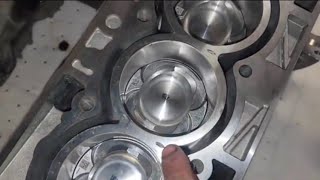
The 2014-2019 Fusion, particularly with the 1.5L and 2.0L EcoBoost engines, is notorious for a specific design flaw. The engine block has an 'open-deck' design with thin passages or 'slits' for coolant to flow between the cylinders. These thin walls are a weak point and can crack or allow the head gasket to fail, permitting coolant to leak directly into the combustion chamber. 🎬 Watch: See why these EcoBoost engines are gulping coolant. This causes misfires, rapid overheating, and eventually this P1285 code. Ford has issued multiple Technical Service Bulletins (TSBs) acknowledging this issue, and the only permanent fix is a redesigned engine block where the slits are replaced with stronger, cross-drilled holes.
Diagnostic Flowchart
Tap your situation to follow the diagnostic path that matches what you're seeing on this vehicle.
Symptoms You May Notice
- Check Engine Light is on
- Temperature gauge suddenly goes to full HOT
- Engine overheating warnings on the dashboard
- Noticeable loss of engine coolant with no visible external leaks
- White, sweet-smelling smoke from the exhaust, especially on startup
- Engine running rough or misfiring, particularly on a cold start
- Low coolant light illuminated
- Engine goes into a reduced power 'limp mode'
- Replacing only the Cylinder Head Temperature (CHT) sensor without verifying if the engine is actually overheating. If the engine is truly hot due to coolant intrusion, a new sensor will not fix the problem.
- Replacing the thermostat or water pump when the root cause is a cracked engine block. This wastes time and money as the overheating will persist.
- Mistaking the symptoms for a simple head gasket failure. While the head gasket does fail, the root cause is the faulty block design, and just replacing the gasket will lead to a repeat failure.
Most Likely Causes

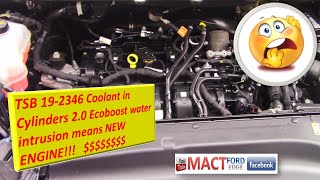
- Internal Coolant Leak (Cracked Engine Block) 🔴 High Probability A known design defect in the 1.5L and 2.0L EcoBoost engine blocks for this year range can cause cracks to form between the cylinder walls, allowing coolant into the cylinders. This is documented in Ford TSBs 22-2322, 22-2229, 🎬 Watch: Mechanic explains the TSB for 2.0L coolant intrusion. and earlier versions like 19-2346 and 20-2100.
How to confirm: Perform a cooling system pressure test; if it fails with no external leaks, suspect an internal leak. Use a borescope to inspect cylinders for coolant (cylinders may appear 'steam cleaned'). A chemical test (block tester) can detect exhaust gases in the coolant. Adding UV dye to the coolant can also help confirm its presence in the cylinders.
Typical fix: Replacement of the engine short block (1.5L) or long block (2.0L) with a redesigned part is the only permanent solution recommended by Ford. Using stop-leak products is strongly discouraged as it can clog the radiator and heater core, causing more problems.
Est. part cost: $1250-$8000 - Failed Cylinder Head Temperature (CHT) Sensor ⚪ Low Probability
How to confirm: With a cold engine, use a scan tool to check the CHT reading. It should be close to the ambient air temperature. If it reads an impossibly high temperature (e.g., 250°F), the sensor or its wiring is faulty. Resistance can also be checked across the sensor's pins.
Typical fix: Replace the CHT sensor and/or repair the wiring pigtail. The sensor is located on the rear of the cylinder head.
Est. part cost: $25-$70 - Standard Cooling System Failure ⚪ Low Probability
How to confirm: Check for common overheating causes like a stuck thermostat (top radiator hose hot, bottom hose cold), a failed water pump (no coolant circulation), or non-functioning radiator fans. These should be ruled out before suspecting engine block failure.
Typical fix: Replace the failed component (thermostat, water pump, fan assembly).
Est. part cost: $50-$500
Rare But Worth Checking
- CHT Sensor Wiring Damage: The wiring to the CHT sensor can become damaged or corroded, causing an incorrect high-temperature reading. This can happen from other repairs, rodent damage, or moisture intrusion. A visual inspection of the harness and connector is warranted.
Diagnosis Steps

- Scan for all DTCs. Note if P1299, P030x, or P0217 are present alongside P1285, which strongly points to the coolant intrusion issue.
- Check the coolant level in the reservoir. If it is low, top it off and check for obvious external leaks.
- With a cold engine, use a scan tool to monitor the CHT sensor reading. If it reads an impossibly high temperature (e.g., 250°F on a 70°F day), suspect a faulty sensor or wiring.
- If the CHT reading seems plausible, start the engine and monitor the temperature. Verify the actual temperature with an infrared thermometer aimed at the cylinder head near the sensor.
- If the engine is confirmed to be overheating, check for basic cooling system function: Are the radiator fans running? Is the water pump circulating coolant (check for flow in the reservoir or by feeling hoses)? Is the thermostat opening (both radiator hoses should be hot)?
- If the basic cooling system seems to work but the engine still overheats and loses coolant, perform a cooling system pressure test. If the system loses pressure with no visible external leaks, an internal leak is highly likely.
- Use a chemical block tester to check for combustion gases in the coolant. A positive test confirms a cracked head/block or failed head gasket.
- As a final confirmation, remove the spark plugs and inspect the cylinder bores with a borescope for evidence of coolant washing or moisture. The piston tops may look unusually clean.
Parts You'll Likely Need

- Engine Short Block
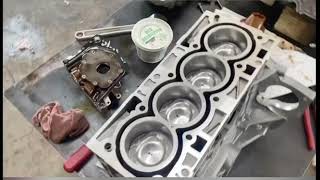
(OEM #DS7Z6010D (Superseded, check with dealer for latest revision))— This is the official Ford-recommended fix for the common coolant intrusion issue on the 1.5L engine. 🎬 Watch: A mechanic's review of the 1.5L EcoBoost design. The replacement part is a redesigned block that mitigates the cracking problem.
Trusted brands: Motorcraft (OEM)
OEM price range: $1250-$2500 - Engine Long Block
(OEM #Varies by VIN, check with dealer)— For the 2.0L engine, Ford's TSBs (e.g., 19-2346) call for a complete long block assembly replacement to correct the coolant intrusion issue.
Trusted brands: Motorcraft (OEM)
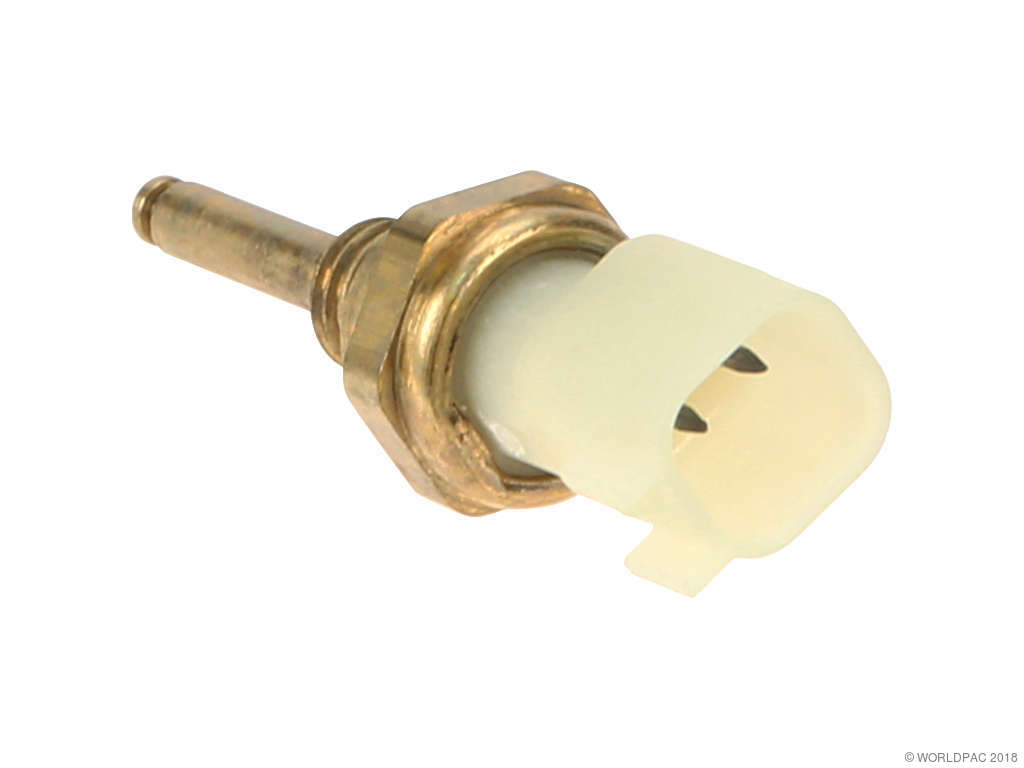
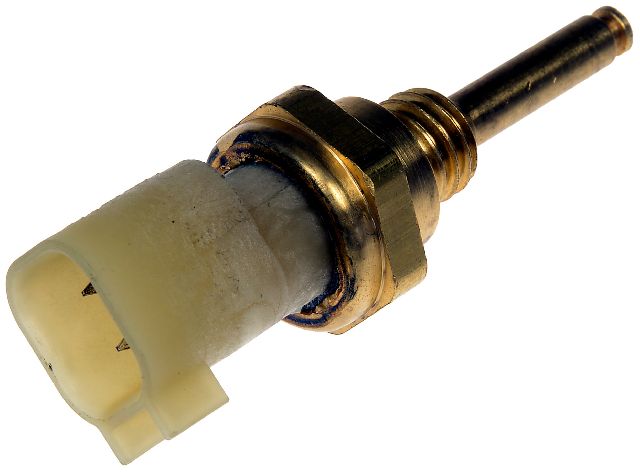
OEM price range: $4000-$8000 - Cylinder Head Temperature (CHT) Sensor
(OEM #9L8Z-6G004-E)— In the rare case that the sensor itself has failed and is sending a false signal, replacing it is the correct fix.
Trusted brands: Motorcraft, Bosch
OEM price range: $25-$40
Aftermarket price range: $15-$30 - CHT Sensor Connector
(OEM #Motorcraft WPT-984 or WPT-985)— The wiring pigtail to the sensor can get damaged or corroded, requiring replacement.
Trusted brands: Motorcraft, Dorman
OEM price range: $13-$45
Aftermarket price range: $8-$20 - Engine Gasket and Seal Kit — Required for an engine replacement job, includes head gasket, valve cover gaskets, seals, and other single-use items.
Trusted brands: Fel-Pro, Motorcraft
OEM price range: $300-$500
Aftermarket price range: $200-$400
Related Codes That Often Appear With This One
- P1299 — Cylinder Head Overtemperature Protection Active. This is the next stage of Ford's protection strategy, triggered after P1285, where the PCM actively intervenes by cutting fuel to some cylinders.
- P0300, P0301, P0302, P0303, P0304 — Random or specific cylinder misfire codes. These are triggered when coolant enters the cylinder, fouling the spark plug and preventing proper combustion. Cylinders 2 and 3 are most commonly affected.
- P0316 — Misfire Detected on Startup (First 1000 Revolutions). Coolant that has pooled in a cylinder overnight will cause an immediate misfire on a cold start.
- P0217 — Engine Overheat Condition. This is a general engine overheat code that often accompanies the more specific P1285.
Technical Service Bulletins (TSBs) & Recalls
- TSB 22-2322: Acknowledges P1285 as a key DTC for coolant intrusion into the cylinder on 2019 1.5L models.
- TSB 22-2229: Acknowledges P1285 as a key DTC for coolant intrusion into the cylinder on 2018 2.0L models.
- TSB 19-2346 / 19-2139: Earlier versions of the bulletin detailing the coolant intrusion issue for 1.5L and 2.0L engines and specifying engine block replacement as the fix.
- TSB 20-2100: Supersedes an earlier TSB for 1.5L engines, confirming the issue and repair procedure.
Platform-Specific Known Issues
- Coolant Intrusion TSBs: Ford has released multiple Technical Service Bulletins regarding coolant intrusion on 1.5L and 2.0L EcoBoost engines, including TSB 22-2322, TSB 22-2229, and the earlier TSB 19-2346. These bulletins explicitly state that DTCs P1285, P1299, and various misfire codes are key indicators of coolant leaking into the cylinders due to a compromised engine block. The only sanctioned repair is a short block (1.5L) or long block (2.0L) replacement.
- **Customer Support
Mechanic-Grade Diagnostic Values
- CHT Sensor Resistance vs. Temperature — expected: Resistance is inversely proportional to temperature. Example values: 37.3 kOhms @ 68°F (20°C), 7.48 kOhms @ 140°F (60°C), 1.13 kOhms @ 356°F (180°C). Ford's system uses a dual-switching resistor circuit, so voltage can overlap; for example, at 194°F (90°C), the voltage could be either ~0.60V or ~3.71V.. Failure: If the measured resistance at a known temperature is significantly different from the service chart values, the sensor is faulty. For example, reading very high resistance (or open circuit) on a warm engine.
- CHT Sensor Signal Wire Voltage (Key On, Engine Off) — expected: With the sensor disconnected, the signal wire at the harness connector should read approximately 5 volts (VREF).. Failure: If the reference voltage is not present, there is an open in the wire or a fault in the PCM.
Scan Tool Commands That Help
- Ford IDS (Integrated Diagnostic System): Data Logger — To monitor the live PID (Parameter ID) for Cylinder Head Temperature (CHT). This allows a technician to watch the temperature reading from the sensor in real-time as the engine warms up to see if it rises smoothly or jumps to an erratic, impossible value, which would indicate a sensor or wiring fault.
- Ford IDS (Integrated Diagnostic System): Self-Test > Retrieve Continuous Memory DTCs (CMDTCS) — To read all stored fault codes, including P1285 and any accompanying codes like P1299, P030x, etc., that provide critical context for the diagnosis. This is the first step in any electronic diagnosis.
Wiring & Ground Locations
- CHT Sensor — On the 1.5L EcoBoost, the CHT sensor is typically located on the cylinder head toward the firewall, in the center, making it difficult to access. On other Ford engines, it is often found on the rear of the driver's side (LH) cylinder head, just above the bellhousing.. This is the sensor that triggers the code. Knowing its physical location is essential for testing, inspection of its connector and wiring, and replacement.
- G107 / G111 / G112 — These are major ground points located in the left front of the engine compartment on a Fusion. Another key ground point is often located on the frame under the battery tray.. The CHT sensor relies on a clean ground reference through the PCM. A corroded or loose engine ground can cause erratic sensor readings, potentially triggering false overheating codes. Verifying main grounds is a key step in diagnosing any electrical sensor issue.
Real Owner Repair Stories
- YouTube user on a New Edge Mustang (Ford Mustang V6 (New Edge)) — Engine overheated and threw code P1285 after a radiator hose came loose and sprayed coolant in the engine bay. After fixing the hose and clearing the code, P1285 returned along with P1290 (CHT Sensor Circuit Fault) without the engine actually overheating.
❌ Tried (didn't work) Clearing the code initially, as it returned quickly.
✅ What actually fixed it The coolant that had sprayed onto the CHT sensor and its electrical connector had damaged the circuitry/connection. Replacing the CHT sensor resolved both codes.
OEM Part Supersession History
Engine block with 'open deck' coolant slits→Engine block with cross-drilled coolant passages— The original design with thin slits of metal between the cylinders was prone to cracking, leading to coolant intrusion. The revised design uses stronger, drilled circular holes for coolant flow, which resolves the structural weakness.
Model Year Variations Within This Range
- 2014-2019: Within the 1.5L EcoBoost engine family for this platform, some vehicles were equipped with a CHT (Cylinder Head Temperature) sensor, while others use only a traditional ECT (Engine Coolant Temperature) sensor. This must be verified by VIN or visual inspection before ordering parts or beginning diagnosis, as one might be searching for a sensor that does not exist on that specific vehicle.
- 2014-2019 (early) vs. later replacements: The original 1.5L/2.0L EcoBoost engine blocks feature an 'open-deck' design with slits for coolant passages between cylinders. This design is the root cause of the coolant intrusion issue. Replacement short/long blocks provided by Ford under TSBs have a revised block with drilled holes instead of slits, which is a more robust design.
Helpful Videos



Used OEM Parts in Stock


New Aftermarket Parts Available


The information in this article is provided for general reference and educational purposes only. Vehicle specifications, procedures, and part compatibility can vary by production date, trim level, and region. Always consult your vehicle's factory service manual and verify part numbers before purchasing or performing repairs. Safety-critical components such as airbags, seat belts, and braking systems should be installed by a qualified professional.
- Ford FUSION:
- 🎬 Helpful Videos
- 🛍️ Shop This Part
- What's Unique About the 2014-2019 Ford FUSION
- Diagnostic Flowchart
- Symptoms You May Notice
- Most Likely Causes
- Rare But Worth Checking
- Diagnosis Steps
- Parts You'll Likely Need
- Related Codes That Often Appear With This One
- Technical Service Bulletins (TSBs) & Recalls
- Platform-Specific Known Issues
- Mechanic-Grade Diagnostic Values
- Scan Tool Commands That Help
- Wiring & Ground Locations
- Real Owner Repair Stories
- OEM Part Supersession History
- Model Year Variations Within This Range
- 🎟️ Get 5% Off