

P1247 on 2004-2008 Audi A4 TDI: Needle Lift Sensor (G80) Failure Causes and Fixes
This code indicates a failure of the Needle Lift Sensor (G80), which is built into one of the fuel injectors, typically for cylinder #3. The most common fix is to replace the entire faulty injector. Expect to pay $250-$450 for a new or remanufactured injector and tackle it as a moderately difficult DIY or pay for 2-3 hours of shop labor.
- P1247 on your Audi A4 TDI is a fuel system code, not a turbo code. It points directly to the Needle Lift Sensor (G80).
- The most likely cause is a failed sensor inside one of the fuel injectors (usually cylinder #3), requiring replacement of that entire injector.
- You can confirm the failure with a multimeter. A healthy sensor should have a resistance of 80-120 Ohms.
- Before buying an injector, inspect the in-head wiring harness for brittle or cracked insulation, as this is another very common cause.
What's Unique About the 2004-2008 Audi A4
Unlike many other manufacturers like Ford, BMW, or Land Rover where P1247 means 'Turbocharger Boost Pressure Low', on Volkswagen Auto Group (VAG) TDI engines of this era, this code is exclusively for the fuel injection system. The Needle Lift Sensor (G80) was a common design on older Pumpe Düse (PD) TDI engines, including the 1.9L and 2.0L TDI found in the B7 A4. The failure is almost always isolated to the sensor-equipped injector or its wiring, not the turbo system.
Symptoms You May Notice
- Check Engine Light is on
- Pre-glow (coil) light may be flashing
- Rough or unstable idle
- Noticeable loss of engine power and sluggish acceleration
- Reduced fuel economy
- Engine 'clatter' is louder than usual or a distinct rattling noise from the lower engine area
- Increased black or dark grey exhaust smoke
- Difficulty starting the engine
- Engine may backfire into the intake plumbing under load
- Replacing the wrong fuel injector. It's crucial to identify which injector contains the G80 sensor, as only one has it. On most 1.9L and 2.0L PD engines, it is the injector for cylinder #3.
- Diagnosing a turbocharger problem. Due to the code's definition on other car brands, mechanics unfamiliar with VAG TDIs might mistakenly troubleshoot the turbo system.
- Replacing the ECU prematurely. The injector or wiring harness is a far more common failure point than the ECU itself.
Most Likely Causes
- Failed Needle Lift Sensor (Internal to Injector) 🔴 High Probability The sensor is an electronic component integrated into a mechanical part (the injector) that operates in a high-heat, high-vibration environment. The internal coil windings of the sensor eventually break or short out, leading to failure. This is the most common point of failure for this code.
How to confirm: Disconnect the electrical connector from the suspect injector (usually cylinder #3) and measure the resistance across the two sensor pins with a multimeter. A healthy sensor should read between 80 and 120 Ohms. An open circuit (infinite resistance) or a short (near-zero resistance) confirms the sensor has failed and the injector must be replaced. While testing, gently tap the injector body with the handle of a screwdriver; if the resistance reading fluctuates wildly, it indicates an intermittent internal break.
Typical fix: Replace the entire fuel injector that contains the G80 sensor. The sensor itself is not serviced separately from the injector. It is also critical to replace the injector seal kit and the single-use stretch bolt for the injector hold-down clamp.
Est. part cost: $250-$450 - Damaged Wiring Harness 🟡 Medium Probability The injector wiring harness sits under the valve cover, where it is constantly exposed to hot engine oil and heat cycles. Over time, the wire insulation becomes brittle, cracks, and flakes off, leading to shorts between wires or open circuits. This is a very common issue on VAG PD engines.
How to confirm: After confirming the injector itself has correct resistance, perform a continuity test on the wires from the injector connector back to the main engine harness connector. While measuring, wiggle the wiring harness to see if the reading fluctuates, which would indicate an intermittent break. Visually inspect the wiring for any obvious damage, chafing, or melted/cracked insulation.
Typical fix: Repair the specific broken or shorted wire. A more reliable and common fix is to replace the entire in-head injector wiring loom. This part is relatively inexpensive and ensures all injector connections are new.
Est. part cost: $40-$100 for a new harness. - Corroded or Loose Injector Connector ⚪ Low Probability Engine vibration and moisture can cause the electrical connector on the injector to become loose or allow moisture entry, leading to corrosion and a poor connection. The plastic connector itself can become brittle and break during other service.
How to confirm: Visually inspect the injector's electrical connector pins and the harness side for any green or white corrosion, bent pins, or a loose fit. Clean with electrical contact cleaner and ensure a snug fit.
Typical fix: Clean the connector terminals with a specialized contact cleaner. If the connector housing is broken, it may need to be replaced, which often involves splicing in a new pigtail.
Est. part cost: $5-$25
Rare But Worth Checking
- Failed Engine Control Unit (ECU/ECM):
Diagnosis Steps
- Scan the vehicle with a VAG-compatible scanner (like VCDS) to confirm P1247 (or 17655) is the primary code.
- Identify which fuel injector contains the Needle Lift Sensor (G80). On the B7 A4 TDI, this is typically the injector for cylinder #3. Visually confirm it's the only injector with a 2-pin electrical connector.
- Disconnect the electrical connector from the identified injector.
- Set a multimeter to measure resistance (Ohms).
- Measure the resistance between the two pins for the G80 sensor on the injector itself. The reading should be between 80 and 120 Ohms.
- If the reading is out of specification (e.g., infinite for an open circuit or near zero for a short), the injector has failed and must be replaced.
- If the injector resistance is within spec, the issue is likely in the wiring. Unplug the main injector harness connector at the cylinder head.
- Perform a continuity test on the two wires corresponding to the G80 sensor from the injector plug to the main harness plug. Wiggle the harness during the test to check for intermittent breaks.
- If a wiring fault is found, replace the in-head injector wiring loom.
- If both the injector and wiring test good, the final, though unlikely, possibility is a faulty ECU.
Parts You'll Likely Need
- Fuel Injector (with Needle Lift Sensor)
(OEM #038130073AG, 038130073F (Verify with VIN))— This is the most common failure. The sensor is integral to the injector and cannot be replaced separately. Part number must be verified with VIN, as multiple revisions exist. The OEM is Bosch.
Trusted brands: Bosch (OEM), RIDEX REMAN
OEM price range: $400-$550
Aftermarket price range: $250-$400 - Injector Wiring Loom (In-Head)
(OEM #038971600)— The second most likely cause. Heat and oil degrade the insulation, causing shorts/opens. It's good practice to replace this when replacing an injector due to age.
Trusted brands: VW/Audi Genuine, Febi Bilstein
OEM price range: $80-$120
Aftermarket price range: $40-$70 - Injector Seal Kit
(OEM #038198051C)— Whenever an injector is removed and reinstalled, new copper crush washers and rubber o-rings must be used to prevent compression and fuel leaks. These are single-use items.
Trusted brands: Bosch, Elring, Victor Reinz
OEM price range: $15-$30
Aftermarket price range: $10-$20
Related Codes That Often Appear With This One
- P0303 - Cylinder 3 Misfire Detected: Since the G80 sensor is usually on injector #3, a fault can sometimes be accompanied by a misfire code for that cylinder.
- 00542 - Needle Lift Sensor (G80): This is the VAG-specific equivalent of P1247.
- 00513 - Engine Speed Sensor (G28): On some older TDI models, a faulty G80 can appear alongside a G28 fault, as they may share a common ground connection in the wiring harness.
Platform-Specific Known Issues
- Injector Removal Difficulty: The Pumpe Düse injectors on the B7 A4 can be very difficult to remove from the cylinder head due to carbon buildup and corrosion. A special slide hammer puller (Tool T10055) is often required to extract them without damage. One owner on audi-owners-club.com described the removal as 'a bit of a swine'.
Mechanic-Grade Diagnostic Values
- Needle Lift Sensor (G80) Resistance — expected: 80 - 120 Ohms at room temperature. Failure: Infinite resistance (Open circuit) or near-zero resistance (Short circuit).
- Voltage supply to G80 sensor — expected: ~5 Volts DC with key on, engine off. Failure: 0V or 12V could indicate a wiring issue or a short to ground/power, respectively.
Scan Tool Commands That Help
- VCDS (VAG-COM): Long Adaptation - Channels 71-74 — This is NOT for the G80 injector. This is used for coding Common Rail TDI injectors to the ECU after replacement. While the PD engine in the B7 A4 does not require this specific injector coding, it's a critical step on later (B8+) TDI models and often confused. The G80 injector is plug-and-play.
- VCDS (VAG-COM): Measuring Blocks / Advanced Measuring Values — Used to monitor engine data in real-time. While there isn't a specific block for G80 status, you can monitor related values like injection timing and engine speed to observe the effects of the fault.
- VCDS (VAG-COM): Coding -> Long Coding Helper -> Byte 1, Bit 0 'Gauge Test/Needle Sweep' — This is an unrelated but popular VCDS tweak. It enables a 'needle sweep' of the instrument cluster gauges on startup. It has no diagnostic value for P1247 but is a common function performed in the same software.
Wiring & Ground Locations
- G12 — Located at the center of the firewall in the engine bay.. This is a primary ground point for the Engine Control Module (ECM). A poor connection here can cause a wide range of erratic engine sensor faults, including issues with the G80 circuit.
- Main Engine Block Ground — A large ground strap connecting the engine block to the chassis, often located near the alternator or starter motor.. Ensures the entire engine, including sensors grounded to the block, has a solid connection to the battery negative. A corroded or loose strap can cause intermittent and hard-to-diagnose electrical issues.
- G80 Sensor Pins at ECU — Specific pins on the main ECU connector. A wiring diagram is required to identify the exact pin numbers for the G80 sensor input.. For a definitive diagnosis of a wiring fault, a continuity test must be performed from the injector connector all the way back to these specific pins on the ECU connector.
OEM Part Supersession History
038130073F→038130073AG— Standard part revision and improvement by the manufacturer (Bosch/VAG).
Heads up: These parts are generally interchangeable for the specified engines, but it's always critical to verify the correct part number for your specific engine code (e.g., BKE, BRB) using the vehicle's VIN.038130073AG→038130073AM, 038130073AQ, 038130073S, 038130079D/DX, 038130079G/GX— Further revisions and application across a wider range of VAG 1.9L and 1.4L TDI engines.
Heads up: While these part numbers supersede the original, they may be for different engine applications (e.g., Skoda, VW models). Sticking to the VIN-specified part number for the Audi A4 is the safest approach to ensure correct performance.
Model Year Variations Within This Range
- 2004-2008: The B7 A4 was available with several different 1.9L and 2.0L TDI engine codes (e.g., BKE, BRB, BNA, BRE, BLB). While they are all Pumpe Düse (PD) engines and the P1247 diagnosis is broadly the same, there can be minor differences in injector part numbers and harness routing. Always verify parts compatibility with the specific engine code, which can be found on the vehicle's data sticker.
Diagnostic Flowchart
Other Known Issues on This Vehicle
Issues unrelated to this code that are worth knowing about as an owner of this generation:
- Oil Pump Balance Shaft Module Failure 🔴 High — Common failure between 70,000-130,000 miles. Affects 2.0L TDI engines. (Ref: Audi TSB TT 15-18-01 (2053218) notes that debris can cause the balance shaft to seize. The failure is typically the rounding of the small hex key that drives the oil pump.)
- Premature Camshaft Lobe Wear 🔴 High — Common on PD engines, especially if incorrect (non-505.01 spec) oil is used. Can occur from 80,000 miles onward.
- Injector Wiring Harness Degradation 🟠 Medium — Very common on high-mileage vehicles (100,000+ miles).
- Tandem (Fuel/Vacuum) Pump Leaks 🟡 Low — Common as seals age, typically after 100,000 miles.
Used vs. New Parts: Buying Guide for This Vehicle
When a used part is the smart pick: A used injector wiring harness (038971600) can be a cost-effective option if it is sourced from a low-mileage, known-good donor vehicle and thoroughly inspected for brittleness or damage. Given the low cost of a new aftermarket harness, however, buying new is often the smarter choice. A used ECU is also a viable option if diagnosed as the fault, but it will require professional programming to the vehicle's immobilizer.
Donor-vehicle mileage cap: roughly under 80000 miles for the part to have meaningful remaining life.
What to inspect on the donor part:
- For Wiring Harness: Check for flexibility; the plastic should not be brittle or crack when bent. Inspect the connector ends for corrosion or broken locking tabs. Ensure no wires are exposed or have previous repairs.
- For Fuel Injector: A used G80 injector is a significant gamble. There is no way to visually inspect the internal sensor. Only consider it if it comes from a running vehicle with a warranty and a clear return policy. Ask for the resistance reading (should be 80-120 ohms) before purchase.
OEM-only on this vehicle (don't cheap out):
- Fuel Injector: While remanufactured units from Bosch (the OEM) are excellent, cheap, unbranded new or remanufactured injectors are a major risk. A poorly manufactured injector can cause poor running, excessive smoke, and even internal engine damage. Stick with Bosch new or remanufactured.
Aftermarket brands forum-validated for this vehicle:
- Febi Bilstein (for Injector Wiring Harness)
Brands owners have reported issues with on this vehicle:
- Unbranded, no-name fuel injectors from online marketplaces. The quality control is often nonexistent.
Real Owner Stories
Aggregated from forums and TSBs cited above. Mileages and costs reflect what owners reported in those sources.
2004-2008 Audi A4 TDI
Symptoms: Check Engine Light and flashing pre-glow light, along with a noticeable loss of engine power.
What fixed it: Replacing the entire G80 sensor-equipped fuel injector on cylinder #3 resolved the fault code.
Source hint: Audi-Sport.net
2004-2008 Audi A4 TDI
Symptoms: Persistent injector-related fault codes, rough idle, and sluggish acceleration.
What fixed it: The injector tested fine, so the in-head injector wiring harness (part 038971600) was replaced, which fixed the issue.
Source hint: VW-Audi Forum
Related OBD-II Codes
Frequently Asked Questions
Where is the G80 Needle Lift Sensor located on my A4 TDI?
Can I just replace the G80 sensor, or do I need a whole new injector?
How can I test the Needle Lift Sensor to confirm it's the problem?
My injector tested good (80-120 Ohms), but I still have the P1247 code. What should I check next?
I'm trying to replace the injector, but it seems stuck. Is this normal?
What other parts must I replace when changing the injector for code P1247?
I've heard the injector wiring harness is a common failure. Is there a known part number?
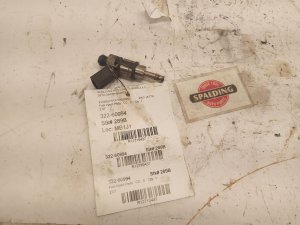
Used OEM Parts in Stock
New Aftermarket Parts Available



The information in this article is provided for general reference and educational purposes only. Vehicle specifications, procedures, and part compatibility can vary by production date, trim level, and region. Always consult your vehicle's factory service manual and verify part numbers before purchasing or performing repairs. Safety-critical components such as airbags, seat belts, and braking systems should be installed by a qualified professional.
- Audi A4:
- 🛍️ Shop This Part
- What's Unique About the 2004-2008 Audi A4
- Symptoms You May Notice
- Most Likely Causes
- Rare But Worth Checking
- Diagnosis Steps
- Parts You'll Likely Need
- Related Codes That Often Appear With This One
- Platform-Specific Known Issues
- Mechanic-Grade Diagnostic Values
- Scan Tool Commands That Help
- Wiring & Ground Locations
- OEM Part Supersession History
- Model Year Variations Within This Range
- Diagnostic Flowchart
- Other Known Issues on This Vehicle
- Used vs. New Parts: Buying Guide for This Vehicle
- Real Owner Stories
- 2004-2008 Audi A4 TDI
- 2004-2008 Audi A4 TDI
- Related OBD-II Codes
- Frequently Asked Questions
- 🎟️ Get 5% Off