

P1185 on 2017-2023 Genesis G80: Understanding a Confusing Code
P1185 is a manufacturer-specific code for Hyundai/Genesis. While it generally means "Fuel Pressure Monitoring - Maximum Pressure Exceeded," all available technical details for this code relate to diesel engines, which the G80 does not have. The presence of this code on a gasoline G80 is highly unusual and likely indicates a scanner error or an underlying fault that should have triggered the standard code P0088 (Fuel Rail/System Pressure - Too High).
- P1185 is a known code for Hyundai/Genesis, meaning fuel pressure is too high.
- However, all detailed technical information for this code applies to DIESEL engines, not the gasoline engines in the G80.
- If you see this code on a Genesis G80, double-check it with a professional-grade scanner. It is almost certainly an error, and the actual code is P0088.
- The most common cause for the underlying high fuel pressure condition (P0088) is a failing high-pressure fuel pump (HPFP) or a bad fuel rail pressure sensor.
- Do NOT use diagnostic guides or replace parts based on information for Hyundai diesel engines.
- Professional diagnosis is essential due to the high level of uncertainty and the safety risk of the engine stalling. Check for open recalls related to the fuel system immediately.
What's Unique About the 2017-2023 Genesis G80
The core issue is a mismatch between the code's documented application and the vehicle in question. The Genesis G80 uses gasoline direct injection (GDI) engines, which have both a low-pressure in-tank fuel pump and a high-pressure, engine-driven mechanical pump. While these systems can experience 'pressure too high' faults, the standardized SAE trouble code for this is P0088. The P1185 code appears to be reserved for the very different fuel systems found in Hyundai's diesel-powered vehicles, which are not offered in the G80 in most markets. It is highly unusual for this code to appear on a gasoline G80, and it most likely points to a generic scanner misinterpreting the manufacturer-specific data for the actual underlying fault, P0088.
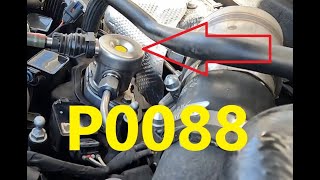
🎬 See this breakdown of common causes for high fuel pressure.Generation note: The 2017-2023 range covers two generations of the G80: the first (DH) from 2017-2020 and the second (RG3) from 2021-2023. However, since the P1185 code is not documented for the gasoline engines in either generation, this distinction is likely irrelevant. The underlying causes for the more probable P0088 code, such as high-pressure fuel pump or sensor failure, can affect all GDI engines in both generations.
Symptoms You May Notice
- Check Engine Light is on
- Rough idle or stalling
- Hesitation or loss of power during acceleration, especially under load
- Engine enters 'limp mode' with reduced power and RPM limit
- Poor fuel economy
- Strong smell of raw fuel from the exhaust
- Black smoke from the exhaust (unlikely but possible with extreme over-fueling)
- Replacing parts based on diesel engine diagnostic procedures.
- Confusing P1185 with the more common P0088 (Fuel Rail/System Pressure - Too High).
- Replacing the fuel rail pressure sensor when the high-pressure fuel pump is the actual cause.
Most Likely Causes
Rare But Worth Checking
- Restriction in the fuel return line (though most GDI systems are returnless from the rail).
- Failure of the in-tank low-pressure fuel pump driver module, causing it to run at maximum speed.
Diagnosis Steps
- Confirm the code with a high-quality, Genesis-compatible scan tool (e.g., Hyundai GDS). Verify if the code is truly P1185 or if it is P0088.
- Check for any available Technical Service Bulletins (TSBs) or Recalls for your vehicle's specific VIN. There are several fuel-pump-related recalls and campaigns for Genesis models.
- Use the scan tool to monitor live data. Graph 'Fuel Rail Pressure (Actual)' vs. 'Fuel Rail Pressure (Desired)'. If actual pressure is consistently and significantly higher than desired, a mechanical or sensor fault is present.
- Inspect the wiring harness for the fuel rail pressure sensor and high-pressure fuel pump for any signs of damage, corrosion, or rodent activity.
- If scan tool data is suspect, test the fuel rail pressure sensor's voltage output. A reading stuck at or near 5.0V indicates a sensor or wiring short-to-power issue.
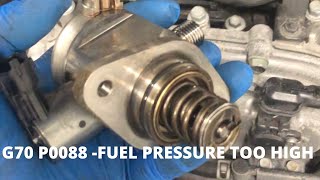
- If the sensor and wiring are good, the primary suspect becomes the high-pressure fuel pump (HPFP). Diagnosis may involve checking the control signal to the pump's volume regulator. Replacement is often the required fix. 🎬 Watch: A professional walkthrough of P0088 diagnosis and repair.
Parts You'll Likely Need
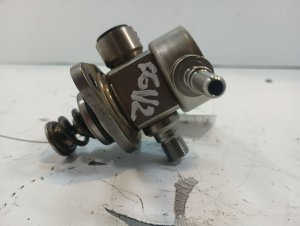
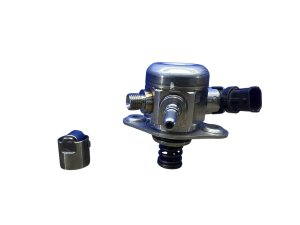
- High-Pressure Fuel Pump (HPFP)
- Fuel Rail Pressure Sensor (FRPS)
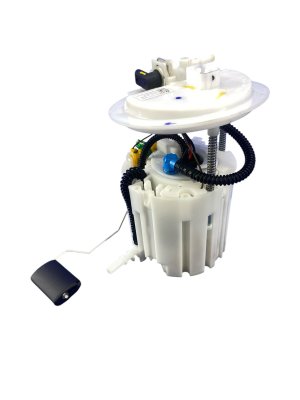
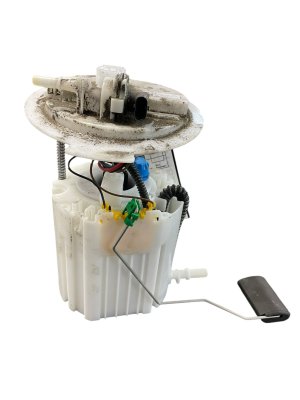
- Low-Pressure Fuel Pump (In-tank)
Related Codes That Often Appear With This One
- P0088 — P0088 is the standard SAE code for 'Fuel Rail/System Pressure - Too High.' It is the code one would typically expect for this condition on a GDI engine. A generic scanner could misinterpret or display P1185 when the underlying fault is a P0088.
- P0300-P0308 — Random or specific cylinder misfire codes can occur due to the extreme rich condition caused by excessive fuel pressure, which can foul spark plugs.
Technical Service Bulletins (TSBs) & Recalls
- NHTSA Campaign 24-01-076G / SC281: Pertains to the Genesis G70 and Kia Stinger 2.0T, but describes the exact failure mode relevant to P0088: a stuck fuel control valve in the HPFP causing over-pressurization, loss of power, and requiring an ECM update and potential pump replacement.
- NHTSA Campaign 23V-630 / Genesis Recall 022G: A widespread recall for 2021-2023 G80, GV70, GV80, and G90 models for a failing low-pressure (in-tank) fuel pump impeller that can cause stalling. While this typically causes low pressure, it's a critical fuel system issue for owners to be aware of.
- TSB 21-FL-003H: Addresses DTC U0109 (Lost Communication with Fuel Pump Control Module), indicating potential electronic issues within the fuel system that could be a contributing factor.
Platform-Specific Known Issues
- While P1185 is not documented, the related code P0088 is a known issue on platform mates like the Kia Stinger and Genesis G70, often leading to a recall or TSB to replace the high-pressure fuel pump and update the ECM software.
- Multiple recalls exist for the broader Genesis lineup concerning fuel pumps. NHTSA campaign 23V-630 (Genesis recall 022G) addresses the low-pressure fuel pump failing and causing stalls. Another recall for 2021 G80s with the 2.5T engine addresses a leaking fuel pipe between the HPFP and fuel rail.
Mechanic-Grade Diagnostic Values
- Low-Pressure Fuel System Pressure — expected: Approximately 60 PSI. Failure: Significantly lower pressure would indicate a failing in-tank pump, which is not the cause of P0088 but is a common failure point on these vehicles.
- High-Pressure Fuel System Pressure (Live Data) — expected: Around 500-515 PSI at idle.. Failure: A reading that spikes to 2,500, 3,000, or even 8,000 PSI, especially when revving the engine, indicates a severe over-pressurization condition caused by a faulty HPFP.
- Fuel Rail Pressure Sensor Voltage — expected: A variable voltage signal between 0.5V and 4.5V that corresponds to pressure changes.. Failure: A constant reading of 5.0V suggests a short-to-power in the wiring or a failed sensor, which could trick the ECM into believing pressure is maxed out.
Hidden / Shadow Codes Worth Checking
- P008800: This is an extended format of the P0088 code, often seen on dealer-level scan tools like the Genesis GDS. It does not represent a different fault but is the more specific identifier used in technical service bulletins. (see via Genesis GDS (Global Diagnostic System) or other advanced, professional-grade scan tools.)
Scan Tool Commands That Help
- Genesis GDS (Global Diagnostic System): ECM Software Update (GDS Event #1140) — This is a mandatory first step in the official recall procedure for the related P0088 code on the 2.0T engine. The software update revises the limp-home logic. The HPFP is only replaced if the P0088 code is present *after* the update.
- Genesis GDS: Fault Code Searching — Used to officially confirm the presence of DTC P0088/P008800 as required by recall procedures before authorizing the replacement of the high-pressure fuel pump.
- High-end generic or dealer scan tool: Live Data Graphing (Actual vs. Desired Fuel Rail Pressure) — This is the primary diagnostic step for any technician. Graphing the actual pressure from the sensor against the pressure requested by the ECM will immediately show if the pressure is spiking far beyond the target, confirming an over-pressurization fault.
Wiring & Ground Locations
- Fuel Pump Relay — In the engine compartment fuse box. On a 2017 G80, fuse F/PUMP (20A) protects the fuel pump relay. The ECM and fuel pump relay are linked via fuse #42 in the same box.. While a relay failure typically causes a no-start or low-pressure condition, a stuck or intermittently failing relay could contribute to erratic fuel system behavior. It's an important and accessible part of the circuit to check.
- Fuel Pump Control Module — For the 2015+ Genesis (precursor to G80), the fuel pump controller module is located in the trunk, behind the passenger-side trim panel.. This module controls the in-tank low-pressure pump. A failure here is more likely to cause low pressure or a U0109 code, but it is a key electronic component in the overall fuel delivery system that could be a factor in rare cases.
Real Owner Repair Stories
- Reddit user Top_Training_979 on r/kiastinger (2019 Kia Stinger (platform mate)) — Car would hesitate when shifting from 2nd to 3rd gear. Later, it would start but immediately stall when put into drive. Codes P0088 and P053F were present.
❌ Tried (didn't work) The shop first tested the battery and alternator, which were both fine.
✅ What actually fixed it The owner took the car to a Kia dealership. The issue was a known problem with the fuel pump, and it was replaced free of charge under warranty as part of a recall. - YouTube channel 'Hyundai Tech' (Genesis G70 (platform mate)) — Engine starts and then immediately stalls. Code P0088 was stored.
❌ Tried (didn't work) The technician first verified the low-pressure fuel pump was working correctly, reading a healthy 60 PSI.
✅ What actually fixed it Live data showed fuel rail pressure spiking to 8,000 PSI, confirming the fuel rail pressure sensor was reporting a real over-pressure event. Replacing the high-pressure fuel pump (HPFP) resolved the stalling issue.
OEM Part Supersession History
35320-3L000→35326-3L000— This is the High-Pressure Fuel Pump (HPFP) for the 3.3L V6 Turbo engine. Part numbers are often superseded due to design revisions or supplier changes.
Heads up: The new part number (35326-3L000) is the correct replacement for vehicles originally equipped with 35320-3L000.
Model Year Variations Within This Range
- 2017-2020 (DH Generation): This generation offered a 3.8L V6, a 3.3L Twin-Turbo V6, and a 5.0L V8. The P0088 fault is most relevant to the GDI engines, particularly the 3.3T which shares architecture with other affected models like the Stinger.
- 2021-2023 (RG3 Generation): The engine lineup was changed to a 2.5L Turbo I4 and a 3.5L Twin-Turbo V6. The 3.8L and 5.0L V8 were dropped. Both new engines are GDI and have a similar fuel system structure (low-pressure in-tank pump, high-pressure engine-mounted pump), meaning the root causes of a P0088 code would be consistent (HPFP, sensor, wiring). The 2021 2.5T model was subject to a specific recall for a leaking fuel pipe between the HPFP and the fuel rail.
Diagnostic Flowchart
Other Known Issues on This Vehicle
Issues unrelated to this code that are worth knowing about as an owner of this generation:
- Low-Pressure Fuel Pump Failure 🔴 High — Widespread enough to trigger a major recall (NHTSA 23V-630 / 022G) on 2021-2023 models. Can cause sudden engine stalling. (Ref: NHTSA 23V-630 / Genesis Recall 022G)
- ABS Module / Starter Solenoid Fire Risk 🔴 High — Affects first-generation (2017-2020) G80 models. Can cause an electrical short and engine compartment fire, even when parked. (Ref: NHTSA 21V-160, 24V107000)
- Left Turbocharger Oil Feed Pipe Leak 🟠 Medium — Affects 2018-2020 G80 models with the 3.3L V6 Turbo engine. The pipe can deteriorate and leak oil onto hot exhaust components, creating a fire risk. (Ref: NHTSA 22V-612)
- Engine Oil Consumption (5.0L V8) 🟠 Medium — Some owners of the 5.0L V8 (primarily in the first generation) report higher-than-average oil consumption, sometimes attributed to piston rings. (Ref: TSB 21-EM-003H (general oil consumption diagnosis))
- Knock Sensor Detection Software (P1326) 🔴 High — While the G80 is not explicitly listed in all versions, a massive campaign (T3G / 953) was issued for many Hyundai/Genesis GDI engines to update software that detects bearing wear to prevent catastrophic engine failure. The associated code is P1326. (Ref: Service Campaign T3G / 953)
Used vs. New Parts: Buying Guide for This Vehicle
When a used part is the smart pick: For this repair, a used OEM Fuel Rail Pressure Sensor (FRPS) from a low-mileage donor vehicle can be a cost-effective option if you suspect a sensor-only failure. However, given the high failure rate of the HPFP, it is often not the sensor.
Donor-vehicle mileage cap: roughly under 50000 miles for the part to have meaningful remaining life.
What to inspect on the donor part:
- For a High-Pressure Fuel Pump (HPFP), verify the exact part number matches your requirement.
- Inspect the pump body for any signs of fuel leaks, heavy corrosion, or physical damage.
- Check the electrical connector to ensure pins are straight and the plastic housing is not cracked or brittle.
- For a sensor, ensure the connector pins are clean and the part has no visible cracks or damage.
OEM-only on this vehicle (don't cheap out):
- High-Pressure Fuel Pump (HPFP): Due to the known defects and safety-critical nature of this part, a new OEM pump is strongly recommended. Many failures are due to internal wear, which is impossible to assess on a used part. Aftermarket options lack the long-term validation and may not be compatible with required ECU software updates.
- High-Pressure Fuel Line: The metal pipe connecting the HPFP to the fuel rail is a single-use, torque-to-yield part. It MUST be replaced with a new one anytime it is removed to prevent catastrophic fuel leaks.
Aftermarket brands forum-validated for this vehicle:
- No aftermarket brands have been consistently validated in forums as reliable long-term alternatives for the HPFP on this platform. Stick with Genuine Hyundai/Kia parts.
Brands owners have reported issues with on this vehicle:
- Avoid unbranded, low-cost HPFPs from online marketplaces. The risk of premature failure and potential for engine bay fire is extremely high with a component under this much pressure.
Real Owner Stories
Aggregated from forums and TSBs cited above. Mileages and costs reflect what owners reported in those sources.
2018-2023 Kia Stinger
Symptoms: Hesitation and the engine entering limp mode.
What fixed it: The owner noted a recall for the high-pressure fuel pump, which was the required repair.
Source hint: Reddit r/kiastinger/comments/s50ycn/p0088_code_fuel_railsystem_pressure_too_high_bank/
2018 Kia Stinger (Base Model)
Symptoms: The vehicle was throwing code P0088.
What fixed it: Discussion among users indicated that high-pressure fuel pump failures are not uncommon on these cars, pointing to the pump as the root cause.
Source hint: Reddit r/kiastinger/comments/10p2z2g/2018_kia_stinger_base_model_is_throwing_code_p0088/
Genesis G70 / Kia Stinger (2.0T)
Symptoms: Loss of power due to a stuck fuel control valve in the high-pressure fuel pump causing over-pressurization.
What fixed it: The official fix requires an ECM update and potential replacement of the high-pressure fuel pump.
Source hint: NHTSA Campaign 24-01-076G / SC281
Related OBD-II Codes
Frequently Asked Questions
My G80 is a 2021 model. Is it affected by any fuel pump recalls?
My scan tool shows code P0088, not P1185. Is this the same problem?
Can I use a cheaper aftermarket high-pressure fuel pump (HPFP) for this repair?
I'm replacing the high-pressure fuel pump. Is there anything else I must replace at the same time?
The TSBs mention the Kia Stinger and Genesis G70. Does this information apply to my G80?
What should a technician look for on a scan tool to diagnose P1185?
Helpful Videos
We Have This Part in Stock



The information in this article is provided for general reference and educational purposes only. Vehicle specifications, procedures, and part compatibility can vary by production date, trim level, and region. Always consult your vehicle's factory service manual and verify part numbers before purchasing or performing repairs. Safety-critical components such as airbags, seat belts, and braking systems should be installed by a qualified professional.
- Genesis G80:
- 🎬 Helpful Videos
- 🛍️ Shop This Part
- What's Unique About the 2017-2023 Genesis G80
- Symptoms You May Notice
- Most Likely Causes
- Rare But Worth Checking
- Diagnosis Steps
- Parts You'll Likely Need
- Related Codes That Often Appear With This One
- Technical Service Bulletins (TSBs) & Recalls
- Platform-Specific Known Issues
- Mechanic-Grade Diagnostic Values
- Hidden / Shadow Codes Worth Checking
- Scan Tool Commands That Help
- Wiring & Ground Locations
- Real Owner Repair Stories
- OEM Part Supersession History
- Model Year Variations Within This Range
- Diagnostic Flowchart
- Other Known Issues on This Vehicle
- Used vs. New Parts: Buying Guide for This Vehicle
- Real Owner Stories
- 2018-2023 Kia Stinger
- 2018 Kia Stinger (Base Model)
- Genesis G70 / Kia Stinger (2.0T)
- Related OBD-II Codes
- Frequently Asked Questions
- 🎟️ Get 5% Off