

P1101 on 2008-2009 Saturn Astra 1.8L: Causes and Fixes for Intake Airflow Faults
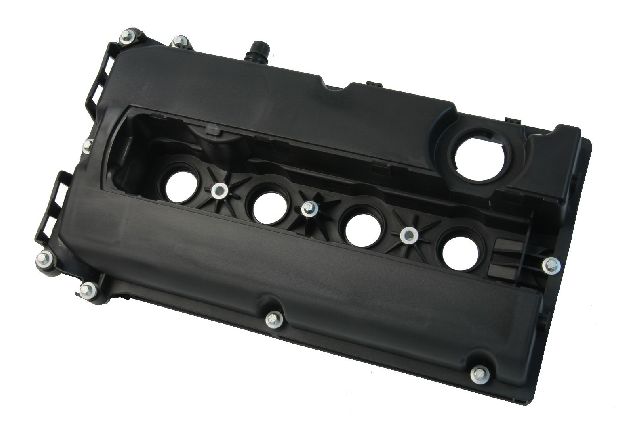
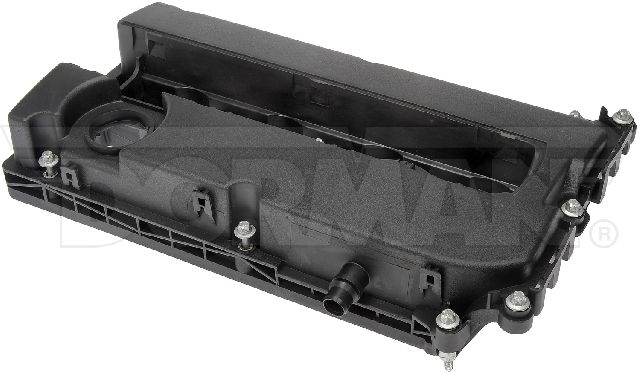
On a 2008-2009 Saturn Astra, code P1101 is almost always caused by a failed PCV diaphragm inside the valve cover (Part No. 55564395), creating a large vacuum leak. The fix is to replace the entire valve cover assembly. Expect to pay $50-$150 for an aftermarket part.
- For a 2008-2009 Saturn Astra, P1101 almost always points to a torn PCV diaphragm in the valve cover.
- Confirm the PCV failure by listening for a hiss from the engine cover or checking for strong vacuum at the oil cap while the engine is running.
- The correct repair is to replace the entire valve cover assembly; the PCV component is not sold separately by GM.
- Before buying parts, always double-check for simple issues like a poorly seated air filter or disconnected intake hose.
- This code is often accompanied by P0171 (System Too Lean), which reinforces the diagnosis of an unmetered vacuum leak.
What's Unique About the 2008-2009 Saturn Astra
The Saturn Astra is a rebadged Opel Astra H, and its 1.8L Ecotec engine (RPO code Z18XER) has a specific design flaw that commonly causes this code. The Positive Crankcase Ventilation (PCV) system's diaphragm is integrated directly into the plastic valve cover. This rubber diaphragm is prone to tearing, creating a significant, unmetered vacuum leak that the ECM cannot account for, directly triggering the P1101 code. 🎬 Watch: How a failed valve cover causes P1101 and P0171 codes. Unlike many other vehicles where the PCV valve is a small, cheap, separate part, fixing this issue on the Astra requires replacing the entire valve cover assembly, as GM does not sell the diaphragm separately.
Symptoms You May Notice
- Check Engine Light is on
- Rough, unstable, or surging idle
- Loud hissing or whistling sound from the top of the engine, specifically from the round black PCV diaphragm cap on the valve cover.
- Engine may stall when coming to a stop
- Reduced engine power and poor acceleration
- Poor fuel economy
- Strong vacuum suction at the oil filler cap, making it difficult to remove with the engine running. The engine's idle will stumble or change dramatically when the cap is finally removed.
- Replacing the MAF sensor without first checking for the common PCV failure. The symptoms of a massive vacuum leak from the PCV system can mimic a bad MAF sensor, but replacing the sensor will not fix the root cause.
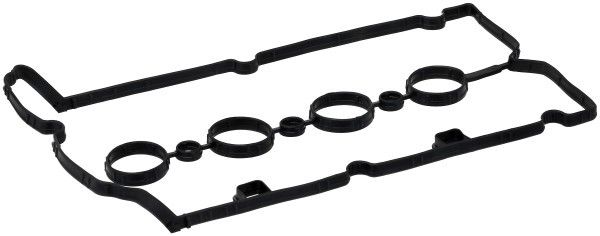
- Replacing only the valve cover gasket when the internal PCV diaphragm is the actual point of failure causing the vacuum leak and P1101 code.
Most Likely Causes
- Failed PCV Diaphragm in Valve Cover 🔴 High Probability The PCV system's rubber diaphragm is integrated into the valve cover and is known to tear or rupture over time, a common failure on this specific 1.6L/1.8L Ecotec engine family used across GM's compact vehicles.
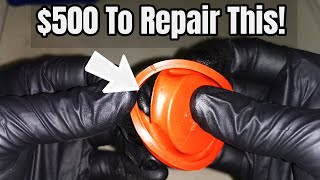
How to confirm: With the engine running, listen for a distinct hissing or sucking noise from the round black cap on the valve cover. Alternatively, try to remove the oil filler cap; if there is a very strong vacuum holding it down and the engine idle changes dramatically when you pull it off, the diaphragm has failed. You may also be able to see the torn diaphragm through a small hole in the cap.
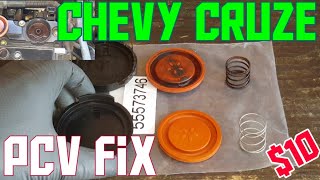
Typical fix: Replace the entire engine valve cover assembly. The PCV diaphragm is not sold separately by the OEM, although some aftermarket diaphragm-only kits exist for those willing to pry open the sealed cap. 🎬 See how to replace just the PCV diaphragm in the cover.
Est. part cost: $70-$150 for an aftermarket assembly, $170+ for OEM. - Vacuum Leak (Other than PCV) 🟡 Medium Probability The plastic and rubber components of the intake system can become brittle over time. The ribbed intake air duct between the air filter box and throttle body is known to crack.
How to confirm: Perform a smoke test by introducing smoke into the intake system and look for leaks from cracked hoses, loose connections, or a bad intake manifold gasket. You can also visually inspect all intake ducting between the MAF sensor and the throttle body for cracks or loose clamps.
Typical fix: Replace the leaking hose, tighten the clamp, or replace the faulty gasket.
Est. part cost: $10-$100 - Dirty or Faulty Mass Airflow (MAF) Sensor ⚪ Low Probability
How to confirm: Remove the MAF sensor and inspect the sensing elements. If they are dirty, clean them carefully with a dedicated MAF sensor cleaner spray. Do not touch the elements. If cleaning doesn't resolve the issue, the sensor may be faulty and require replacement. A faulty MAF is a common misdiagnosis for the PCV failure.
Typical fix: Clean or replace the MAF sensor.
Est. part cost: $15 (cleaner) or $60-$120 (sensor) - Improperly Installed or Clogged Air Filter ⚪ Low Probability
How to confirm: Inspect the engine air filter. Ensure it is clean and, more importantly, seated correctly in the airbox housing. An improperly sealed or deformed aftermarket air filter can cause turbulent airflow and incorrect MAF readings.
Typical fix: Replace the air filter and ensure the airbox is sealed correctly.
Est. part cost: $15-$30
Rare But Worth Checking
- Dirty Throttle Body: Significant carbon buildup can restrict or alter airflow enough to contribute to this code. Cleaning it is good maintenance and a common fix on related GM platforms.
- Cracked Intake Manifold: While less common than a gasket leak, the plastic intake manifold itself can develop cracks, creating a hard-to-find vacuum leak.
- Cracked Intake Air Duct: The flexible, ribbed portion of the air intake hose that connects the air filter housing to the throttle body can develop cracks, creating an unmetered air leak after the MAF sensor.
Diagnosis Steps
- Check for Stored Codes: Use an OBD-II scanner to confirm P1101 and check for any other related codes like P0171 or P0106, which strongly suggest a vacuum leak.
- Perform PCV System Check: With the engine idling, listen for a loud hissing or sucking noise from the valve cover's round PCV cap. Carefully attempt to remove the oil filler cap. If strong vacuum resistance is felt and the engine note changes significantly, the PCV diaphragm has failed. This is the most probable cause.
- Inspect Air Intake System: Visually inspect the entire air intake tract from the air filter box to the throttle body. Pay close attention to the ribbed, flexible sections of the intake duct for cracks. Ensure all clamps are tight.
- Inspect Air Filter: Open the air filter housing and check if the filter is clean and properly seated. A poorly fitted or deformed filter can cause this code.
- Clean the MAF Sensor: If the PCV system seems okay, the next step is to clean the MAF sensor. Disconnect it, remove it from the intake tube, and spray the sensor wires with dedicated MAF sensor cleaner. Let it dry completely before reinstalling.
- Perform a Smoke Test: If the cause is still not found, a smoke test is the most reliable way to find hidden vacuum leaks in hoses, the intake manifold, or gaskets.
- Check Throttle Body: Inspect the throttle body for heavy carbon buildup and clean if necessary.
- Torque Valve Cover Bolts: When replacing the valve cover, it is critical to use a torque wrench. The plastic cover is sensitive to over-tightening. 🎬 Watch this step-by-step valve cover and gasket replacement walkthrough. Torque the bolts to 71 in-lbs (8 Nm).
Parts You'll Likely Need
- Engine Valve Cover with Integrated PCV
(OEM #55564395 (Superseded by 25198874))— This is the most common failure point for code P1101 on this engine. The integrated PCV diaphragm tears, and the entire cover must be replaced.
Trusted brands: ACDelco (GM Genuine), Dorman (p/n 264-968), Autotecnica
OEM price range: $120-$200
Aftermarket price range: $50-$150
Related Codes That Often Appear With This One
- P0171 — This code means 'System Too Lean (Bank 1)'. It is frequently triggered alongside P1101 because the unmetered air from the vacuum leak (often the PCV) creates a lean air-fuel mixture that the ECM tries to correct by adding fuel.
- P0106 — This code indicates a 'Manifold Absolute Pressure (MAP) Sensor Performance' issue. A large vacuum leak from a failed PCV diaphragm causes MAP sensor readings to be out of their expected range, triggering this code along with P1101.
- P0068 — This code points to a correlation issue between the MAP, MAF, and Throttle Position sensors. A major vacuum leak causes a discrepancy among these sensors' readings that the ECM flags as a fault.
Technical Service Bulletins (TSBs) & Recalls
- GM TSB 20-NA-047: While for newer engines, it establishes a clear link between a plugged/faulty PCV system and the P1101 code, corroborating the diagnosis for the Astra.
- GM TSB PIP5108: Discusses P1101 on some Cruze models and advises checking throttle position angle at idle. A reading below 7-8% indicates unmetered air is entering the engine, pointing towards a vacuum leak, which is consistent with a failed PCV diaphragm.
Platform-Specific Known Issues
- The integration of the PCV diaphragm into the valve cover is a known weak point on the 1.8L Ecotec engine (and its 1.6L sibling) used in the Saturn Astra and other contemporary GM compacts like the Chevrolet Cruze and Sonic.
- Aftermarket valve covers, such as those from Dorman, are widely available but have mixed reviews. Some users report fitment issues or premature failure, while others find them to be a cost-effective solution.
Mechanic-Grade Diagnostic Values
- Manifold Absolute Pressure (MAP) Sensor Voltage — expected: Key On, Engine Off (KOEO): ~4.5-5.0 Volts. At idle: ~1.0-2.0 Volts.. Failure: Voltage at idle remains high (near the KOEO reading), indicating a massive vacuum leak or faulty sensor.
- Mass Airflow (MAF) Sensor Output Voltage — expected: At idle (~800 RPM): 0.7 - 1.1 Volts. At 3000 RPM: 1.3 - 2.0 Volts.. Failure: Voltage is significantly outside the expected range for a given RPM. A reading above 0V with the engine off can indicate a faulty sensor.
- Short-Term Fuel Trim (STFT) with MAF disconnected — expected: With the engine running and MAF sensor disconnected, the fuel trim should quickly correct towards 0% (+/- 10%).. Failure: If disconnecting the MAF causes the high positive fuel trims (associated with the P0171 lean code) to normalize, it confirms the MAF was providing inaccurate readings, likely due to a vacuum leak or turbulence.
- Mass Airflow (MAF) Sensor Grams/Second (g/s) — expected: At idle, the 'Actual' MAF reading should be very close to the 'Calculated' airflow value on a scan tool.. Failure: The P1101 code sets when the measured airflow is significantly different from what the ECM calculates it should be.
Wiring & Ground Locations
- MAF Sensor Connector Pin 1 — The output signal wire on the MAF sensor connector. Can also be tested at the corresponding ECM harness connector, Pin 41.. This is the specific pin to back-probe with a voltmeter to test the MAF sensor's output voltage against specifications at idle and 3000 RPM.
- Engine Ground Points — Main grounds are typically from the negative battery terminal to the chassis and from the chassis to the engine block. Check for loose or corroded bolts on the engine block or transmission housing where ground straps are attached.. A poor engine ground can cause erratic voltage readings from all engine sensors, including the MAF and MAP, potentially triggering a P1101 code.
Real Owner Repair Stories
- YouTube channel 'SiRobb' (Chevrolet Cruze (with similar Ecotec engine and PCV design)) — P1101 code, rough running.
❌ Tried (didn't work) Initial assumption was a vacuum leak or bad sensor.
✅ What actually fixed it The aftermarket air filter was not seated correctly in the airbox. Removing the filter, ensuring the seal was properly aligned, and reinstalling it correctly resolved the code. The improper seal caused turbulent air across the MAF sensor, leading to incorrect readings. - Reddit user in r/cruze (2014 Chevrolet Cruze 1.4L Turbo with 171k miles) — P1101, P0106, P0171 codes, surging/rough idle.
❌ Tried (didn't work) Replaced intake manifold, Replaced valve cover assembly, Replaced ignition coils and spark plugs, Replaced MAP sensor
✅ What actually fixed it The user's issue was unresolved in the post, but the top comment, a detailed bot response, explains that after replacing the valve cover, if the issue persists, the root cause is often a failed/missing check valve inside the intake manifold, which causes the new valve cover diaphragm to fail again. The ultimate fix in these cases is replacing the intake manifold or installing a special aftermarket external check valve kit.
"I Checked Everything" — The Actual Cause
- In one documented case, a P1101 was caused by an improperly seated aftermarket air filter. A smoke test for vacuum leaks would have come back clean because the leak/turbulence was happening at the airbox, before the point of induction. The incorrect seal on the air filter created turbulent airflow across the MAF sensor, causing it to read incorrectly and trigger the code. The fix was simply to reinstall the air filter correctly, ensuring it sealed properly in the housing.
When the Usual Fixes Don't Work
- While the failed PCV diaphragm in the valve cover is the cause over 90% of the time, it is not the only possibility. In one confirmed repair, the P1101 code was caused solely by an aftermarket air filter that was not seated correctly in the airbox, causing turbulent flow over the MAF sensor. A smoke test would not find this fault. The fix was simply reinstalling the filter correctly. In other related GM models, even after replacing the valve cover, the code can persist if a secondary check valve inside the intake manifold has also failed, an issue that requires either replacing the manifold or installing an aftermarket bypass kit.
OEM Part Supersession History
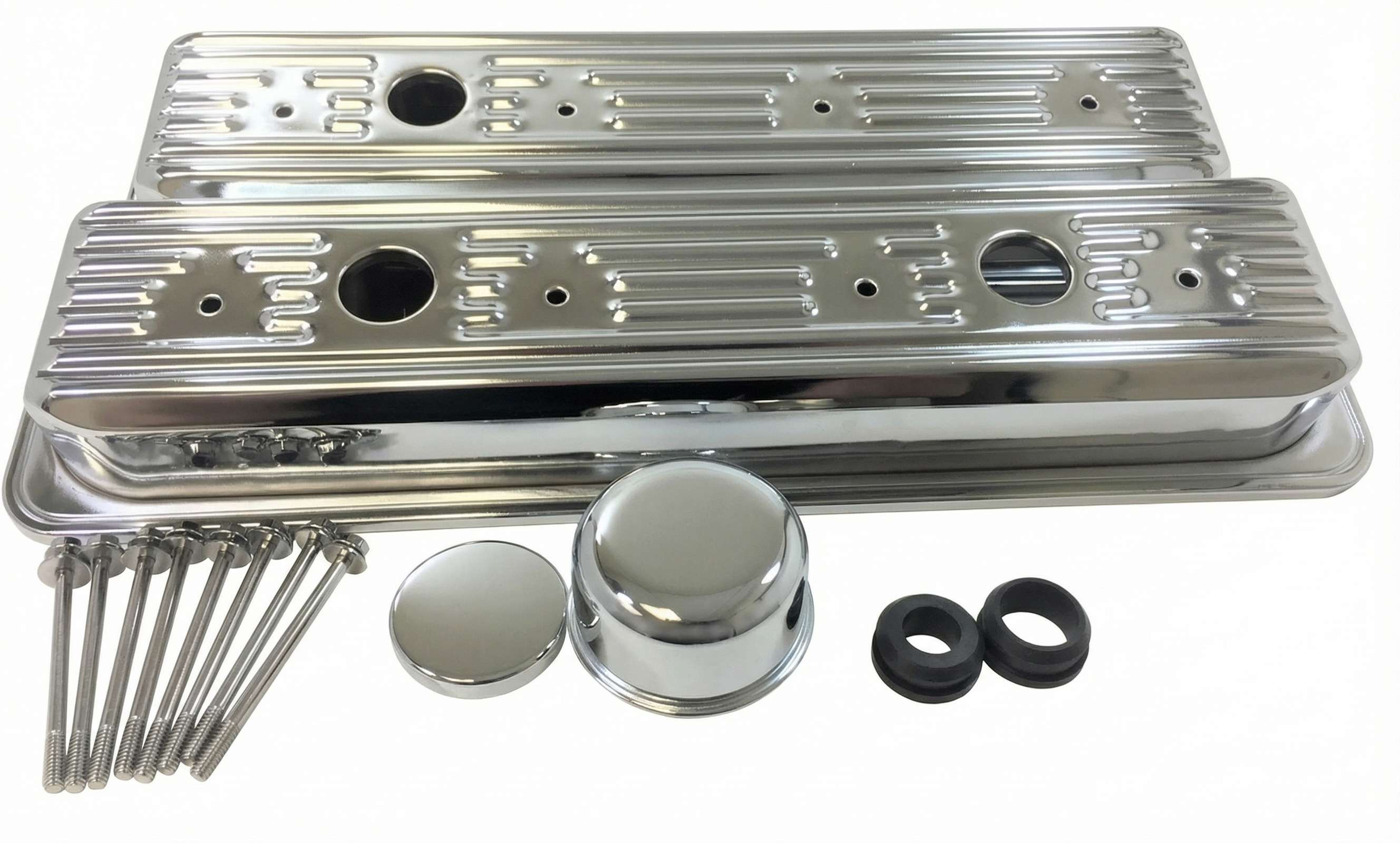
19418859 (Plastic)→55564395 (Plastic or Aluminum)— Original plastic covers were prone to cracking and heat degradation.
Heads up: An aluminum version with part number 55564395 is available as a more durable upgrade to the OEM plastic cover.55564395→25198874— Standard part number evolution by GM.55558673→55564395— Listed as an interchange part number, likely an earlier revision.
Diagnostic Flowchart
Real Owner Stories
Aggregated from forums and TSBs cited above. Mileages and costs reflect what owners reported in those sources.
Saturn Astra / GM 1.6L/1.8L Ecotec
Symptoms: Check Engine Light illuminated with a large vacuum leak caused by a tear in the rubber PCV diaphragm inside the valve cover, resulting in a System Too Lean code.
What fixed it: Replacing the valve cover assembly to fix the torn PCV diaphragm.
Source hint: Go-Parts
Chevrolet Cruze / Sonic 1.8L
Symptoms: Experienced a hissing noise from the engine bay along with a combination of P1101 and P0171 codes.
What fixed it: Successful resolution by replacing the valve cover assembly.
Source hint: cruzetalk.com & sonicownersforum.com
2019 Chevy Trax
Symptoms: Experienced an oil leak after installing a new aftermarket Dorman valve cover.
What fixed it: Highlighted potential quality control issues with aftermarket parts; no permanent fix noted.
Source hint: Reddit r/AskMechanics - 'Dorman Valve Cover 264-968 Reviews'
Related OBD-II Codes
Frequently Asked Questions
Why is there a loud hissing sound coming from the top of my 1.8L Ecotec engine?
Can I just replace the PCV valve on my 2008 Saturn Astra instead of the whole valve cover?
Does GM TSB 20-NA-047 or PIP5108 apply to my Saturn Astra's P1101 code?
Should I buy an aftermarket Dorman valve cover to fix the P1101 code?
What is the correct torque spec for the valve cover bolts on the 1.8L Astra?
Could my air filter really be causing a P1101 code on my Astra?
Helpful Videos
Used OEM Parts in Stock
New Aftermarket Parts Available




The information in this article is provided for general reference and educational purposes only. Vehicle specifications, procedures, and part compatibility can vary by production date, trim level, and region. Always consult your vehicle's factory service manual and verify part numbers before purchasing or performing repairs. Safety-critical components such as airbags, seat belts, and braking systems should be installed by a qualified professional.
- Saturn Astra:
- 🎬 Helpful Videos
- 🛍️ Shop This Part
- What's Unique About the 2008-2009 Saturn Astra
- Symptoms You May Notice
- Most Likely Causes
- Rare But Worth Checking
- Diagnosis Steps
- Parts You'll Likely Need
- Related Codes That Often Appear With This One
- Technical Service Bulletins (TSBs) & Recalls
- Platform-Specific Known Issues
- Mechanic-Grade Diagnostic Values
- Wiring & Ground Locations
- Real Owner Repair Stories
- "I Checked Everything" — The Actual Cause
- When the Usual Fixes Don't Work
- OEM Part Supersession History
- Diagnostic Flowchart
- Real Owner Stories
- Saturn Astra / GM 1.6L/1.8L Ecotec
- Chevrolet Cruze / Sonic 1.8L
- 2019 Chevy Trax
- Related OBD-II Codes
- Frequently Asked Questions
- 🎟️ Get 5% Off