

P1101 on 2012-2018 Ford Focus ST: Causes and Fixes for MAF Sensor Faults
On a 2012-2018 Ford Focus ST, code P1101 is most often caused by a dirty Mass Airflow (MAF) sensor or a vacuum/boost leak. Start by cleaning the MAF sensor with a dedicated cleaner and inspect all intake hoses between the sensor and the throttle body for leaks, especially at the charge air cooler connections. Also, check for leaks at the sound symposer and consider a delete kit, as this is a known failure point.
- Always start diagnosis by cleaning the MAF sensor with a dedicated cleaner; it's the cheapest and most common fix.
- Thoroughly inspect the entire intake tract for air leaks, paying special attention to the large charge pipes connected to the intercooler.
- Avoid over-oiling aftermarket air filters, as the excess oil is a primary source of MAF sensor contamination.
- Do not replace the MAF sensor until you have ruled out a dirty sensor and air leaks.
- If you hear a whistling sound, it is a strong indicator of a vacuum or boost leak that needs to be found and fixed.
What's Unique About the 2012-2018 Ford Focus
For the turbocharged 2.0L EcoBoost engine in the Focus ST, the P1101 code is frequently tied to the forced induction system. Unlike naturally aspirated engines, the ST's intake tract is pressurized, meaning a leak can be a 'boost leak' (losing pressurized air) as well as a vacuum leak. Issues like a poorly seated charge air cooler hose or contamination of the MAF sensor from oil vapors in the PCV system are more common on this platform. A unique potential leak source on the ST is the factory 'Sound Symposer,' a device that pipes intake noise into the cabin and is known to fail, creating a boost leak. Many owners opt to install a 'symposer delete' kit to permanently eliminate this failure point.
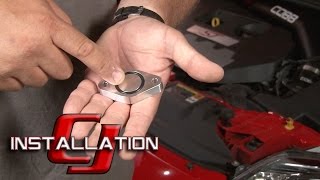
🎬 See how to install a sound symposer delete kit yourself.Symptoms You May Notice
- Check Engine Light is on
- Reduced engine power and sluggish acceleration, sometimes described as 'limp mode'.
- Rough or unstable idle
- Hesitation or stumbling when applying the throttle
- Engine stalling, especially when coming to a stop or right after refueling (can also indicate a purge valve issue).
- A high-pitched whistling noise from the engine bay under boost, which strongly indicates a vacuum or boost leak.
- Noticeably reduced intake or engine noise in the cabin (can indicate a failed sound symposer).
- Replacing the MAF sensor immediately without first cleaning it and checking for leaks. A dirty sensor is far more common than a failed one.
- Replacing the MAF sensor when the actual problem is a vacuum/boost leak elsewhere in the system, such as a torn charge pipe or failed sound symposer.
- Confusing P1101 symptoms with a bad purge valve. While both can cause stalling and rough idle, the purge valve issue is most prominent immediately after refueling.
Most Likely Causes
- Dirty or Contaminated Mass Airflow (MAF) Sensor 🔴 High Probability Oiled aftermarket air filters are a primary culprit, as excess oil can coat the MAF sensor's delicate wires. Additionally, oil vapor from the PCV system is common in direct-injected, turbocharged engines and can contaminate the sensor over time, leading to incorrect readings.
How to confirm: Visually inspect the MAF sensor's wires located in the intake tube right after the air filter box. If they appear dirty, oily, or have debris on them, they need cleaning. The sensor is typically held in by two Torx screws.
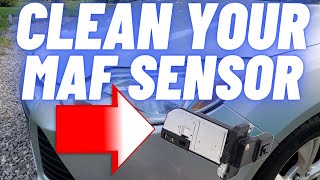
Typical fix: Remove the sensor and clean it carefully using only a dedicated MAF sensor cleaner spray. 🎬 Watch: A quick guide on how to clean the MAF sensor. Do not touch the wires. Allow it to dry completely before reinstalling. Many owners report a significant improvement in drivability after cleaning.
Est. part cost: $10-$20 for MAF cleaner - Vacuum or Boost Leak 🔴 High Probability The pressurized intake system has numerous connection points. Common leak points include the charge pipes to and from the intercooler, the throttle body connection, and the factory sound symposer diaphragm, which is known to rupture.
How to confirm: Visually inspect all intake tract components. A high-pitched whistle under boost is a strong audible clue. For hard-to-find leaks, a smoke test is the most effective diagnostic method. Pay close attention to the sound symposer unit on the intake manifold.
Typical fix: Tighten loose clamps, replace cracked hoses, or secure connections. For a failed sound symposer, many owners install a 'delete kit' which provides a permanent seal.
Est. part cost: $20-$200 depending on the failed component (hoses, clamps, or symposer delete kit) - Improperly Installed, Clogged, or Aftermarket Air Filter 🟡 Medium Probability An air filter that isn't seated correctly in the airbox can allow unmetered air to bypass the filter, causing turbulent airflow across the MAF sensor. Some aftermarket cold air intakes can also cause turbulence or change the airflow characteristics enough to trigger a P1101 code, even without a leak.
How to confirm: Open the air filter housing and inspect the air filter. Ensure it is the correct part, is installed correctly, and the housing is sealed properly. Check if the filter is excessively dirty.
Typical fix: Reseat the air filter correctly or replace a dirty/clogged filter. If an aftermarket intake is the cause, it may require a custom tune to calibrate the MAF sensor properly.
Est. part cost: $20-$60 for a standard filter - Faulty Canister Purge Valve (EVAP Purge Valve) ⚪ Low Probability The canister purge valve on the Focus can fail by sticking open, creating a constant vacuum leak that the PCM may not always interpret correctly, sometimes contributing to P1101. This issue is common enough that Ford issued recall 18S32. A failing purge valve often causes rough idle and stalling immediately after refueling.
How to confirm: Symptoms are the best indicator: rough running or stalling after getting gas. It can also be diagnosed by monitoring fuel trims with a scan tool; a stuck-open valve will cause high negative trims at idle.
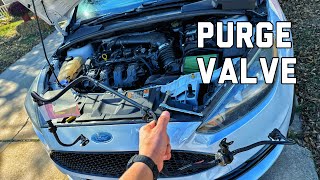
Typical fix: Replace the canister purge valve assembly. It's a relatively simple and inexpensive part to replace. 🎬 Watch: This easy walkthrough shows you how to replace the purge valve.
Est. part cost: $40-$80
Rare But Worth Checking
- Faulty MAF Sensor Wiring or Connector: While less common than a dirty sensor, physical damage to the wiring harness or corrosion in the connector pins can cause an intermittent or total loss of signal, triggering P1101.
- Cracked Intake Manifold or Bad Gasket: The stock plastic intake manifold can develop cracks or the gasket can fail, creating a vacuum leak that is difficult to see. This is a known issue on some EcoBoost engines.
- Faulty PCM: In very rare cases, the Powertrain Control Module itself can be the issue, failing to correctly interpret the MAF sensor data. This should only be considered after all other possibilities have been exhausted.
Diagnosis Steps
- Read the codes with an OBD-II scanner and confirm P1101 is present. Note any other codes, especially P0101, P0171, P1450, or P0299.
- Visually inspect the entire air intake system, from the airbox to the throttle body. Look for loose clamps, disconnected hoses, or obvious cracks. Pay special attention to the charge pipes connected to the intercooler.
- Inspect the Sound Symposer. It is located on the intake manifold and has a vacuum line and a larger tube running towards the firewall. Check for cracks or loose connections. A common failure point is its internal diaphragm.
- Remove and inspect the air filter. Ensure it is clean and properly seated in the housing. Check for any damage to the airbox that could cause a leak.
- Carefully remove the MAF sensor. Inspect it for dirt or oil contamination. It is located just after the airbox.
- Clean the MAF sensor using only dedicated MAF sensor cleaner spray. Spray the delicate wires and let it air dry completely before reinstalling.
- Clear the trouble codes and test drive the vehicle, specifically under boost, to see if the code or symptoms (like whistling) return.
- If the code returns, perform a smoke test to check for vacuum or boost leaks that are not visually apparent. This is the most reliable way to find small leaks in gaskets or hoses.
- If symptoms point to a purge valve issue (stalling after refueling), inspect and likely replace the canister purge valve.
- If no leaks are found and cleaning the MAF did not work, inspect the MAF sensor wiring and connector for damage or corrosion.
- If all else fails, the MAF sensor itself may have failed electronically and require replacement.
Parts You'll Likely Need
- Mass Airflow (MAF) Sensor Cleaner — This is the first and most common fix. A dirty sensor is the leading cause of P1101.
Trusted brands: CRC, Liqui Moly, WD-40 Specialist
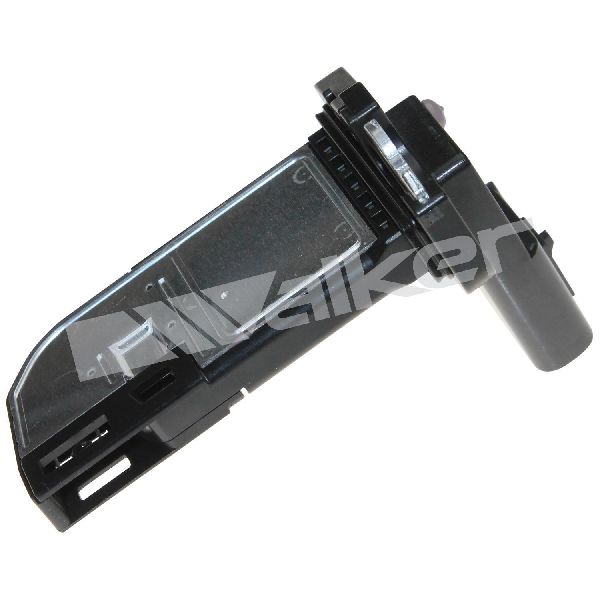
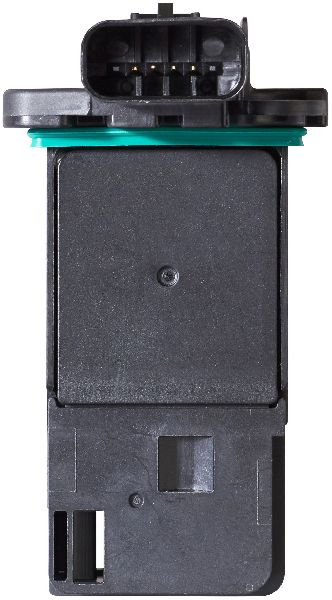
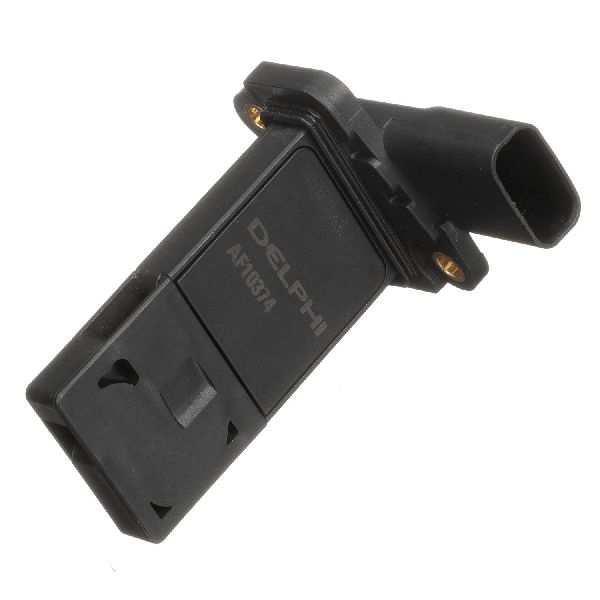
Aftermarket price range: $10-$20 - Mass Airflow (MAF) Sensor
(OEM #8V2Z-12B579-A)— If cleaning the sensor and confirming there are no air leaks doesn't resolve the code, the sensor itself may have failed electronically.
Trusted brands: Ford (OEM), Motorcraft, Bosch
OEM price range: $150-$215
Aftermarket price range: $70-$150 - Sound Symposer Delete Kit — The factory sound symposer is a common point for boost leaks. A delete kit permanently seals this potential failure point.
Trusted brands: COBB Tuning, Steeda, ACCELATEC
Aftermarket price range: $40-$70
Related Codes That Often Appear With This One
- P0101 — P0101 (Mass Air Flow Circuit Range/Performance) is a very similar code and often appears with P1101 as both relate to the MAF sensor's reading being out of the expected range.
- P0171 — P0171 (System Too Lean) can occur if there is a vacuum leak, as unmetered air enters the engine, causing the oxygen sensors to detect a lean condition.
- P1450 — P1450 (Unable to Bleed Up Fuel Tank Vacuum) is a strong indicator that the canister purge valve is stuck open, which can sometimes accompany or be mistaken for a P1101 fault.
- P0299 — P0299 (Turbocharger/Supercharger Underboost Condition) may appear if a significant boost leak is the root cause of the P1101 code, as the system is losing pressure.
Technical Service Bulletins (TSBs) & Recalls
- Ford Recall 18S32 / NHTSA 18V735: This recall addresses a faulty Canister Purge Valve (CPV) that can stick open. While the primary symptom is excessive vacuum in the fuel tank, a stuck-open valve also creates a vacuum leak that can contribute to or cause symptoms similar to P1101. The fix involves a PCM software update and, if necessary, replacement of the CPV and/or fuel tank.
Mechanic-Grade Diagnostic Values
- MAF Sensor Voltage (KOEO - Key On, Engine Off) — expected: 0.2V - 0.3V. Failure: A voltage significantly higher than 0.3V indicates a potential sensor or wiring issue.
- MAF Sensor Voltage (KOER - Key On, Engine Running at idle) — expected: 0.46V - 2.44V. Failure: A voltage reading outside of this range during the self-test will trigger the P1101 code.
- MAF Sensor Live Data (Engine Off) — expected: 0.0 g/s. Failure: If a scan tool shows any significant airflow in grams/second (g/s) with the engine off, the sensor is faulty or there is a wiring issue.
Scan Tool Commands That Help
- Ford IDS (or equivalent professional scanner): Key-On Engine-Running (KOER) Self-Test — This is the specific test the PCM runs that triggers the P1101 code. Manually running this test after a repair is the definitive way to confirm if the fault condition is resolved before waiting for the PCM to run the test on its own.
- FORScan: ACM Module Configuration: 'Engine Sound Enhancement' -> Set to 'Disabled' — If a sound symposer delete kit has been physically installed, this software command disables the electronic valve control in the Audio Control Module, preventing potential unrelated codes and ensuring the system is fully disabled.
- Ford IDS (or equivalent): Reset All Adaptations / Clear KAM — After replacing a major component like a MAF sensor or fixing a significant vacuum leak, clearing the Keep Alive Memory (KAM) forces the PCM to relearn fuel trims and airflow strategies immediately, which can resolve poor running conditions faster.
Wiring & Ground Locations
- Main Engine Bay Ground — Under the air filter box, on the chassis frame rail.. This is a primary ground point for engine bay components. Corrosion or a loose connection here can cause erratic voltage readings for multiple sensors, including the MAF.
- Transmission Ground Strap — A ground wire connects from the chassis to a threaded bolt hole on the transmission bell housing.. This ground is critical for the engine/transmission assembly. It is often removed during clutch or transmission work and can be left loose or dirty, causing a poor connection that leads to various sensor faults and even no-start conditions.
- MAF Sensor Harness — The wiring harness leading to the MAF sensor connector, routed near the air intake tube and battery box.. A Ford recall (unrelated to P1101 but relevant to harness routing) highlighted potential chafe points for the engine wiring harness near the transmission and radiator hoses. Inspecting the MAF harness in this area for rubbing or damage is a wise step.
Real Owner Repair Stories
- YouTube - 'Fixing the Infamous GM / Chevy P1101 MAF Code on my Buick Encore 1.4L' (Buick Encore 1.4L Turbo (Note: Not a Focus ST, but a directly analogous turbocharged engine platform)) — P1101 code, apparent lack of boost.
❌ Tried (didn't work) Replaced valve cover (for PCV system), Installed external PCV valve kit, Cleaned throttle body, Cleaned MAF sensor, Replaced MAF sensor with a new Bosch unit, Replaced O-rings on oil cap and dipstick
✅ What actually fixed it The final root cause was a cracked intercooler charge pipe (hose) that was not found during initial inspections. Replacing the cracked hose resolved the code permanently. - Focus ST forums (common knowledge) (2012-2018 Ford Focus ST) — P1101 code, often with a whistling noise under boost.
❌ Tried (didn't work) Cleaning the MAF sensor, Replacing the MAF sensor, Smoke testing the intake system (sometimes the leak is only present under boost pressure)
✅ What actually fixed it The internal diaphragm of the factory Sound Symposer had ruptured, creating a significant boost leak. Installing a 'Sound Symposer Delete' kit, which replaces the unit with a block-off plate, permanently fixed the leak and the code.
"I Checked Everything" — The Actual Cause
- A technician reported a case where all intake ducts and PCV systems checked out clean with no leaks. By monitoring live data, they saw the MAF reading was inaccurate compared to calculated values. Disconnecting the MAF sensor caused the fuel trims to normalize, proving the sensor itself was providing false data ('lying') despite being clean and having no visible leaks in the system.
- In another case on a similar engine, after a smoke test found no leaks and a new MAF sensor didn't fix the issue, the root cause was determined to be a faulty throttle body that was replaced to finally clear the code.
OEM Part Supersession History
Incomplete in Pass 2 ('8V2Z-')→8V2Z-12B579-A— This is the complete and correct OEM part number for the MAF sensor for this application.
Heads up: This part is also sold under the Motorcraft part number AFLS195 or MOF-AFLS195. While other sensors may physically fit the housing, using a non-OEM or incorrect aftermarket sensor is a common cause of persistent P1101 codes.
Model Year Variations Within This Range
- 2012-2014 (Pre-Facelift) vs. 2015-2018 (Facelift): A significant refresh occurred for the 2015 model year. While the 2.0L EcoBoost engine, transmission, and core components related to P1101 remained the same, there were changes to the front and rear fascias, headlights, and some interior controls. The front bumper and grille changes on 2015+ models may slightly alter access to the intercooler and charge piping during diagnosis, but the causes and fixes for P1101 are consistent across all 2012-2018 ST models.
Diagnostic Flowchart
Real Owner Stories
Aggregated from forums and TSBs cited above. Mileages and costs reflect what owners reported in those sources.
Ford Focus ST
Symptoms: Sputtering in higher gears and a noticeable loss of intake noise in the cabin.
What fixed it: Identified as a boost leak from a faulty factory sound symposer; commenters recommended installing a sound symposer delete kit.
Source hint: Reddit r/FocusST - faulty sound symposer?
Ford Focus ST
Symptoms: A new high-pitched whistle under boost after getting a new tune.
What fixed it: Diagnosed as a boost leak, with the owner suspecting the seal on their sound symposer delete plug was the culprit.
Source hint: Reddit r/FocusST - Stock Sound Symposer Boost Leak?
Ford Focus
Symptoms: Rough engine operation.
What fixed it: Removed and cleaned the MAF sensor using a dedicated cleaner, resulting in significantly smoother engine operation afterward.
Source hint: Ford Focus Club - Clean your MAF sensor and reset your PCM
Ford Focus ST
Symptoms: Rough idle after fill-ups and erratic fuel trims.
What fixed it: Diagnosed as a canister purge valve failure, which is a common issue on the ST platform.
Source hint: Reddit r/FocusST - EVAP Issues/F.U.F.F. Purge Assembly
Related OBD-II Codes
Frequently Asked Questions
Does Ford Recall 18S32 apply to my Focus ST and could it cause code P1101?
I hear a high-pitched whistling noise under boost with code P1101. What is the most likely cause on the 2.0L EcoBoost?
Can an aftermarket air filter trigger P1101 on my Focus ST?
Why did my engine noise inside the cabin suddenly get quieter when P1101 appeared?
My Focus ST stalls right after getting gas and has a rough idle. Is this related to the MAF sensor?
How do I clean the MAF sensor on my 2012-2018 Focus ST?
Helpful Videos
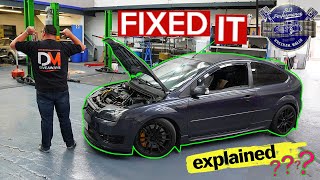
Used OEM Parts in Stock

New Aftermarket Parts Available


The information in this article is provided for general reference and educational purposes only. Vehicle specifications, procedures, and part compatibility can vary by production date, trim level, and region. Always consult your vehicle's factory service manual and verify part numbers before purchasing or performing repairs. Safety-critical components such as airbags, seat belts, and braking systems should be installed by a qualified professional.
- Ford Focus:
- 🎬 Helpful Videos
- 🛍️ Shop This Part
- What's Unique About the 2012-2018 Ford Focus
- Symptoms You May Notice
- Most Likely Causes
- Rare But Worth Checking
- Diagnosis Steps
- Parts You'll Likely Need
- Related Codes That Often Appear With This One
- Technical Service Bulletins (TSBs) & Recalls
- Mechanic-Grade Diagnostic Values
- Scan Tool Commands That Help
- Wiring & Ground Locations
- Real Owner Repair Stories
- "I Checked Everything" — The Actual Cause
- OEM Part Supersession History
- Model Year Variations Within This Range
- Diagnostic Flowchart
- Real Owner Stories
- Ford Focus ST
- Ford Focus ST
- Ford Focus
- Ford Focus ST
- Related OBD-II Codes
- Frequently Asked Questions
- 🎟️ Get 5% Off