

P1098 on 2020 Chevrolet Blazer: Coolant Valve and Software Faults Explained
On a 2020 Blazer, code P1098, especially when seen with P26BB, is most often caused by a software anomaly that requires a dealer update, as noted in GM TSB #PIP5675G. If the software is current, the Engine Coolant Flow Control Valve is the likely failed part.
- For a 2020 Chevrolet Blazer, P1098 is related to the Engine Coolant Flow Control Valve, not the intake manifold.
- Always check for a PCM software update with a dealer before replacing any parts, as a known software bug is the most common cause, especially if P26BB is also stored.
- If a part replacement is needed, it will be the Engine Coolant Flow Control Valve, which can be an expensive and labor-intensive repair.
- The issue is often covered under the vehicle's powertrain warranty.
What's Unique About the 2020-2020 Chevrolet BLAZER
The 2020 Blazer is subject to a specific software issue documented by General Motors in Technical Service Bulletin #PIP5675G. This bulletin explicitly links P1098 with code P26BB, stating the cause is likely a "software anomaly." This means that unlike in other vehicles where this code might point directly to a mechanical failure, the first step for a 2020 Blazer is always to check if a software update is needed, potentially saving hundreds of dollars on a misdiagnosis.
Diagnostic Flowchart
Tap your situation to follow the diagnostic path that matches what you're seeing on this vehicle.
Symptoms You May Notice
- Check Engine Light (MIL) illuminated
- Engine cooling fans running at high speed constantly
- Reduced engine power or 'limp mode'
- Fluctuating engine temperature gauge
- Decreased fuel economy
- Replacing the Intake Manifold Runner Control (IMRC) actuator. While P1098 means IMRC on some other GM platforms, for the 2020 Blazer it relates to the coolant control valve.
- Replacing the coolant flow control valve without first checking for the required software update as per TSB #PIP5675G.
Most Likely Causes
- Software Anomaly 🔴 High Probability A known issue documented by GM in TSB #PIP5675G and its revisions for 2020 models.
How to confirm: A GM dealer or a professional shop with access to OEM service information must check the vehicle's VIN against available PCM software updates.
Typical fix: Update the Powertrain Control Module (PCM) software to the latest version.
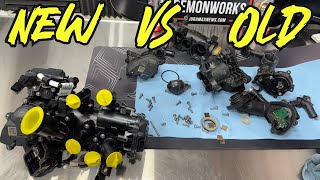
Est. part cost: $0 - Faulty Engine Coolant Flow Control Valve 🟡 Medium Probability This part is a known high-failure item across many modern GM vehicles, with internal plastic gears that can wear or break, and motors that can fail. The TSB diagnostic procedure directs technicians to replace this valve if the code returns after a software clear. A teardown of a similar valve showed that grease on the internal plastic worm gears can break down and get contaminated with plastic dust, causing the valve to bind. 🎬 Watch: See a teardown of the internal gear failure.
How to confirm: After confirming the software is up-to-date, a technician would use a scan tool to command the valve through its positions and monitor sensor feedback. If the valve fails to respond correctly or sensor data is erratic, the valve is faulty.
Typical fix: Replace the entire coolant flow control valve assembly. This part was subject to supply chain issues, leading to backorders. After replacement, an 'Engine Cooling Control Valve Learn' procedure must be performed with a scan tool.
Est. part cost: $150-$300
Rare But Worth Checking
- Wiring or Connector Issue: A later TSB (#PIP5777) advises inspecting the electrical connections to the coolant control valve for contamination or corrosion before replacing parts.
- Low Coolant Level: In some cases, a low engine coolant level can trigger faults in the thermal management system, including P1098. Always check the coolant level first.
Diagnosis Steps
- Scan the ECM for trouble codes. Note if P1098 is present alone or with P26BB.
- Check the engine coolant level and condition. Top up if low and inspect for leaks.
- CRITICAL STEP: Contact a GM dealer or qualified shop to determine if the vehicle's PCM software is up to date, specifically referencing TSB #PIP5675G. If an update is available, this is the most probable fix.
- If software is current, follow the TSB's diagnostic path: clear the codes. If they return, the coolant flow control valve is the suspected cause.
- Inspect the wiring harness and electrical connector at the coolant flow control valve for any signs of damage, corrosion, or contamination.
- If wiring is intact and the code persists after a software check, replacement of the engine coolant flow control valve is necessary. After replacement, perform the 'Engine Cooling Control Valve Learn' procedure using a compatible scan tool.
Parts You'll Likely Need
- Engine Coolant Flow Control Valve — This is the primary mechanical failure point for this code after a software issue has been ruled out. The TSB diagnostic tree leads to its replacement if codes return.
Trusted brands: ACDelco, GM Genuine Parts
OEM price range: $150-$300
Aftermarket price range: $120-$250
Related Codes That Often Appear With This One
- P26BB — This code for the 'Engine Coolant Bypass Valve 'B' Control Circuit' is explicitly mentioned in TSB #PIP5675G as appearing with P1098 due to the same software anomaly.
Technical Service Bulletins (TSBs) & Recalls
- PIP5675G: States that a MIL with DTC P1098 and/or P26BB may be caused by a software anomaly and provides diagnostic steps that prioritize checking software before replacing the Coolant Flow Control Valve.
- PIP5777: A diagnostic tip bulletin that advises technicians to inspect the Engine Coolant Control Valve electrical connections for contamination or corrosion when diagnosing P1098, P26BB, or P26B7.
Platform-Specific Known Issues
- The 2020 Blazer with the 2.0L LSY engine is specifically named in multiple versions of GM's Preliminary Information bulletin #PIP5675 regarding a software anomaly causing codes P1098 and P26BB.
Hidden / Shadow Codes Worth Checking
- U0672: Lost Communication With Electric Engine Coolant Pump Control Module. While not directly linked in TSBs, the 2.0L LSY engine's Active Thermal Management system uses a LIN bus to communicate between the ECM, coolant pump, and flow control valve. A communication fault like U0672 could potentially accompany a P1098 code. (see via A professional scan tool capable of reading network communication codes.)
Scan Tool Commands That Help
- GDS2 or equivalent professional scanner: Engine Coolant Control Valve Mode — During diagnosis, to command the valve's position and verify its operation. According to TSBs, a technician should observe if the valve's position value increases and decreases according to the command.
- GDS2, Launch X431, or equivalent professional scanner: Engine Cooling Control Valve Learn — This is a mandatory special function to be performed immediately after replacing the Engine Coolant Flow Control Valve. It calibrates the new valve's motor positions. Failure to perform this step may result in improper valve function.
- GDS2 or equivalent professional scanner: Coolant System Bleed / Fill Procedure — After replacing the valve and refilling the coolant. The active thermal management system is sensitive to air pockets, and a vacuum-fill tool along with a scan tool-guided bleed procedure is highly recommended to prevent overheating issues or related codes.
Wiring & Ground Locations
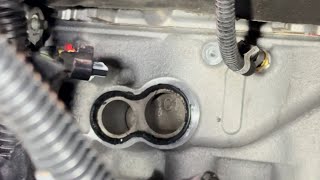
- Engine Coolant Flow Control Valve Connectors — The valve assembly, located on the side of the engine block, has three separate electrical connectors that must be disconnected for service.. TSB #PIP5777 specifically advises checking these connectors for corrosion or contamination as a potential cause of the fault before replacing the entire valve.
- Main Engine Grounds (General) — On many GM engines, primary ground points are located on the rear of the cylinder heads (e.g., G104) and from the engine block to the frame.. A poor engine ground can cause a variety of erratic sensor readings and module performance issues. While not specifically cited for P1098 on the Blazer, checking that main grounds are clean and tight is a fundamental step in any electrical diagnosis.
Real Owner Repair Stories
- GM1500Diesel Forum user (2021 GMC Sierra 3.0L Duramax, 63k miles) — P1098 code, cooling fans running at 100%.
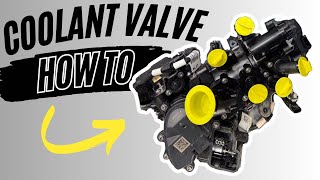
❌ Tried (didn't work) Restarting the engine would temporarily clear the issue, but it eventually became permanent. 🎬 See how this owner replaced the valve on a Duramax.
✅ What actually fixed it While waiting for a back-ordered replacement part, the owner removed the valve (a 7-hour job), found one of the internal motor gearboxes was 'gummed up', cleaned and lubricated the valve and its components, and reinstalled it. This resolved the problem. - Reddit user r/Silverado (2020 Silverado 3.0L Duramax, 70k miles) — Error message related to coolant control valve.
❌ Tried (didn't work) Purchased a $150 scan tool to perform the relearn procedure but could not get it to work.
✅ What actually fixed it The owner replaced the coolant control valve themselves, which took about 12 hours. They noted the part was very difficult to find in stock. They skipped the official 're-learn' procedure and reported no issues after 10,000 miles, though it is a required step per GM. - Reddit user r/gmcsierra (2021 LM2 (3.0L Duramax)) — P1098 code.
✅ What actually fixed it The dealership fixed the issue by reprogramming the ECM. This aligns with the TSB stating a software anomaly is a primary cause.
OEM Part Supersession History
55512101, 55509070, 55512103→55516369— Part numbers are often superseded to address design flaws, improve reliability, or change suppliers. Given the high failure rate, it is likely the newer part number contains revisions.
Heads up: These part numbers were listed for a 2020-2024 Blazer. Always verify the correct part number with a dealer using the vehicle's VIN before ordering.
Helpful Videos
We Have This Part in Stock



The information in this article is provided for general reference and educational purposes only. Vehicle specifications, procedures, and part compatibility can vary by production date, trim level, and region. Always consult your vehicle's factory service manual and verify part numbers before purchasing or performing repairs. Safety-critical components such as airbags, seat belts, and braking systems should be installed by a qualified professional.
- Chevrolet BLAZER:
- 🎬 Helpful Videos
- 🛍️ Shop This Part
- What's Unique About the 2020-2020 Chevrolet BLAZER
- Diagnostic Flowchart
- Symptoms You May Notice
- Most Likely Causes
- Rare But Worth Checking
- Diagnosis Steps
- Parts You'll Likely Need
- Related Codes That Often Appear With This One
- Technical Service Bulletins (TSBs) & Recalls
- Platform-Specific Known Issues
- Hidden / Shadow Codes Worth Checking
- Scan Tool Commands That Help
- Wiring & Ground Locations
- Real Owner Repair Stories
- OEM Part Supersession History
- 🎟️ Get 5% Off