

P1098 on 2020 Cadillac CT5: Engine Coolant Control Valve Causes and Fixes
On a 2020 Cadillac CT5, code P1098 almost always points to a problem with the Engine Coolant Control Valve, also known as the thermal management module. The official GM procedure is to first check for a software update at a dealer, as a glitch can trigger the code. If the software fix doesn't work or the code has appeared before, the valve assembly itself has likely failed and requires replacement, which is a complex and costly repair.
- P1098 on your 2020 CT5 means there's an issue with the Engine Coolant Control Valve.
- Your first step should be to visit a GM dealer to check for a required software update, which is a known fix for a first-time occurrence per TSB PIP5675G.
- If a software update doesn't solve it or the code has appeared before, the valve itself has likely failed mechanically and will need to be replaced.
- Do not ignore this code. It can affect engine temperature and performance, potentially leaving you in a reduced power 'limp mode' with fans running constantly.
- Replacement is an expensive and complex job, and the part can sometimes be hard to find due to high demand.
What's Unique About the 2020-2020 Cadillac CT5
For the 2020 CT5 and other GM vehicles with the LSY engine, this code is uniquely tied to two primary issues. First, GM has officially acknowledged in a series of Technical Service Bulletins (TSB PIP5675) that a "software anomaly" can trigger this code, meaning the valve may be physically fine. Second, the valve itself has a very high failure rate due to its internal plastic components and grease, which can cause it to bind or fail. This is a widely discussed issue among owners and technicians, sometimes leading to parts being on national backorder.
Diagnostic Flowchart
Tap your situation to follow the diagnostic path that matches what you're seeing on this vehicle.
Symptoms You May Notice
- Check Engine Light is on
- Radiator fan runs constantly at high speed, even when the engine is cold or after the vehicle is shut off.
- "Reduced Acceleration, Drive with Caution" message appears on the driver information center.
- Poor heater performance or engine temperature gauge not reaching the normal operating range.
- Transmission temperature running slightly higher than normal.
- Audible noise from the valve area as it attempts to move but is stuck.
- Replacing the thermostat. This vehicle uses the Engine Coolant Control Valve *instead* of a traditional thermostat. P1098 specifically points to this electronic control valve assembly.
- Replacing the coolant pump. The coolant pump is a separate component, and while related to the cooling system, it typically sets different diagnostic codes (e.g., U0672 or P3075).
Most Likely Causes
- Software Anomaly 🔴 High Probability GM issued multiple versions of TSB PIP5675 (up to at least version G) specifically identifying a software issue that can falsely trigger code P1098 on this vehicle and its platform mates.
How to confirm: A GM dealer must check the vehicle's software calibration history (VIN history) against the latest versions. The TSB directs them to reprogram the ECM if it's the first occurrence of the code and no other faults are found.
Typical fix: Reprogramming the Engine Control Module (ECM) with the latest GM software calibration.
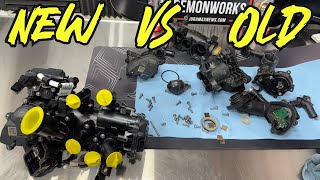
Est. part cost: $0 - Failed Engine Coolant Control Valve 🔴 High Probability The valve is known to fail due to internal plastic gears wearing down or the grease used for lubrication breaking down and mixing with plastic shavings, which causes the internal motors to bind. This is a well-documented mechanical failure. 🎬 See why these valves fail and how the design has changed.
How to confirm: If a software update does not resolve the code, or if the TSB indicates the code has set in history, the valve is the likely culprit. A technician can use a scan tool (like the GM GDS2) to command the 'Engine Coolant Control Valve Mode' and see if the valve's position sensor data changes as commanded. If it doesn't respond, it has failed.
Typical fix: Replace the Engine Coolant Control Valve assembly and perform the 'Engine Coolant Control Valve Learn' procedure with a capable scan tool. A vacuum-fill of the cooling system is highly recommended to prevent air pockets.
Est. part cost: $250-$500
Rare But Worth Checking
- Wiring Harness or Connector Issue: While far less common than a software glitch or valve failure, damage to the wiring or a poor connection at the coolant control valve's multiple connectors can cause the same code. TSB #PIP5777 specifically calls out inspecting the valve's electrical connections for contamination or corrosion as a diagnostic step. This should be inspected before replacing the valve, ensuring connectors are clean and fully seated.
- Low Coolant Level / Air in System: While more likely to set other codes like P3075, a significant air pocket or low coolant level could potentially affect the valve's operation and contribute to a performance code. Always verify the coolant level is correct.
Diagnosis Steps
- Read all fault codes with a professional OBD-II scanner.
- CRITICAL FIRST STEP: Check with a GM dealer if Technical Service Bulletin PIP5675G (or a newer version) applies and if a software update is available. Check the vehicle's VIN history for previous instances of P1098 or P26BB.
- If this is the first time the code has appeared, have the dealer perform the ECM software update. Clear codes and return the vehicle to the customer as per the TSB.
- If the code returns after the update, or if it had been set previously, the valve is condemned per the TSB.
- Before replacement, visually inspect the wiring and all three electrical connectors at the Engine Coolant Control Valve for any signs of damage, corrosion, or moisture, as advised by TSB #PIP5777.
- Using a capable scan tool (e.g., GM GDS2), command the 'Engine Coolant Control Valve Mode' and observe if the valve's position sensor data changes as commanded. Failure to respond confirms a failed valve.
- If the valve is confirmed faulty, replace the Engine Coolant Control Valve assembly.
- After replacement, fill the cooling system using a vacuum-fill tool to prevent air pockets.
- Perform the 'Engine Coolant Control Valve Learn' procedure using the scan tool. This is a required step to calibrate the new valve's motors and positions.
- Clear all codes and perform a thorough test drive to ensure the issue is resolved.
Parts You'll Likely Need
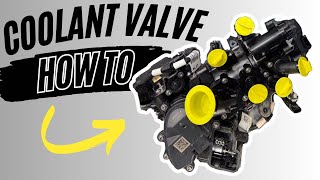
- Engine Coolant Control Valve
(OEM #12713334)— This is the component that fails mechanically or is the subject of the software glitch. If the code is not fixed by a software update, this part requires replacement.
Trusted brands: ACDelco (GM Genuine)
OEM price range: $350-$500
Aftermarket price range: $250-$400 - Engine Coolant / Antifreeze — The cooling system must be drained to replace the valve. The system should be refilled with fresh, correct-spec coolant.
Trusted brands: ACDelco DEX-COOL
OEM price range: $20-$40
Aftermarket price range: $15-$30
Related Codes That Often Appear With This One
- P26BB — This code also relates to the 'Engine Coolant Control Valve Performance' and is often set alongside P1098, as they both monitor the same component. GM TSBs for this issue almost always list both codes together.
Technical Service Bulletins (TSBs) & Recalls
- PIP5675G (and earlier versions B, D, E, F): States that a customer may report a check engine light with P1098 and/or P26BB set. It identifies a potential software anomaly and provides the diagnostic logic: check VIN history. If the code has set before, replace the valve. If not, try a software update first. If the code returns, replace the valve.
- PIP5777: A diagnostic tip bulletin that advises technicians to inspect all Engine Coolant Control Valve electrical connections for signs of contamination or corrosion as a potential cause for P1098 and related codes.
Platform-Specific Known Issues
- Software Anomaly vs. Mechanical Failure Logic: Per GM TSB PIP5675, the official diagnostic path is to update software on the first occurrence, but replace the valve on the second. This implies GM acknowledges both a software trigger and a high rate of eventual mechanical failure.
- Part Backorders and Owner Frustration: Due to the high failure rate across many GM models, this valve has been subject to national backorders, with some owners reporting their vehicles being at the dealership for weeks or months waiting for the part.
- Warranty and Special Coverage: While this repair is typically covered under the 5-year/60,000-mile powertrain warranty, there has been debate. For some similar engines (like the 3.0L Diesel), GM has issued a 'Special Coverage' extending the warranty on this specific part to 15 years/150,000 miles, though this does not officially apply to the 2.0L LSY as of late 2025.
Mechanic-Grade Diagnostic Values
- Temperature difference between heater inlet (ECT sensor 3) and heater outlet (ECT sensor 4) with engine warm and HVAC on high. — expected: Temperatures should be similar.. Failure: A temperature difference over 30°C (86°F) suggests a restriction in coolant flow, which could be related to the control valve's operation or a separate blockage.
Scan Tool Commands That Help
- GDS2 (GM Global Diagnostic System 2): Engine Coolant Control Valve Mode — This is a bidirectional control used to command the valve's internal motors to various positions. The technician observes the valve's position sensor data to see if it responds correctly. A lack of response confirms an internal failure of the valve.
- GDS2 (GM Global Diagnostic System 2): Engine Coolant Control Valve Learn — This is a mandatory service procedure that must be performed after the Engine Coolant Control Valve is replaced. It calibrates the new valve's motors and position sensors to the ECM.
Wiring & Ground Locations
- Engine Coolant Control Valve Connectors — The valve is located on the right side of the 2.0L LSY engine, underneath the intake manifold.. The valve has three separate electrical connections. TSB #PIP5777 identifies that contamination or corrosion in these connectors can cause P1098, making inspection of these points a critical diagnostic step before condemning the valve itself.
Real Owner Repair Stories
- Pickup Truck +SUV Talk Forums (2021 GMC Sierra with 3.0L Duramax (LM2) engine at 63,000 miles (platform mate with similar valve design)) — P1098 code, cooling fans running at 100% power.
❌ Tried (didn't work) Restarting the engine would temporarily clear the issue, but it eventually stopped working.
✅ What actually fixed it Owner could not get the replacement part due to a 5+ month backorder. They removed the valve, disassembled the motor gearboxes, and found them 'gummed up' with old grease and plastic shavings. The owner cleaned the worm gears, re-lubricated them with new white lithium grease, and reassembled. This successfully repaired the valve and resolved the code.
OEM Part Supersession History
12713334 (for 2.0L LSY)→Unknown— An analysis of a similar failed valve (PN 24001355) for the 3.0L Duramax engine showed that even brand new replacement parts did not appear to have a significant design change. The failure mechanism of insufficient grease on plastic worm gears seems to persist, suggesting newer parts may not be more durable than the originals.
Heads up: Part number 55516370 is also listed for sale for the 2020-2023 CT5 2.0L engine, but it is not confirmed as an official supersession for 12713334. Part number 24001355 is associated with the 3.0L Diesel engine.
Helpful Videos
We Have This Part in Stock



The information in this article is provided for general reference and educational purposes only. Vehicle specifications, procedures, and part compatibility can vary by production date, trim level, and region. Always consult your vehicle's factory service manual and verify part numbers before purchasing or performing repairs. Safety-critical components such as airbags, seat belts, and braking systems should be installed by a qualified professional.
- Cadillac CT5:
- 🎬 Helpful Videos
- 🛍️ Shop This Part
- What's Unique About the 2020-2020 Cadillac CT5
- Diagnostic Flowchart
- Symptoms You May Notice
- Most Likely Causes
- Rare But Worth Checking
- Diagnosis Steps
- Parts You'll Likely Need
- Related Codes That Often Appear With This One
- Technical Service Bulletins (TSBs) & Recalls
- Platform-Specific Known Issues
- Mechanic-Grade Diagnostic Values
- Scan Tool Commands That Help
- Wiring & Ground Locations
- Real Owner Repair Stories
- OEM Part Supersession History
- 🎟️ Get 5% Off