

P1098 on 2020 Cadillac CT4: Coolant Control Valve Fault Causes and Fixes
On a 2020 Cadillac CT4, code P1098 almost always points to a problem with the Engine Coolant Control Valve. The issue could be a software anomaly requiring a dealer update per GM TSB 21-NA-185, or a physical failure of the valve itself, which is a very common high-failure part. A dealer visit is the best first step to check for software updates before replacing any hardware.
- P1098 on a 2020 CT4 points to an issue with the Engine Coolant Control Valve system.
- The first step in diagnosis should be a visit to a GM dealer to check for essential software updates, as per TSB #PIP5675G and later bulletins.
- If software is not the issue, the Coolant Control Valve itself has likely failed, a very common issue for this part.
- The OEM part number for the valve is likely 12697676 (ACDelco 12713899), but always verify with a dealer using your VIN.
- This issue is shared across many GM vehicles using the 2.0L LSY and 2.7L L3B engines.
What's Unique About the 2020-2020 Cadillac CT4
For the 2020 Cadillac CT4, equipped with either the 2.0L LSY or 2.7L L3B engine, P1098 is a well-documented issue. GM issued technical service bulletins (TSBs), starting with preliminary ones like PIP5675G and leading to more definitive ones like 21-NA-185, acknowledging the code could be triggered by a software anomaly. In many cases, a simple software update at the dealership is the intended first step. However, the Coolant Control Valve assembly itself is also a known high-failure part across many GM platforms using these engines, leading to confusion where a software update may be performed, but the code returns because the hardware is faulty. The root cause of hardware failure is often the breakdown of grease inside the valve's internal plastic worm gear assemblies, causing them to bind.
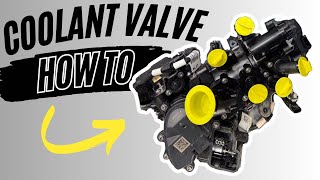
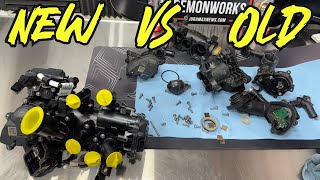
🎬 See why these valves fail and how they've been redesigned.Diagnostic Flowchart
Tap your situation to follow the diagnostic path that matches what you're seeing on this vehicle.
Symptoms You May Notice
- Check Engine Light (MIL) is illuminated.
- Cooling fans running at high speed constantly, even in cool weather.
- "Reduced Acceleration, Drive with Caution" message on the driver information center.
- Engine temperature gauge reading lower than normal or not warming up properly.
- Poor heater performance.
- Audible clicking or binding noises from the engine bay where the valve is located.
- Replacing the Coolant Control Valve when only a software update was needed. The TSBs advise checking for software updates first before replacing parts.
- Clearing the code without diagnosis. The code will likely return because it's triggered by a persistent software or hardware fault. One user on a forum noted the code would return after a restart until the valve was finally repaired.
Most Likely Causes
- Software Anomaly 🔴 High Probability GM explicitly identified a software issue in TSBs #PIP5675G and the later #21-NA-185 for 2020 models, including the CT4 with LSY and L3B engines. The logic for monitoring the valve's position could be overly sensitive. GM has also released over-the-air (OTA) updates to change the valve's operational behavior to extend its life.
How to confirm: A GM dealership must check the vehicle's software calibration level against the latest available updates using the GM GDS2 diagnostic tool.
Typical fix: Reprogramming the Engine Control Module (ECM) with updated software. This is the prescribed first step before parts replacement.
Est. part cost: $0 - Failed Engine Coolant Control Valve 🔴 High Probability The valve assembly is a known high-failure part across many GM models that use it. Failure is often due to internal plastic gears stripping, the worm gear drive binding from dried/gummy grease, or the integrated position sensor failing.
How to confirm: After ruling out software, a technician can use a scan tool to command the valve's position and see if it responds correctly. If the commanded position and actual position data do not match, the valve is bad.
Typical fix: Replace the entire Engine Coolant Control Valve assembly and perform the scan tool relearn procedure.
Est. part cost: $150-$300
Rare But Worth Checking
- Low Coolant Level or Air in System: If the coolant level is low, the valve's operation can be affected, setting a performance code. A user on a Tahoe/Yukon forum noted the code appeared when their coolant was low. Always check the coolant level first, as this could be a symptom of a separate leak.
- Wiring Harness or Connector Issue: Damage to the wiring or a poor connection at the Coolant Control Valve can mimic a failed component. TSB 21-NA-149 notes that engine harness contact with other components can cause various DTCs on vehicles with the 2.7L L3B engine. There are documented cases of wire rub-through on the L3B engine harness causing LIN bus communication issues with related components.
Diagnosis Steps
- Check for Technical Service Bulletins (TSBs) related to P1098 for your specific VIN. A GM dealer is the best source for this, specifically looking for TSB 21-NA-185 or its successors.
- Verify the engine coolant level is correct and the system is free of air pockets.
- If coolant is low, pressure test the system to check for leaks before proceeding.
- Connect a GM-compatible scan tool (like GDS2) to check for the latest ECM software calibrations. If an update related to TSB #PIP5675G or a superseding bulletin is available, perform the update.
- If the software is up-to-date or the update does not fix the issue, use the scan tool's 'Engine Coolant Control Valve Mode' function to command the valve through its range of motion.
- Monitor the valve's actual position sensor data on the scan tool while commanding movement. If the valve does not move as commanded or the position data is erratic, incorrect, or does not match the commanded state, the valve has failed.
- Inspect the wiring harness and connector at the Coolant Control Valve for any signs of damage, corrosion, or loose pins, paying attention to areas where the harness might rub against engine components.
- If the valve is confirmed to be faulty, it must be replaced, followed by a coolant system vacuum-fill and the scan tool relearn procedure.
Parts You'll Likely Need
- Engine Coolant Control Valve
(OEM #12697676)— This is the component that fails, either mechanically or electrically, causing code P1098. It is a complex assembly with internal motors and sensors. The ACDelco equivalent part number is 12713899. Another part number associated with this valve on other GM applications is 24001355.
Trusted brands: ACDelco (GM Genuine)
OEM price range: $200-$300
Aftermarket price range: $150-$250
Related Codes That Often Appear With This One
- P26BB — This code for 'Engine Coolant Bypass Valve Performance' is frequently set along with P1098. GM TSBs consistently mention these two codes together, as they both relate to the same faulty component or software logic.
- P2B60 — This code for 'Engine Coolant Flow Control Valve Position Sensor Performance' can also appear, pointing directly to a failure of the position sensor within the valve assembly.
- P138C — In a January 2026 revision to bulletin #24-NA-070, GM formally added P1098 to a procedure involving P138C for a no-restart condition after an auto stop/start event on the 3.0L LM2 engine. If P1098 is present in this scenario, the bulletin directs replacement of the coolant control valve.
Technical Service Bulletins (TSBs) & Recalls
- PIP5675G: "MIL illuminated with DTC P1098 and/or P26BB" - The primary preliminary document stating the cause may be a software anomaly and that GM was investigating. It applied to the 2020 CT4 with 2.0L LSY and 2.7L L3B engines.
- 21-NA-185: A later, more definitive TSB that often supersedes the preliminary bulletins. It provides updated diagnostic information regarding the software and hardware faults for this code.
- 21-NA-149: While for different DTCs, this bulletin is relevant as it documents potential wiring harness chaffing issues on trucks with the 2.7L L3B engine, a potential rare cause for P1098.
- 24-NA-070 (Rev. Jan 2026): This revised bulletin for the 3.0L LM2 engine formally adds P1098 to a diagnostic procedure for a no-start condition during auto stop/start, requiring valve replacement if the code is present.
Platform-Specific Known Issues
- A known software anomaly can cause this code to set incorrectly, as documented in GM TSB #PIP5675G and later bulletins.
- The diagnostic procedure in early TSBs instructed dealers to clear the code and return the vehicle if it was the first occurrence, but to replace the valve if the code returned a second time, indicating a known hardware issue alongside the software problem.
- Due to the high failure rate of this part across multiple vehicle lines, the Coolant Control Valve has been known to go on national backorder for months, causing long repair delays for owners.
Scan Tool Commands That Help
- GDS2 (or equivalent professional scan tool): Engine Coolant Control Valve Mode — During diagnosis, after checking for software updates. This bidirectional control allows a technician to command the valve to specific positions to verify if it moves correctly and if its position sensor reports accurately. Failure to respond correctly confirms a hardware fault.
- GDS2 (or equivalent professional scan tool): Engine Cooling Control Valve Learn — Immediately after replacing the Engine Coolant Control Valve. This function calibrates the new valve, teaching the ECM the endpoints of the valve's motors. Skipping this step may result in improper coolant flow even with a new part.
Wiring & Ground Locations
- Engine Coolant Control Valve Connectors — On the valve assembly itself, located on the side of the engine block. Access typically requires removing the driver-side wheel and wheel well liner.. The valve has three electrical connectors that should be inspected for corrosion, damage, or moisture intrusion before condemning the valve.
- Engine Harness Routing (L3B Engine) — The main engine harness on the 2.7L L3B engine has known rub points where it can chafe against other components.. A chafed wire in the harness, particularly one related to the LIN bus circuit for the cooling system, can cause communication errors and trigger performance codes like P1098, mimicking a failed valve.
Real Owner Repair Stories
- GM1500Diesel Forum / Reddit user flyfisherholms (2021 GMC Sierra, 63,000 miles) — Check engine light with code P1098, cooling fans running at 100% power constantly. Initially, restarting the engine would temporarily resolve the symptoms, but eventually, the issue became permanent.
❌ Tried (didn't work) Restarting the engine (worked temporarily at first), Waiting for a replacement part (on a 5+ month backorder)
✅ What actually fixed it The owner performed a DIY repair due to the part backorder. They removed the valve, disassembled the motor gearbox (the one held by clips, not screws), cleaned out the old, gummed-up grease from the plastic worm gears, and re-lubricated them with white lithium grease. This restored the valve's function and resolved the code. - Reddit user nathanjoco (2020 Silverado 3.0 Duramax, 70,000 miles) — Bad coolant control valve (P1098).
❌ Tried (didn't work) An attempt to use a $150 scan tool to perform the relearn procedure failed to work.
✅ What actually fixed it The owner replaced the coolant control valve themselves. They did NOT perform the scan tool relearn procedure. The truck has since run for over 10,000 miles, including towing a camper through mountains, with no issues, suggesting that while the relearn is officially recommended, the system may be able to self-calibrate in some cases.
Helpful Videos
We Have This Part in Stock



The information in this article is provided for general reference and educational purposes only. Vehicle specifications, procedures, and part compatibility can vary by production date, trim level, and region. Always consult your vehicle's factory service manual and verify part numbers before purchasing or performing repairs. Safety-critical components such as airbags, seat belts, and braking systems should be installed by a qualified professional.
- Cadillac CT4:
- 🎬 Helpful Videos
- 🛍️ Shop This Part
- What's Unique About the 2020-2020 Cadillac CT4
- Diagnostic Flowchart
- Symptoms You May Notice
- Most Likely Causes
- Rare But Worth Checking
- Diagnosis Steps
- Parts You'll Likely Need
- Related Codes That Often Appear With This One
- Technical Service Bulletins (TSBs) & Recalls
- Platform-Specific Known Issues
- Scan Tool Commands That Help
- Wiring & Ground Locations
- Real Owner Repair Stories
- 🎟️ Get 5% Off