

P1066 on 2017-2023 Jeep Compass 2.4L: MultiAir Solenoid Causes and Fixes
On a 2017-2023 Jeep Compass, P1066 is almost always caused by low engine oil or outdated engine computer software. First, check that the oil is full and is the correct 0W-20 full synthetic type meeting the MS-6395 specification. If the oil is correct, the vehicle likely needs a software update from a Jeep dealer, as outlined in several TSBs. If those don't work, the MultiAir actuator 'brick' has likely failed, which is a more expensive repair.
- P1066 on a 2.4L MultiAir engine is most likely an oil or software issue, not a hard part failure.
- Before any other action, check the engine oil level and ensure it is full with clean, full synthetic 0W-20 oil.
- Do not replace any parts until you have confirmed with a dealer that your vehicle's PCM software is fully up to date.
- If a part must be replaced, it will be the entire MultiAir actuator assembly ('brick'), which is a costly repair.
- Regularly checking your engine oil level between services can prevent this issue from occurring.
What's Unique About the 2017-2023 Jeep Compass
The 2.4L Tigershark MultiAir engine in the Jeep Compass uses a unique electro-hydraulic system to control its intake valves. This system is extremely sensitive to engine oil level, viscosity (SAE 0W-20), and cleanliness. Many of these vehicles were shipped with powertrain software that was too sensitive, leading to false P1066 codes, a fact acknowledged by FCA through numerous Technical Service Bulletins (TSBs). As a result, the most common fixes are often as simple as an oil change or a software update from the dealer, rather than an immediate hardware failure. The engine is also known for oil consumption, which can lead to low oil levels that trigger this fault.
Symptoms You May Notice
- Check Engine Light (MIL) on
- Rough idle or engine hesitation
- Reduced engine power and poor acceleration
- Increased fuel consumption
- Engine may stall at low speeds
- Flashing check engine light in cases of severe misfire
- Audible ticking or clicking noise from the top of the engine.
- Replacing the camshaft position sensor. While timing-related, this code points specifically to the MultiAir hydraulic control system, not the camshaft sensor itself.
- Replacing ignition coils or spark plugs. While a misfire can be a symptom, the root cause is the improper valve actuation from the P1066 fault, not the ignition system.
Most Likely Causes
- Low, Dirty, or Incorrect Engine Oil 🔴 High Probability The MultiAir system is hydraulic and extremely sensitive to oil level and quality. The 2.4L engine is known for oil consumption, with some owners reporting needing to add oil between changes. FCA has acknowledged this with warranty extension XB1 on some models. Using oil other than full synthetic SAE 0W-20 that meets the Chrysler MS-6395 specification can cause this code.
How to confirm: Check the engine oil dipstick on level ground with the engine cold. The level should be full. Verify that the oil being used is a full synthetic SAE 0W-20 that meets FCA specification MS-6395.
Typical fix: Perform an oil and filter change with the correct type of oil. If the level was low, top it off and monitor consumption closely.
Est. part cost: $50-$100 - Outdated Powertrain Control Module (PCM) Software 🔴 High Probability FCA (Jeep's parent company) released multiple Technical Service Bulletins (TSBs) to fix overly sensitive diagnostic parameters in the original software that could falsely trigger P1066. This is a well-documented issue across all vehicles with this engine.
How to confirm: A Jeep dealership or a qualified shop with a wiTECH scan tool can check the current software version against the latest available for your vehicle's VIN. TSB 18-032-17 is a key bulletin for this issue.
Typical fix: Reprogram (reflash) the PCM with the latest software version. This must be done by a dealer or properly equipped independent shop. The TCM may also require an update at the same time.
Est. part cost: $0 (if under warranty) - $250 - Failed MultiAir Actuator Assembly ('Brick') 🟡 Medium Probability If the engine has been run with low or incorrect oil, or if the software updates do not resolve the issue, the internal solenoid for cylinder 1 may have failed. The solenoids are not individually serviceable, requiring replacement of the entire assembly. This is a common failure point.
How to confirm: This is diagnosed by exclusion. If the oil is correct and the PCM software is up to date, but the code persists (especially after clearing), the actuator is the likely culprit. An advanced scan tool may be able to perform an active test on the solenoid.
Typical fix: Replace the entire MultiAir actuator assembly.
Est. part cost: $450-$1400
Rare But Worth Checking
- Wiring or Connector Issue: A damaged wire or a loose pin in the connector to the MultiAir actuator or at the PCM can cause an intermittent fault. This is worth inspecting before replacing the expensive actuator assembly.
- Clogged MultiAir Oil Filter Screen: The MultiAir system has a small, dedicated oil filter screen in the cylinder head. If this screen gets clogged with sludge from infrequent oil changes, it can restrict oil flow to the actuator and trigger this code. This should be inspected or replaced when replacing the actuator.
Diagnosis Steps
- Check Engine Oil Level and Condition: Pull the dipstick. Is the oil level full? Is the oil clean? If the level is low or the oil is dirty, this is your most likely cause. Ensure the oil cap specifies SAE 0W-20 and that the oil used meets Chrysler spec MS-6395.
- Correct Oil and Clear Codes: If the oil was low or incorrect, perform an oil and filter change using full synthetic SAE 0W-20 oil meeting the MS-6395 spec. Clear the trouble codes with an OBD-II scanner and drive the vehicle to see if the code returns.
- Check for Software Updates (TSBs): If the oil is correct and the code returns, contact a Jeep dealership. Provide your VIN and ask them to check for any open Technical Service Bulletins (TSBs) related to PCM updates for code P1066. Common TSBs include 18-032-17 and 18-122-16, which specifically call for a PCM flash.
- Perform PCM Reflash: If a software update is available, have the dealer or a qualified shop perform the PCM reflash. This is a very common and often successful fix.
- Inspect Wiring: If the code still persists, visually inspect the wiring harness and connector going to the MultiAir actuator assembly on the top of the engine. Look for any signs of damage, corrosion, or loose pins. Also check the main PCM connectors for loose or spread female pins.
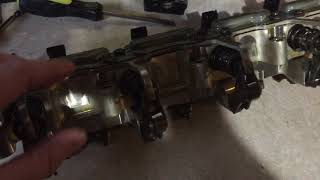
- Replace MultiAir Actuator: If all previous steps fail to resolve the code, the MultiAir actuator assembly ('brick') has likely failed and requires replacement. This is a complex job best left to experienced technicians. 🎬 Watch: A complete walkthrough of the MultiAir brick installation process.
Parts You'll Likely Need
- MultiAir Actuator Assembly
(OEM #5047980AE)— This is the component that houses the failing oil supply solenoid. If an oil change or software update doesn't fix the code, this entire assembly must be replaced as the solenoids are not sold separately. This part number supersedes 5047980AD, 5047980AC, 5047980AB, 5047980AA, 5047457AE, and 5047457AD.
Trusted brands: Mopar
OEM price range: $600-$1400
Aftermarket price range: $450-$650 - Engine Oil (Full Synthetic SAE 0W-20) — The MultiAir system is highly sensitive to oil quality and viscosity. Using the correct oil (meeting Chrysler MS-6395 specification) is the first and most critical step in diagnosis and prevention.
Trusted brands: Pennzoil, Mobil 1, Valvoline
OEM price range: $50-$100 (for oil change)
Aftermarket price range: $50-$80 (for oil change)
Related Codes That Often Appear With This One
- P1068, P106A, P106C — These are the same fault for cylinders 2, 3, and 4, respectively. Seeing them together often points to a systemic issue like oil quality, a software problem, or a failing MultiAir 'brick'.
- P0301 — This is a misfire code for cylinder 1. If the MultiAir solenoid isn't working correctly, it disrupts valve lift, causing incomplete combustion and a misfire in that cylinder.
- P219A — This code indicates a Bank 1 air-fuel ratio imbalance. It can be triggered by P1066 because improper valve lift on a single cylinder disrupts the engine's overall air-fuel mixture.
- U1424 — Improper valve operation can lead to unexpected engine torque, causing the PCM to log this code for 'Implausible Engine Torque Signal Received'. It is frequently mentioned in TSBs alongside P106x codes.
Technical Service Bulletins (TSBs) & Recalls
- 18-032-17: Specifically mentions P1066 and other codes that are resolved by a PCM software update to improve powertrain diagnostics and idle performance.
- 18-122-16: Lists P1066 and suggests a PCM flash as the remedy, noting it can appear with codes for other cylinders.
- 18-023-16 / 18-022-17: TSBs for platform mates like the Chrysler 200 and Dodge Dart, showing a history of software updates to fix P1066 and related codes.
- Bulletin #S2018000003: Notes that P1066, P1068, P106A, or P106C (Solenoid Valve Switch Off Time Out of Range) may be stored in the PCM alongside P219A, and customers may complain about a loss of power.
Platform-Specific Known Issues
- The 2.4L Tigershark engine can be prone to oil consumption, making it critical for owners to check their oil level regularly, not just at scheduled service intervals. A low oil level is a primary trigger for this fault code. Some vehicles may be covered by warranty extension XB1 for this issue.
- Independent repair shops have reported difficulty accessing and clearing certain codes on the Jeep computer system without dealer-specific tools, which can complicate diagnosis.
Mechanic-Grade Diagnostic Values
- MultiAir Solenoid Coil Resistance — expected: Conflicting sources exist. More specific service literature suggests 6.7-7.9 Ohms at 68°F (20°C). Other sources cite a broader range of 0.2-1.0 Ohms or 5-20 Ohms.. Failure: A reading of infinity (OL) indicates an open circuit, near-zero suggests a short, and a value significantly outside the expected ranges points to a faulty solenoid.
- Engine Oil Pressure (Hot Engine) — expected: Minimum of 4 PSI at idle; 25-80 PSI at 3000 RPM.. Failure: Pressure below the minimum at idle or pressure that does not rise with RPM can starve the MultiAir system, indicating a weak oil pump, clogged passages, or severe internal engine wear.
Scan Tool Commands That Help
- wiTECH (or equivalent high-level bidirectional scanner): Active Test: Cylinder 1-4 Oil Supply Solenoid Valve — After verifying oil level and software are correct, this test allows a technician to individually command each solenoid on and off. A lack of an audible 'click' from the solenoid for cylinder 1 points directly to a failed solenoid or wiring issue.
- wiTECH (or equivalent): Service Function: MultiAir Lube Oil System Purge / VVA Oil Bleed — This procedure is critical after replacing the MultiAir actuator or after an oil change where the level was found to be critically low. It primes the new actuator and purges trapped air from the hydraulic passages to prevent misfires and codes on startup.
- wiTECH (or equivalent): Cam/Crank Variation Relearn Procedure — This must be performed any time the MultiAir actuator (or other major powertrain components like camshafts) has been replaced to ensure the PCM has the correct baseline for timing adjustments.
- wiTECH (or equivalent): PROXI Alignment — This procedure is required if the Powertrain Control Module (PCM) itself is replaced. It aligns the configuration of the new module with all other control units on the vehicle.
Wiring & Ground Locations
- PCM Connector — The Powertrain Control Module (PCM) is located in the engine bay. The fault occurs within the main engine harness connector at the PCM.. A rare but documented cause for P106x codes is a loose or spread female pin in the PCM connector for the specific cylinder's solenoid circuit. This creates high resistance, mimicking a failed solenoid and triggering the code even when the MultiAir actuator is good. This should be checked before replacing the expensive actuator.
- MultiAir Actuator Connector vs. Oil Temp Sensor Connector — On the top/back of the engine at the MultiAir actuator assembly.. Service information notes that the MultiAir actuator solenoid connectors and the oil temperature sensor connector are very similar. It is possible to inadvertently connect the wrong harness, which would cause an immediate fault.
Real Owner Repair Stories
- Go-Parts Diagnostic Case File (citing a technician's experience) (Jeep Renegade with 2.4L MultiAir engine (same powertrain)) — Persistent P1068 (same fault, cylinder 2)
❌ Tried (didn't work) Taken to five different mechanics, Spark plugs replaced
✅ What actually fixed it A technician diagnosed high resistance on the solenoid circuit. The cause was a loose female pin in the main PCM connector for that solenoid's circuit. Repairing the pin tension resolved the code without replacing the MultiAir actuator. - Reddit user on r/dodgedart (Dodge Dart with 2.4L MultiAir engine (same powertrain)) — P1067 (same fault, different cylinder), stumbling, dead cylinder, rough running
✅ What actually fixed it Replaced the entire MultiAir actuator ('brick') with one from a donor engine. The user noted that the special spring compressor tool (SST 10259B) was not strictly necessary if the last two bolts were loosened carefully and evenly to control the ascent of the brick off the head. - Chrysler 200 owner forum report (2015-2016 Chrysler 200 (same powertrain)) — P1066 code
❌ Tried (didn't work) Software update (reflash), Oil and filter change
✅ What actually fixed it The code persisted after the common fixes. The dealer then replaced the entire MultiAir actuator assembly ('brick'), which resolved the problem.
OEM Part Supersession History
5047980AA, AB, AC, AD→5047980AE— Revisions to improve the reliability and address common failure modes of the MultiAir actuator assembly.
Heads up: While earlier versions may physically fit, it is critical to use the latest available part number (5047980AE) to ensure all design improvements are included.10259A→10259B— Updated design for the special tool required to compress the valve springs for removal and installation of the MultiAir actuator.
Model Year Variations Within This Range
- 2017-2023: While the hardware is consistent, the specific software update (TSB) required to fix false P1066 codes can vary by model year. For example, TSB 18-032-17 was released in 2017 and may have been superseded for later model years. It is critical to have a dealer check the VIN to identify the precise TSB and software version applicable to the specific vehicle.
Diagnostic Flowchart
Used vs. New Parts: Buying Guide for This Vehicle
When a used part is the smart pick: A used MultiAir actuator ('brick') is a high-risk, budget-only option. Given its extreme sensitivity to oil quality and maintenance history, an unknown used part may fail quickly. It should only be considered if from a very low-mileage donor vehicle with a verifiable service history.
Donor-vehicle mileage cap: roughly under 50000 miles for the part to have meaningful remaining life.
What to inspect on the donor part:
- Obtain the VIN of the donor vehicle and check its service history for regular oil changes.
- If possible, inspect the donor engine with the valve cover removed to look for any signs of oil sludge or varnish.
- Avoid parts from vehicles that were in a severe front-end collision.
OEM-only on this vehicle (don't cheap out):
- MultiAir Actuator Assembly: Strongly recommend using a new Mopar (OEM) part (PN 5047980AE) to ensure you get all reliability updates and a warranty.
- Engine Oil Filter: While aftermarket is acceptable, an OEM Mopar filter is inexpensive and guaranteed to meet the required bypass and filtration specs for this sensitive system.
Aftermarket brands forum-validated for this vehicle:
- For engine oil, brands like Pennzoil, Mobil 1, and Valvoline that offer a full synthetic SAE 0W-20 meeting the Chrysler MS-6395 specification are trusted choices.
Brands owners have reported issues with on this vehicle:
- Unnamed/white-box MultiAir Actuators: There are no widely-validated aftermarket brands for the actuator itself. Given the complexity and labor involved, installing a cheap, unproven aftermarket 'brick' is not recommended.
Real Owner Stories
Aggregated from forums and TSBs cited above. Mileages and costs reflect what owners reported in those sources.
Jeep Cherokee 2.4L
Symptoms: A fault code similar to P1066 was present, indicating an issue with the MultiAir system.
What fixed it: The dealer quoted for a replacement of the MultiAir actuator assembly.
Cost: $1500
Source hint: Jeep Cherokee Forum
Related OBD-II Codes
Frequently Asked Questions
I heard there's a software update for P1066 on my Jeep Compass. Does a specific TSB apply?
What specific type of oil should I use in my 2.4L Compass to prevent code P1066?
My Compass is burning oil. Is this related to the P1066 code?
My mechanic says the MultiAir 'brick' has failed. What is that and what's the replacement cost?
Is it safe to continue driving my Compass with an active P1066 code?
Are other Jeep or Chrysler vehicles with the 2.4L engine affected by this P1066 issue?
Helpful Videos
We Have This Part in Stock


The information in this article is provided for general reference and educational purposes only. Vehicle specifications, procedures, and part compatibility can vary by production date, trim level, and region. Always consult your vehicle's factory service manual and verify part numbers before purchasing or performing repairs. Safety-critical components such as airbags, seat belts, and braking systems should be installed by a qualified professional.
- Jeep Compass:
- 🎬 Helpful Videos
- 🛍️ Shop This Part
- What's Unique About the 2017-2023 Jeep Compass
- Symptoms You May Notice
- Most Likely Causes
- Rare But Worth Checking
- Diagnosis Steps
- Parts You'll Likely Need
- Related Codes That Often Appear With This One
- Technical Service Bulletins (TSBs) & Recalls
- Platform-Specific Known Issues
- Mechanic-Grade Diagnostic Values
- Scan Tool Commands That Help
- Wiring & Ground Locations
- Real Owner Repair Stories
- OEM Part Supersession History
- Model Year Variations Within This Range
- Diagnostic Flowchart
- Used vs. New Parts: Buying Guide for This Vehicle
- Real Owner Stories
- Jeep Cherokee 2.4L
- Related OBD-II Codes
- Frequently Asked Questions
- 🎟️ Get 5% Off