

P0965 on 2013-2022 Buick Encore: Pressure Control Solenoid 'B' (PCS #2) Causes and Fixes
On a 2013-2022 Buick Encore, code P0965 almost always points to a problem with the Pressure Control Solenoid #2 inside the transmission. The most common fix is replacing the entire TEHCM (Transmission Electro-Hydraulic Control Module), which contains all the solenoids and the control module, and is mounted to the valve body. This is a complex job for a professional, typically costing between $600 and $1,500, and requires programming the new module to the vehicle.
- P0965 on your Encore specifically points to a fault with Pressure Control Solenoid #2 in your 6-speed automatic transmission.
- Symptoms are serious and include harsh shifting and potentially getting stuck in gear; do not ignore this code.
- While low or dirty fluid can be a cause, the most likely repair is replacing the internal transmission solenoid assembly (TEHCM).
- This is not a DIY-friendly repair. It requires internal transmission work and likely computer programming, so professional service is strongly recommended.
- Before approving a costly repair, ensure the shop has checked the transmission fluid level and condition correctly, as this is the simplest potential cause.
What's Unique About the 2013-2022 Buick Encore
The Buick Encore uses a GM 6T40 (or similar 6-speed) automatic transmission where the solenoids are integrated into a single unit called the Transmission Electro-Hydraulic Control Module (TEHCM), which is mounted to the valve body. Unlike some transmissions where individual solenoids are easily accessed, fixing this code on an Encore requires removing the transmission side cover to access the entire TEHCM assembly. A GM-specific document confirms that for the 2014 Encore, P0965 directly corresponds to 'Pressure Control Solenoid Valve 2,' removing ambiguity found in generic definitions. This integrated design is a known failure point across multiple GM vehicles using the 6T30/6T40/6T45 family of transmissions.
Generation note: The 2013-2022 year range covers the entire first generation of the Buick Encore. The Buick Encore GX, introduced in 2020, is a different vehicle platform with different powertrains and is not covered by this guide. This guide is specific to the first-generation Encore with the 1.4L LUV Turbo engine and 6T40/6T45 transmission. There are GEN 1 and GEN 2 versions of the 6T40 transmission within this period, which have different internal solenoid arrangements, but the P0965 fault still points to the TEHCM as the primary failure point.
Symptoms You May Notice
- Check Engine Light is on
- Harsh, clunky, or delayed gear shifts
- Transmission slipping between gears
- Vehicle stuck in one gear (limp mode)
- Reduced fuel efficiency
- Inability to shift into certain gears
- Transmission overheating
- Replacing the entire transmission when only the internal TEHCM/solenoid assembly is faulty.
- Replacing the external Powertrain Control Module (PCM) when the fault is with the internal Transmission Control Module (TEHCM).
- Attributing harsh shifting to engine misfires when the root cause is the transmission solenoid.
Most Likely Causes
- Low, Burnt, or Contaminated Transmission Fluid 🟡 Medium Probability The 6T40 transmission does not have an easily accessible dipstick, making fluid level checks difficult for the average owner. The level must be checked via a specific plug when the fluid is at a high temperature (185-203°F or 85-95°C), leading to neglect. Dirty fluid is a primary cause of solenoid failure.
How to confirm: Check the transmission fluid level and condition. The fluid should be bright red and not smell burnt. This requires raising the vehicle and following the specific temperature-dependent procedure outlined in the service manual.
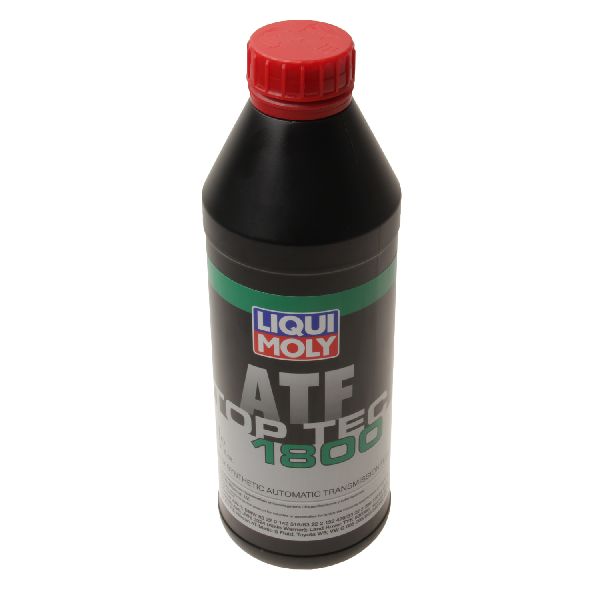
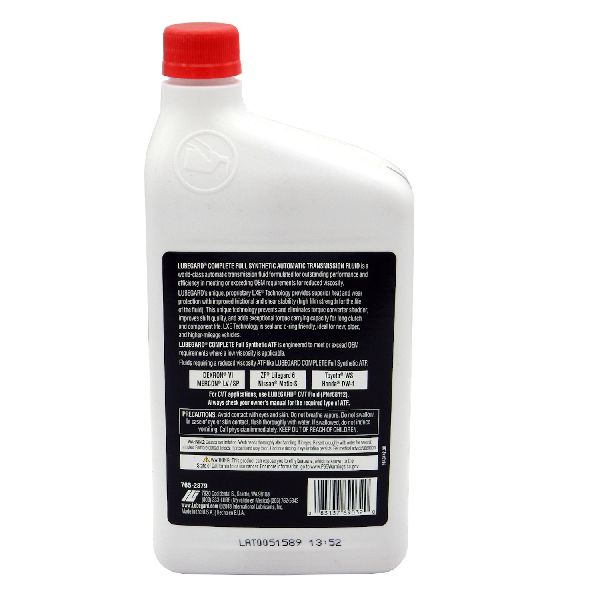
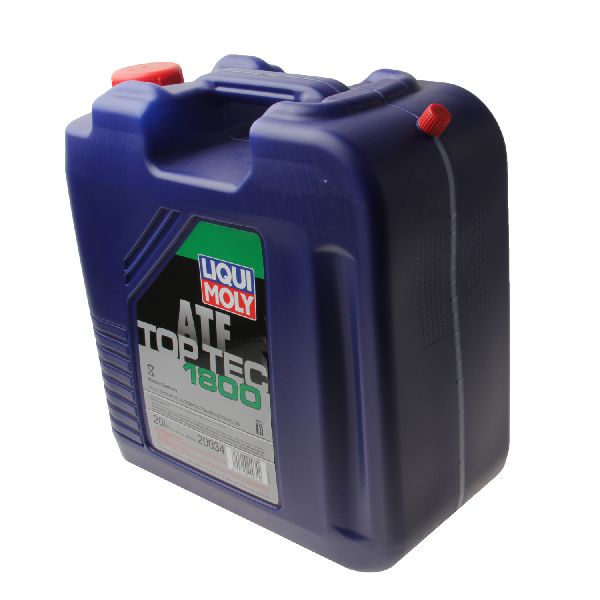
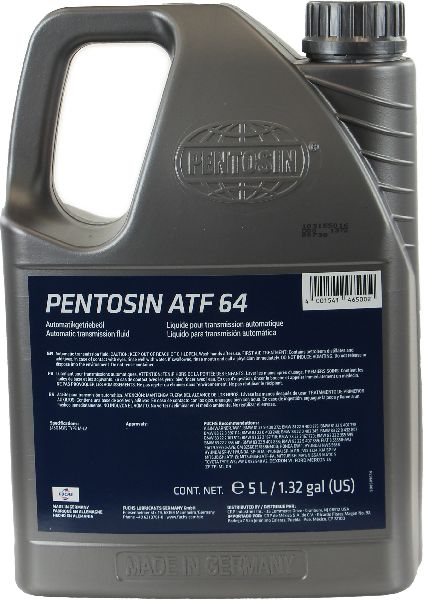
Typical fix: Perform a transmission fluid drain-and-fill using DEXRON-VI fluid. Note that the filter is internal and not changed during this service.
Est. part cost: $50-$100 - Faulty Pressure Control Solenoid #2 / TEHCM Assembly 🔴 High Probability The solenoids within the TEHCM are a very common failure point on the GM 6T40/6T45 series transmissions after 60,000-100,000 miles due to heat, vibration, and contamination from aging fluid. The entire assembly is typically replaced as a unit.
How to confirm: After accessing the TEHCM, a technician can test the internal resistance of the solenoid with a multimeter. The reading should be within the manufacturer's specified range (typically 3-10 ohms for this type). A reading outside this range or a scan tool showing erratic performance data points to a failed solenoid or TEHCM.
Typical fix: Replace the entire TEHCM/valve body assembly. This part is located inside the transmission, behind the side cover. The new TEHCM must be programmed to the vehicle's VIN.
Est. part cost: $250-$500 - Damaged Wiring or Connectors ⚪ Low Probability
How to confirm: Visually inspect the transmission wiring harness and the main connector at the transmission case for any signs of corrosion, damage, or loose pins. A technician can also perform a continuity test from the TCM connector to the transmission connector. A reading of 0 ohms indicates good continuity.
Typical fix: Repair the damaged section of the wiring harness or replace the corroded connector.
Est. part cost: $20-$150 - Failed Transmission Control Module (TCM/TEHCM) or Valve Body ⚪ Low Probability The TCM and solenoids are combined into one unit (TEHCM) inside the transmission, exposed to heat and vibration, which can lead to internal circuit failure over time. Debris can also clog passages in the aluminum valve body it's attached to.
How to confirm: This is typically diagnosed by exclusion. If the fluid is good, the solenoid tests correctly, and the wiring is intact, the fault likely lies within the internal circuitry of the TEHCM or a blockage in the valve body.
Typical fix: Replace the entire TEHCM and valve body assembly. This requires programming with GM-specific software.
Est. part cost: $400-$800
Diagnosis Steps
- Scan the vehicle for all stored trouble codes. Note if P0700 is present with P0965.
- Check the transmission fluid level and condition. This MUST be done at the correct operating temperature (185-203°F / 85-95°C) to be accurate.
- If the fluid is low or degraded, perform a fluid drain-and-fill with DEXRON-VI fluid, clear the codes, and test drive to see if the code returns. If the problem persists, proceed.
- Inspect the main transmission wiring harness and connector for any visible damage, corrosion, or loose connections.
- Using a professional scan tool (like GM GDS2), monitor the real-time data for Pressure Control Solenoid #2. Command the solenoid on and off and observe the voltage and pressure readings to see if they respond correctly.
- If the fluid and wiring are good, but scan tool data is abnormal, the next step is to gain access to the TEHCM/valve body inside the transmission by removing the side cover.
- Test the resistance of Pressure Control Solenoid #2 using a multimeter. Compare the reading to the manufacturer's specification (typically 3-10 ohms). An out-of-spec reading confirms a failed solenoid.
- If the solenoid resistance is out of spec, replace the entire TEHCM assembly.
- If the solenoid tests good, the issue may be a blockage in the valve body or an internal failure of the TEHCM itself. In this case, replacement of the TEHCM/valve body assembly is the recommended repair.
- After replacement, the new TEHCM must be programmed to the vehicle using GM's Service Programming System (SPS).
- Clear all codes and perform a 'Service Fast Learn' procedure to allow the TCM to adapt to the new components, then test drive to verify the repair.
Parts You'll Likely Need
- Transmission Solenoid and TEHCM Kit
(OEM #24287428 (ACDelco))— This is the most direct fix for a failed pressure control solenoid, as it replaces the solenoid, the control module, and other related solenoids in one assembly. This is the highest probability fix if fluid and wiring are confirmed to be good. The TEHCM is a known high-failure item on this transmission.
Trusted brands: ACDelco, Dorman (e.g., 609-000)
OEM price range: $500-$800
Aftermarket price range: $350-$600 - DEXRON-VI Automatic Transmission Fluid
(OEM #10-9395 (ACDelco))— Required for any service involving a drain-and-fill or replacement of internal transmission components. Approximately 5-6 quarts are needed for a pan-drop service.
Trusted brands: ACDelco, Valvoline, Castrol
OEM price range: $10-$15 per quart
Aftermarket price range: $8-$12 per quart - Transmission Side Cover Gasket — Required when removing the transmission side cover to access the TEHCM. Often included with a new TEHCM kit.
Trusted brands: ACDelco, Fel-Pro
OEM price range: $25-$40
Aftermarket price range: $15-$30
Related Codes That Often Appear With This One
- P0700 — P0700 is a generic code indicating the Transmission Control Module (TCM) has stored a fault. It almost always appears alongside a more specific transmission code like P0965 to signal the primary issue is transmission-related.
- P0964 — This code indicates a 'Circuit Low' condition for the same solenoid ('B' / #2), pointing directly to an electrical issue like a short to ground.
- P0966 — This code indicates a 'Circuit Low' condition for the same solenoid ('B' / #2), pointing directly to an electrical issue like a short to ground.
- P0967 — This code indicates a 'Circuit High' condition for the same solenoid ('B' / #2), pointing to an open circuit or a short to power.
Technical Service Bulletins (TSBs) & Recalls
- PI0893: Provides diagnostic information for DTCs P0965, P2719 and P2728 on other GM models, indicating manufacturer awareness of this code family.
- N232395330: While not for P0965, this special coverage program for 2017-2018 Encore/Sonic/Trax addresses turbocharger failures, another common issue with the 1.4L LUV engine.
Platform-Specific Known Issues
- Owner Experience: P0700 and P0965 on a 2015 Chevy Trax: An owner of a 2015 Chevy Trax (mechanically identical to the Encore) reported experiencing harsh shifting and codes P0700 and P0965. After confirming the fluid level was correct, the owner had a shop replace the TEHCM assembly. The repair, including programming the new module, successfully resolved the shifting issues and cleared the codes.
Mechanic-Grade Diagnostic Values
- Pressure Control Solenoid 'B' (PCS #2) Resistance — expected: 3 - 10 Ohms. Failure: A reading of 0 ohms (short circuit) or infinite/OL (open circuit) indicates a failed solenoid.
- Transmission Fluid Temperature for Level Check — expected: 185-203°F (85-95°C). Failure: Checking the fluid level outside this temperature range will result in an inaccurate reading, potentially leading to over or under-filling.
- Alternator Output Voltage — expected: 13.5V - 14.5V. Failure: Voltage outside this range can cause various electrical issues, including incorrect signals from the TCM/TEHCM.
Scan Tool Commands That Help
- GM GDS2 / Tech2 or equivalent professional scan tool: Service Fast Learn / Transmission Adaptive Values Learn — This procedure MUST be performed after replacing the TEHCM or valve body. It allows the new module to learn the specific characteristics of the clutches, ensuring smooth shifting. Failure to perform this step can result in poor shift quality or set new DTCs.
- GM GDS2 / Tech2 or equivalent professional scan tool: Solenoid Cleaning Procedure — If debris in the fluid is suspected of causing a solenoid to stick, some scan tools can command the TCM to cycle all solenoids rapidly while the system is pressurized. This can sometimes dislodge small particles and restore function, potentially avoiding a TEHCM replacement.
- GM Service Programming System (SPS): Module Programming & Setup — Required when installing a new TEHCM. The module must be flashed with the correct software and programmed with the vehicle's VIN to communicate with other modules on the car.
Wiring & Ground Locations
- Main Transmission Ground — On some GM platforms, a primary ground for the ECM and TCM is located on a frame cross rail under the engine's crank pulley, or on a bolt on the transmission bell housing.. A poor or corroded ground connection at this point can cause erratic behavior and incorrect voltage readings from the TEHCM, potentially mimicking a solenoid or module failure. This should be inspected for tightness and corrosion before condemning expensive internal parts.
- Transmission Main Connector (X175 or similar) — The main round or rectangular connector on the outside of the transmission case where the vehicle harness connects to the internal TEHCM wiring.. This is the primary point for external electrical testing. Pins for the Pressure Control Solenoid 'B' circuit can be back-probed here to check for correct voltage signals from the TCM and to test continuity to the module without opening the transmission.
Real Owner Repair Stories
- User review on an e-commerce site (2009-2020 Chevrolet Cruze (uses same 6T40 TEHCM)) — Check Engine Light on, shifting problems.
✅ What actually fixed it The owner replaced the TEHCM with a pre-programmed unit. After installation, they used a diagnostic tool to perform a 'fast learn' procedure. This resolved the issue and the car drove great afterward.
OEM Part Supersession History
Multiple, including 24256524, 24264425, 24275869→24287428 (ACDelco) / 24268164 (GM)— Part consolidation and design updates over the life of the 6T30/40/45 transmission family.
Heads up: It is critical to ensure the replacement TEHCM is correct for the specific generation (GEN 1 vs GEN 2) of the 6T40 transmission. While they may look similar, the internal solenoid functions and positions changed. Using the wrong generation TEHCM will cause major operational issues and set different codes.
Model Year Variations Within This Range
- Approx. 2013-2015 (GEN 1) vs 2016-2022 (GEN 2): The 6T40 transmission had a design change from GEN 1 to GEN 2. GEN 1 units have pressure switches, while GEN 2 units do not. The internal arrangement and function of some solenoids within the TEHCM also changed. A scan tool can help identify the generation by checking if pressure switch DTCs are listed as 'valid' (GEN 1) or 'invalid' (GEN 2). While P0965 points to the same component type, the specific TEHCM part number required will differ between generations.
Diagnostic Flowchart
Other Known Issues on This Vehicle
Issues unrelated to this code that are worth knowing about as an owner of this generation:
- PCV System / Valve Cover Failure 🔴 High — Very common, often occurs between 60,000 and 100,000 miles. A check valve in the intake manifold and a diaphragm in the valve cover fail, causing vacuum leaks, oil consumption, and rough idle. (Ref: Multiple informal TSBs and dealer communications exist. The fix involves replacing both the valve cover and the intake manifold.)
- Turbocharger Failure 🔴 High — Common, particularly on 2013-2018 models, often before 100,000 miles. Symptoms include loss of power, whining noises, and code P0299 (Turbo Underboost). (Ref: N232395330 (Special Coverage for 2017-2018 models))
- Coolant Leaks (Water Pump & Plastic Housings) 🟠 Medium — Frequent issue. The water pump is known to leak, as are the plastic thermostat housing and other plastic coolant fittings, typically after 50,000 miles.
- Excessive Oil Consumption 🟠 Medium — Often linked to the failing PCV system, which causes pressure issues and forces oil past seals and into the combustion chamber.
- Timing Chain Guide Failure 🟡 Low — Less common, but can occur at higher mileage (100,000+ miles). The plastic timing chain guides can become brittle and break, causing a rattling noise and code P0016.
Used vs. New Parts: Buying Guide for This Vehicle
When a used part is the smart pick: A used TEHCM from a donor vehicle is a viable option ONLY if you have access to specialized tools to 'clone' the programming from the original failed module to the used one. This is a bench-top procedure requiring tools like IO Terminal and is not something a typical shop can do. Without cloning, a used module will have the wrong VIN and calibration data, causing a no-start or no-shift condition.
Donor-vehicle mileage cap: roughly under 80000 miles for the part to have meaningful remaining life.
What to inspect on the donor part:
- Verify the donor vehicle's year and model to ensure it has the same generation (GEN 1 vs GEN 2) of the 6T40 transmission.
- Ask for the donor vehicle's VIN to cross-reference part compatibility.
- Inspect the connector pins on the used TEHCM for any signs of corrosion, damage, or fluid intrusion.
OEM-only on this vehicle (don't cheap out):
- Transmission Electro-Hydraulic Control Module (TEHCM): While aftermarket options exist, they often require complex remote programming or have mixed reliability. For the highest chance of success, an OEM ACDelco part or a reputable remanufactured unit that is pre-programmed to your VIN is strongly recommended.
Aftermarket brands forum-validated for this vehicle:
- Several online vendors offer remanufactured TEHCMs that are pre-programmed to your vehicle's VIN, making them 'plug and play' after the 'Service Fast Learn' procedure is completed.
Brands owners have reported issues with on this vehicle:
- Dorman: While a major brand, some users report issues with Dorman TEHCMs for this application, particularly regarding the requirement for their separate Remote Assist Programming (RAP) kit, which adds complexity and cost compared to pre-programmed units.
Real Owner Stories
Aggregated from forums and TSBs cited above. Mileages and costs reflect what owners reported in those sources.
2015 Chevy Trax 1.4L LUV Turbo
Symptoms: The owner reported experiencing harsh shifting and the vehicle triggered codes P0700 and P0965.
What fixed it: After confirming the fluid level was correct, the TEHCM assembly was replaced and programmed to the vehicle.
Source hint: Owner Experience: P0700 and P0965 on a 2015 Chevy Trax
Related OBD-II Codes
Frequently Asked Questions
Can I check the transmission fluid level myself on my Buick Encore to see if it's causing the P0965 code?
Does the special coverage N232395330 for the 2017-2018 Encore cover the P0965 transmission issue?
If I replace the TEHCM assembly to fix P0965, is it a simple 'plug and play' repair?
Is there a specific transmission fluid I should use for my Encore when addressing this code?
Why is my Buick Encore prone to TEHCM failure and P0965 after 60,000 miles?
Should I change the transmission filter while fixing the P0965 code?
Used OEM Parts in Stock


New Aftermarket Parts Available

The information in this article is provided for general reference and educational purposes only. Vehicle specifications, procedures, and part compatibility can vary by production date, trim level, and region. Always consult your vehicle's factory service manual and verify part numbers before purchasing or performing repairs. Safety-critical components such as airbags, seat belts, and braking systems should be installed by a qualified professional.
- Buick Encore:
- 🛍️ Shop This Part
- What's Unique About the 2013-2022 Buick Encore
- Symptoms You May Notice
- Most Likely Causes
- Diagnosis Steps
- Parts You'll Likely Need
- Related Codes That Often Appear With This One
- Technical Service Bulletins (TSBs) & Recalls
- Platform-Specific Known Issues
- Mechanic-Grade Diagnostic Values
- Scan Tool Commands That Help
- Wiring & Ground Locations
- Real Owner Repair Stories
- OEM Part Supersession History
- Model Year Variations Within This Range
- Diagnostic Flowchart
- Other Known Issues on This Vehicle
- Used vs. New Parts: Buying Guide for This Vehicle
- Real Owner Stories
- 2015 Chevy Trax 1.4L LUV Turbo
- Related OBD-II Codes
- Frequently Asked Questions
- 🎟️ Get 5% Off