

P0933 on 2009-2014 Ford F-150: Hydraulic Pressure Sensor Causes and Fixes
On a 2009-2014 F-150 with the 6R80 transmission, code P0933 almost always points to a faulty internal transmission lead frame. This part contains the pressure sensor and is a known failure point. Expect to pay $1,000-$1,800 for a professional replacement. The failure can cause dangerous, sudden downshifts.
- P0933 on a 2009-2014 F-150 strongly suggests a problem with the transmission's internal molded lead frame.
- Symptoms include harsh shifting, getting stuck in gear, and the Check Engine Light.
- This is a serious safety issue that should be addressed immediately to prevent unexpected downshifts.
- The fix involves replacing the lead frame, transmission filter, and fluid, which is a complex job best left to a professional.
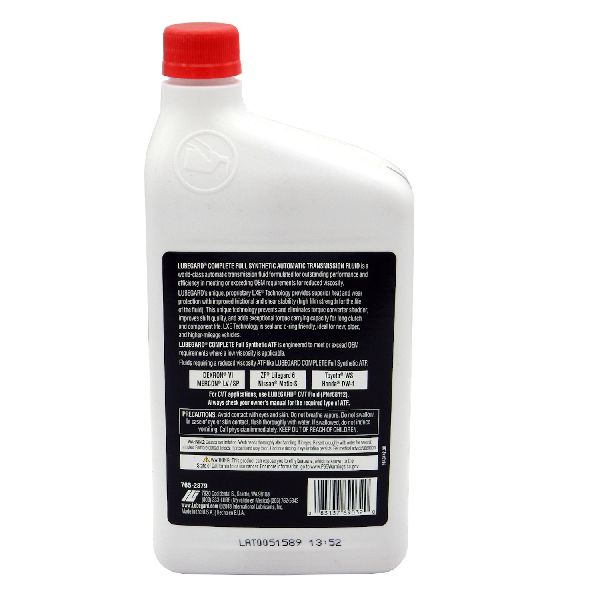
- Always use Motorcraft MERCON LV fluid when servicing the 6R80 transmission.
What's Unique About the 2009-2014 Ford F-150
For the 12th generation F-150 equipped with the 6R80 automatic transmission, this code is very frequently caused by a specific part: the molded lead frame inside the transmission. This component, which is a plastic and metal assembly containing various sensors and electrical pathways, is known to develop cracks and cause intermittent electrical faults. Ford issued Safety Recall 19S07 for 2011-2013 F-150s for a related failure of the Output Shaft Speed (OSS) sensor, which is also part of the lead frame, that could cause an unintended downshift to first gear. Though P0933 specifically points to the pressure sensor, the root cause is almost always the entire lead frame assembly failing.
Symptoms You May Notice
- Harsh, erratic, or delayed gear shifts.
- Transmission suddenly downshifting to a low gear (e.g., 1st or 2nd) at speed.
- Vehicle gets stuck in one gear ('limp mode').
- Illuminated Check Engine Light or Transmission Warning Light (wrench icon).
- Reduced acceleration power.
- Inability to read the speedometer if the Output Speed Sensor on the same lead frame also fails.
- Replacing the entire valve body when only the lead frame is faulty.
- Condemning the entire transmission for replacement without first diagnosing the common lead frame issue.
- Replacing only the external transmission connector when the fault is internal to the lead frame.
Most Likely Causes
- Faulty Internal Molded Lead Frame 🔴 High Probability The 6R80 transmission's lead frame is a well-documented, high-failure item. The plastic housing can develop hairline cracks over time, allowing electrical connections for the integrated pressure and speed sensors to fail intermittently. Contamination on the solenoid terminals is also a common cause of shorts. Ford has issued multiple recalls and extended coverage programs for this part on various models, including recall 19S07 for 2011-2013 F-150s.
How to confirm: A technician will use an advanced scan tool to monitor live data for the transmission pressure sensor, output speed sensor (OSS), and range sensor (TRS). Irrational or missing signals from these sensors, which are all part of the lead frame, strongly indicate a failure. Visual inspection of the part after removal often reveals cracks in the plastic housing or connector pins.
Typical fix: Replace the entire molded lead frame assembly inside the transmission. This involves draining the fluid, removing the transmission pan and valve body to access the part. The bulkhead sleeve connector should also be replaced at the same time.
Est. part cost: $200-$350 - Low or Contaminated Transmission Fluid 🟡 Medium Probability While not a specific prone issue, neglected maintenance can lead to low or degraded fluid. The 6R80 is specified to use MERCON LV fluid, and a fluid and filter change is recommended every 60,000 miles for normal use, or more frequently for severe duty. A pan drop and filter change can require 9-10 quarts to refill.
How to confirm: Check the transmission fluid level and condition via the dipstick located on the passenger side of the transmission case. The fluid should be at the correct level and appear clean and red. Dark, burnt-smelling fluid indicates a problem.
Typical fix: Perform a transmission fluid and filter change using the correct Motorcraft MERCON LV fluid. If the fluid is very dark or contains clutch material, internal transmission damage may be present.
Est. part cost: $80-$150 - Damaged Wiring or External Connector ⚪ Low Probability The main body-to-frame ground strap is known to corrode and cause various electrical issues, including communication codes. While less common for P0933 specifically, a poor ground can affect sensor readings.
How to confirm: Visually inspect the main transmission wiring harness and the large, round bulkhead connector on the passenger side of the transmission for any signs of corrosion, damage from road debris, or fluid intrusion. Inspect the main body-to-frame ground cable for corrosion or looseness.
Typical fix: Repair the damaged section of the wiring harness or clean/replace the affected connector. Clean or replace corroded ground straps.
Est. part cost: $20-$100
Rare But Worth Checking
- Failing Transmission Control Module (TCM) or Powertrain Control Module (PCM): This is very uncommon and should only be suspected after all other possibilities, especially the lead frame, have been definitively ruled out. Misdiagnosis is expensive. Note that on 2011+ models, the TCM function is integrated into the PCM, while earlier 2009-2010 models had a separate TCM as part of the lead frame/valve body assembly.
Diagnosis Steps
- Check and verify the transmission fluid level and condition. Ensure it is full and the fluid is not burnt or dirty.
- Use an advanced OBD-II scanner (like Ford IDS or FORScan) to read all transmission-related codes and view live data streams. Pay close attention to 'Desired Line Pressure' vs 'Actual Line pressure'. A significant deviation points to a sensor or circuit issue.
- Monitor the live data for the Transmission Fluid Pressure Sensor, Output Speed Sensor (OSS), and Transmission Range Sensor (TRS) during a test drive if safe to do so. Dropouts or erratic readings from any of these point towards the lead frame.
- Check for any applicable recalls, like 19S07, by VIN. The recall involves a PCM software update to prevent the dangerous downshift, but may also involve lead frame replacement if certain codes are present. 🎬 See how Ford's 19S07 recall addresses the sudden downshift issue.
- Inspect the main transmission wiring harness and the bulkhead connector (C175T) for any visible damage, corrosion, or loose connections.
- Inspect body and frame ground connections for corrosion, particularly the main ground strap near the passenger side.
- If fluid and wiring are good, the next logical step is to drop the transmission pan and inspect for excessive metal debris.
- If the pan is relatively clean, the most likely cause is the internal molded lead frame. Proceed with replacing it.
Parts You'll Likely Need
- Transmission Molded Lead Frame Connector
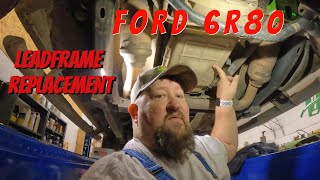
(OEM #AL3Z-7G276-D)— This is the most common failure point for the 6R80 transmission that causes code P0933. It contains the pressure sensor, speed sensors, and range sensor that fail. Part number AL3Z-7G276-D is the latest revision, superseding -A and -B versions. 🎬 Watch: Why this specific lead frame part fails so often.
Trusted brands: Motorcraft, Dorman
OEM price range: $210-$320
Aftermarket price range: $150-$250 - Motorcraft MERCON LV Automatic Transmission Fluid
(OEM #XT-10-QLVC)— This is the required fluid for the 6R80 transmission. A fluid and filter change is required when replacing the lead frame. A full service requires 9-10 quarts.
Trusted brands: Motorcraft
OEM price range: $8-$12 per quart - Transmission Filter Kit
(OEM #FT188)— The filter should always be replaced when the transmission pan is removed for service.
Trusted brands: Motorcraft
OEM price range: $25-$40
Aftermarket price range: $15-$30 - Transmission Bulkhead Connector Sleeve
(OEM #AL3Z-7G391-A)— This sleeve seals the wiring harness connection to the transmission case. It is highly recommended to replace it when servicing the lead frame to prevent future leaks.
Trusted brands: Motorcraft
OEM price range: $15-$30
Aftermarket price range: $10-$20
Related Codes That Often Appear With This One
- P0720 — Output Speed Sensor Circuit fault. This sensor is integrated into the same lead frame assembly.
- P0722 — Output Speed Sensor Circuit No Signal. This sensor is also part of the lead frame.
- P0731 — Gear 1 Incorrect Ratio. Often triggered when the OSS sensor fails, leading to an unexpected downshift.
- P0706 — Transmission Range Sensor 'A' Circuit Range/Performance. This sensor is also part of the lead frame assembly.
Technical Service Bulletins (TSBs) & Recalls
- Recall 19S07 / NHTSA 19V433: Covers 2011-2013 F-150s for intermittent OSS sensor failure on the lead frame causing unintended downshifts. The remedy is a PCM software update and, if specific DTCs are present, lead frame replacement.
- Customer Satisfaction Program 19N01: An extended coverage program for the molded lead frame on certain F-150s, often running concurrently with recall 19S07.
Platform-Specific Known Issues
- A recall (19S07) was issued for 2011-2013 F-150s for the lead frame failure causing sudden downshifts. The fix was often a PCM software update to change the transmission's failure strategy, but in some cases included lead frame replacement.
- A later recall for 2015-2017 models highlighted how common this issue is for the 6R80 transmission platform.
Mechanic-Grade Diagnostic Values
- Transmission Fluid Temperature (TFT) Sensor Resistance — expected: Approx. 37,000 Ohms at 50°F (10°C), 9,500 Ohms at 104°F (40°C), 2,000 Ohms at 176°F (80°C). The TFT is a thermistor integrated into the lead frame.. Failure: An open circuit (infinite resistance) or short circuit (near zero resistance), or readings that do not correspond to the fluid temperature.
Scan Tool Commands That Help
- Ford IDS or FORScan: Clear Transmission Adaptive Tables — This service procedure must be performed after replacing the lead frame or valve body. The PCM has learned the timing of the old components, and clearing the tables forces it to relearn the hydraulic fill times and clutch apply characteristics of the new parts to ensure smooth shifting.
- Ford IDS or FORScan: Module Programming -> Programmable Parameters -> Transmission Solenoid Body Identification — Required when the valve body or lead frame assembly is replaced. The new part comes with a 13-digit solenoid strategy number on a tag. This number must be programmed into the PCM to match the flow characteristics of the new solenoids, preventing harsh shifts and other driveability issues.
Wiring & Ground Locations
- C175T — This is the designation for the transmission-specific connector at the Powertrain Control Module (PCM). The PCM is typically located on the passenger-side firewall in the engine bay.. All sensor signals from the lead frame (pressure, speed, temperature, range) travel through this connector to the PCM. A pin-point test here can determine if a wiring fault exists between the transmission and the PCM.
- G104 (or similar) — A primary engine/body ground strap is located on the passenger side, connecting the back of the cylinder head to the firewall. Another key ground runs from the body to the frame on the passenger side.. Poor grounding at these points is a known issue on F-150s, leading to corrosion and a host of intermittent electrical problems and communication codes. While not a direct cause of P0933, a bad ground can disrupt sensor reference voltages and cause erratic readings.
Real Owner Repair Stories
- Ford F150 Forum user jca2112 (2012 F-150 FX4 3.5L EcoBoost with 6R80) — Lead frame failure with associated codes.
❌ Tried (didn't work) Calling a dealership, who quoted over $3,000 and a potential 6-month wait for the OEM part.
✅ What actually fixed it The owner self-installed a Dorman-branded lead frame, a new filter, and a new transmission pan with a drain plug. The total cost was under $750, and the truck was repaired in 3 days. The owner reported the Dorman part performed identically to OEM with no issues.
OEM Part Supersession History
AL3Z-7G276-A, AL3Z-7G276-B→AL3Z-7G276-D— Revisions made by Ford to improve the durability and reliability of the lead frame assembly, likely addressing the cracking and sensor failure issues.
Heads up: The newest revision, -D, is the recommended replacement for all prior versions for the specified model years.
Model Year Variations Within This Range
- 2009-2010: These early 6R80 models used a Mechatronic unit, where the Transmission Control Module (TCM) was integrated directly into the lead frame/valve body assembly inside the transmission.
- 2011-2014: For the 2011 model year, Ford revised the 6R80. The separate TCM was eliminated, and its functions were integrated into the main Powertrain Control Module (PCM). These models also received a one-way clutch for smoother 1-2 shifts. This change affects diagnostic procedures, as communication is with the PCM, not a separate TCM.
Diagnostic Flowchart
Other Known Issues on This Vehicle
Issues unrelated to this code that are worth knowing about as an owner of this generation:
- Fuse 27 (Fuel Pump) Relocation 🔴 High — Very common across all 2009-2014 engines. The fuse terminal overheats, melts, and causes a no-start or stalling condition. (Ref: TSB 15-0137)
- 5.4L 3V Triton Cam Phaser/Timing Chain Failure 🔴 High — Extremely common on 2009-2010 models with the 5.4L engine. Caused by low oil pressure from faulty tensioners, leading to a characteristic 'diesel rattle' and eventual engine failure.
- 3.5L EcoBoost Timing Chain Rattle on Cold Start 🟠 Medium — Common on 2011-2014 models with the 3.5L EcoBoost. A stretched timing chain causes a brief rattle on cold starts. (Ref: TSB 16-0027 (superseded by 18-2305))
- EPAS (Electric Power Steering) Rack Failure 🔴 High — Common on 2011-2014 models. The electric steering rack can fail suddenly, causing a complete loss of power assist, which is a major safety hazard.
- 5.0L V8 'Sunken' Intake Valves 🟠 Medium — Affected a number of 2011-2013 and early 2014 models with the 5.0L Coyote engine. The intake valves were made of a soft material, causing them to recede into the cylinder head, leading to compression loss and misfires at idle.
- 5.4L 3V Spark Plug Breakage 🟠 Medium — A notorious issue on the 2009-2010 5.4L 3V engine. The two-piece spark plug design can cause the lower portion to seize in the cylinder head and break off during removal, requiring a special extraction tool.
- Integrated Wheel End (IWE) Actuator Grinding 🟡 Low — Common on 4x4 models. A loss of vacuum to the front hubs causes the gears to partially engage while driving in 2WD, creating a grinding or clicking noise. Often caused by a faulty solenoid or leaking vacuum lines.
Used vs. New Parts: Buying Guide for This Vehicle
When a used part is the smart pick: Never. The molded lead frame is a high-failure part due to its plastic construction and integrated electronics failing over time from heat cycles and vibration. A used part from a junkyard carries the same inherent design flaw and has unknown remaining life, making it a very poor-value proposition.
What to inspect on the donor part:
- Not applicable as a used part is not recommended.
OEM-only on this vehicle (don't cheap out):
- Molded Lead Frame Connector (Motorcraft AL3Z-7G276-D is strongly preferred)
Aftermarket brands forum-validated for this vehicle:
- Dorman: While OEM is preferred, forum users have reported success with the Dorman replacement, especially when the OEM part is on backorder.
- Circuit Board Medics: One user reported a positive experience with a remanufactured OEM unit from this company.
Brands owners have reported issues with on this vehicle:
- Unbranded, low-cost units from online marketplaces are a significant gamble, as quality control is unknown and could lead to immediate failure, requiring the complex repair to be performed again.
Real Owner Stories
Aggregated from forums and TSBs cited above. Mileages and costs reflect what owners reported in those sources.
2011 Ford F-150 — ~125000 miles
Symptoms: The truck started shifting harshly and erratically, and then suddenly downshifted to a low gear while driving at highway speed. The check engine light and wrench light came on.
What fixed it: Replacement of the internal molded lead frame assembly at the dealership.
Cost: $1000-$2200
Source hint: reddit.com/r/f150 & r/FordTrucks
2013 Ford F-150 — ~155000 miles
Symptoms: The speedometer suddenly stopped working and the transmission was stuck, only allowing access to 3rd and 5th gear.
What fixed it: The molded lead frame was diagnosed as the failure and was replaced, which restored speedometer function and normal shifting.
Source hint: f150forum.com - Thread titled 'Speedometer stopped working and only had 3rd and 5th gear?'
2012 Ford F-150 — ~140000 miles
Symptoms: Got a P0933 code and other transmission codes. The shifts were very harsh and delayed, and the truck went into limp mode.
What fixed it: DIY replacement of the molded lead frame, bulkhead sleeve connector, filter, and fluid.
Source hint: f150forum.com - Multiple threads corroborate that the molded lead frame is the primary cause of P0933 and related transmission codes, with owners sharing repair costs and experiences. Specific threads discuss the symptoms and DIY replacement.
Related OBD-II Codes
Frequently Asked Questions
My 2012 F-150 suddenly downshifted to first gear on the highway. Is there a recall for this?
What is the most likely part I need to fix for a P0933 code on my F-150?
My speedometer stopped working and the truck is stuck in gear. Is this related to the P0933 code?
Is there an extended warranty for the lead frame on my 2013 F-150?
What type of transmission fluid does my 2014 F-150 use?
Could a bad ground wire cause my F-150's transmission problems and code P0933?
I have a 2012 Ford Expedition with the same shifting problems. Does it have the same lead frame issue?
Helpful Videos
Used OEM Parts in Stock

New Aftermarket Parts Available


The information in this article is provided for general reference and educational purposes only. Vehicle specifications, procedures, and part compatibility can vary by production date, trim level, and region. Always consult your vehicle's factory service manual and verify part numbers before purchasing or performing repairs. Safety-critical components such as airbags, seat belts, and braking systems should be installed by a qualified professional.
- Ford F-150:
- 🎬 Helpful Videos
- 🛍️ Shop This Part
- What's Unique About the 2009-2014 Ford F-150
- Symptoms You May Notice
- Most Likely Causes
- Rare But Worth Checking
- Diagnosis Steps
- Parts You'll Likely Need
- Related Codes That Often Appear With This One
- Technical Service Bulletins (TSBs) & Recalls
- Platform-Specific Known Issues
- Mechanic-Grade Diagnostic Values
- Scan Tool Commands That Help
- Wiring & Ground Locations
- Real Owner Repair Stories
- OEM Part Supersession History
- Model Year Variations Within This Range
- Diagnostic Flowchart
- Other Known Issues on This Vehicle
- Used vs. New Parts: Buying Guide for This Vehicle
- Real Owner Stories
- 2011 Ford F-150 — ~125000 miles
- 2013 Ford F-150 — ~155000 miles
- 2012 Ford F-150 — ~140000 miles
- Related OBD-II Codes
- Frequently Asked Questions
- 🎟️ Get 5% Off