

P0877 on 2009-2019 Ford Flex 3.5L: Transmission Pressure Sensor 'D' Circuit Low Causes and Fixes
On a 2009-2019 Ford Flex, code P0877 is most often caused by a failed transmission fluid pressure sensor located inside the transmission on the valve body. This repair requires removing the transmission pan and is best left to a professional. Expect costs to range from $600 to $1,200. The issue is frequently traced to a faulty molded lead frame, a known failure point in Ford's 6F50/6F55 transmissions.
- P0877 on a Ford Flex indicates a 'Circuit Low' fault for the internal Transmission Fluid Pressure Sensor 'D'.
- The most likely cause is a failed pressure sensor or the molded lead frame wiring harness, both located inside the transmission.
- This is a serious code that can cause severe shifting problems and requires professional repair involving the removal of the transmission valve body.
- Before authorizing an expensive repair, ensure the shop first checks the fluid level/condition and tests the external wiring.
- When the valve body is removed, it is wise to replace the entire set of sensors and the lead frame to prevent repeat failures.
What's Unique About the 2009-2019 Ford Flex
The Ford Flex uses a 6F50 or 6F55 automatic transmission, a design co-developed by Ford and GM (whose version is the 6T70/6T75). In this design, the transmission fluid pressure (TFP) sensors are not simple, externally-mounted parts. They are located inside the transmission and are integrated with the valve body assembly. Failures often relate to either the sensor itself or the molded lead frame—the internal wiring harness that connects to the sensors and solenoids. This internal location makes diagnosis and repair more complex and labor-intensive than on vehicles with externally accessible sensors.
Symptoms You May Notice
- Harsh, erratic, or delayed shifting
- Transmission slipping between gears
- Vehicle gets stuck in a single gear (limp mode)
- Check Engine Light and/or Wrench Light are illuminated
- A smell of burnt or overheating transmission fluid
- Failure to engage a gear from a stop
- Replacing the entire transmission when only an internal sensor or lead frame has failed. A full rebuild or replacement is often unnecessary unless there is evidence of widespread mechanical damage (e.g., excessive metal in the pan).
Most Likely Causes
- Faulty Molded Lead Frame Assembly 🔴 High Probability This is a widely documented failure point on Ford's 6-speed transmissions (including the 6F50 and 6R80). The lead frame contains the internal wiring, the Output Speed Sensor (OSS), and the Transmission Range Sensor (TRS). The thin plastic and internal circuits can crack or short out from heat, vibration, and contamination from metallic fluid, leading to various circuit-low codes like P0877 and speed sensor codes like P0720. 🎬 Watch this guide on diagnosing 6F50 speed sensor code P0722
How to confirm: A technician will see P0877 often accompanied by other codes like P0720 or P0722. Live data will show an erratic or missing signal from the TFP sensor and/or the OSS. After confirming external wiring is intact, the diagnosis points to an internal component failure, with the lead frame being the prime suspect. Ford TSB 13-5-27 specifically notes that high resistance in the digital TR sensor (part of the lead frame) is a known issue.
Typical fix: Replace the molded lead frame assembly. This requires dropping the pan and valve body. It is considered best practice to replace the lead frame, the valve body-to-case seals, and the filter at the same time. The transmission's adaptive learning strategy must be reset after the repair using a capable scan tool.
Est. part cost: $250-$400 for an OEM Motorcraft lead frame kit. - Faulty Transmission Fluid Pressure (TFP) Sensor 'D' 🟡 Medium Probability The TFP sensors are electronic components mounted on the valve body, exposed to constant heat and fluid pressure changes, leading to eventual failure. While the sensor can fail on its own, the fault often lies within the lead frame that connects to it.
How to confirm: A professional technician will use a high-end scan tool to monitor live data from the TFP sensor 'D' circuit. If the voltage reads at or near zero regardless of engine RPM or gear, the sensor or its circuit is faulty. The technician will then test the wiring between the PCM and the transmission connector before condemning the internal sensor. A check for a 5-volt reference signal at the sensor connector is a key step.
Typical fix: Replace the faulty transmission fluid pressure sensor. Since this requires removing the valve body, it is common practice to replace all pressure sensors/switches and the molded lead frame at the same time to prevent future failures. The transmission fluid and filter are also replaced.
Est. part cost: $200-$400 for a valve body solenoid/sensor kit or lead frame. - Low or Contaminated Transmission Fluid 🟡 Medium Probability While not a design flaw, neglected maintenance can lead to low fluid levels from leaks or fluid breakdown. Burnt or contaminated fluid loses its hydraulic properties, causing pressure issues that can trigger codes.
How to confirm: Check the transmission fluid level and condition using the dipstick. The fluid should be at the correct level and have a bright red color (for MERCON LV). If it is dark brown/black, smells burnt, or is very low, this is a likely contributor.
Typical fix: If the fluid is low, top it off with Motorcraft MERCON LV fluid and check for leaks. If the fluid is old and dirty, perform a transmission fluid drain and fill. A full 'flush' is not recommended as it can dislodge debris and cause other issues.
Est. part cost: $80-$150 for fluid and a filter kit. - Wiring Harness or Connector Issue ⚪ Low Probability The main external transmission connector can become contaminated with moisture or road grime, and wiring can be damaged by road debris or improper repairs.
How to confirm: Visually inspect the main wiring harness connector (C168) at the transmission case for pushed-out pins, corrosion, or damage. Perform a continuity test on the TFP sensor 'D' circuit wire between the PCM and the transmission connector.
Typical fix: Clean the connector terminals with electronic contact cleaner. Repair or replace the damaged section of the wiring harness.
Est. part cost: $10-$100 depending on the extent of the damage.
Rare But Worth Checking
- Failed Powertrain Control Module (PCM): This is very rare. The PCM should only be considered after all other possibilities, including internal transmission wiring and sensors, have been exhaustively tested and ruled out.
Diagnosis Steps
- Check and verify the transmission fluid level and condition. Top off or replace as necessary.
- Use an advanced OBD-II scanner to check for other transmission-related codes (especially P0720, P0722) and to view live data for the TFP Sensor 'D' voltage.
- Visually inspect the main external transmission wiring harness and connector (C168) for any signs of damage, corrosion, or loose connections.
- If external wiring is okay, test the TFP sensor 'D' circuit for continuity and shorts between the PCM and the transmission connector. Per TSB 13-5-27, for 2009-2011 models, check resistance on the TR sensor circuits at connector C168; a reading over 5 Ohms indicates a faulty lead frame.
- If the external circuit is intact, the fault is internal to the transmission. The next step is to drop the transmission pan.
- Inspect the fluid in the pan for excessive metal shavings or clutch material, which would indicate a more serious mechanical failure. Note that fine metallic dust on the range sensor magnet is a common sign of lead frame failure.
- Remove the valve body to gain access to the TFP sensors and the molded lead frame.
- Inspect the lead frame for any visible cracks or damage. It is highly recommended to replace the entire lead frame assembly at this stage, along with the four small seals and the main pass-through connector seal.
- Reassemble the transmission with a new filter and pan gasket, ensuring the valve body bolts are torqued to the correct specification (approx. 106 in-lbs).
- Fill with the correct amount of Motorcraft MERCON LV fluid.
- Clear all codes and perform a transmission adaptive strategy relearn procedure with a capable scan tool. A simple battery disconnect is not sufficient.
Parts You'll Likely Need
- Molded Lead Frame Assembly
(OEM #AL3Z-7G276-D (Note: This is for the similar 6R80, confirm part number by VIN for 6F50/55))— This is the most common point of failure for this code. It contains the internal wiring and sensors that short out.
Trusted brands: Motorcraft, Dorman
OEM price range: $250-$400
Aftermarket price range: $150-$250 - Transmission Fluid Pressure Sensor/Switch — This is the component directly identified by the code. However, it's often replaced as part of the lead frame or a solenoid body kit.
Trusted brands: Motorcraft, Dorman
OEM price range: $150-$250 (often sold as a kit or part of the valve body)
Aftermarket price range: $80-$150 - Transmission Filter
(OEM #FT-188)— Always replaced when the transmission pan is removed for service.
Trusted brands: Motorcraft, Wix, ATP
OEM price range: $25-$40
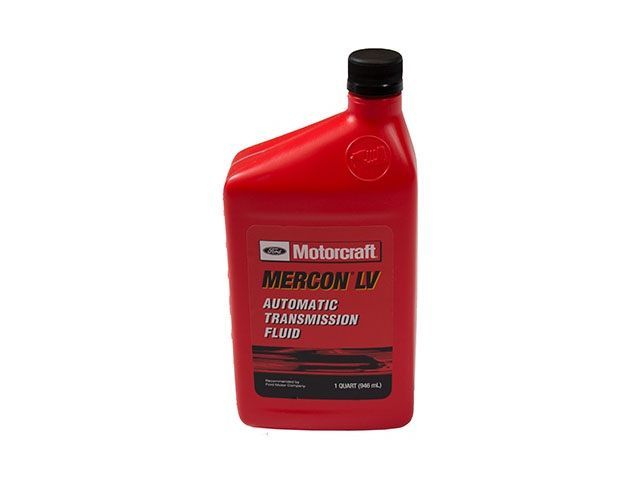
Aftermarket price range: $15-$30 - Motorcraft MERCON LV Automatic Transmission Fluid
(OEM #XT-10-QLVC)— The correct fluid must be used to refill the transmission after dropping the pan. A typical drain and fill requires 7-9 quarts.
Trusted brands: Motorcraft
OEM price range: $10-$15 per quart - Valve Body to Case Seal Kit — These small rubber seals are critical for preventing internal pressure leaks and should always be replaced when the valve body is removed.
Trusted brands: Motorcraft, Sonnax
OEM price range: $30-$50
Aftermarket price range: $20-$40
Related Codes That Often Appear With This One
- P0720 — This code is for an 'Output Speed Sensor (OSS) Circuit' failure. On the 6F50/6F55 transmission, the OSS is integrated into the molded lead frame assembly. A failure of the lead frame often triggers both speed sensor and pressure sensor codes simultaneously.
- P0722 — This code indicates 'Output Speed Sensor (OSS) Circuit No Signal'. Like P0720, this points directly to a failure of the OSS, which is part of the lead frame assembly, making a combined failure common.
- P0989 — This code is for 'Transmission Fluid Pressure Sensor 'E' Circuit Low'. Since the pressure sensors are part of a single internal assembly and share wiring in the lead frame, it's common for multiple sensor circuit faults to appear together.
Technical Service Bulletins (TSBs) & Recalls
- TSB 16-0100: This TSB addresses harsh shifting and diagnostic trouble codes related to the molded lead frame on various Ford models, including those with the 6R80 transmission, which has a similar lead frame design and failure mode.
Platform-Specific Known Issues
- Ford issued TSB 11-12-10 for some 2009-2011 models for sluggish acceleration and harsh bumps, which involved a valve body modification. While not for P0877 specifically, it highlights known issues with the valve body assembly in early models.
- Ford also issued TSB 13-5-27 for 2009-2011 models for slipping and neutral-out conditions related to the internal transmission range sensor. This points to a pattern of internal electronic component failures in the 6F50/6F55 transmission.
Mechanic-Grade Diagnostic Values
- Transmission Range (TR) Sensor Circuit Resistance — expected: Less than 5.0 Ohms. Failure: Any reading greater than 5.0 Ohms indicates high resistance in the sensor, requiring lead frame replacement.
- TFP Sensor Reference Voltage — expected: Approximately 5 volts. Failure: Missing or significantly lower voltage points to a wiring issue or a fault in the PCM.
- Valve Body and Solenoid Body Bolt Torque — expected: 106 in-lbs (approx. 9 ft-lbs). Failure: Incorrect torque can cause internal leaks or damage the valve body.
Scan Tool Commands That Help
- Ford IDS / FORScan / Professional Scan Tool: Clear All Codes & Transmission Adaptive Learning Reset — This is mandatory after replacing the lead frame or valve body. The PCM must relearn the clutch fill times and shift points. Failure to do this can result in continued poor shifting. In some cases, the vehicle may not start or show gears until codes are cleared.
- Ford IDS / Professional Scan Tool: Download Solenoid Body Strategy — Required when a new solenoid body or complete transmission is installed. The unique 13-digit strategy ID from the new part must be programmed into the PCM for correct operation.
Wiring & Ground Locations
- C168 — The main external wiring harness connector at the transmission case.. This is the primary connector for all electronic signals going into and out of the transmission, including the TFP sensor circuits. TSB 13-5-27 specifies testing resistance at this connector's pins to diagnose the internal lead frame.
- C175T — One of the main multi-pin connectors at the Powertrain Control Module (PCM).. This connector contains the corresponding pins for the transmission sensor signals. It's the other end of the circuit for continuity testing from the C168 connector.
- G104 — On the transmission assembly.. This is a primary ground point for the transmission. A loose or corroded ground here can cause a wide range of erratic electronic faults and sensor reading issues, including circuit low codes.
Real Owner Repair Stories
- Ford F150 Forum (2015 F-150 3.5L EcoBoost (with similar 6R80 transmission)) — Stuck in 5th gear, check engine light, code for output shaft sensor.
❌ Tried (didn't work) Initial diagnosis was unclear.
✅ What actually fixed it Replaced the molded lead frame. After reassembly, the truck would not start or show gears on the dash. The user cleared the codes with a new OBD2 scanner, which allowed the truck to start and function correctly. The root cause of the no-start was incorrect alignment of the cylinder pin on the valve body with the plastic slider on the lead frame. Correcting the alignment and clearing codes resolved the issue. - Ford F150 Forum (2012 F-150 5.0L (with similar 6R80 transmission)) — No-start condition and 11 transmission-related DTCs after DIY lead frame replacement.
❌ Tried (didn't work) Re-checking the main electrical pigtail connector.
✅ What actually fixed it The problem was diagnosed by a shop as incorrect alignment of the manual valve linkage with the range sensor on the lead frame. The PCM believed the truck was in gear and prevented the starter from engaging. Properly aligning the components during reassembly is critical.
OEM Part Supersession History
Various early lead frames→Updated Motorcraft Lead Frame Kits— To improve reliability. Later designs of the lead frame (for the similar 6R80) included a small foam pad placed over the solenoid terminals to prevent shorting from conductive metallic particles circulating in the transmission fluid.
Model Year Variations Within This Range
- 2009-2011: Per TSB 13-5-27, vehicles built from March 2009 to June 2010 are specifically prone to high resistance in the Transmission Range (TR) sensor, causing slipping, neutral-out, or 5th gear starts. Diagnosis requires a specific resistance check at the C168 connector.
- 2009-2011: Per TSB 11-9-11, some vehicles using MERCON LV fluid may require an updated separator plate and checkball modification within the valve body to resolve certain drivability issues.
- 2010: Per TSB 10-9-9, some 2010 models may have an issue with a forward clutch feed seal in the case, leading to harsh engagements, slipping, and DTC P0751. This requires transmission removal to repair.
Diagnostic Flowchart
Other Known Issues on This Vehicle
Issues unrelated to this code that are worth knowing about as an owner of this generation:
- Internal Water Pump Failure 🔴 High — Commonly occurs between 80,000 and 120,000 miles. Failure can cause coolant to mix with engine oil, leading to catastrophic engine damage if not caught early.
- Power Transfer Unit (PTU) Failure (AWD Models) 🔴 High — The PTU fluid can overheat and break down, leading to gear and bearing failure. There is no drain plug, making service difficult and often neglected. Failure is costly, often requiring a full PTU replacement.
- Faulty Door Latches 🟠 Medium — Widespread issue where a component in the door latch can break, preventing the door from latching securely or causing it to open while driving. (Ref: Ford Recalls 16S30, 17S33, 20S30, 23S36)
- Cracked Flex Plate 🟠 Medium — Some owners have reported cracked flex plates, which connect the engine to the transmission, typically occurring between 60,000-90,000 miles and causing a loss of power.
- Harsh or Delayed Shifting (6F50/6F55) 🟠 Medium — Beyond specific codes, these transmissions are known for developing shift quality issues like harsh engagement or delays, sometimes addressed by software updates or solenoid body replacement. (Ref: General diagnosis often leads to solenoid or valve body work.)
Used vs. New Parts: Buying Guide for This Vehicle
When a used part is the smart pick: For this specific repair, sourcing a used part is highly discouraged. The molded lead frame is a known high-failure-rate electronic component. A used part from a salvage yard carries a significant risk of being faulty or having a very short remaining service life.
Donor-vehicle mileage cap: roughly under 30000 miles for the part to have meaningful remaining life.
What to inspect on the donor part:
- If forced to consider a used part, only select one from a very low-mileage vehicle that was wrecked due to collision, not due to powertrain failure.
- Visually inspect the lead frame for any cracks, especially around the sensor housings and connector pins.
- Avoid any part that shows signs of overheating (discoloration) or has heavy metallic sludge on the sensor magnets.
OEM-only on this vehicle (don't cheap out):
- Molded Lead Frame Assembly
Aftermarket brands forum-validated for this vehicle:
- Sonnax (for individual valve body components and seal kits, not complete lead frames)
Brands owners have reported issues with on this vehicle:
- Unbranded or 'white box' lead frames from online marketplaces have a high rate of being dead-on-arrival or failing prematurely, as reported in owner forums.
Real Owner Stories
Aggregated from forums and TSBs cited above. Mileages and costs reflect what owners reported in those sources.
2014 Ford Flex SEL 3.5L
Symptoms: Owner reported general transmission issues and sought advice on potential failures common to the model year.
What fixed it: Diagnosis of internal transmission components, specifically focusing on the lead frame and sensors common to the 6F50 platform.
Source hint: Reddit r/FordFlex thread titled '2014 ford flex sel issues help or advice needed'
2009-2011 Ford Flex 3.5L
Symptoms: Sluggish acceleration and harsh bumps during gear changes.
What fixed it: Valve body modification as specified in TSB 11-12-10.
Source hint: Vehicle_specific_issues citing TSB 11-12-10
2009-2011 Ford Flex 3.5L
Symptoms: Transmission slipping and 'neutral-out' conditions where the vehicle fails to stay in gear.
What fixed it: Replacement of the internal transmission range sensor/lead frame assembly due to high resistance.
Source hint: TSB 13-5-27 cited in vehicle_specific_issues
Related OBD-II Codes
Frequently Asked Questions
My 2010 Ford Flex is slipping and dropping into neutral; does TSB 13-5-27 apply to this issue?
What specific transmission fluid should I use for my Ford Flex 3.5L to avoid pressure codes like P0877?
Is there a TSB for harsh shifting on the Ford Flex that isn't specifically for P0877?
Can I just disconnect the battery to reset the transmission after replacing the lead frame on my Flex?
Why is the lead frame a common failure point on the Ford Flex 6F50 transmission?
What should a technician check at connector C168 on a 2011 Ford Flex?
Helpful Videos
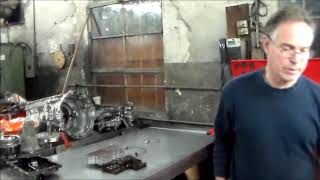
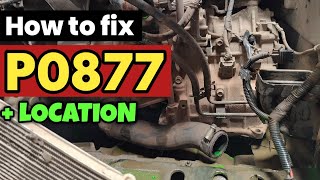
Used OEM Parts in Stock

New Aftermarket Parts Available



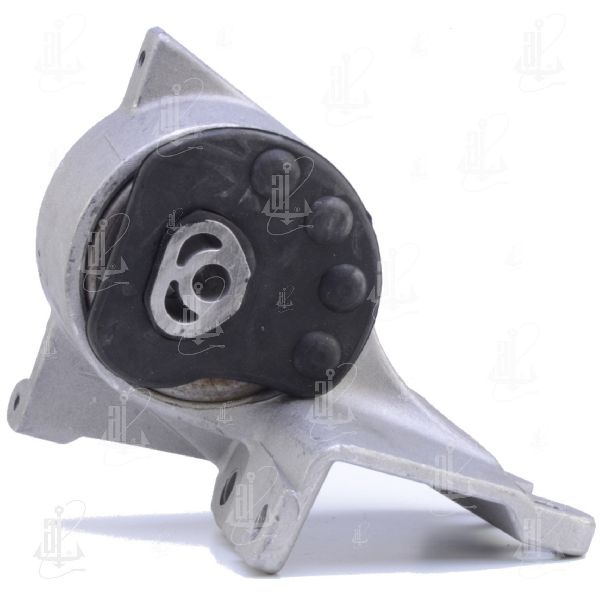

The information in this article is provided for general reference and educational purposes only. Vehicle specifications, procedures, and part compatibility can vary by production date, trim level, and region. Always consult your vehicle's factory service manual and verify part numbers before purchasing or performing repairs. Safety-critical components such as airbags, seat belts, and braking systems should be installed by a qualified professional.
- Ford Flex:
- 🎬 Helpful Videos
- 🛍️ Shop This Part
- What's Unique About the 2009-2019 Ford Flex
- Symptoms You May Notice
- Most Likely Causes
- Rare But Worth Checking
- Diagnosis Steps
- Parts You'll Likely Need
- Related Codes That Often Appear With This One
- Technical Service Bulletins (TSBs) & Recalls
- Platform-Specific Known Issues
- Mechanic-Grade Diagnostic Values
- Scan Tool Commands That Help
- Wiring & Ground Locations
- Real Owner Repair Stories
- OEM Part Supersession History
- Model Year Variations Within This Range
- Diagnostic Flowchart
- Other Known Issues on This Vehicle
- Used vs. New Parts: Buying Guide for This Vehicle
- Real Owner Stories
- 2014 Ford Flex SEL 3.5L
- 2009-2011 Ford Flex 3.5L
- 2009-2011 Ford Flex 3.5L
- Related OBD-II Codes
- Frequently Asked Questions
- 🎟️ Get 5% Off