

P0868 on 2010-2014 Subaru Legacy: Low Transmission Fluid Pressure Causes and Fixes
On a 2010-2014 Subaru Legacy, code P0868 almost always points to a failing valve body or solenoid in the TR690 CVT transmission. This is a very common and well-documented failure for this platform. A full valve body replacement can cost $1,500-$2,500, while a fluid change, the first and cheapest diagnostic step, is around $200-$400. Replacing an individual solenoid is a more advanced DIY or specialist repair but can save thousands.
- P0868 on a 2010-2014 Legacy almost always indicates a problem with the CVT valve body or its solenoids.
- Before committing to an expensive repair, always have the CVT fluid level and condition professionally checked. A simple fluid service may resolve the issue if the fluid is low or degraded.
- Ask your mechanic about the possibility of replacing only the failed solenoid instead of the entire valve body, as this could save you over a thousand dollars.
- Due to the complexity and sensitivity of the Lineartronic CVT, this repair is not recommended for novice DIYers. Always use genuine Subaru fluid.
What's Unique About the 2010-2014 Subaru Legacy
The 2010-2014 Legacy uses a TR690 Lineartronic CVT, and code P0868 is a signature failure for this transmission. The most frequent point of failure is not a simple leak or sensor, but the transmission's valve body or one of its integrated pressure control solenoids. In response to widespread issues, Subaru issued TSB 16-115-18 and others, extending the CVT warranty for many vehicles to 10 years/100,000 miles. While most vehicles in this 2010-2014 year range are now outside that coverage period by time, the existence of the warranty extension is an official acknowledgment of the transmission's known weaknesses.
Symptoms You May Notice
- Check Engine Light is illuminated
- AT OIL TEMP light may flash
- Vehicle may enter "limp mode" with reduced engine power
- Shuddering, jerking, or hesitation, especially on acceleration
- Transmission slipping or feeling like it's not engaging properly
- A high-pitched whining or droning sound from the transmission area
- Delayed engagement when shifting into Drive or Reverse
- Stalling or near-stalling when coming to a stop, feeling similar to not pressing the clutch on a manual car.
- Replacing the entire transmission when only the valve body is needed. A proper diagnosis is key to avoiding unnecessary expense.
- Assuming the code is just a sensor fault without checking the fluid condition and valve body function first.
- Replacing the torque converter. While torque converter issues (like stalling, covered in TSB 16-90-13R) are also common on these cars, they typically don't cause P0868 on their own.
Most Likely Causes
- Failing CVT Valve Body or Control Solenoid 🔴 High Probability The valve body and its solenoids are a known weak point on this generation of Subaru's TR690 Lineartronic CVT. Over time, solenoids can wear out, stick, or fail electronically, failing to regulate pressure correctly. This is the most common root cause of P0868.
How to confirm: A technician with a professional scan tool (like a Subaru Select Monitor) can monitor live data for commanded line pressure vs. actual line pressure. If actual pressure is consistently low despite good fluid level/condition, the valve body is the primary suspect. Often, this is a diagnosis of exclusion after fluid is confirmed good.
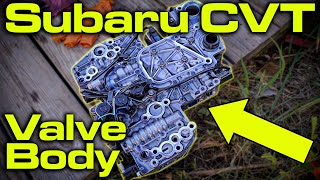
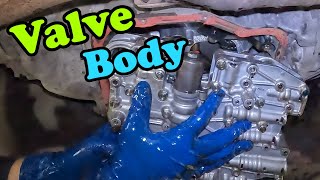
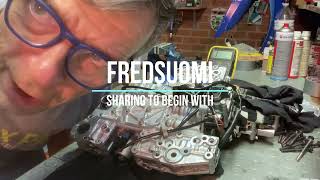
Typical fix: The most common professional repair is to replace the entire CVT valve body assembly. 🎬 Watch: A complete DIY walkthrough for replacing the TR690 valve body. For DIYers or specialists, it is possible to identify and replace only the faulty solenoid (e.g., the lock-up solenoid), which is much more cost-effective. 🎬 Watch: How to replace individual solenoids instead of the whole unit. Aftermarket companies like Sonnax also offer valve body repair kits.
Est. part cost: $400-$800 for a remanufactured valve body, $50-$150 for an individual solenoid. - Low or Degraded CVT Fluid 🟡 Medium Probability While Subaru initially marketed the fluid as "lifetime," it breaks down with heat and time, losing its viscosity and ability to maintain pressure. Leaks from the oil pump chain cover are also a known issue (see TSB 16-103-16R).
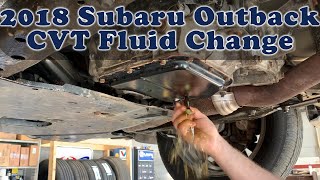
How to confirm: Check the transmission fluid level and condition. The fluid should be at the correct level and not appear dark, burnt, or contain excessive debris. Note: This CVT has no dipstick; the level must be checked via a fill plug procedure 🎬 See how to perform a proper fluid level check and refill. with the fluid temperature between 95-113°F (35-45°C).
Typical fix: Perform a transmission fluid drain and fill using the correct type of Subaru CVT fluid (e.g., High-Torque CVTF). This is often the first diagnostic step. A full flush is not typically recommended by Subaru.
Est. part cost: $100-$200 for OEM fluid. - Clogged CVT Fluid Strainer (Filter) ⚪ Low Probability If internal components begin to wear, metallic debris can clog the internal fluid strainer, restricting flow from the pump. This is usually a symptom of a larger failure rather than a root cause.
How to confirm: This is typically discovered during a valve body replacement or transmission teardown. A significant amount of debris in the pan during a fluid change is a strong indicator. The strainer is located inside the pan, attached to the valve body.
Typical fix: The strainer is replaced during the valve body service. It is a small, inexpensive part.
Est. part cost: $20-$50
Rare But Worth Checking
- Failing Internal Transmission Oil Pump: While less common than a valve body failure, the pump that generates the hydraulic pressure can wear out, especially at high mileage. A known TSB (16-103-16R) addresses leaks from the oil pump chain cover due to a faulty gasket. A full pump failure is a major internal repair that often results in replacing the entire transmission.
- Faulty Transmission Fluid Pressure Sensor: It is possible for the sensor itself to fail and send an incorrect low-pressure reading. However, on this platform, the issue is more frequently with the pressure control solenoids rather than the monitoring sensor. TSB 16-102-16 provides diagnostic steps for a related secondary pressure sensor code (P0841), indicating sensor issues are not unheard of.
Diagnosis Steps
- Check and verify the CVT fluid level and condition. This is the most crucial first step. The fluid must be checked via the fill plug with the engine running and the transmission fluid temperature between 95-113°F (35-45°C), confirmed with a scan tool.
- If the fluid is low, top it off, clear the codes, and test drive to see if the code returns. If it does, inspect for external leaks, paying close attention to the oil pump chain cover.
- If the fluid is old or degraded, perform a drain and fill with genuine Subaru High-Torque CVT fluid.
- If the fluid level and condition are good, use a professional scan tool to monitor the transmission line pressure in real-time while driving. Compare the commanded pressure vs. the actual pressure. Note any significant discrepancies.
- If actual pressure is consistently lower than commanded pressure, this points towards a hydraulic issue (valve body, solenoid, or pump).
- Inspect the wiring and connectors to the transmission and valve body for any damage, corrosion, or loose connections. TSB 16-102-16R provides a 'wiggle-test' procedure for checking wiring harnesses.
- If all other steps fail to resolve the issue, the most likely culprit is the CVT valve body or a specific solenoid within it. At this point, replacement of the valve body assembly is the standard repair.
Parts You'll Likely Need
- CVT Valve Body Assembly
(OEM #31706AA033 (may be superseded by 31706AA034 or 31706AA331, verify with VIN))— This is the most common point of failure for code P0868 on the TR690 CVT. It contains the solenoids that regulate pressure.
Trusted brands: Subaru (OEM), Aftermarket Remanufactured (e.g., from FridayParts, Sonnax)
OEM price range: $975-$1500
Aftermarket price range: $350-$800 - Subaru High-Torque CVT Fluid
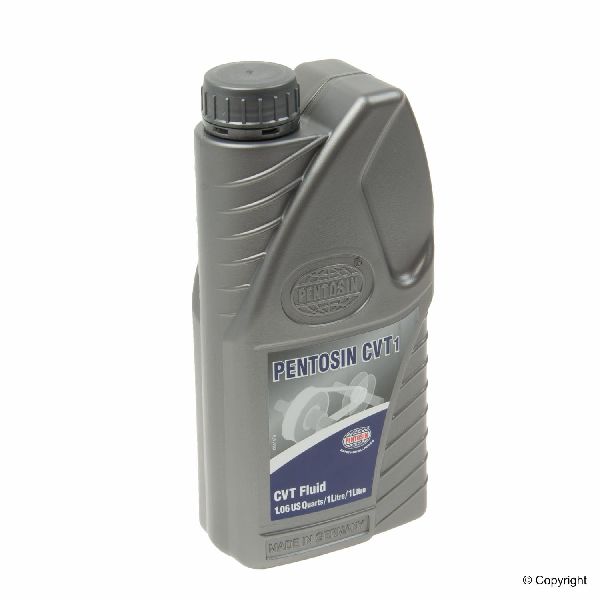
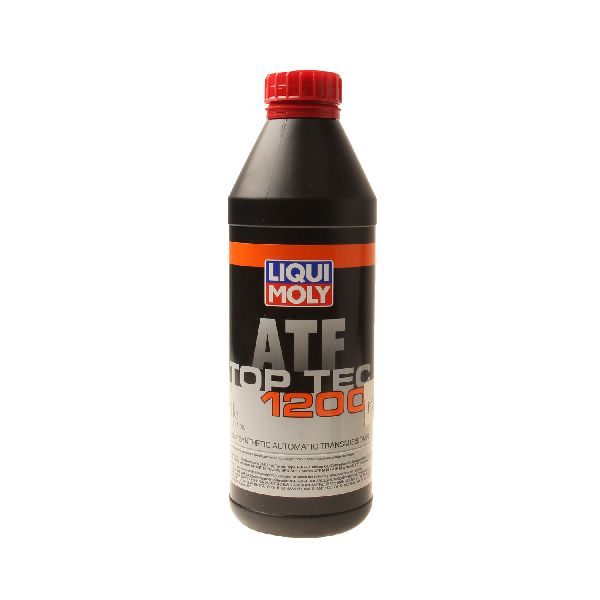
(OEM #SOA748V0200)— The correct fluid is essential for the transmission's operation. Using the wrong type can cause damage. Always verify the correct fluid type with the vehicle's VIN. A drain and fill requires approximately 5-6 quarts.
Trusted brands: Subaru (OEM)
OEM price range: $20-$30 per quart
Aftermarket price range: $15-$25 per quart - Torque Converter Lock-Up Solenoid
(OEM #31825AA050 (or equivalent))— If the issue is isolated to a single solenoid (often the lock-up solenoid), replacing it is a much cheaper alternative to the entire valve body. This is a more advanced repair.
Related Codes That Often Appear With This One
- P0700 — P0700 is a generic code indicating the Transmission Control Module (TCM) has stored a fault. It almost always appears alongside more specific transmission codes like P0868 to illuminate the main Check Engine Light.
- P2764 — This code relates to the Torque Converter Clutch Pressure Control Solenoid. Since the valve body houses multiple solenoids, it's common for faults in different solenoids to appear together, strongly pointing to a valve body or specific solenoid failure.
- P0841 — This code for 'Secondary Fluid Pressure Sensor/Switch 'A' Circuit Range/Performance' can appear with P0868. Subaru has a specific TSB (16-102-16R) to diagnose this, which may involve checking wiring or the valve body itself.
Technical Service Bulletins (TSBs) & Recalls
- TSB 16-115-18 / 16-107-17R: Details the CVT warranty extension to 10 years/100,000 miles for various models, acknowledging widespread concerns.
- TSB 16-90-13R: Addresses a stalling/shuddering condition when stopping, caused by a faulty torque converter design.
- TSB 16-103-16R: Pertains to CVT fluid seepage from the oil pump chain cover due to gasket failure.
- TSB 16-102-16R: Provides an enhanced diagnostic procedure for DTC P0841 (Secondary Oil Pressure Sensor), which can be related to P0868 issues.
Platform-Specific Known Issues
- Subaru extended the warranty on many Lineartronic CVTs from this era to 10 years or 100,000 miles under TSBs like 16-115-18. While likely expired for most 2010-2014 models, it acknowledges a history of issues with these transmissions.
- A separate common issue is stalling when coming to a stop, addressed by TSB 16-90-13R, which involves a redesigned torque converter. This is sometimes misdiagnosed as part of the P0868 problem.
- Fluid seepage from the CVT oil pump chain cover is another known issue, addressed by TSB 16-103-16R. This can lead to low fluid levels, which can trigger P0868.
Mechanic-Grade Diagnostic Values
- Torque Converter Lock-up Solenoid Resistance (Primary Coil) — expected: 3.2–3.7 Ω. Failure: A reading outside this range, or an open circuit, indicates a failed solenoid. The circuit may test good when cold but open when hot.
- Torque Converter Lock-up Solenoid Resistance (Secondary Coil) — expected: 12.2–13.2 Ω at 68°F (20°C). Failure: A reading outside this range, especially an open circuit when heated with a heat gun, points to a common failure mode.
- Live Data: Actual vs. Desired Line Pressure — expected: Actual line pressure should closely follow desired line pressure under most conditions.. Failure: If the actual line pressure is consistently more than 10-15 PSI below the desired pressure for several seconds, it will trigger code P0868.
- Live Data: Line Pressure at Idle (in Drive) — expected: Approximately 60 PSI.. Failure: Significantly lower pressure at idle, which does not increase with RPM, suggests a pump or major leak issue.
Scan Tool Commands That Help
- Subaru Select Monitor (SSM) or compatible aftermarket tool: Clear AT Learning Value — This must be performed before the relearn procedure. It clears the old adaptive values stored by the TCM after the valve body has been replaced.
- Subaru Select Monitor (SSM) or compatible aftermarket tool: AT Learning Mode — This is a required procedure after replacing the valve body or certain solenoids. The TCM must relearn the hydraulic characteristics of the new components to ensure smooth operation and prevent damage. The vehicle must be lifted with wheels off the ground, and specific steps involving shifting and warming the fluid must be followed.
Wiring & Ground Locations
- Main Engine Ground — A primary ground strap connects from the chassis near the battery to the top starter motor bolt on the transmission bellhousing.. While not a direct cause of P0868, poor grounding can cause a wide range of bizarre electrical issues and erratic sensor readings. The TCM and its sensors rely on a stable ground reference. Ensuring all main grounds are clean and tight is a foundational step in any electrical diagnosis.
- TCM Location — The Transmission Control Module (TCM) is typically located in the passenger compartment, often under the dashboard or near the glove box area.. This is the module that receives the pressure sensor data and controls the solenoids. In rare cases of persistent issues after replacing parts, the TCM itself or its connector could be the problem.
- Valve Body Connector — The main electrical connector for the valve body passes through the transmission case and is accessible after removing the transmission oil pan.. This connector is the single point of contact for all solenoids and sensors on the valve body. A loose connection or corroded pins here can mimic a failed valve body and should be inspected during replacement.
Real Owner Repair Stories
- MrSubaru1387 on YouTube (2011 Subaru Outback (Brother's car)) — Flashing AT OIL TEMP light, bucking/erratic behavior, stalling at stops (due to a separate torque converter issue).
❌ Tried (didn't work) The diagnosis pointed directly to the valve body/solenoid failure.
✅ What actually fixed it Replacement of the entire CVT valve body assembly, followed by a fluid fill and a successful 'AT Learning' procedure with a scan tool, resolved the primary transmission faults (though the torque converter stalling issue remained). - Valley Mobile Automotive on YouTube (2012 Subaru Outback) — Not specified, but performing a valve body replacement for a customer.
✅ What actually fixed it Successfully replaced the TR690 valve body. The video details the process of draining fluid, removing the pan, identifying the correct 12 bolts to remove the valve body, and the reinstallation and fluid fill procedure.
OEM Part Supersession History
31706AA030, 31706AA031, 31706AA032, 31706AA033→31706AA034, and later 31706AA331— Part revisions to improve reliability and address common failure modes.
Heads up: While the parts are physically interchangeable for the 2010-2014 Legacy, it is critical to use the latest available part number when ordering a replacement to get the most recent design improvements. Always verify the correct part number with the vehicle's VIN.
Diagnostic Flowchart
Other Known Issues on This Vehicle
Issues unrelated to this code that are worth knowing about as an owner of this generation:
- Excessive Engine Oil Consumption (FB25 Engine) 🔴 High — Very common on 2013-2014 models with the 2.5L FB25 engine. Caused by defective piston rings. Can consume over a quart of oil in 1,200 miles. (Ref: Subject of class-action lawsuit (Yaeger v. Subaru). Subaru settled, extending warranties and offering oil consumption tests and short block replacements for affected vehicles.)
- Premature Wheel Bearing Failure 🟠 Medium — Commonly occurs between 60,000 and 100,000 miles. Both front and rear bearings are susceptible. Symptoms include a loud humming or grinding noise that changes with speed and cornering. (Ref: No specific recall, but a very widely reported owner complaint. Some theories point to inadequate grounding causing electrical pitting on the bearing surfaces.)
- Torque Converter Shudder/Stall 🟠 Medium — Common on 2010-2012 models. Causes a shudder or engine stall when coming to a stop, as if not disengaging the clutch in a manual car. (Ref: TSB 16-90-13R. Subaru released a redesigned torque converter to fix the issue, which was caused by internal thrust washer wear restricting oil flow.)
- CVT Fluid Seepage from Oil Pump Cover 🟡 Low — A minor but common leak point on the TR690 CVT. Seepage accumulates under the torque converter case. (Ref: TSB 16-103-16R. The fix involves removing the cover, cleaning the surfaces, and re-sealing with an improved gasket material.)
Used vs. New Parts: Buying Guide for This Vehicle
When a used part is the smart pick: For a DIYer on a tight budget, a used valve body from a low-mileage, rear-ended donor vehicle can be a viable option. It is a gamble, as the failure is common, but it can save significant money over a new or remanufactured unit.
Donor-vehicle mileage cap: roughly under 80000 miles for the part to have meaningful remaining life.
What to inspect on the donor part:
- Verify the donor vehicle's mileage and reason for being salvaged (e.g., rear collision is ideal, front-end damage is riskier).
- If possible, get a short warranty from the salvage yard.
- Inspect the fluid in the donor transmission if possible. Dark, burnt fluid is a red flag.
- Swapping an individual solenoid from a used valve body to your original one can be a cost-effective repair if you can identify the specific failed solenoid.
OEM-only on this vehicle (don't cheap out):
- CVT Fluid (Subaru High-Torque CVTF SOA748V0200). The chemistry of CVT fluid is critical, and using non-OEM fluid is a common cause of transmission problems.
Aftermarket brands forum-validated for this vehicle:
- Sonnax: Offers valve body repair kits and upgraded components that are well-regarded in the transmission repair industry.
- Dorman OE FIX: Offers a replacement lock-up solenoid (p/n 926-408) which can be a cost-effective alternative to replacing the entire valve body if the lock-up solenoid is the only fault.
Brands owners have reported issues with on this vehicle:
- Generic, unbranded valve bodies and solenoids from online marketplaces can be a significant risk due to inconsistent quality control and incorrect resistance values.
Real Owner Stories
Aggregated from forums and TSBs cited above. Mileages and costs reflect what owners reported in those sources.
2010-2014 Subaru Legacy
Symptoms: Owner experienced issues leading to a P0868 diagnosis and was given a dealership quote for a valve body replacement.
What fixed it: The dealership-quoted repair was a full valve body replacement, though the owner noted the possibility of a more cost-effective, solenoid-only repair.
Cost: $2500-$2500
Source hint: reddit.com/r/subaru
Related OBD-II Codes
Frequently Asked Questions
My 2012 Legacy has a P0868 code. Is this covered by Subaru's CVT warranty extension?
What is the first and most important thing to check when I get a P0868 code on my Legacy?
How do I check the transmission fluid on my 2010-2014 Legacy? I can't find a dipstick.
My car is stalling when I come to a stop. Is this caused by the P0868 issue?
My mechanic says the valve body is the most likely cause of P0868. Is this accurate?
I noticed a fluid leak under my car. Could this be related to the P0868 code?
Can I just replace the faulty solenoid instead of the entire expensive valve body assembly?
Helpful Videos
We Have This Part in Stock

The information in this article is provided for general reference and educational purposes only. Vehicle specifications, procedures, and part compatibility can vary by production date, trim level, and region. Always consult your vehicle's factory service manual and verify part numbers before purchasing or performing repairs. Safety-critical components such as airbags, seat belts, and braking systems should be installed by a qualified professional.
- Subaru Legacy:
- 🎬 Helpful Videos
- 🛍️ Shop This Part
- What's Unique About the 2010-2014 Subaru Legacy
- Symptoms You May Notice
- Most Likely Causes
- Rare But Worth Checking
- Diagnosis Steps
- Parts You'll Likely Need
- Related Codes That Often Appear With This One
- Technical Service Bulletins (TSBs) & Recalls
- Platform-Specific Known Issues
- Mechanic-Grade Diagnostic Values
- Scan Tool Commands That Help
- Wiring & Ground Locations
- Real Owner Repair Stories
- OEM Part Supersession History
- Diagnostic Flowchart
- Other Known Issues on This Vehicle
- Used vs. New Parts: Buying Guide for This Vehicle
- Real Owner Stories
- 2010-2014 Subaru Legacy
- Related OBD-II Codes
- Frequently Asked Questions
- 🎟️ Get 5% Off