

P0843 on 2007-2011 Honda CR-V: 2nd Clutch Pressure Switch Fixes
This code typically points to a failed 2nd clutch transmission fluid pressure switch. It's a common issue, and replacing the switch is a straightforward DIY fix for around $30-$60 in parts. Often, the only symptom is a blinking 'D' light on the dashboard, with no other noticeable driving issues.
- P0843 on a 2007-2011 CR-V almost always means the 2nd clutch pressure switch has failed.
- The most common symptom is a blinking 'D' light on the dashboard, often with no noticeable driving problems.
- The fix is usually replacing the switch (Part No. 28600-RCL-004), which is located under the air filter box and is accessible for a DIYer with a 22mm deep socket.
- Always use Honda Genuine ATF-DW1 fluid when performing a drain and fill.
- Don't confuse the 2nd clutch switch (blue connector) with other pressure switches; look for the '2' marking on the transmission case if possible to confirm location.
What's Unique About the 2007-2011 Honda CR-V

The 2007-2011 (third generation) CR-V uses a conventional 5-speed automatic transmission (model BZJA/MZJA) with multiple external pressure switches that are a known failure point. Unlike some transmissions where switches are buried inside, these are relatively easy to access on top of the transmission case, making for a common and manageable DIY repair. The most frequent symptom is not a severe shifting problem, but the unnerving blinking 'D' (Drive) indicator light on the instrument cluster.
Symptoms You May Notice

- Blinking 'D' (Drive) indicator light on the dashboard
- Check Engine Light is on
- Harsh or erratic transmission shifting
- Transmission may hesitate or feel sluggish between shifts
- Slightly reduced fuel economy in some cases
- Replacing the wrong pressure switch. The transmission has multiple switches; P0843 specifically refers to the 2nd clutch switch (Switch A), which has a blue connector. Some owners mistakenly replace the 3rd clutch switch (P0847/P0848), which often has a brown or black connector.
Most Likely Causes

- Failed 2nd Clutch Transmission Fluid Pressure Switch 🔴 High Probability These external switches are a common failure item on this generation of Honda transmissions due to age, heat cycles, and vibration. The internal diaphragm can fail, causing an incorrect electrical reading.
How to confirm: The most definitive way is to replace the switch, as testing can be inconclusive. The switch is located on top of the transmission, identifiable by its blue electrical connector and a number '2' often cast into the transmission case nearby. A mechanic can also use a Honda Diagnostic System (HDS) to monitor the switch status ('2nd Pressure Switch') while driving to confirm it is not turning 'ON' when 2nd gear is engaged.
Typical fix: Replace the 2nd clutch pressure switch. It is located underneath the air filter box assembly. A 22mm deep socket is required for removal. 🎬 Watch: Step-by-step guide to replacing the 2nd clutch pressure switch.
Est. part cost: $30-$60 - Low or Dirty Transmission Fluid 🟡 Medium Probability Honda transmissions are sensitive to fluid condition and type. Old, degraded, or non-Honda ATF can cause pressure-related issues that may be misinterpreted by the sensor.
How to confirm: Check the transmission fluid level and condition using the dipstick. The fluid should be red or light brown, not black, and should not have a burnt smell. If the fluid is low or very dirty, it can cause pressure sensor faults.
Typical fix: Perform a drain and fill of the automatic transmission fluid using only Honda Genuine ATF-DW1. It's often recommended to do this when replacing the pressure switch.
Est. part cost: $40-$80 - Wiring or Connector Issue ⚪ Low Probability The wiring harness connector sits on top of the transmission and is exposed to heat and vibration. Rodents are also known to chew on wires in this area, which can cause an open or short circuit.
How to confirm: Visually inspect the wiring and the blue connector for the 2nd clutch pressure switch. Check for signs of rodent damage (chewed wires), corrosion in the connector pins, or a loose connection. A multimeter can be used to check for continuity and proper voltage at the connector.
Typical fix: Repair the damaged section of wiring or clean/replace the connector. Applying dielectric grease to the new connector can help prevent future moisture intrusion.
Est. part cost: $5-$50
Rare But Worth Checking
- Faulty Powertrain Control Module (PCM): This is extremely rare. The PCM should only be considered after all other possibilities (switch, fluid, wiring) have been thoroughly ruled out. A faulty PCM will usually cause multiple other codes and more significant issues.
Diagnosis Steps

- Confirm the code P0843 is present using an OBD-II scanner.
- Check for the classic symptom: a blinking 'D' light on the dash.
- Inspect the transmission fluid level and condition. If low, top it off. If very dirty or burnt, plan to change it with Honda ATF-DW1.
- Locate the 2nd clutch pressure switch. You will need to remove the engine air filter box assembly (top and bottom halves) to access it. This typically requires a 10mm socket.
- Inspect the switch's blue electrical connector and nearby wiring for any signs of damage, corrosion, or looseness. Pay special attention to signs of rodent activity.
- Disconnect the connector. Using a 22mm deep socket, remove the old pressure switch.
- Install the new pressure switch with a new crush washer. Do not overtighten; a snug fit is sufficient as a specific torque spec is not widely published.
- Apply a small amount of dielectric grease to the connector pins before reconnecting it to seal out moisture.
- Reinstall the air filter box assembly.
- Clear the trouble code with the scanner. Disconnecting the battery may also clear the code.
- Test drive the vehicle, shifting through all gears, to confirm the fix and ensure the 'D' light does not blink and the code does not return.
Parts You'll Likely Need
- 2nd Clutch Transmission Fluid Pressure Switch (Switch A)
(OEM #28600-RCL-004)— This is the component that fails most frequently, triggering the P0843 code. This part number has superseded several previous versions.
Trusted brands: Honda (Genuine), Standard Motor Products, Dorman
OEM price range: $50-$70
Aftermarket price range: $25-$45 - Crush Washer / Gasket (for pressure switch)
(OEM #90471-PW7-A00)— A new crush washer is required to ensure a proper seal when replacing the pressure switch. It is often sold separately.
Trusted brands: Honda (Genuine)
OEM price range: $2-$5
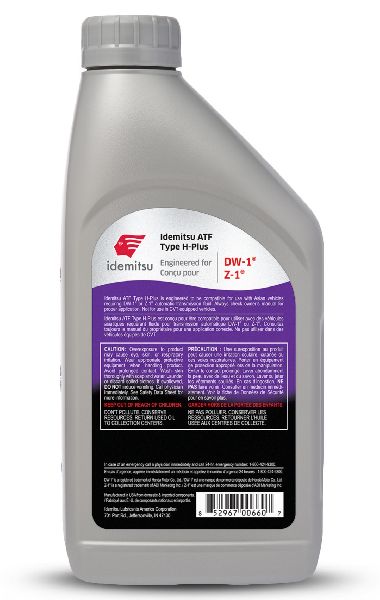
Aftermarket price range: $1-$3 - Automatic Transmission Fluid (ATF-DW1)
(OEM #08200-9008)— Proper fluid level and condition are critical. It's best practice to perform a drain-and-fill when servicing the transmission. Only genuine Honda fluid is recommended. 🎬 Watch: How to perform a transmission fluid drain and fill.
Trusted brands: Honda (Genuine)
OEM price range: $10-$15 per quart (approx. 3-4 quarts needed for drain/fill)
Aftermarket price range: N/A (Use of genuine Honda fluid is strongly recommended)
Platform-Specific Known Issues
- Rodent Damage: A recurring theme in owner forums is finding chewed wires near the transmission pressure switches. The soy-based wire insulation used in this era can attract rodents, leading to open circuits and codes like P0843.
- Cross-Manufacturer Observations: While the CR-V is the primary focus, other Honda models with similar transmission logic also exhibit this code. For instance, NHTSA ODI #11698241 describes a case where P0843 was retrieved alongside an oil leak and a cylinder misfire.
Mechanic-Grade Diagnostic Values
- Voltage at the 2nd clutch pressure switch connector (disconnected) with key on, engine off. — expected: Approximately 5.0V. Failure: A reading of 0V indicates an open or short in the wire to the PCM, or a faulty PCM. This test confirms the PCM is sending the correct reference voltage.
- Continuity test of the pressure switch itself. — expected: No continuity between the electrical pin and the switch body (ground) when no pressure is applied.. Failure: Continuity with no pressure indicates a shorted switch (would cause P0842, not P0843). A lack of continuity when hydraulic pressure *is* applied indicates a failed open switch, which is the direct cause of P0843.
- Quick circuit test by jumping the harness connector pin to ground. — expected: With the connector jumped to a good ground, the code P0843 should be clearable and/or a P0842 (Circuit Low) may appear.. Failure: If P0843 remains active even with the connector jumped to ground, the fault is in the wiring between the connector and the PCM, or the PCM itself.
Scan Tool Commands That Help
- Honda Diagnostic System (HDS): A/T Data List > 2nd Pressure Switch (ON/OFF) — This is a live data monitoring function used to confirm the switch's operation. While driving, a technician will shift into 2nd gear and watch this parameter. If the status remains 'OFF' when 2nd gear is engaged, it confirms a fault in the switch or its circuit, definitively diagnosing the problem without swapping parts.
Wiring & Ground Locations
- 2nd Clutch Pressure Switch Connector — On top of the transmission housing, under the air filter box. It is a single-pin connector, typically blue.. This is the connection point for the switch. Corrosion or damage here will cause an open circuit and trigger P0843.
- PCM Connector B, Pin B33 — At the Powertrain Control Module (PCM). The wire is typically Yellow/Blue (YEL/BLU).. This is the destination for the switch's signal. A technician would test for continuity between this pin and the switch connector to rule out a broken wire.
- G101 — Main engine/transmission ground, typically located on the left side of the cylinder head or near the thermostat housing, connecting the harness to the engine block.. The pressure switch grounds through the transmission case. A poor main ground at G101 can create a floating ground, preventing the switch from pulling the signal voltage low enough and causing an intermittent or persistent P0843 code.
Real Owner Repair Stories
- CRV Owners Club Forum (2007-2011 Honda CR-V) — Blinking 'D' light, codes P0843 and P0848.
✅ What actually fixed it Owner replaced both the 2nd clutch (P0843) and 3rd clutch (P0848) pressure switches and performed a 3x transmission fluid drain-and-fill with genuine Honda ATF-DW1. This resolved both codes and the blinking light. - JustAnswer Mechanic Post (2006 Honda Civic (similar K-series engine and transmission logic)) — Persistent transmission pressure switch code after replacing the sensor.
❌ Tried (didn't work) Replacing the pressure switch.
✅ What actually fixed it The final cause was found to be oil leaking onto the wiring harness, which wicked into the connector and degraded the connection. The fix was to clean the oil from the harness and replace the connector pigtail.
OEM Part Supersession History
28600-RCL-003, 28600-PRP-013, 28600-P6H-013, and others→28600-RCL-004— Part consolidation and potential design updates by the manufacturer.
Heads up: The newer part number 28600-RCL-004 is backward compatible with vehicles that used the older numbers. No known incompatibilities exist for this application.
Diagnostic Flowchart
Other Known Issues on This Vehicle
Issues unrelated to this code that are worth knowing about as an owner of this generation:
- A/C Compressor Clutch Failure 🔴 High — Very common. The clutch coil fails or the clutch wears out, causing intermittent or total loss of A/C. Often misdiagnosed as a bad compressor. (Ref: Honda TSB 12-072 (Warranty extension, now expired))
- VTC Actuator Rattle on Cold Start 🟠 Medium — Common, especially on 2008-2011 models. A brief, loud metallic rattle for 1-2 seconds upon cold startup. Caused by a faulty VTC actuator locking pin. (Ref: Honda has released updated parts to address this.)
- Power Door Lock Actuator Failure 🟡 Low — Extremely common. One or more door locks will fail to operate with the remote or door switch. Requires replacement of the individual actuator inside the door.
- Excessive Oil Consumption 🟠 Medium — Reported more frequently on 2010-2011 models. Can be caused by stuck oil control rings. Requires frequent oil level checks. (Ref: A warranty extension was offered for this issue, but has since expired.)
- Groaning Noise from Rear Differential 🟡 Low — Common on AWD models. A groaning or moaning sound is heard during slow-speed turns. (Ref: Honda TSB recommends changing the rear differential fluid and burnishing the clutches to resolve the noise.)
Used vs. New Parts: Buying Guide for This Vehicle
When a used part is the smart pick: For this specific repair, a used pressure switch is not recommended. The part is a known high-failure item, and its low cost when purchased new makes the risk of a used part failing prematurely not worthwhile. A used wiring harness pigtail could be a sensible choice if the original connector is damaged.
What to inspect on the donor part:
- If sourcing a pigtail, inspect for any signs of brittleness, cracking, or oil contamination.
- Ensure the connector's locking tab is intact.
OEM-only on this vehicle (don't cheap out):
- Automatic Transmission Fluid (ATF-DW1): Honda transmissions are notoriously sensitive to fluid type. Using anything other than genuine Honda ATF-DW1 is strongly discouraged by mechanics and enthusiasts alike.
Aftermarket brands forum-validated for this vehicle:
- Standard Motor Products (SMP) / Intermotor: Generally considered a high-quality aftermarket alternative, sometimes repackaging the original OE part.
- NTK: A reputable sensor manufacturer.
Brands owners have reported issues with on this vehicle:
- Dorman: While Dorman offers a replacement, owner and mechanic experiences are mixed, with some reporting out-of-box failures or poor longevity. It's often considered a last resort if OEM or other premium aftermarket brands are unavailable.
- Unbranded / White-Box eBay/Amazon parts: These are a significant gamble. While some may work, failure rates are high, and the labor involved makes it a poor value proposition.
Real Owner Stories
Aggregated from forums and TSBs cited above. Mileages and costs reflect what owners reported in those sources.
2007-2011 Honda CR-V
Symptoms: The owner experienced the P0843 trouble code along with a blinking 'D' light on the dashboard.
What fixed it: Replacing the 2nd clutch pressure switch (part number 28600-RCL-004) resolved the issue. Some owners also replace the 3rd clutch switch at the same time as a preventative measure.
Source hint: CRV Owners Club Forum
2009 Honda CR-V — 130000 miles
Symptoms: The vehicle stored code P0843 and had a blinking 'D' light, but the owner reported no noticeable drivability or shifting issues.
What fixed it: The owner's report corroborated the common symptoms and the typical repair path, which is replacing the failed pressure switch.
Source hint: CarKiller.com - 'How do I fix transmission fluid pressure fault'
Documented NHTSA Reports
Honda Transmission Pressure Fault
Symptoms: An owner reported that a warning light was illuminated. Upon inspection by a dealer, DTC: P0843 was retrieved alongside a cylinder 3 misfire and an oil leak.
Status: The vehicle was not repaired at the time of the report.
Source hint: NHTSA ODI #11698241
Related OBD-II Codes
Frequently Asked Questions
What does the blinking 'D' light mean on my 2007-2011 CR-V when the Check Engine Light is also on for code P0843?
Where is the 2nd clutch pressure switch located on my CR-V's transmission?
What specific type of transmission fluid should I use in my 2009 CR-V?
I found chewed wires near the top of my engine. Could this be related to the P0843 code?
What tools are required to replace the 2nd clutch pressure switch myself?
Is the P0843 pressure switch failure common on other Honda models?
Helpful Videos

![Blinking D [ P0843 07 Honda Crv ]](https://img.youtube.com/vi/SCuSMY97Sxw/mqdefault.jpg)
We Have This Part in Stock



The information in this article is provided for general reference and educational purposes only. Vehicle specifications, procedures, and part compatibility can vary by production date, trim level, and region. Always consult your vehicle's factory service manual and verify part numbers before purchasing or performing repairs. Safety-critical components such as airbags, seat belts, and braking systems should be installed by a qualified professional.
- Honda CR-V:
- 🎬 Helpful Videos
- 🛍️ Shop This Part
- What's Unique About the 2007-2011 Honda CR-V
- Symptoms You May Notice
- Most Likely Causes
- Rare But Worth Checking
- Diagnosis Steps
- Parts You'll Likely Need
- Platform-Specific Known Issues
- Mechanic-Grade Diagnostic Values
- Scan Tool Commands That Help
- Wiring & Ground Locations
- Real Owner Repair Stories
- OEM Part Supersession History
- Diagnostic Flowchart
- Other Known Issues on This Vehicle
- Used vs. New Parts: Buying Guide for This Vehicle
- Real Owner Stories
- 2007-2011 Honda CR-V
- 2009 Honda CR-V — 130000 miles
- Documented NHTSA Reports
- Honda Transmission Pressure Fault
- Related OBD-II Codes
- Frequently Asked Questions
- 🎟️ Get 5% Off