

P0772 on 2017-2023 Ford F-150: Shift Solenoid 'E' Stuck On Causes and Fixes
On 2017-2023 F-150s with the 10R80 transmission, code P0772 is almost always caused by a faulty main control valve body. This is a known issue covered by multiple Ford TSBs. The fix requires replacing the entire valve body assembly, which can cost between $2,500 and $5,000 at a shop. The issue is not isolated to the F-150 and affects many Ford and GM vehicles that share the 10-speed transmission.
- P0772 on a 2017-2023 F-150 indicates that Shift Solenoid 'E' is stuck on, which is a serious issue affecting the 10R80 10-speed transmission.
- The most probable cause is a failure of the main control valve body, a known issue acknowledged by Ford in multiple service bulletins.
- Symptoms are severe and include harsh shifting, getting stuck in gear, and potential loss of reverse.
- The correct repair is to replace the entire valve body assembly, not just a single solenoid. This is a complex and expensive job best left to a professional.
- Always check for other stored transmission codes, as P0772 often appears with others that point to the same valve body failure.
What's Unique About the 2017-2023 Ford F-150

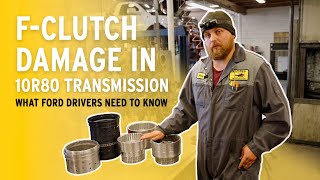
The 2017-2023 F-150 predominantly uses the 10-speed 10R80 automatic transmission, a joint venture between Ford and GM. 🎬 Watch: Overview of common 10R80 transmission failures and problems. This specific transmission is known to have issues with its main control valve body, where internal spool valves or the integrated solenoids can stick. Ford has released numerous Technical Service Bulletins (TSBs) acknowledging that symptoms like harsh shifts and a wide array of transmission codes, including P0772, can be traced back to this valve body assembly. Another known failure point in the 10R80 that can cause similar symptoms is a bushing in the CDF drum that can move and damage a seal, causing pressure loss. Due to these widespread, documented issues, a valve body failure is a much more common cause on this platform than on other vehicles where a single external solenoid or wiring might be the culprit.
Diagnostic Flowchart

Tap your situation to follow the diagnostic path that matches what you're seeing on this vehicle.
Generation note: This range covers the thirteenth generation (2017-2020) and the fourteenth generation (2021-2023) of the F-150. Both generations widely use the 10R80 10-speed automatic transmission, and the valve body issue is common to both. Multiple class-action lawsuits have been filed concerning the reliability of this transmission in F-150s from these years.
Symptoms You May Notice
- Harsh, jerky, or delayed shifts, especially noted on the 3-5 shift. 🎬 See how to address hard shifting before it causes damage.
- Illuminated Malfunction Indicator Lamp (MIL) or Check Engine Light.
- Transmission getting stuck in one gear or being unable to select a gear.
- Inability to engage certain gears, including reverse.
- Transmission slipping between gears or neutralizing unexpectedly.
- Vehicle may not move when a gear is selected.
- Decreased fuel efficiency.
- Transmission overheating.
- Replacing only the single Shift Solenoid 'E'. On the 10R80 transmission, the solenoids are integrated into the valve body, and the issue is often with the body itself or its internal spool valves. The entire assembly is typically replaced as a unit.
Most Likely Causes

- Failed Main Control Valve Body 🔴 High Probability This is a well-documented issue on the 10R80 transmission. Multiple Ford TSBs point to sticking valves within the main control body as the root cause for a host of transmission codes, including P0772. Debris or wear can cause the spool valves to bind, preventing proper hydraulic control. The solenoids are integrated into this assembly, making a complete replacement the standard repair.
How to confirm: Diagnosis requires an advanced scan tool to monitor solenoid commands vs. actual gear state. If Solenoid 'E' is commanded off but the circuit remains energized or the hydraulic effect persists, and wiring is confirmed good, the valve body is the likely fault. TSB 20-2226 for the Transit specifically identifies this as the cause for P0772.
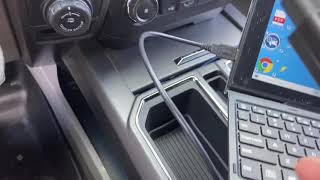
Typical fix: Replace the entire main control valve body assembly along with the transmission fluid and filter. The new valve body requires programming and an adaptive 🎬 Watch: How to program transmission solenoid strategy using FORSCAN. learning drive cycle to be performed.
Est. part cost: $500-$1200 - Low or Contaminated Transmission Fluid 🟡 Medium Probability While not specific to the F-150, any transmission can suffer from fluid issues. On the 10R80, old or contaminated fluid can exacerbate the sticking of sensitive components within the valve body.
How to confirm: Check the transmission fluid level and condition. The procedure for the 10R80 is complex and does not use a traditional dipstick. The fluid should be at the correct level when checked at operating temperature and appear clean and red (Ford Mercon ULV), not brown, black, or burnt-smelling.
Typical fix: Perform a transmission fluid and filter change using only the specified Ford Mercon ULV fluid. If the fluid is heavily contaminated, this may be a sign of a larger internal failure.
Est. part cost: $100-$250 - Damaged Wiring or Connectors ⚪ Low Probability
How to confirm: Visually inspect the transmission wiring harness and connectors for any signs of damage, corrosion, or loose pins. Use a multimeter to check for continuity and proper voltage at the solenoid connector.
Typical fix: Repair or replace the damaged section of the wiring harness or the faulty connector.
Est. part cost: $20-$300
Rare But Worth Checking
- Faulty Powertrain Control Module (PCM) or Transmission Control Module (TCM): This is uncommon. The control module should only be suspected after all other possibilities, especially the valve body and wiring, have been thoroughly ruled out.
- Internal CDF Clutch Drum Failure: In some 10R80 transmissions, a bushing inside the CDF (Clutch D/F) drum can slide out of place, damaging a seal and causing a loss of hydraulic pressure. This can lead to a variety of shifting problems and codes. Ford has since released an updated drum design to fix this.
Diagnosis Steps
- Check the transmission fluid level and condition. This is a complex procedure on the 10R80 that must be done at a specific operating temperature.
- Use an OBD-II scanner to check for P0772 and any other related transmission codes.
- Perform a thorough visual inspection of the transmission's external wiring harness and main electrical connector for any signs of damage, corrosion, or loose connections.
- Using an advanced diagnostic scan tool (like Ford's FDRS), access the TCM data to command Shift Solenoid 'E' on and off. Monitor the solenoid's status to see if it responds to the commands.
- Follow the diagnostic procedure outlined in the relevant TSB (e.g., TSB 24-2176), which may involve software updates or specific pressure tests before condemning the valve body.
- If the wiring is intact and the solenoid does not function correctly when commanded, the fault is internal to the transmission, most likely the main control valve body.
- Drop the transmission pan to access and replace the main control valve body assembly.
- After replacement, fill with new manufacturer-specified transmission fluid (Mercon ULV), clear all DTCs, and perform any required adaptive learning or programming procedures as specified by Ford.
Parts You'll Likely Need
- Transmission Main Control Valve Body Assembly
(OEM #HL3Z-7A100-B)— This is the most common point of failure for code P0772 and related shifting issues on the 10R80 transmission. This part number supersedes HL3Z-7A100-A.
Trusted brands: Motorcraft
OEM price range: $800-$1200
Aftermarket price range: $500-$900 - Automatic Transmission Fluid (Mercon ULV)
(OEM #XT-12-QULV)— New fluid is required when replacing the valve body. The 10R80 specifically requires Mercon ULV. Using the wrong fluid can cause damage.
Trusted brands: Motorcraft
OEM price range: $10-$15 per quart
Aftermarket price range: $8-$12 per quart - Transmission Filter and Pan Gasket — These should always be replaced when the transmission pan is removed for service.
Trusted brands: Motorcraft
OEM price range: $50-$100
Aftermarket price range: $30-$70
Related Codes That Often Appear With This One
- P2704 — This code relates to 'Transmission Friction Element 'E' Apply Time Range/Performance'. It often appears with P0772 because the stuck solenoid causes a clutch pack (the friction element) to apply incorrectly or at the wrong time.
- P0771 — This code is for 'Shift Solenoid E Stuck Off'. It's common to see codes for the same solenoid being stuck on or off, indicating an erratic failure within the valve body or its control circuit.
- Multiple other transmission codes — The provided TSBs (TSB 24-2176, TSB 23-2250, etc.) list P0772 among dozens of other codes (P0751, P0756, P0761, etc.) that all stem from the same valve body or internal transmission issues, indicating a widespread control failure.
Technical Service Bulletins (TSBs) & Recalls

- TSB 24-2176: Mentions P0772 in a list of DTCs related to shifting issues due to software, sticking valves, or CDF clutch cylinder sleeve movement.
- TSB 26-2046: Lists P0772 with other codes for harsh/delayed shifts.
- TSB 25-2018: Associates P0772 with delayed engagement and harsh shifts.
- TSB 25-2302: Includes P0772 in a group of codes related to shift problems.
- TSB 24-2254: Connects P0772 to harsh/delayed engagements and shifts.
- TSB 23-2123: Supersedes an earlier TSB, again listing P0772 for harsh shifts and recommending a main control overhaul or adaptive learning cycle.
- TSB 20-2226: Specifically for the 2020 Transit, this TSB directly links P0772 and P2704 to sticking valves in the main control body and advises replacement.
Platform-Specific Known Issues
- Ford has issued multiple Technical Service Bulletins (TSBs), including TSB 24-2176, TSB 23-2250, and TSB 23-2123, that group P0772 with many other transmission codes. They all point to issues like harsh/delayed shifts caused by problems within the 10R80 main control valve body or internal components like the CDF clutch cylinder sleeve.
- A specific TSB for the 2020 Transit (TSB 20-2226) with the same 10R80 transmission explicitly states that DTC P0772 can be caused by sticking valves in the main control valve body and that the fix is to replace the assembly.
- Multiple class-action lawsuits have been filed against Ford regarding the 10R80 transmission's reliability, citing harsh shifting and premature internal failures.
Mechanic-Grade Diagnostic Values
- Shift Solenoid (A-F) Current — expected: Directly proportional; 0 mA current = 0 pressure, max current (approx. 850 mA) = max pressure.. Failure: The code P0772 indicates the solenoid is stuck 'on', meaning hydraulic pressure is being applied when the TCM is commanding zero or low current.
- Shift Solenoid Resistance — expected: While a specific Ohm value is not consistently published, a technician would test for an open circuit (infinite resistance) or a short to ground (very low resistance).. Failure: A reading outside of the expected range for a known-good solenoid indicates an internal electrical failure of the solenoid coil.
Scan Tool Commands That Help
- FORScan or Ford FDRS/IDS: Clear Transmission Adaptive Tables — This service function resets the transmission's learned shift patterns. It is often used to address harsh or erratic shifting behavior and is a recommended step after any transmission repair, including valve body replacement, or even after a battery disconnect.
- FORScan or Ford FDRS/IDS: Transmission Characterization Update / Solenoid Body Strategy Programming — This is a mandatory procedure when replacing the main control/valve body. The new valve body has a unique 13-digit solenoid strategy ID printed on it that must be programmed into the TCM for the transmission to shift correctly.
- Ford FDRS/IDS: Adaptive Learning Drive Cycle — After clearing tables or replacing components, a specific drive cycle procedure may be required to allow the TCM to relearn clutch fill times and shift points under various load conditions.
Wiring & Ground Locations
- C175T (PCM Connector) — This is one of the main connectors at the Powertrain Control Module (PCM), typically located in the engine bay near the firewall.. Pin 11 on this connector is the control circuit for Shift Solenoid 'E' (SSE). A technician can test for voltage and continuity at this pin to diagnose issues between the PCM and the transmission.
- Main Transmission Case Connector — The main electrical harness connector on the outside of the 10R80 transmission case.. This is the primary connection point for all internal transmission electronics, including the solenoids. Checking for corrosion, moisture, or pushed-out pins here is a critical step in diagnosing any transmission electrical fault.
- Body-to-Frame Ground — A common corrosion point is the body-to-frame ground strap located on the passenger side frame rail, often below the front door area.. A poor ground connection at this point can cause a host of bizarre electrical issues and communication faults between modules, including the PCM/TCM. While not a direct cause of a single solenoid code, it can contribute to erratic electronic behavior and should be inspected.
- G104 (Main Battery Ground) — The main battery negative cable ground point is typically located on the chassis in the engine compartment, just in front of the washer fluid reservoir.. This is the primary ground for the entire vehicle electrical system. A loose or corroded connection here can cause widespread problems, including issues with control module operation.
Real Owner Repair Stories
- Reddit user Col_Clucks (2019 Ford F-150) — CDF drum failure requiring transmission replacement.
❌ Tried (didn't work) Initially, after swapping the transmission, the user attempted to only reset the adaptive shift tables., An attempt to program the new solenoid strategy resulted in a 'TRID data don't match' error.
✅ What actually fixed it The user needed to use FORScan to perform a 'Transmission Characterization Update'. This involved selecting the option for 'replacement main control/valve body' and inputting the new 13-digit solenoid strategy number found on the side of the replacement transmission. This successfully programmed the new component to the truck's TCM.
OEM Part Supersession History
HL3Z-7A100-A→HL3Z-7A100-B— This is a revision to the 10R80 main control valve body assembly. While Ford does not publish the specific changes, part supersessions typically address known failure points or manufacturing improvements.
Heads up: The parts are interchangeable, but HL3Z-7A100-B is the later, preferred version.
Model Year Variations Within This Range
- 2017-2020: Models in this range are reported to have more aggressive software tuning that favors skipping gears (e.g., 1-3-5) to improve fuel economy, which can contribute to the harsh shifting sensation.
- 2021-2023: Ford reportedly updated the transmission tuning software in 2021+ models for more consistent, sequential shifting, which can feel smoother than earlier models.
- Post August 16th, 2022: Ford introduced an updated CDF drum with a machined lip on the inner half to prevent the internal sleeve from migrating. Vehicles built after this date are less likely to experience this specific type of internal failure.
Helpful Videos

Used OEM Parts in Stock


New Aftermarket Parts Available


The information in this article is provided for general reference and educational purposes only. Vehicle specifications, procedures, and part compatibility can vary by production date, trim level, and region. Always consult your vehicle's factory service manual and verify part numbers before purchasing or performing repairs. Safety-critical components such as airbags, seat belts, and braking systems should be installed by a qualified professional.
- Ford F-150:
- 🎬 Helpful Videos
- 🛍️ Shop This Part
- What's Unique About the 2017-2023 Ford F-150
- Diagnostic Flowchart
- Symptoms You May Notice
- Most Likely Causes
- Rare But Worth Checking
- Diagnosis Steps
- Parts You'll Likely Need
- Related Codes That Often Appear With This One
- Technical Service Bulletins (TSBs) & Recalls
- Platform-Specific Known Issues
- Mechanic-Grade Diagnostic Values
- Scan Tool Commands That Help
- Wiring & Ground Locations
- Real Owner Repair Stories
- OEM Part Supersession History
- Model Year Variations Within This Range
- 🎟️ Get 5% Off