

P0771 on 2017-2023 Ford F-150: Shift Solenoid 'E' Performance Causes and Fixes
On 2017-2023 Ford F-150s with the 10R80 transmission, code P0771 is most often caused by a faulty transmission main control (valve body) assembly. This is a known issue covered by multiple Ford Technical Service Bulletins (TSBs). Expect a repair cost of $1,500 to $3,000 at a dealership or independent shop, with some quotes reaching as high as $5,000 if a torque converter is also recommended.
- P0771 on a 2017-2023 F-150 indicates a problem with Shift Solenoid 'E', but the actual cause is usually the entire main control (valve body) assembly.
- Symptoms include harsh shifts, delayed gear engagement, and the Check Engine Light.
- This is a known issue acknowledged by Ford through multiple Technical Service Bulletins (TSBs).
- The correct repair is typically to replace the entire valve body, not just one solenoid. This is a complex job best left to a professional.
- Always use the specified Motorcraft MERCON ULV transmission fluid for any service on the 10R80 transmission.
What's Unique About the 2017-2023 Ford F-150

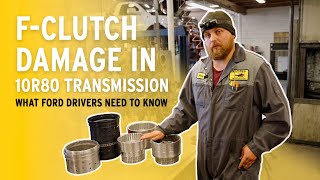
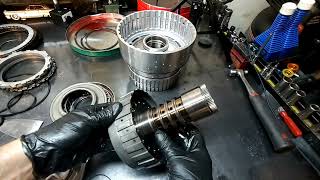
The 2017-2023 F-150 primarily uses the 10-speed 10R80 automatic transmission, a complex unit co-developed with GM. 🎬 Watch: Overview of common 10R80 transmission failures and design problems. While designed for efficiency, early versions were prone to harsh shifting and solenoid/valve body issues. Ford has released numerous TSBs (like TSB 24-2176 and TSB 22-2428) that group P0771 with many other solenoid codes, pointing to a common failure of the entire main control (valve body) assembly rather than just a single solenoid. Newer TSBs also mention that issues can stem from axial movement of the CDF clutch cylinder sleeve causing internal hydraulic leaks, which also necessitates significant transmission service. This makes replacing the whole valve body a more common and reliable fix than trying to replace an individual solenoid.
Diagnostic Flowchart

Tap your situation to follow the diagnostic path that matches what you're seeing on this vehicle.
Generation note: This range covers the end of the 13th generation (2017-2020) and the start of the 14th generation (2021-2023) Ford F-150. Both generations use the 10R80 automatic transmission, and the issues related to the valve body and this code are common across these model years. TSBs cover vehicles across both generations.
Symptoms You May Notice
- Harsh, jerky, or delayed shifts between gears, particularly on upshifts. [TSB 25-2018, 2, 14]
- Illuminated Malfunction Indicator Lamp (Check Engine Light) or Wrench Light. [TSB 24-2176, 7]
- Transmission getting stuck in one gear or entering "limp mode".
- Delayed or harsh engagement when shifting from Park to Drive or Reverse. [TSB 24-2254, 5]
- Slipping between gears or a feeling of neutralization during shifts.
- Reduced fuel economy due to inefficient shifting.
- A dragging or shuddering sensation when accelerating or coming to a stop.
- Replacing only the single Shift Solenoid 'E'. While the code points to this specific solenoid, the root cause on the 10R80 transmission is often a systemic issue within the valve body (sticking valves) or internal hydraulic leaks. Replacing the entire assembly is the more reliable, manufacturer-recommended repair.
- Resetting the adaptive learning tables without addressing the underlying hardware fault. Owners report that this provides only a very temporary fix, with harsh shifting returning quickly.
Most Likely Causes

- Faulty Transmission Main Control (Valve Body) Assembly 🔴 High Probability The 10R80 transmission has a well-documented history of issues with sticking valves and internal cross-leaks within the valve body. Multiple Ford TSBs list P0771 as one of many codes resolved by replacing or overhauling the entire valve body assembly, as it's considered a systemic failure. [TSB 24-2176, TSB 26-2046, TSB 25-2018, TSB 25-2302, TSB 24-2254] Forum user experiences overwhelmingly confirm that this is the most common and successful repair.
How to confirm: A professional technician will use a high-level scan tool to monitor solenoid command and feedback data. If the solenoid is commanded but doesn't respond correctly and wiring is intact, the valve body is the likely culprit. Given the numerous TSBs, many shops proceed directly to valve body replacement after confirming the code and fluid level.
Typical fix: Replacement of the entire transmission main control (valve body) assembly, followed by a fluid fill and a mandatory 🎬 See this walkthrough of a 10R80 valve body replacement. adaptive learning procedure using a diagnostic tool like Ford IDS.
Est. part cost: $600-$1300 - Low or Contaminated Transmission Fluid 🟡 Medium Probability The 10R80 transmission is very sensitive to fluid level and condition. It uses a specific fluid, Motorcraft MERCON ULV. Low fluid can cause pressure issues that mimic solenoid failure, while old or contaminated fluid can cause valves within the valve body to stick. However, this is often a symptom of another problem (like a leak) rather than the root cause.
How to confirm: Check the transmission fluid level and condition according to the manufacturer's procedure. The fluid should be red and clear, not brown, black, or smelling burnt. Dark fluid or glitter in the pan can indicate clutch material wear, suggesting a more serious problem.
Typical fix: Perform a transmission fluid and filter change using only Motorcraft MERCON ULV. If this doesn't resolve the issue, it's likely the valve body or there is a larger internal problem.
Est. part cost: $150-$300 - Wiring or Connector Issue ⚪ Low Probability The internal transmission wiring harness is submerged in hot fluid, which can cause wires to become brittle or connectors to fail over time, though this is less common than valve body failure.
How to confirm: This requires dropping the transmission pan to visually inspect the wiring harness leading to the shift solenoids. A multimeter is used to check for continuity and shorts in the solenoid 'E' circuit from the TCM connector.
Typical fix: Repair the damaged wire or replace the internal transmission wiring harness.
Est. part cost: $50-$200
Rare But Worth Checking
- Faulty Powertrain Control Module (PCM) or Transmission Control Module (TCM): This is rare, but a software glitch or internal hardware failure in the control module can mimic a solenoid problem. Often, a software update (reflash) is attempted before module replacement. TSBs note that a new valve body may require a PCM/TCM software update to ensure compatibility.
- Internal Mechanical Failure (e.g., 'E' Clutch Assembly or CDF Drum): While less common than valve body failure, a mechanical issue with the clutch pack associated with solenoid 'E' or the known-problematic CDF (Clutch Drum F) 🎬 Watch: Understanding the common CDF drum failure in these units. can trigger performance-related codes. A TSB points to a sleeve in the CDF clutch cylinder moving and causing hydraulic leaks. This is a major repair and usually presents with more severe symptoms, like metal debris in the pan or complete loss of gears.
Diagnosis Steps
- Check and verify the transmission fluid level and condition. Ensure it is clean, full, and does not smell burnt.
- Use a professional OBD-II scanner to check for other related transmission codes. Note all codes present, as they are often grouped.
- Consult Technical Service Bulletins (TSBs) for the specific vehicle and codes. For P0771, TSB 22-2428 is highly relevant as it covers harsh shifts and numerous solenoid codes.
- If fluid is okay, the next step is typically to drop the transmission pan to access the valve body.
- Inspect the internal wiring harness and connectors for any visible damage, corrosion, or loose pins.
- If wiring is intact, the most likely cause is the main control (valve body) itself. Given the known issues, replacement is the common path. A specialist might air-check the clutch packs to rule out a major internal leak.
- Replace the main control (valve body) assembly.
- Install a new filter, pan gasket, and refill with OEM-specified Motorcraft MERCON ULV fluid.
- Use a Ford-compatible scan tool (like IDS) to perform the Transmission Characterization/Solenoid Body Strategy download and the transmission adaptive pressure learning procedure.
- Clear all codes and perform an extended test drive to allow the transmission to relearn shift points. Advise the owner that shifting may feel firm for several days.
Parts You'll Likely Need

- Automatic Transmission Main Control (Valve Body)
(OEM #ML3Z-7A100-B (replaces ML3Z-7A100-A), HL3Z-7A100-B (replaces HL3Z-7A100-A for earlier models))— This is the most common failure point for a wide range of shift solenoid codes, including P0771, on the 10R80 transmission, as documented in numerous Ford TSBs.
Trusted brands: Motorcraft
OEM price range: $700-$1300
Aftermarket price range: $500-$900 (Remanufactured) - Motorcraft MERCON ULV Automatic Transmission Fluid
(OEM #XT-12-QULV)— This is the only specified fluid for the 10R80 transmission. Using any other fluid can cause damage and shifting problems.
Trusted brands: Motorcraft
OEM price range: $15-$25 per quart
Aftermarket price range: N/A - Transmission Filter Kit (Filter and Pan Gasket)
(OEM #FT-215 (Filter), JL3Z-7A191-A (Gasket))— Always replaced when the valve body is serviced or the transmission pan is removed.
Trusted brands: Motorcraft
OEM price range: $50-$100
Aftermarket price range: $30-$60
Related Codes That Often Appear With This One
- P0751, P0756, P0761, P0766, P2700-P2708, etc. — These are all codes related to other shift solenoids and friction elements in the 10R80 transmission. Ford TSBs group them together because a failing main control (valve body) or internal hydraulic leak can cause any one or a combination of these codes to appear. [TSB 24-2176, TSB 26-2046, TSB 25-2018, 20]
- P0729, P0731-P0736 (Gear Ratio Errors) — These codes indicate incorrect gear ratios. They often accompany solenoid codes like P0771 because if a solenoid fails to actuate a clutch properly, the transmission cannot achieve the correct gear, leading to a mismatch between engine speed and output shaft speed.
Technical Service Bulletins (TSBs) & Recalls
- TSB 24-2176: Addresses harsh/delayed shifts and a long list of DTCs including P0771 in some 2021-2023 F-150s.
- TSB 24-2254: Pertains to harsh/delayed engagements/shifts with DTCs like P0771 on some 2021-2022 F-150s.
- TSB 26-2046: Covers delayed shifts and DTCs including P0771 for some 2022 models.
- TSB 25-2302: Similar to the others, for some 2022 models with delayed shifts and DTCs including P0771.
- TSB 25-2018: Notes harsh/delayed engagement/shifts with DTCs including P0771 on some 2018-2020 F-150s.
Platform-Specific Known Issues
- Multiple Technical Service Bulletins (TSBs) have been issued by Ford for the 10R80 transmission concerning harsh/delayed shifts and various solenoid codes, including P0771. The primary fix is often the replacement of the main control valve body assembly. [TSB 24-2176, TSB 26-2046, 7, 9, 10]
- A common owner complaint is that dealerships may initially only reset the 'adaptive learning' tables, which provides a very short-term fix before the harsh shifting returns, indicating a mechanical or hydraulic fault not solvable by software.
- In addition to the valve body, some TSBs point to a problem with the CDF clutch cylinder sleeve moving within the transmission case, causing hydraulic leaks. This is a more involved repair that can produce the same family of codes.
Mechanic-Grade Diagnostic Values
- Shift Solenoid (A-F) Current — expected: Approx. 850 mA (0.85A) when commanded ON, Approx. 50 mA (0.05A) when commanded OFF.. Failure: Current not matching the commanded state, or being out of this range, indicates a potential solenoid or wiring issue.
- Solenoid Coil Resistance — expected: Typically 3–5 Ω (Ohms).. Failure: A reading of 0 ohms indicates a short, while an infinite reading (OL) indicates an open circuit in the solenoid coil.
Scan Tool Commands That Help

- Ford IDS (Integrated Diagnostic System): Transmission Characterization / Solenoid Body Strategy — This is a mandatory procedure after replacing the transmission valve body (main control). The new valve body has a 13-digit strategy code on a tag that must be programmed into the TCM/PCM. Failure to do so will result in poor shifting and potential damage.
- Ford IDS (Integrated Diagnostic System): Clear Transmission Adaptive Tables — Used after a hardware repair (like valve body replacement) or software update to erase the old learned values. This forces the transmission to start a fresh learning process with the new components.
- High-level scan tool (like Ford IDS): Live Data Monitoring (PIDs: SSPCE_F, SSE_AMP) — During diagnosis, a technician monitors the command status (SSPCE_F) and commanded current (SSE_AMP) for Shift Solenoid E to see if the computer is sending the correct signals. This helps differentiate between a control-side and component-side failure.
Wiring & Ground Locations
- C175T — This is one of the three main connectors on the Powertrain Control Module (PCM). It is specifically for the transmission harness.. The control circuits for all transmission shift solenoids run from the PCM to the transmission through this connector. While specific pin numbers for the 10R80's Solenoid 'E' are not consistently documented in generic diagrams, checking for corrosion, damage, or pushed-out pins at this connector is a valid diagnostic step for electrical faults.
Real Owner Repair Stories
- Reddit user in r/f150 (2018 F-150 EcoBoost, 145k miles) — Crazy shift problems, including floating between gears then slamming into another, and attempting to shift into 1st gear at 80mph.
❌ Tried (didn't work) Transmission relearn procedure, Valve body replacement
✅ What actually fixed it The user ultimately diagnosed the issue as a failed CDF drum, where an internal sleeve had moved and caused a seal to fail. This was confirmed by finding TSB 22-2428 which describes this exact failure mode. The final fix was replacing the CDF drum assembly.
OEM Part Supersession History
HL3Z-7A100-A→HL3Z-7A100-B— Updated part for early model (approx. 2017-2018) 10R80 transmissions to address valve and shifting issues.
Heads up: These parts are generally for earlier F-150s. Using the correct part for the vehicle's specific year and configuration (e.g., column vs. electronic shift) is critical.ML3Z-7A100-A→ML3Z-7A100-B— Updated part for later model (approx. 2021+) F-150s, specifically noted for hybrid models but used more broadly.
Heads up: This part number is associated with newer F-150s. Always verify the correct part number via VIN with a Ford dealer.
Model Year Variations Within This Range
- 2017-2020: These earlier models were more prone to harsh shifting issues related to both software calibration and valve body design. The transmission tuning often prioritized fuel economy by skipping gears, which could exacerbate harshness.
- 2021+: Later models feature improved software that tends to shift more sequentially and consistently. Ford also introduced hardware updates, such as an anodized (black) outer shell for the transmission rotating assembly to improve durability against clutch wear, a known issue that can lead to catastrophic failure.
Helpful Videos
Used OEM Parts in Stock


New Aftermarket Parts Available


The information in this article is provided for general reference and educational purposes only. Vehicle specifications, procedures, and part compatibility can vary by production date, trim level, and region. Always consult your vehicle's factory service manual and verify part numbers before purchasing or performing repairs. Safety-critical components such as airbags, seat belts, and braking systems should be installed by a qualified professional.
- Ford F-150:
- 🎬 Helpful Videos
- 🛍️ Shop This Part
- What's Unique About the 2017-2023 Ford F-150
- Diagnostic Flowchart
- Symptoms You May Notice
- Most Likely Causes
- Rare But Worth Checking
- Diagnosis Steps
- Parts You'll Likely Need
- Related Codes That Often Appear With This One
- Technical Service Bulletins (TSBs) & Recalls
- Platform-Specific Known Issues
- Mechanic-Grade Diagnostic Values
- Scan Tool Commands That Help
- Wiring & Ground Locations
- Real Owner Repair Stories
- OEM Part Supersession History
- Model Year Variations Within This Range
- 🎟️ Get 5% Off