

P0766 on 2017-2023 Ford F-150: Shift Solenoid 'D' Causes and Fixes
On 2017-2023 F-150s with the 10R80 transmission, code P0766 is almost always caused by a faulty main control valve body or a related internal component like the CDF drum. Ford has issued multiple Technical Service Bulletins (TSBs) for this widespread issue. The fix typically involves replacing the entire valve body assembly, which can cost between $1,500 and $3,000 at a shop.
- P0766 on a 2017-2023 F-150 is a serious transmission code that strongly points to a known issue with the 10R80 transmission's main control valve body.
- Ford has acknowledged the problem through multiple Technical Service Bulletins (TSBs), which should be referenced for diagnosis.
- The first and simplest check is the transmission fluid level and condition, but the most probable fix is a complete valve body replacement.
- Due to the complexity and the need for post-repair software procedures, this is a job best left to a professional transmission shop or a qualified dealership technician.
- Ignoring the code can lead to further transmission damage and potential breakdowns.
What's Unique About the 2017-2023 Ford F-150

The 2017-2023 Ford F-150 predominantly uses the 10-speed 10R80 automatic transmission, which was co-developed with GM. This specific transmission is known for issues related to its main control valve body and the CDF (Clutch D/F) drum. Ford has acknowledged these widespread problems by releasing numerous Technical Service Bulletins (TSBs) that directly link harsh/delayed shifting and a host of solenoid codes, including P0766, to sticking valves in the main control, software issues, or axial movement of the CDF clutch cylinder sleeve. Therefore, unlike a generic vehicle where P0766 might be a simple solenoid swap, on this F-150, it often points to a more complex and integrated component failure requiring either a valve body replacement or a more involved internal repair.
Diagnostic Flowchart

Tap your situation to follow the diagnostic path that matches what you're seeing on this vehicle.
Generation note: This year range covers the end of the 13th generation (2017-2020) and the start of the 14th generation (2021-2023) F-150. Both generations widely use the 10R80 10-speed automatic transmission, and the associated TSBs for this issue cover vehicles from both generations, indicating a shared, persistent problem with the transmission design.
Symptoms You May Notice
- Harsh or delayed shifts between gears.
- Harsh or delayed engagement when shifting into Drive or Reverse.
- Illuminated Check Engine Light (Malfunction Indicator Lamp).
- Transmission may enter a "limp mode," limiting available gears.
- Vehicle may not shift out of Park, or may have no forward or reverse gears at all.
- Increased fuel consumption.
- Clunking sounds during shifts.
- Transmission overheating.
- Replacing a single shift solenoid when the issue lies within the non-serviceable parts of the valve body.
- Assuming a major internal failure (clutches, torque converter) before thoroughly diagnosing the control system (valve body and electronics).
- Replacing the valve body when the root cause is a leak at the CDF drum sleeve.
Most Likely Causes

- Faulty Main Control Valve Body 🔴 High Probability This is a well-documented failure point on the 10R80 transmission. Multiple Ford TSBs (e.g., TSB 24-2176) point to sticking valves within the valve body as a primary cause for a group of solenoid codes, including P0766. Debris and metallic contamination can accumulate in the valve body, causing valves to behave out of spec.
How to confirm: A technician will use an advanced scan tool to monitor solenoid commands vs. actual states. If the solenoid is commanded ON but feedback shows it's OFF (and wiring is intact), the fault is internal to the valve body. The diagnostic procedure in the relevant TSB is the ultimate confirmation.
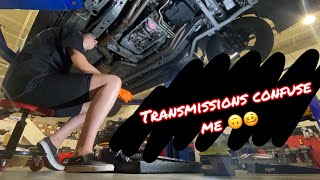
Typical fix: Replacement of the entire main control valve body assembly, followed by a transmission adaptive learning procedure. 🎬 Watch: A step-by-step walkthrough of the valve body replacement process.
Est. part cost: $500-$900 - CDF (Clutch D/F) Drum Sleeve Failure 🔴 High Probability Another extremely common failure on the 10R80. The sleeve inside the CDF drum can move out of position, causing hydraulic circuit leaks. This leads to erratic shifting and can trigger solenoid performance codes like P0766. Ford has since released updated parts with a machined lip to prevent the sleeve from moving.
How to confirm: This is a more involved diagnosis often identified during a valve body replacement or transmission teardown. TSB 24-2254 outlines a specific hydraulic/vacuum test to check for leaks in this circuit. Often, the diagnosis is made after a valve body replacement fails to fix the issue.
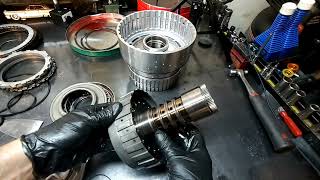
Typical fix: Replacement of the CDF clutch cylinder (drum) with the updated part (Part No. JL3Z-7H351-B or L1MZ-7H351-B). This requires significant transmission disassembly. 🎬 See this video for a detailed look at CDF drum failure.
Est. part cost: $150-$250 - Low or Contaminated Transmission Fluid 🟡 Medium Probability
How to confirm: Check the transmission fluid level and condition while the engine is running and the transmission is at operating temperature (96-101°C / 206-215°F). The fluid should be at the correct level, red in color, and not smell burnt. The 10R80 requires a specific MERCON ULV fluid.
Typical fix: Perform a transmission fluid and filter change using the correct OEM-specified fluid. If the fluid is heavily contaminated, it may indicate a more severe internal failure.
Est. part cost: $100-$200 - Damaged Main Control to Oil Pump Seal ⚪ Low Probability This issue typically occurs after a recent transmission repair where the valve body was removed. The seal can be easily damaged, dislodged, or forgotten during reinstallation, leading to a massive pressure loss. A technician on Reddit noted it's more likely to happen when the valve body is installed with the transmission in the vehicle (hanging upside down).
How to confirm: This is usually diagnosed after a recent repair when the vehicle has no forward or reverse gears and sets codes P0756 and P0766. Visual inspection during valve body removal is required.
Typical fix: Properly install a new main control to oil pump seal (Part No. HL3Z-7A248-A).
Est. part cost: $10-$30
Rare But Worth Checking
- Wiring Harness Issue: While less common than valve body failure, damage to the wiring harness leading to or inside the transmission can cause an open or short in the solenoid circuit. Corroded body-to-frame ground straps are a known issue on these trucks and can cause various electrical faults.
- Faulty Powertrain/Transmission Control Module (PCM/TCM): In very rare cases, the control module itself can fail, sending incorrect signals or failing to read feedback properly. This should be the last item to consider after all other possibilities are exhausted.
Diagnosis Steps
- Check the transmission fluid level and condition. Ensure it is clean, at the proper level (at 96-101°C / 206-215°F), and is the correct Motorcraft MERCON ULV type.
- Use an OBD-II scanner to check for any other transmission-related trouble codes. The presence of multiple solenoid or clutch codes strongly points to a valve body or internal hydraulic issue.
- Inspect the external transmission wiring harness and connectors for any signs of damage, corrosion, or loose connections. Pay special attention to the main body-to-frame ground strap under the passenger side.
- With an advanced diagnostic scan tool, monitor the 'Solenoid D Command' and 'Solenoid D Feedback' PIDs while operating the transmission to see if the solenoid is responding to commands.
- If the solenoid does not respond and the wiring is confirmed to be good, the fault is internal to the transmission.
- Consult the relevant Technical Service Bulletin (TSB), such as TSB 24-2176 or TSB 24-2254. These guide technicians through software updates and specific diagnostic tests to differentiate between a faulty valve body and a leaking CDF drum sleeve.
- If the valve body is replaced, the Solenoid Body Strategy must be programmed into the PCM/TCM, followed by a mandatory transmission adaptive learning drive cycle.
Parts You'll Likely Need

- Main Control Valve Body Assembly
(OEM #HL3Z-7A100-B (supersedes HL3Z-7A100-A))— This is the most common failure point for P0766 and related codes on the 10R80 transmission, as documented in multiple Ford TSBs.
Trusted brands: Motorcraft
OEM price range: $600-$900
Aftermarket price range: $450-$700 - CDF Clutch Cylinder Assembly
(OEM #JL3Z-7H351-B, L1MZ-7H351-B)— The second most common cause, due to a design flaw where an internal sleeve walks out of position causing hydraulic leaks. This is the updated part designed to prevent this failure.
Trusted brands: Motorcraft
OEM price range: $150-$250 - Motorcraft MERCON ULV Automatic Transmission Fluid
(OEM #XT-12-QULV)— The system must be refilled with this specific fluid after replacing the valve body or performing any internal service. Using the wrong fluid can cause damage.
Trusted brands: Motorcraft
OEM price range: $8-$12 per quart
Related Codes That Often Appear With This One
- P0751 — Relates to Shift Solenoid 'A'. Both are housed in the same valve body assembly and often fail due to the same root cause, as listed in numerous TSBs.
- P0756 — Relates to Shift Solenoid 'B'. This code is frequently seen with P0766, especially when there is a seal issue after a repair, causing a complete loss of engagement.
- P0761 — Relates to Shift Solenoid 'C'. Like other solenoid codes, it points to the common valve body failure.
- P2700-P2708 — These codes relate to the timing and application of various transmission clutches, which are directly controlled by the solenoids in the valve body.
Technical Service Bulletins (TSBs) & Recalls
- TSB 24-2176: Supersedes previous versions. Lists P0766 for harsh/delayed shifts on 2021-2023 F-150s and other models. Points to PCM/TCM software, sticking valves in the main control, or CDF clutch cylinder sleeve movement as possible causes.
- TSB 24-2254: For 2020-2022 models, specifically addresses diagnosing axial movement of the CDF clutch cylinder sleeve causing hydraulic leaks and the same list of DTCs, including P0766.
- TSB 23-2123: A superseded TSB that covered 2017-2020 F-150s for the same issues, indicating the problem has persisted for years. It noted that adaptive calibration incompatibility over time could be a cause.
- TSB 24-2046: Covers 2017-2020 F-150s and other models, also listing P0766 and pointing to the valve body or CDF sleeve as the cause.
Platform-Specific Known Issues
- Widespread 10R80 Valve Body Failures: Ford has issued a series of TSBs (including TSB 24-2176) for the 2017-2023 F-150 concerning harsh/delayed shifts and numerous solenoid DTCs, including P0766. The cause is identified as sticking valves within the main control valve body and/or software issues. The prescribed fix is often a complete valve body replacement.
- CDF Drum Sleeve Migration: A critical design flaw in early 10R80s involves the sleeve within the CDF clutch drum walking out of position, causing internal hydraulic leaks. This leads to erratic shifting and can trigger a host of codes, including P0766. TSB 24-2254 provides diagnostics for this, and an updated drum (JL3Z-7H351-B) is the permanent fix.
Mechanic-Grade Diagnostic Values
- Transmission Fluid Temperature for Level Check — expected: 96°C - 101°C (206°F - 215°F). Failure: Checking the level when the fluid is too cold or too hot will result in an inaccurate reading, leading to under or overfilling.
- Scan Tool PID Monitoring — expected: The 'Solenoid D Feedback' parameter should change in response to the 'Solenoid D Command' parameter as the transmission is commanded through gears.. Failure: If the command signal is present but the feedback status does not change, it points to a fault with the solenoid or its internal mechanical actuation (e.g., a stuck valve in the valve body).
Hidden / Shadow Codes Worth Checking
- P163E: Transmission Control Module (TCM) - Solenoid Strategy File Error. This code can appear after replacing the main control valve body. (see via Standard OBD-II scanner. According to Ford TSB 22-2339, this is caused by software incompatibility and an incorrect programming procedure where both the 12-digit ID and 13-digit strategy are entered, when only the 13-digit strategy was required.)
Scan Tool Commands That Help

- Ford IDS, FORScan, or equivalent professional scanner: PCM – Transmission Strategy Download — This is a mandatory procedure after replacing the main control valve body. It requires entering the 13-digit solenoid body strategy number from the tag on the new part to ensure the PCM/TCM can control it correctly.
- Ford IDS, FORScan, or equivalent professional scanner: Clear Transmission Adaptive Tables — This should be performed after a transmission repair or when trying to resolve shift quality issues. It resets the learned values, forcing the TCM to start a new learning process.
- Ford IDS, FORScan, or equivalent professional scanner: Adaptive Learning Drive Cycle — This is a mandatory, multi-step road test procedure that must be performed after clearing the adaptive tables or programming a new valve body. Failure to perform this cycle correctly will result in poor shift quality.
Wiring & Ground Locations
- Body-to-Frame Ground Strap — Underneath the truck, on the passenger side, there is a ground cable that goes from the body down to the frame.. This ground is notorious for corroding and breaking on 2017+ F-150s. A poor ground can cause a host of intermittent electrical issues and communication codes, potentially affecting the transmission control module's operation.
- 10R80 Transmission Case Connector (C3041) — The main 32-pin electrical connector on the transmission case.. This is the primary interface between the vehicle wiring and the internal transmission components, including all solenoids. Technicians use this connector to test for power, ground, and signal integrity. For example, Pin 17 is a ground, and other pins correspond to specific solenoid control circuits.
Real Owner Repair Stories
- Reddit user in r/FordTransmissionTech (Ford F-150 with 10R80) — No reverse, no neutral, no forward gears. Will not shift out of park. Codes P0756 and P0766 are set.
❌ Tried (didn't work) The issue was often seen on vehicles towed in from other shops that had attempted a repair.
✅ What actually fixed it The cause was a damaged, dislodged, or completely missing main control valve body to oil pump seal. This typically happened as a mistake during a recent repair, like a valve body replacement. Correctly installing a new seal resolved the no-move condition and the codes.
OEM Part Supersession History
HL3Z-7A100-A→HL3Z-7A100-B— Revision and update to the main control valve body assembly.
Heads up: When replacing, the new Solenoid Body Strategy must be programmed into the vehicle's computer.Original CDF Clutch Cylinder (Drum)→JL3Z-7H351-B, L1MZ-7H351-B— The original design allowed an internal sleeve to 'walk' or move out of position, causing hydraulic leaks. The updated parts have a machined lip to act as a hard stop, preventing the sleeve from moving.
Heads up: The original part is flawed; always replace with the updated, redesigned part number to permanently fix the issue.
Model Year Variations Within This Range
- 2017-2020: These models typically have an auxiliary transmission fluid cooler mounted near the pan. 2021+ models may not have this cooler, simplifying the process of dropping the transmission pan for service.
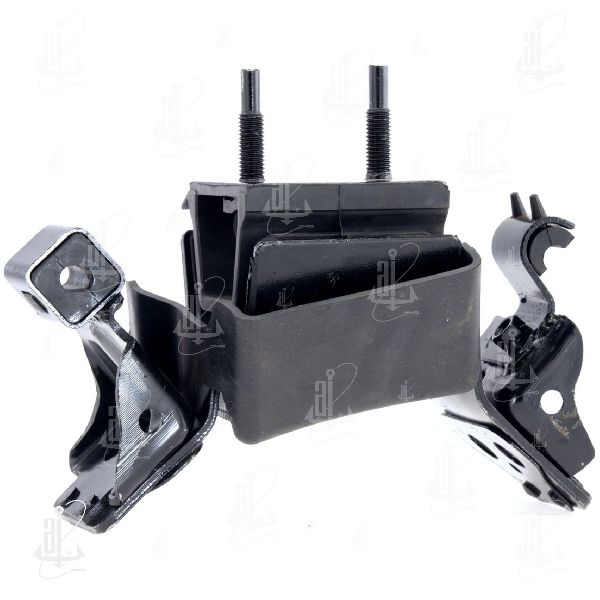
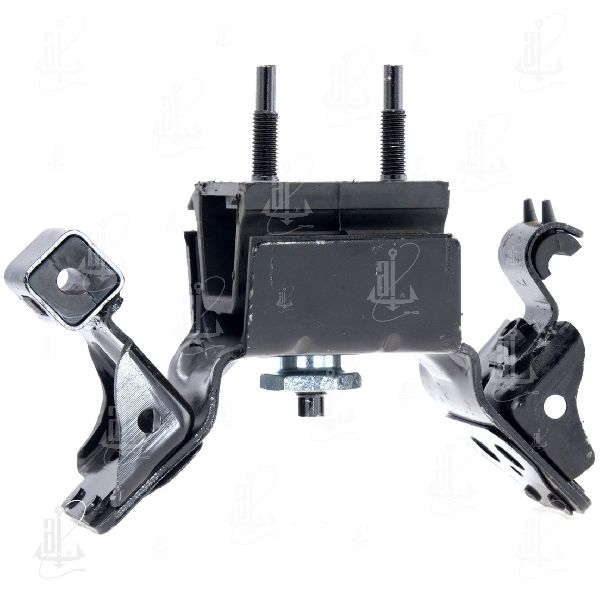
- 2017-2023 with 5.0L V8 Engine: On models with the 5.0L V8, the exhaust routing is very close to the transmission pan. To remove the pan, the transmission mount must be unbolted and the transmission must be jacked up slightly to gain clearance. This is not typically required on EcoBoost models.
Helpful Videos
Used OEM Parts in Stock


New Aftermarket Parts Available


The information in this article is provided for general reference and educational purposes only. Vehicle specifications, procedures, and part compatibility can vary by production date, trim level, and region. Always consult your vehicle's factory service manual and verify part numbers before purchasing or performing repairs. Safety-critical components such as airbags, seat belts, and braking systems should be installed by a qualified professional.
- Ford F-150:
- 🎬 Helpful Videos
- 🛍️ Shop This Part
- What's Unique About the 2017-2023 Ford F-150
- Diagnostic Flowchart
- Symptoms You May Notice
- Most Likely Causes
- Rare But Worth Checking
- Diagnosis Steps
- Parts You'll Likely Need
- Related Codes That Often Appear With This One
- Technical Service Bulletins (TSBs) & Recalls
- Platform-Specific Known Issues
- Mechanic-Grade Diagnostic Values
- Hidden / Shadow Codes Worth Checking
- Scan Tool Commands That Help
- Wiring & Ground Locations
- Real Owner Repair Stories
- OEM Part Supersession History
- Model Year Variations Within This Range
- 🎟️ Get 5% Off