

P0755 on 2003-2007 Saturn Ion: Shift Solenoid 'B' Malfunction Causes and Fixes
P0755 on a Saturn Ion indicates a 'Shift Solenoid B' malfunction. For the common 2005-2007 models with the 4T45-E transmission, this is almost always a failed shift solenoid. Replacing both shift solenoids (A & B, part #24207236) and the side cover gasket is the recommended repair, costing about $80-$100 in parts and 3-5 hours of labor.
- First, confirm which transmission your 2003-2007 Saturn Ion has. This guide is most relevant for the 4T45-E in 2005-2007 models.
- The most likely cause is a failed shift solenoid, but always check the transmission fluid level and condition first.
- When replacing the shift solenoid, it is strongly recommended to replace both the 'A' (1-2) and 'B' (2-3) solenoids at the same time, as they are the same part and require significant labor to access.
- The correct fluid for the 4T45-E transmission is DEXRON-VI. Using the wrong fluid type can cause severe damage.
- This is a difficult DIY repair due to the need to support the engine and lower the subframe to access the transmission's side cover.
What's Unique About the 2003-2007 Saturn Ion
The 2003-2007 Saturn Ion is complex because it used three different automatic transmissions, and the fix for P0755 varies significantly between them. - 2003-2004 Coupes (VTi CVT): These used a continuously variable transmission (CVT) known as the VTi. This transmission was notoriously unreliable, and a P0755 code often signals an impending or catastrophic internal failure, frequently requiring a complete transmission replacement. - 2003-2004 Sedans (Aisin 5-Speed): These used an Aisin AW55-50SN 5-speed automatic. While more reliable than the VTi, its solenoids are prone to sticking from debris, causing harsh shifting and codes. Accessing the valve body and solenoids is a complex job. - 2005-2007 All Models (GM 4T45-E): Most Ions on the road today use the GM 4T45-E 4-speed automatic. This guide focuses on this transmission, as P0755 is a very common and well-documented failure of the shift solenoids within this unit.
Symptoms You May Notice
- Check Engine Light is on
- Transmission Service Vehicle light may be on
- Harsh, erratic, or delayed shifting
- Transmission is stuck in one gear (usually 2nd or 3rd, a 'limp mode')
- Inability to shift into or out of a specific gear
- Feels like it shifts into neutral when trying to shift into 3rd or 4th gear.
- Engine RPMs are higher than usual for the vehicle speed
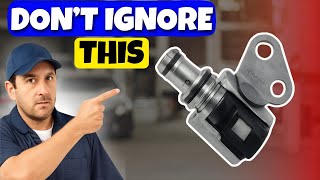
- Reduced fuel economy 🎬 Watch: 10 symptoms of a bad shift solenoid to look for.
- Replacing only one shift solenoid. Because the labor to access the solenoids is the main cost, and both solenoids are the same age and part number, it is a common mistake not to replace them as a pair.
- Condemning the entire transmission without checking fluid and wiring first. Many shifting problems are caused by low/dirty fluid or a simple electrical fault.
Most Likely Causes
- Failed Shift Solenoid 'B' (2-3 Solenoid) 🔴 High Probability Solenoids are electro-mechanical parts that wear out over time. In the 4T45-E, the 'A' (1-2) and 'B' (2-3) solenoids are identical and are the most common failure points for shifting issues. Their internal coil windings can fail or the plunger can stick.
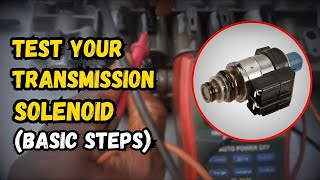
How to confirm: A mechanic can test the solenoid's resistance with a multimeter at the transmission harness connector. The resistance for a good solenoid is typically between 20-30 ohms. An open circuit (infinite resistance) or short (near zero resistance) confirms failure. A bi-directional scan tool can also command the solenoid on and off to check for an audible click. 🎬 See this video for basic steps on testing a transmission solenoid.
Typical fix: Replace the faulty shift solenoid. It is highly recommended to replace both the 'A' and 'B' shift solenoids at the same time due to the high labor cost to access them. The part is identical for both positions.
Est. part cost: $40-$80 for two OEM ACDelco solenoids. - Low or Dirty Transmission Fluid 🟡 Medium Probability Fluid level and quality are critical for hydraulic pressure. The 4T45-E transmission requires DEXRON-VI fluid. Old, burnt, or low fluid can cause solenoids to operate sluggishly or overheat.
How to confirm: Check the transmission fluid level via the dipstick. The fluid should be bright red and not smell burnt. Dark, brown, or gritty fluid indicates it's degraded and needs changing.
Typical fix: Perform a transmission fluid and filter change. If the fluid is very dark or contains metal shavings, it may indicate a more severe internal problem beyond just a solenoid.
Est. part cost: $50-$100 for fluid and a filter kit. - Faulty Transmission Wiring or Connectors 🟡 Medium Probability Corrosion can affect the main transmission harness connector where it attaches to the transmission case. Wires can also chafe or break in the engine bay, leading to an open or short in the solenoid circuit.
How to confirm: Visually inspect the external transmission connector for green or white corrosion. A technician can perform a continuity test on the wires between the PCM and the transmission connector to check for breaks or shorts.
Typical fix: Clean the corroded connectors with a specialized cleaner and apply dielectric grease. Repair or replace any damaged sections of the wiring harness.
Est. part cost: $10-$50 for cleaning supplies or wiring repair.
Rare But Worth Checking
- Failed Powertrain Control Module (PCM): This is very uncommon. The PCM's internal driver for the solenoid circuit can fail, but this should only be considered after all other possibilities (fluid, solenoids, wiring) have been exhaustively checked and ruled out.
- Internal Mechanical Failure: If the transmission fluid contains a significant amount of clutch material or metal shavings, it points to a failure of clutches, bands, or other hard parts. In this case, a simple solenoid replacement will not fix the issue and a transmission rebuild or replacement is necessary.
Diagnosis Steps
- Check Transmission Fluid: Verify the fluid level is correct and the condition is good (bright red, no burnt smell). If low, top off and check for leaks. If dirty, a fluid and filter change is the first step.
- Scan for Codes: Use an OBD-II scanner to confirm P0755 and check for any other related codes like P0700 or P0750.
- Inspect Wiring: Visually inspect the main electrical connector going to the transmission for any signs of corrosion, moisture, or damage. Trace the harness for any obvious issues.
- Test the Solenoid Circuit: Using a multimeter, check the resistance of the Shift Solenoid 'B' circuit from the transmission connector. Compare the reading to the manufacturer's specification (typically 20-30 ohms). An out-of-spec reading indicates a bad solenoid or internal wiring.
- Command Solenoid with Scan Tool: A professional scan tool can command the solenoid to turn on and off, allowing a technician to monitor its response and confirm if it's functioning electrically.
- Access and Replace Solenoids: If the solenoid is confirmed to be faulty, the transmission side cover must be removed. This involves supporting the powertrain and lowering the subframe for access. Once open, the solenoids can be unbolted and replaced.
- Final Steps: After replacement, install a new side cover gasket, reassemble everything, refill with the correct amount of fresh DEXRON-VI fluid, clear the codes, and perform a test drive to ensure proper shifting.
Parts You'll Likely Need
- Automatic Transmission Shift Solenoid (A/B)
(OEM #24207236)— This is the direct cause of the P0755 code. In the 4T45-E transmission, the 'A' and 'B' solenoids are the same part, and it's best practice to replace both at the same time. This part has replaced older part number 10478130.
Trusted brands: ACDelco (GM Genuine)
OEM price range: $40-$50 each
Aftermarket price range: $25-$40 each - Automatic Transmission Side Cover Gasket
(OEM #24221762 (This is a filter kit that includes the gasket))— The transmission side cover must be removed to access the solenoids. The gasket is a one-time use part and must be replaced to prevent leaks. Often included in a filter kit.
Trusted brands: ACDelco, Fel-Pro
OEM price range: $35-$50 (for kit)
Aftermarket price range: $20-$35 (for kit) - DEXRON-VI Automatic Transmission Fluid — This is the required fluid type for the 4T45-E transmission. The system will need to be refilled after the repair. Typically requires 4-6 quarts for a pan drop.
Trusted brands: ACDelco, Valvoline, Castrol
OEM price range: $8-$12 per quart
Aftermarket price range: $7-$10 per quart
Related Codes That Often Appear With This One
- P0700 — P0700 is a generic code that simply means the Transmission Control Module (TCM) has stored a fault code. It is an informational code that will almost always be present alongside a more specific transmission code like P0755.
- P0750 — P0750 is for a 'Shift Solenoid A' malfunction. Since the 'A' and 'B' solenoids in the 4T45-E are identical and subject to the same conditions, it's not uncommon for them to fail around the same time or for a wiring issue to affect both.
Technical Service Bulletins (TSBs) & Recalls
- NHTSA #14V047 / GM #14063: Ignition S
Platform-Specific Known Issues
- Multiple Transmissions: The most critical issue is identifying which transmission your Ion has. This guide focuses on the 4T45-E (2005-2007). If you have a 2003-2004 model, the cause and repair will be different. The VTi CVT in 2003-2004 coupes is particularly known for failure and is generally not worth repairing.
- Subframe Lowering: The repair on the 4T45-E requires partially lowering the driver's side of the engine subframe to get clearance to remove the transmission's side cover. This is the most difficult part of the job and requires careful support of the engine and transmission from above.
Mechanic-Grade Diagnostic Values
- Shift Solenoid A/B Resistance — expected: 20 to 30 ohms. Failure: An open circuit (infinite resistance) or a short circuit (near zero ohms) indicates a failed solenoid coil.
Scan Tool Commands That Help
- GM Tech 2: Transmission Output Controls / Solenoid Actuator Test — After confirming the wiring is intact, this command allows a technician to manually command the solenoid on and off. A functional solenoid will produce an audible 'click' from the transmission case, confirming the solenoid's coil and plunger are working. No click suggests a failed or stuck solenoid.
Wiring & Ground Locations
- Splice #107 (Circuit 439) — Located in the engine harness conduit, approximately 13 inches forward of the transmission breakout, above the cooler lines.. This splice on the PINK wire provides ignition voltage to the transmission solenoids. The harness conduit can trap water, causing this specific splice to corrode and create an open circuit. This will cut power to the solenoids and set codes like P0755, but the fault is in the harness, not the solenoid itself.
- G105 — On the lower left rear of the engine, above the starter motor.. This is a primary engine/transmission ground point. A loose or corroded connection here can cause a host of electrical issues, including erratic behavior from transmission sensors and solenoids.
- G107 — At the rear of the engine.. Another critical engine ground. Poor grounding can lead to incorrect sensor readings and intermittent solenoid circuit faults.
Real Owner Repair Stories
- SaturnFans.com Forum (2006 Saturn Ion, 2.2L Ecotec, 4T45-E Automatic) — Car suddenly started shifting very hard from 1-2 and 2-3, with P0755 and P0750 codes present. Transmission would feel like it was slipping or going into neutral.
❌ Tried (didn't work) Checking fluid level (it was full and clean).
✅ What actually fixed it The owner, following forum advice, replaced both the 'A' and 'B' shift solenoids (ACDelco 24207236) and the transmission side cover gasket. The repair involved lowering the subframe for access but completely resolved the harsh shifting and cleared the codes.
OEM Part Supersession History
10478130→24207236— Standard part revision and consolidation by GM over time.
Diagnostic Flowchart
Other Known Issues on This Vehicle
Issues unrelated to this code that are worth knowing about as an owner of this generation:
- Faulty Ignition Switch 🔴 High — Extremely common across all 2003-2007 models, subject to a major recall. The switch can move out of the 'run' position, shutting off the engine and disabling airbags. (Ref: NHTSA Recall #14V047 (also referenced as GM recall 14063).)
- Sudden Loss of Electric Power Steering (EPS) 🔴 High — Very common, affecting 2004-2007 models. This can make the vehicle extremely difficult to steer at low speeds. (Ref: NHTSA Recall #14V153000 (also referenced as GM recall 14115).)
- Ecotec Timing Chain Failure 🔴 High — The 2.2L L61 Ecotec engine is an interference engine. The timing chain tensioners and guides can wear prematurely, causing the chain to skip or break. This often results in catastrophic engine damage (bent valves, damaged pistons). Failures can occur even at relatively low mileage (under 100k miles).
- Ignition Module/Coil Failure 🟠 Medium — A common cause for a Check Engine Light and engine misfires.
- Fuel Pump Module Cracking 🟠 Medium — The plastic supply or return port on the fuel pump module can crack, leading to a fuel leak. (Ref: NHTSA Recall #09V419000, #12V459000.)
Used vs. New Parts: Buying Guide for This Vehicle
When a used part is the smart pick: For this specific repair, using used parts is not recommended. The primary failure is an electronic solenoid with a finite lifespan, and the labor to access it is very high. A complete used transmission assembly from a low-mileage donor is only a sensible option if the original transmission has a catastrophic mechanical failure (e.g., metal chunks in the pan) and the cost of a rebuild is prohibitive.
Donor-vehicle mileage cap: roughly under 70000 miles for the part to have meaningful remaining life.
What to inspect on the donor part:
- Verify the donor vehicle's mileage.
- Ask for a vehicle history report to check for accidents or flood damage.
- If possible, inspect the transmission fluid from the donor vehicle. It should be bright red and not smell burnt.
- Ensure the donor vehicle is a 2005-2007 model to get the correct 4T45-E transmission.
OEM-only on this vehicle (don't cheap out):
- Shift Solenoids (A & B)
- Transmission Side Cover Gasket
- Transmission Filter
Brands owners have reported issues with on this vehicle:
- Unbranded or 'white box' solenoid kits from online marketplaces. The cost savings do not justify the risk of premature failure and having to repeat the 3-5 hour repair.
Real Owner Stories
Aggregated from forums and TSBs cited above. Mileages and costs reflect what owners reported in those sources.
2006 Saturn Ion — 86000 miles
Symptoms: Vehicle was intermittently shifting into neutral at speeds of 40-45 MPH. Diagnostic codes P0700 and P0757 were present.
What fixed it: The problem was resolved by replacing both the 1-2 and 2-3 shift solenoids in the transmission.
Source hint: Car Talk forum thread titled '2006 Saturn Ion transmission opportunity'
Related OBD-II Codes
Frequently Asked Questions
My Saturn Ion is a 2004 model. Does this repair guide for P0755 apply to my car?
Is it normal for the mechanic to lower the engine subframe to replace a shift solenoid on my Ion?
If I'm replacing the Shift Solenoid 'B' for code P0755, should I replace anything else at the same time?
What type of transmission fluid should be used in my 2006 Saturn Ion after this repair?
My scanner showed code P0700 along with P0755. What does that mean?
Are there any major safety recalls I should check for on my 2003-2007 Saturn Ion?
My Chevy Cobalt has code P0755. Is the cause likely the same as on the Saturn Ion?
Helpful Videos
We Have This Part in Stock

The information in this article is provided for general reference and educational purposes only. Vehicle specifications, procedures, and part compatibility can vary by production date, trim level, and region. Always consult your vehicle's factory service manual and verify part numbers before purchasing or performing repairs. Safety-critical components such as airbags, seat belts, and braking systems should be installed by a qualified professional.
- Saturn Ion:
- 🎬 Helpful Videos
- 🛍️ Shop This Part
- What's Unique About the 2003-2007 Saturn Ion
- Symptoms You May Notice
- Most Likely Causes
- Rare But Worth Checking
- Diagnosis Steps
- Parts You'll Likely Need
- Related Codes That Often Appear With This One
- Technical Service Bulletins (TSBs) & Recalls
- Platform-Specific Known Issues
- Mechanic-Grade Diagnostic Values
- Scan Tool Commands That Help
- Wiring & Ground Locations
- Real Owner Repair Stories
- OEM Part Supersession History
- Diagnostic Flowchart
- Other Known Issues on This Vehicle
- Used vs. New Parts: Buying Guide for This Vehicle
- Real Owner Stories
- 2006 Saturn Ion — 86000 miles
- Related OBD-II Codes
- Frequently Asked Questions
- 🎟️ Get 5% Off