

P0755 on 2006-2010 Hummer H3: Shift Solenoid 'B' Malfunction Causes and Fixes
On a 2006-2010 Hummer H3, code P0755 is most often caused by a faulty 1-2/2-3 shift solenoid or low, dirty transmission fluid. The fix usually involves replacing both shift solenoids ('A' and 'B') while the transmission pan is off, which costs around $50-$100 in parts. This is a very common issue for the GM 4L60-E transmission used in this vehicle.
- P0755 on your H3 points to a problem with the 2-3 shift solenoid in your 4L60-E transmission.
- Always start diagnosis by checking the transmission fluid level and condition; low or dirty fluid is the #1 cause of solenoid problems.
- The most reliable fix is to replace both the 'A' (1-2) and 'B' (2-3) shift solenoids at the same time, along with a new transmission filter and fluid.
- This is a serious code that can leave you stranded or cause severe transmission damage if ignored. Do not drive extensively with this code active.
What's Unique About the 2006-2010 Hummer H3
The Hummer H3 uses the ubiquitous GM 4L60-E transmission, shared with millions of GM trucks and SUVs like the Chevrolet Colorado and GMC Canyon. While generally robust, the shift control solenoids are a well-documented weak point as these vehicles age. Owners often experience this code as the first sign of transmission trouble, which can manifest as getting stuck in a single gear (limp mode) or harsh, erratic shifting. Because the transmission is so common, parts are widely available and the repair procedure is familiar to most technicians and DIYers.
Symptoms You May Notice
- Check Engine Light is on
- Transmission gets stuck in one gear (often 2nd or 3rd gear, 'limp mode')
- Harsh, jerky, or delayed gear shifts
- Failure to upshift or downshift
- Vehicle feels sluggish or has a loss of power
- Transmission may overheat
- Inability to shift out of neutral
- Replacing only one shift solenoid. Since both primary shift solenoids are the same age and the labor to access them is identical, replacing only the one that failed often leads to having to do the job again when the second one fails shortly after.
- Condemning the entire transmission. Often, shifting problems related to P0755 can be fixed with a relatively inexpensive solenoid and fluid change, without needing a full transmission rebuild.
- Mistaking a bad front differential bushing for a transmission issue. A worn front diff bushing on the H3 causes a loud clunk when shifting from Park to Drive/Reverse, which can sound like a harsh transmission engagement.
Most Likely Causes
- Low or Dirty Transmission Fluid 🔴 High Probability Over time, transmission fluid breaks down and collects clutch material and metal shavings. This contaminated fluid can clog the tiny passages in the shift solenoids, causing them to stick or respond slowly. This is a very common cause of solenoid-related codes.
How to confirm: Check the transmission fluid level and condition using the dipstick. The fluid should be bright red and clear, not brown, black, or smelling burnt. If it's low or dirty, this is a likely contributor.
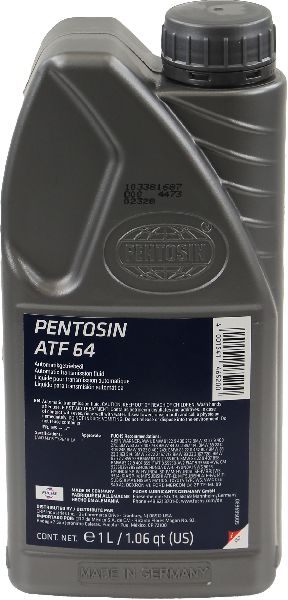
Typical fix: Perform a transmission fluid and filter change. This may resolve the issue if the solenoid is merely sticking and not electrically failed. Use DEXRON-VI fluid.
Est. part cost: $50-$100 for fluid and a filter kit. - Failed Shift Solenoid 'B' 🔴 High Probability The electronic solenoids in the 4L60-E are a known failure point due to age and heat cycles, leading to an internal coil failure (shorts/opens) or mechanical sticking. It is one of the most frequent direct causes of P0755.
How to confirm: After dropping the transmission pan, the solenoid can be tested with a multimeter. A healthy 4L60-E shift solenoid should have a resistance of 20-30 ohms. A reading outside this range indicates failure. You can also briefly apply 9-12 volts to the solenoid to listen for an audible 'click'.
Typical fix: Replace the shift solenoid. It is highly recommended to replace both the 'A' (1-2) and 'B' (2-3) solenoids at the same time, as they are identical parts with the same amount of wear and are accessed together.
Est. part cost: $25-$50 per solenoid. - Damaged Internal Wiring Harness 🟡 Medium Probability The wiring harness inside the transmission is constantly submerged in hot fluid, which can make the plastic connectors brittle and prone to cracking or corrosion over time, leading to a poor connection at the solenoid.
How to confirm: Visually inspect the wiring harness and connectors for signs of damage, corrosion, or loose pins once the transmission pan is removed. Check for continuity on the solenoid circuit from the main transmission connector.
Typical fix: Repair the specific wire or replace the entire internal transmission wiring harness.
Est. part cost: $50-$150 for a new harness.
Rare But Worth Checking
- Cracked Radiator / Coolant Contamination: The H3's transmission cooler is integrated into the radiator. A failure in the radiator can allow engine coolant to mix with the transmission fluid, causing catastrophic transmission failure. One owner on HummerForums.com reported this exact issue. If the transmission fluid appears milky, frothy, or like a 'strawberry milkshake', this is a critical issue requiring immediate attention.
- Faulty Transmission Control Module (TCM) / Powertrain Control Module (PCM): While uncommon, the computer that controls the transmission can fail, sending incorrect signals to the solenoid. This is usually diagnosed only after all other possibilities (fluid, solenoid, wiring) have been ruled out. A specialist may be needed to confirm a faulty module.
Diagnosis Steps
- Scan for Codes: Use an OBD-II scanner to confirm P0755 and check for any other related codes like P0750 or P0700.
- Check Transmission Fluid: Check the fluid level and condition. Low, burnt, or dirty fluid is a major red flag. If the fluid is milky or frothy, stop immediately and diagnose a likely radiator/cooler failure.
- Inspect External Wiring: Check the main transmission wiring connector for any visible damage, corrosion, or loose connections.
- Drop the Transmission Pan: Safely raise the vehicle, drain the fluid, and remove the transmission pan to access the internal components. On some GM trucks, the exhaust or shift linkage may need to be moved for clearance.
- Inspect for Debris: Examine the fluid in the pan and the magnet for excessive metal shavings. A small amount of fine grey material is normal, but large chunks indicate a more serious internal mechanical failure.
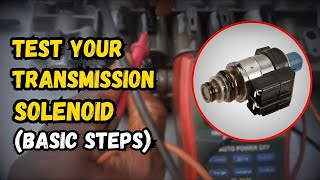
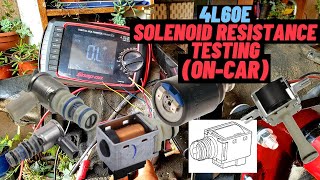
- Test the Solenoid: The 1-2 (A) and 2-3 (B) shift solenoids are easily accessible once the filter is removed. Disconnect the solenoid's electrical connector. Use a multimeter to test its resistance. It should be between 20-30 ohms. 🎬 Watch: How to perform an on-car solenoid resistance test A reading of 0 or infinity indicates failure.
- Inspect Internal Wiring: While the pan is off, carefully inspect the internal wiring harness for any signs of damage, brittle connectors, or frayed wires.
- Replace Parts: If the solenoid tests bad or is suspect, replace it. It is highly recommended to replace both the 1-2 ('A') and 2-3 ('B') shift solenoids at the same time. Install a new transmission filter and pan gasket.
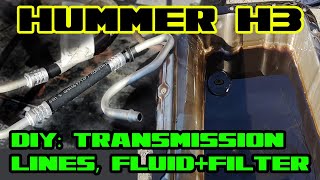
- Refill and Test: Reinstall the pan, refill with the correct type and amount of new transmission fluid (DEXRON-VI is specified for the 4L60-E), 🎬 See this walkthrough for H3 fluid, filter, and cooler line service clear the codes, and test drive to ensure normal shifting.
Parts You'll Likely Need
- Automatic Transmission Shift Solenoid (1-2 / 2-3)
(OEM #24230298)— This is the component that fails electrically or mechanically, directly causing the P0755 code. The 'A' and 'B' solenoids are the same part number on a 4L60-E.
Trusted brands: ACDelco (OEM), Delphi, ATP
OEM price range: $40-$60
Aftermarket price range: $20-$40 - Automatic Transmission Filter Kit
(OEM #24208576)— Must be replaced whenever the transmission pan is removed. A clogged filter is a common cause of fluid pressure issues that can trigger solenoid codes.
Trusted brands: ACDelco, Wix, Fram
OEM price range: $30-$50
Aftermarket price range: $15-$30 - Automatic Transmission Fluid (DEXRON-VI) — New fluid is required after dropping the pan. Old, degraded fluid is a primary cause of solenoid failure. A pan drop requires approximately 5-6 quarts.
Trusted brands: ACDelco, Valvoline, Mobil 1
OEM price range: $8-$12 per quart
Aftermarket price range: $7-$10 per quart
Related Codes That Often Appear With This One
- P0750 — This code is for 'Shift Solenoid 'A' Malfunction'. Since the 'A' and 'B' solenoids are often replaced as a pair and subject to the same conditions, seeing both codes together strongly points to a shared problem like bad fluid, a clogged filter, or a wiring issue.
- P0700 — This is a generic code that means the Transmission Control Module (TCM) has stored a fault. It's an informational code that will almost always appear alongside a more specific transmission code like P0755, essentially telling you to look for other transmission codes.
Technical Service Bulletins (TSBs) & Recalls
- PIP4013D: Misfire at Idle Due to Potential Valve Leakage (Cylinder Head Issue)
- 07-06-01-019: Cylinder Head Replacement Procedure for LLR 3.7L Engine
Platform-Specific Known Issues
- Radiator Failure and Transmission Contamination: A key issue for the H3 is the factory radiator's integrated transmission cooler. The radiator is known to crack, and if the internal wall between the coolant and transmission fluid fails, antifreeze will mix with the ATF. This contaminated fluid, often described as looking like a 'strawberry milkshake', destroys clutch materials and damages solenoids, requiring a transmission rebuild or replacement and a new radiator.
Mechanic-Grade Diagnostic Values
- Shift Solenoid 'A' or 'B' Coil Resistance — expected: 20-30 Ohms at room temperature. More specifically, a healthy solenoid often reads in the 20-25 Ohm range.. Failure: A reading of 0 Ohms (short circuit) or infinite/OL (open circuit) indicates a failed solenoid.
- Shift Solenoid 'Click' Test — expected: A distinct 'click' sound when 9-12 volts are briefly applied to the solenoid's two terminals.. Failure: No click indicates the solenoid's internal plunger is mechanically stuck or the coil is dead.
- Voltage at Solenoid Power Feed — expected: Approximately 12V (± 0.5V) when the ignition is on and the TCM is commanding the solenoid to activate.. Failure: No voltage or low voltage suggests a problem with the wiring harness or the TCM driver circuit, not necessarily the solenoid itself.
Scan Tool Commands That Help
- GM Tech2 / GDS2: Solenoid Activation / Output Control — This bidirectional command allows a technician to manually command the Shift Solenoid 'B' on and off while the vehicle is stationary. It is used to verify if the solenoid clicks when commanded and to check for a corresponding voltage change on the control circuit, confirming the integrity of the wiring and the TCM's driver circuit without having to drop the pan first.
Wiring & Ground Locations
- Transmission Main Connector (Vehicle Harness Side) — On the passenger side of the 4L60-E transmission case.. This is the primary point for testing the solenoid circuit externally. To test the 2-3 Shift Solenoid (B), you can check for continuity/resistance between the pins corresponding to the Yellow/Black wire and the Green wire.
- TCM (Transmission Control Module) — On 2008-2010 models, it is a separate module located under the hood on the firewall. On 2006-2007 models, it is integrated into the main Powertrain Control Module (PCM).. A poor connection at the TCM/PCM or a failure of the module itself can cause P0755. Knowing its location is critical for diagnosis after ruling out the transmission-side components.
- G110 / G120 — G110 is on the left side of the engine block. G120 is on the left lower inner wheel well, near the engine mount.. These are key engine and chassis ground points. A corroded or loose ground at these locations can cause erratic behavior in the TCM and other vehicle electronics, potentially leading to false solenoid codes.
- TCCM (Transfer Case Control Module) — Located behind the passenger side dash, next to the glove box.. This is often mistaken for the TCM. While not directly related to P0755, knowing its location prevents misdiagnosis if a technician is hunting for control modules in the cabin.
When the Usual Fixes Don't Work
- While P0755 is an electrical fault code for the solenoid circuit, the root cause is not always electrical. In some cases, mechanics have replaced the shift solenoid multiple times only for the code to return. A less common but critical failure is wear in the valve body itself, specifically the check ball seats on the separator plate. When these seats wear down, hydraulic pressure can leak between circuits. The TCM commands a shift, the solenoid opens, but the required pressure doesn't build in the correct clutch pack due to the leak. The computer sees the resulting incorrect gear ratio and flags the solenoid circuit as malfunctioning, even though the solenoid and wiring are perfectly functional. This scenario requires a valve body repair or replacement, not just another solenoid.
OEM Part Supersession History
10478131, 24047681, 24236521→24230298— Part consolidation and potential minor revisions over the long production life of the 4L60-E transmission.
Heads up: The current part number 24230298 is the correct service replacement for all previous numbers and is compatible with 4L60-E transmissions from 1993 and up.
Model Year Variations Within This Range
- 2008-2010: These later models use a separate Transmission Control Module (TCM) located on the firewall. This differs from 2006-2007 models which have the transmission control functions integrated within the main Powertrain Control Module (PCM). This affects diagnostic strategy and module replacement.
- Late 2006-2010: Starting in late 2006 and fully implemented by 2008, the 4L60-E in these vehicles includes an Input Shaft Speed (ISS) sensor. This adds wiring to the internal harness and a new pin to the main case connector. Transmissions from earlier vehicles without this sensor are not directly compatible.
- Late 2006-2010: The valve body separator plates were updated to a bonded design around 2007, where the gaskets are bonded directly to the plate. Earlier designs used separate gaskets.
Diagnostic Flowchart
Other Known Issues on This Vehicle
Issues unrelated to this code that are worth knowing about as an owner of this generation:
- Cylinder Head Valve Seat Failure (3.5L & 3.7L I5) 🔴 High — Very common on 2006 models (3.5L L52) and some 2007 models (3.7L LLR) built before March 31, 2006. Can occur at mileages as low as 87,000 miles. Leads to misfire codes (e.g., P0300, P0305) and requires cylinder head replacement. (Ref: TSB #PIP4013D, TSB #07-06-01-019)
- GM Passlock Anti-Theft System Failure 🟠 Medium — A widespread and frustrating issue where the Passlock sensor in the ignition switch fails, preventing the vehicle from starting for a mandatory 10-minute waiting period. It can happen intermittently for years.
- Cracked Radiator with Plastic End Tanks 🔴 High — Common across multiple model years, especially the 2008 H3. The plastic end tanks crack, causing coolant leaks. If the internal transmission cooler ruptures, it leads to catastrophic transmission failure from coolant contamination.
- Worn Front Differential Mount Bushing 🟠 Medium — The main crossmember bushing and side support bushings for the front differential wear out, causing a distinct 'clunk' noise when shifting into Drive or Reverse, or during acceleration/deceleration. Often misdiagnosed as a transmission problem.
- HVAC Blower Motor Resistor & Harness Failure 🟡 Low — The connector for the blower motor resistor is prone to overheating and melting, causing the fan to only work on the highest setting or not at all. This was subject to a recall. (Ref: NHTSA Recall #15V202000)
- Erratic Fuel Gauge Operation 🟡 Low — Common on 2006-2008 models, the fuel level sensor in the tank fails, causing the gauge to read incorrectly. The typical fix is to replace the entire fuel pump module.
Used vs. New Parts: Buying Guide for This Vehicle
When a used part is the smart pick: Given the low cost of new, high-quality aftermarket or OEM solenoids ($20-$50), buying a used solenoid is not recommended. For a complete valve body, a professionally remanufactured unit is a much safer choice than a used one from a junkyard, as a used part may have the same hidden wear in bores or check ball seats that caused the original problem.
What to inspect on the donor part:
- If inspecting a used transmission assembly, check the fluid on the dipstick. It should be bright red and clear, not dark brown, black, or smelling burnt.
- Examine the pins on the main electrical connector for any signs of corrosion, damage, or fluid wicking.
- Avoid any transmission that has obvious signs of coolant contamination (milky, pink fluid), as it will require a complete rebuild.
OEM-only on this vehicle (don't cheap out):
- Transmission Control Module (TCM) / Powertrain Control Module (PCM): While aftermarket options exist, they often have programming or compatibility issues. A failed module is best replaced with an OEM unit programmed specifically for the vehicle's VIN.
Aftermarket brands forum-validated for this vehicle:
- Solenoids: ACDelco (OEM), Borg-Warner, Rostra
- Valve Body Repair/Upgrade Kits: Sonnax, TransGo
Brands owners have reported issues with on this vehicle:
- Unbranded, generic 'master solenoid kits' from online marketplaces. While tempting due to low price, they often have high failure rates and inconsistent quality control compared to established brands.
Real Owner Stories
Aggregated from forums and TSBs cited above. Mileages and costs reflect what owners reported in those sources.
2008 Hummer H3
Symptoms: The transmission fluid was contaminated with antifreeze, looking like a 'strawberry milkshake'. This caused severe transmission shifting problems and ultimately failure.
What fixed it: The issue required a complete transmission rebuild or replacement, in addition to replacing the failed factory radiator.
Source hint: Hummer4x4offroad.com forum thread 'the-dreaded-h3-tranny-cooler-radiator-issue'
2006 Hummer H3 3.5L — 87000 miles
Symptoms: The vehicle had a persistent engine misfire, triggering codes like P0300 and P0305.
What fixed it: The problem was diagnosed as a valve leakage issue which required a complete cylinder head replacement, as outlined in the relevant TSB.
Source hint: TSB #PIP4013D and TSB #07-06-01-019
2006 Hummer H3
Symptoms: A distinct 'clunk' noise was heard when shifting from Park into Drive or Reverse, and also during acceleration. The owner initially suspected a transmission problem.
What fixed it: The cause was a worn front differential mount bushing. Replacing the crossmember and side support bushings for the differential resolved the noise.
Source hint: Hummer4x4offroad.com forum thread '2006-hummer-h3-front-differential-issues-and-question-regarding-2wd'
Related OBD-II Codes
Frequently Asked Questions
My H3 is stuck in gear with a P0755 code, but I also hear a 'clunk' when shifting into Drive. Could it be something other than the solenoid?
I checked my transmission fluid and it looks like a pink 'strawberry milkshake'. What does this mean for my Hummer H3?
If I have to replace the Shift Solenoid 'B' for code P0755, should I replace anything else while I'm in there?
What type of transmission fluid should I use to refill my H3 after a P0755 repair?
How can I test the shift solenoid myself to confirm it's the cause of P0755?
My scanner shows P0755 and a P0300 misfire code. Are these two problems related on my 2006 H3?
Helpful Videos
Used OEM Parts in Stock

New Aftermarket Parts Available



The information in this article is provided for general reference and educational purposes only. Vehicle specifications, procedures, and part compatibility can vary by production date, trim level, and region. Always consult your vehicle's factory service manual and verify part numbers before purchasing or performing repairs. Safety-critical components such as airbags, seat belts, and braking systems should be installed by a qualified professional.
- Hummer H3:
- 🎬 Helpful Videos
- 🛍️ Shop This Part
- What's Unique About the 2006-2010 Hummer H3
- Symptoms You May Notice
- Most Likely Causes
- Rare But Worth Checking
- Diagnosis Steps
- Parts You'll Likely Need
- Related Codes That Often Appear With This One
- Technical Service Bulletins (TSBs) & Recalls
- Platform-Specific Known Issues
- Mechanic-Grade Diagnostic Values
- Scan Tool Commands That Help
- Wiring & Ground Locations
- When the Usual Fixes Don't Work
- OEM Part Supersession History
- Model Year Variations Within This Range
- Diagnostic Flowchart
- Other Known Issues on This Vehicle
- Used vs. New Parts: Buying Guide for This Vehicle
- Real Owner Stories
- 2008 Hummer H3
- 2006 Hummer H3 3.5L — 87000 miles
- 2006 Hummer H3
- Related OBD-II Codes
- Frequently Asked Questions
- 🎟️ Get 5% Off