

P0751 on 2009-2016 Land Rover Discovery 4: Shift Solenoid 'A' Causes and Fixes
On a 2009-2016 Discovery 4, code P0751 is most often caused by degraded transmission fluid or a failing shift solenoid inside the transmission. The first step is a transmission fluid and filter service. If that doesn't work, the entire solenoid pack likely needs replacement. Expect $500-$800 for a fluid service and $1,200-$2,000+ for solenoid replacement at a shop.
- P0751 on a Discovery 4 points to a problem with the transmission's ability to shift gears, most often due to fluid or solenoid issues.
- Your first and most important diagnostic step is to check the transmission fluid level and condition. Do not skip this.
- The 2009-2016 range includes both 6-speed and 8-speed ZF transmissions. You must identify which one your vehicle has before ordering any parts, as they are not interchangeable.
- Due to the complexity and specific procedures required, especially for refilling the fluid, this repair is best handled by a qualified independent specialist familiar with Land Rover or ZF transmissions.
What's Unique About the 2009-2016 Land Rover Discovery 4
The Discovery 4 uses highly reliable but sensitive ZF automatic transmissions. While Land Rover often marketed the transmission fluid as "filled for life," the transmission manufacturer, ZF, recommends a fluid and filter service every 50,000 to 75,000 miles. Many P0751 issues on these vehicles arise simply because this recommended service has been neglected, leading to fluid breakdown and solenoid malfunction. The problem is common enough that ZF offers complete solenoid replacement kits, as replacing the entire set is the recommended procedure once one has failed.
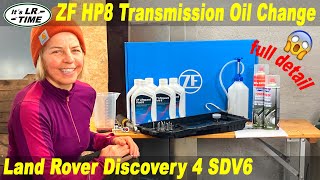
Generation note: The 2009-2016 year range covers two different ZF automatic transmissions: - 2009-2012/13: ZF 6HP28 6-speed automatic. - 2013-2016: ZF 8HP70 8-speed automatic. 🎬 Watch: Step-by-step ZF 8HP transmission fluid change guide While the causes and symptoms are nearly identical, the specific solenoids, fluid (Lifeguard 6 vs. Lifeguard 8), and transmission pan/filter are different. It is crucial to identify your vehicle's specific transmission before ordering parts.
Symptoms You May Notice
- "Transmission Fault" message on the dashboard
- Vehicle enters 'limp mode,' getting stuck in one gear
- Harsh, jerky, or delayed gear shifts
- Slipping between gears, where the engine revs without accelerating
- Illuminated Check Engine Light
- Reduced fuel economy
- Transmission may overheat
- Replacing only a single solenoid. The solenoids wear at a similar rate, and the labor to access them is significant. It is standard practice on ZF transmissions to replace the entire set to prevent a repeat failure of a different solenoid in the near future.
Most Likely Causes
- Low, Old, or Degraded Transmission Fluid 🔴 High Probability Land Rover's lack of a recommended service interval contradicts the transmission manufacturer's (ZF) advice, leading many owners to neglect fluid changes. Over time, the fluid loses its lubricating properties, becomes contaminated with clutch material, and can't operate the solenoids correctly.
How to confirm: Check the transmission fluid level and condition. The fill plug is on the side of the transmission case. The fluid should be a clear honey/green color (depending on type). If it is dark brown, black, or smells burnt, it needs to be changed. The level check must be performed with the engine running and the fluid at a specific temperature (30-50°C).
Typical fix: Perform a complete transmission fluid and filter service. This involves draining the old fluid and replacing the transmission pan, which has an integrated filter. Use only the specified ZF Lifeguard fluid for your transmission (Lifeguard 6 or 8).
Est. part cost: $250-$400 - Failed Shift Solenoid Pack 🟡 Medium Probability The solenoids are electro-mechanical parts that cycle thousands of times and are a known wear item in ZF transmissions. They can fail electrically (open or short circuit) or become mechanically stuck from debris in old fluid.
How to confirm: If a fluid service doesn't fix the issue, the next step is to test the solenoids. This is done by removing the valve body (mechatronic unit) and checking the resistance of each solenoid with a multimeter. A professional scan tool can also sometimes command individual solenoids to check their function.
Typical fix: Replace the entire set of solenoids. ZF sells them as a complete kit. This job is done with the valve body removed from the transmission.
Est. part cost: $350-$550 - Leaking Mechatronic Sealing Sleeve ⚪ Low Probability The plastic sleeve that seals the main wiring connector to the transmission case is a known failure point on ZF 6HP and 8HP transmissions. The O-rings become hard and brittle with age and heat, causing fluid leaks and potential electrical issues.
How to confirm: Visually inspect the round electrical connector on the side of the transmission for signs of fluid leakage. A leak here can cause low fluid levels and intermittent electrical connection problems that can trigger various codes, including P0751.
Typical fix: Replace the mechatronic sealing sleeve and top off 🎬 See: ZF 6HP pan, fluid, and sleeve replacement walkthrough the transmission fluid. This part is inexpensive but requires draining the fluid and dropping the pan for access.
Est. part cost: $20-$40
Rare But Worth Checking
- Internal Valve Body (Mechatronic) Failure: The valve body itself can develop cracks or internal leaks, or the small rubber seals between the valve body and transmission case can fail, preventing it from holding the hydraulic pressure needed to operate the solenoids and clutches. This is a more severe issue that often requires replacement of the entire mechatronic unit.
- Faulty Transmission Control Module (TCM): While rare, the TCM (which is integrated into the mechatronic unit on these transmissions) can fail electronically. This can be due to software corruption or internal circuit failure, requiring replacement and reprogramming of the entire mechatronic unit.
- Wiring Harness or Connector Issues: Damage to the wiring harness leading to the transmission or corrosion within the main connector can cause intermittent signals to the solenoids, triggering performance codes.
Diagnosis Steps
- Check for Other Codes: Use an advanced OBD-II scanner to check for any other transmission-related codes. Multiple solenoid codes suggest a widespread issue.
- Inspect Fluid Level and Condition: This is the most critical first step. With the vehicle level and running, and the transmission fluid at the correct temperature (typically 30-50°C), remove the fill plug. A small trickle of fluid should come out. If not, the fluid is low. Note the color and smell of the fluid; if it's dark, burnt, or contains debris, it's degraded.
- Perform a Fluid and Filter Service: If the fluid is low or degraded, perform a full drain, pan/filter replacement, and refill using the correct ZF Lifeguard fluid. Clear the codes and perform a test drive to see if the fault returns. A full adaptation reset with a diagnostic tool is often required.
- Inspect Wiring and Connectors: Visually inspect the main transmission harness connector for damage or corrosion. Check for fluid leakage at the mechatronic sealing sleeve.
- Test Solenoids: If the code persists after a fluid service, the valve body must be removed. Once removed, the resistance of each solenoid can be tested with a multimeter (compare readings to manufacturer specs). This will identify an electrically failed solenoid.
- Inspect Valve Body: With the solenoids removed, carefully inspect the valve body for scoring, cracks, or signs of excessive wear. Check for debris in the small fluid passages. Also inspect the rubber seals between the valve body and the transmission case for degradation.
- Replace Solenoid Pack: If a solenoid is confirmed bad or is highly suspect, replace the entire set of solenoids as a kit.
- Consider Mechatronic Unit Replacement: If solenoids are new and the problem persists, the fault lies within the valve body itself or the integrated TCM, requiring a replacement mechatronic unit.
Parts You'll Likely Need
- Transmission Solenoid Kit (6-Speed)
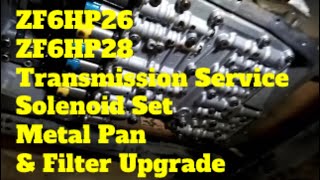
(OEM #1068298046)— For models up to 2012/13 with the ZF 6HP28 transmission. 🎬 Watch: ZF 6-speed solenoid replacement and metal pan upgrade This kit replaces all 7 shift solenoids, which are a common failure point causing shifting issues.
Trusted brands: ZF (OEM)
OEM price range: $280-$450
Aftermarket price range: $200-$300 - Transmission Solenoid Kit (8-Speed)
(OEM #1087298388)— For models from 2013-2016 with the ZF 8HP70 transmission. This kit replaces all the shift solenoids to rectify shifting problems.
Trusted brands: ZF (OEM)
OEM price range: $335-$575
Aftermarket price range: $250-$400 - Transmission Pan and Filter Kit (6-Speed) — Required for a fluid service on the 6HP28. The filter is integrated into the plastic pan, which must be replaced as a unit. The kit typically includes a new pan, gasket, and bolts.
Trusted brands: ZF, Vaico, Febi
OEM price range: $150-$250
Aftermarket price range: $80-$150 - Transmission Pan and Filter Kit (8-Speed) — Required for a fluid service on the 8HP70. Like the 6-speed, the filter is built into the pan. The kit includes a new pan, gasket, and bolts.
Trusted brands: ZF (OEM)
OEM price range: $180-$280
Aftermarket price range: $100-$180
Related Codes That Often Appear With This One
- P0756 — This indicates a fault with Shift Solenoid 'B'. Seeing multiple solenoid performance codes together points towards a systemic issue like contaminated fluid or a failing valve body rather than a single bad solenoid.
- P0741 — This code relates to the Torque Converter Clutch (TCC) solenoid. A failing torque converter can shed debris that contaminates the fluid and clogs all the solenoids, leading to multiple codes including P0751.
Mechanic-Grade Diagnostic Values
- Shift Solenoid Resistance (ZF 6HP28) — expected: 5.0 Ohms at 20°C (68°F). Failure: A reading significantly higher or lower than 5.0 Ohms, or an open circuit (infinite resistance), indicates a failed solenoid coil. Testing should be done directly at the solenoid with the mechatronic unit removed.
- Shift Solenoid Resistance (ZF 8HP70) — expected: Varies by source: 5.0 Ohms, ~5.5 Ohms, or 10-11 Ohms at 20°C (68°F).. Failure: Due to conflicting data, the best practice is to measure all solenoids. A single solenoid with a drastically different reading from the others is suspect. An open circuit indicates failure. Always test with the mechatronic unit removed.
Scan Tool Commands That Help
- Land Rover SDD (Symptom Driven Diagnostics) or equivalent advanced scanner: Transmission Adaptations Reset / Clear Transmission Adaptive Values — This is a mandatory step after replacing the transmission fluid, solenoids, or the entire mechatronic unit. The TCM 'learns' the behavior of the old components and fluid. Failing to reset these learned values will cause harsh shifting and may prevent the new parts from functioning correctly, potentially causing the P0751 code to return even after a successful repair.
Wiring & Ground Locations
- Main Transmission Connector (Mechatronic Connector) — On the side of the transmission case, typically on the right-hand side. It's a large, round, twist-lock connector where the main vehicle harness plugs into the mechatronic sealing sleeve.. This is the single point of electrical connection for all solenoids and sensors inside the transmission. Corrosion from moisture or contamination from a leaking sealing sleeve at this connector can interrupt the signal to Shift Solenoid 'A', directly causing the P0751 code.
When the Usual Fixes Don't Work
- A common scenario leading to a misdiagnosis of P0751 is when a technician replaces the shift solenoids, but the fault returns. The underlying cause is often not the solenoid itself, but a loss of hydraulic pressure that prevents the solenoid's action from successfully engaging a clutch. This pressure loss is frequently caused by hardened and leaking rubber seals, such as the mechatronic bridge seal or the four smaller tube seals between the valve body and the transmission case. These seals cost a fraction of the price of a solenoid kit but are a primary failure point. Any time the valve body is removed to service the solenoids, these seals should be replaced as a matter of course to prevent a comeback.
OEM Part Supersession History
1068 298 046→1068 298 046— This is the current and widely recognized ZF OEM part number for the complete 7-piece solenoid kit for the 6HP28 transmission.1087 298 388→1087 298 388— This is the current and widely recognized ZF OEM part number for the complete solenoid kit for the 8HP70 transmission.
Model Year Variations Within This Range
- 2009-2012/13: These models use the ZF 6HP28 (a second-generation 6HP transmission), which requires the 7-piece solenoid kit (PN: 1068298046) and ZF Lifeguard 6 fluid. Solenoid resistance is specified at 5.0 Ohms.
- 2013-2016: These models use the ZF 8HP70 transmission, which requires a different solenoid kit (PN: 1087298388) and ZF Lifeguard 8 fluid. Solenoid resistance values have conflicting reports (5.0-11 Ohms), requiring careful diagnosis.
Diagnostic Flowchart
Other Known Issues on This Vehicle
Issues unrelated to this code that are worth knowing about as an owner of this generation:
- 3.0L TDV6/SDV6 Crankshaft Failure 🔴 High — Can occur at any mileage, but more common on higher-mileage or poorly maintained engines. It is a well-documented, catastrophic failure. (Ref: LTB00487)
- Air Suspension Faults (Compressor, Air Springs, Valve Blocks) 🟠 Medium — Very common, especially over 80,000 miles. Symptoms include the vehicle sagging overnight, slow raising, and "Suspension Fault" warnings.
- 5.0L V8 Timing Chain Tensioner & Guide Wear 🔴 High — Common on 2010-2013 models, typically presenting as a metallic rattle on cold starts. If ignored, can lead to catastrophic engine failure. (Ref: LTB00474NAS3)
- Electronic Parking Brake (EPB) Malfunction 🟠 Medium — Common issue where the parking brake fails to engage/disengage or makes a screeching noise, often due to actuator failure or need for adjustment.
- Lower Front Suspension Arm Bushing Wear 🟠 Medium — A frequent wear item, causing a knocking or clunking sound from the front suspension, especially at low speeds or when braking.
- Cracked Intake Manifold (Plastic) 🟡 Low — The plastic intake manifolds, particularly on the V8 models, can develop cracks over time, leading to vacuum leaks, rough idling, and lean fault codes.
Used vs. New Parts: Buying Guide for This Vehicle
When a used part is the smart pick: For this specific repair, using used parts is not recommended for any of the common failure items. The only scenario where a used part might be considered is for a complete transmission assembly from a low-mileage, verified-running donor vehicle if the original transmission has suffered catastrophic internal mechanical failure.
Donor-vehicle mileage cap: roughly under 60000 miles for the part to have meaningful remaining life.
What to inspect on the donor part:
- Verify the donor vehicle's mileage and history if possible.
- Inspect the transmission fluid from the donor unit. If it is dark, burnt, or contains metallic particles, do not purchase.
- Ensure the main electrical connector pins are clean, straight, and free of corrosion.
OEM-only on this vehicle (don't cheap out):
- Shift Solenoid Kit: The TCM adapts to the specific flow rates of each solenoid. Used solenoids may not function correctly with your existing TCM. Always buy a new, complete OEM (ZF) kit.
- Mechatronic/Valve Body Unit: This unit contains the TCM, which is programmed to the original vehicle's VIN. A used unit will cause communication and operational issues unless reprogrammed by a specialist, which is often not possible.
- Mechatronic Sealing Sleeve & Bridge Seal: These are inexpensive rubber/plastic parts. The cost savings of a used part are negligible, and a used seal will likely be just as old and brittle as the one being replaced.
Aftermarket brands forum-validated for this vehicle:
- ZF (OEM for solenoids, pan/filter, and fluid)
- Vaico (For transmission pan/filter kit)
- Febi (For transmission pan/filter kit)
Brands owners have reported issues with on this vehicle:
- Unbranded, low-cost solenoid kits from online marketplaces. These often have inconsistent quality control and may fail prematurely or cause performance issues.
Real Owner Stories
Aggregated from forums and TSBs cited above. Mileages and costs reflect what owners reported in those sources.
2012 Land Rover Discovery 4 — ~85000 miles
Symptoms: Vehicle entered 'limp mode' and got stuck in one gear; 'Transmission Fault' message appeared on the dashboard with harsh, jerky shifts.
What fixed it: A complete transmission fluid and filter service, replacing the transmission pan (integrated filter) and refilling with ZF Lifeguard fluid.
Cost: $250-$400
Source hint: https://www.disco3.co.uk/forum/
2010 Land Rover Discovery 4 — ~110000 miles
Symptoms: Check Engine Light illuminated with P0751; transmission was slipping between gears and the engine would rev without accelerating.
What fixed it: Replacement of the entire set of shift solenoids using a ZF solenoid kit after testing resistance on the valve body.
Cost: $350-$550
Source hint: https://landroverforums.com/
2014 Land Rover Discovery 4 — ~95000 miles
Symptoms: Intermittent electrical connection problems and 'Transmission Fault' warnings; visual inspection showed fluid leakage at the main wiring connector.
What fixed it: Replaced the mechatronic sealing sleeve and topped off the transmission fluid.
Cost: $20-$40
Source hint: https://www.aulro.com/afvb/l319-discovery-3-4-rrs/
Related OBD-II Codes
Frequently Asked Questions
Why does Land Rover's service schedule for the Discovery 4 conflict with the transmission manufacturer's advice regarding P0751?
What specific transmission fluid should I use for my 2009-2016 Discovery 4 to resolve shift solenoid issues?
Can a leak at the round electrical connector on the side of the transmission cause a P0751 code?
Is there a TSB for the crankshaft failure mentioned in the known issues for the 3.0L TDV6 Discovery 4?
My Discovery 4 has a metallic rattle on cold starts along with transmission issues; is this related?
At what temperature should I check the transmission fluid level on my Discovery 4?
Helpful Videos
Used OEM Parts in Stock

New Aftermarket Parts Available



The information in this article is provided for general reference and educational purposes only. Vehicle specifications, procedures, and part compatibility can vary by production date, trim level, and region. Always consult your vehicle's factory service manual and verify part numbers before purchasing or performing repairs. Safety-critical components such as airbags, seat belts, and braking systems should be installed by a qualified professional.
- Land Rover Discovery 4:
- 🎬 Helpful Videos
- 🛍️ Shop This Part
- What's Unique About the 2009-2016 Land Rover Discovery 4
- Symptoms You May Notice
- Most Likely Causes
- Rare But Worth Checking
- Diagnosis Steps
- Parts You'll Likely Need
- Related Codes That Often Appear With This One
- Mechanic-Grade Diagnostic Values
- Scan Tool Commands That Help
- Wiring & Ground Locations
- When the Usual Fixes Don't Work
- OEM Part Supersession History
- Model Year Variations Within This Range
- Diagnostic Flowchart
- Other Known Issues on This Vehicle
- Used vs. New Parts: Buying Guide for This Vehicle
- Real Owner Stories
- 2012 Land Rover Discovery 4 — ~85000 miles
- 2010 Land Rover Discovery 4 — ~110000 miles
- 2014 Land Rover Discovery 4 — ~95000 miles
- Related OBD-II Codes
- Frequently Asked Questions
- 🎟️ Get 5% Off