

P0751 on 2007-2014 Ford Edge: Shift Solenoid 'A' Causes and Fixes
This code indicates a problem with the 1-2 shift solenoid in the 6F50 transmission. While low fluid can be a cause, it often points to a failed solenoid pack or a more complex internal issue like a broken orifice plug mentioned in a Ford TSB for 2010 models. Expect a repair cost of $500-$2000, as it requires internal transmission work to replace the solenoid body.
- P0751 on a 2007-2014 Edge is a serious code indicating a 1-2 shift problem that requires prompt attention.
- Always start diagnosis by checking the transmission fluid level and condition; use only MERCON LV fluid.
- The most probable cause is a faulty transmission solenoid body/pack, which requires internal transmission work to replace.
- Be aware of TSB 10-9-9, which points to a specific, major internal failure on some 2010 models.
- This is not a beginner-friendly DIY repair; professional service is strongly recommended.
What's Unique About the 2007-2014 Ford Edge

The first-generation Ford Edge uses the 6F50 automatic transmission, a unit shared with many other Ford, Lincoln, and Mercury vehicles. While P0751 can be caused by common issues like a faulty solenoid, this platform has a specific known issue detailed in Ford Technical Service Bulletin (TSB) 10-9-9. This TSB applies to 2010 Edge models with transmissions built between December 11, 2009, and April 15, 2010. It identifies a broken orifice restrictor cup plug in the forward clutch circuit that can cause P0751 along with harsh or no forward engagement. This is a much more involved repair than a simple solenoid swap and is a key consideration for this specific model year.
Symptoms You May Notice
- Harsh, delayed, or erratic shifting
- Transmission getting stuck in one gear (limp mode), limiting speed to 30-45 mph
- Slipping or failure to engage the 1-2 shift
- No forward gear engagement at all
- Illuminated Check Engine Light
- Transmission overheating
- Abrupt "clunk" or metallic noise when a gear finally engages
- Replacing only the single Shift Solenoid 'A'. On the 6F50, the solenoids are part of a complete solenoid body/pack. The entire assembly is typically replaced.
- Immediately blaming the solenoid without checking fluid. Low, old, or burnt fluid is a common cause of shifting problems and can mimic solenoid failure.
- Assuming a bad solenoid when the issue is a damaged clutch pack. In some cases, especially if driven for a long time with symptoms, the code may be a result of internal mechanical failure, not the cause.
Most Likely Causes

- Low or Dirty Transmission Fluid 🟡 Medium Probability Fluid level can drop due to leaks, and fluid degrades over time. The 6F50 transmission is sensitive to fluid condition and using incorrect fluid can cause issues.
How to confirm: Check the transmission fluid level and condition via the dipstick (if equipped). The fluid should be red and translucent, not brown, black, or smell burnt. Many newer models lack a dipstick, requiring a technician to check.
Typical fix: Top off the fluid or perform a transmission fluid and filter change. Use only Ford-specified MERCON LV fluid. 🎬 Watch: Step-by-step 6F50 transmission fluid exchange procedure.
Est. part cost: $100-$200 - Failed Shift Solenoid Body / Pack 🔴 High Probability The solenoids are housed in a single block with an integrated lead frame connector. Heat and mileage cause the solenoids or the internal wiring to fail. This is a very common failure point for the 6F50.
How to confirm: A technician can command the solenoid with a scan tool and check for a response. Resistance checks can be performed on the solenoid pins at the transmission connector. Often diagnosed by replacing it as the most likely culprit after fluid is checked.
Typical fix: Replace the entire solenoid body assembly. This is located inside the transmission's side cover and requires programming to the vehicle's PCM.
Est. part cost: $250-$450 - Broken Orifice Restrictor Cup Plug ⚪ Low Probability Specifically mentioned in TSB 10-9-9 for 2010 models with transmissions built between Dec 11, 2009 and Apr 15, 2010. It's a known manufacturing defect.
How to confirm: This requires removing the main control valve body to visually inspect the plug in the forward clutch circuit.
Typical fix: If the plug is broken, the TSB specifies replacing the transmission case half, which requires a complete transmission teardown and rebuild.
Est. part cost: $500-$1000+ - Faulty Valve Body 🟡 Medium Probability Debris from normal wear can cause valves to stick or bores to wear out, impeding hydraulic pressure control. TSB 11-12-10 notes valve body issues causing shift problems on the 6F50, requiring replacement of the separator plates and a PCM reprogram.
How to confirm: This is typically diagnosed after solenoids and wiring have been ruled out. A technician may perform pressure tests or inspect the valve body for scoring and stuck valves.
Typical fix: Clean and inspect the valve body, or replace it with a new or remanufactured unit. The fix for TSB 11-12-10 involves replacing separator plates and removing a check ball.
Est. part cost: $400-$800
Rare But Worth Checking
- Wiring Harness Issues: The external wiring harness to the transmission can become damaged from heat and vibration. Check the main connector at the transmission for corrosion, pushed pins, or rodent damage before assuming an internal fault.
- Failed Powertrain Control Module (PCM): This is very rare. The PCM should only be considered after all other possibilities, including all internal transmission components and wiring, have been exhaustively tested and ruled out.
Diagnosis Steps
- Check and correct the transmission fluid level and condition. Use MERCON LV fluid.
- Use a high-quality scan tool to check for other transmission-related codes.
- Inspect the main transmission wiring harness and connector for any visible damage, corrosion, or loose pins.
- Drop the transmission pan and inspect for excessive metal debris on the magnet, which would indicate severe internal damage.
- Remove the transmission side cover to access the solenoid body.
- Test the resistance of the Shift Solenoid 'A' circuit through the connector.
- If tests point to a faulty solenoid, replace the entire solenoid body assembly and program the new part to the vehicle.
- While the solenoid body is out, inspect the valve body for any obvious debris or stuck valves.
- If working on a 2010 model, a technician should be aware of TSB 10-9-9 and inspect the orifice plug if symptoms match.
- After repairs, clear codes and perform a transmission adaptive learning drive cycle.
Parts You'll Likely Need

- Transmission Solenoid Body (Solenoid Pack)
(OEM #AA5Z-7Z369-B)— This is the most common fix, as it replaces all shift solenoids and the failure-prone internal lead frame connector as one unit. Requires programming after installation.
Trusted brands: Motorcraft, Rostra
OEM price range: $350-$500
Aftermarket price range: $200-$350 - Transmission Filter Kit — Should always be replaced whenever the transmission pan is removed for service.
Trusted brands: Motorcraft, Wix, ATP
OEM price range: $30-$50
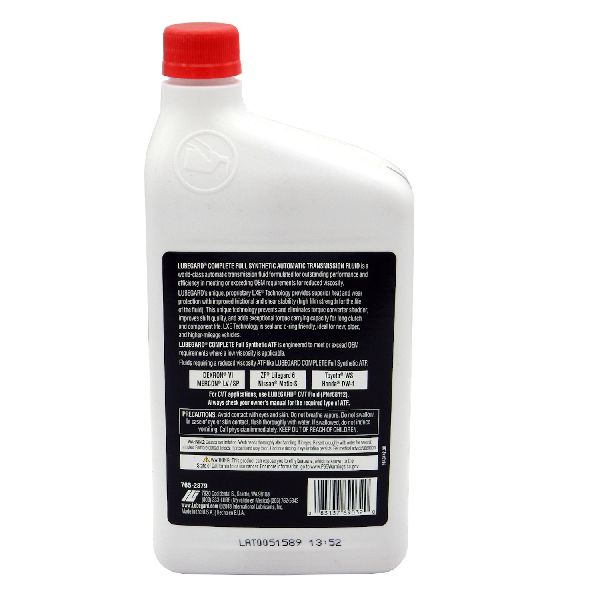
Aftermarket price range: $15-$30 - MERCON LV Automatic Transmission Fluid
(OEM #XT-10-QLVC)— This is the required fluid for the 6F50 transmission. Using the wrong fluid can cause damage.
Trusted brands: Motorcraft
OEM price range: $8-$12 per quart
Related Codes That Often Appear With This One
- P0756 — Shift Solenoid 'B' Performance. If multiple solenoid codes appear, it points towards a more systemic issue like a bad solenoid block, valve body problems, or a major internal hydraulic leak.
- P0729 — Gear 6 Incorrect Ratio. This and other incorrect ratio codes (P0731-P0735) often accompany solenoid performance codes as the transmission fails to achieve or hold the commanded gear.
Technical Service Bulletins (TSBs) & Recalls

- TSB 10-9-9: 6F50/6F55 Transmission—DTC P0751—Harsh Or No Forward Engagements, Slip/Delayed And/Or Harsh Downshifts
- TSB 11-12-10: 6F50/6F55 Transmission - Sluggish Acceleration From 0-5 MPH Followed By A Harsh Bump Or A Slip On Take-Off
- Bulletin #TSB 26-2046: Manufacturer service bulletin notes that P0751 may be accompanied by harsh or delayed engagement and shifts, along with an illuminated malfunction indicator lamp.
Platform-Specific Known Issues
- TSB 10-9-9 documents a broken orifice restrictor cup plug in the forward clutch circuit on some 2010 models (built Dec 2009 - Apr 2010), causing P0751 and severe shifting issues.
- TSB 11-12-10 points to valve body design flaws in the 6F50 transmission that can cause sluggishness and harsh bumps or slips. The fix involves replacing separator plates, removing a check ball, and reprogramming the PCM.
- In related Ford platforms, NHTSA ODI #11694940 describes a scenario where multiple DTCs including P0751 indicated a clutch mechanical fault where the "A" clutch was dragging.
Mechanic-Grade Diagnostic Values
- Shift Solenoid 'A' (SSA) Coil Resistance — expected: Varies with temperature. At 68-86°F (20-30°C), the expected range is 4.00 - 5.89 Ohms. This applies to SSA, SSB, SSC, SSD, TCC, and LPC solenoids.. Failure: A reading of infinity (open circuit) or near zero (short circuit), or a value outside the temperature-specific range, indicates a failed solenoid coil.
- Voltage at Transmission Harness Connector C168, Pin 15 — expected: Approximately battery voltage (11-14V).. Failure: A resistance to ground of less than 10,000 ohms on this circuit indicates a short to ground. No voltage or significant voltage drop points to a wiring issue between the PCM and the transmission.
Scan Tool Commands That Help
- Ford IDS (Integrated Diagnostic System): Solenoid Body Strategy Programming — This function is mandatory after replacing the solenoid body assembly. The technician must input the 13-digit solenoid strategy number and the 7-digit solenoid body ID number from the new part into the PCM. Failure to do so can result in harsh shifts, incorrect shift timing, and eventual transmission damage as the adaptive learning tries to compensate for incorrect base settings.
- Ford IDS (Integrated Diagnostic System): DataLogger — Used to monitor live PID (Parameter ID) data from the TCM, such as commanded gear, output shaft speed (OSS), and the duty cycle of each shift solenoid. This allows a technician to see if the TCM is commanding Shift Solenoid 'A' and if the transmission is responding as expected.
Wiring & Ground Locations
- C168 — The main external harness connector on the transmission case, driver's side.. This is the primary electrical interface for all solenoids and sensors inside the transmission. Pin 15 is the power control circuit for the solenoids. Corrosion, pushed pins, or damage at this connector can directly cause P0751 by interrupting the power or signal to the solenoid pack.
- Main Battery/Block Grounds — The passenger's side battery negative cable grounds to the front of the engine block. There is also a smaller ground strap from the back of the block to the firewall.. While not a direct cause, a poor engine or chassis ground can cause electrical noise and voltage fluctuations that can affect the operation of the PCM/TCM and its ability to accurately control the transmission solenoids, potentially leading to erratic behavior and fault codes.
Real Owner Repair Stories
- Ford Truck Enthusiasts Forum User (2008 Ford Edge) — Intermittent, very hard shifts. No reverse 'clunk' was noted.
❌ Tried (didn't work) The user did not specify other attempted fixes before the successful one.
✅ What actually fixed it The dealership service department replaced the solenoid valve body, stating it was a known problem. - Ford Truck Enthusiasts Forum User (Ford Edge (year not specified, but with 6F50 trans)) — Reverse 'clunk' when shifting from Drive to Reverse after reaching operating temperature. Also, firmer shifts between gears, sometimes when downshifting.
❌ Tried (didn't work) Replacing both the Output Shaft Speed (OSS) and Turbine Shaft Speed (TSS) sensors., Performing a transmission fluid change.
✅ What actually fixed it The user suspected the solenoid valve body (also called TCM) was the next logical step, as the prior fixes did not resolve the issue. This aligns with common failures for these symptoms. - NHTSA ODI #11474436 — An owner reported problems with the vehicle not engaging or shifting; a diagnostic report identified P0751 for SSA performance stuck on or off. The vehicle had to be towed to a dealership for service.
OEM Part Supersession History
7T4Z-7Z369-F (and others)→AA5Z-7Z369-B— The solenoid body has gone through multiple revisions to improve reliability and address common failure points. The part is often referred to by its engineering number (e.g., AA5P-7Z369-AA) stamped on the unit itself.
Heads up: While physically interchangeable, it is critical to program the new solenoid body's specific 13-digit strategy number and 7-digit ID number into the PCM using a tool like Ford IDS. Using a used solenoid body is risky because its unique strategy numbers are required for programming and are often lost once removed from the donor vehicle.
Model Year Variations Within This Range
- 2007-2010 vs 2011-2014: The Ford Edge received a facelift for the 2011 model year, which included powertrain updates. While the 6F50 transmission was used throughout, internal components and software logic were revised. The dimensions of the vehicle also changed slightly.
- Pre-July 30, 2012 vs. Post-July 30, 2012 (AWD Models): For All-Wheel Drive models, the rear differential and its mounting brackets changed significantly. A vehicle with a build date after July 30, 2012, has a different style differential that is not directly interchangeable with the earlier style without modifying or fabricating brackets.
Diagnostic Flowchart
Other Known Issues on This Vehicle
Issues unrelated to this code that are worth knowing about as an owner of this generation:
- Power Transfer Unit (PTU) Failure 🔴 High — Common on AWD models. Fluid can overheat and break down, leading to gear failure. Often occurs between 40,000-100,000 miles. Ford called the fluid 'lifetime,' but it requires changing.
- Faulty Brake Booster 🔴 High — A tear can develop in the booster's diaphragm, causing a hissing noise and a hard or spongy brake pedal. Affects 2007-2015 models. (Ref: Ford Customer Satisfaction Program 13N02 extended warranty coverage for this repair.)
- Water Leaks into Cabin 🟠 Medium — Commonly reported on 2007-2014 models, water can leak in around the A-pillars, doors, or liftgate, leading to wet carpets and potential mold. A similar issue prompted a service campaign for early 2015 models.
- Door Ajar Light Stays On 🟡 Low — Prevalent in 2011-2013 models, a faulty door latch sensor causes the 'door ajar' light to remain on, which can drain the battery. (Ref: TSB 18-2013 was issued for this problem.)
- Internal Water Pump Failure (3.5L/3.7L V6) 🔴 High — The water pump is located internally and is driven by the timing chain. When it fails, it can leak coolant directly into the engine oil, leading to catastrophic engine damage if not caught immediately. This is an expensive preventative or corrective repair.
- Transmission Speed Sensor Failure (TSS/OSS) 🟠 Medium — Early models (especially 2007-2008) were prone to failure of the Turbine Shaft Speed (TSS) or Output Shaft Speed (OSS) sensors, causing erratic shifting, speedometer issues, and potential limp mode.
Used vs. New Parts: Buying Guide for This Vehicle
When a used part is the smart pick: For this specific repair, using a used solenoid body is strongly discouraged. The part requires programming with unique identification numbers that are printed on a sticker on the original transmission case and are often lost. Without these numbers, proper programming is impossible, leading to poor performance. A used complete transmission assembly from a low-mileage donor can be a cost-effective alternative to a full rebuild, but the donor's history is critical.
Donor-vehicle mileage cap: roughly under 80000 miles for the part to have meaningful remaining life.
What to inspect on the donor part:
- Check the fluid condition from the donor transmission; it should be bright red and not smell burnt.
- Ask for the VIN of the donor vehicle to check for accident history or reported issues.
- If possible, get the solenoid strategy and ID numbers from the donor transmission case before it's pulled.
- Ensure the donor vehicle matches the model year range and drivetrain (FWD/AWD) precisely.
OEM-only on this vehicle (don't cheap out):
- Transmission Solenoid Body (Solenoid Pack) - Due to the critical need for correct strategy number programming, a new OEM (Motorcraft) or a high-quality remanufactured unit from a reputable rebuilder is the only reliable option.
Aftermarket brands forum-validated for this vehicle:
- Rostra (for solenoid bodies)
- TransGo (for valve body shift improvement kits)
- Sonnax (for valve body repair kits)
Brands owners have reported issues with on this vehicle:
- Generic, unbranded solenoid bodies from online marketplaces. Many forum users report issues with these parts failing quickly or being impossible to program correctly.
Real Owner Stories
Aggregated from forums and TSBs cited above. Mileages and costs reflect what owners reported in those sources.
2010 Ford Edge
Symptoms: Harsh or no forward engagements, slipping, delayed, and/or harsh downshifts.
What fixed it: Replacement of the transmission case half due to a broken orifice restrictor cup plug in the forward clutch circuit, as per TSB 10-9-9.
Source hint: TSB 10-9-9: 6F50/6F55 Transmission—DTC P0751
2011 Ford Edge
Symptoms: Sluggish acceleration from 0-5 MPH followed by a harsh bump or a slip on take-off.
What fixed it: Replacing the valve body separator plates, removing a check ball, and performing a PCM reprogram.
Source hint: TSB 11-12-10: 6F50/6F55 Transmission - Sluggish Acceleration From 0-5 MPH Followed By A Harsh Bump Or A Slip On Take-Off
2007-2014 Ford Edge
Symptoms: P0751 code followed later by P0756; concerns about fluid contamination or internal TCM failure.
What fixed it: The discussion suggests potential causes ranging from fluid contamination to internal TCM failure.
Source hint: https://www.ford-trucks.com/forums/1376840-need-some-thoughts-on-p0751-well-crap-more-going-on-in-this-one-p0756-now.html
2007-2014 Ford Edge
Symptoms: P0751 code; shop recommended a full transmission replacement.
What fixed it: Full transmission replacement.
Source hint: https://www.fordforums.com/threads/p0751-code-shop-says-it-needs-a-replacement-transmission-true.177651/
Related OBD-II Codes
Frequently Asked Questions
My 2010 Ford Edge is having harsh forward engagements and slipping. Is there a specific TSB for this?
What specific transmission fluid should I use for my 2007-2014 Ford Edge to avoid P0751 issues?
I'm experiencing a harsh bump or slip on take-off in my Edge. Is this related to the solenoid?
Can I just replace the single failed shift solenoid 'A' on my Ford Edge?
Is the P0751 code related to the 'Door Ajar' light or Brake Booster issues common on this model?
Helpful Videos
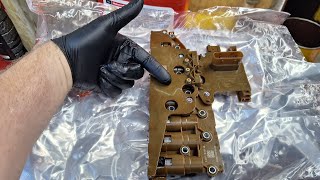
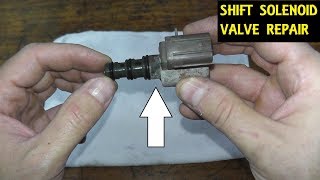
Used OEM Parts in Stock


New Aftermarket Parts Available

The information in this article is provided for general reference and educational purposes only. Vehicle specifications, procedures, and part compatibility can vary by production date, trim level, and region. Always consult your vehicle's factory service manual and verify part numbers before purchasing or performing repairs. Safety-critical components such as airbags, seat belts, and braking systems should be installed by a qualified professional.
- Ford Edge:
- 🎬 Helpful Videos
- 🛍️ Shop This Part
- What's Unique About the 2007-2014 Ford Edge
- Symptoms You May Notice
- Most Likely Causes
- Rare But Worth Checking
- Diagnosis Steps
- Parts You'll Likely Need
- Related Codes That Often Appear With This One
- Technical Service Bulletins (TSBs) & Recalls
- Platform-Specific Known Issues
- Mechanic-Grade Diagnostic Values
- Scan Tool Commands That Help
- Wiring & Ground Locations
- Real Owner Repair Stories
- OEM Part Supersession History
- Model Year Variations Within This Range
- Diagnostic Flowchart
- Other Known Issues on This Vehicle
- Used vs. New Parts: Buying Guide for This Vehicle
- Real Owner Stories
- 2010 Ford Edge
- 2011 Ford Edge
- 2007-2014 Ford Edge
- 2007-2014 Ford Edge
- Related OBD-II Codes
- Frequently Asked Questions
- 🎟️ Get 5% Off