

P0741 on 2013-2020 Ford Escape: Torque Converter Clutch Failure Causes and Fixes
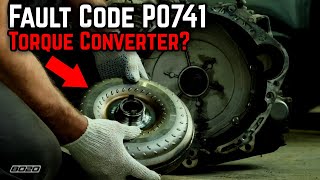
On a 2013-2020 Ford Escape with the 6F35 transmission, code P0741 almost always indicates a failed torque converter, a widely known issue backed by Ford's own Technical Service Bulletins (TSBs). The proper fix requires transmission removal to replace the torque converter and often other related components like the pump and seals, making it a costly professional repair. A fluid flush alone is highly unlikely to solve the issue.
- P0741 on a 2013-2020 Ford Escape is a serious code that almost always points to a failed torque converter.
- This is a known issue confirmed by Ford through multiple Technical Service Bulletins (TSBs).
- A simple fluid change or solenoid replacement is highly unlikely to fix the problem.
- The correct repair is expensive and complex, requiring the transmission to be removed from the vehicle.
- Do not ignore this code, as it can lead to further transmission damage and leave you stranded.
What's Unique About the 2013-2020 Ford ESCAPE

The Ford Escape, particularly models using the 6F35 transmission, has a well-documented history of torque converter failures that directly cause the P0741 code. This is not a random occurrence but a pattern noted in multiple class-action lawsuits and acknowledged by Ford through multiple Technical Service Bulletins (TSBs). Unlike many other vehicles where a P0741 might be a simple solenoid or fluid issue, on the Escape it frequently points to a major mechanical failure requiring transmission removal. TSBs like 19-2100 and SSM 49345 specifically point to internal torque converter damage or related bushing leaks as the root cause.
Diagnostic Flowchart

Tap your situation to follow the diagnostic path that matches what you're seeing on this vehicle.
Generation note: This issue affects both the third generation (2013-2019) and the fourth generation (2020) Escape, primarily those with the 6F35 transmission. Ford has issued TSBs for models at both ends of this year range, including TSB 19-2100 for 2013-2015 models with the 1.6L engine and SSM 49345 for 2020 models (with the 8F35/8F40 transmission), indicating a persistent problem with torque converter systems across these generations.
🎬 Watch: Overview of common Ford Escape transmission faults and repairs.Symptoms You May Notice
- Illuminated Check Engine Light or Powertrain Malfunction (wrench) indicator.
- "Transmission Malfunction Service Now" warning message on the instrument panel. [ODI #11485268]
- Vehicle shudders or vibrates, often described as a "rumble strip" feeling, at steady cruising speeds (typically 35-50 mph).
- Engine RPM is higher than normal at highway speeds because the converter isn't locking.
- Noticeable decrease in fuel economy.
- Transmission may feel like it's slipping or shifting harshly.
- Vehicle may stall after coming to a stop from highway speeds.
- Replacing only the TCC solenoid without addressing the torque converter. If the converter is failing mechanically, a new solenoid will not solve the problem.
- Performing a transmission fluid flush and expecting it to fix the code. While good for maintenance, a flush cannot repair a mechanically failed torque converter clutch. 🎬 See why a transmission flush won't fix these specific codes.
- Mistaking the code for an engine issue like a VVT solenoid problem, as one owner on a forum initially did before realizing it was a transmission code.
Most Likely Causes

- Internal Torque Converter Failure 🔴 High Probability This is the most common cause. Ford TSBs #19-2100 and #SSM 49345 explicitly state that P0741 is likely due to internal damage to the torque converter or a related pump stator bushing leak. The lockup clutch lining wears out, or internal seals fail, preventing the clutch from engaging properly. This is a known weak point on the 6F35 transmission.
How to confirm: A professional mechanic will use a scan tool to monitor TCC Slip RPM (PID: TCC_SLIP). 🎬 Watch: Professional diagnosis of TCC lockup and slip issues. If slip is excessive (over 200 RPM) when lock-up is commanded (PID: TCC_CMD) and fluid/solenoids are ruled out, the torque converter is condemned.
Typical fix: Remove the transmission and replace the torque converter. Per TSB 19-2100, the procedure also involves inspecting the fluid pump, main control, and replacing the TCC solenoid and various seals. When the converter fails, it often sends metallic debris through the transmission, necessitating a full overhaul or replacement.
Est. part cost: $300-$800 - Low or Degraded Transmission Fluid ⚪ Low Probability While possible, it's often a symptom of a larger problem (like a leak from a failing seal) rather than the root cause. On this platform, the issue is more likely mechanical. A fluid flush alone is almost never a permanent fix for an established P0741 code.
How to confirm: Check the transmission fluid level and condition. The fluid should be at the correct level and red (for Mercon LV), not dark brown or black, and should not have a burnt smell or contain glittery metallic particles.
Typical fix: Perform a transmission fluid drain and fill or flush. However, this is highly unlikely to fix the code if the torque converter is already damaged internally.
Est. part cost: $100-$250 - Faulty Torque Converter Clutch (TCC) Solenoid ⚪ Low Probability While the solenoid controls the TCC, the TSBs for the Escape point to the converter itself being the more common failure point. The solenoid is often replaced as a preventative measure during the larger torque converter job, as outlined in TSB 19-2100. A solenoid failure is possible, but less probable than the mechanical failure of the converter.
How to confirm: A technician can test the solenoid's electrical circuit and command it with a scan tool. This requires dropping the transmission pan and sometimes the valve body for access. Resistance should be between 4.00 - 5.89 Ohms at room temperature (68-86°F) for the 6F35 transmission.
Typical fix: Replace the TCC solenoid, which is located inside the transmission on the valve body.
Est. part cost: $50-$150
Rare But Worth Checking
- Damaged Valve Body: The valve body directs hydraulic fluid. A worn valve bore or stuck plunger can prevent the TCC from engaging. TSB 19-2100 mentions inspecting the solenoid body as part of the repair, and other experts note valve wear is a possible cause.
- Worn Pump Stator Bushing: TSB SSM 49345 specifically calls out a leak from the pump stator bushing as a cause for P0741 on 2020 models. This wear leads to a loss of hydraulic pressure required to apply the torque converter clutch.
- Wiring Harness Damage: Damage to the wiring leading to the transmission can interrupt the signal to the TCC solenoid. This is less common than the mechanical failure of the converter.
Diagnosis Steps
- Check and verify the code with a quality OBD-II scanner.
- Check the transmission fluid level and condition. Note any burnt smell or dark discoloration. Look for fine metallic particles ('glitter') in the fluid, which indicates internal mechanical wear.
- Using an advanced scan tool, monitor live data PIDs: Torque Converter Clutch Slip RPM (TCC_SLIP), TCC Commanded state, Engine RPM, and Turbine Shaft Speed (TSS).
- While driving at a steady highway speed (45-60 mph), observe if the PCM is commanding lock-up. If lock-up is commanded but TCC slip remains over ~200 RPM, a mechanical/hydraulic problem is confirmed.
- Inspect the transmission wiring harness for any visible damage, corrosion, or loose connections.
- If fluid and wiring are okay, the next step is internal diagnosis. Given the known TSBs for this vehicle, the most probable cause is the torque converter itself.
- Professional diagnosis is strongly recommended to confirm the failure before committing to a transmission removal.
Parts You'll Likely Need

- Torque Converter
(OEM #CV6Z-7902-G (for 1.6L per TSB 19-2100), DG9Z-7902-V (common replacement for 6F35))— This is the primary point of failure for code P0741 on this vehicle, as documented by multiple Ford TSBs.
Trusted brands: Motorcraft, LuK, Transtar, Precision of New Hampton
OEM price range: $500-$800
Aftermarket price range: $250-$500 - Torque Converter Clutch (TCC) Solenoid
(OEM #CV6Z-7G383-C (per TSB 19-2100))— It is best practice to replace this solenoid when the transmission is removed for a torque converter replacement, as it is a critical part of the lock-up circuit and required by TSB 19-2100.
Trusted brands: Motorcraft, Rostra
OEM price range: $80-$150
Aftermarket price range: $40-$90 - Automatic Transmission Fluid
(OEM #Motorcraft MERCON LV (XT-10-QLVC))— The transmission must be drained to perform the repair, requiring a full fluid replacement. Use only the specified fluid, typically Motorcraft MERCON LV.
Trusted brands: Motorcraft
OEM price range: $8-$12 per quart
Aftermarket price range: $7-$10 per quart - Transmission Filter Kit & Seals — When the transmission is removed and opened for the torque converter, replacing the internal filter and all related seals (pump, axle, etc.) is mandatory for a proper repair, as outlined in Ford's TSBs.
Trusted brands: Motorcraft, ATP
OEM price range: $100-$200 (for various seals)
Aftermarket price range: $50-$150
Related Codes That Often Appear With This One
- P1744 — This code, for 'Torque Converter Clutch System Performance', is explicitly mentioned alongside P0741 in Ford's TSBs #19-2100 and #SSM 49345 as indicating the same torque converter failure.
Technical Service Bulletins (TSBs) & Recalls
- SSM 49345: Addresses P0741/P1744 on 2020 models (Escape, Corsair, Edge, Transit Connect) with 8F35/8F40 transmissions built before 30-Sep-2020, citing torque converter and pump stator bushing leaks.
- TSB 19-2100: Addresses P0741/P1744 on 2013-2015 1.6L Escapes (and 2013-2016 Fusions) due to internal torque converter damage, providing a detailed repair procedure.
Platform-Specific Known Issues
- TSB #SSM 49345 notes that on some 2020 Escapes (and platform mates like the Corsair and Edge) with the 8F35/8F40 transmission, P0741 may be caused by a leak from the torque converter and a pump stator bushing.
- TSB #19-2100 states that on 2013-2015 Escapes with the 1.6L engine, P0741 is likely due to internal damage to the torque converter and requires replacement along with inspection of the pump and valve body.
- Owner complaints frequently cite this code leading to a diagnosis of a failed torque converter or transmission, with repair quotes often ranging from $2,500 to over $7,000 for a full replacement. [ODI #11282790, ODI #11485268, 34]
- A Reddit user with a 2017 Escape was quoted nearly $8,000 for a remanufactured transmission replacement after experiencing related gear ratio codes, highlighting the extreme potential cost if the issue is left unaddressed and causes further damage.
Mechanic-Grade Diagnostic Values
- TCC Solenoid Resistance (6F35 Transmission) — expected: 4.00 - 5.89 Ohms @ 68 - 86°F (20 - 30°C). Failure: A reading outside this range indicates a faulty solenoid coil.
- TCC Solenoid Resistance (6F35 Transmission) — expected: 5.32 - 7.21 Ohms @ 194 - 212°F (90 - 100°C). Failure: A reading outside this range when the transmission is at operating temperature indicates a faulty solenoid coil.
Scan Tool Commands That Help

- Ford IDS (or equivalent high-end scanner): Output State Control of Torque Converter — This bidirectional test allows a technician to manually command the TCC solenoid on and off while monitoring slip RPM to verify if the solenoid is responding to electrical commands.
- Ford IDS (or equivalent high-end scanner): Transmission Characterization and Solenoid Identification — This function reads the solenoid body strategy and band information directly from the module, which is required for ordering the correct replacement solenoids without disassembling the transmission first.
Wiring & Ground Locations
- C175T — The main electrical connector at the Powertrain Control Module (PCM), which contains the circuits for the transmission solenoids.. This is the primary connector to test the TCC solenoid circuit from the PCM side for opens, shorts, or high resistance without having to access the transmission itself.
- G104 / G105 — Located at the left front corner of the engine compartment, near the battery junction box.. These are major chassis ground points for the engine and transmission controls. A loose or corroded ground here can cause erratic electrical behavior and phantom codes.
- G108 — Located on the front of the engine.. This is a key engine ground point. A poor connection can affect sensor readings and actuator performance, including those related to the transmission.
Real Owner Repair Stories
- Reddit user /u/shrek_texas, a technician (2017 Ford Escape (and Fusions/Explorers with 6F35)) — Codes P0741 and P1744.
❌ Tried (didn't work) The user notes that simply replacing the torque converter is often not enough.
✅ What actually fixed it A complete transmission overhaul or replacement was the proper fix. The user states the torque converters are "junk" and when they fail, they contaminate the entire transmission with metallic sludge, damaging the pump, valve body, clutch pistons, and solenoid screens.
OEM Part Supersession History
CV6Z-7902-G→CV6Z-7902-FRM— This part number, specified in TSB 19-2100 for the 1.6L engine, has been superseded by a remanufactured part. The chain includes previous versions C, D, E, and F.DG9Z-7902-V (and F, G, H)→DG9Z-7902-HTC— This is a common torque converter for the 6F35 transmission, often used with the 2.0L engine. The original part has been superseded multiple times, with HTC being the latest version.
Model Year Variations Within This Range
- 2013-2019: These years primarily used the 6-speed 6F35 automatic transmission, which is the main subject of TSB 19-2100 and has a widely documented history of torque converter failures leading to P0741.
- 2020: For the 2020 model year, Ford introduced the 8-speed 8F35 automatic transmission. While a different transmission, it is also susceptible to P0741, as noted in TSB SSM 49345, which points to a pump stator bushing leak as a cause on these newer models.
Helpful Videos
Used OEM Parts in Stock


New Aftermarket Parts Available


The information in this article is provided for general reference and educational purposes only. Vehicle specifications, procedures, and part compatibility can vary by production date, trim level, and region. Always consult your vehicle's factory service manual and verify part numbers before purchasing or performing repairs. Safety-critical components such as airbags, seat belts, and braking systems should be installed by a qualified professional.
- Ford ESCAPE:
- 🎬 Helpful Videos
- 🛍️ Shop This Part
- What's Unique About the 2013-2020 Ford ESCAPE
- Diagnostic Flowchart
- Symptoms You May Notice
- Most Likely Causes
- Rare But Worth Checking
- Diagnosis Steps
- Parts You'll Likely Need
- Related Codes That Often Appear With This One
- Technical Service Bulletins (TSBs) & Recalls
- Platform-Specific Known Issues
- Mechanic-Grade Diagnostic Values
- Scan Tool Commands That Help
- Wiring & Ground Locations
- Real Owner Repair Stories
- OEM Part Supersession History
- Model Year Variations Within This Range
- 🎟️ Get 5% Off