

P0736 on 2017-2023 Ford F-150: Reverse Incorrect Gear Ratio Causes and Fixes
On a 2017-2023 Ford F-150, code P0736 often points to a software issue that can be fixed by a dealer reprogramming the Powertrain Control Module (PCM), as noted in a Ford Technical Service Bulletin. Other causes include low transmission fluid, a faulty valve body, or a known internal mechanical issue with the CDF clutch drum.
- P0736 means the transmission is slipping in reverse.
- The most likely and first thing to check for on a 2017-2023 F-150 is a software update (TSB 26-2046) from a Ford dealer.
- Always check the transmission fluid level and condition, as low or dirty fluid is a common cause of transmission problems.
- Do not immediately assume a costly transmission replacement is needed; software and fluid issues are more probable and much cheaper to fix.
- Driving with this code is not recommended as you may lose the ability to reverse and could cause further, more expensive damage to the transmission.
What's Unique About the 2017-2023 Ford F-150
The 2017-2023 F-150 primarily uses the 10-speed 10R80 automatic transmission. While generally robust, this transmission has known issues with shifting behavior that can sometimes be traced back to software logic or specific hardware failures. Ford has issued multiple technical service bulletins (TSBs) to address harsh or delayed shifting, which can include the P0736 code. A particularly notable issue for the 10R80 is the potential for axial movement or failure of the CDF clutch cylinder sleeve, a specific internal component that can lead to various gear ratio errors. This is a more specific mechanical failure point than what is typically seen in older transmission designs.
Diagnostic Flowchart
Tap your situation to follow the diagnostic path that matches what you're seeing on this vehicle.
Generation note: This range covers the end of the 13th generation (2017-2020) and the start of the 14th generation (2021-2023) Ford F-150. Both generations widely use the 10R80 10-speed automatic transmission. The causes and fixes for this code, including software updates, valve body issues, and CDF drum failures, are generally consistent across these years. However, a key mechanical update to the problematic CDF drum was reportedly implemented in late 2022 or early 2023 models, which may make later trucks less prone to this specific internal failure.
Symptoms You May Notice
- Check Engine Light is on
- Inability to shift into reverse or delayed engagement
- Harsh engagement, clunking, or grinding when shifting into reverse
- Vehicle won't move when in reverse
- Transmission slipping while in reverse
- Increased fuel consumption
- Replacing the entire transmission when only a PCM software update or valve body overhaul was needed.
- Replacing speed sensors when the issue is low transmission fluid or a software glitch.
- Assuming an internal failure before thoroughly checking for updated TSBs related to software or valve body procedures.
Most Likely Causes
- Powertrain Control Module (PCM) or Transmission Control Module (TCM) Software Issue 🔴 High Probability Ford has released multiple TSBs, including TSB 23-2123 and TSB 22-2428, which supersede older bulletins and state that P0736 can be caused by software incompatibility as the transmission hardware breaks in over time. TSB 23-2030 also notes a no-reverse condition on some 2021-2022 models that can be fixed with a PCM reprogram.
How to confirm: A Ford dealer or a qualified shop with access to Ford's diagnostic software (FDRS) can check for and apply any available software updates for the PCM or TCM.
Typical fix: Reprogramming the control module to the latest calibration and possibly performing a transmission adaptive learning drive cycle.
Est. part cost: $0-$250 - Low or Contaminated Transmission Fluid 🟡 Medium Probability The 10R80 transmission is sensitive to fluid level and condition. Low fluid can cause a loss of hydraulic pressure needed to engage the reverse clutch pack, leading to slippage and this code.
How to confirm: Check the transmission fluid level and condition according to the manufacturer's procedure. The fluid should be at the correct level and reddish, not brown, black, or smelling burnt. This procedure requires the vehicle to be at a specific operating temperature (206°F to 215°F) and is checked from underneath, as there is no traditional dipstick in the engine bay. 🎬 Watch: How to properly check your 10-speed transmission fluid level.
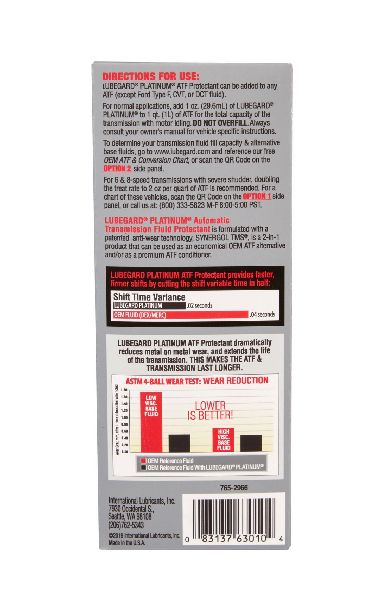
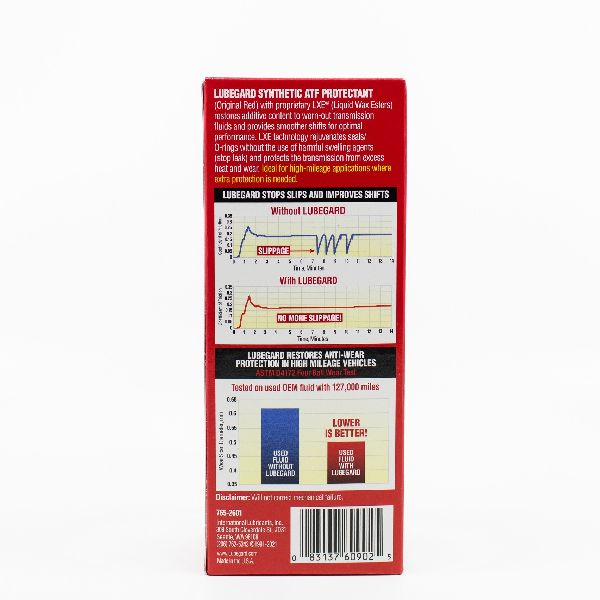
Typical fix: Top off or replace the transmission fluid with the correct type (Motorcraft MERCON ULV) and replace the filter.
Est. part cost: $150-$350 - Faulty Transmission Valve Body or Solenoids 🟡 Medium Probability Sticking valves within the main control valve body are a known issue on the 10R80 transmission. TSB 22-2428 explicitly lists this as a potential cause for harsh/delayed shifts and associated codes. The solenoids are calibrated from the factory and must be replaced with a solenoid of the matching band number (1-5).
How to confirm: This is often diagnosed after a software update fails to fix the issue. A technician may perform a valve body overhaul as prescribed by Ford's TSBs. Solenoids can be tested for resistance.
Typical fix: Overhauling or replacing the main control valve body assembly. A common OEM part number is JL3Z-7A100-B or its successor, JL3Z-7A100-C.
Est. part cost: $500-$1300 - Internal Transmission Mechanical Failure (CDF Drum) ⚪ Low Probability A well-documented failure point in the 10R80 is the 'CDF' (Clutch C/D/F) clutch cylinder. Axial movement of the CDF drum's sleeve can cause hydraulic leaks and shifting problems. This movement uncovers fluid passages, causing pressure loss. While often associated with forward gears 3-4-5, this internal issue can cause system-wide pressure problems and various gear ratio codes.
How to confirm: This is usually diagnosed after all other possibilities (software, fluid, valve body) have been ruled out. It requires a complete transmission teardown to inspect the drum.
Typical fix: Rebuilding the transmission with an updated CDF drum assembly (e.g., Part JL3Z-7H351-B). Updated parts have a machined lip to prevent the sleeve from moving. 🎬 Watch: See how a failed CDF drum causes internal damage.
Est. part cost: $3000-$7000
Rare But Worth Checking
- Damaged Wiring Harness or Poor Ground Connection: While not specific to P0736, F-150s in this year range have had issues with body-to-frame ground straps corroding, causing a variety of electrical and communication issues. A visual inspection of the harness and major ground points, especially on the passenger side near the frame rail, is a valid diagnostic step.
Diagnosis Steps
- Check for Technical Service Bulletins (TSBs). Specifically, search for the latest TSBs related to the 10R80 transmission, such as TSB 22-2428 or 23-2123, which supersede older ones and address P0736.
- Scan for other DTCs to see if other gear ratio or solenoid codes are present, which can help pinpoint the issue.
- Check the transmission fluid level and condition. Ensure it is full and the fluid is clean, red, and does not smell burnt. This must be done at operating temperature (206°F-215°F).
- If fluid is low, top it off with Motorcraft MERCON ULV, clear the codes, and test drive to see if the code returns.
- If TSBs indicate a software fix, have a dealer or qualified shop reprogram the PCM/TCM to the latest calibration.
- Perform the Transmission Adaptive Learning Drive Cycle after any software update or clearing of adaptive tables.
- If software and fluid are not the issue, the next step recommended by Ford TSBs is often a main control valve body overhaul or replacement.
- As a final step, an internal transmission inspection may be necessary to check for mechanical wear, specifically focusing on the CDF clutch drum.
Parts You'll Likely Need
- Transmission Fluid
(OEM #XT-12-QULV (Motorcraft MERCON ULV))— Incorrect fluid level or poor fluid condition is a common cause for shifting issues and incorrect gear ratio codes.
Trusted brands: Motorcraft
OEM price range: $20-$30 per quart
Aftermarket price range: $15-$25 per quart - Transmission Valve Body
(OEM #JL3Z-7A100-B, JL3Z-7A100-C)— If the issue is traced to a faulty solenoid or sticking valve within the valve body, replacement is often the most effective repair, as recommended by multiple TSBs.
Trusted brands: Motorcraft
OEM price range: $800-$1300
Aftermarket price range: $500-$900 - CDF Clutch Drum Assembly
(OEM #JL3Z-7H351-B)— In cases of severe internal failure, a worn or damaged CDF drum is a likely culprit in the 10R80 transmission and requires a full transmission rebuild to replace.
Trusted brands: Motorcraft
OEM price range: $150-$250
Related Codes That Often Appear With This One
- P0729 — Incorrect Gear Ratio - 6th Gear. TSB 23-2123 and others list this and many other gear ratio codes as potentially being caused by the same PCM software or valve body issues.
- P0731-P0735 — Incorrect Gear Ratio for forward gears (1-5). If multiple gear ratio codes are present, it strengthens the possibility of a systemic issue like low fluid, a faulty valve body, or an internal failure like the CDF drum.
- P2700-P2708 — Friction Element Apply Time Range/Performance. These codes often accompany gear ratio errors and point towards a clutch pack, solenoid, or valve body problem, and are also mentioned in the same TSBs.
Technical Service Bulletins (TSBs) & Recalls
- TSB 22-2428: Supersedes several previous TSBs. Cites software, sticking valve body valves, and/or axial movement of the CDF clutch cylinder sleeve as causes for harsh shifts and related DTCs on 2017-2023 F-150s.
- TSB 23-2123: Supersedes TSB 22-2139. Addresses harsh/delayed shifts on 2017-2020 F-150s (among others) with the 10R80. Lists P0736 as a possible code and recommends either a PCM reprogram or a valve body overhaul.
- TSB 26-2046: An older TSB noting that various gear ratio codes, including P0736, may be stored due to a PCM software issue.
- TSB 18-2274: Addresses harsh/bumpy shift and engagement concerns on 2
Platform-Specific Known Issues
- A Ford Technical Service Bulletin (TSB 22-2428) directly addresses harsh/delayed shifts and related codes like P0736. It points to potential causes including PCM software, sticking valves in the valve body, or axial movement of the CDF clutch cylinder sleeve.
- TSB 23-2123, which supersedes TSB 22-2139, also lists P0736 and suggests the fix may be a PCM reprogram or a valve body overhaul due to the adaptive calibration failing to adapt to hardware break-in.
- Owner forums contain numerous threads where a transmission rebuild was required to fix shifting issues, specifically citing the CDF drum as the point of failure.
Mechanic-Grade Diagnostic Values
- Transmission Solenoid Resistance — expected: 5.0 - 5.4 ohms at 68°F (20°C). Failure: A reading outside of this range indicates a faulty solenoid coil.
- Transmission Fluid Temperature for Level Check — expected: 206°F - 215°F (96°C - 101°C). Failure: Checking the fluid level outside of this temperature range will result in an inaccurate reading, which can lead to over or under-filling.
Scan Tool Commands That Help
- Ford IDS/FDRS, FORScan, or equivalent professional scanner: Clear Transmission Adaptive Tables — This function should be used after a transmission repair, valve body replacement, or software update. It resets the learned shift pressure values, forcing the TCM to start a new learning process. Failing to do this can cause continued erratic shifting even after a repair.
- Ford IDS/FDRS, FORScan, or equivalent professional scanner: Transmission Adaptive Learning Drive Cycle — This specific, multi-step driving procedure must be performed after clearing the adaptive tables to allow the TCM to properly relearn shift points and clutch engagement pressures for all gears, including reverse. Skipping this procedure is a common reason for shift quality complaints to return shortly after a reset.
Wiring & Ground Locations
- Body-to-Frame Ground Strap — Commonly found on the passenger side, with a ground going from the body down to the frame rail. Other key grounds are near the battery in the engine bay.. These trucks are known for corrosion at this ground point, even on newer models with low mileage. A poor ground can cause a host of communication errors between modules, including the PCM/TCM, potentially leading to incorrect sensor readings or commanded states that could trigger a P0736 code.
Real Owner Repair Stories
- Reddit user in /r/f150 (2018 F-150 EcoBoost with 145k miles) — Crazy shift problems, including floating between gears and then slamming into another.
❌ Tried (didn't work) Transmission relearn procedure, Valve body replacement
✅ What actually fixed it The user ultimately diagnosed the issue as the CDF drum failure, as described in TSB 22-2428. The implication is that a transmission rebuild to replace the CDF drum was the necessary final repair.
OEM Part Supersession History
Unknown, multiple revisions exist→JL3Z-7H351-B (and subsequent revisions)— The original CDF clutch drum design had a sleeve/bushing that was prone to sliding out of position, exposing hydraulic passages and causing pressure loss. The updated design includes a machined lip on the drum to physically prevent the sleeve from moving.
Model Year Variations Within This Range
- Late 2022-2023: Models built from late 2022 onwards may have an updated CDF clutch drum from the factory. This updated part features a machined lip to prevent the internal sleeve from slipping, which was a primary cause of internal failure in earlier 10R80 transmissions. This makes later models potentially less susceptible to this specific mechanical failure.
- 2021-2022 with 10R80 MHT (Mild Hybrid): These models can experience a unique no-reverse condition caused by a software glitch related to simultaneous brake and accelerator application during regenerative braking. This is addressed by TSB 23-2030 and fixed with a PCM reprogram.
Helpful Videos
Used OEM Parts in Stock


New Aftermarket Parts Available


The information in this article is provided for general reference and educational purposes only. Vehicle specifications, procedures, and part compatibility can vary by production date, trim level, and region. Always consult your vehicle's factory service manual and verify part numbers before purchasing or performing repairs. Safety-critical components such as airbags, seat belts, and braking systems should be installed by a qualified professional.
- Ford F-150:
- 🎬 Helpful Videos
- 🛍️ Shop This Part
- What's Unique About the 2017-2023 Ford F-150
- Diagnostic Flowchart
- Symptoms You May Notice
- Most Likely Causes
- Rare But Worth Checking
- Diagnosis Steps
- Parts You'll Likely Need
- Related Codes That Often Appear With This One
- Technical Service Bulletins (TSBs) & Recalls
- Platform-Specific Known Issues
- Mechanic-Grade Diagnostic Values
- Scan Tool Commands That Help
- Wiring & Ground Locations
- Real Owner Repair Stories
- OEM Part Supersession History
- Model Year Variations Within This Range
- 🎟️ Get 5% Off